Buyer Fit Snapshot
| Best fit | Print on Corrugated Boxes projects where brand print, material claims, artwork control, MOQ, and repeat-order consistency need to be specified before quoting. |
|---|---|
| Quote inputs | Share finished size, material target, print colors, finish, packing count, annual reorder estimate, ship-to region, and any compliance wording. |
| Proofing check | Approve dieline scale, logo placement, barcode or warning zones, color tolerance, closure strength, and carton packing before bulk production. |
| Main risk | Vague material claims, crowded artwork, missing packing details, or unclear freight terms can make a low unit price expensive after revisions. |
Fast answer: Print on Corrugated Boxes: Quote Scope, Sample Proof, MOQ, and Lead Time should be specified like a repeatable production item. The safest quote records material, print method, finish, artwork proof, packing count, and reorder notes in one written spec.
Production checks before approval
Compare the actual filled-product size with the drawing, then confirm tolerance on folds, seals, hang holes, label areas, and retail display edges. Reserve space for logos, QR codes, warning copy, and material claims before decorative graphics fill the panel.
Quote comparison points
Review material grade, print process, finish, sampling route, tooling charges, carton quantity, and freight assumptions side by side. A quote is only useful when the supplier can repeat the same color, closure quality, and packing count on the next order.
A corrugated box can look crisp on a screen and still print dull on kraft board, which is why how to print on corrugated boxes is never just a question of ink. Liner color, flute structure, board coating, artwork density, and press pressure all affect the result. The finished carton is shaped by material and method as much as by design.
Buyers usually begin with the visual target and work backward from there. A shipping carton that spends its life in transit has different needs from a retail box that has to carry a brand on a shelf, and how to print on corrugated boxes changes with that use case. A one-color logo, a CMYK illustration, a spot-color brand mark, or a premium offset top sheet each points to a different production path.
Comparing a plain branded shipper with a higher-end presentation box is easier once you look at the broader packaging range, including Custom Shipping Boxes and the wider lineup of Custom Packaging Products. The fanciest print method is not always the right one. The better choice is the one that fits the product, the order quantity, the budget, and the way the carton will be handled from warehouse to customer.
I have sat through press checks where a clean file still came out underwhelming because the board spec was wrong. That happens more often than most brand teams expect. A box is not a poster. It flexes, absorbs, scuffs, and travels.
How to Print on Corrugated Boxes: What Makes It Tricky
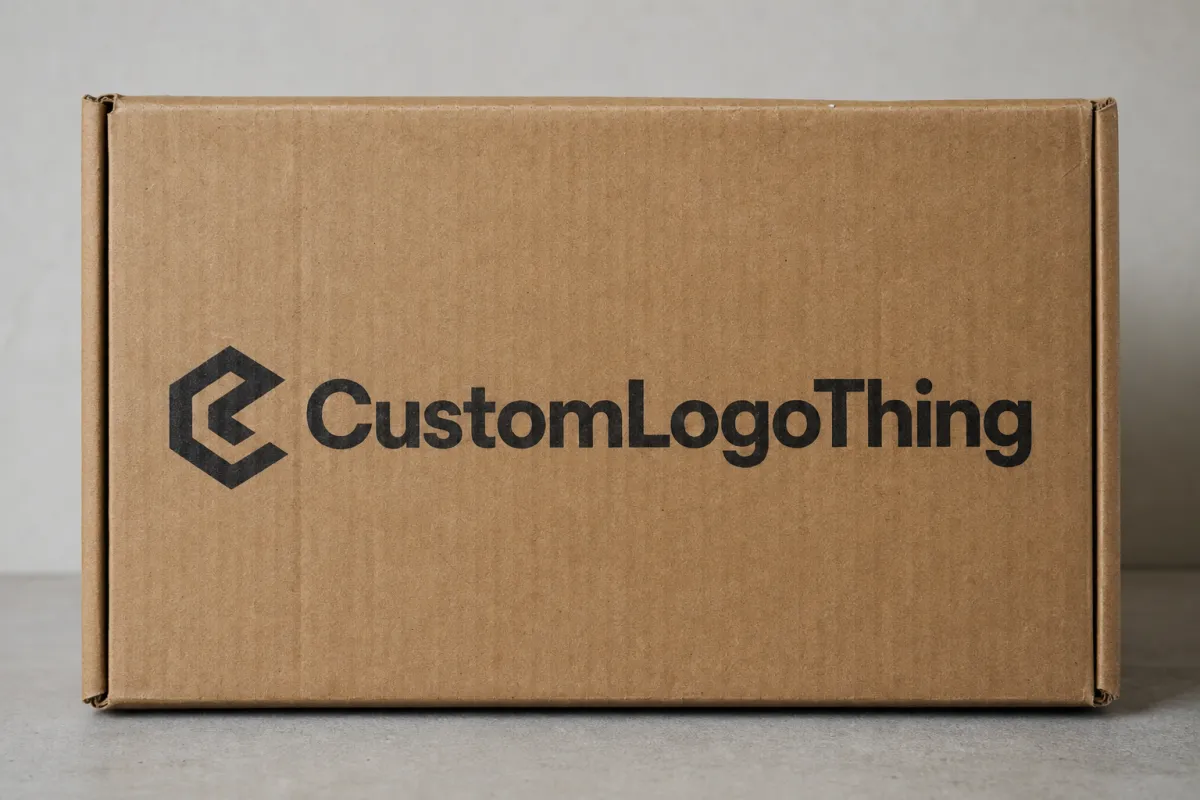
Corrugated board is not a smooth sheet of paperboard, and that is where many first-time buyers get surprised. A box includes outer liners, an inner liner, and a fluted medium between them. That structure gives the box strength, yet it also creates texture, slight waviness, and uneven ink absorption across panels. A reliable answer to how to print on corrugated boxes begins with that reality: the surface is structural, not decorative.
Kraft liners behave differently from white or clay-coated liners. Brown kraft changes how color reads, so a bright blue often prints deeper and a pastel can look muted. White liner gives the artwork a cleaner base and usually brings the proof closer to the finished result. That is why how to print on corrugated boxes starts with board selection before any file is finalized.
Flute choice matters too. E-flute has a thinner profile and a smoother face, which helps fine detail and small type. B-flute and C-flute are common for shipping strength, yet their surfaces can show more texture and can make small reverse text or thin rules less reliable. Under pressure, the flute pattern can telegraph through the liner, especially in large solid areas, which is where many designs start to lose sharpness.
There is also a practical divide between direct print and mounted presentation. Some boxes are printed directly with flexographic or digital equipment. Others use labels, sleeves, or litho-laminated top sheets that are printed separately and then mounted to corrugated board for a smoother face. In production, how to print on corrugated boxes is usually a question of visual standard versus the physical limits of the board.
Those trade-offs make the decision more technical than it first appears. Brand goals, cost, run size, shelf impact, and durability all pull in different directions. A warehouse shipper may only need a clean logo and a readable barcode. A consumer-facing carton may need tighter color control, surface protection, and print finishing such as varnish or aqueous coating. Once those priorities are clear, how to print on corrugated boxes becomes much easier to plan.
The strongest corrugated print jobs are usually decided before press time: board spec, artwork, and print method all need to agree.
How to Print on Corrugated Boxes: Methods and Process
Four main routes shape how to print on corrugated boxes, and each one has its own production rhythm. Flexographic printing is the volume workhorse, efficient for simple graphics, logos, and repeated runs. Digital printing works well for short runs, many SKUs, seasonal graphics, and fast turnaround needs. Litho-lamination begins with an offset-printed sheet that is then laminated to corrugated for a premium face. Screen printing still has a place for bold marks, strong solids, and designs that benefit from heavy ink laydown rather than fine detail.
Each method changes how the job moves through production. Flexo usually needs plates, anilox selection, and careful mounting. Digital relies on the RIP and file translation into print data, often in CMYK with optional spot color or white ink depending on the equipment. Litho-lamination starts with a printed top sheet, then trimming, glue, and mounting to the corrugated base. Screen printing needs screens and stencils, and it favors simpler layouts over photographic art. That is why how to print on corrugated boxes should be settled before design work gets too far along.
Ink behavior also changes with the board. More absorbent liners pull ink down quickly, which can reduce shine and flatten color density. Rough surfaces soften edges a little, especially on tiny type. Die-cut panels with minor compression can vary slightly from one area to another. That variation is not always a defect. It is part of how to print on corrugated boxes on a board that has structure, grain, and movement.
Direct print and mounted print serve different jobs. A direct flexo print fits transit packaging, simple branded shippers, and larger runs where cost discipline matters. Litho-laminated surfaces fit gifting, e-commerce presentation, subscription packaging, and cartons that need cleaner image quality. Mounted sheets give the design a smoother face, which helps with photography, fine patterns, and controlled print finishing.
Testing standards can matter as much as the print itself. Distribution test methods from the International Safe Transit Association are available at ISTA, and that matters because a box has to survive vibration, stacking, and handling without rubbing the graphics away or scuffing at the edges. Paper sourcing may matter too, especially if you plan to make FSC claims and need chain-of-custody paperwork to support them. Claims should always match the documentation.
The short answer is plain: how to print on corrugated boxes is a balance of image quality, speed, cost, and the physical limits of the board. The print method sets the ceiling for detail, the number of colors, and the amount of setup needed before the first saleable box leaves the line.
Cost, Pricing, and Quote Factors for Corrugated Box Printing
Most pricing conversations around how to print on corrugated boxes come down to a few variables, and buyers who understand them usually get better quotes. Box size affects board usage, ink coverage, and waste. Board grade affects strength and surface quality. Print coverage matters because a tiny logo is a different job from a full-panel design. Quantity matters because setup costs spread out over more units as the run grows.
Run length has a large effect on the final number. Flexographic printing tends to make more sense as volume rises because plate and setup costs are absorbed over more boxes. Digital printing can look expensive per unit at high volume, yet it often works best for 250, 500, or 1,000-piece runs, especially if the artwork changes often. Litho-lamination brings a premium appearance, but the setup burden is higher, so it pays off only when presentation value justifies it. That is a major reason how to print on corrugated boxes has to be tied to the job itself, not only to the artwork.
Artwork complexity can move the price more than many buyers expect. Full bleed art, tight registration, white ink on kraft, multiple spot colors, variable data, and several SKUs all add handling. If a carton needs a barcode, a lot code, a compliance mark, and a retail-facing logo, the supplier may need extra setup time to keep all of it aligned. A file can look simple on screen and still require careful production work. That is another reason how to print on corrugated boxes should be discussed with the supplier before final files are locked.
Minimum order quantities exist for a practical reason. Plates, dies, setup sheets, proofing, and press make-ready all cost money before production begins. A small order can carry a high unit cost because those fixed charges are spread over fewer boxes. That is normal for flexo and litho work. Digital pricing follows a different curve because it avoids some tooling, yet ink coverage, board type, and finishing still affect the total. Ask whether the quote includes plates, proofs, dies, freight, and reprint terms so you can compare bids fairly.
| Method | Best Fit | Typical Setup Burden | Illustrative Price Range | Notes |
|---|---|---|---|---|
| Digital printing | Short runs, fast turnaround, multiple versions | Low | $0.45-$1.20 per box at small-to-mid quantities | Good for CMYK graphics, variable data, and frequent artwork changes |
| Flexographic printing | Mid-to-high volume shipping and retail cartons | Medium to high | $0.18-$0.45 per box at higher quantities | Strong for spot color, logos, and repeat production |
| Litho-lamination | Premium retail presentation | High | $0.90-$2.50+ per box depending on coverage and finishing | Offset-printed top sheet mounted to corrugated for a smoother face |
| Screen printing | Bold graphics, simple marks, large solids | Low to medium | $0.35-$1.00 per box depending on colors and size | Best for strong graphics rather than fine detail or photographic work |
Those numbers are examples, not a promise, because size, coverage, board grade, freight, and finishing all affect the math. Still, they give a useful starting point for anyone deciding how to print on corrugated boxes for a real budget. A buyer who already knows whether the order is 500 units or 25,000 units can compare quotes with much more clarity.
For clean quoting, ask suppliers to separate unit price from one-time charges. Then ask what changes on a repeat order. In many cases the second run is cheaper because the tooling already exists and the file is already approved. Practical questions matter here: turnaround, proof quality, file support, and the supplier’s willingness to explain the process often matter as much as the headline price. That is part of how to print on corrugated boxes with fewer surprises.
Step-by-Step Process for Printing Corrugated Boxes
The production path for how to print on corrugated boxes usually begins with file prep, and that is where many costly mistakes can be avoided. Build the artwork on the correct dieline, keep critical content inside the safe zone, and tell the supplier whether the layout is for a top panel, side panel, end panel, or an all-over wrap. If the artwork includes a barcode, legal copy, or product identifier, confirm placement early so it does not land near a fold, flap, or cut edge.
Next comes substrate selection. Kraft board gives a natural look and suits brands that want a recycled feel, while white liners usually support brighter graphics and stronger contrast. Coated liners can improve image sharpness and help the ink sit more cleanly on the surface. That choice sits at the center of how to print on corrugated boxes because the board color and texture affect the result before the first ink hits the sheet.
Proofing should be treated as a decision point, not a box to check quickly. Review logo size, barcode readability, small type, panel alignment, fold lines, and any gradients or photographic elements. A digital proof can look more detailed than a flexo production run, so keep that difference in mind. A supplier worth working with will say that directly rather than letting you discover it after the boxes ship. That honest conversation is part of good how to print on corrugated boxes planning.
From there, the production sequence usually looks like this:
- Prepress review and file correction
- Plate making or digital workflow setup
- Press setup and test print
- Color approval and registration check
- Full production run
- Drying, curing, or stack management
- Die-cutting, folding, gluing, and finishing
- Packing, palletizing, and freight prep
The order may vary from one plant to another, yet the logic stays the same: print first, verify quality, then move into conversion and packing. If the job needs print finishing such as aqueous coating or varnish, that layer has to fit into the workflow cleanly. A premium carton can fail fast if the finish scratches during folding or if the ink is still soft when the boxes are stacked. Good how to print on corrugated boxes work respects those physical limits.
Lead time depends on the method and the readiness of the artwork. A straightforward digital order may move in a handful of business days after approval, while flexo or litho-laminated work usually needs more time for plates, proofing, and board scheduling. If a supplier quotes 12 to 15 business days from proof approval, that may be reasonable for a simple run; revisions, board substitutions, and more involved finishing can stretch the timeline. That is why how to print on corrugated boxes is as much about coordination as printing.
Common Mistakes When Printing on Corrugated Boxes
One of the most common mistakes in how to print on corrugated boxes is trying to force too much detail onto a substrate that does not hold it well. Thin lines can break up. Tiny reversed type can fill in. Gradients can band. Photos can lose sharpness on textured liners. If the box will be seen from a distance during shipping or storage, a cleaner layout usually looks more confident and performs better.
Ignoring the base color of the board causes trouble too. Kraft is not white, which means the same CMYK build that looks crisp on coated paper may look muted or dirty on brown corrugated. Brand teams sometimes approve a file on screen, then react to the finished box as if the press changed the art. The real issue is usually the substrate. Good how to print on corrugated boxes planning starts with material reality, not screen appearance.
File prep errors create delays fast. Missing bleed can leave slivers of unprinted edge. Unoutlined fonts can change unexpectedly. Low-resolution art can fall apart once it is enlarged. A dieline placed poorly can push a logo too close to a fold or a cutout. A barcode shifted only slightly can hurt scan performance. These are easy problems to catch early, which is why how to print on corrugated boxes should always include a careful prepress review.
Another mistake is choosing the print method before defining the use case. A transit shipper that will be stacked and palletized does not need the same finish as a retail display box. A box with a short shelf life may not justify litho-lamination if a clean digital or flexo print would meet the need with less complexity. The method should serve the application, not the other way around. That is one of the more practical lessons in how to print on corrugated boxes.
Skipping a prototype can be expensive. Even a simple sample can reveal color shifts, edge crush, barcode placement problems, and handling wear that nobody noticed in a PDF. One sample can keep a full batch from moving in the wrong direction. In packaging work, the sample is not extra; it is risk control. If a supplier offers a preproduction sample, treat it as part of the core process for how to print on corrugated boxes.
Expert Tips for Better Brand Results
If you want better results from how to print on corrugated boxes, design for the material you have, not for the display monitor. Corrugated texture changes how graphics read at a distance. Strong shapes, clear contrast, and a disciplined layout often outperform a busy design with too many weak details. Packaging has to communicate quickly in warehouses, trucks, and stores, so clarity usually wins.
Color discipline pays off quickly. A restrained palette of one or two spot colors can look cleaner and print more consistently than a complicated multicolor build, especially on kraft stock. If the brand depends on exact tone matching, a white liner or coated face may be worth the extra cost because it gives the inks a more predictable starting point. In some jobs, white underprinting raises color intensity enough to sharpen the whole design. That is one of the simplest ways to improve how to print on corrugated boxes without changing the core concept.
Handling conditions matter too. If cartons will travel far, sit in humidity, or rub against other packages in a warehouse, ask about scuff resistance and finish options. A light aqueous coating or varnish can help protect the print, though the right choice depends on the print method and the board. Some jobs need more protection; others need less. Good how to print on corrugated boxes planning includes that conversation before the order is released.
Technical language helps when speaking with suppliers. If the art is CMYK, say so. If the job only needs a one-color spot logo, say that as well. If a barcode must scan on first pass, ask for a read test. If the carton is part of a branded shipping experience, explain whether the goal is a clean retail feel or a more utilitarian transit look. The clearer the brief, the easier it is for the supplier to match the process to the job. That is true every time someone asks how to print on corrugated boxes.
A cleaner file, a better liner, and a simpler graphic structure often improve corrugated print quality more than a pricier press.
One practical habit separates smooth projects from messy ones: involve the packaging supplier early. Small shifts in the art, board spec, or print sequence can save money and improve fidelity. A logo can move a quarter-inch. A line can get thicker. A background can disappear from a difficult panel. Those small changes often separate a box that merely functions from one that feels polished. That level of detail sits at the center of how to print on corrugated boxes with confidence.
What to Do Next After You Decide How to Print on Corrugated Boxes
Once the direction is set, turn the idea into a clean quote request. Confirm the box dimensions, the board type, the print method, the artwork count, the target quantity, and the delivery window. If you are still weighing direct print against a more finished presentation, ask for both prices so the comparison stays honest. That is often the clearest way to finish the how to print on corrugated boxes decision without guessing.
Before you approve the order, ask for a sample or prototype and review it under real lighting. Warehouse lighting, retail lighting, and daylight each reveal different flaws. A carton can look balanced in a PDF and still feel too dark or too weak in physical form. Handle the sample, stack it, fold it, and if possible run it through the same workflow it will face in production. That is the best practical test for how to print on corrugated boxes that will hold up in the field.
It also helps to compare at least two production routes. A digitally printed shipper, a flexo printed box, and a label-on-box approach may all reach the same branding goal, but the economics and visual result can differ a lot. A label or sleeve may make sense for a small campaign. A litho-laminated face may be worth the premium if the box is part of the customer experience. There is no single answer to how to print on corrugated boxes; there is only the best fit for the job in front of you.
If you are assembling a file package, keep it practical. Include the dieline, font notes, color references, barcode requirements, and finishing instructions. If the supplier needs to know which surfaces are print faces, mark them. If the box includes a special branding panel, note that too. The more complete the handoff, the shorter the approval cycle tends to be. That kind of preparation makes how to print on corrugated boxes much easier for everyone involved.
Here is a simple pre-quote checklist:
- Box size and board grade
- Print method preference
- Number of colors or CMYK build
- Estimated quantity and repeat order potential
- Target delivery date
- Proofing and sample requirements
- Any finishing or coating needs
If you want to compare packaging options beyond a single box style, Custom Packaging Products can help you weigh different structures and print approaches, while Custom Shipping Boxes are a solid starting point for mailer and transit applications. The best way to print on corrugated boxes is the one that supports the brand, respects the budget, and suits the way the carton will be used from first delivery to final unpacking.
FAQ
Can you print directly on corrugated boxes, or do you need labels?
Yes, many corrugated boxes can be printed directly, especially with flexographic printing or digital printing. Labels are useful when you want a shorter run, easier artwork changes, or a smoother visual finish on a plain box.
What is the best way to print on corrugated boxes for small runs?
For small quantities, digital printing is often the most practical choice because it avoids plate costs and long setup work. It is especially helpful if you need multiple versions, seasonal art, or a fast turnaround.
Why do colors look different on kraft corrugated boxes?
Kraft board has a brown base that absorbs and shifts ink color, so bright or pale artwork will not look the same as it does on white stock. Using stronger contrast, a white liner, or a spot color strategy can improve consistency.
How long does it usually take to print corrugated boxes?
Lead time depends on artwork approval, the print method, and whether plates or tooling are needed. Simple digital jobs can move quickly, while larger flexo or litho projects usually need more time for setup, proofing, and production scheduling.
What should I ask for in a quote when printing on corrugated boxes?
Ask what is included in the price, such as setup, proofs, plates, dies, and freight, so you can compare quotes accurately. Also confirm MOQ, unit cost at different quantities, repeat-order pricing, and whether any print finishing or coating changes the total.
If you take one thing from this piece, make it this: how to print on corrugated boxes is about matching the board, the artwork, and the print method to the actual use of the carton. Start with the substrate, confirm the production route, then lock the artwork around those limits. When those three pieces line up, the box looks better, costs make more sense, and production tends to run with fewer surprises. That is the practical heart of how to print on corrugated boxes, and it is usually where strong packaging decisions begin.


