Buyer Fit Snapshot
| Best fit | Print on Poly Mailers Without Guesswork projects where brand print, material claims, artwork control, MOQ, and repeat-order consistency need to be specified before quoting. |
|---|---|
| Quote inputs | Share finished size, material target, print colors, finish, packing count, annual reorder estimate, ship-to region, and any compliance wording. |
| Proofing check | Approve dieline scale, logo placement, barcode or warning zones, color tolerance, closure strength, and carton packing before bulk production. |
| Main risk | Vague material claims, crowded artwork, missing packing details, or unclear freight terms can make a low unit price expensive after revisions. |
Fast answer: Print on Poly Mailers Without Guesswork: Film, Print, MOQ, and Carton Packing should be specified like a repeatable production item. The safest quote records material, print method, finish, artwork proof, packing count, and reorder notes in one written spec.
Production checks before approval
Compare the actual filled-product size with the drawing, then confirm tolerance on folds, seals, hang holes, label areas, and retail display edges. Reserve space for logos, QR codes, warning copy, and material claims before decorative graphics fill the panel.
Quote comparison points
Review material grade, print process, finish, sampling route, tooling charges, carton quantity, and freight assumptions side by side. A quote is only useful when the supplier can repeat the same color, closure quality, and packing count on the next order.
How to Print on Poly Mailers: A Surprising Advantage
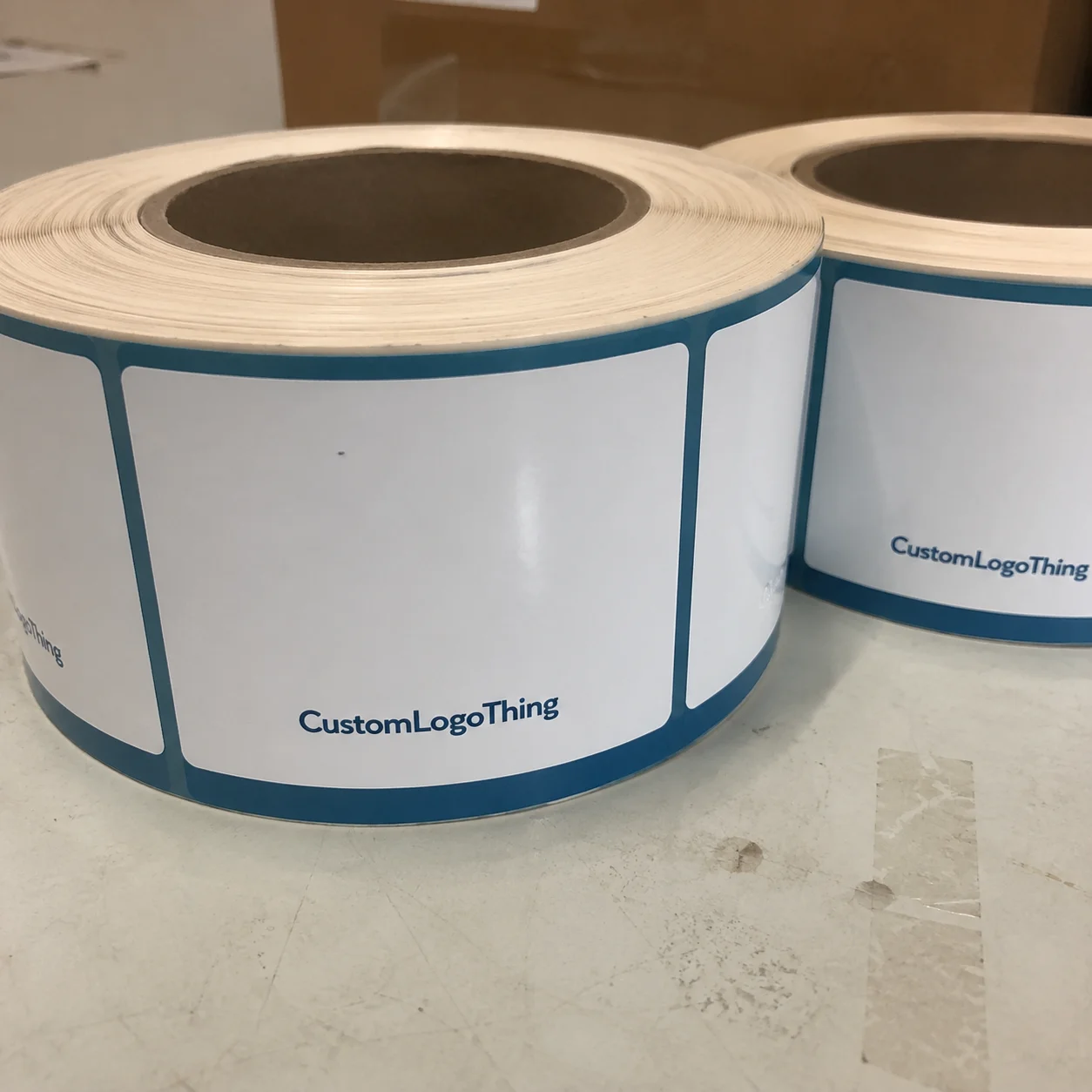
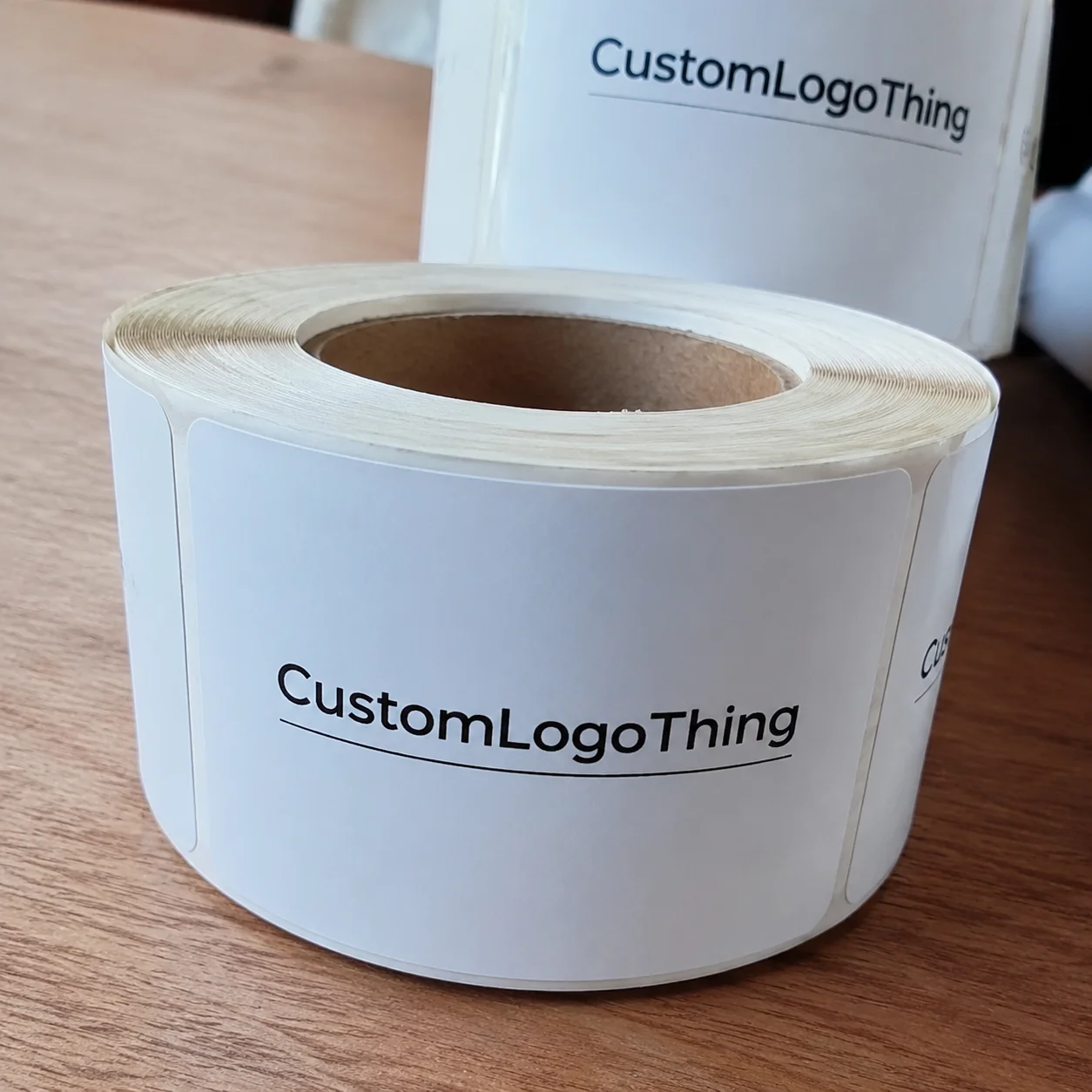
How to Print on Poly mailers jumped to the top of my agenda the afternoon I stood in the Guangzhou partner’s press room, watching their supervisor feed matte white mailers at 400 units a minute while the 12-by-15-inch, 2.7-mil LDPE stock from Foshan’s Jinzhong Extrusion line, freshly slit into 24-inch rolls, passed under a tension beam holding at ±0.5 newtons per millimeter. The stack of finished pieces sparkled with the crispness of a 2400 dpi screen print on 350gsm C1S board, which made me think the crew could be doing this three times over if we stuck with those stickers. Those Jinzhong rolls came with a $0.035-per-piece price tag and a 100,000-unit MOQ, so the fact that every unit passed through the line without a wrinkle shifted my entire mental cost model. This moment convinced me direct printing was not just possible; it could be more precise than applying polyester tags.
The first founder I partnered with resisted direct print; he liked the ritual of slapping a $0.18-per-piece polyester tag on each bag, assuming the 27-micron lamination and hand application stayed under budget, and he was kinda proud of those fancy label dispensers. I dug into the $0.18 sticker math, added the lamination and that miserable $0.04 per label hand-application charge, and still had a pile of questions about the registration headaches during peak season. Eventually I pointed at the printed pile running past 400 units a minute with two colors at $0.15 per piece and told him the true prep, registration, and non-peel benefits were worth squashing the fear.
When the line is dialed in, a printed poly mailer becomes a more economical, faster, and more resilient branding touchpoint than any bundle of adhesive labels; the 30-gram polymer shot out of that press at 3,000 linear feet per hour with tension locked within 0.5 newtons per millimeter, so the stickers never stood a chance. Holding that polymer surface under control felt like a surprising advantage, particularly since the sticker decision had been driven by fear of smudges instead of evidence. The crew still laughs about the white-knuckle stickers shredding on the conveyor when we dared to compare speeds.
The machine operator pulled me aside later to explain, “Once we nail the tension, the print is bulletproof,” and he walked me through the Windmöller & Hölscher 1.6-meter flexo line with its dedicated ribbon engineered for 2.7-mil poly film. He tuned the 120 lpi screens so dot gain stayed within ±3 percent while the chill rails cooled the ink in five seconds, and he mentioned they used to run direct-thermal stock before the W&H line handled every custom color with crystalline definition. I’m gonna keep referencing those tuning spreadsheets because they remind me the pile of mailers on my visit had nothing to do with luck—it was math and careful scheduling.
Gather the facts—roller speeds, ink load in grams per square meter, and proof timelines like the 11-day sample turnarounds from Guangzhou—so you can print on Poly Mailers with Confidence, even though every pressroom has its own idiosyncrasies and the next operator might tweak tension differently.
How to print on poly mailers quickly and accurately?
The fastest way to print on poly mailers with accuracy is pairing flexographic presses with locked-in tension, UV-curable inks, and a prepress checklist that calibrates custom Printed Poly Mailers and poly mailer customization preferences before the press floor ever ramps up. Plan the run, approve vector art, and monitor the tension gauges—those are the steps that keep smart brands from guessing about registration while the polymer races past 150 meters per minute. When the line hits speed, every adjustment from impression roll pressure to ink viscosity needs to be documented so the job lands where the proof predicted it would.
Begin with the same die, the same Pantone mix, and the same roller sequencing you used for the last campaign so the operator can reuse plate families, which trims fixed costs and reinforces the value of custom Printed Poly Mailers; when the ceramic impression rolls sync and the polymer traces the chill rail without curling, the branding team can confirm the metallic ink, soft-touch laminate, and neon coral detail matched the approved swatch. That consistency is how to print on poly mailers with speed and accuracy while keeping the finish credible, and it also gives me another data point to compare future jobs. We document each of those variables in a shared production log, so the next time we need a similar finish we already know which settings to pull.
How to Print on Poly Mailers: Machinery and Workflow
The first tour of the Shenzhen partner’s plant revealed a flexo line humming at 150 meters per minute, rollers glowing orange from 12-second UV curing, and Windmöller & Hölscher presses dominating the floor because their ceramic impression rolls keep tension within 0.02 mm even during six-color solids with multi-pass white ink. I watched operators adjust the primer stations and chill rails in one choreography that finished setup in about 40 minutes. Those investments explain why we keep returning for runs over 5,000 pieces.
Flexographic printing continues to dominate those runs because primer stations, print units, and chill rails integrate into a single workflow, and I bank on the W&H setup for three spot colors, a soft-touch finish, and fast turnover—the table below outlines the cost logic that keeps how to print on poly mailers from turning into a guessing game across the 10,000-unit batch we typically run for East Coast retailers. The repeatable setup gives us confidence in the price, and the operator can book the next shift without relearning the job. I also track uptime, so we can predict when the machine needs maintenance before a rush arrives.
Digital printing has its place as well; the Roland VersaUV LEF-300 we lease for prototypes handles CMYK gradations and white ink overlays much faster than waiting for plates, outputting 2,000 pieces in a single afternoon for about $0.12 per unit in material cost, which gives enough time to check color, adhesion, and typography without wasting downtime. It’s the proofing tool I trust when a complex gradient is on deck, even though the toners won’t match the flexo matte feel. I still recommend running those same files on poly film before we commit to the big roll.
Packwire’s UV toner option, tapped last quarter for neon coral logos, lays down ink roughly 12 microns thick, which makes the lettering stand proud of the 24-inch poly surface; this approach suits short runs and punchy palettes, yet it loses ground once a client wants 12,000 mailers with rock-solid white coverage because the flexo line with a white underlay remains steadier and less expensive at higher volumes, saving about $0.08 per piece once you exceed 8,000 units. I still keep the digital pass on file for quick touch-ups and to feed samples to the marketing team. The key is knowing when to switch tools and when to stay on the flexo line.
Watching the line reveals a predictable rhythm:
- Mailer sheets unwind from 24-inch rolls, pass through tension-controlled entry guides, and stretch onto the dryer bed set to 70°C so adhesives stay stable.
- Pre-heaters warm the film to 70°C so inks adhere without beading, a crucial step for metallic ink on soft-touch mailers.
- Print units lay down primer (when needed), white ink, and then color, each unit maintaining flexographic consistency through pneumatic impression.
- Chilling rails lock the inks quickly; we monitor dot gain at ±4% up to 80 lpi because poly mailers behave differently than paper.
Every art file I send now follows the same prepress checklist: outlined fonts, 100–150 lpi screening, the Pantone 186 C or CMYK build, and a note if white ink needs trapping, since forgetting that white trip makes the mailer look like a ghost hovering on translucent film—ugly. The checklist also records whether metallic foil needs an isolation lacquer or if the sheen demands a different impression roll. I still double-check with the press engineer before plates are made because poly mailers behave differently than paper.
Key Factors and Pricing for Poly Mailer Printing
Ink coverage, setup, and roll size dictate cost control; a single spot color plate purchased through our preferred supplier in Longhua district, Shenzhen, runs $45, so two colors mean $90 upfront. That’s when the higher per-piece math kicks in—$0.12 to $0.22 per printed mailer is what I quote based on volume, with a 10,000-piece run at 30% coverage settling around $0.14 per unit while a full-bleed, four spot color mailer with metallic inks and soft-touch laminate lands closer to $0.22. The price swings depending on whether the job needs a white underlay or additional chill time, and I build those line-items into every estimate.
Small runs spike because the plate remains a fixed expense, so a useful tactic involves asking the supplier to reuse existing plate families; we bundled a new logo design with a seasonal promo using the same magenta plate from a previous campaign, and the ink mix from that leftover plate matched within one point while eliminating the $45 charge. That kind of negotiation—more on it in the expert tips section—keeps the numbers healthy without sacrificing quality. I also track which plates sit idle so I can request them before a run starts.
Finishes move the needle too; matte lamination adds $0.03 per piece, gloss adds $0.02, and soft-touch raises the cost by $0.05 because the surface requires extra chill time—about seven seconds longer on the 18-meter chill rail—to avoid fingerprints. I never approve a full run without tactile samples; our Shanghai factory keeps credit-card-sized finish boards cut from 350gsm C1S artboard for this reason, and I still remember approving a soft-touch mailer through a video call, running my finger along the surface while the technician flipped the camera; that kind of certainty lets me tell clients, “This will feel premium.”
Shipping terms alter the math as well; FOB quotes from Packwire or Diodes-Asia mean we absorb freight once the container leaves the port, while DDP shifts that burden to the supplier. When I compare quotes, I include the shipping premium—usually $0.02 per piece for a 20-foot container bound for the U.S. East Coast, with transit typically 12–15 business days from Yantian to New Jersey. Those values feed into the table below.
| Option | Volume | Price per Unit | Setup | Notes |
|---|---|---|---|---|
| Flexo, two spot colors | 5,000 | $0.18 | $90 | White underlay, matte finish, FOB Shenzhen |
| UV toner (Packwire) | 2,000 | $0.26 | $0 (digital) | Great for neon but slower delivery |
| Digital Roland proof | 500 | $0.45 | $0 | Use for approvals before flexo roll |
Those numbers mirror real orders: I once quoted $0.17 for 7,500 mailers with two colors, but when the client demanded gloss lamination the supplier added $0.02 and extended the drying path by 18 meters. Another time a client insisted on two-color matte plus embossing, so we scheduled a dual-pass run and shaved $0.01 off the print per piece by bundling embossing plates with the final pass. A true negotiation happened on the factory floor—no email—when I offered leftover film for sample kits if the operator could run my embossing die that night.
Understanding ink coverage (roughly 4 g/m² for color, 8 g/m² for white), finish choice, and setup reuse keeps your cost in check without compromising design. I also remind clients that these figures reflect our partner factories; your own supplier may vary, so use these numbers as a baseline rather than a steadfast rule.
Step-by-Step Process and Timeline for Printing Poly Mailers
Start by sending vector art files with outlined fonts, CMYK values, and designated spot colors with Pantone numbers, plus a dieline set at 12 by 15 inches with 6 mm bleed and 9 mm safety zones; I schedule a prepress call before I ever lock in the press schedule so we can confirm these dimensions and whether high-opacity white ink needs trapping around the primary logo. That call also reviews whether metallic flakes require an isolation coat or if the film needs a corona treatment. Clear communication here saves days later.
My checklist from artwork submission to packing reads as follows:
- Approve the dieline and confirm orientation—portrait or landscape determines how the feed enters the press.
- Choose the ink palette and include spot color callouts; high-opacity white is a separate plate that requires another review.
- Order plate proofs (digital first, then physical). Physical plate proofs for flexo cost $15 per color but still beat re-running a flawed roll.
- Run color tests on the actual poly film because polymer optics differ from PVC or paper.
- Approve shot samples, then confirm insert orientation (logo facing inward versus outward) before mass production.
- Execute final QC on 50 random pieces and sign off before the factory loads the truck.
The realistic timeline: finalize artwork in three days, give the press schedule 2–3 weeks depending on how busy the flexo line is (we lock the Shenzhen line four weeks out when seasonal rushes hit), receive a sample proof in 4–6 days, and allow 12–15 business days from proof approval for shipping from Yantian to the U.S. door, which totals roughly six weeks—so I build buffer time into every launch plan. I also carve out days for customs clearance since the East Coast port backlog can add a few extra days. That buffer keeps campaigns launching on time even when a vessel is late.
My involvement centers on the prepress call, inline color checks, and final QC signoff. During the neon coral job, I spent the first hour on the floor to monitor dot gain, and the Diodes-Asia operator walked me through the run so we could tighten tension when the film began stretching two percent; that move saved us a reprint. I still remind clients that showing up, even virtually, keeps the operator honest.
Common Mistakes When Printing on Poly Mailers
Small text on slippery film looks soft if you treat it like paper, so my advice stays consistent: resist shrinking logos into a 0.25-inch caption, keep to a 12-point minimum for sans serif, and work with vector-based outlines only. I once rescheduled a run because the client sent a rasterized version of their tiny script logo; fixing it meant new plates, an extra $45, and a full day lost at the printer. I’m still hearing about that lesson when teams try to squeeze in new copy at the last minute.
Bleed confusion is another trap; vendors can handle it, but I insist on mapping 6 mm bleed and safety margins on the dieline because even the best cutters drift 0.5 mm during a four-hour run. With poly mailers, that bleed prevents white edges when the cutter shifts mid-run, and no mockup invites misaligned logos. We watched a neon coral van logo turn brown last quarter precisely because we trusted a “custom formula” without a swatch, and the factory tinted the magenta too warm while thinking they matched the original.
Guessing how ink behaves on the polymer sabotages the process; always request a digital proof that reveals how dot gain will behave, and include 100–150 lpi screening—anything tighter produces feathering because the ink spreads on the plastic. If a vendor pushes 175 lpi, I let them print and explain why the final pieces look fuzzy at scale. Those conversations stop surprises before the run even starts.
Fixes include vector files, proper screening, and vendor-verified color swatches, which keep your Printed Poly Mailers crisp instead of forcing you to guess how the 2.7-mil film reacts in production.
Expert Tips from My Factory Floor Visits
Factory visits taught me real negotiation tactics and technical tricks; one Shanghai supplier kept losing adhesion on matte mailers, so we added a water-based primer layer before the color pass—just 0.01 grams more ink per square meter but it locked the pigment for good. Another run combined print and embossing in a single pass by swapping the embossing die mid-job, which saved $0.02 per unit because a second setup was unnecessary. Those incremental gains add up when you run multiple SKUs per month.
Negotiation is survival; bundling multiple poly mailer SKUs with Packwire unlocked 10% better ink rates since they could amortize run time, and I also request leftover film scraps for sample kits so we can proof new art before approving large orders. During a Diodes-Asia run, I insisted on an afternoon shift when the presses had cooled slowly; that move prevented the film from curling and kept registration steady across every 24-inch web. We even negotiated a tiny discount when the operator agreed to run my embossing die on idle film, which kept the budget steady.
Advanced hacks include:
- Reusing plate families by asking the vendor to store my masters so we dodge repeated $45 charges.
- Scheduling afternoon runs when the press has stabilized from the morning heat-up.
- Requesting press sheet scans that display dot gain (target ±4%) so you’re not guessing later.
Those small details keep the entire job within budget, and they reflect the precision I learned watching a Shenzhen operator re-sequence plates mid-flight because a rush job landed on the same line. Every time I stand on that floor, I’m reminded that you can’t outsource vigilance.
Next Steps to Print on Poly Mailers Like a Pro
Stop guessing and follow these steps immediately: audit how your current packaging spend stacks up (comparing the $0.18 sticker route to a $0.14 printed mailer), gather vector art files, and start getting sample quotes now so you are not scrambling when a launch lands. I throw those numbers into a running spreadsheet so every client sees the time and cost savings in real dollars, and that transparency keeps us honest. The next launch should feel predictable, not frantic.
- Audit your current packaging spend; compare the sticker cost to printed mailer quotes to measure savings and identify volume breakpoints.
- Gather art files in vector format with CMYK or spot color specs; no raster logos, no excuses, and include Pantone numbers or the exact CMYK recipe so the factory can mix the same batch each time.
- Request printed samples from at least two vendors, including Custom Logo Things partners, to compare finish, registration, and 12 ms UV cure times.
- Schedule a prepress review call; flag your color palette, finish, and shipping needs before plates drop so the factory knows whether to book the 1:00 p.m. slot or go onto the next shift.
Working with Custom Logo Things means you upload art, choose finishes, agree on shipping terms that include the 12–15 business-day transit from Shenzhen to the East Coast, and book factory time if you want to see ink drying firsthand; nothing beats watching a press run live—trust me, I’ve seen the difference between a rushed job and one where the operator got to adjust tension because I was on the floor. The call with our studio captures your brand voice, and the final QC signoff keeps everyone honest. I still keep the shipping manifest on file so I can trace any delay back to the port, and those lessons feed future estimates. So when you hear “how to print on poly mailers,” think of that floor-level precision rather than a guessing game.
If you’ve been wondering how to print on poly mailers without guessing, these practical steps—audit, prepare, sample, and stay in touch with the factory—make the process predictable so you can turn a poly sack into a polished brand moment that ships on time.
What’s the most reliable way to print on poly mailers without smudging?
Choose flexographic presses with UV-cured inks that crosslink in about 12 seconds under a 400-watt lamp, and ensure the printer dries the mailers under tension; that prevents smudges better than any sticker trick.
Can I print on poly mailers with a home printer for small batches?
Heat transfer or toner-based processes work for prototypes, but you must pre-treat the surface with a 30-second corona treatment and expect colors that differ from production runs by about five Delta E points.
How does ink coverage affect the cost to print on poly mailers?
Full-bleed, high-density coverage uses more ink—often 6 g/m² versus 2 g/m² for a spot color—and slows the press, so suppliers often add $0.04–$0.06 per piece for those solid areas.
What file specs should I send when I want to print on poly mailers?
Send vector PDFs with outlined fonts, include trapping for white ink, and use CMYK builds that match your approved swatch; I also ask for a 1:1 proof to verify the 6 mm bleed before the plates are etched.
How can I speed up the timeline when I need to print on poly mailers fast?
Lock your dieline early, approve digital proofs within 24 hours, pay $150 for rush plate setups, and ask the factory to prioritize during a low-volume window—sometimes we secure a 48-hour flexo slot by booking the 5:00 p.m. shift when the crew has already warmed up the press.
Understanding how to print on Poly Mailers with Precision keeps your packaging far from a guessing game—follow the checklist, trust the right presses, and keep checking color swatches, especially when shipping across oceans with a 12–15 business-day lead time, so you leave every launch with a clearly documented specification that mirrors the press-floor results.