Buyer Fit Snapshot
| Best fit | Start A Subscription Box Company with Packaging projects where brand print, material claims, artwork control, MOQ, and repeat-order consistency need to be specified before quoting. |
|---|---|
| Quote inputs | Share finished size, material target, print colors, finish, packing count, annual reorder estimate, ship-to region, and any compliance wording. |
| Proofing check | Approve dieline scale, logo placement, barcode or warning zones, color tolerance, closure strength, and carton packing before bulk production. |
| Main risk | Vague material claims, crowded artwork, missing packing details, or unclear freight terms can make a low unit price expensive after revisions. |
Fast answer: Start A Subscription Box Company with Packaging: Board, Finish, Dieline, and Unit Cost should be specified like a repeatable production item. The safest quote records material, print method, finish, artwork proof, packing count, and reorder notes in one written spec.
Production checks before approval
Compare the actual filled-product size with the drawing, then confirm tolerance on folds, seals, hang holes, label areas, and retail display edges. Reserve space for logos, QR codes, warning copy, and material claims before decorative graphics fill the panel.
Quote comparison points
Review material grade, print process, finish, sampling route, tooling charges, carton quantity, and freight assumptions side by side. A quote is only useful when the supplier can repeat the same color, closure quality, and packing count on the next order.
If you are figuring out how to Start Subscription Box company, accept this early: packaging controls margin more than product concept alone. A clever idea can look irresistible in a deck, then quietly evaporate after the first shipping cycle because the carton is too tall, the contents shift, or the premium finish collapses under real parcel handling.
That is why I treat packaging as part of the offer, not a decorative afterthought. I have watched founders obsess over colors for months while guessing on insert dimensions, then wonder why their churn spikes by cycle three. The carton geometry, board grade, inserts, labels, and dimensions influence cost, damage rates, assembly speed, and whether a subscriber actually renews.
For a brand like Custom Logo Things, that mindset flips the sequence. You lock structure first, then print. You lock shipping cost first, then premium finishing. A pretty box might improve first impressions, but a functional box keeps the business alive. Those two priorities never fully align by accident.
If you are mapping how to Start Subscription Box company, map the first three shipments before your first public ad. The first shipment tells you you can ship. The second tells you if your process is repeatable. The third tells you whether this is a scalable recurring model or a lucky launch spike.
What a Subscription Box Company Is, and Why Packaging Wins or Loses the Sale
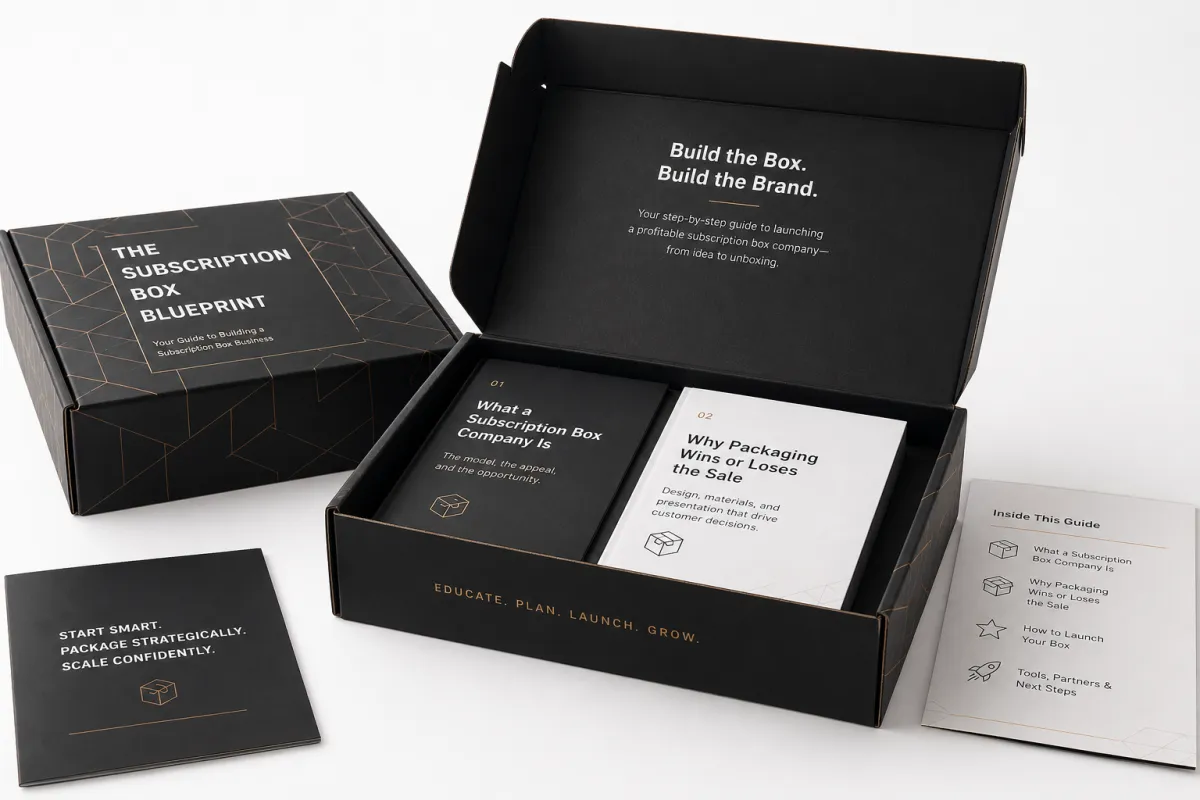
A subscription box company sells ongoing expectation, not one-off excitement. Customers buy into a promise of consistency: every cycle should feel at least as considered as the last one. Miss the promise once, and trust falls fast. Damaged, late, or cramped deliveries do more than hurt reviews—they trigger a direct revenue drain through churn and support costs.
Most people ask how to start subscription box company like it begins with theme selection. It doesn’t. The engine is operational design: sourcing, packaging fit, fulfillment throughput, postage strategy, and repeatable order cadence. Theme matters, yes. But theme without a stable system is like a fast car with no brakes.
Picture the first forty-five seconds when a customer opens the parcel. Outer mailer, lid, insert, contents, and tactile impression happen before they even evaluate product quality. That first sensory moment heavily influences whether they keep the subscription or hit cancel before the next cycle. A clean structural design gets shared. A cramped one gets tagged and forgotten.
Many teams get seduced by style and forget that every extra millimeter can become a hidden cost center. A slightly larger footprint can push you into a higher dimensional-rate band while barely changing weight. That means the same order becomes materially more expensive at scale. If you are looking at how to start subscription box company, start with inner dimensions, then refine aesthetics.
Packaging sets four forces at once:
- Shipping cost - larger cartons can trigger higher dimensional pricing far faster than weight-based costing suggests.
- Damage rate - weak structure turns ordinary carrier handling into replacement churn.
- Brand signal - the arrangement and structural integrity often communicate quality more than graphics.
- Repeatability - standardized assembly reduces errors and keeps replenishment smooth.
From a practical operator’s perspective, early-stage winners are often quietly boring on first glance: standardized size, stable inserts, clear orientation logic, and materials chosen for durability first. Then you add visual refinements where they add true perceived value. Overbuilding finish while underbuilding function is a costly shortcut.
A subscription box is not a product in a carton. It is the carton, pack-out process, transit behavior, and margin stack that determines if the model scales or dies after initial demand.
This is why the core question how to start subscription box company is as much operations as story. A brand idea can shift in days. An altered mailer spec after launch usually takes weeks and budget to correct. It can be done, but nobody wants the first six months to pay for it.
That distinction matters because founders asking how to start subscription box company need both creative intent and pack-line discipline. One earns attention, the other earns recurring revenue.
How a Subscription Box Company Works From First Order to Reorder
On paper, the loop looks tidy: customer subscribes, payment occurs, inventory is reserved, items get packed, shipped, received, and renewed. In reality, supplier delays, theme swaps, and inventory mismatch inject friction everywhere. Success depends on whether this sequence can run repeatedly with minimal rework and constant quality.
That repeating loop is why how to start subscription box company cannot sit separate from fulfillment design. A one-time campaign launch can tolerate a few manual fixes. A subscription model compounds small inefficiencies across hundreds or thousands of shipments and multiple cycles.
Anyone researching how to start subscription box company should test pack-line behavior under pressure. Misaligned inserts, inconsistent carton sizing, and a long learning curve at staffing each add to labor drag, then to delays, then to refunds and churn. In the end, packaging and process create your retention curve as much as creative content does.
Most workflows move through these stages:
- Sign-up - subscriber selects plan length, cadence, and optional variants.
- Billing - recurring payment schedule is set and confirmed.
- Allocation - SKU quantities are reserved for the next shipment window.
- Pack-out - insert, protection, and products are assembled to spec.
- Fulfillment - labels, sorting, and carrier handoff execution.
- Delivery - parcel moves through transit reality.
- Unboxing - customer checks value against expectation.
- Renewal decision - customer confirms trust by staying or exits.
That looks clean. Reality adds real-world exceptions: mixed product dimensions, fragile SKUs that demand extra protection, seasonal spikes, and forecast variance. One supplier delay can throw this entire chain off by one cycle.
Packaging suppliers shape your baseline risk profile. Fulfillment teams control execution speed. Carriers finalize the economics whether the customer loved your story or not. Because of this, a packaging partner is not merely creative support; it is a core operations node. If you want an example of how that partnership should feel, review how About Custom Logo Things positions structure and shipment quality before visual embellishment.
Carrier pricing is driven by weight, zone, and dimensional thresholds. In many domestic parcels, a tiny change in length, width, or height can raise your cost per shipment with no visible change in product value. That is why I am a big fan of ISTA-style testing discipline: verify real handling assumptions before committing to volume. A single failed shipment wave can erase weeks of good retention metrics in one weekend.
If your model for how to start subscription box company is supposed to survive month three, repeatability has to beat novelty. A hero box packed by one founder can feel great at launch; recurring fulfillment can only be sustained by a process your team can perform at scale.
Subscription Box Company Costs: Packaging, Fulfillment, and Margins
Passion does not protect margin; math does. If you are serious about how to start subscription box company, build a full landed-cost model before any major order. Product cost is only one line. Packaging, packing labor, storage, shipping, and replacement support can all outrun product spend once volume starts.
Founders often lead with product selection because that is exciting. More often the critical decisions are structural: carton footprint, insert strategy, shipment density, and packing labor profile. Those decisions define whether recurring revenue becomes real margin or just recurring turnover.
A typical cost stack includes product sourcing, custom or blank mailers, inserts, void control, labeling, storage, fulfillment labor, postage, and return/replacement handling. One extra inch in height can increase shipping bands. A weaker box can increase replacement frequency and quietly nullify any saving from lower sheet-stock costs.
Here is a concrete comparison from real production cycles: a custom box priced at $1.10 seems cheap until it increases billable dimensions enough to add $1.50 in freight per shipment. At 2,000 monthly units, that is a $3,000 swing before profit is calculated. This is why how to start subscription box company must be planned in landed cost, not aesthetic aesthetics.
| Packaging Option | Typical Unit Cost | Protection | Best For | Main Tradeoff |
|---|---|---|---|---|
| Plain stock mailer box | $0.40-$0.85 | Moderate | Lean launches, light products, pilot runs | Less brand impact, fewer print choices |
| Custom printed mailer box | $0.85-$1.75 | Moderate to strong | Most subscription brands shipping direct | Higher setup cost and longer lead times |
| Rigid setup box | $2.25-$5.50 | Strong | Premium gifting, keepers, high-perceived-value products | Higher material cost, slower line speed |
| Corrugated shipper with insert | $0.95-$2.10 | Strong | Fragile products, mixed SKUs, frequent transit handling | Potentially higher labor without good insert logic |
Pricing is never universal. Minimum order quantity, print coverage, board class, and insert complexity all push unit cost. A 5,000-unit run behaves differently from 500 units because setup amortization and tolerance risk both shift.
Dimensional pricing is the silent killer. A box can look okay in a mocked-up quote yet jump into a higher band if one side length crosses a threshold. Carriers read dimensions objectively. So should you.
When I build a margin target, I start with gross margin floor before marketing spend. In many subscription models, teams aim for 40–60% gross margin on direct costs, then absorb acquisition, support, and platform costs only if churn assumptions hold. But this is a planning range, not a rulebook. Some health or beauty models run leaner with add-ons and higher retention, while niche collectible models run slightly higher unit economics.
To improve margins with how to start subscription box company, operational controls usually matter more than one major branding win:
- Use the smallest safe carton for each SKU profile.
- Standardize insert families across cycles and avoid one-off redesigns.
- Approve dielines, materials, and print details before production starts.
- Run freight and crush tests before placing mass orders.
- Include replacement labor and return handling in your baseline cost model.
For brands with sustainability goals, paperboard and reduced filler are often strong moves when they are tied to handling efficiency. If you do it only for optics, costs can spike without helping operations. Do it because it improves structure and transportability, then it supports both story and margin.
One expensive oversight I keep seeing: teams finance premium embossing while ignoring a small weight increase. A few extra grams can produce a disproportionately higher annual freight load, and that mistake compounds every cycle. If you are learning how to start subscription box company, every material choice should connect to a measurable margin or retention effect.
How do you start a subscription box company?
If you want a practical entry into how to start subscription box company, plan backward from your promised first shipment date. Define launch timing first, then map dependencies: Packaging Lead Time, samples, supplier lock, fit testing, and fulfillment readiness. It is the cleanest path I know for avoiding blind spots in your first public cycle.
A realistic timeline looks more like this than you think:
- Offer design and feasibility - 1 to 2 weeks
- Sample rounds - 1 to 3 weeks
- Artwork approval and dieline finalization - 3 to 7 business days
- Packaging production - often 10 to 20 business days after sign-off
- Pilot pack-out run - 3 to 7 days, depending on complexity
- Carrier and transit testing - 1 to 2 weeks if revisions are needed
- Public first shipment - only after fit, protection, and process checks pass
- Monthly churn - who leaves after each shipment.
- Damage rate - packages arriving compromised.
- Average pack-out time - labor per completed package.
- Dimensional weight lift - shipping cost shifts tied to size changes.
- Refund and replacement ratio - margin erosion point tied to quality failures.
- Too many SKUs - each SKU adds complexity in sourcing, inventory, and assembly variance.
- Under-rated board strength - carton failure becomes a recurring support issue.
- Too much internal volume - oversized packaging raises freight and weakens perceived quality.
- Last-minute decision-making - it creates reprints, fulfillment fixes, and missed test windows.
- No pilot run - small misses become repeated operational defaults.
- Over-complicated inserts - pretty logic that slows packers does not scale.
- Create one end-to-end sample using final product weight and dimensions.
- Approve board grade, insert logic, and carton depth under real assembly conditions.
- Collect carrier quotes across three providers and review dimensional assumptions.
- Run drop/crush/vibration checks with actual goods.
- Calculate landed cost including packaging, labor, freight, and replacement handling.
- Execute a pilot shipment before full public release.
- Track first 30 days of churn, damage, and pack-out time before expanding.
Concept speed matters. Physical system speed does not. If you rush the pack architecture, you usually pay through reprints, packaging waste, and service escalations. Move quickly on messaging, but validate hardware and handling before scale.
For a founder in the trenches, this is where your budget and your build sheet finally meet. A small mismatch in box depth or insert clearance can add direct labor and freight to almost every pack. That is exactly how recurring profitability gets squeezed.
Sampling is where theoretical decisions break open. Real items reveal pressure points you cannot detect with mockups: corner shift, top-heavy balance, fill displacement, and awkward closure. If your real product can only be packed with constant improvisation, the design is not launch-ready.
Never rely only on foam stand-ins. Product density changes handling behavior. Bottles roll. Rigid items create point pressure at corners. Glass shifts under vibration in a way paper never replicates. The box that looked stable with samples fails when true inventory enters the line.
Practical test discipline helps more than expensive lab tests. A six-point cycle—drop, corner compression, stack pressure, vibration simulation, road handling, and seam integrity—can expose 80% of likely failures before launch. Yes, it takes time, but less time than firefighting a broken repeat. If you are asking how to start subscription box company, test like your fulfillment margin depends on it, because it does.
Run a controlled pilot. Keep the customer group small, track pack-out minutes per box, damage outcomes, and unboxing comments unfiltered. That data tells you whether your process is ready to become routine or still a prototype in disguise.
Need a concrete packaging-spec sanity check before placing larger orders? A disciplined supplier discussion around structure, board performance, lead times, and revision turnaround is a better investment than a prettier PDF package. That is why serious operators use partners like About Custom Logo Things as a barometer: direct answers, realistic tradeoffs, and explicit assumptions beat hype.
The practical path for how to start subscription box company is simple: schedule backward, test with real products, run shipping checks, and leave room for one controlled redesign cycle. It is unglamorous. It is also what keeps the business out of triage by month two.
Key Factors That Make a Subscription Box Company Profitable
Subscription profitability is usually the result of dozens of tiny controls, not one lucky idea. If your goal is durable growth, focus on the variables that keep renewal high and cost low across cycles.
The first lever is retention. One-time conversion matters. Six-month retention matters more. A reliable package makes the “wait, what’s coming?” moment predictable in a way marketing alone never can: secure structure, clear product placement, and easy unboxing.
The second lever is offer architecture. If you offer add-ons, your carton must accommodate them without becoming a custom mess every cycle. If a one-off bonus breaks packing speed, it is a design constraint, not a brand advantage.
The third lever is pack-out time. Forty-five seconds versus two minutes sounds small until you multiply it. At 1,000 boxes, that difference is over 25 extra labor hours. It also compounds during peaks, when one weak insert design can become a bottleneck all month.
The fourth lever is consistency. Subscribers build habits around your system, not only your catalog copy. If print and internal layout hold steady while themes rotate, the process feels trustworthy. If everything changes every cycle, people stop knowing what they are paying for.
If you are validating how to start subscription box company from a numbers standpoint, track these metrics from week one:
An overlooked factor is post-unboxing utility. Boxes that customers keep for storage, repurposing, or gifting after the first cycle extend shelf-life for your brand. That is usually a function of structure and handling quality, not expensive interior decoration.
Let early customer feedback shape your structure, not mood-board revisions. If a revised insert cuts packing time by 20%, keep it. If a SKU creates repeated stack failures, change the SKU sizing or insert spec. If lighter packaging performs the same, migrate to it and retain savings. How to start subscription box company efficiently means simplifying what the team must execute.
That evidence-first approach is the difference between a box that looks premium once and one that supports subscription economics all year. If structure, mass, and carrier profile improve together, you gain margin and trust at the same time.
Sustainability can be operationally strong, too. If the right choices reduce filler, improve fit, and protect product, they can also reduce freight. If they do not, keep reading that as a branding-only move and budget separately.
Common Mistakes and Expert Tips for New Subscription Box Brands
Recurring fulfillment fails less from weak concepts than from untreated complexity. If your first six weeks look busy and your first six months feel broken, you probably optimized for a launch, not for a repeat cycle.
Founders often assume more customization always equals higher value. In many real operations, the opposite shows up in labor logs and support tickets.
Tip one: design for pack speed. A clean mailer with controlled structure usually outperforms a complex rigid build at scale, unless your category truly needs strict protection. Fragile products need targeted support, not decorative fill that hides problems.
Tip two: run pre-production checks for crush, drop, and vibration. A practical script includes corner drops, stack pressure simulation, and route-style handling. If it fails these, it will likely fail in real delivery, and your brand absorbs the cost.
Tip three: standardize insert families where possible. One robust insert system across campaigns reduces training burden and reduces error rates. It can feel less creative, but it keeps throughput healthier.
Tip four: secure a fallback spec. If your primary vendor misses lead-time or quality, having a prequalified backup protects cash flow and reputation. No one likes to be boxed in by one supplier when launch approaches.
Tip five: force your marketing claim through logistics before publishing it. If the box reaches the customer damaged, your messaging can be perfect and still ring false. Customers remember what actually arrives.
Ask this before each major decision: can this package survive realistic transit, pack fast at volume, and still represent the value promise? If any answer is no, fix the design before launch, then test again.
That checkpoint should become a habit, not a one-time phase. Design compromises at launch become recurring costs for as long as that packaging remains in use.
Supplier conversations should be explicit and technical. Ask for board class, corner strength assumptions, approved tolerances, quality controls, and true lead-time windows. A serious partner should discuss tradeoffs directly, including what changes if volume shifts by quarter. That is the sourcing standard I expect from people like About Custom Logo Things.
How to Start Subscription Box Company: Next Steps to Launch Your Subscription Box Company
When you move from prep to launch, constrain scope first. A controlled pilot beats an oversized initial run every time. Your first launch should include verified shipping assumptions, one or two packaging iterations, and a cost model you can defend to yourself and to future investors.
If you are still deciding how to start subscription box company, the moment to be bold is not launch day. It is the week you force clarity on structure, labor, and cost.
Build one complete sample and test it honestly. Measure dimensions, weigh, photograph critical seams, and assemble with real inventory. If it looks good but is too heavy, that’s not a design opinion—that is a business signal. If fit is awkward, that is a process signal. If your team struggles to assemble it quickly, that is a labor signal. Catch these now.
Request at least three quote comparisons from carriers or fulfillment providers. One quote is a single data point, not a model. Compare by zone and service level. You will often find a slightly different carton strategy lowers cost more than a coupon can.
Pilot with a controlled audience—never your entire email list. A few dozen to a few hundred test boxes will still expose the failure modes: transit damage, handling time, feedback language around value, and return patterns.
If the pilot clears your operational gates, scale. If it does not, revise packaging and process before opening the floodgates.
Use a launch checklist to force disciplined decision-making:
That workflow is rarely flashy, but it is how how to start subscription box company survives beyond the honeymoon period. The real win is a system that can ship on time, keep boxes intact, and remain profitable after real support and freight.
Packaging design sets the finish line. Build from product needs, lock stable structures, and test before scale. A subscription business that survives month three is one that can repeat what it promised, month after month, without drama.
Clear takeaway: if you are starting today, do this this week—finalize three physical prototypes (custom, blank, and backup), run real drop and transit simulation on each, pick the lowest-cost option that meets zero-to-low damage at your target volume, and only then lock pricing and launch timing.
How much does it cost to start a subscription box company?
Costs vary by category and model, but the core cost buckets are consistent: product inventory, packaging, shipping, software, storefront tools, and the first fulfillment cycle. Lean operators can often begin in the low thousands when packaging is kept simple, print complexity is constrained, and the initial run is piloted tightly. Custom packaging usually raises upfront costs, yet it often lowers breakage and improves retention when structure matches product handling needs. For founders learning how to start subscription box company, the practical budget test is this: can the model stay profitable after packaging, freight, labor, and replacements are included?
How long does it take to launch a subscription box company?
A basic launch can take a few weeks if products and suppliers are ready and packaging specs are finalized early. Custom packaging, artwork approvals, and fulfillment scheduling often add meaningful delay. A safer timeline includes sample testing, at least one revision cycle, and a pilot shipment before full release.
What packaging do I need for a subscription box business?
You need a container system that matches product shape and weight, survives normal parcel handling, and supports assembly speed. Inserts, tissue, and void control should solve real handling risks, not just visual clutter. If shipping cost is a key constraint, lock size and weight assumptions first, then finalize branding.
Do I need inventory before I start a subscription box company?
In most cases, yes—you need enough inventory for realistic samples and a pilot cycle. A pilot run reveals packaging and fulfillment issues before your brand reaches a larger audience. Hold full inventory until packaging specs, carrier performance, and fulfillment timing pass practical validation.
How do I price a subscription box so it stays profitable?
Start with total landed cost: packaging, labor, shipping, platform fees, and expected replacement handling in addition to product cost. Then set pricing against a retention target, not a single-cycle margin target. Pay special attention to dimensional weight and pack-out efficiency, because those two variables can remove profit faster than your unit COGS.


