Buyer Fit Snapshot
| Best fit | Water Soluble Packaging projects where brand print, material claims, artwork control, MOQ, and repeat-order consistency need to be specified before quoting. |
|---|---|
| Quote inputs | Share finished size, material target, print colors, finish, packing count, annual reorder estimate, ship-to region, and any compliance wording. |
| Proofing check | Approve dieline scale, logo placement, barcode or warning zones, color tolerance, closure strength, and carton packing before bulk production. |
| Main risk | Vague material claims, crowded artwork, missing packing details, or unclear freight terms can make a low unit price expensive after revisions. |
Fast answer: Water Soluble Packaging: Artwork Proof, Packing Count, and Landed Cost should be specified like a repeatable production item. The safest quote records material, print method, finish, artwork proof, packing count, and reorder notes in one written spec.
Production checks before approval
Compare the actual filled-product size with the drawing, then confirm tolerance on folds, seals, hang holes, label areas, and retail display edges. Reserve space for logos, QR codes, warning copy, and material claims before decorative graphics fill the panel.
Quote comparison points
Review material grade, print process, finish, sampling route, tooling charges, carton quantity, and freight assumptions side by side. A quote is only useful when the supplier can repeat the same color, closure quality, and packing count on the next order.
What is water soluble packaging? It is packaging built to disappear on purpose, but only under the right water conditions. That sounds a little backward until you are looking at a detergent pod, a dusty chemical, or a process where one wrong pour can turn into a mess fast. In plain terms, what is water soluble packaging refers to a film, pouch, sachet, pod, liner, or wrap made from a material such as PVA or PVOH that dissolves in water instead of lingering as waste.
The confusion starts because dissolving, breaking apart, and biodegrading are not the same thing. A package can dissolve in water and still not biodegrade in soil. A biodegradable item can take its sweet time in a sink. What is water soluble packaging supposed to do, then? It should hold together during storage and transport, then release its contents or dissolve when exposed to the intended water temperature, agitation, and contact time. That is why you see it in laundry products, agrochemicals, industrial cleaners, medical dosing, and a few specialized containment uses where the package has to do more than just look neat.
I have seen first-hand how quickly the wrong assumption can blow up a project. A team once brought me a sample that looked perfect in a lab test, then it got sticky in a humid warehouse and started sticking to itself like cheap candy wrap. The product was fine. The handling conditions were not. That is the kind of detail that decides whether this format works or fails.
If your job is shelf appeal, a printed carton or conventional folded box may be the better fit. If your job is containment, measured dosing, or reducing direct contact with the contents, what is water soluble packaging becomes the right question to ask. The material is not magic. It is a controlled choice with real limits, and those limits decide whether the purchase saves money or creates a very polished problem.
What Is Water Soluble Packaging?
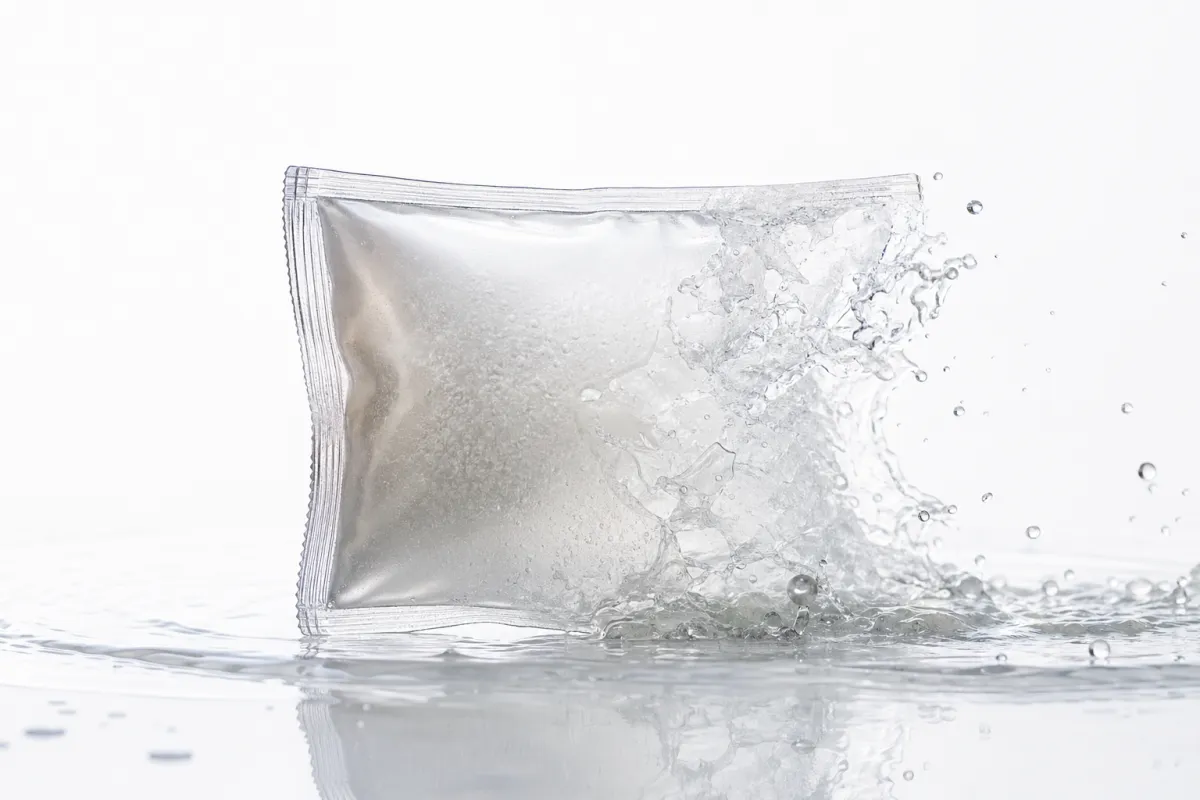
What is water soluble packaging, really? It is a water-sensitive film or structure designed to dissolve once it meets a target water environment. The most common material family is polyvinyl alcohol, usually abbreviated as PVA or PVOH. Not all film grades behave the same way. Some dissolve quickly, some hold longer, and some are tuned for a narrow temperature window. A supplier saying “fast dissolve” without a spec is giving you a vibe, not a measurement.
On a production line, what is water soluble packaging can show up in several forms: a small sachet for powder, a larger pouch for laundry detergent, a pod for a cleaning formula, or a liner that keeps a worker from touching a chemical directly. Unit-dose strips, dissolvable bags, and thin wraps also appear in workflows that value precision and cleaner handling. The shape depends on the fill weight, product state, sealing method, and whether the package has to survive a filling machine, a pallet stack, or a rough shipping lane before it ever sees water.
The package is not supposed to disappear because it picked up a little humidity in a warehouse. It is supposed to dissolve when the user puts it into the intended water condition. What is water soluble packaging good for? Usually for products that need accurate dosing, cleaner handling, or fewer touchpoints. It is a different animal from product packaging or retail packaging, where the outer structure has to survive repeated handling, shelf display, and customer inspection before anyone opens it.
The real test is not whether the concept sounds clever. The real test is whether your product, your warehouse, and your end user can live with it. A film that performs beautifully in a beaker can still fail if the brief ignores humidity, seal strength, or the temperature of the water used at the point of release. That is not a flaw in the idea. It is usually a missing detail.
Think of what is water soluble packaging as containment with a timed exit. It must be strong enough to hold the product, stable enough to ship, and predictable enough to dissolve at the right moment. That balance is why thickness, material grade, and seal pattern matter more than many first-time buyers expect.
What Is Water Soluble Packaging Used For?
What is water soluble packaging used for? The clearest answer is measured dosing in places where a cleaner workflow matters more than loose-fill packaging or scoop-and-pour handling. In consumer goods, that often means laundry pods, dishwasher tabs, cleaning sachets, or personal care formats that dissolve during use. Industrial products lean on it for detergent concentrates, disinfectants, seed treatment products, soil additives, and other unit-dose systems that should not be handled with bare hands.
Medical and laboratory environments use what is water soluble packaging for containment as well. Specimen transport liners, contaminated linen bags, and products meant to reduce exposure are common examples. The benefit is not just convenience. It is fewer touchpoints. If a worker does not need to tear open a bag and pour out the contents, the process gets cleaner and safer. That matters when the contents are dusty, caustic, allergenic, or simply unpleasant to handle.
What is water soluble packaging doing once it hits water? The answer changes with temperature and agitation. Warm water usually speeds things up. Agitation helps because moving water carries dissolved material away from the film surface. Cold water slows the process enough that a product can appear stubborn even when it is technically performing as designed. A formulation that looks effortless in a warm lab test may take a lot longer in a cold utility sink. That is the sort of thing that causes customer complaints if nobody warned them ahead of time.
Some operations are poor candidates. What is water soluble packaging good for in a controlled plant can become trouble in a wet warehouse, a humid shipping lane, or an open storage area with weak climate control. A carton sitting beside a loading dock in sticky summer air can soften film, wrinkle a pouch, or weaken integrity long before the customer opens the box. That is not a minor nuisance. That is a failed rollout with a very clear paper trail.
For brands, the upside usually comes from precision and cleanliness. What is water soluble packaging solves problems that standard plastic often creates: overpouring, residue, direct exposure to chemicals, and waste from torn or poorly measured packets. It can also support package branding by making the pack part of the product story instead of just the shell around it. The packaging is doing actual work, which is more than a logo can say for itself.
There is a reason buyers in cleaning and industrial categories keep asking what is water soluble packaging can replace. They want less handling time, fewer mistakes, and lower costs tied to leaks or contamination. If the use case is right, it can be cleaner than loose powder, rigid tubs, or refill systems that depend on every operator remembering the same routine. That kind of consistency is hard to fake.
How Water Soluble Packaging Affects Cost and Pricing
What is water soluble packaging going to cost? More than commodity plastic film, almost always. The better question is whether the higher unit price buys enough reduction in labor, mess, waste, or exposure to justify it. That calculation matters. A cheap film that tears, sticks, or dissolves too slowly is not cheap. It is a future headache with a lower quote attached. I have watched projects go sideways because someone chased the lowest number and forgot to count downtime. Not worth it.
Pricing depends on specific variables: film grade, thickness, bag size, print coverage, sealing method, and quantity. A plain unprinted sachet at volume will land very differently from a custom printed pouch with dense artwork and tighter tolerances. Add a moisture-barrier outer layer, a special seal geometry, or extra handling controls, and the price rises again. What is water soluble packaging worth is tied to the cost of the failure it prevents, not just the material on the line item.
For budget planning, these sample ranges work better as starting points than promises:
| Order Size | Typical Unit Range | What Drives the Price | Best Fit |
|---|---|---|---|
| Sample / pilot run, 500-2,000 units | $0.35-$0.90 each | Setup time, short-run converting, testing, limited economies of scale | Proof of concept, product validation, early market checks |
| Mid-volume, 5,000-20,000 units | $0.18-$0.42 each | Film grade, seal width, print count, bag size, fulfillment complexity | Launches, recurring replenishment, regional distribution |
| Larger production, 50,000+ units | $0.08-$0.22 each | Tooling efficiency, line speed, less waste, better material utilization | Established programs and repeat orders |
Those figures move around. A lot. What is water soluble packaging with heavy ink coverage and tight graphics can cost more than a plain pouch at the same volume. A larger format can push pricing higher too because the film has to hold strength across a bigger area. If the design calls for branded packaging with several color passes, the print cost belongs in the quote instead of in someone’s optimistic spreadsheet. Print never turns up free, which is annoying but true.
Hidden costs deserve attention. Storage controls can add overhead if the material needs a dry room or sealed cartons. Transit protection may require stronger secondary packaging. Testing can take time and money, especially if the product must dissolve under real water conditions rather than ideal lab conditions. If the first batch fails humidity checks, the replacement lot is not just a manufacturing line item. It becomes a schedule delay, a customer conversation, and sometimes a rework of the entire program.
If the lowest quote ignores storage, testing, and real-world handling, you are not saving money. You are just moving the bill to a later date.
What is water soluble packaging compared with basic plastic? The unit cost is usually higher. The total system cost can still be lower. Less spillage, fewer dosing errors, faster handling, and lower worker exposure can make up the difference. That is the tradeoff people miss when they stare at the price per piece and stop there.
For budget planning, ask for quotes at several volumes and keep pressure on the specs. Ask what happens if film thickness changes by a small amount. Ask whether print coverage affects dissolve time. Ask what the replacement cost looks like if the product needs secondary protection. What is water soluble packaging on a quote sheet is one thing. What it costs after production constraints, storage realities, and customer use are folded in is another.
Water Soluble Packaging Process and Timeline
What is water soluble packaging production actually like? It usually starts with a brief, moves to a material recommendation, then samples, testing, revisions, and final production. That is the neat version. The messy version appears when the buyer forgets to mention humidity exposure, water temperature, or how long the product will sit before use. Those gaps come back later, and they never come back quietly.
A realistic timeline often looks like this: 2-5 business days for the initial brief and material discussion, 7-12 business days for first samples, 3-7 business days for revisions if the fit needs adjustment, and 12-20 business days for production after approval. Complex artwork, unusual pouch dimensions, or stricter test requirements can stretch the schedule. If the project needs special validation for water temperature or seal strength, add more time. What is water soluble packaging without testing? A polished guess.
Projects move faster when the buyer arrives prepared. That means knowing the fill weight, the product state, the contact conditions, the expected storage environment, and the target dissolution behavior. If the supplier has to chase basic answers, the calendar stretches. Simple as that. You do not need a novel. You need numbers.
For a clean handoff, send this checklist with the first request:
- Product type, fill weight, and whether the contents are powder, liquid, gel, or granules
- Expected water temperature range, such as cold wash, room temperature, or warm wash
- Target dissolve speed or release behavior
- Humidity exposure during storage and shipping
- Desired shelf life before use
- Artwork files, seal requirements, and package dimensions
- Any regulatory or safety constraints
That list looks basic because it is. What is water soluble packaging supposed to do if the supplier does not know whether the customer will use cold water or hot water? Not much. A supplier can recommend a film grade, but only if the operating conditions are on the table instead of staying in someone’s head.
For product teams that also need other packaging formats, it makes sense to compare the dissolvable solution against your broader Custom Packaging Products portfolio. Sometimes a hybrid setup works better: a soluble inner pack, plus a conventional outer carton for shelf protection and print impact. That keeps packaging design practical instead of theatrical.
Key Factors That Determine Performance
What is water soluble packaging performance actually tied to? Four factors do most of the work: water temperature, agitation, humidity exposure, and seal integrity. Ignore those and the rest of the discussion gets fuzzy fast. Film grade matters too, but the operating environment can make a strong film look weak or a marginal film look acceptable for a few weeks before it fails.
Temperature is the obvious lever. Warm water usually speeds dissolution, while cold water slows it. Agitation matters because still water gives the film less help moving dissolved material away from the surface. Humidity is the silent troublemaker. High humidity can soften the film, weaken seals, and cause clumping or wrinkling long before the package reaches the end user. What is water soluble packaging worth if it starts degrading in storage? Not much.
Thickness changes behavior more than most people expect. A thicker film generally gives more handling strength and a wider storage window, but it may dissolve more slowly. A thinner film can disappear faster, yet it can be more fragile during filling, sealing, and transit. The formulation inside the film matters too. Some grades are made for faster release in warmer water, while others are meant to stay intact longer. There is no universal setting. If there were, every supplier would be using it already.
The contents inside the pack matter as well. Powder loads can pull moisture differently than liquids. Some chemicals stress the film or seal more aggressively than others. A product with sharp granules can abrade the inner surface. A liquid formula may need a different seal margin than a dry powder because the package has to hold shape without stretching failure. What is water soluble packaging supposed to protect against if the product itself is hard on the film? Plenty.
Testing under real conditions is where the useful answers live. Lab tests help, but warehouse air is not a lab. Shipping lanes are not a lab. End users are definitely not a lab. If the product will be stored in a humid facility or used in colder water, test there. Use actual cartons. Use actual handling. Use the actual exposure window. That is the closest thing to truth you get before launch.
For teams looking for a framework, industry testing standards like ISTA methods can help validate shipping and handling performance, while EPA guidance is useful when the contents have environmental or chemical handling implications. What is water soluble packaging should never be judged by film alone. The package, the product, the outer carton, and the route to the customer all shape the result.
If you sell a branded item rather than a containment system, the conversation can be simpler. With water soluble formats, the goal is not just attractive package branding. It is controlled behavior under real-world conditions. That distinction saves money, time, and a good deal of embarrassment.
Common Mistakes With Water Soluble Packaging
The biggest mistake is assuming all water soluble packaging behaves the same. It does not. What is water soluble packaging made from, how thick is the film, how is it sealed, and what water condition is it meant for? Those details change the outcome. Buyers sometimes shop the category like a commodity. That is how they end up with a film that looks fine in a sample and fails in the field.
Humidity mistakes show up often. A warehouse that feels comfortable to a person can still be rough on soluble film. Damp air can soften the pack, make it wrinkle, or cause pieces to stick together. Seals can weaken. Edges can curl. A clean dissolvable format can turn into a clumsy one before it ever gets near water. What is water soluble packaging doing in a humid trailer for two days? Losing ground before the customer even opens the box.
Skipping real water testing is another expensive shortcut. Cold water, hard water, soft water, and warm water can all behave differently. Agitation changes the dissolve rate too. If the end user’s water condition is not the same as your lab setup, the approved sample may not tell the whole story. That tends to hurt most with consumer cleaning products, where people use whatever water they have and expect the pack to behave the same way every time.
Transit and storage get ignored as well. Weak outer cartons, long dwell times in distribution, and poor pallet wrapping can undo a good inner pack. This is where many buyers discover that packaging is a system, not a single component. A soluble pouch may be fine. The rest of the chain may not be.
The unit-price trap shows up in almost every buying cycle. A cheaper film can look impressive on a quote sheet and terrible on a production floor. If it dissolves too slowly, tears too easily, or demands excessive spoilage control, the savings disappear quickly. What is water soluble packaging really costing you if operators slow down, rework product, or replace failed lots? More than the unit number suggests.
One more mistake appears in branding meetings. Teams spend more time arguing about artwork than about performance. Packaging design matters, but a beautiful print file does not help if the pack fails in humidity. If you need a display-ready shelf item, use a different structure with a proper outer. If you need a functional dissolvable format, put function first. Fancy graphics cannot rescue bad film.
Expert Tips for Choosing Water Soluble Packaging
What is water soluble packaging worth if you buy it blindly? Very little. Start with the supplier’s exact dissolve specs. Ask for temperature ranges, time ranges, film thickness, and storage recommendations. If the answer feels vague, keep asking. A serious supplier should be able to tell you whether the film is intended for cold water, warm water, or a narrower operating window. “It dissolves in water” is not a spec. It is an evasion dressed up as one.
Test samples under the same conditions the end user will face. That means expected water temperature, expected handling, expected shelf life, and expected humidity. If the product sits in a hot truck or a damp warehouse, include that in the test plan. What is water soluble packaging in a controlled lab is useful data. What it does after transit is the decision-maker.
Match the film grade to the product risk, not the sales story. A low-risk detergent sample may tolerate a lighter film. A product with aggressive chemistry, sharp granules, or a stricter exposure profile may need a stronger grade and a wider seal margin. The cheapest option often becomes the expensive one once repeat testing, replacements, or lost production time get counted.
Design details matter too. Keep seal margins wide enough for the filling process. Use clear labeling so operators and customers know how to store and use the pack. If the package needs an outer barrier, say so early instead of discovering the issue after approval. If the format will sit beside other Custom Printed Boxes or retail kits, make sure the outer branding supports the dissolvable inner pack instead of competing with it. That is still packaging design, just with real constraints.
Here is the shortest practical checklist I can give:
- Define the water temperature and exposure time.
- State the product type and fill weight.
- Request sample testing in real storage conditions.
- Ask for tolerance ranges, not just ideal numbers.
- Compare total cost, not only unit price.
- Build in moisture protection if the route is risky.
If you want to compare soluble formats with other custom packaging options, do it with a functional brief, not a mood board. What is water soluble packaging should be judged on fit, not novelty. Novelty fades. A package that works on the line and in the sink keeps earning its place.
My blunt advice: request samples, test them in the real environment, and make the supplier prove the numbers. What is water soluble packaging is only valuable if it behaves predictably in the conditions that matter to your buyer. Everything else is decoration.
For brands building a broader product packaging system, soluble film can sit inside a stronger outer shipper or carton. That lets the inner dose do its job while the outer structure handles display, stacking, and branded communication. It is a practical compromise, and practical usually wins.
What is water soluble packaging ultimately about? Lower handling, cleaner use, and less waste where those things matter. If the application fits, the format can be smarter than standard plastic. If the application does not fit, forcing it creates expensive problems that show up later in the supply chain.
Bottom line: what is water soluble packaging is a controlled, water-triggered format that can reduce mess, improve dosing, and improve handling safety, but only if the material grade, storage conditions, and water environment are matched properly. If you are evaluating it for a launch, ask for samples, test them hard, and compare suppliers on proof instead of hype.
FAQ
What is water soluble packaging made from?
Most versions use polyvinyl alcohol, often shortened to PVA or PVOH, though the exact formulation changes by application. What is water soluble packaging made from is not a single answer because film grades can be tuned for faster or slower dissolution. A supplier should share the film specs, thickness, and water-temperature range instead of hiding behind vague language.
How long does water soluble packaging take to dissolve?
It depends on water temperature, agitation, and film formulation; there is no honest one-size-fits-all answer. Some products start breaking down quickly in warm water, while others are designed to hold together longer before dissolving. What is water soluble packaging supposed to do in your setup? That question gets answered properly only after testing the actual product in the real use environment, not just in a lab beaker.
Is water soluble packaging safe for handling?
In many applications, yes, but safety depends on the contents inside the package and the specific handling workflow. It should still be stored away from moisture and used with normal packaging precautions, because humidity is the silent troublemaker. For regulated or hazardous products, ask for compliance data and compatibility details before you buy.
What does water soluble packaging cost compared with plastic?
The per-unit price is usually higher than basic plastic film, especially for small orders or custom dimensions. The real question is total cost: less mess, fewer dosing errors, and lower labor can offset the higher material price. What is water soluble packaging worth in your program? Request quotes at multiple order volumes so you can see where the price drops and what tradeoffs come with it.
Where should you not use water soluble packaging?
Avoid it in environments with constant humidity, repeated water exposure, or storage conditions you cannot control. Do not use it when the pack must survive wet transit or long warehouse dwell times without secondary protection. If the application needs long-term outdoor durability, this is probably the wrong tool.


