Buyer Fit Snapshot
| Best fit | Start Custom Packaging Company projects where brand print, material claims, artwork control, MOQ, and repeat-order consistency need to be specified before quoting. |
|---|---|
| Quote inputs | Share finished size, material target, print colors, finish, packing count, annual reorder estimate, ship-to region, and any compliance wording. |
| Proofing check | Approve dieline scale, logo placement, barcode or warning zones, color tolerance, closure strength, and carton packing before bulk production. |
| Main risk | Vague material claims, crowded artwork, missing packing details, or unclear freight terms can make a low unit price expensive after revisions. |
Fast answer: Start Custom Packaging Company: Quote Scope, Sample Proof, MOQ, and Lead Time should be specified like a repeatable production item. The safest quote records material, print method, finish, artwork proof, packing count, and reorder notes in one written spec.
Production checks before approval
Compare the actual filled-product size with the drawing, then confirm tolerance on folds, seals, hang holes, label areas, and retail display edges. Reserve space for logos, QR codes, warning copy, and material claims before decorative graphics fill the panel.
Quote comparison points
Review material grade, print process, finish, sampling route, tooling charges, carton quantity, and freight assumptions side by side. A quote is only useful when the supplier can repeat the same color, closure quality, and packing count on the next order.
How to Start Custom Packaging company gets sold like a creative business with a printer attached: elegant mockups, neat dielines, and clients who approve on the first pass. That version is attractive. It is also incomplete. In practice, the business lives or dies on cash cycle timing, minimum order quantities, approval discipline, and whether you can keep freight and revisions from quietly eating the margin.
If you are figuring out how to Start Custom Packaging Company, begin with the unglamorous part. Decide what you actually sell, who makes it, who owns the risk when something goes wrong, and how you will price the work when one change request turns into three. Packaging is half design, half operations, and the operations side is the one that keeps the lights on. I have seen otherwise promising launches slip because the owner understood branding but not supplier lead times. That mistake is surprisingly common.
There is a reason this industry rewards calm, structured thinking. The same order can look profitable on paper and turn into a mess once the sample is revised twice, the customer changes the artwork, and the truck arrives late. The goal is not to make the process romantic. The goal is to learn how to start custom packaging company in a way that survives first orders, repeat orders, and the occasional bad week. And there will be bad weeks, kinda without warning.
How to Start Custom Packaging Company: What a Custom Packaging Company Actually Does
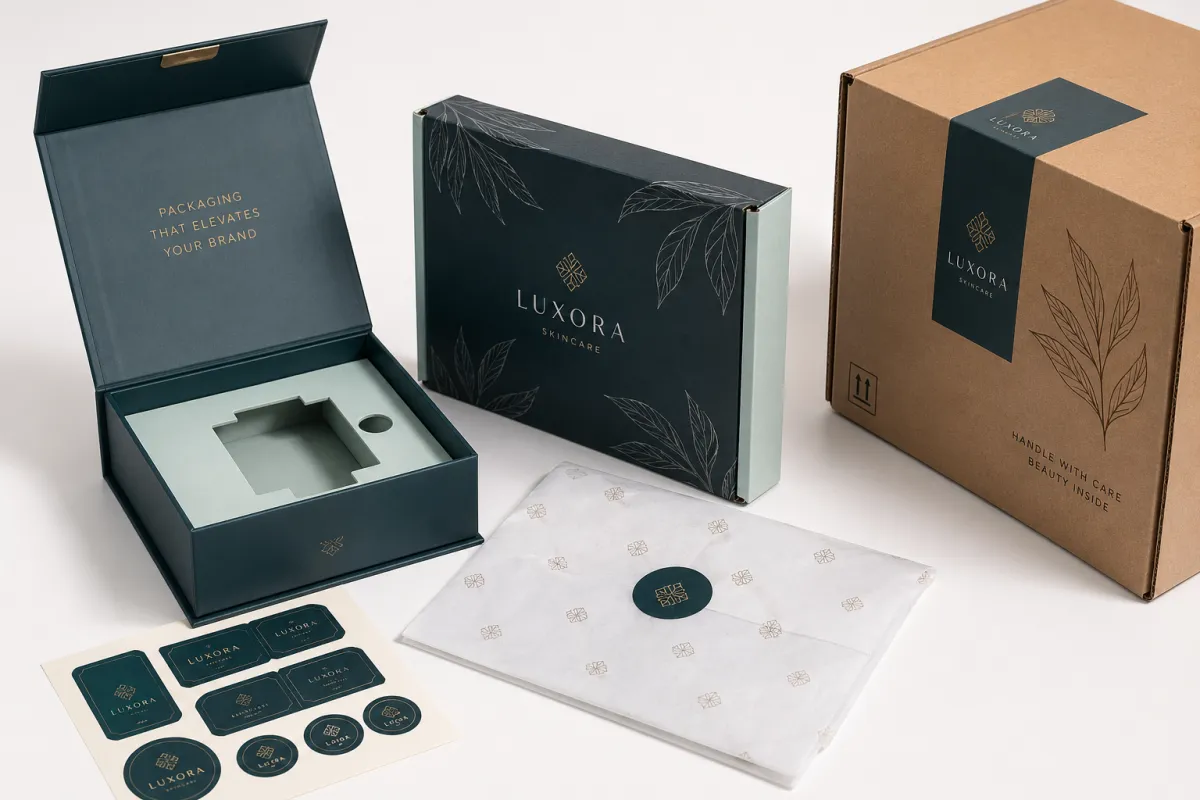
When people ask how to start custom packaging company, they often picture a design studio with finished cartons stacked like art objects. Sometimes that is true. More often, the company acts as a coordinator between the buyer, the factory, the material spec, and the shipping path. That small distinction changes everything: capital needs, margin structure, quality control, and the kind of mistakes that can sink a job before it leaves the dock.
A beginner usually fits one of four operating models:
- Broker - You source from third-party factories, manage quotes, and earn margin through coordination and order management rather than owning machinery.
- Reseller - You buy packaging in lots, add branding touches or fulfillment support, and package the value through service and convenience.
- In-house printer - You control more production variables, but you also accept higher fixed costs, maintenance, and staffing pressure.
- Full manufacturer - You manage production end-to-end from raw board to conversion and shipping, with heavy upfront cash needs and a much steeper operational load.
Most first-time founders do best starting as brokers or resellers. That path lets you test demand without buying a die cutter, press, laminator, or folder-gluer before you know what customers actually want. It also gives you room to compare product lines and learn which specs repeat reliably. If you are researching how to start custom packaging company, that flexibility is worth more than equipment ownership on day one.
Product mix is broader than most people expect. Demand often includes stock mailers, folding cartons, rigid boxes, inserts, sleeves, labels, and assembled packaging kits. A real packaging company does not just sell materials; it solves fit, protection, presentation, and brand consistency under a budget. That is why how to start custom packaging company is really a question about judgment, not just design taste.
Revenue also shows up in more than one place. Markup lives in the quote, but setup fees, sample charges, rush surcharges, and artwork revisions often cover the work that otherwise disappears into margin. Repeat business matters most, because a company only proves itself once the buyer comes back. One big order can look exciting and still be destructive if it requires three approval cycles, two freight fixes, and one angry phone call.
“A sample is not a promise. It is a test.”
That sentence saves people money. In packaging, the sample checks structure, fit, color behavior, and finish. It does not guarantee a stress-free production run, and it does not erase the need for clear approval. If your role in the chain is fuzzy, the whole order process gets noisy fast. If you want to understand how to start custom packaging company with fewer surprises, start by defining the part of the supply chain you truly control.
How to Start Custom Packaging Company: Order Process
The outside version of this business is seductively simple: the buyer asks, you quote, they approve, and the boxes show up. Real operations have more checkpoints, and each one exists to protect margin or reduce risk. If you are serious about how to start custom packaging company, build your quote and approval flow around those checkpoints from the beginning.
- Inquiry and discovery - Capture box type, size, print method, volume, deadline, and destination early.
- Spec review - Confirm dimensions, artwork layout, inserts, protective finish, and shipping details.
- Dieline or structure selection - Choose an existing stock structure or approve a custom build where needed.
- Proof or sample - Validate artwork, structure, and placement before production authorization.
- Approval - Freeze specs, payment terms, and delivery commitments.
- Production - Print, convert, finish, assemble, and pack in sequence.
- Quality control - Verify dimensions, colors, fold quality, glue lines, count, and function.
- Shipping - Lock freight mode, confirm windows, and monitor delivery through tracking.
That workflow looks basic because each step has a job. Breakage usually starts when one of them gets skipped. If you are learning how to start custom packaging company, build visibility into approvals and timing now, before a late-stage change forces you to explain why a supposedly simple order suddenly got expensive.
Lead times vary more than new owners expect. Stock mailers can move in roughly 7-12 business days after approval when components are on hand and the print path is simple. Printed Folding Cartons often sit in the 10-18 day window, especially with coatings, foil, or custom structures. Rigid boxes with inserts, ribbon pulls, or specialty wraps can push into 3-6 weeks before international freight is even part of the conversation. Buyers trust companies that state timelines by phase rather than hiding behind vague language.
- 3 days - Quote, spec intake, and proofing for stocked items.
- 2 weeks - Sample approval and production for common printed mailers or sleeves.
- 6 weeks - Custom rigid structures, inserts, premium finishes, and cross-border freight.
Most delays are predictable once you map them. Revisions cost time. Sample adjustments cost more. Supplier stockouts are annoying, but they are survivable if you communicate early. Freight disruptions tend to strike at the worst moment, usually right after the buyer feels good about the project. If you are serious about how to start custom packaging company, build for defendable commitments, not lucky outcomes.
For shipment readiness, the ISTA packaging transport testing guidelines are a practical reference. Their framework pushes teams to think in drop resistance, vibration impact, and real handling conditions instead of hoping a display-ready box will survive the trip.
A process that reads clearly on paper signals reliability to buyers. Packaging customers notice very quickly whether you understand sequencing or only presentation. They are not buying a mood board. They need a dependable route from approved design to receiving dock, on the date promised.
Custom Packaging Company Costs and Pricing
Cost surprises sink new packaging companies faster than bad creative ever will. A lot of newcomers assume how to start custom packaging company is mainly a sales problem. Then they underprice the job, forget freight and revisions, and discover that a deal that looked like $1,000 in revenue is really a $900 cost event before overhead. That is not a learning opportunity. It is a warning.
Startup spending usually falls into these buckets:
- Samples and prototypes - $150-$800 based on material complexity and revision rounds.
- Branding and website - $500-$5,000 for positioning, sales collateral, and a professional web presence.
- Software and quoting tools - $50-$300 per month for CRM, file handling, and quote/version tracking.
- Supplier deposits - Typically 30%-50% up front for custom projects, sometimes more at first run.
- Storage and handling - Rising fast once inventory becomes part of your process.
- Working capital - The reserve that absorbs reprints, freight spikes, defects, and late invoices.
Pricing by instinct is a quick path to pain. Use material cost, print method, finishing, waste %, freight, labor, and margin assumptions. Add risk explicitly. A one-color white mailer does not live in the same cost universe as a foil-stamped rigid box with a custom insert. If you are learning how to start custom packaging company, those differences are your edge.
| Business Model | Typical Startup Cost | Margin Potential | Best For | Main Risk |
|---|---|---|---|---|
| Brokerage | $2,000-$10,000 | 20%-40% | Fast launch, low overhead, service-focused sales | Margin pressure if quotes are sloppy |
| Stocked inventory | $10,000-$50,000+ | 25%-50% | Repeat SKUs, faster fulfillment, local clients | Cash tied up in inventory |
| Production-first | $75,000-$500,000+ | Higher on paper, lower after overhead | Operators with equipment and technical experience | Equipment cost, downtime, maintenance |
The table makes the trade-off plain: there is no easy shortcut. Lean entry usually means brokerage or resale. Full production gives you more control, but it moves risk from process pain to capital pain. For how to start custom packaging company, that trade matters more than a polished logo ever will.
Concrete examples keep the model honest. A lightweight sample pack for a startup brand can cost $150-$250 if it includes three to five variants, basic finishing, and standard shipping. A prototype rigid box often lands at $300-$800 depending on structure and detail. A first production run of 500-1,000 units can lock up $1,500-$8,000 before final collection, and sometimes more if the order includes inserts or specialty finishes. A 10% underquote can erase the profit from the whole batch. I have watched that happen more than once, and it is never pretty.
Disciplined margins beat optimistic volume every time. How to start custom packaging company gets easier when you do fewer jobs with clear economics instead of many jobs with fuzzy inputs. A small ledger of clean, repeatable orders is worth more than a long list of complicated ones.
For material sourcing, FSC labeling is often useful context. The Forest Stewardship Council explains chain-of-custody language that helps buyers evaluate responsible sourcing claims. That matters when packaging becomes part of a brand promise rather than just a shipping container.
Key Factors That Decide Whether It Works
Different sectors buy packaging differently, and that affects the entire business model. A cosmetics brand may pay for tactile finish, controlled color, and a polished unboxing moment. A subscription company often cares more about repeat dimensions and predictable replenishment costs. A regional food brand may care about compliance language, shelf appeal, and speed. Selling every format to every vertical usually drives quote fatigue and weak close rates.
Niche choice changes the numbers. E-commerce buyers ask for Custom Printed Boxes that reduce damage and support repeat purchase behavior. Luxury operators prioritize finish quality and rigid structure. Smaller makers often start with sleeves, labels, and folding cartons before moving into rigid packaging. If you are learning how to start custom packaging company, pick one use case and own it before your portfolio starts pretending it is five different businesses.
Supplier quality determines whether your promises hold. Domestic partners often shorten lead times and improve communication. Overseas partners can lower unit cost at scale, but they also add complexity around timing, language, tooling, and quality control. Neither model is automatically better. The real question is who manages tooling, who pays for rework, and what backup plan exists when a supplier misses a milestone.
Quality control is where trust is either protected or burned. Check color consistency, board strength, glue integrity, folding accuracy, edge finish, and shipping durability. A package that looks premium in a studio and collapses under freight is not premium at all. A misregistered print on a high-end lot can turn a featured campaign into a customer service problem. This is why how to start custom packaging company is not design first and logistics second. It is both from day one.
Compliance and logistics can quietly become major cost drivers. Food-contact standards, barcode placement, test evidence, insurance clauses, and sustainability claims all carry risk if unmanaged. The Environmental Protection Agency provides practical guidance on packaging impacts and waste strategies at epa.gov. That information is handy when clients start making responsible-sourcing claims they expect you to support.
If you want fewer surprises, compress your variables. Cut material families, reduce finish options, and avoid unnecessary structural variation until your workflow settles. Simplicity is not timid. It is operationally superior, and it is often the difference between a stable business and one that feels constantly on fire.
How do you start a custom packaging company step by step?
Most people want a clean blueprint, not motivational language. Fair enough. Use this as a working model, then adjust it based on what buyers actually ask for. The market is usually more revealing than a business plan.
1. Pick one niche and one offer
Choose one buyer segment and one starter product family. Example: ecommerce Mailers for Skincare lines, folding cartons for candle makers, or sleeves and labels for subscription goods. That keeps quoting rules, sample selection, and sales conversations manageable. Expanding into every product in week one creates a quote system you cannot defend. If you are serious about how to start custom packaging company, restraint is a real advantage.
2. Talk to real buyers before you build the full offer
Contact 10-15 target prospects by call or direct message. Ask what they buy now, what frustrates them, what they spend, and whether speed, cost, or visual quality matters most. Those answers give you real demand signals. If five buyers say “premium” but push back on even modest pricing changes, you have pricing intelligence, not just a positioning idea. That distinction matters.
3. Build a supplier shortlist
Gather three quotes for each lane you plan to sell. Record minimum order quantities, lead times, proof standards, communication speed, and payment structures. A scorecard is better than gut feel: rank quality consistency, defect rate, turnaround, and willingness to correct issues without drama. For how to start custom packaging company, this data set will help more than a prettier website in the first quarter.
4. Create quote and proof templates
Prepare a pricing template with line items for material, print method, finishing, freight, and target margin. Add proof approval fields for dimensions, color tolerance, material notes, and shipment date. This documentation keeps the “we assumed” conversation from showing up on every job. Assumptions are expensive because they multiply quietly.
5. Build a sample kit
A focused sample kit shortens objections fast. Include three to five practical examples that reflect your chosen niche and include one premium, one standard, and one volume-friendly option. Buyers respond better when they can touch, stack, and compare real differences. The goal is not to show everything. The goal is to prove fit quickly.
6. Set payment terms you can survive
Many operators fail before the first repeat order because payment policy does not match cash reality. A 50% deposit plus the remaining 50% before shipment remains a practical baseline for custom work. Net terms can come later, once workflow and receivables are predictable. Protecting working capital early is not being rigid. It is avoiding an involuntary shutdown.
7. Launch with a simple outreach plan
Send your offer only to prospects who match the niche you selected. Reach out to agencies, ecommerce operators, local manufacturers, and subscription teams. Share the sample kit, show sample pricing bands, and present lead times as ranges with clear caveats. Buyers respond when they can evaluate quickly without decoding your process. You do not need to be flashy. You need to be clear.
Month one should focus on proving demand, not scaling. If inquiries become samples, samples become quotes, and quotes become spec questions with urgency, the model is working. By day sixty, tighten your supplier list and refine your pricing assumptions. By day ninety, push for repeat business from first-wave buyers and map which spec sets sell with the least friction. That is how how to start custom packaging company moves from idea to recurring operation.
For a practical product reference, review Custom Packaging Products and use it to frame your launch menu around one category at a time.
For positioning and team context, the About Custom Logo Things page can help you present a credible founder story without stretching claims.
Common Mistakes That Sink New Packaging Companies
The loudest rookie mistake is product sprawl. Trying to sell rigid cartons, mailers, labels, sleeves, inserts, tubes, and specialty food packs at the same time overloads pricing and QA. If you are learning how to start custom packaging company, two offers are often enough at the beginning. Clarity beats variety when your process is still fragile.
Some operators quote from memory as if supplier costs never move. Freight swings, board pricing, add-on fees, and rework risk all move in the same direction: up for the unprepared. A small oversight in one input can wipe out margin across an entire production lot and leave you hoping volume makes up for it. Usually, it does not.
Skipping proof approval is expensive theater. A buyer may ask for speed, but production does not honor speed without confirmation. If approval signs are bypassed, the color-shift argument appears, followed by artwork revisions and rework cost. A short approval checkpoint is usually cheaper than a second print run, and a lot less embarrassing.
False promises create trust debt. A seller says yes to a tight date, then absorbs the hidden penalties when the supplier slows or the material slips. Buyers rarely punish delays when they are informed early. They punish being misled. Honest lead-time ranges, with reasons attached, build more confidence than slick confidence ever will.
- Do not promise same-week turnaround unless material, proof, and freight windows are already secure.
- Do not clear artwork without verifying dieline and bleed placement.
- Do not price premium finishing without documenting exact variable add-ons.
- Do not assume a second order matches the first unless all specs are locked and tracked.
If your goal is a stable launch, documentation is not optional. Track specs, quantities, finishes, delivery date, carrier, approvals, and payment status every step. It is plain bookkeeping, and it is what separates a functioning business from a polite failure.
Expert Tips and Your Next Moves
Keep the offer narrow while you test fit. One segment, one material family, one production lane gives you enough data to learn quickly. If you are serious about how to start custom packaging company, your first meaningful target should be repeatable replenishment, not a dramatic opening order that eats cash and attention for months.
Run a supplier scorecard after every shipment. Track lead times, defect counts, response quality, price consistency, and issue resolution speed. A cheaper supplier is not always better if they generate rework and delays every other order. The right partner reduces firefighting, even if the unit cost is modestly higher.
Create simple comparison sheets for sample conversations. Buyers decide faster when they can see side-by-side differences: stock mailer versus custom printed carton, matte versus soft-touch finish, standard versus heavy-stock support. Concrete comparisons reduce decision fatigue and make your conversations sharper. They also make you look like someone who has done this before.
Be explicit about control boundaries. You cannot force a factory’s schedule, but you can control the quote structure, spec checks, and response time. Newer operators can win here because they often out-communicate slower incumbents. Responsiveness can become a margin lever when the product itself is similar. That is a little unfair, but business is kinda like that.
If you are implementing how to start custom packaging company right now, use this trimmed action list:
- Choose one niche and define one core package format.
- Collect three supplier quotes for that format.
- Order and approve samples from your top supplier.
- Deploy one standardized quote template.
- Contact five prospects and ask how much they currently spend on packaging.
This sequence moves you from assumption to data quickly. The pace is not glamorous, but it compounds.
Operators who last in this niche usually respect the unsexy parts: board thickness control, timeline buffers, documented approval, and freight planning. Profit hides in those details. Trust also grows there. Keep the offer focused, the process visible, and the pricing defendable. That combination does not remove uncertainty, but it gives you a real edge. Most first-time founders start with the logo. The better move is to start with the workflow.
FAQ
How much does it cost to start a custom packaging company?
A lean brokerage-led launch often starts in the low thousands. A stocked model can move into the tens of thousands quickly, while full manufacturing can require much more depending on equipment and setup. Factor in sample work, branding, site presence, supplier deposits, sales tools, and an emergency buffer for reprints or freight shocks. The biggest risk is not opening spend alone; it is underfunded working capital before repeat orders arrive when you are learning how to start custom packaging company.
How do I start a custom packaging company without a factory?
Lead with a brokerage or reseller model. Partner with vetted production teams, set tight quoting and quality standards, and run the customer-facing operations yourself. Own the relationship and approval loop first, then add machinery only after demand is repeatable. This route removes unnecessary overhead and is a realistic path for how to start custom packaging company early.
How long does it take to launch a custom packaging company?
A service-first version can launch in a few weeks if suppliers, quoting flow, and sample process are set. A heavier model with inventory, custom tooling, and in-house workflow often needs months of setup and validation. Most first-time operators underestimate the time spent in spec-to-quote conversion and supplier onboarding, which is where launches typically stall while learning how to start custom packaging company.
What products are easiest for beginners in custom packaging?
Simple mailer boxes, folding cartons, sleeves, and labels are usually easiest. They tend to repeat well, have simpler specs, and keep revision risk manageable. Rigid boxes and multi-part kits can be profitable later, but start with what can be quoted quickly and delivered consistently. Avoid high-compliance categories like food-contact packaging until you can manage that complexity with confidence while pursuing how to start custom packaging company.
How do I get my first customers for a custom packaging company?
Start where packaging demand already exists: ecommerce brands, subscription operations, local makers, and agencies with recurring packaging needs. Use sample kits, fast and clear quoting, and one strong operational advantage as your pitch. Ask for referrals after the first successful order because repeat orders and references are usually where consistency arrives for how to start custom packaging company.

