Why a custom jewelry box can change the first impression
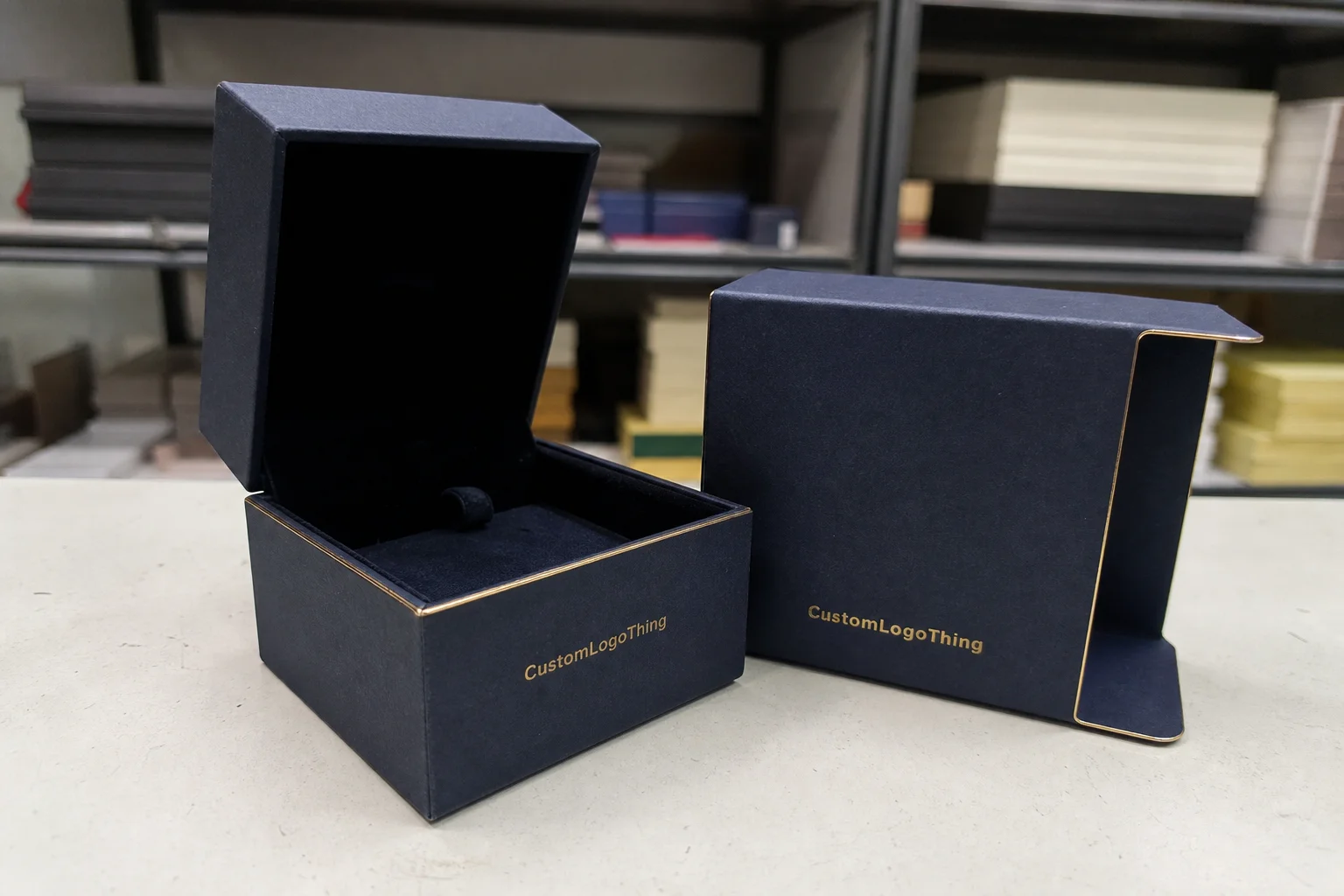
A jewelry box custom made for the piece inside does more than hold product. It shapes the first physical moment a customer has with the brand. In jewelry, that moment carries outsized weight because buyers often judge value within seconds, based on feel, closure quality, color, and how securely the piece sits inside.
That is why “custom made” means more than printing a logo on a stock carton. It covers the internal dimensions, the insert style, the closure, the board grade, the wrap material, and the way the box will be handled after it leaves the bench or the warehouse. A ring box for a boutique counter display is not the same object as a rigid mail-ready box for direct-to-consumer fulfillment.
A premium look does not always come from the heaviest board or the most elaborate finish. Clean proportions, a well-cut insert, and a restrained logo application often read as higher-end than a box crowded with effects. A buyer may not know why the package feels expensive, but they usually know when it does.
The brand impression changes with small design choices. A matte wrapped box with blind debossing feels quiet and refined. Add a satin ribbon or a velvet insert and the tone shifts toward gifting. Use a crisp shoulder box with a foil mark and the product feels more structured, more retail-ready, more deliberate. The box becomes part of the product presentation, not a separate layer added at the last minute.
How the production process and timeline usually work
The production flow is fairly consistent across suppliers, even when the materials differ. It usually begins with a brief, then moves to dieline development, sample building, artwork proofing, production, finishing, assembly, and freight. The longest delay is rarely the press run. It is usually the back-and-forth over fit, artwork placement, and finish selection before the job is approved.
Physical samples matter because a screen mockup can hide practical problems. A box may look right in a PDF and still fail when the insert holds the pendant too tightly, the magnet pulls unevenly, or the lid catches at one corner. A prototype reveals those issues early, before they become expensive rework across hundreds or thousands of units.
Buyers usually need to provide a few core inputs:
- Exact product dimensions, including clasps, prongs, chains, or any irregular edges.
- Order quantity and likely reorder volume.
- Closure style, such as magnetic flap, lift-off lid, drawer, or shoulder box.
- Artwork files, logo placement, and color references.
- Whether the box needs to survive shipping, retail handling, or both.
Timelines depend on complexity. A simple printed carton can move quickly once the design is approved. A rigid box with a custom insert, foil stamping, embossing, or specialty wrap needs more time, especially if the supplier is building a new dieline or cutting a new insert tool. Overseas production adds transit time and usually one more sample cycle. Domestic production may shorten the schedule, but often at a higher per-unit cost.
For parcels and fulfillment, it helps to ask whether the packaging has been considered against shipping standards rather than assumed to be “good enough.” Not every jewelry box needs formal lab testing, but the structure should match the real handling risk. If the box will go through parcel networks, corner crush and surface scuffing deserve attention from the start. The most elegant package in the world is still a problem if it arrives dented.
Key factors that shape structure, look, and durability
Material choice sets the foundation. Rigid setup board gives the box a solid hand feel and sharper corners. Folding paperboard is lighter and usually more economical, which makes sense for high-volume lines or lighter jewelry. Specialty wraps such as linen-texture paper, soft-touch laminated paper, or coated art paper change the tactile impression more than many buyers expect.
Soft-touch feels expensive, but it can scuff more easily than a standard matte wrap. That tradeoff matters if the box will be stacked, shipped, or handled often. A finish that looks beautiful on a sample may not be the best choice for a retail floor or a fulfillment line.
The insert does most of the real work. Foam, EVA, molded pulp, paperboard cradles, velvet trays, and satin-lined structures each solve different problems. Foam and EVA hold their shape well and keep rings, earrings, and small pendants centered. Molded pulp is more aligned with recycling-minded packaging and can be a practical choice for brands reducing plastic content. Velvet and satin improve the reveal, but they are less forgiving if the jewelry shifts in transit.
For chains, the insert needs restraint without pressure. Too loose, and the chain tangles or slides out of position. Too tight, and it leaves a bend or a mark. That balance is easy to underestimate when the jewelry is laid flat on a table and difficult to fix once the insert is tooled.
Closure and structure also shape perception. A magnetic flap opens with a clean, familiar motion, but the magnet strength and paper thickness must be calibrated so the lid does not spring open. Shoulder-lid rigid boxes feel substantial and align well for premium gift sets. Drawer boxes work well for multi-piece sets or for products that benefit from a staged reveal. Ribbon pulls add charm, although they can fray or catch if the box is handled repeatedly.
Branding is not just decoration. Foil stamping usually creates a sharper focal point than dense full-color art when the jewelry itself should remain the star. Embossing and debossing add tactile depth without extra ink coverage. Spot UV can create contrast, but too much of it makes a box feel busy fast. Screen printing works well on some specialty papers, while full-wrap art suits brands that want the packaging itself to carry a stronger visual identity.
For product packaging, the right structure depends on use case more than preference. A boutique counter box, a bridal gift box, and a direct-to-consumer shipping box are different jobs. Good package branding shows up in the small things: the lid closes flat, the insert sits square, the logo lands in the right visual zone, and the box opens without friction.
Cost, pricing, MOQ, and what moves the unit cost
Pricing usually falls into a few buckets: board and wrap materials, printing, finishing, insert complexity, setup labor, tooling, assembly, packing, and freight. Once the quote is broken down that way, the numbers make more sense. A simple printed sleeve may be economical. A rigid box with a velvet insert, foil logo, and multi-piece lid adds cost in several places, not just one.
MOQ affects unit cost because setup labor and tooling are spread across fewer boxes. A small order can feel expensive even when the materials are modest. The press still has to be set up, the die still has to be cut, and the finishing steps still have to be performed. Fixed costs do not shrink just because the run is short.
Size matters too. Larger boxes use more board, more wrap, and often more protective packing to keep the corners from crushing in transit. A deeper insert may require more complex die cutting or more labor during assembly. Even a few millimeters can change the cost at scale.
Typical pricing varies by structure and finish. These ranges are illustrative, since quantity, decoration coverage, and freight lanes can move the final number.
| Box Type | Typical Structure | Common Finish | Approximate Unit Cost Range | Best Fit |
|---|---|---|---|---|
| Folding paperboard box | Lightweight fold-flat carton | CMYK print, matte or gloss | $0.35-$0.90 | Entry-level retail packaging, high-volume SKUs |
| Rigid lift-off lid box | Set-up board with wrapped paper | Foil, embossing, soft-touch optional | $1.20-$3.50 | Gift sets, premium branding, boutique display |
| Rigid box with insert | Set-up board plus die-cut insert | Foil, spot UV, specialty wrap | $1.80-$5.50 | Rings, necklaces, coordinated jewelry sets |
| Drawer or shoulder box | Multi-piece rigid structure | Premium wrap, ribbon pull, foil | $2.50-$7.00+ | High-end presentation, special releases |
When comparing quotes for Custom Packaging Products, read the inclusions carefully. Some suppliers build sample charges into the approved order. Others separate prepress, insert assembly, and overrun allowances. Freight can change the real picture too, especially if the boxes ship flat but expand into more volume once assembled or packed with inserts.
Special effects raise cost faster than many buyers expect. A small amount of foil is often manageable. Heavy foil coverage, multiple emboss levels, or a multi-piece lid can move a project from moderate to premium in a hurry. That is fine if the margin supports it. It is not fine if the extra cost was added without a clear reason.
Step-by-step guide to ordering the right box
Start with the jewelry itself. Measure the item in the exact condition it will ship or display in, not as a loose part on the bench. A pendant with chain, a ring with a tall setting, and a bracelet with a wide clasp all need different internal clearances. If the insert is wrong, the whole jewelry box custom made spec loses value no matter how polished the outside looks.
Next, define the use case. Is the box for gifting, counter sale, subscription fulfillment, e-commerce shipping, or long-term storage? A gifting box can prioritize feel and reveal. A shipping box needs more crush resistance and a closure that stays shut in transit. A retail packaging box may need stackability, barcode space, or a cleaner shelf profile. The use case should guide the structure, not the other way around.
Then translate the brand feel into materials. If the brand is understated and premium, a matte wrapped rigid box with blind debossing may be enough. If the brand is fashion-forward, a bold print pattern or metallic foil accent may be the right move. Strong packaging design starts with the impression you want the customer to have in the first few seconds, then works backward into paper, insert, and finish.
After that, gather the technical files and notes:
- Logo files in vector format if possible.
- Color references, including Pantone targets if color matching matters.
- Any copy limits for the box exterior.
- Closure preference and opening direction.
- Labeling, barcode, or compliance needs.
Then approve a sample against the actual jewelry piece. That step prevents a lot of expensive rework. A prototype confirms fit, lid movement, insert tension, and the visual balance of the whole structure. For brands with sustainability goals, it is also the time to ask about fiber source, plastic content, and whether the board or wrap can be aligned with standards such as FSC. Not every project needs certified paper, but the question should be asked early, not after the order is placed.
Custom printed boxes work best when structure, insert, and finish are treated as one system. If those decisions are made separately, the result often feels inconsistent. If they are made together, the box reads as intentional from the first touch to the final close.
Common mistakes that create expensive rework
The biggest mistake is sizing from the outside in. Buyers often picture the finished box before they account for insert thickness, lid clearance, and how the product actually sits inside. A ring slot that looks fine on paper can be too tight once the lining is added. A necklace cavity can be deep enough in theory and still leave the chain exposed in practice.
Another common problem is over-designing the finish. Too many effects can make the box feel busy and raise cost without improving perceived value. A strong jewelry box usually needs one clear focal point: a foil logo, a subtle texture, or a simple color field with one restrained mark. When every surface tries to impress, the design loses focus.
Shipping conditions are easy to ignore until the first damage claim shows up. If the box travels through fulfillment, the corners need enough strength to resist crush, and the surface finish should tolerate scuffing. Loose inserts are a common failure point too; they can shift, rub, or create a cheap rattle the moment the parcel is opened.
Artwork approval before structural sampling creates another avoidable problem. A small dimensional shift can move the logo off center, crowd the foil area, or make a sleeve seam land in the wrong place. Files can be technically correct and still end up wrong if the dieline changes later. Structural approval and artwork approval belong in the same workflow.
“The packaging did its job when the buyer never had to think about the packaging. It just felt right.”
That is the standard worth aiming for. If the box looks beautiful but opens awkwardly, fails to protect the piece, or pushes the budget out of line, it is not helping the business. A good custom box should feel almost invisible in the best possible way: present, precise, and suited to the product.
Expert tips and next steps before you request a quote
The fastest path to an accurate quote is a one-page packaging brief. Include product dimensions, target quantity, finish level, insert need, timeline, and shipping concerns. That single page usually does more for pricing accuracy than a long email chain full of vague language about wanting something “premium.”
If the jewelry is fragile, irregular, or high-value, request at least one sample. That is not overcautious. It is the least expensive way to verify fit and feel before a full run. A sample can reveal whether a foam cutout is too rigid, whether a ribbon pull interferes with the lid, or whether the cavity needs to be deeper than first expected.
Compare quote language carefully. Confirm what is included, what is optional, and what happens if dimensions or artwork change after approval. Ask whether prepress, insert assembly, and replacement allowances are built in. Those details often decide whether a quote is actually competitive or only appears that way at first glance.
If you are choosing between a few structures, keep the order of priorities simple: protection first, presentation second, cost third. That sequence usually produces a better result than starting with decoration and hoping the structure works itself out later. A thoughtful jewelry box custom made for the product and the channel will do more for perception and repeat purchase behavior than a flashy box that misses the fit.
Before requesting pricing, gather the spec sheet, define the protection level, and decide on the finish tier. Then compare jewelry box custom made options against the actual piece, the expected handling, and the customer experience you want the package to support.
What should I know before ordering a custom jewelry box?
Measure the product and decide how it should sit in the insert, not just how it should look on a shelf. Define whether the box is for gifting, retail display, e-commerce shipping, or long-term storage, because each use case changes the structure. Prepare logo files, color references, and quantity targets before requesting a quote so the pricing is based on real specs.
How long does a custom jewelry box usually take to produce?
The schedule depends on sampling, artwork approval, finish complexity, and whether tooling is required. Simple builds move faster; rigid boxes with inserts, foil, or embossing usually need more time. Ask for a timeline that includes proofing, sample approval, production, and freight so there are no hidden delays.
What affects custom jewelry box pricing the most?
Material choice, insert type, finishing steps, and order quantity are usually the biggest pricing drivers. Smaller runs often have a higher unit cost because setup and labor are spread across fewer boxes. Special effects like foil, embossing, soft-touch coating, and multi-piece lids can raise cost quickly.
Which insert is best for delicate jewelry?
Choose the insert based on the shape and fragility of the item, not just the appearance of the box. Foam and EVA offer strong hold and consistent placement; paperboard and molded pulp can be better when you want a more recyclable feel. For fine chains, earrings, and rings, the insert should prevent shifting without crushing or bending the piece.
What is the best way to avoid mistakes when ordering?
Approve a physical sample whenever possible, especially if the item is expensive or has an unusual shape. Confirm dimensions, artwork placement, finish, and closure style before full production starts. Review the quote line by line so you know what is included in the price and what could change the final cost.