Buyer Fit Snapshot
| Best fit | Kraft Corrugated Boxes for Logistics projects where brand print, material claims, artwork control, MOQ, and repeat-order consistency need to be specified before quoting. |
|---|---|
| Quote inputs | Share finished size, material target, print colors, finish, packing count, annual reorder estimate, ship-to region, and any compliance wording. |
| Proofing check | Approve dieline scale, logo placement, barcode or warning zones, color tolerance, closure strength, and carton packing before bulk production. |
| Main risk | Vague material claims, crowded artwork, missing packing details, or unclear freight terms can make a low unit price expensive after revisions. |
Fast answer: Kraft Corrugated Boxes for Logistics: Board, Finish, Dieline, and Unit Cost should be specified like a repeatable production item. The safest quote records material, print method, finish, artwork proof, packing count, and reorder notes in one written spec.
Production checks before approval
Compare the actual filled-product size with the drawing, then confirm tolerance on folds, seals, hang holes, label areas, and retail display edges. Reserve space for logos, QR codes, warning copy, and material claims before decorative graphics fill the panel.
Quote comparison points
Review material grade, print process, finish, sampling route, tooling charges, carton quantity, and freight assumptions side by side. A quote is only useful when the supplier can repeat the same color, closure quality, and packing count on the next order.
Kraft Corrugated Boxes for Logistics: A Practical Guide
I have spent enough time on dock plates, in corrugator plants, and inside cramped receiving rooms to know that kraft corrugated boxes for logistics are rarely the glamorous part of the conversation, and yet they are often the part that keeps a shipping program from turning into damage claims, repacks, and those awkward apology emails nobody wants to write. I remember one sticky July afternoon at a Chicago-area cross-dock when a plain brown shipper came through a rough LTL transfer with its corners still square, while a glossy printed carton beside it split at a seam after a single forklift touch. That is the real value of kraft corrugated boxes for logistics: they keep moving through hard hands and hard miles without asking for applause, usually at a board spec like 44 ECT or a double-wall 32/44 build made in Dalton, Georgia or Monterrey, Mexico.
If you work with Custom Logo Things, or any packaging team supporting a shipping-heavy operation, the question is rarely whether the sample looks nice under bright lights on a clean table. Honestly, I think that is where a lot of people get distracted. The real question is whether kraft corrugated boxes for logistics will hold their shape under 24-inch pallet overhangs, warehouse humidity near 70% relative humidity, and a carrier network that may touch the same carton four or five times before delivery. I have seen a 44 ECT kraft shipper outperform a prettier carton because the board matched the route, the weight, and the stack height, especially on lanes that moved from Atlanta to Dallas in 2 to 3 days. For teams comparing corrugated packaging across multiple lanes, the difference between stock cartons and purpose-built kraft corrugated boxes for logistics usually shows up in the first week of shipping, not in the sample room.
The focus here stays practical: structure, protection, cost, ordering, and the mistakes that quietly eat away at performance. If you need more packaging choices alongside these shippers, you can also browse Custom Shipping Boxes and other Custom Packaging Products that fit a shipping program built around 500-unit replenishment batches, weekly dock schedules, and repeat handling in plants from Charlotte to Louisville.
What kraft corrugated boxes for logistics actually are
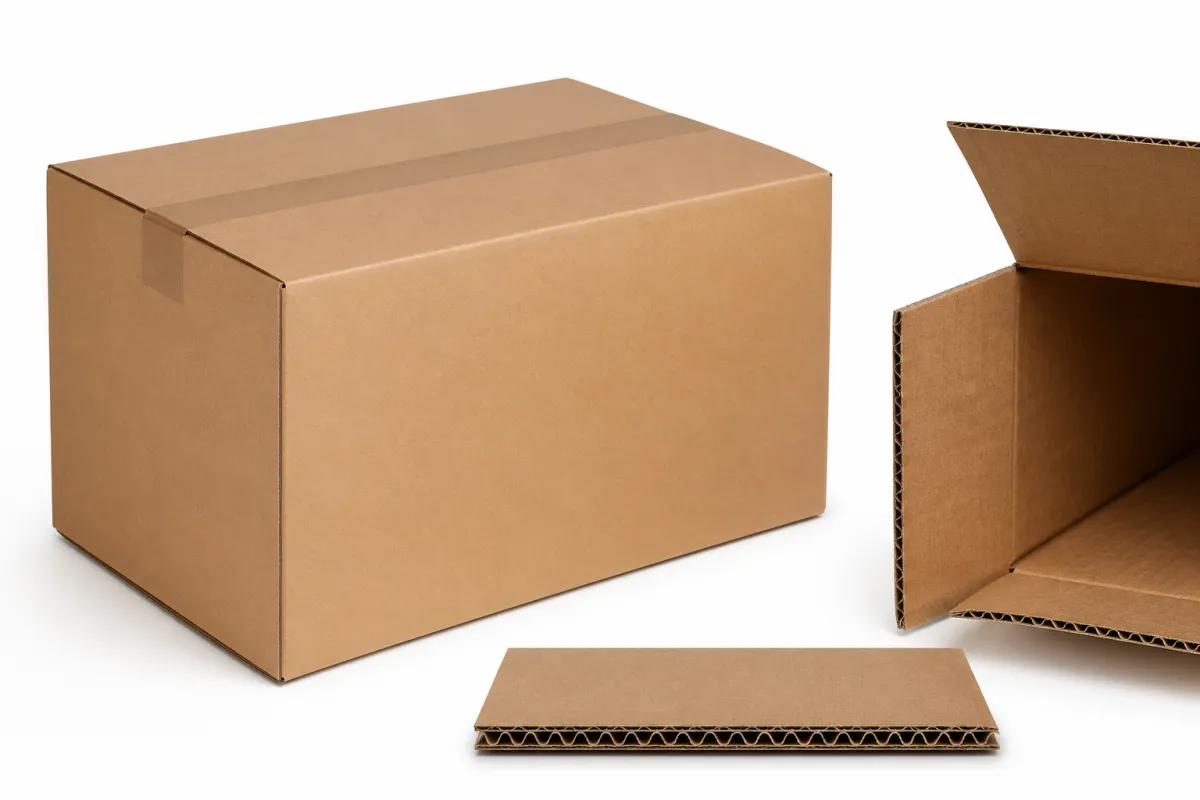
Kraft corrugated boxes for logistics are built from kraft linerboard wrapped around a fluted corrugated medium, and that simple structure is the reason they show up everywhere from parcel rooms to export pallets. The kraft linerboard forms the outer skin, usually a brown natural fiber sheet with strong tensile performance and a warehouse-friendly surface that hides scuffs better than a white coated carton. Between those layers, the flutes act like a row of small arches, which gives the board compression strength without turning the carton into a rigid slab. I have always liked that about corrugated board: it looks modest, but it works hard, whether the liner is made on a machine in Wisconsin or converted into shippers in Foshan or Tijuana.
People in a packaging room sometimes call every brown shipper "just a box," but the details change how the package behaves in the real world. A B flute carton does not react the same way as a C flute carton, and a single-wall carton does not perform like a double-wall shipper once the pallet starts carrying load. That is why kraft corrugated boxes for logistics are selected by board grade, flute profile, and box style, not by color alone. The brown kraft finish is not decoration; it is the visible side of a fiber system designed for compression, handling, and repeat movement, often produced with a water-based starch adhesive and liner weights in the 125- to 200gsm range.
Kraft board also earns its place because it works well in day-to-day operations. Labels stick cleanly, route stamps stay readable, barcodes scan without much drama, and most water-based inks sit well on the surface. Clean kraft fiber also moves more easily through recycling mills than cartons built from mixed materials, film laminations, and heavy plastic coatings. That is one reason many sustainability teams prefer kraft corrugated boxes for logistics for high-volume programs, especially where the carton is meant to move once through the chain and then go back into a paper recovery stream in regions like the Midwest United States, Ontario, and northern Italy.
These boxes fit a broad range of logistics use cases. Parcel shipping is the obvious one, but I have also seen kraft corrugated boxes for logistics used for LTL freight, palletized replenishment, industrial parts, contract manufacturing, and e-commerce B2B fulfillment. A distribution center in Georgia once moved from mixed-size stock cartons to a small set of custom kraft shippers, and the team cut cube waste enough to fit two additional pallet layers on several outbound truck lanes. Operations people notice that kind of change immediately because it shows up in freight, labor, and dock flow at the same time, especially when one box size replaces three SKUs and 18 separate pick locations.
The right way to think about the box is as a transport tool, not an image problem. A logistics carton has to survive lifting, dropping, squeezing, stacking, wrapping, scanning, and restacking. That is the job of kraft corrugated boxes for logistics, and everything else should support that job rather than distract from it. A box that holds 28 pounds, stacks six high on a 40 x 48 pallet, and survives a 48-inch drop test is doing the work it was meant to do, whether it was converted in Ohio or shipped out of a plant in Monterrey.
For standards-minded teams, it also helps to keep an eye on the test language that guides box selection. Organizations such as ISTA test standards and packaging groups like Packaging Industry resources give you a cleaner way to compare transit performance than guessing from thickness alone, especially when the spec sheet includes ECT, Mullen burst, and compression data measured under 23 C and 50% RH.
How do kraft corrugated boxes for logistics protect freight?
The strength story starts with structure. Kraft corrugated boxes for logistics use linerboard skins and a fluted core to spread force across a wider area, which is why a carton can look modest on the outside and still carry serious stack load. Edge crush resistance, usually discussed as ECT, tells you how much pressure the board can handle on its edge before it gives way. In a pallet stack, edges and corners carry most of the load above them, so that number matters far more than many buyers first assume, especially on runs that ship 36 or 48 cartons per pallet layer.
I still remember a purchasing review where someone wanted to trim a few cents by dropping a board spec from 44 ECT to 32 ECT on a warehouse replenishment line. We ran the carton under 36-inch stack heights and left it in a humid storage room for 24 hours, and the lighter board began to bow at the corners before the test ended. That was one of those moments where everyone went quiet, stared at the sample, and then looked at me like I had personally offended paper. That is the kind of result that makes kraft corrugated boxes for logistics worth testing under actual conditions instead of only reading the spec sheet. A cheap board can look fine until the pallet sits overnight and the load starts to relax.
The flutes do a lot of hidden work. They absorb vibration, soften minor shock, and give the carton a slight spring that helps across mixed carrier networks. Freight does not load once and stay still; it gets moved from carton truck to pallet, from pallet to conveyor, and from conveyor to van or trailer. During that chain, kraft corrugated boxes for logistics keep the product from sitting directly against a hard wall of paperboard. That extra buffer against micro-shock is one reason corrugated board beats rigid alternatives in so many shipping programs, particularly when the route includes three handoffs and one overnight terminal stay.
Corner strength matters even more than most teams want to admit. Crushed corners usually fail first because they carry the weight above them, the pull of stretch wrap, and the twist that comes from handling a pallet at an angle. I have watched a well-filled carton fail simply because stretch wrap was pulled too tight on one side, which tilted the top layer just enough to crack the front edge. I may have muttered a few words that were not meant for a meeting, the kind you only say when a pallet goes bad five minutes before a carrier pickup. A better carton style, or a small change in pallet pattern, would have saved the whole stack. That is why kraft corrugated boxes for logistics should always be matched to both the product and the pallet build.
Single-wall, double-wall, and triple-wall boards each have a place. Single-wall kraft corrugated boxes for logistics often work well for lighter parcels and shorter routes. Double-wall board makes more sense for heavier product, higher stacks, or lanes with more transfer points. Triple-wall is usually reserved for very heavy industrial parts, export freight, or situations where puncture and compression risk are both high. I would not default to triple-wall for every hard shipment; it adds cost and bulk, and many programs do better with a carefully chosen double-wall spec, such as a 275# test liner paired with a C flute and B flute combination.
Board performance also drops when the environment turns unfriendly. Humidity, condensation, long dwell times, and overfilled cartons all weaken the panel. If a carton bulges because the product is packed too tightly, the panel loses part of its compression resistance. That is why the best kraft corrugated boxes for logistics are never chosen in isolation; they are selected with warehouse climate, route length, and handling style in mind, from a dry Phoenix warehouse to a coastal facility in Savannah where morning condensation can soften board edges by 10% or more.
Kraft corrugated boxes for logistics: cost and pricing factors
Pricing for kraft corrugated boxes for logistics is not random, even if it can feel that way during procurement reviews. The main drivers are board spec, flute type, dimensions, print coverage, adhesive use, and order volume. A larger carton uses more paper area, Custom Die Cutting adds setup cost, and higher-volume runs usually bring the unit price down. Once those pieces are clear, the quote starts to make sense instead of looking like a number pulled out of thin air by someone with a spreadsheet and a deadline. A 12 x 10 x 8 inch 32 ECT shipper can quote very differently from a 20 x 16 x 14 inch double-wall carton because the board footage and converting time are not even close.
On a recent supplier call, a buyer asked why one box quoted at $0.46 each and another at $0.61 each when both were brown and looked similar in the sample room. The answer was straightforward: one was a standard stock-style size in 32 ECT, while the other needed a custom footprint, heavier liner, and a tighter die cut to hold a returnable insert. That is exactly why kraft corrugated boxes for logistics should be compared on full specification, not surface appearance. Brown does not mean equal. If only it were that easy, every quote from a plant in Toledo or Qingdao would read the same.
Right-sizing is one of the fastest ways to reduce total spend. Less empty space means lower DIM weight charges on parcel shipments, less void fill, tighter pallet cubes, and fewer transit dents caused by product movement. I have seen a 2-inch reduction in carton length save more money in freight than it cost in added board because the pallet pattern improved and the truck cube got cleaner. For many programs, the smartest kraft corrugated boxes for logistics are the ones that remove wasted air, especially on routes priced by dimensional weight at 139 cubic inches per pound.
There is also a hidden cost conversation that buyers miss all the time. A carton that costs three cents less but creates a 2% damage rate is not a bargain. Once you factor in repacking labor at $19 to $27 per hour, chargebacks, customer service time, and delayed shipments, the cheapest carton can become the most expensive part of the lane. In my experience, kraft corrugated boxes for logistics should be judged on landed cost and failure cost together, with freight from the converting plant in Ohio or northern Mexico included in the math.
Before you approve a quote, make sure the review covers these items:
- Paper basis weight and board grade, such as 32 ECT or 44 ECT.
- Exact inside dimensions and whether the size is stock or custom.
- Tooling or die costs for new converting setups.
- Pallet counts, bundle counts, and truckload efficiency.
- Print coverage, ink usage, and any special markings.
- Outbound freight from the converting plant to your dock.
The table below shows the sort of comparison I like to see before a team locks a spec. These are illustrative ranges, but they reflect the way kraft corrugated boxes for logistics are often priced in real buying discussions, including 5,000-piece runs that ship from plants in Indiana, Monterrey, or South China.
| Option | Typical use | Approx. unit price at 5,000 units | Strength profile | Main trade-off |
|---|---|---|---|---|
| 32 ECT single-wall kraft shipper | Light parcel, small parts, short routes | $0.38-$0.54 | Good for moderate compression | Less margin for stacking abuse |
| 44 ECT single-wall kraft shipper | Heavier parcels, mixed carrier networks | $0.52-$0.78 | Stronger edge performance | Higher carton and freight cost |
| 32/44 ECT double-wall kraft shipper | LTL freight, palletized replenishment | $0.86-$1.34 | Better compression and puncture resistance | More material, more cube |
| Custom die-cut kraft carton with print | Branded logistics program, fitted inserts | $1.10-$1.90 | Application-specific protection | Tooling and setup take longer |
For steady replenishment programs, custom sizes often win because the savings repeat every week. If a custom carton cuts three inches of void space on a 10,000-unit monthly lane, the reduction in freight and fill can outweigh the tooling cost within a few shipments. That is why kraft corrugated boxes for logistics should be treated as an operating decision, not just a purchasing line item, especially when the plant is running in 12-15 business days from proof approval and shipping from a 250,000-square-foot converting site in the Midwest.
Step-by-step process and timeline for ordering kraft corrugated boxes for logistics
The cleanest ordering process begins with a packaging audit. Measure the product footprint, gross weight, stack height, pallet pattern, and handling method. Write down whether the carton will move through parcel, LTL, or warehouse replenishment. A box that travels 300 miles through one carrier is not the same as a box that sits in a 90-day replenishment loop. That is why I always start by defining the lane before talking about kraft corrugated boxes for logistics, whether the freight leaves a plant in Kansas City or a co-packer in Guadalajara.
Next, translate the shipping environment into a spec. If the load is light but bulky, the design may need better cube efficiency. If the load is heavy and stacked high, the board may need a stronger ECT rating or a double-wall build. If the carton needs labels, barcodes, or route marks, plan those elements early so the print area and glue seams do not interfere with scanning. Good kraft corrugated boxes for logistics begin with the right spec, not the box everyone has used since the last reorg. For insert-heavy packs, a 350gsm C1S artboard insert or a 24-point SBS divider may also be part of the final structure.
Sampling comes next. I like to request prototypes or a short pilot run, then test fit, drop behavior, compression strength, pallet stability, and warehouse handling. A simple warehouse test can reveal a lot: one team in Texas found that a carton with perfect paper specs still slipped during wrap because the footprint was 3/8 inch too narrow for the divider they were using. That kind of issue shows up fast in a pilot and very late in full production. Testing kraft corrugated boxes for logistics before launch saves expensive surprises, and the prototype run usually costs less than $150 when the supplier is nearby in Tennessee or Illinois.
A typical timeline looks something like this:
- Day 1-3: packaging audit, measurement, and spec review.
- Day 4-7: structural recommendation, quote, and sample request.
- Day 8-14: prototype approval, fit checks, and any revision cycle.
- Day 15-25: production scheduling, converting, and quality checks.
- Day 26+: freight planning, dock appointment setup, and rollout.
That schedule can move faster for stock cartons and slower for custom tooling or complex print changes. Seasonal demand also matters. If a plant is booked with back-to-school or holiday work, kraft corrugated boxes for logistics may need a longer lead time because corrugators and converters run hard during peak periods, especially in August, October, and the first two weeks of December. Procurement teams often underestimate how much a two-line print change can affect release timing.
One of the best habits I picked up from a supplier in Ohio was to confirm the go-live checklist before the purchase order is released. That checklist should include approved artwork, final dimensions, pallet quantity, bundle count, label placement, receiving instructions, and a backup contact in operations. When those pieces are locked, kraft corrugated boxes for logistics move from concept to daily use with far less friction, and the first truck usually arrives 12 to 15 business days after proof approval when the order is within the plant's standard run window.
If you want a simple rule, use this: sample first, validate second, and launch only after the warehouse can stack and scan the cartons exactly as intended. That sequence keeps kraft corrugated boxes for logistics tied to the real operation rather than a spec-sheet fantasy, and it avoids the kind of correction run that costs an extra $0.08 to $0.14 per unit on a small reprint.
Key factors that decide box strength, fit, and performance
Fit is the first thing I check. If a carton has too much empty space, the product shifts, corners crush, and the load gets ugly before it even reaches the truck. A snug fit also improves pallet cube efficiency, which matters just as much as strength in high-volume shipping. The best kraft corrugated boxes for logistics are neither overstuffed nor loose; they are matched to the product with just enough clearance for safe packing and quick closure, often 1/8 to 1/4 inch of tolerance around the contents.
Pallet pattern is the next variable. A strong carton can still fail if it overhangs the pallet, bridges a gap, or sits under an uneven stretch-wrap pattern. I once watched a distribution line move from full overlap to a mixed pattern because a new team member wanted faster loading. The result was a row of crushed corners on the front edge of every pallet. That is a classic reminder that kraft corrugated boxes for logistics depend on stacking discipline as much as board strength, especially on 40 x 48 pallets built six or seven layers high.
Humidity deserves more attention than it gets. Corrugated board can lose strength in damp environments, and that matters in cold storage, coastal lanes, and unconditioned warehouses. I have handled cartons that tested fine in a dry spec room but softened enough in a loading dock with condensation to cause trouble later in the route. If your environment swings between 35% and 85% relative humidity, do not assume the same carton will behave the same way. kraft corrugated boxes for logistics should be tested in the climate they actually face, including rainy season conditions in Houston or winter thaw in Minneapolis.
Paper quality and recycled content also require balance. Recycled fiber can perform very well, but only if the board grade matches the application. I have seen people assume more virgin fiber always means better performance, and that is not always true. The better question is whether the board spec delivers the compression, puncture resistance, and print performance your lane needs. That is where kraft corrugated boxes for logistics earn their keep: by being specified to the job, not to a slogan, whether the liner is 60% recycled or a premium virgin top sheet from a mill in British Columbia.
Labeling and barcode placement matter more than many teams think. A barcode placed across a seam, over a flute peak, or near a rough-glued flap can scan poorly at warehouse speed. Handling icons help too, especially on cartons moving through multiple hands, because a clear "this side up" or pallet orientation mark can cut mistakes. I have watched a dock crew sort hundreds of cartons faster simply because the markings were consistent. In day-to-day operations, kraft corrugated boxes for logistics should help the warehouse move faster, not slow it down, and a 2-inch print zone reserve near the flap usually keeps the scanner from missing at 12 feet per second.
"The carton did not fail because the paper was bad. It failed because the load, the pallet, and the climate were never considered together." - a logistics manager I worked with during a pallet redesign review in Nashville
If you want a simple performance checklist, I would use these five points before approving a rollout:
- Snug fit with no significant product movement.
- Correct pallet pattern with no dangerous overhang.
- Humidity awareness for storage and transit lanes.
- Readable labels and barcode placement outside the seam line.
- Board grade matched to weight, stack height, and handling.
That is the practical side of kraft corrugated boxes for logistics: not just the box, but the whole shipping system around it, from the 48-inch pallet build to the 72-hour dock dwell time.
Common mistakes with logistics corrugated packaging
The most common mistake I see is overspecifying. Teams assume stronger is always safer, so they move to a heavier carton without proving that the lane actually needs it. That adds paper cost, extra freight weight, and often more cube on the pallet. A 51 ECT box may be the right answer for some freight, but it is not the automatic answer for every lane. Smart kraft corrugated boxes for logistics are sized to the risk, not to fear, especially when a lighter 44 ECT carton already survives a 40-pound load and a three-day transit.
The second mistake is underspecifying. A carton that looks fine on a clean desk can collapse under stack pressure, long dwell time, or damp storage. I have seen product teams choose a light carton for a 60-pound industrial kit because the sample survived a quick hand test. Three weeks later, the shipping department was dealing with crushed corners and repacking labor, and nobody was particularly cheerful about it. That is exactly the kind of miss that makes kraft corrugated boxes for logistics a full-system decision, especially when the stockroom sits at 76 to 80 degrees and 65% humidity.
Another error is ignoring pallet orientation and stacking pattern. A design that works on one lane may not work on another if the load is rotated, wrapped differently, or stacked by a different crew. The same carton can perform well on a direct truckload and fail in a mixed LTL flow because the handling pattern changes. That is why I always say kraft corrugated boxes for logistics should be tested on the actual lane, not only on the best-case lane, including a real test on a Friday afternoon pickup and a Monday morning delivery window.
Validation in ideal conditions is a trap. If the sample room is dry, the truck is short-haul, and the pallet sits only a few hours before delivery, the test tells you very little about a six-day transit route with a cross-dock transfer and an overnight yard stop. I have seen a team approve a carton after a pristine drop test, then discover that the same carton sagged after a week in storage at 78% humidity. The lesson is simple: kraft corrugated boxes for logistics should be tested against reality, including one run with a 1,500-pound top load and one with a 48-hour dwell in a humid warehouse.
Poor documentation causes its own headaches. If the spec sheet is missing dimensions, board grade, or naming conventions, procurement can reorder the wrong size six months later. Then the warehouse adapts by stuffing void fill into a box that should have been redesigned from the start. I have seen that happen more than once, and the worst part is that everyone acts surprised like the box itself changed overnight. Good records keep kraft corrugated boxes for logistics from becoming a recurring mystery every time inventory gets low, and a simple SKU code with inside dimensions and ECT in the name prevents a lot of confusion.
Here are the mistakes I would put at the top of the list:
- Choosing a box by habit instead of testing the lane.
- Ignoring humidity, dwell time, and rough handling.
- Using a pallet pattern that creates overhang or voids.
- Skipping documentation for exact dimensions and board grade.
- Buying the cheapest quote without comparing landed cost.
Expert tips for kraft corrugated boxes for logistics and next steps
If I had to pick one habit that saves the most money, it would be testing a few representative shipping lanes before changing every SKU. One lane may need puncture resistance because the freight is handled roughly; another may need tighter cube control because the cartons ride in a parcel network. That is why I like to pilot kraft corrugated boxes for logistics on one or two lanes first and compare the results against the old spec, ideally with 500-piece pilot lots and a documented drop test at 30 and 36 inches.
Track the numbers before and after the change. Damage rate, freight cost, cube utilization, labor time, and customer claims tell a much better story than a sample carton on a table. I worked with a distributor who found that a slightly more expensive carton reduced claims enough to pay for the upgrade within eight weeks. That kind of evidence makes it easier to defend kraft corrugated boxes for logistics in a budget meeting, which is handy because budget meetings can get a little theatrical when someone sees a quote move from $0.42 to $0.57 per unit.
Build a vendor checklist that keeps quotes comparable. Include board spec, ECT, dimensions, print requirements, pallet quantity, minimum order, and target lead time. If one supplier quotes a 32 ECT single-wall and another quotes a 44 ECT double-wall, the lower number is not cheaper in any real sense if the freight or damage profile changes. Clean comparison matters for kraft corrugated boxes for logistics because the buying team needs apples-to-apples data, not mixed assumptions, and the same goes for converting plants in Michigan, Nuevo Leon, or Zhejiang.
Coordination matters just as much as the spec. Packaging, warehouse, purchasing, and carrier teams should all sign off on the carton choice. The person who picks the box should also understand how it is stored, picked, wrapped, and delivered. I have seen excellent carton specs fail because the warehouse kept overstacking them on a damp floor, or because the carrier team changed lane assumptions without telling packaging. Good kraft corrugated boxes for logistics need good operating discipline around them, along with a receiving SOP that spells out stack limits, wrap tension, and pallet height in inches.
My preferred rollout sequence is simple: audit one SKU family, request two board options, run a pilot shipment, compare the results, and then scale the winner. If the winner is a lighter board, great. If the winner is a double-wall carton with a slightly tighter footprint, that works too. The point is to make the decision based on actual performance. That is how kraft corrugated boxes for logistics become a repeatable system instead of a guess, and it is usually the best path when the order needs to turn in 12 to 15 business days after approval.
For teams working with Custom Logo Things, this is also the moment to align packaging design with production planning. A carton spec that saves 8% in freight but creates a two-week supply gap is not a success. A good plan balances lead time, replenishment cadence, and the way the warehouse really works. That is the practical promise of kraft corrugated boxes for logistics: fewer surprises, fewer claims, and a better fit between packaging and operations, with print-ready files approved by 3:00 p.m. often moving into press scheduling by the next business day.
And if you are still comparing options, remember that the right box is the one that protects freight, keeps the pallet stable, and makes the route cheaper or at least no more expensive than it needs to be. In my experience, kraft corrugated boxes for logistics do that job well when they are specified with enough care to match the lane, the climate, and the handling path, whether that path runs through Richmond, Toronto, or a final-mile depot outside Phoenix.
One last anecdote: at a supplier review in the Southeast, a plant manager told me, "If the carton survives the dock, the trailer, and the customer’s receiving team, we designed it right." That line stuck with me because it is exactly the standard I use. The best kraft corrugated boxes for logistics are not the prettiest, and they are not the heaviest. They are the ones that keep freight intact from the first lift to the final scan, usually with a board spec like 275# test and a production run that closes cleanly at 5,000 or 10,000 pieces.
So the practical takeaway is pretty straightforward: define the lane, match the board to the handling risk, and validate the carton in the same humidity, pallet pattern, and dwell time it will actually face. If the box passes those three checks, you have a strong case for moving ahead with kraft corrugated boxes for logistics that will hold up in the warehouse instead of just looking good on paper.
What ECT is best for kraft corrugated boxes for logistics?
Choose ECT based on product weight, stack height, and transit conditions instead of using one number for every shipment. Lighter parcel loads often work with 32 ECT, while heavier palletized freight usually needs 44 ECT or a double-wall build with stronger corner support. If the lane includes humidity, long dwell times, or rough handling, test the carton under those real conditions before approving the final spec, ideally with a 24-hour compression hold in the same climate the boxes will ship through.
Are kraft corrugated boxes for logistics recyclable after use?
Yes, most kraft corrugated boxes for logistics can be recycled if they stay dry, clean, and free of heavy contamination. Water-based inks and paper labels are usually easier to recover than plastic-heavy finishes or mixed-material wraps. Tape, liners, and inserts can affect recyclability, so it helps to design the whole package with the recovery stream in mind, including a plain kraft outer shell and minimal laminate use.
Should I use single-wall or double-wall kraft corrugated boxes for logistics?
Single-wall boxes are often enough for lighter loads, short routes, and parcels that will not be stacked very high. Double-wall boxes are usually better for heavier freight, longer transit, mixed carriers, or shipments that face stronger compression and puncture risk. The final choice should come from actual weight, stack pressure, and handling conditions rather than board thickness alone, such as a 28-pound kit moving 220 miles versus a 62-pound kit moving through two cross-docks.
How long do kraft corrugated boxes for logistics take to produce?
Stock cartons can move fast, but custom sizes usually need design review, sample approval, and a production slot before they ship. Lead time depends on tooling, print changes, order size, and how busy the converting line is when the order is released. If the boxes support a launch or seasonal peak, build in time for testing so the first production run is not rushed, and expect a typical 12-15 business day window from proof approval on standard custom work.
What drives pricing most for kraft corrugated boxes for logistics?
The biggest drivers are board grade, carton dimensions, order quantity, print coverage, and whether custom tooling is required. Freight can be a major part of the landed cost, especially if the cartons are bulky or shipped in smaller lots. Right-sizing the box often saves money in more than one place because it can reduce packaging spend, damage, and transport cost at the same time, and a quote at $0.15 per unit for 5,000 pieces is only possible when the spec is simple and the run is efficient.