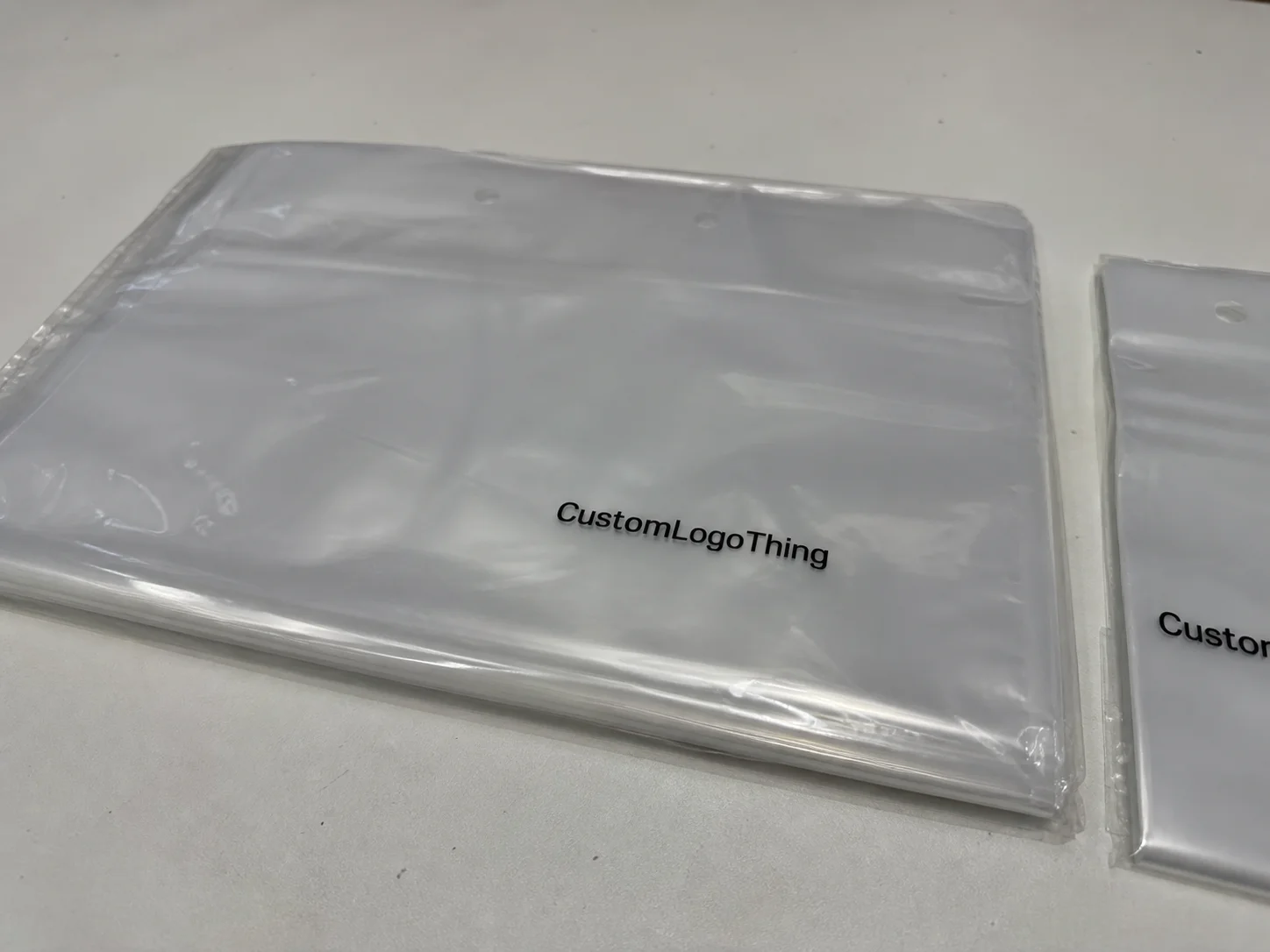
Buyer Fit Snapshot
| Best fit | Kraft Envelope Mailers Supplier projects where brand print, material claims, artwork control, MOQ, and repeat-order consistency need to be specified before quoting. |
|---|---|
| Quote inputs | Share finished size, material target, print colors, finish, packing count, annual reorder estimate, ship-to region, and any compliance wording. |
| Proofing check | Approve dieline scale, logo placement, barcode or warning zones, color tolerance, closure strength, and carton packing before bulk production. |
| Main risk | Vague material claims, crowded artwork, missing packing details, or unclear freight terms can make a low unit price expensive after revisions. |
Fast answer: Kraft Envelope Mailers Supplier: Film, Print, MOQ, and Carton Packing should be specified like a repeatable production item. The safest quote records material, print method, finish, artwork proof, packing count, and reorder notes in one written spec.
Production checks before approval
Compare the actual filled-product size with the drawing, then confirm tolerance on folds, seals, hang holes, label areas, and retail display edges. Reserve space for logos, QR codes, warning copy, and material claims before decorative graphics fill the panel.
Quote comparison points
Review material grade, print process, finish, sampling route, tooling charges, carton quantity, and freight assumptions side by side. A quote is only useful when the supplier can repeat the same color, closure quality, and packing count on the next order.
Kraft Envelope Mailers Supplier: Sustainable Buying Guide
A kraft envelope mailers supplier does a lot more than ship out a brown paper sleeve with a logo slapped on it. Paper grade, adhesive, flap shape, gusset depth, and print coverage all decide whether the mailer holds together in transit or starts looking tired before it reaches the customer. If you are buying for ecommerce, subscriptions, or printed collateral, treat a kraft envelope mailers supplier like a packaging partner. Not a quote machine.
Kraft mailers look simple. That is the trap. One version may work fine for flat inserts and documents. Another may be better for folded apparel, books, or sample kits that need room, structure, and a seal that does not give up halfway through the route. The right kraft envelope mailers supplier helps you match the build to the product, the packing line, and the sustainability target you actually need to meet. Otherwise you are just buying a brown envelope and hoping for the best. That is not a strategy.
For Custom Logo Things and other buyers focused on branded shipping, the real question is not whether kraft paper looks green. Paper can look virtuous in a mockup and still fail in the warehouse. The question is whether the full mailer performs cleanly, ships efficiently, and supports the end-of-life story you want to tell. That is the angle I would keep in view from here on out.
What a kraft envelope mailers supplier actually does
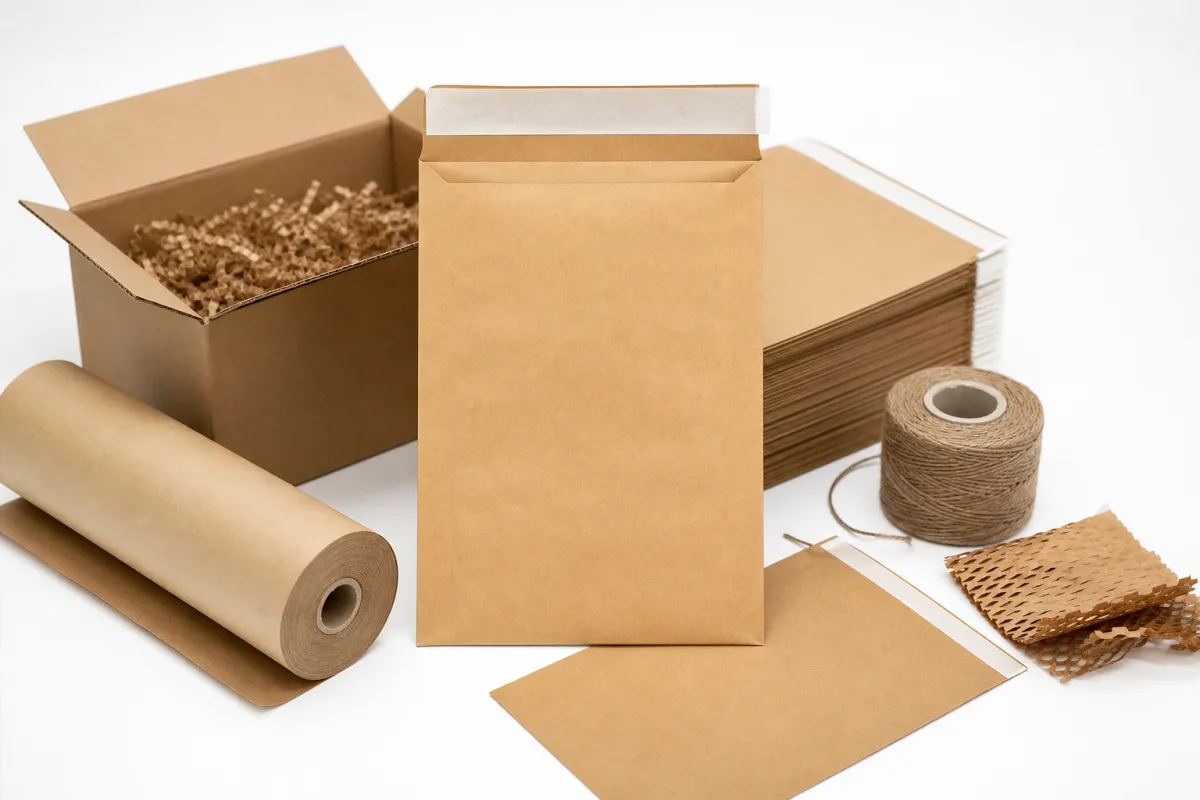
A kraft envelope mailers supplier provides paper-based shipping envelopes for low-bulk items: documents, apparel, inserts, flat samples, catalogs, and plenty of ecommerce orders that do not need a rigid box. The concept is easy. The construction details are not. One supplier may sell a lightweight stock mailer with a basic flap. Another may build a custom format with stronger seams, a tear strip, and printed branding that still fits a paper-recycling stream.
The paper itself is where the real differences start. Kraft paper can come from virgin fiber or recycled fiber, and fiber length, basis weight, and surface finish all affect folding, printing, and tear resistance. A kraft envelope mailers supplier might work with 100 gsm, 120 gsm, or 150 gsm stock depending on the application, and each one changes the hand feel and the durability. Heavier is not automatically better. A well-designed 120 gsm mailer with a proper closure can outperform a heavier one with a weak seal. Paper weight does not rescue bad engineering.
Most buyers choose a kraft envelope mailers supplier instead of a random one-off seller because consistency matters. If your team ships the same SKU hundreds or thousands of times, the mailer needs tight size control, print registration has to stay clean, and the adhesive should behave the same from the first carton to the fiftieth. Once a warehouse team gets used to a certain fold line, flap length, or opening style, even a small change can slow packing or raise damage risk. I have watched a line stall over a few millimeters. Nobody was thrilled.
Branding matters too. A good supplier can keep the look restrained and polished, with a one-color logo or a full-coverage print depending on the budget. A strong kraft envelope mailers supplier should be able to tell you where the ink sits best, how much coverage the mailer can take before it starts looking muddy, and whether the design still supports recycling claims. Kraft paper has a feel. Burn that with too much ink and the whole thing looks tired.
That last point deserves a straight answer. Kraft paper can support a lower-plastic approach, but the outer paper alone does not make a mailer sustainable. A film liner, plastic window, heavy lamination, or closure that complicates recycling weakens the claim fast. A thoughtful kraft envelope mailers supplier will explain what is in the build and what is not. If they dodge that question, keep your wallet closed for a minute.
For buyers comparing options, it helps to think in this order:
- Function first: what item needs to fit, close, and survive transit?
- Construction second: what paper weight, seal, and reinforcement are needed?
- Branding third: how much print coverage does the design need?
- Sustainability last, but not least: what can actually be documented?
That is the job of a kraft envelope mailers supplier: turn a shipping need into a repeatable mailer build that can be reordered, packed faster, and explained clearly to customers without hand-waving.
How kraft envelope mailers work in everyday shipping
In day-to-day shipping, a kraft mailer works because it keeps a flat or low-profile item compact while still protecting it from abrasion, light scuffing, and the usual dust-and-handling nonsense that happens in transit. A kraft envelope mailers supplier may offer a basic envelope style, but many builds include more than one sheet of paper. You might get an outer kraft layer, an inner reinforcement at the flap, a peel-and-seal strip, and in some cases a tear strip or side gusset to make packing easier.
The flap and seal do a lot of the heavy lifting. A pressure-sensitive adhesive gives a fast close, which helps in high-volume fulfillment where speed matters. A peel-and-seal strip can give a cleaner, more secure bond if the package will sit in transit for several days. A good kraft envelope mailers supplier will ask how your fulfillment team packs because a mailer that works well for hand packing may not be the best fit for a semi-automated line or a fast kitting operation.
Protection comes from compactness as much as from strength. When a flat item rattles around inside a larger carton, corners get bruised and presentation suffers. Kraft mailers reduce empty space, which can lower edge wear and cut down on filler. For a brand that wants a cleaner unboxing moment, that matters. A kraft envelope mailers supplier that understands presentation will usually recommend a mailer size that gives just enough clearance for insertion without letting the product slide inside like it is late for a train.
These mailers fit best with items such as:
- Apparel pieces like tees, socks, and light accessories
- Books, notebooks, and flat printed materials
- Sample sets and promotional inserts
- Catalogs, brochures, and direct-mail pieces
- Return-friendly ecommerce orders that do not need rigid edge protection
There are limits. A kraft envelope is not a box pretending to be modest. If the product has sharp corners, brittle edges, moisture sensitivity, or a shape that creates pressure points, a mailer can become the wrong tool very quickly. In that case, a rigid mailer, corrugated carton, or another packaging structure may work better. A seasoned kraft envelope mailers supplier should say that plainly instead of trying to force one format into every job.
From a warehouse point of view, the benefits are obvious. Packing is usually faster. Storage is more compact. Dimensional weight can be easier to control on some routes. The finished package often looks more intentional than a box stuffed with void fill. If you are comparing formats, it helps to look at these mailers alongside Custom Packaging Products and keep Custom Poly Mailers in the mix if your team needs water resistance or a different shipping profile.
On the testing side, a good supplier will not just toss around paper-strength language. A reliable kraft envelope mailers supplier should be able to talk about how the mailer behaves under normal handling, and many packaging teams use distribution testing methods such as ISTA protocols to sanity-check performance. If you want broader context on sustainable materials, the EPA recycling guidance is a solid reference point.
Kraft envelope mailers supplier selection factors
Choosing a kraft envelope mailers supplier comes down to matching technical details to the way you actually ship. A lot of buyers start with price, then discover too late that the paper is thin, the seal is inconsistent, or the size runs annoyingly tight. I would start with construction, then move into branding, compliance, and cost. That order produces fewer surprises and a lot less apologizing to the warehouse team.
Paper weight is the first thing to pin down. A supplier may call the mailer kraft and leave it at that, which is not much help. Ask for the basis weight, the fiber mix, and whether the paper surface is meant for writing or print. A 100 gsm mailer can work well for light, flat shipments. A 140 gsm or heavier build may be better for mailers that take more abuse or carry items with harder edges. A skilled kraft envelope mailers supplier will explain the tradeoff between weight, stiffness, and fold memory without trying to sound mystical about it.
Closure performance deserves the same level of attention. Peel-and-seal strips are popular because they are fast and secure, but not every adhesive behaves the same in dusty warehouse conditions or temperature swings. Pressure-sensitive closures may be fine for short, controlled shipments, while tamper-evident structures add another layer of confidence. If the mailer is moving through a high-volume operation, the seal has to work cleanly the first time. A kraft envelope mailers supplier should be willing to discuss closure testing rather than just showing you a glossy sample and calling it solved.
Size control can save money and reduce waste. If a mailer is oversized, you pay for extra paper and sometimes extra freight. If it is too tight, your team wastes time forcing product into the envelope and the seal line may fail under tension. I have seen buyers save more by changing dimensions by a few millimeters than by shaving a cent off the unit price. A good kraft envelope mailers supplier will help you fit the internal dimensions around the real product, not some idealized spec sheet fantasy.
Branding quality matters too. Kraft paper can look elegant with one-color printing, but it can also look muddy if the artwork is too busy or the ink is too dense. Ask about print coverage, registration tolerances, and whether the supplier can keep logos crisp at smaller sizes. If your brand wants a minimal natural look, restrained print usually works better than full-wrap coverage. A thoughtful kraft envelope mailers supplier will tell you what the paper can carry without losing the kraft finish.
A mailer that looks sustainable but falls apart in the warehouse is not a good sustainable choice. A kraft envelope mailers supplier should help you balance material use, packing speed, and shipping protection so the package works in daily operations, not just in a mockup.
Documentation is the final filter. If a supplier says the mailer is recyclable, recycled-content, FSC-certified, or otherwise responsible, ask for proof. The paper source, recycled percentage, and any finishing layers should be clear enough for your team to validate. If you are checking paper sourcing, the FSC site is useful for understanding certification language. A credible kraft envelope mailers supplier should expect that question, not take offense at it.
Here is a comparison many buyers find useful:
| Option | Best for | Typical print capability | Indicative unit price | Notes |
|---|---|---|---|---|
| Stock kraft mailer | Fast restocking, basic branding | Limited or none | $0.12-$0.20 | Lower setup, smaller minimums, less customization |
| Custom kraft mailer | Logo branding, fit control | 1-4 color print or more | $0.18-$0.32 | Better fit and brand impact, longer proofing time |
| Reinforced kraft mailer | Heavier flat goods, better seal confidence | Usually custom | $0.24-$0.40 | Extra material and more consistent closure performance |
| Premium branded mailer | Retail presentation, higher-touch unboxing | Full coverage or specialty print | $0.30-$0.55 | Best for brand experience, but not always necessary |
One more filter that saves headaches: ask whether the supplier can support your order volume without pushing you into excess inventory. A very low price from a kraft envelope mailers supplier gets less attractive if it forces you to buy a year’s worth of stock that just sits there eating cash and shelf space.
Some businesses should not use a kraft mailer at all. If you need moisture resistance, puncture resistance, or a more compact outer profile, another package style may be the better choice. That is why buyers often compare a kraft envelope mailers supplier with suppliers of other mailing formats before they commit. The right answer is usually the one that protects the product without making operations miserable.
Kraft envelope mailers supplier pricing and lead times
Pricing from a kraft envelope mailers supplier usually breaks down more cleanly than buyers expect, but only if the questions are specific. The quote line may look simple. The real spend shifts once freight, print setup, samples, and storage tied to larger order volumes show up. A fair comparison starts with the same size, the same paper weight, the same seal, and the same print coverage. Otherwise, you are comparing different products and pretending the numbers are meaningful.
The main pricing drivers are pretty predictable. Paper basis weight matters. Custom dimensions matter. Print complexity matters, especially if you want more than a single-color logo. Adhesive type can change cost, and so can the amount of reinforcement in the flap or side panels. A transparent kraft envelope mailers supplier will show where the money goes instead of giving you a number and hoping you stop asking questions.
Order quantity changes the math quickly. Small runs often carry a higher unit price because the setup time is spread across fewer pieces. Larger runs can lower unit cost a lot, but they also increase inventory risk. If demand is seasonal or uncertain, the cheapest per-piece quote may not be the smartest one. A good kraft envelope mailers supplier should help you find the point where unit cost and holding cost stop fighting each other.
Here is a useful way to think about timing:
- Stock products: often ship faster when inventory is on hand
- Custom sizes: usually need drawing confirmation and production scheduling
- Printed runs: add artwork review, proof approval, and sometimes plate or setup time
- Freight: can add several days depending on distance and mode
In many cases, a stock or lightly customized order can move in about 7 to 12 business days after approval. A more customized order often lands in the 12 to 20 business day range, and larger volumes may need longer depending on the factory schedule. A reliable kraft envelope mailers supplier will separate proofing, production, and transit so you can see where the time is going instead of staring at one broad estimate.
It helps to compare landed cost instead of unit price alone. That means freight, carton counts, sample charges, and any minimum order quantity that creates excess. If one kraft envelope mailers supplier quotes $0.19 per unit but requires 20,000 pieces, while another quotes $0.24 per unit at 5,000 pieces with lower freight, the second option may be better for cash flow and storage.
One simple comparison table keeps the conversation honest:
| Quote factor | Why it matters | What to confirm |
|---|---|---|
| Unit price | Helpful, but incomplete | Same size, material, print, and seal style? |
| Freight | Can change total spend a lot | Included, prepaid, or billed separately? |
| Setup or plate cost | Common on custom print jobs | One-time or recurring charge? |
| Minimum order quantity | Affects inventory and storage | Can the volume be split by release? |
| Lead time | Impacts launch and replenishment planning | Proof, production, and transit all included? |
Many buyers also review supplier responses alongside other packaging options so they can tell whether a mailer is actually the right tool. A strong kraft envelope mailers supplier should be comfortable with that comparison because the goal is the right package, not the biggest order. If a supplier gets defensive, that usually tells you more than the quote does.
In plain buying terms, the best quote is not the cheapest one on paper. It is the one that gives you the right fit, the right presentation, and a delivery window that matches your shipping calendar. If you are planning a promotion, seasonal drop, or product launch, start earlier than you think you need to. A dependable kraft envelope mailers supplier can move quickly, but only if the spec is clear and the artwork is ready.
Kraft envelope mailers supplier process and timeline
The best way to work with a kraft envelope mailers supplier is to treat the order like a small packaging project. That sounds formal, but it saves time. Start with the product dimensions, the target fit, the seal style you want, and any branding requirements. If you already know the approximate monthly usage, include that too. A supplier usually does better work when the end use is clear instead of vaguely implied.
The process usually starts with a spec request or sample discussion. Good suppliers will ask for the item dimensions, the expected shipping route, the branding file format, and the minimum acceptable performance. That sample stage matters. A kraft envelope mailers supplier can show you paper feel and basic construction on paper, but the real test is how the mailer behaves with your actual product, your actual packers, and your actual workflow.
Once samples are in hand, the next step is usually proofing. This is where dielines, logo placement, bleed, and flap alignment get checked. Small mistakes here become expensive once production starts. A careful kraft envelope mailers supplier will slow the process enough to catch problems before ink hits paper. That may feel tedious. It is still cheaper than reworking thousands of mailers because the logo lands too close to a fold.
After proof approval, production begins. Depending on the order, the sequence may include material sourcing, printing, cutting, folding, adhesive application, inspection, carton packing, palletizing, and shipment. Each step adds time, especially if the supplier is waiting on a specific paper grade or a custom print setup. A dependable kraft envelope mailers supplier should give you a realistic sequence instead of one broad promise that hides the schedule.
Inspection matters more than many people realize. A mailer can look fine in a sample pack and still fail if the cut tolerance drifts or the seal area picks up dust during production. Basic checks often include paper consistency, adhesive function, print alignment, and carton count verification. If the order matters, ask your kraft envelope mailers supplier what they inspect and when they inspect it. The answer says a lot about their process maturity.
A practical timeline often looks like this:
- Day 1-3: brief, specs, and sample request
- Day 3-7: sample review or concept quote
- Day 7-10: artwork proof and final approval
- Day 10-20: production window, depending on customization
- Transit: added based on shipping method and location
That is not universal. A stocked item may move faster, while a custom build can take longer if the paper must be sourced or if the print run is complex. A seasoned kraft envelope mailers supplier will help you decide where to build buffer time so your launch does not depend on one truck arriving on time.
There is also a planning habit that good packaging teams use: document the final approved spec. Keep the dimensions, paper weight, seal type, print file, carton pack count, and reorder quantity in one place. That way, the next order does not start from scratch. A responsive kraft envelope mailers supplier will appreciate that level of clarity because it cuts errors and speeds up reorders.
If your business handles multiple mailer types, this is the moment to compare them internally and decide what belongs in paper, what belongs in plastic, and what should stay in rigid packaging. The best kraft envelope mailers supplier conversations are not just about one SKU. They are about building a packaging system that fits the way your business actually ships.
Common mistakes when choosing a kraft envelope mailers supplier
The biggest mistake I see is buying on price alone. A kraft envelope mailers supplier may offer a very attractive per-unit quote, but if the mailer tears at the seal, runs too small, or slows down the packing line, the savings disappear quickly. Returns, repacks, and customer complaints cost more than the pennies you thought you saved on paper. Cheap paper is still expensive when it fails.
Another common mistake is accepting vague sustainability language. A supplier may say the mailer is eco-friendly, recyclable, or made from responsible materials, but those words need specifics behind them. What is the recycled content? Is the paper certified? Is there a plastic lining? Is the ink coverage light enough to support the recycling story? A strong kraft envelope mailers supplier should answer those questions in plain language.
Skipping samples is risky. A mailer can look perfect in a catalog and still perform badly in real use. Maybe the seal is weak. Maybe the fold memory is stiff. Maybe the size is a little too tight once the product is inserted with its insert card or tissue wrap. A reliable kraft envelope mailers supplier should encourage sampling because that is how a bad fit gets caught before production scale.
Warehouse workflow gets ignored far too often. If the mailer is awkward to open, slow to load, or annoying to seal, your team loses time on every unit. Over a 10,000-piece order, that turns into a real labor expense. When evaluating a kraft envelope mailers supplier, ask the operations team to handle the sample and tell you whether the package feels efficient or fussy. If they sigh before the test is over, that tells you plenty.
Lead time mistakes are another big one. Buyers hear a production window and forget to add artwork approval, freight time, or the possibility that a paper grade is out of stock. That creates stockouts during a promotion or seasonal surge. A practical kraft envelope mailers supplier will separate those time blocks clearly so you do not get surprised later.
There is also the habit of ordering a generic size and hoping the product will fit forever. Inventory changes. Product dimensions shift. Folding methods evolve. If the package is too loose, the presentation suffers. If it is too tight, packers fight the envelope. A more disciplined kraft envelope mailers supplier conversation includes the real product dimensions, not just the nominal SKU size on a spec sheet.
If the supplier cannot talk through fit, seal strength, and recycling claims with evidence, that is a warning sign. The best suppliers know that paper packaging is not just about being paper-based. It is about how the build performs from packing bench to customer doorstep. That is the line a good kraft envelope mailers supplier should be able to hold.
Expert tips and next steps for working with a kraft envelope mailers supplier
The cleanest way to start with a kraft envelope mailers supplier is to build a one-page spec sheet before you request quotes. Include the product dimensions, target mailer size, paper preference, seal type, print needs, carton pack count, and sustainability requirements. That one page cuts down a lot of back-and-forth because it gives the supplier something concrete to price and manufacture.
My second recommendation is to run a short sample test with real products and real packers. Do not judge the mailer by hand feel alone. See how it loads, seals, stacks, and opens. If possible, run a small transit test using your normal carrier path. A good kraft envelope mailers supplier will not mind that at all, because a real-world trial usually saves both sides from surprises later. And yes, it is a little annoying to set up. Still worth it.
Compare more than cost. A lower quote means very little if the supplier cannot hold color consistency, if the adhesive is inconsistent, or if the order lands after the campaign goes live. A dependable kraft envelope mailers supplier should be judged on four things: fit, print quality, lead time, and documentation. If all four are solid, the quote starts to matter in the right way.
It also helps to lock down the reorder settings early. Save the approved dieline, final artwork, paper spec, and packaging count in one internal file. Then, when it is time to reorder, your team does not have to rebuild the project from the ground up. A mature kraft envelope mailers supplier relationship gets better over time because the details stay organized.
Here is the checklist I would use before placing an order:
- Confirm the mailer size against the actual product dimensions
- Ask for samples and test the closure under real packing conditions
- Request paper, adhesive, and recycled-content details in writing
- Compare landed cost, not just unit price
- Check lead time, freight, and minimum order quantity together
- Keep the final spec and artwork files in one place for reorders
That approach keeps the buying process practical and grounded. It also helps the packaging team explain why one format was chosen over another, which matters if operations, marketing, and finance all touch the decision. A thoughtful kraft envelope mailers supplier is part of that decision, but not the whole decision.
If you are buying for a brand that values a cleaner material story, kraft mailers can make excellent sense. They can cut plastic use, present well, and ship efficiently when matched to the right contents. Just keep the full construction in view. The paper matters, but the seal, dimensions, print, and handling behavior matter just as much. That is why smart buyers stay close to their kraft envelope mailers supplier, ask direct questions, and build the order around the real shipment instead of the assumption.
Frequently asked questions
What should I ask a kraft envelope mailers supplier before placing an order?
Ask about paper weight, seal type, custom sizing, minimum order quantity, and whether samples are available before you commit. A good kraft envelope mailers supplier should also give you clear details on recycled content, print options, and expected lead time so you can compare quotes on the same terms.
How do I compare kraft envelope mailers supplier pricing fairly?
Compare the full landed cost, not just the per-unit quote, because freight, setup, and sample charges can change the real total. Make sure each kraft envelope mailers supplier is quoting the same size, material, seal style, and print coverage, or you are really comparing different products.
Can a kraft envelope mailers supplier make custom sizes and branding?
Yes, many suppliers can adjust dimensions and print logos, but custom work usually adds proofing time and may raise the minimum order. Ask for a dieline or spec drawing early so the kraft envelope mailers supplier can check artwork, fit, and machine compatibility before production starts.
What is a realistic lead time for kraft envelope mailers from a supplier?
Stock items can ship faster, while custom sizes or printed runs usually take longer because of proof approval and manufacturing time. A practical kraft envelope mailers supplier timeline should also include freight and sample review so you do not set expectations too tightly around one production date.
Are kraft envelope mailers actually a sustainable packaging choice?
They can be, especially when they reduce plastic use and are made with documented recycled or responsibly sourced paper. The best choice depends on the full construction, so a kraft envelope mailers supplier should be able to explain adhesives, linings, print coverage, and end-of-life guidance Before You Buy.
For most brands, the best outcome comes from choosing a kraft envelope mailers supplier that can prove the mailer fits the product, fits the warehouse workflow, and fits the sustainability story you want to tell. Get the samples, compare the landed cost, verify the materials, and keep the reorder spec tight. Do that, and your kraft envelope mailers supplier becomes a steady part of the packaging program instead of a yearly headache. The next order gets easier, the packing line stays happier, and nobody has to improvise with tape and hope.