Buyer Fit Snapshot
| Best fit | Kraft Shipping Bags Wholesale projects where brand print, material claims, artwork control, MOQ, and repeat-order consistency need to be specified before quoting. |
|---|---|
| Quote inputs | Share finished size, material target, print colors, finish, packing count, annual reorder estimate, ship-to region, and any compliance wording. |
| Proofing check | Approve dieline scale, logo placement, barcode or warning zones, color tolerance, closure strength, and carton packing before bulk production. |
| Main risk | Vague material claims, crowded artwork, missing packing details, or unclear freight terms can make a low unit price expensive after revisions. |
Fast answer: Kraft Shipping Bags Wholesale: Specs, Pricing, Supply should be specified like a repeatable production item. The safest quote records material, print method, finish, artwork proof, packing count, and reorder notes in one written spec.
Production checks before approval
Compare the actual filled-product size with the drawing, then confirm tolerance on folds, seals, hang holes, label areas, and retail display edges. Reserve space for logos, QR codes, warning copy, and material claims before decorative graphics fill the panel.
Quote comparison points
Review material grade, print process, finish, sampling route, tooling charges, carton quantity, and freight assumptions side by side. A quote is only useful when the supplier can repeat the same color, closure quality, and packing count on the next order.
Custom Logo Things
For flat goods, apparel sets, paperwork kits, and lightweight ecommerce shipping jobs, Kraft Shipping Bags wholesale can solve a problem that boxes never quite fix: too much empty space, too much storage bulk, and too much handling for a package that does not need a rigid carton. The right bag format keeps order fulfillment moving, protects the product from scuffing and dust, and cuts wasted dimensional weight where a box would have created dead air around a slim item. I have seen plenty of shipping rooms where the switch from oversized cartons to a proper paper bag took a lot of friction out of the line, and the change was usually more practical than flashy.
Kraft Shipping Bags Wholesale: Why They Solve Flat-Pack Shipping Problems
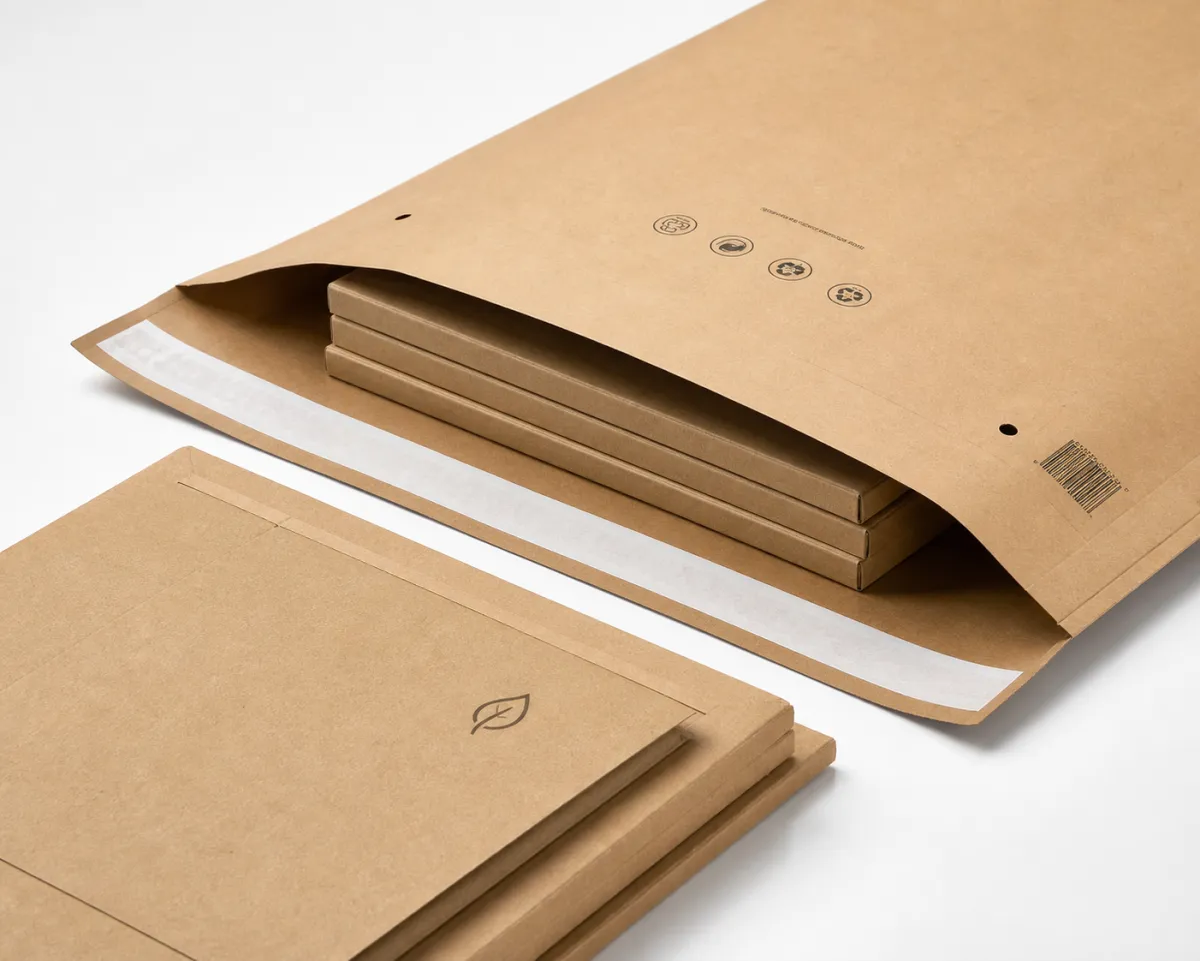
Most shipping losses do not begin with a dramatic failure. They begin with a small mismatch: the pack format is wrong for the product, the closure is awkward for the line, or the outer pack forces the item to rattle, wrinkle, or bend. That is why kraft shipping bags wholesale works so well for apparel, printed materials, manuals, flat kits, and other low-profile goods. A good bag gives the shipper a clean outer pack that stacks well, labels easily, and stores without taking over the warehouse.
From a packaging buyer's point of view, kraft shipping bags wholesale makes sense when you need a format that is simple enough for daily use but consistent enough for recurring volume. The benefit is not limited to a lower unit cost. It also means fewer emergency buys, fewer mix-and-match packaging decisions, and fewer packing delays when outbound volume climbs. A paper shipping bag is easy to pull, fill, seal, and move down the line. That matters in order fulfillment because every extra motion adds labor cost, even when the unit price looks low at first glance.
There is also a storage advantage. Boxes consume cubic space fast. Bags compress far better, especially when you are holding seasonal apparel, document sets, or replacement parts in reserve. For ecommerce shipping, that can be the difference between keeping a full month of supply on hand and scrambling for pallet space. Kraft formats also tend to be straightforward to label, barcode, and sort, which helps operators work faster without extra training or special handling steps.
Too many buyers make transit packaging harder than it needs to be. If the product is flat, light, and not sharp enough to cut through the wall, a well-built kraft bag often beats a box on cost and convenience. That does not mean every item belongs in paper. It means the spec should match the load. If you need a clean, economical outer pack that can be bought in volume, kraft shipping bags wholesale is one of the most practical places to start.
A good shipping bag should disappear into the workflow: easy to store, easy to fill, easy to seal, and easy to scan without fighting the item inside.
That is also why the format works so well for package protection in flat-pack scenarios. It is not trying to act like a shipping box, and that is exactly the point. A good kraft bag protects the surface finish, keeps dust off the product, and presents a tidy face for carriers and receiving teams. When the load is right, kraft shipping bags wholesale gives you a useful balance of utility and control. If the product is a little odd-shaped, the right bag spec can still work, but the fit has to be checked with real measurements instead of guesswork.
Kraft Shipping Bags Wholesale Product Details: Materials and Construction
Not all kraft bags are built the same, and the differences show up quickly once the line starts running. Natural kraft is the common choice because it has a familiar paper look, good stiffness for its weight, and a clean surface for labeling. Bright white kraft gives a brighter print field and a more finished appearance for branded shipments. For kraft shipping bags wholesale, the real question is not color first; it is how the paper, seams, and closure work together under daily handling.
Paper weight is the first spec buyers usually ask about, but it should not be the only one. A heavier sheet can feel better in the hand and hold its shape more cleanly during packing, yet a heavy sheet alone will not fix weak seams or a poor closure. In many cases, paper builds in the 70-120 gsm range, or equivalent basis-weight structures depending on the factory, are used for shipping-style bags. If the item is sharp, cornered, or awkwardly folded, the construction needs to be checked as a system, not just by the number on the spec sheet.
Seam strength matters more than most people expect. Side seams, bottom folds, and any reinforced edges must handle friction from insertion and movement in transit packaging. If the bag is too soft, it can collapse before sealing. If the gusset is too shallow, the product bulges and stresses the closure. If the opening is too narrow, packers waste time trying to slide items into place. Those are small issues on paper, but they create real friction in a high-volume shipping line.
Closure style changes the workflow too. Open-end bags are simple and often low-cost, but they depend on the buyer's sealing method. Self-seal adhesive strips speed up packing and reduce labor. Fold-over flaps can work well for basic containment, especially when the contents are already protected inside a retail carton or sleeve. Reinforced zones around the mouth or flap help when the bag is opened and closed repeatedly during prep, sampling, or kitting. In other words, kraft shipping bags wholesale is not one product; it is a family of options built for different handling steps.
When buyers compare shipping materials, they should also look at how the bag holds shape on the table. A bag that stands open just enough to be loaded cleanly saves time and reduces mistakes. A bag that collapses flat and twists during packing can slow an otherwise smooth operation. For this reason, the best wholesale specs always name the material, the fold style, the seam method, the closure, and the exact finished size. That level of clarity prevents surprises later.
If your product line also includes formats that need moisture resistance or a smoother film face, compare the paper bag option with Custom Poly Mailers and decide based on the real handling environment rather than habit. Paper is not automatically better, and film is not automatically stronger. The point is to match the package to the job. A dry, flat assortment can do very well in kraft, while a shipment that faces damp docks or rough weather may need a different outer pack.
Size, Thickness, and Print Specifications
Size selection starts with the packed item, not the flat item alone. Measure the finished product, then add the clearance needed for insertion, a label, any insert card, and the amount of closure overlap required at the mouth. That sounds basic, but it is where many first-time kraft shipping bags wholesale orders go sideways. A bag that is technically large enough can still feel awkward if the opening is tight or the item catches on an internal fold. Leave room for the packing motion, not just the product dimensions.
Thickness should be read as stiffness plus durability, not just paper mass. Heavier paper often feels more premium and resists crumpling better, which is useful when the bag needs to look tidy at delivery. Still, paper thickness does not make a bag suitable for everything. For sharp corners, metal edges, or bulky kits, the bag may need a stronger seam, a wider gusset, or a different outer pack entirely. Buyers who treat thickness as the only variable often end up overbuying material without solving the actual problem.
Print specifications should be kept practical. One-color logo work, a simple return address, or a short message can look clean and keep costs under control. Multi-color coverage, full panels, and heavy ink saturation add design impact, but they also affect price, proofing time, and the visual consistency of the paper surface. If the goal is efficient branding for ecommerce shipping, a restrained print layout is often the right answer. It reads clearly, runs well in production, and avoids turning a shipping bag into a marketing poster. I am all for attractive packaging, but the bag still has to move through the line without making folks curse under their breath.
Before placing kraft shipping bags wholesale orders, confirm these details in writing:
- Finished size and usable interior space
- Printable area and artwork placement
- Closure type and seal width
- Paper color and paper weight
- Gusset depth or flat profile
- Any packaging-line requirements, such as carton count or pallet pattern
Those details make the difference between a clean approval and an expensive surprise. A bag that is slightly off in width might still fit the product, but it can slow the pack line if operators need two hands to work the seal. A bag that is too deep can look sloppy and waste material. A bag that is too narrow can crease the item and weaken package protection. With kraft shipping bags wholesale, the right spec is the one that supports the actual packing motion, not the one that sounds best on a quote sheet.
For buyers who are building a broader packaging program, it helps to compare bag options against boxes and other mailer formats. Some programs use paper bags for flat goods, Custom Shipping Boxes for rigid or fragile items, and a mix of paper and film formats across SKUs. That kind of planning keeps transit packaging efficient without forcing one format to do every job. It also gives your team a cleaner playbook when seasonal volume spikes and nobody has time to improvise.
Kraft Shipping Bags Wholesale Pricing and Minimum Orders
Price is usually driven by a few concrete variables: bag size, paper weight, closure style, print complexity, and total quantity. Cosmetic details matter less than buyers expect. A simple natural kraft bag with no print is usually the least expensive route, while a larger printed format with adhesive closure, custom sizing, or special handling requirements will cost more. That is the basic logic behind kraft shipping bags wholesale pricing, and it stays fairly consistent across most production runs.
In broad terms, wholesale pricing often improves as quantity rises. A 1,000-piece order may carry a noticeably higher unit cost than a 10,000-piece order because setup time, proofing, carton packing, and production overhead get spread across more units. Smaller custom runs can still be worthwhile, but they often include minimum charges or packaging premiums that affect the landed cost. For buyers comparing kraft shipping bags wholesale quotes, the smartest move is to ask for tiered pricing at multiple break points.
Here is a realistic way to think about ranges, keeping in mind that exact pricing depends on specification and freight:
| Option | Typical Use | Common Spec Notes | Wholesale Range per Unit | MOQ Trend |
|---|---|---|---|---|
| Natural kraft, unprinted | Flat apparel, documents, light kits | Standard paper weight, basic seal or open-end format | $0.08-$0.18 | Often lower, especially on stock sizes |
| White kraft, single-color print | Branded ecommerce shipping | Cleaner print face, simple logo or return info | $0.12-$0.24 | Usually moderate, with proof requirements |
| Heavier kraft with adhesive closure | Higher-volume order fulfillment | Improved stiffness, faster line sealing | $0.16-$0.30 | Often higher due to construction and tooling |
| Custom size, multi-color print | Retail kits, branded mailers, special programs | Custom die or spec, broader print coverage | $0.22-$0.45+ | Typically the highest MOQ and setup cost |
Those numbers are not a quote; they are a buying guide. Freight, cartons, pallet count, and delivery destination can move the final number a lot, especially on lighter shipments where transportation makes up a larger share of the landed cost. Buyers should ask for a side-by-side quote that shows unit price, print charges, tooling if any, freight, and sample or proof fees. Without that, kraft shipping bags wholesale pricing can look better than it really is.
MOQ deserves the same attention. A stock bag may have a low minimum, while a custom size or printed format can push the minimum up because the factory has to allocate setup time and production capacity. That is not a penalty; it is simply how the run is built. The best way to control cost is to compare the quantity break points and decide where your inventory risk makes sense. If a larger run lowers unit cost but ties up cash and storage, the cheaper option may be the wrong one for your operation. A lot of buyers learn that the hard way, usually after the storage rack starts filling up faster than the product moves out.
Production Process, Proofs, and Lead Times
A clean production process matters just as much as the bag spec itself. The usual path for kraft shipping bags wholesale orders is straightforward: inquiry, specification review, quote, artwork confirmation, proofing, production, quality check, and shipment. The more complete the spec sheet, the less time is lost in back-and-forth. That matters because a packaging delay can become a shipping delay, and a shipping delay can turn into missed fulfillment windows for your customers.
Proofing is where many projects are won or lost. If the logo sits too close to a fold, if the copy is too small, or if the artwork file does not match the printable area, the finished bag may not look the way the buyer expected. A proof lets both sides check layout, color placement, and any critical dimensions before production starts. For kraft shipping bags wholesale, that step is especially useful when the bag will carry branded retail products or contract mailings where presentation matters as much as function.
Typical timelines vary by stock status and customization level. A stock-based order can move faster because the base materials and sizes already exist. A custom print or special size generally takes longer because the run needs artwork approval and sometimes extra material prep. In many cases, a practical planning window is 12-15 business days from proof approval for standard custom work, with longer windows for larger quantities or more complex print requirements. Rush situations happen, but they work best when the buyer is very clear about the requirements from the start.
For buyers who want to keep the schedule steady, documentation is the real insurance policy. Send the size, construction, closure, artwork file, carton count, and delivery address in one shot. If a product needs inspection against transit packaging standards, ask about test references early. The ISTA procedures are worth reviewing when a package has to survive handling, vibration, and carrier movement, and paperboard or paper products may also be discussed alongside relevant ASTM methods depending on the material and test plan. That kind of early check keeps you from guessing later.
Clear approvals protect your timeline. A bag that is approved from a complete specification rarely causes trouble later, while a vague order often creates avoidable revisions. That is why kraft shipping bags wholesale buyers who send strong documentation usually get better results, faster responses, and fewer costly surprises during production. It is a boring discipline, sure, but boring is exactly what you want when a production schedule is on the line.
Why Buyers Choose Custom Logo Things for Kraft Shipping Bags
Buyers usually want the same thing from a packaging supplier: straight answers. What is the material, how is it built, what does it cost, and how long will it take? That is the level of clarity Custom Logo Things should bring to kraft shipping bags wholesale projects. When a supplier can explain the paper weight, seal style, print options, and quantity breaks without hedging, the buying process gets easier and the final order is more likely to fit the line.
Technical guidance matters because most customers are not ordering packaging for its own sake. They are solving an operational need. Maybe they need a flatter outer pack for apparel. Maybe they are replacing an oversized carton that drives up dimensional weight. Maybe they need a cleaner branded finish for retail returns, documentation sets, or subscription items. In each case, the right answer starts with the shipping workflow, not the artwork. That is where kraft shipping bags wholesale should be evaluated: against the actual packing motion, the shelf space, and the carrier handoff.
Custom Logo Things also fits buyers who want one supplier conversation to cover more than one package style. A program might use paper bags for flat goods, Custom Packaging Products for mixed formats, and a separate box line for heavier items. Some customers also pair paper bags with Wholesale Programs to keep volume purchasing consistent across multiple packaging categories. That way, procurement does not need to negotiate every SKU separately, which is a relief when the calendar gets busy and the order list starts to pile up.
Quality control is another practical benefit. With kraft shipping bags wholesale, consistency across cartons matters because packers notice even small differences in fold, seal, or print registration. A bag that performs well in one carton should behave the same in the next. That repeatability helps order fulfillment stay smooth, especially when different team members are packing on different shifts.
If a supplier can help narrow the choice between natural kraft, white kraft, open-end construction, or adhesive closure before production starts, that saves time and reduces waste. It also keeps the quote grounded in actual usage instead of generic assumptions. That is the kind of support buyers should expect from a packaging partner: direct, practical, and tied to the real job the bag has to do.
One more detail matters here: standards and source transparency. If your buying team cares about responsible sourcing, ask whether the paper can be aligned with FSC expectations and whether the production documentation matches your internal compliance needs. The Forest Stewardship Council is a useful reference point when you are evaluating paper sourcing claims, but the actual certification status still has to be verified on the specific order. That kind of check is normal, and it is better to ask early than to sort it out after the bags are already on a dock.
When buyers approach kraft shipping bags wholesale this way, the purchase becomes easier to manage and easier to repeat. The supplier is no longer guessing, the spec is clearer, and the result is a bag that fits the operation instead of forcing the operation to adapt to the bag.
What to Send for a Fast Quote
The fastest quotes usually come from the most complete requests. If you want accurate kraft shipping bags wholesale pricing, start with the core specifications and add the operational details that affect production. A clear request saves time on both sides and reduces the chance that a quote will need to be revised after the first review.
Send these details first:
- Finished size or target dimensions
- Estimated quantity and preferred quantity breaks
- Artwork files, logo placement, and print colors
- Paper finish, color, and weight preference
- Closure type, such as open-end, adhesive strip, or fold-over flap
- Product type, weight, and any sharp edges or inserts
- Whether the order is stock or fully custom
Then add the details that help the supplier understand the working environment. Is the bag being packed by hand or on a semi-automated line? Is it part of a high-speed ecommerce shipping operation? Does it need to fit a shelf display, a mailroom process, or a retail return workflow? Those questions sound simple, but they change the spec. A bag intended for manual packing can tolerate a different opening style than one feeding a fast line. A bag for document kits may need a cleaner print face than one used for back-of-house transit packaging.
If the package will carry branded retail goods, contract documents, or higher-value contents, ask for sample confirmation or an approved spec before production. That is standard practice for good kraft shipping bags wholesale programs. It protects package protection, keeps the print where it belongs, and gives the buyer confidence that the first shipment will match the approved standard.
For customers who are still deciding between formats, it can help to compare the bag program with other mailers and cartons in the same buying conversation. A narrow, flat item may work best in paper, while a bulkier or more fragile product may belong in a carton. The point is not to force every SKU into one packaging style; the point is to build a packaging system that supports the business. In that sense, kraft shipping bags wholesale is often the right answer for the items that are flat, clean, and easy to seal, and something else should be used where the product demands it.
Send the finished dimensions, quantity, artwork requirements, and use-case notes together. That gives the buyer a much better chance of getting a usable quote on the first pass, and it makes the final kraft shipping bags wholesale order easier to approve, easier to produce, and easier to run on the floor.
Frequently Asked Questions
What size should I choose for kraft shipping bags wholesale orders?
Measure the packed product, not just the flat item, and add clearance for insertion, labels, and any inserts that sit inside the bag. A size that closes cleanly without stretching seams or folding corners usually performs best in daily packing. If you ship multiple SKUs, build a short size range instead of forcing one bag to cover everything. That is usually the cleaner move, and it saves the packers from improvising all day.
Are kraft shipping bags wholesale options strong enough for heavier items?
They work best for flat, lightweight, or moderately weighted products that do not have sharp edges. Paper weight, seam quality, gusset depth, and closure style all affect performance, so the construction matters more than the color or the print finish. For heavier contents, confirm the structure before ordering and avoid using a light bag outside its intended range. If the item is borderline, test a few samples first instead of hoping for the best.
What is the typical MOQ for kraft shipping bags wholesale pricing?
MOQ depends on whether the bag is stock or custom printed, plus the size and construction details. Larger runs usually bring better unit pricing, while smaller custom orders may include setup or proofing charges. Ask for tiered pricing so you can compare break points before committing to a final quantity. That way you can see the real cost curve instead of just the headline number.
How long does production take for kraft shipping bags wholesale orders?
Timing usually includes quote approval, artwork confirmation, proof review, production, inspection, and shipping. Stock-based orders are generally faster than custom-printed runs with special sizing or finishing requirements. A complete spec sheet and approved artwork reduce back-and-forth and help keep the schedule moving. If the timeline is tight, say so up front; that saves everybody a headache.
Can I add my logo to kraft shipping bags wholesale packaging?
Yes, most wholesale orders can be printed with a logo, simple copy, or other branded artwork. Keep the design file clean and ready, and confirm logo placement, colors, and printable area before production. A restrained print layout often keeps costs lower while still giving the bag a professional branded look. In a lot of cases, a simple mark is better than trying to cram too much onto the bag.
Final note: if you are comparing suppliers for kraft shipping bags wholesale, lock in the finished size, paper weight, closure, print plan, MOQ, and lead time together, then choose the spec that matches how the product actually moves through packing, shipping, and receiving.


