A ll bean Tote Bag Custom order looks easy until the spec sheet shows up. Then the real questions start: canvas weight, handle build, stitch density, imprint method, and whether the bag still looks decent after it is folded, shipped, and handled by people who do not care about your brand guidelines. The difference between a polished tote and a forgettable one is rarely the logo alone. It is the blank, the construction, and the decoration working together.
Most buyers are not chasing a collector piece. They want a sturdy boat-and-tote-style bag that can hold groceries, event collateral, retail purchases, or a client gift without collapsing into a soft rectangle. That sounds straightforward. It is not. A thin canvas, a crowded logo, or the wrong handle length can make the whole order feel cheaper than it should. A good ll bean tote bag custom program starts with the structure first and the artwork second.
If you are deciding between promotional, retail, or gift use, separate those goals Before You Quote anything. A promo tote is about volume and visibility. A retail tote has to justify itself as part of the product. A gift tote sits in the middle and usually needs to feel more substantial than the budget allows. That split affects blank quality, decoration method, and how much room you leave for the logo. If you also need inserts, hangtags, or companion items, start with Custom Packaging Products so the bag and the rest of the package branding look planned instead of stitched together at the last minute.
A tote only feels premium when the canvas, handles, and imprint look like they were chosen together. A fancy logo on a cheap blank still reads cheap. Customers notice faster than brands do.
LL Bean Tote Bag Custom: What Buyers Really Mean
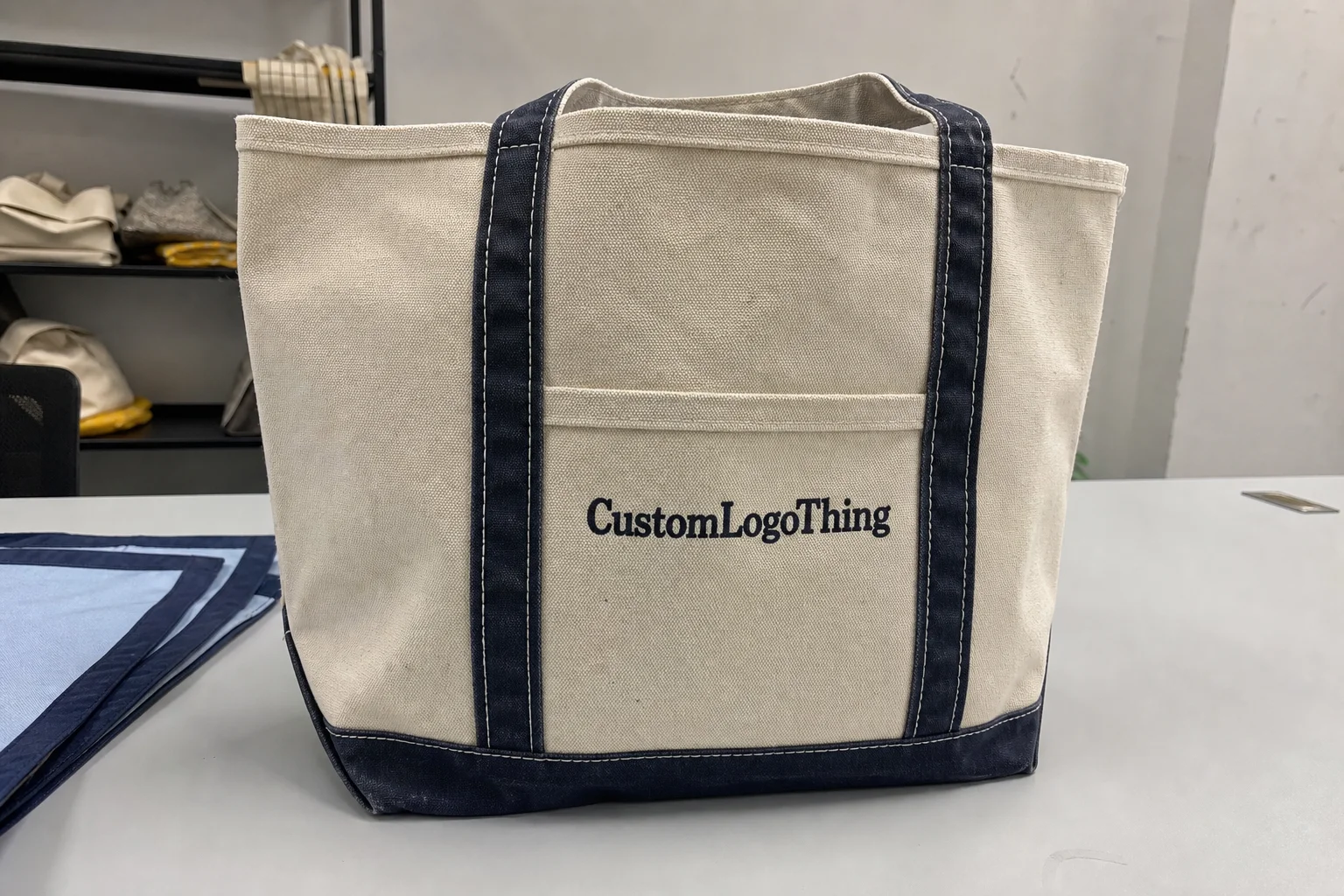
When someone asks for a ll bean tote bag custom order, they usually mean a classic canvas tote with a boxy body, sturdy handles, and a clean logo on the front panel. They are not always asking for a literal branded item. In practice, they want the familiar boat-and-tote look: durable, simple, and useful enough that people keep carrying it long after the original event is over.
That style can drift in two bad directions. Too light, and the bag slouches like a cheap grocery tote. Too heavy, and it starts to feel stiff, overbuilt, and awkward for everyday use. A canvas in the 12 oz to 18 oz range is common for this category, but the right weight depends on the job. For trade shows and handouts, midweight canvas is usually enough. For premium packaging or retail resale, heavier material with tighter stitching and better handle reinforcement reads more credible.
The other mistake is treating decoration like a magic fix. Canvas is forgiving, but not infinite. A simple one-color logo usually looks better than a packed full-color design with tiny text and thin lines. If the artwork is busy, the tote stops feeling classic and starts looking crowded. The strongest results usually come from a bold mark sized to the bag, not forced onto it like an afterthought.
Color is another place where expectations get sloppy. Natural canvas is not white, and that matters. Ink shifts differently on natural, black, navy, and dyed canvas. Embroidery thread behaves differently again. If exact color matching matters, ask for a proof and do not assume the bag will act like a coated sheet of paper. Canvas has texture. Texture changes everything.
From a packaging point of view, the tote is both a carrier and a display surface. That is why the same artwork can look polished on one blank and awkward on another. The goal is not to cover every inch. The goal is to make the bag feel intentional enough that it belongs with the product, the gift, or the event kit it is supporting.
How the Process and Lead Time Usually Work
A normal custom tote project follows a predictable sequence. Quote, artwork review, proof, approval, production, shipping. The part people underestimate is how much can stall if one piece of information is missing. Low-resolution files, vague placement notes, or changing quantities slow the job before a single bag reaches the press.
- Inquiry and quote: confirm bag style, quantity, imprint size, and shipping destination.
- Artwork review: check file type, legibility, color count, and overall print readiness.
- Proof or mockup: verify placement, size, and any decoration limits.
- Approval: lock the job before production begins.
- Production and packing: decorate, inspect, and prep for shipment.
- Transit: parcel or freight delivery, depending on the order size.
Lead time depends on blank availability, decoration method, and run size. A simple one-color screen print on an in-stock tote can often move in roughly 10 to 15 business days after proof approval. More colors, embroidery, or special finishing can push that to 15 to 25 business days. If the order includes custom packaging, retail sleeves, or kitting, add more time. That is not bureaucracy. That is production reality.
Delays usually show up in the same places. The file is not vector. The art needs cleanup. Someone wants the logo moved after the proof is approved. Or the buyer assumes the shipping deadline and the production deadline are the same thing. They are not. If the schedule is tight, ask early whether rush service exists. It usually does, but rush work tends to raise cost and narrow your options on revisions, color matching, and finishing.
For orders shipping directly to customers or event sites, ask whether the packed cartons need transit testing. Groups like ISTA publish packaging test profiles that help expose weak points before damage turns into a customer complaint. That matters more when the tote is part of a bundled kit, especially if the shipment also includes Custom Printed Boxes, inserts, or multiple branded components that have to arrive intact.
Lead time is not one number. It is artwork time, approval time, production time, and shipping time stacked together. Buyers who separate those buckets usually avoid most of the drama.
Specs That Change the Look, Feel, and Durability
The difference between a good tote and a forgettable one usually comes down to four things: canvas weight, handle construction, seam quality, and imprint placement. Those details sound boring until you carry the bag for five minutes and realize the handles are digging into your hand or the bottom panel feels like it will give out under a laptop and a bottle of water.
Canvas weight is the easiest spec to compare, but not the only one that matters. A lighter bag around 10 oz to 12 oz can work for low-cost promotions and mailers. A midweight 12 oz to 14 oz canvas is a safer middle ground for everyday use. Heavier 16 oz to 18 oz canvas feels more substantial and usually photographs better for retail packaging or premium giveaways. Heavier fabric costs more, but it also hangs better and holds shape longer. There is no trick here. Just less regret.
Handle length changes how the bag gets used. Short handles make it feel structured and keep the tote closer to the hand. Longer handles let people carry it on a shoulder, which is better for events and commuting. Gusset depth matters too. A deeper gusset gives the bag room for catalogs, boxed product, or folded apparel. Too shallow and the tote looks flat. Too deep and the logo can disappear into the folds if the placement is wrong.
Decoration method matters just as much as the blank. Screen print is the workhorse for clean logos, solid fills, and controlled unit costs. Embroidery adds texture and a more premium feel, but tiny details can disappear. Woven patches and woven labels work well if you want a garment-style finish or a more fashion-forward look. A patch can look strong on a tote, but it should look deliberate, not like a fix for bad planning.
For sustainability-focused buyers, check whether the cotton is FSC-certified where applicable and whether packaging components use recycled or responsibly sourced material. FSC standards are useful when the tote is part of a broader sourcing story, especially if the bag ships with hangtags, tissue, or outer cartons. That does not make the tote automatically better. It just means the paper-based parts of the program were handled with more discipline.
Here is the rule I use: the larger and simpler the logo, the more the bag can carry it. The smaller and more detailed the logo, the more the blank quality and decoration method have to do the heavy lifting. Otherwise the tote does the opposite of what good packaging should do. It makes the brand look smaller.
If the tote is meant to carry merchandise, buy for structure first and decoration second. If the tote is meant to carry attention, reverse that order. Most buyers get that backward.
A useful comparison looks like this:
| Option | Typical Blank | Decoration | Approx. Unit Cost | Best For |
|---|---|---|---|---|
| Value tote | 10 oz to 12 oz canvas, basic seams | 1-color screen print | $3.25 to $5.25 at 1,000 units | Promotions, mailers, internal events |
| Mid-tier tote | 12 oz to 14 oz canvas, reinforced handles | 1 to 2 color print or simple embroidery | $5.50 to $8.50 at 1,000 units | Gift programs, resale add-ons, branded packaging |
| Premium tote | 16 oz to 18 oz canvas, heavier stitch work | Large print, embroidery, or patch | $8.75 to $14.00 at 1,000 units | Retail packaging, executive gifts, merch drops |
Those ranges move with quantity, blank source, and freight. A small run can price well above them. A larger run can fall below them. The point is not the exact number. The point is seeing how quickly better fabric, better construction, and cleaner decoration change the final cost.
Cost, Pricing, and MOQ for Custom Tote Orders
Pricing on a ll bean tote bag custom order usually comes down to five variables: blank quality, decoration method, number of print colors, setup fees, and freight. That sounds simple until you realize each one pulls in a different direction. A better tote increases material cost. A more complex logo increases setup time. A smaller order spreads fixed charges across fewer bags. And shipping, as always, has a personality of its own.
For small runs, MOQ pressure is real. A 50-piece order usually has a much higher per-unit cost than a 500-piece order because the setup fees do not shrink just because the quantity is smaller. That surprises people, but it should not. Screen setup, proofing, and press calibration take nearly the same labor whether you run 50 bags or 5,000. That is why unit price usually drops hard once the order passes the early breakpoints.
As a practical buying guide, I would expect a simple one-color tote to land somewhere around $4 to $7 per unit at moderate quantities, while a better canvas or more involved decoration can push that into the $8 to $14 range. Small orders can sit above that. Large orders with straightforward art can come in lower. If someone quotes far under those levels, check what was left out. There is usually a catch hiding under the paper.
The design itself also changes pricing. A large single-color logo is easy. Two-color art means more setup. Fine detail means more proof time and more chance that the image needs simplification. Embroidery can look excellent, but denser stitch counts add cost. If the bag is part of a wider package branding program, ask whether the logo needs to match inserts, stickers, or a custom printed box. Aligning the full set usually costs less than fixing mismatched pieces later.
If you want a cleaner comparison, ask for two quotes at once: one value version and one upgraded version. A decent supplier should be able to show the difference in blank, print, and freight without making you guess. That is better than comparing a premium tote to a stripped-down sample and pretending they are the same thing.
Also ask whether the quote includes carton packing, polybagging, or individual retail packing. Those items sound minor until they do not. If the totes are heading to stores or subscription boxes, packing labor may matter as much as the imprint. That is especially true when the order needs custom printed boxes or kitting with other product packaging components.
Step-by-Step: From Artwork File to Final Proof
The fastest way to avoid trouble is to treat the artwork handoff like a production job, not a casual email attachment. Start with vector artwork whenever possible. AI, EPS, or PDF files with editable outlines are the safest options. They keep edges sharp at any size, which matters when the imprint moves from a small mark to a larger tote panel.
Before you request a quote, make three decisions: bag style, decoration method, and target quantity. Once those are locked, the supplier can tell you what is realistic. If the design team has not settled on the final logo size or spot color, the proof stage will drag. That delay is usually avoidable.
- Artwork: provide vector files, or a high-resolution raster file if vector is not available.
- Colors: specify Pantone references when exact color matters, but allow for material-based variation.
- Placement: note front, back, gusset, or handle print location before the proof is created.
- Dimensions: confirm imprint size in inches, not just "make it prominent."
- Shipping: provide the final destination, deadline, and whether the order splits across locations.
The proof should show more than a logo floating on a blank bag. It should show size, placement, print color, and any warning about thin lines or small type. If the proof says the logo needs to be simplified, take that seriously. That is not the supplier being difficult. It is the supplier saving you from a tote that looks fuzzy, cramped, or off-center.
Approval is the point of no return. Once the proof is signed off, changes can trigger rework, new setup, and schedule disruption. If someone on your team tends to add “one more tweak” after approval, set a hard internal deadline before the supplier starts. It is cheaper to settle the design in-house than to pay the press to settle it for you.
For mailers and bundled orders, ask whether the final pack-out needs to survive parcel handling. A tote stuffed into a box with a rigid insert and a printed card has different shipping concerns than a loose tote in a carton. Again, if the bag is part of a wider branded packaging system, the proof should reflect the full kit, not just the bag by itself.
Common Mistakes That Waste Time and Money
The cheapest tote is not the cheapest decision. Buyers often choose a low-cost blank first, then discover the handles feel weak, the fabric wrinkles badly, or the stitching makes the bag look unfinished. Once that happens, the logo cannot rescue it. Decoration can improve a tote. It cannot turn a poor blank into a good one.
Another common mistake is overworking the art. Small text, too many colors, gradients, and thin lines all increase the chance that the tote prints poorly. A logo that looks elegant on a screen can become a muddy patch on canvas. If the design needs to communicate a lot, use hierarchy. Put the core mark on the tote and move the detail to a tag, insert card, or secondary package branding piece.
Ordering without a physical sample is risky when the bag has to feel premium. On paper, two totes may look similar. In hand, one may have better handle reinforcement, better balance, or better drape. That difference matters for retail packaging and client gifts because people judge the bag quickly and then keep judging it every time they use it.
Timeline mistakes are just as expensive. A buyer may think the quoted production window includes proof revisions, approval delays, and transit time. It usually does not. If the event date is fixed, work backward from the delivery deadline and build in slack. If the project is tight, ask about an expedited option before the schedule starts to fall apart.
Lastly, do not assume the same quote covers every version of the bag. One supplier may be quoting a lighter blank. Another may be quoting a better bag with lower imprint complexity. Those are not equivalent offers. Comparing them as if they are the same is how people end up angry at a quote that was never apples-to-apples.
For buyers who want a repeatable process, the safest path is boring in the best way: verify the spec, confirm the proof, and document the approval before production begins. That is not glamorous. It is how custom tote programs stay on budget.
Expert Tips and Next Steps Before You Request a Quote
Keep the project narrow at the start. Three choices drive most of the outcome: bag style, decoration method, and quantity. If those are not locked, everything else is moving sand. Buyers who decide those three things first get better quotes and fewer revisions.
Ask for two versions of the same project: a value option and a premium option. The value quote shows what the basic program looks like. The premium quote shows where the upgrades actually matter. That side-by-side view is useful because it makes the tradeoffs visible instead of hiding them inside a vague “good/better/best” chart.
One more practical move: request a proof that includes the exact imprint size, logo placement, and any note on artwork cleanup before production starts. If the supplier expects the file to be converted or simplified, you should know that before approval. That is especially true for a ll bean tote bag custom order where the bag shape is simple, which means the decoration has nowhere to hide.
If the tote is part of a launch kit, event package, or merch bundle, think about the whole delivery system. Will the bag arrive loose, folded, polybagged, or packed inside a carton with inserts? Does the outer shipper need to match the brand? Will the order include custom printed boxes or other retail packaging pieces? Those details affect cost, timing, and presentation more than most buyers expect.
My short version: compare specs, check the proof, verify shipping timing, and only then place the order. If the goal is clean, durable, and brand-appropriate, a well-planned ll bean tote bag custom program is straightforward. If the goal is premium results on bargain specs, the tote will announce that mistake loudly.
How much does a ll bean tote bag custom order usually cost?
Pricing depends on blank quality, decoration method, logo complexity, and quantity. Small runs usually carry a higher unit cost because setup fees are spread across fewer bags. For moderate quantities, simple one-color print jobs often land in the mid-single digits per bag, while heavier canvas or more involved decoration can push the price higher.
What is the normal turnaround for custom LL Bean style totes?
Most timelines include artwork review, proof approval, production, and shipping. A straightforward order on in-stock blanks may ship in roughly 10 to 15 business days after proof approval. More complex decoration, special packing, or revision cycles can stretch that timeline.
What logo file is best for a custom tote bag order?
Vector artwork is best because it stays sharp at any print size. AI, EPS, or a clean PDF is ideal. If only a raster file is available, it should be high resolution and free of tiny text or fragile linework that could fall apart during prepress.
Can I order a small quantity without paying a huge MOQ penalty?
Yes, but the unit price usually rises because setup costs are divided across fewer bags. A small order can still make sense for a launch, internal event, sample run, or short campaign. The key is to expect a higher per-unit cost rather than pretending the math will improve on its own.
What should I check before approving an LL Bean tote bag custom proof?
Check artwork size, placement, ink color, bag color, spelling, and spacing. Make sure the proof matches the intended use so the final tote does not look too small, too crowded, or off-brand. If the bag is part of a larger package branding system, confirm that the tote, inserts, and shipping materials all feel consistent.


