Magnetic Boxes Unit Cost Breakdown for Bulk Buyers
Why Magnetic Boxes Look Expensive Before They Save Money
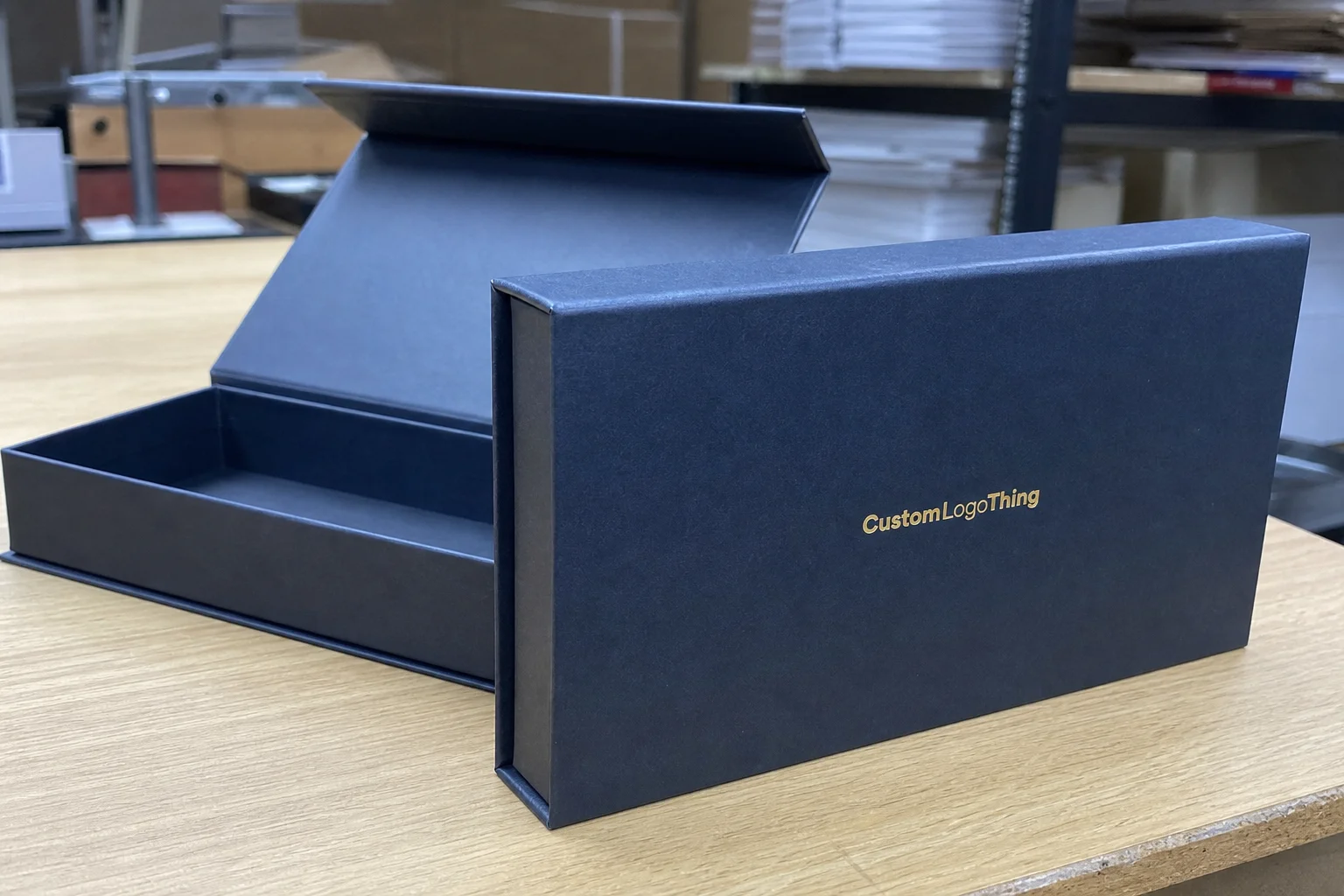
A buyer compares a $0.65 folding carton with a $3.80 rigid magnetic box and the reaction is predictable: that box looks expensive. Sometimes it is. Sometimes the cheaper option is only cheaper until the product ships, dents, rattles, returns, or looks weaker than the price point deserves.
A proper magnetic boxes Unit Cost Breakdown matters because the quoted unit price is not one thing. It is board, wrap paper, magnets, print, finish, inserts, hand assembly, quality checks, export cartons, freight, and sometimes duties or warehousing. Roll those together without labels and procurement is left comparing fog.
Magnetic rigid boxes are chosen for cosmetics sets, jewelry, electronics accessories, PR kits, corporate gifts, candles, and premium ecommerce bundles because the package is doing more than containing the item. It protects. It frames the product. It makes a gift feel finished before the customer touches what is inside.
That does not mean every product needs one. A clearance item, refill pack, or lightweight promotional giveaway may be better served by a folding carton, sleeve, or mailer. The trap is assuming the lowest packaging quote is automatically the smart one. A low quote can hide 1.5mm board where 2.5mm was expected, weak magnets, thin wrap paper, no insert, poor lamination, rough corner wrapping, or freight left outside the number. Cute on a spreadsheet. Ugly on a receiving dock.
The better question is not, "What is the factory price?" It is, "What is the total landed cost per usable box?" That includes shipping method, carton count, duties if applicable, storage volume, expected defect rate, and whether the boxes arrive assembled or flat-packed. Rigid packaging punishes incomplete math.
What Should a Magnetic Boxes Unit Cost Breakdown Include?
A useful cost breakdown separates factory unit cost from landed cost. Factory unit cost covers production before the logistics chain gets involved. Landed cost is the more practical number: the cost to get each usable box to the point where it can be packed, stored, fulfilled, or handed to a customer.
The core line items should include structural board, printed or specialty wrap paper, lamination or coating, magnet pairs, ribbon pulls if used, inserts, assembly labor, QC, inner packing, export cartons, and freight assumptions. Tooling, sampling, duties, tariffs, customs brokerage, palletization, warehousing, and domestic delivery may sit outside the unit price. They still belong in the buying decision.
Silence is not a discount. It is usually a later invoice.
A strong quote explains assumptions in plain terms: finished size, board thickness, paper type, print method, magnet count, insert material, finish process, carton dimensions, quantity tier, Incoterms, shipping method, and lead time. Once those are visible, the breakdown becomes a purchasing tool instead of a guessing exercise.
For bulk buyers, the most useful quotes show at least two views. First, the production cost per piece. Second, the landed estimate per piece based on stated freight and delivery assumptions. Without that split, a $2.90 factory quote can lose to a $3.30 quote after freight, carton efficiency, and defects are considered.
Magnetic Boxes Unit Cost Breakdown: What Buyers Actually Pay
There is no universal price per piece. Size, structure, finish, order quantity, insert type, and shipping method pull the number in different directions. Still, the main cost buckets behave in recognizable ways.
Board and wrap commonly account for about 25-40% of the unit cost. Labor and assembly can run 20-35%, especially for rigid setup boxes that require hand wrapping, gluing, corner forming, flap alignment, and closure testing. Printing and finishing may add 10-25%. Inserts can add 10-30%, depending on the material and cavity complexity. Magnets and small hardware are usually smaller line items, but they are not optional if the closure is supposed to feel crisp.
| Cost Bucket | Typical Share of Unit Cost | What Moves the Price |
|---|---|---|
| Board and wrap paper | 25-40% | Box size, board thickness, paper grade, printed coverage |
| Labor and assembly | 20-35% | Rigid setup style, wrap precision, ribbon tabs, closure alignment, inspection level |
| Printing and finishing | 10-25% | CMYK, Pantone, foil stamping, embossing, debossing, spot UV, soft-touch lamination |
| Inserts | 10-30% | Paperboard tray, EVA foam, molded pulp, velvet, flocked board, thermoformed tray |
| Magnets and hardware | Usually lower, but required | Magnet strength, flap size, closure style, board thickness, product weight |
Size drives cost harder than many first-time buyers expect. A 12 inch gift box does not cost twice as much as a 6 inch box. It can cost far more because the larger box uses more greyboard, more wrap area, more glue, more hand handling, larger cartons, and more shipping volume. The box may be light, but carriers charge for space as well as weight.
Quantity also changes the curve. Setup charges, dielines, tooling, sampling, printing preparation, and labor scheduling are spread across more units as volume increases. A 500 piece custom run can look painful. At 2,500 or 5,000 pieces, the same structure often becomes more rational, assuming the artwork and product dimensions are stable.
Directional ranges help during early budgeting. Small, simple magnetic rigid boxes at higher MOQs can land in the low single-digit dollars per unit before complex freight assumptions. Larger premium boxes with foam inserts, specialty paper, foil stamping, ribbon pulls, or multi-part trays can move several dollars higher. Oversized PR kits climb quickly because freight stops being a side note and becomes part of the product economics.
Ultra-low quotes usually remove something. Thinner board. Cheaper magnets. No insert. Minimal QC. Freight excluded. A vague quote may look efficient until the sample exposes the shortcut.
Materials, Inserts, and Finishes That Move the Price
Board thickness is the skeleton. Lightweight cosmetics, stationery, and small accessories may work with 1.5mm to 2.0mm greyboard. Candles, glass jars, electronics, tools, and heavier gift sets usually need 2.0mm to 3.0mm board, sometimes with reinforced corners or revised proportions. More board raises cost. Crushed corners on a premium launch are not a bargain either.
Wrap paper changes both price and hand feel. Standard printed art paper is usually the efficient choice for full-color branding. Specialty paper, linen texture, leatherette finishes, metallic paper, dyed-through paper, and soft-touch lamination cost more. Some upgrades earn their place. Others only make the mockup look expensive.
Printing should follow the brand requirement, not the mood board. CMYK works well for full-color artwork and photography. Spot Pantone printing gives better control when a specific brand color matters. Foil stamping, embossing, debossing, spot UV, and textured coatings add impact, but they also add setup time, registration risk, and QC pressure. A foil logo that lands 2mm off center will bother everyone who sees it.
Magnet quality is simple from the buyer's side: the closure should feel secure without making the customer fight the box. Magnet strength has to match the flap size, board thickness, product weight, and structure. Weak closures make premium packaging feel cheap. Overpowered closures can bend the flap or make opening awkward. Neither outcome belongs on a luxury set.
Inserts deserve more scrutiny than they usually get. Paperboard trays are economical and can work well for light kits. EVA foam gives structure and a clean fit for electronics, bottles, tools, and fragile components. Molded pulp can reduce plastic use and support sustainability goals, though tooling and surface finish need review. Velvet, flocked, or wrapped inserts add a gift-ready feel for jewelry and presentation sets. Thermoformed trays suit retail kits where each component needs a precise cavity.
Practical buying rule: if the product is fragile, heavy, or sold as a multi-piece kit, the insert is not decoration. It is insurance against movement, breakage, returns, and poor unboxing photos.
Sustainability choices are available, but they need documentation and tradeoff checks. Recycled board, FSC-certified paper, soy-based inks, plastic-free inserts, and recyclable coatings can all support better packaging decisions. Availability, minimums, print performance, scuff resistance, and lead time still matter. Buyers who need certified paper should confirm paperwork early; the FSC standard is a common reference point for responsible paper sourcing.
Finish stacking is where budgets wander. Textured paper plus foil plus embossing plus spot UV may look impressive in a presentation deck, then become slow, fragile, and expensive in production. Every added process creates another registration point and another place for defects to appear. Premium packaging does not have to shout from every surface. Often, one precise finish beats four competing ones.
For cost control, the magnetic boxes Unit Cost Breakdown should identify which upgrades are structural and which are cosmetic. Thicker board may protect the product. A second foil color may only flatter the rendering. The budget can tell the difference.
Specs Buyers Should Lock Before Requesting a Quote
A supplier cannot quote accurately from "I need a premium box." That is a mood, not a specification.
Before requesting pricing, lock the box style, finished size, board thickness, wrap paper, print method, finish, magnet closure type, insert type, quantity, shipping destination, and whether the boxes should ship assembled or collapsible. If any of those details are open, ask for options rather than pretending the number is final.
Interior size matters more than exterior size for many projects. Send product length, width, height, and weight. Add clearance requirements, especially for jars, bottles, devices, cables, and multi-piece kits. If the item must sit proud, lay flat, or lift out with a ribbon tab, say that before the dieline is made.
Protection details change the structure. Fragile items need drop protection, snug inserts, and enough clearance to avoid pressure points. Heavy products may need stronger board, reinforced corners, a shorter lid flap, or a deeper base. A beautiful box that fails in shipping is just an expensive apology with printing on it.
Artwork specs matter too. Logo files should be vector whenever possible, usually AI, EPS, or clean PDF. Print artwork needs bleed, safe zones, correct color setup, and clear finishing layers. If brand color matching matters, confirm Pantone references early. Waiting until the sample arrives to announce that "the red feels off" is a reliable way to lose a week.
Some categories require compliance planning before artwork approval. Warning labels, barcode placement, recycling marks, country-of-origin labels, retail shelf requirements, marketplace carton rules, and child-resistant packaging requirements can affect layout and structure. For transit expectations, buyers can review standards and test protocols published by ISTA, especially for ecommerce shipments and heavier kits.
Reference samples help more than adjectives. A target box, competitor sample, finish swatch, or clear photo lets the supplier price the actual expectation. "Premium" can mean soft-touch black paper with gold foil to one buyer and textured white paper with molded pulp to another. Those are not the same quote.
Freight assumptions should be stated early: destination, Incoterms, delivery deadline, carton requirements, palletization needs, and delivery restrictions. Two quotes can look unfair because one includes sea freight, inserts, QC, and export cartons, while another is a bare factory-door box price. That is not price comparison. It is accounting theater.
MOQ, Bulk Pricing, and Landed Cost Traps
Custom magnetic rigid boxes usually become more economical at higher quantities because setup, tooling, printing preparation, sampling time, and labor planning are spread across the run. MOQ is not always a supplier being difficult. Often the numbers are just doing what numbers do.
Low-volume custom runs may be possible at several hundred units, but the unit cost will be higher. Mid-volume orders often start to look more efficient around 1,000 to 2,500 pieces. Runs of 5,000 units and above can improve material purchasing, production scheduling, and per-piece labor efficiency, provided the design is stable and the factory can hold quality across the full run.
Landed cost includes factory unit price plus tooling fees, sampling, export packing, freight, duties, tariffs if applicable, customs brokerage, warehousing, and domestic delivery. If a buyer only compares factory unit price, they are missing the part of the invoice that actually hits the budget. A magnetic boxes unit cost breakdown that stops at factory price is incomplete.
Ask for price breaks at 500, 1,000, 2,500, and 5,000 units. That gives procurement a realistic view of where savings begin. Sometimes the jump from 500 to 1,000 is meaningful. Sometimes the real break appears at 2,500 because material purchasing and scheduling improve. Guessing is a poor strategy with rigid packaging.
Shipping method can swing the final number. Air freight is fast but punishing for rigid boxes because they occupy volume. Sea freight is slower and usually better for bulk orders. Express courier makes sense for samples, urgent replenishment, or small test runs, but dimensional weight can turn a reasonable unit cost into a strange-looking invoice.
Assembled versus collapsible structure is another major decision. Fully assembled magnetic rigid boxes protect the shape, look polished, and simplify fulfillment. They also consume more shipping and storage space. Collapsible magnetic boxes can reduce freight and warehouse volume, but they may change the structure, feel, and packing labor. For ecommerce teams packing hundreds of orders a day, that labor is real money.
Storage is the quiet cost buyers miss. An assembled rigid box may occupy more warehouse space than the product it holds. Multiply that by 5,000 units and packaging stops being only a sourcing decision. It becomes an operations decision, and warehouse teams tend to notice first.
For buyers comparing formats, Custom Packaging Products can help map whether a rigid magnetic box, folding carton, sleeve, mailer, or gift box structure makes better financial sense. Sometimes the smartest package is not the fanciest one. Annoying, but true.
Production Steps, Lead Time, and Approval Timeline
The production path is straightforward when the specs are clean: specification review, dieline creation, artwork setup, sample production, sample approval, material booking, mass production, quality control, packing, freight, and final delivery. Loose inputs at the start become schedule bruises later.
Quote review may take 1-3 business days when the buyer provides dimensions, quantity, finish, insert needs, and delivery location. Dieline and artwork setup can take several more days depending on structure. Physical sampling commonly takes 7-14 days, especially if foil, specialty paper, molded inserts, or exact color matching is involved. Mass production often takes several weeks after sample approval, with freight time added separately.
What slows projects down? Missing product dimensions. Vague artwork. Late finish changes. Unapproved inserts. Specialty paper unavailable in the required weight. Holiday closures. Quantity changes after pricing is approved. None of these are exotic problems. They are the normal ways packaging timelines get dragged into expensive nonsense.
Different sample types answer different questions. Digital mockups help check artwork layout. White samples confirm structure, fit, and proportions without printed finish. Printed pre-production samples confirm color, finish, magnet strength, insert fit, and overall feel. For a premium launch or retail kit, the printed sample is usually worth the time.
Approval discipline matters. Do not approve a sample unless the product fits correctly, the closure feels right, the finish matches expectations, and the shipping cartons suit the delivery route. If the box will move through parcel networks, ask about carton strength and packing method. ASTM and ISTA test methods are often used as reference points for drop, vibration, compression, and transit performance.
QC checkpoints should include board thickness, wrap alignment, glue marks, magnet placement, color consistency, foil registration, insert fit, closure strength, and carton packing. Small defect rates multiply quickly across a bulk order. A 2% defect rate on 5,000 units is 100 bad boxes. That is not minor when a launch date is sitting on top of it.
Build custom magnetic box development into the calendar 8-12 weeks before the in-hand deadline when custom production and ocean freight are involved. More time is cheaper than panic. Shocking, I know.
Getting a Clean Quote Without Guesswork
Send the basics first: product dimensions, product weight, target quantity, delivery location, preferred delivery date, logo files, brand colors, finish references, insert needs, and photos of any box style you like. That single packet of information can save days of back-and-forth.
Request options instead of one blind number. Ask for good-better-best specs, or compare two board thicknesses, two insert types, and several quantity tiers. A useful magnetic boxes unit cost breakdown should show where the money is going, not just drop a lonely unit price into an email.
Prioritize the decisions that move cost most: box size, quantity, insert, board thickness, finish, and shipping method. Logo placement matters for the brand, yes. But the logo is usually not what blows up the budget. A large rigid structure with EVA foam and air freight can do that all by itself.
Name the budget range if one exists. A supplier can engineer toward a target only if the target is real. Without a range, everyone wastes time pretending every finish, insert, and freight path is equally possible. They are not.
For related formats and bulk custom packaging options, review Custom Packaging Products before locking into one structure. A magnetic rigid box may be right for a premium gift set, while a printed mailer or folding carton may be smarter for lighter ecommerce orders.
Clean inputs produce cleaner quotes and fewer expensive surprises. Prepare the spec list, choose 2-3 quantity tiers, decide whether assembled or collapsible boxes make sense, and ask for line-item pricing where possible. The best packaging quote is not the one with the most exciting low number. It is the one that still makes sense after production, freight, inspection, storage, and fulfillment have all had their say.
FAQ
What is usually included in a magnetic box unit cost breakdown?
A proper breakdown should include board, wrap paper, printing, finishing, magnets, inserts, labor, QC, packing, and freight assumptions. Tooling, sampling, duties, tariffs, customs brokerage, and domestic delivery may be separate, so ask whether the number is factory unit cost or landed cost.
How much do custom magnetic boxes cost per unit?
Simple small magnetic rigid boxes at higher quantities may land in the low single-digit dollar range before complex freight costs. Larger boxes, premium finishes, thicker board, custom inserts, foil stamping, and specialty papers can push the unit price several dollars higher. Quantity, size, insert type, and shipping method usually move the price more than the logo itself.
What MOQ should I expect for magnetic rigid boxes?
Many custom magnetic box projects become practical around several hundred to 1,000 units, with better bulk pricing at higher tiers. Lower MOQs may be possible, but setup charges and sampling costs have fewer units to absorb, so unit cost rises. Ask for pricing at 500, 1,000, 2,500, and 5,000 units to find the strongest price break.
Do inserts change the magnetic box price a lot?
Yes, especially for EVA foam, molded pulp, velvet, flocked, or multi-cavity inserts. A simple paperboard tray is usually more economical, while precision inserts cost more but protect products better. For fragile, heavy, or multi-piece products, a higher insert cost can be cheaper than damage, returns, and bad presentation.
How long does magnetic box production take after quote approval?
Sampling often takes about 7-14 days depending on structure, print, and finish complexity. Mass production commonly takes several weeks after sample approval, with freight time added separately. Start 8-12 weeks before the in-hand date when custom production and ocean freight are involved.