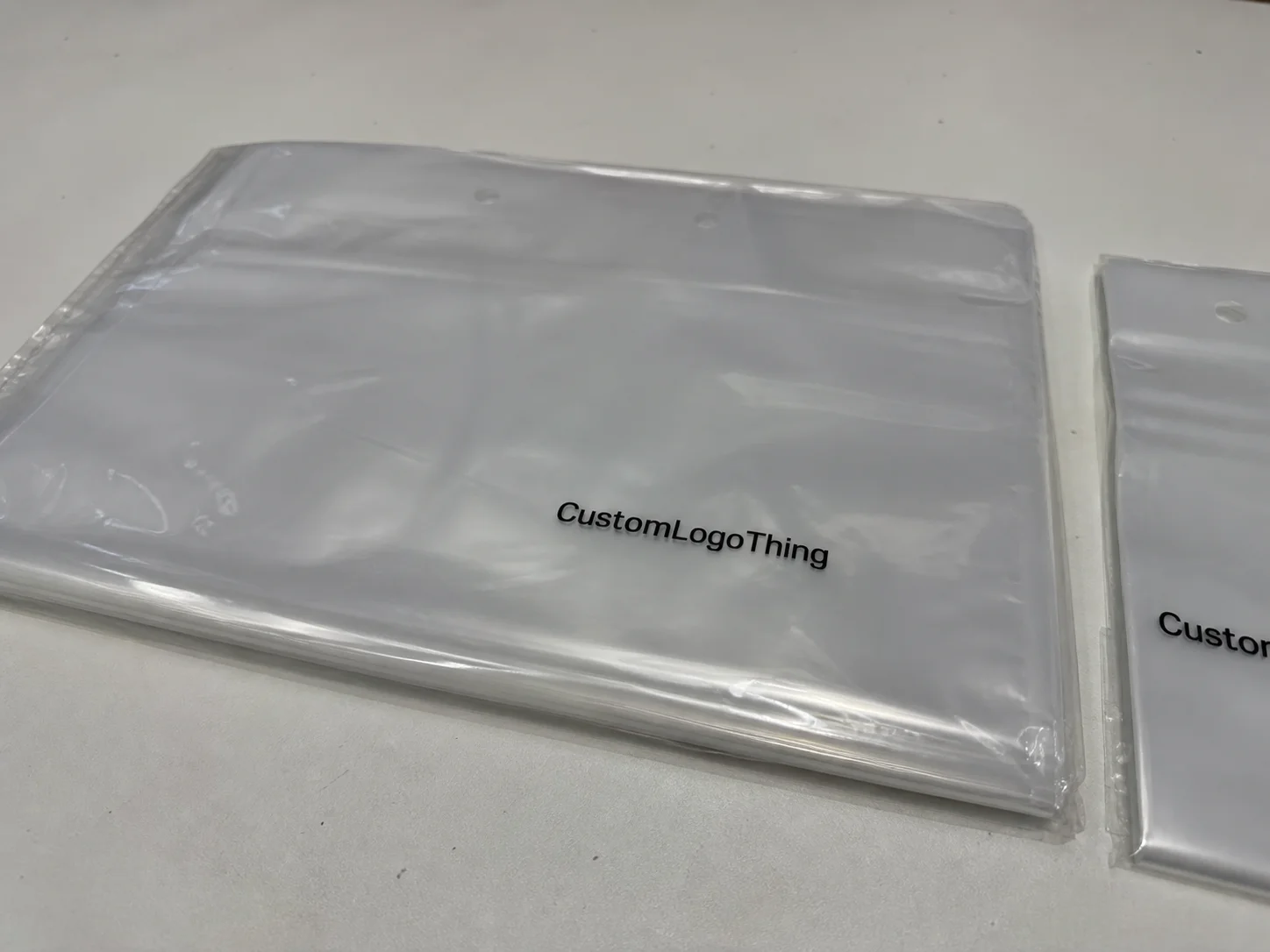
Buyer Fit Snapshot
| Best fit | Mailing Bags Comparison projects where brand print, material claims, artwork control, MOQ, and repeat-order consistency need to be specified before quoting. |
|---|---|
| Quote inputs | Share finished size, material target, print colors, finish, packing count, annual reorder estimate, ship-to region, and any compliance wording. |
| Proofing check | Approve dieline scale, logo placement, barcode or warning zones, color tolerance, closure strength, and carton packing before bulk production. |
| Main risk | Vague material claims, crowded artwork, missing packing details, or unclear freight terms can make a low unit price expensive after revisions. |
Fast answer: Mailing Bags Comparison: Choose the Right Poly Mailers should be specified like a repeatable production item. The safest quote records material, print method, finish, artwork proof, packing count, and reorder notes in one written spec.
Production checks before approval
Compare the actual filled-product size with the drawing, then confirm tolerance on folds, seals, hang holes, label areas, and retail display edges. Reserve space for logos, QR codes, warning copy, and material claims before decorative graphics fill the panel.
Quote comparison points
Review material grade, print process, finish, sampling route, tooling charges, carton quantity, and freight assumptions side by side. A quote is only useful when the supplier can repeat the same color, closure quality, and packing count on the next order.
On a packaging line in Shenzhen, I once watched two poly mailers roll through the same carton packout station, and the mailing bags comparison couldn’t have been more dramatic once they hit the real world. They looked nearly identical on the sample table, same white exterior, same self-seal flap, same size callout, but one survived a wet dock run and a six-foot drop test, while the other split at the side seal after a worker had only packed about 80 units. That kind of difference is exactly why a thoughtful mailing bags comparison matters before you place a purchase order, especially when a factory quote from Dongguan or Ningbo looks attractive at first glance.
At Custom Logo Things, I’ve seen brands focus on print mockups and forget the part that actually protects the product. A mailing bag is not just a wrapper; it’s a working piece of shipping equipment, and in eCommerce, retail replenishment, subscription boxes, and direct-to-consumer fulfillment, the bag has to do three jobs at once: protect, present, and move fast through the warehouse. A good mailing bags comparison helps you Choose the Right structure for your products, your labor team, and your postage budget, instead of paying more for features that never get used. For a 10,000-unit run, that difference can be as small as $0.03 per unit or as large as $0.22 per unit, depending on the film and print spec.
I’ve watched plenty of buyers get tripped up by appearance. A glossy mailer with a bold logo can look premium, but if the adhesive strip fails in a 38°C loading bay or the film is too thin for a pair of denim jeans, the customer experience falls apart quickly. A proper mailing bags comparison reduces returns, prevents transit damage, avoids overspending on unnecessary thickness, and keeps the brand feeling intentional rather than flimsy. Honestly, I think packaging people deserve a little medal for surviving a bad bag spec (or at least a strong coffee), especially when the reprint window is only 12 to 15 business days from proof approval.
Here’s what I want to cover with a practical mailing bags comparison: material types, thickness, seal quality, print choices, cost, lead time, and which bag fits which shipping scenario. The best bag is rarely the most expensive one, and that’s something I’ve had to explain more than once in supplier meetings where everyone in the room wanted the “premium” option without asking what the product actually needed. In many cases, the smartest choice is simply the bag that matches the item’s weight, finish, and shipping conditions with the least waste, whether the factory is in Shenzhen, Guangzhou, or Xiamen.
Why Mailing Bags Comparison Matters More Than You Think
A mailing bags comparison starts with a simple truth from the factory floor: two bags can share the same dimensions and still behave very differently under stress. One may use a co-extruded LDPE film with a tougher outer layer and a cleaner seal line, while another uses a cheaper single-layer blend that feels fine in hand but tears when the courier’s sorter grabs the corner. I’ve seen that happen during outbound trials where a 250-gauge bag and a 500-gauge bag were both labeled “strong enough,” but only one held up through conveyor friction, curbside transfer, and a rain-soaked last-mile route in coastal Guangdong.
In practical terms, mailing bags are lightweight shipping envelopes made for soft goods, apparel, documents, accessories, and other items that do not need a rigid carton. Most buyers are comparing poly mailers first, though the broader category can include bubble mailers, padded mailers, kraft mailers, and heavy-duty shipping bags. A smart mailing bags comparison shows how each option behaves in the hands of packers, carriers, and customers instead of relying on a glossy catalog image, and that matters whether you are shipping 500 orders a month or 50,000 across North America and Europe.
The reason this comparison matters is simple: returns and damage are expensive. A single ruined garment can wipe out the savings from choosing a cheaper bag, and a weak adhesive strip can create a customer service headache that costs more than the package itself. I’ve sat in client meetings where finance wanted to shave $0.02 off the unit cost, and operations pushed back because a 1.5% damage rate would cost far more over the next 50,000 shipments. That is the real value of a mailing bags comparison—it connects material choice to actual business outcomes, not just the line item on a purchase order.
It also helps you avoid overbuying. Plenty of brands end up with mailers that are too thick, too large, or too heavily printed for the products inside. That drives up material spend, freight, and sometimes even postage, especially when the extra weight changes dimensional thresholds or pushes a parcel into a different service band. A disciplined mailing bags comparison keeps the conversation grounded in fit, protection, and cost per shipped order, and that can mean the difference between a $0.15-per-unit option and a $0.28-per-unit option on a 5,000-piece order.
Set your expectations correctly, and the decision gets easier. We are not just comparing looks; we are comparing film construction, seal performance, print quality, moisture resistance, lead time, and the way the bag handles at pack-out speed. That is the lens I use whether I’m reviewing stock poly mailers for a startup or a custom printed run for a 30,000-unit apparel launch from a factory in Zhejiang. For reference, industry groups like the Packaging Institute and transit-testing resources such as ISTA are useful starting points for understanding packaging performance and distribution testing expectations.
How Mailing Bags Work and What Makes Them Different
In a real mailing bags comparison, the first thing I check is how the bag is built. Most poly mailers are made from LDPE, or low-density polyethylene, and many better versions use co-extruded film layers, which means multiple layers are formed together to balance strength, opacity, and sealability. The outer layer may be designed for print clarity and abrasion resistance, while the inner layer is tuned for heat sealing or adhesive bonding, depending on the conversion line, and in many export factories that conversion happens on 8-color flexo lines running 2,000 to 3,000 meters per hour.
The construction details Matter More Than most people realize. A self-seal adhesive strip needs enough tack to close firmly without peeling open in warm warehouses, and tamper-evident closures can help protect customer trust by showing whether the bag has been opened in transit. Some poly mailers include gussets, which give the bag side expansion for bulkier items like knitwear or lightweight boxed goods. A proper mailing bags comparison should look at these details with the same seriousness you’d give carton board caliper or corrugate edge crush, because a 30-mm gusset and a 50-mm gusset can change how a hoodie sits in the bag.
Several common formats cover most shipping needs, and each serves a different use case. Plain poly mailers are the workhorse for soft goods, bubble mailers add air-cushioning around fragile items like small electronics or cosmetics, padded mailers offer a bit more surface protection, kraft mailers combine paper appearance with a lighter protective structure, and heavy-duty shipping bags are built for products that need more puncture resistance. In one warehouse I visited in Melbourne, the team used bubble mailers for phone accessories and plain mailers for tees, then switched to padded mailers only for glassware samples. That kind of sorting logic is exactly what a solid mailing bags comparison should support.
How they are made also affects how they perform. Film extrusion determines the quality of the plastic layers, slit-and-seal conversion shapes the final mailer, flexographic printing lays down logos and brand graphics, and adhesive application controls the reliability of the flap. If a converter runs sloppy tension control or uneven sealing temperature, the result can be weak seams, crooked prints, or adhesive bands that fail in storage. When I hear someone say all mailers are the same, I know they haven’t spent time standing next to a conversion line in a facility in Suzhou watching operators reject bags by the handful.
That is why a mailing bags comparison should never focus only on the outer appearance. Mailing bags are chosen for how they behave in the full fulfillment cycle: loading, sealing, labeling, sorting, carrier handling, weather exposure, and customer unboxing. If the bag slows the packer down by 3 seconds per unit, that becomes a labor issue. If it opens during transit, that becomes a claims issue. If it looks cheap in photos, that becomes a brand issue. One bag can create all three problems at once, and the total cost can easily exceed a savings of $0.01 per unit across a 20,000-piece shipment.
Key Factors in a Mailing Bags Comparison
Any serious mailing bags comparison has to start with material thickness, usually shown in microns or mils. A 60-micron bag and a 100-micron bag may both be called “durable,” but they feel different in hand, fold differently around corners, and resist puncture very differently during transit. Thin bags keep shipping weight down, which helps with postage and handling cost, while thicker bags offer a stiffer feel and more protection against sharp edges or rough conveyor systems. The right number depends on the product, not the marketing language, and for many apparel lines that number lands around 70 to 90 microns for standard use.
Sizing is the next piece, and this is where I see wasted money all the time. A mailer that is too large creates excess empty space, which can make the package look sloppy and can also increase the chance of the item shifting around inside the bag. Too little room, on the other hand, can stress the seam or make the seal unreliable when the product is inserted quickly. In a mailing bags comparison, I want to know not just the stated flat dimensions, but the practical usable space once the seal flap and any gusset are accounted for, because a bag labeled 12 x 16 inches may only offer about 11.2 x 14.5 inches of true packing area after closure.
Cost deserves a careful look because pricing is never just unit price. A common Custom Printed Poly mailer run might be quoted at $0.18 per unit for 5,000 pieces, but then you need to ask about print setup fees, plate costs, freight from the facility, and whether the minimum order quantity locks you into more inventory than your forecast supports. The cheapest option on paper can become the most expensive once you add damage, rework, and labor. That is a lesson I’ve seen proven in buyer meetings more than once, especially when a team chased a lower quote from a supplier in Ningbo but had to reorder early because the film split on heavier products.
Branding and print quality can also change the outcome of a mailing bags comparison. One-color logos on a matte white mailer often print cleanly and read well in transit, while full-color graphics on glossy film can look sharp if the registration is dialed in but may show scuffs more easily after sorting and delivery. Flexographic printing is still the standard for many large-volume poly mailers because it is efficient and repeatable, but only if the artwork is prepared correctly and the line operator can keep ink density consistent across the run. If you want a premium branded feel without overcomplicating production, our Custom Poly Mailers page is a useful reference point for common structures and print options.
Sustainability deserves a careful, honest conversation. Some bags are made with recycled-content films, some are recyclable under local collection systems, and some carry environmental claims that sound good but are difficult to verify. I always advise buyers to ask for the actual material makeup, the recycle stream compatibility, and any certifications rather than accepting vague language. If you need a starting point for environmental standards and recycling context, the EPA recycling resources are a sensible place to look. A trustworthy mailing bags comparison should separate real material facts from broad marketing claims, whether the product is coming from a factory in Guangdong or a converter in Vietnam.
“The bag that feels nicest in a sales sample box is not always the one that survives a wet depot floor, a crushed pallet corner, and a driver who tosses packages into the van with one hand.” That is something I learned the hard way after a customer in Queensland rejected an entire batch of soft-goods mailers because the adhesive held in the office but failed after heat exposure in transit.
One more point that often gets missed: a mailing bags comparison should include workflow. If your team packs 2,000 orders a day, a bag with an easy-peel strip can save real labor time. If the print needs exact pantone matching on a multi-color logo, you may need to allow for slightly longer lead time and tighter proof approval. The bag is part of the system, not a standalone object, and in a high-volume facility that can mean the difference between a pack rate of 180 units per hour and 220 units per hour.
How Do You Choose the Right Bag in a Mailing Bags Comparison?
The right answer in a mailing bags comparison usually comes from balancing product protection, warehouse speed, and landed cost rather than chasing the thickest or flashiest option. Start with the item itself, then match the bag format to the shipping route, the packing team’s workflow, and the customer experience you want to create. A lightweight apparel order may only need a standard poly mailer, while a fragile accessory or boxed item may justify a padded mailer, a bubble mailer, or a heavier gauge film. The best choice is the one That Holds Up in transit without adding unnecessary material, weight, or labor.
Step-by-Step Process for Choosing the Right Mailing Bag
I like to keep a mailing bags comparison grounded in five steps, because that keeps the conversation practical and stops it from drifting into opinions that sound nice but don’t survive a shipping lane.
- Audit the product first. Measure length, width, thickness, weight, surface texture, and fragility. A folded cotton hoodie behaves differently from a rigid paperback, and a satin garment bag behaves differently again because the surface can scuff or slide. If possible, note the heaviest unit in the range, such as a 1.4 kg boxed bundle or a 220 g folded tee stack.
- Match the structure to the item. Standard poly mailers work for soft goods, padded mailers help with light fragility, and heavier gauge mailers are better for products with sharp corners or higher compression risk. For many apparel brands, a 70-micron to 90-micron LDPE mailer is the practical middle ground.
- Compare samples in hand. Check seal tack, side seam strength, film clarity, and how easily the product slides in without snagging. I’ve had buyers approve a mailer on paper and then reject it immediately once they felt the weak seal line between finger and thumb.
- Estimate the production flow. Ask about artwork proofing, plate setup, conversion time, packing, and freight. A plain stock mailer might ship in 3 to 5 business days, while a custom printed order may need 12 to 15 business days from proof approval depending on quantity and finishing.
- Review landed cost and reorder logic. A good mailing bags comparison looks at unit price, freight, customs if relevant, and the storage space needed for the order so today’s choice still works six months later. A quote of $0.15 per unit for 5,000 pieces can be better than $0.13 if the lower-priced option increases damage or slows pack-out.
In one client meeting, a mid-sized apparel brand wanted to jump straight to a Custom Printed Mailer because their unboxing photos looked stronger with branding. I asked them to send three actual products, not just one sample tee, and when we tested the range, the oversized hoodie needed a thicker film than the lightweight shirts. That one adjustment saved them from ordering a bag that would have looked perfect on a design board but failed during actual pack-out. That’s why a real mailing bags comparison always starts with product reality, not the artwork proof from a studio in Shanghai.
Another useful habit is to compare the bag against your warehouse speed. If the seal strip peels cleanly in one motion, your team may save a second or two per order, which becomes meaningful across 10,000 or 50,000 shipments. I’ve stood beside conveyor pack stations where a fiddly adhesive flap backed up the line because operators had to press and re-press every closure. Those seconds are invisible in procurement spreadsheets, but they show up immediately in labor cost. A strong mailing bags comparison should capture that operational detail, especially if your packing team is already hitting 150 to 250 orders per hour.
Do not ignore carrier conditions either. A route with long hot-weather exposure needs a different adhesive profile than one with cool, predictable sorting. The same goes for moisture. If a package might sit on a damp dock or be delivered through monsoon conditions, moisture resistance becomes a non-negotiable. That is where a mailing bags comparison is worth far more than a simple catalog quote, particularly for shipments moving through Mumbai, Jakarta, or Manila during peak rainy season.
Common Mistakes People Make When Comparing Mailing Bags
The biggest mistake I see in a mailing bags comparison is choosing by price alone. A cheaper mailer can be a bargain if it performs properly, but if it tears, opens, or makes the brand look careless, you pay for it later in claims, replacements, and customer complaints. I’ve had buyers come back after a few weeks and say the “savings” disappeared as soon as the first wave of damaged parcels hit the service desk, especially on orders that looked great at $0.12 per unit but failed under real courier handling.
Another common error is picking a bag that is too large. People think oversizing creates flexibility, but in practice it often creates a sloppy presentation and more movement inside the package. That extra void space can also make the parcel harder to stack or sort cleanly. In a disciplined mailing bags comparison, the correct size is the one that gives the product enough clearance to enter easily while staying snug enough to travel well, and in many cases that means choosing a bag only 10 to 15 mm larger than the packed item on each side.
Seal quality gets overlooked too often. A bag may look fine until it sits in a warm dispatch area for several hours, and then the flap loses tack or the closure lifts at the corners. For shipments that run through hot warehouses or long transit routes, I always recommend testing closure integrity after the bag has been conditioned in actual storage temperatures. A mailing bags comparison without seal testing is only half a comparison, and a 38°C test chamber can reveal failures that a room-temperature sample hides.
Print limitations are another trap. A low-resolution logo can blur on flexible film, and certain gradients or fine text can disappear once the bag is stretched or creased. Glossy surfaces can exaggerate fingerprints and scuffs, while matte finishes can mute some colors if the ink system is not matched correctly. I’ve seen a brand approve a beautiful design proof only to discover that the smallest tag line cracked slightly when the film flexed at the fold line. That sort of issue is exactly why a mailing bags comparison should include print testing, not just artwork approval, especially if the artwork includes text below 6 pt.
And then there is the failure to test with real product samples. A mailer that seems strong in isolation may not perform well once filled with a bulky knit, a boxed accessory, or a stack of folded garments. Always test with the actual item, actual labels, and actual packing staff. That’s not a theory; it’s the difference between a smooth launch and a painful second order correction. If you want your mailing bags comparison to mean something, put product in the bag before you place the order and run at least 20 to 30 sample packs through the bench.
Expert Tips for Better Mailing Bags Comparison Decisions
Start by asking for side-by-side samples from the same production source. That makes the mailing bags comparison cleaner because you are not confusing factory-to-factory variation with material differences. I’ve seen buyers compare one supplier’s 70-micron bag to another supplier’s 70-micron bag and assume the samples were equivalent, only to find the film structures and seal behavior were totally different once they looked at the specs. A good sample request should identify the factory, the resin type, the micron range, and the intended shipping product.
Test under real conditions whenever possible. A simple drop test, a compression check, a moisture exposure test, and repeated handling on a packing line can tell you more than a shiny sample ever will. If your product sells into coastal regions or the rainy season, place a sample in humid storage for a day and then check the flap and seams. A good mailing bags comparison should include rough handling because that is what carrier networks do every hour, from warehouse hubs in Houston to regional depots in Brisbane.
Think about warehouse speed. A peel-and-seal strip that opens cleanly every time saves labor, and labor savings compound fast. On a 20,000-unit run, shaving even one second from the sealing motion can matter more than a small unit price difference. That is one reason I often advise clients to pay attention to closure design, not just thickness, during a mailing bags comparison. I’ve seen a pack station go from calm to chaos over a stubborn flap, and nobody enjoys watching a line of operators fight plastic like it owes them money.
Balance branding with practicality. Clean, high-contrast artwork usually prints better on poly film than delicate detail, and a simple two-color logo often looks more confident in transit than an overworked graphic full of tiny elements. If you want a premium feel, texture and finish matter as much as print count. A matte white bag with crisp black branding can feel more controlled than a busy full-color design that fights with the product itself. That judgment call belongs in every mailing bags comparison, especially if your final print method is flexographic on a 350gsm C1S artboard insert or a satin-printed label applied after conversion.
Work backward from your shipping geography. A region with long-haul routes, rough handling, or high humidity may need a heavier gauge bag than a local metro delivery network. If you ship across a wide geography, build your mailing bags comparison around the harshest realistic transit condition, not the easiest one. That is how you avoid surprises when sales scale into new territories, whether the route runs through Germany, the UAE, or inland Australia.
One supplier negotiation still sticks in my mind. A brand wanted FSC-labeled outer packaging to support their sustainability story, and while FSC applies to paper-based materials rather than standard poly film, the conversation forced everyone to be more precise about which packaging layer did what. That specificity mattered, because buyers often mix up environmental terms. For paper-based packaging references, the Forest Stewardship Council provides clear certification guidance. A strong mailing bags comparison should be honest about material type, certification scope, and what each claim actually covers.
Best Next Steps After Your Mailing Bags Comparison
After a thorough mailing bags comparison, I recommend building a short decision sheet with your top three options, your product type, your target unit cost, and the protection level required. Keep it simple enough that operations, finance, and marketing can all read it without a long meeting. The goal is not to win an argument; it is to lock in a bag spec that works in real shipment conditions, including the exact size, thickness, and seal style you want to reorder six months from now.
Then request physical samples and test them with your actual products, your shipping labels, and the people who will pack them. A buyer can make a lot of assumptions from a spec sheet, but your packaging team will tell you quickly whether the flap peels cleanly, whether the seal is awkward, and whether the bag size slows them down at the bench. A good mailing bags comparison ends with hands-on confirmation, not just spreadsheet approval, and that hands-on review should include at least 10 sample packs from each finalist option.
Before you place the order, confirm pricing with print, freight, and minimum order quantity included so you know the true landed cost. That’s where many comparisons get distorted. A unit quote of $0.18 may look attractive until you add the plate fee, packaging carton cost, inland freight, and the extra inventory you’ll need to hold. A complete mailing bags comparison needs those numbers on the same page, and on larger runs the difference between $0.15 per unit for 5,000 pieces and $0.21 per unit can materially change your margin.
Also confirm the timeline in writing. Ask for proof approval date, production window, and expected shipping date, because those details affect launch schedules, reorder planning, and promotional timing. A simple stock poly mailer may move faster than a custom printed run, but not always if the factory is backed up or the season is busy. That’s why a careful mailing bags comparison should include delivery dates, not just material specs, and why a realistic schedule often reads 3 to 5 business days for stock and 12 to 15 business days from proof approval for custom work.
Once you make the choice, document the final spec. Write down size, thickness, film structure, color, print method, seal type, quantity, and approved artwork so reorders stay consistent. I’ve seen too many brands lose control of their packaging because the original procurement notes were vague and the second order came from memory instead of specification. A disciplined mailing bags comparison is only useful if it leads to repeatable purchasing later, especially when the second run is produced in a different season or at a different facility.
If you need a starting point for custom printed bags that balance branding and practical shipping performance, our Custom Poly Mailers page is a helpful place to review structure options and build a clearer sourcing brief. The better your brief, the cleaner the quote, and the easier it becomes to compare like with like.
My honest opinion? The best mailing bags comparison is the one that respects reality. It respects product weight, warehouse handling, weather, carrier roughness, print limits, and budget, all at the same time. Do that well, and the bag stops being an afterthought and starts doing real work for your brand, whether your order ships from Shenzhen, Ho Chi Minh City, or a regional warehouse in Ohio.
So the practical takeaway is this: shortlist bags by product fit first, test them with real stock second, and only then decide on price. If a mailer passes those three checks, you’re probably looking at the right one; if it fails any of them, keep comparing, because the cheaper option can turn into a messy headache real quick.
Mailing Bags Comparison: decision table
| Decision area | Best fit | What to verify | Risk if skipped |
|---|---|---|---|
| Board or flute choice | Product protection, stacking strength, and shipping distance | Caliper/flute, crush resistance, and sample fit | Weak structure or oversized cartons increase damage and freight cost |
| Print and finish | Retail presentation, unboxing, and shelf recognition | Color proof, coating, scuff resistance, and logo placement | A good dieline can still look cheap if finish and color drift |
| Packing method | Hand packing, ecommerce fulfillment, or retail-ready cartons | Inner count, master carton, label position, and warehouse handling | Good packaging slows operations if pack-out is ignored |
FAQ
What should I compare first when evaluating mailing bags comparison options?
Start with product size, weight, and fragility because those three factors determine the bag style and thickness you actually need. Then compare seal strength, material feel, and whether the bag protects against moisture or puncture risk in transit. A proper mailing bags comparison always begins with the item, not the packaging catalog, and for most products that means checking actual packed dimensions within 2 to 3 mm of tolerance.
How do I compare mailing bags by cost without missing hidden expenses?
Look at unit price, print setup fees, minimum order quantity, freight, and the shipping weight impact on postage. The cheapest bag on paper can become expensive if it causes damage, returns, or slows packing speed. That is why a complete mailing bags comparison needs landed cost, not just per-unit pricing, and a quote of $0.15 per unit for 5,000 pieces may still beat a lower quote if the lower one ships in weaker cartons or higher damage rates.
Which mailing bag is best for lightweight clothing orders?
A standard poly mailer is often the best fit because it is light, moisture-resistant, and efficient for soft goods. If the apparel is premium or delicate, consider a thicker gauge bag or a padded option for added protection. In many apparel mailing bags comparison decisions, the simplest bag ends up being the most efficient, especially for tees, leggings, and loungewear packed under 600 g.
How do I know if a mailing bag is strong enough?
Check thickness, seam construction, and seal quality, then test it with your real product under normal packing conditions. A good bag should resist tearing at the corners, stay closed during transit, and handle light compression. That hands-on check is one of the most useful parts of a mailing bags comparison, and it is even better if you test 10 to 20 filled bags through a drop and shake routine.
How long does it usually take to produce custom mailing bags?
Timeline depends on artwork approval, print setup, conversion, and freight, so it is best to confirm each stage before ordering. Simple plain bags move faster, while custom printed runs usually take longer because proofs and production setup are involved. If timing matters, include schedule checkpoints in your mailing bags comparison from the start, and plan on roughly 12 to 15 business days from proof approval for many custom runs.