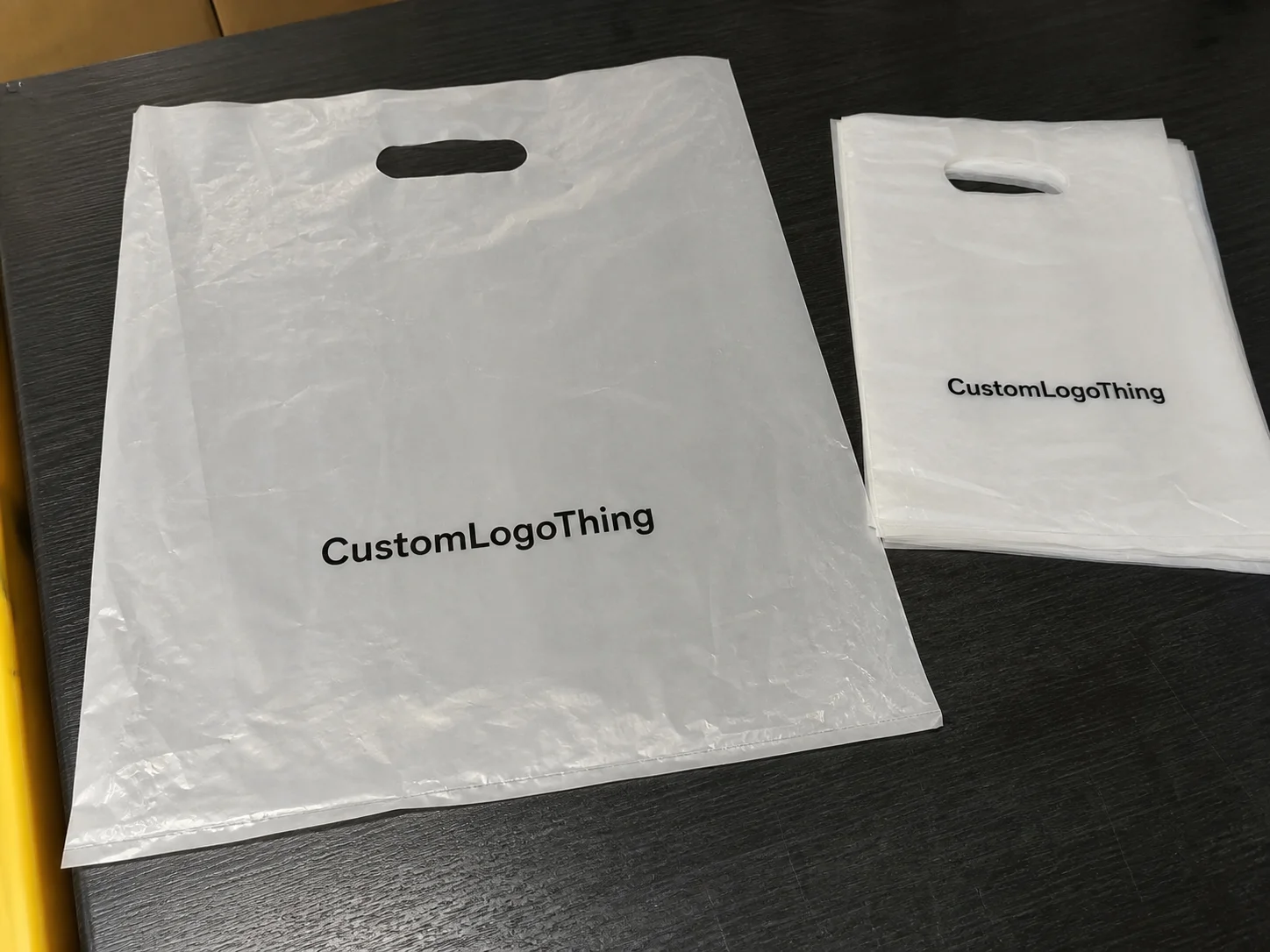
Buyer Fit Snapshot
| Best fit | Mailing Bags Selection projects where brand print, material claims, artwork control, MOQ, and repeat-order consistency need to be specified before quoting. |
|---|---|
| Quote inputs | Share finished size, material target, print colors, finish, packing count, annual reorder estimate, ship-to region, and any compliance wording. |
| Proofing check | Approve dieline scale, logo placement, barcode or warning zones, color tolerance, closure strength, and carton packing before bulk production. |
| Main risk | Vague material claims, crowded artwork, missing packing details, or unclear freight terms can make a low unit price expensive after revisions. |
Fast answer: Mailing Bags Selection: Film, Print, MOQ, and Carton Packing should be specified like a repeatable production item. The safest quote records material, print method, finish, artwork proof, packing count, and reorder notes in one written spec.
Production checks before approval
Compare the actual filled-product size with the drawing, then confirm tolerance on folds, seals, hang holes, label areas, and retail display edges. Reserve space for logos, QR codes, warning copy, and material claims before decorative graphics fill the panel.
Quote comparison points
Review material grade, print process, finish, sampling route, tooling charges, carton quantity, and freight assumptions side by side. A quote is only useful when the supplier can repeat the same color, closure quality, and packing count on the next order.
Mailing bags how to choose is one of those questions that sounds straightforward right up until a shipment splits open on a conveyor, a returns label peels off in cold weather, or postage creeps up because the mailer was just a little too large. I’ve seen all three happen on factory floors, and more than once the packaging problem turned out to be a mailer problem, not a product problem. If you ship apparel, soft goods, documents, or other non-fragile items, mailing bags how to Choose the Right way can save money, speed up packing, and make the customer feel like you actually thought through the unboxing moment.
At Custom Logo Things, I’d approach mailing bags how to choose the same way I used to on fulfillment lines in New Jersey and Shenzhen: start with the product, then the handling, then the shipping lane, and only then look at price. That order matters. A mailer that looks cheap in a catalog can become expensive once you add re-packing labor, damage claims, and dimensional weight charges from carriers that bill on package volume, not just actual weight. It’s a bit of a boring equation on paper, but it can swing a real budget pretty fast.
Why Choosing the Right Mailing Bag Matters
Mailing bags are lightweight shipping pouches, usually made from polyethylene film, that protect non-fragile items during fulfillment and transit. Most people think of them as simple poly mailers, but in practice they are the outer shell that carries your product through product insertion, adhesive sealing, courier handling, sorting hubs, line-haul trucking, and the final delivery drop. Mailing bags how to choose well means understanding that every one of those steps can either support the shipment or punish it.
I remember walking a parcel line where a clothing brand was losing nearly 3% of orders to torn seams. The garments were fine; the bag was the weak link. The buyer had selected a thin, low-cost film that looked acceptable on paper, but after repeated compression on the sortation belt, the seams failed. They switched to a co-extruded 3-layer mailer with a stronger seal area, and the complaints dropped almost immediately. Honestly, that story explains mailing bags how to choose better than any spec sheet does: the right bag protects the whole process, not just the item.
There’s also the postage side. Oversized bags can push a shipment into a higher dimensional-weight bracket, especially with parcel carriers that measure length, width, and height very closely. I’ve seen a 12 x 15 inch mailer perform perfectly for a folded hoodie, while a 14 x 17 inch version quietly added cost to every order. Multiply that by 5,000 units, and you’re talking about real money, not pocket change.
And then there’s brand perception. A wrinkled, oversized, or poorly sealed mailer tells the customer something, even if they never consciously say it. A properly fit mailer, on the other hand, looks intentional. It opens cleanly, it holds the product snugly, and it makes the whole order feel like it was packed by people who actually cared. That’s why mailing bags how to choose should be treated as a purchasing decision, a shipping decision, and a customer experience decision all at once.
Packaging truth from the floor: if the mailer is wrong, the product has to work harder to survive the trip. That’s backwards, and it usually costs more.
Mailing bags how to choose: Materials, Construction, and Seal Types
When you’re working through mailing bags how to choose, material comes first. The most common options are LDPE and co-extruded polyethylene film. LDPE, or low-density polyethylene, is flexible and economical, and it’s often the entry point for plain mailers. Co-extruded film combines multiple layers, which can improve puncture resistance, opacity, and tear performance without making the bag feel stiff like a rigid envelope.
Thickness matters too. In the trade, you’ll hear people talk about gauge or microns, depending on the market, and the practical meaning is pretty simple: thinner bags save money and can be fine for very light items, while thicker bags generally handle heavier garments, multi-item orders, or rougher transit lanes better. A 2.5 mil mailer might be completely adequate for a single T-shirt, but a 4 mil or 5 mil bag gives you more insurance if you’re shipping jeans, boxed accessories, or bundles that create sharper internal corners.
Finish is another detail buyers sometimes overlook. Matte surfaces can feel more premium and are often easier to write on if you need manual notes or routing marks. Glossy finishes usually make color graphics pop. Opaque black or white mailers improve privacy, which matters a lot for apparel and personal items. I’ve sat in print approval meetings where the client was obsessed with the logo placement, then later admitted the bigger issue was that the film showed too much of the contents. That’s a classic mailing bags how to choose mistake: focusing on artwork before structure.
Seal type is just as important as film type. Self-seal adhesive strips are the standard for e-commerce because they are fast and easy for packers to use. Tamper-evident closures add a security cue, which can be useful for retail or returns-sensitive shipments. Some mailers include a second adhesive Strip for Returns, and that detail is worth real money if you want the customer to reuse the same bag instead of requesting a new one. For a fashion brand I worked with, the double-strip mailer reduced inbound returns friction enough that their service team noticed fewer “how do I send this back?” emails within two weeks.
If you want to compare options, our Custom Poly Mailers are a good place to start because you can evaluate size, film, print, and seal style together instead of treating them like separate purchases. That matters. Mailing bags how to choose is never just one variable.
Key Factors to Compare Before You Buy
Size is usually the first filter, and it should be based on packed dimensions, not the product’s flat dimensions. A folded sweatshirt is not the same as a sweatshirt laid open on a table. Measure the finished packed bundle, add just enough allowance for easy insertion, and avoid excessive slack that lets the product slide around. If the item moves too much, corners poke the film and the bag can look sloppy even when it doesn’t fail.
Weight and shipping cost deserve equal attention. A mailer that’s physically bigger than necessary can increase postage even if the product inside is lightweight. I’ve seen warehouses save a surprising amount by stepping down from a 14 x 19 inch bag to a 12 x 15 inch bag on a high-volume apparel line, simply because the smaller mailer reduced dimensional charges and packed more efficiently into master cartons. Mailing bags how to choose well often comes down to these small, boring numbers that add up quickly.
Protection needs vary more than people expect. A soft tee in a climate-controlled domestic route does not need the same construction as a multi-item order crossing several hubs in damp weather. If the route is long, if the bags will be handled by automated sorters, or if the contents have zippers, buttons, or boxed edges, go toward stronger seam construction and a thicker film. If the item is light and low-risk, plain stock mailers may be the smarter budget choice.
Branding can matter, but only when it serves the economics. Custom printing, spot color matching, and logo placement can absolutely raise perceived value, especially for direct-to-consumer apparel. But if your volume is still modest, a plain mailer with a clean label panel may be the better move. One client in a supplier meeting told me they wanted full-bleed color on everything. After a few sample runs, they realized the print setup cost was eating too much margin on smaller orders. We shifted them to a two-color logo with a crisp black background, and the results looked premium without the extra waste.
Compliance and use case can also shape the choice. If you sell through marketplaces, sell retail returns, or operate multiple channels, your packaging spec may need to support all of those flows. Some retailers want barcode visibility, some distribution centers want carton labeling consistency, and some carriers have dimension or sealing preferences. Mailing bags how to choose properly means checking those constraints before you place a large order, not after a dock supervisor sends you a rejection note.
- Measure packed size, not flat product size.
- Match thickness to handling risk and product weight.
- Decide on branding only after basic performance is right.
- Check returns needs before you approve the seal style.
How to Choose Mailing Bags Step by Step
Here’s the process I’d use if I were standing in your packing room with a clipboard and a stack of samples. First, list the exact products you ship most often. Don’t work from memory alone. Pull the last 60 to 90 days of order data and sort products into size and weight groups. A T-shirt, a hoodie, and a two-piece bundle should not be treated like the same shipment if they’re packed differently.
Second, match each group to a mailer size that fits with minimal void space. You want enough room for clean insertion and a proper seal, but not so much extra space that the product slides around or the mailer looks overstuffed. Mailing bags how to choose gets much easier once you stop thinking in terms of “one bag for everything” and start thinking in product families.
Third, decide on material and thickness based on how the bags will actually be handled. High-volume packing tables often need better opening control and faster sealing. Long transit lanes and conveyor sorting call for stronger seams and better puncture resistance. Soft goods that are packed neatly and travel locally may only need a basic 2.5 mil mailer, while heavier or rougher shipments may perform better in a 4 mil to 5 mil co-ex film.
Fourth, test samples in real conditions. I mean real conditions: the same tables, same packers, same label printer, same tape gun if you use one, same warehouse temperature. I’ve watched sample tests go perfectly in a clean conference room and then fail on the line because the adhesive strip wouldn’t grab in a dusty packing area. If you can, run a small pilot with actual packers for at least a few hundred orders. Watch sealing speed, loading behavior, and whether the bag feels easy to handle after a long shift.
Fifth, review the numbers before you commit. Look at damage rates, packing time, postage impact, and customer feedback. Mailing bags how to choose is not a one-time decision; it’s a controlled trial. The brands that do this well usually keep a simple approval sheet with the approved size, material, seal type, print file name, and reorder spec so purchasing stays consistent across teams and shifts.
If you’re still building your packaging system, pairing mailers with branded inserts or labels can help create a cleaner workflow. Our Printed Packaging Solutions and Shipping Supplies categories can help you think about the entire pack-out sequence instead of isolated parts. That broader view is where mailing bags how to choose becomes easier and cheaper.
Mailing Bag Cost, Pricing, and Budget Planning
The true cost of a mailing bag is never just the unit price. You have to include print setup if the bag is custom, inbound freight, warehouse storage, labor, waste from mis-sized inventory, and the postage effect if the package lands in a higher class. I’ve seen people celebrate saving two cents per bag, then lose seven cents in postage and another three cents in re-packing labor. That is not a win.
Plain stock mailers are usually the least expensive at the unit level, especially if you buy standard sizes in higher quantity. Custom bags cost more because of artwork setup, printing, and order-specific production. The premium can be justified if branding matters, if the mailer reduces return friction, or if the print helps your parcel stand out in a crowded delivery stream. One apparel brand I advised was paying slightly more for a black custom mailer with a white logo, but their customer service team reported fewer complaints about damaged packaging and a stronger perceived value in reviews. That was worth the added spend.
Material thickness and special features also change the price. Dual adhesive strips, extra opacity, stronger seams, and more complex print coverage all add cost. When buyers ask me mailing bags how to choose on budget, I tell them to compare cost per shipped order, not cost per bag. A mailer that costs more but reduces labor by five seconds per pack can be cheaper in total once you run the numbers across thousands of orders.
If you want a practical benchmark, many buyers find plain mailers acceptable in lower-risk applications, while Custom Printed Mailers usually make sense once volume is steady and repeat orders matter. Exact pricing depends on quantity, film structure, color count, and shipping terms, so you should always request quotes based on the same packed dimensions and seal style. That keeps the comparison honest.
My rule: if a mailer saves half a cent but creates one extra hand motion, it may already be too expensive.
For buyers concerned with responsible sourcing, it can also be worth asking whether the supplier supports FSC-certified paper components for any labels or inserts, or whether their broader packaging program aligns with environmental reporting expectations. For reference, the EPA recycling guidance, the Packaging Machinery Manufacturers Institute, and the ISTA testing framework are useful places to understand broader shipping and transit considerations. If sustainability is part of your procurement criteria, FSC guidance can help when paper-based elements are involved.
Common Mistakes When Selecting Mailing Bags
The biggest mistake I see is choosing by appearance alone. A shiny bag with a nice logo can still fail if the seal is weak or the film is too thin for the route. Another common mistake is buying one universal size for every product. That usually creates too much slack for small items and too much compression for bulky ones, and both problems can hurt performance.
Adhesive performance is another trap. In cold warehouses, hot dock areas, and dusty packing spaces, a seal that looks strong in a sample may behave differently during a full shift. I’ve watched operators on a mezzanine pack line press down on a self-seal strip, only to find that only part of the adhesive grabbed because the release liner dust was interfering with the bond. That’s why mailing bags how to choose should include a real-line test, not just a spec review.
Returns are often forgotten until the customer complains. If the bag cannot be reopened and reused, or if the return process requires extra tape and a second pouch, your service team may pay the price later. Seasonal spikes can also expose bad assumptions. A winter assortment with heavier fabrics may need a different mailer than your summer range, and a product bundle can instantly make the original spec too small. Mailing bags how to choose properly means expecting change, not pretending the catalog will stay perfect forever.
Expert Tips for Better Mailer Performance
Field-test samples on the same packing tables, with the same packers, under the same line speed. That sounds obvious, but I still see offices approve packaging from a conference table while the real workers struggle with it on the line. The best sample test is boring and practical: open, load, seal, label, sort, and inspect for 50 to 100 cycles.
I also recommend keeping two or three standard sizes instead of one oversized option. That gives your team a cleaner decision tree and usually improves speed. If packers have to think too much, they slow down. If they have a small set of approved choices, they move with confidence. Mailing bags how to choose gets easier when your operating system is simple.
For custom orders, check print placement, seam strength, and adhesive coverage carefully. I’ve approved artwork that looked great on screen but sat too close to the edge after film stretch, which made the brand mark look cramped. Small details matter: 3 mm to 5 mm shifts in print placement can change how premium a mailer feels once it’s in a customer’s hands.
Another tip: write a standard operating procedure for each product family. If your light apparel line uses a 12 x 15 inch opaque bag with one adhesive strip, make that the rule and train to it. Don’t let every packer improvise. The best packaging rooms I’ve seen, whether in a garment plant in Dongguan or a mid-sized fulfillment center in Ohio, rely on repeatable rules. That discipline keeps error rates down and makes mailing bags how to choose a straightforward part of the workflow.
What to Do Next After You Shortlist Bags
Start by measuring your top three products and writing down the packed dimensions, target weight range, and any special handling concerns. Then request samples in the two nearest sizes. If your product is right on the boundary, test both. I would rather spend a few extra days on samples than live with 20,000 bags that are all slightly wrong.
Once samples arrive, test them for fit, seal strength, and shipping durability using actual products. Include a small drop test and a conveyor handling pass if you can. If your facility follows ISTA-style transit thinking, even a simple internal test is better than guessing. Compare the results against total landed cost, including postage impact and labor time, because mailing bags how to choose really means choosing the total system, not just the pouch.
Then build a short approval sheet for your team. Keep it tight: size, material, seal type, print artwork version, approved supplier, and reorder quantity. That one-page control sheet prevents a lot of expensive drift. Use the first purchase as a controlled trial, review damage rates and packing speed, then scale only after the numbers look stable. That’s how experienced buyers avoid inventory headaches and keep packaging from becoming a moving target.
If you’re still comparing options, take one last pass through your product mix and ask a blunt question: what would fail first, the bag or the product? If the answer is “the bag,” you’ve got your direction. Mailing bags how to choose is really about removing guesswork and replacing it with field-tested decisions that fit your actual operation.
That’s the practical path I’d follow, and it’s the same one I’ve used with brands shipping 300 orders a week and others pushing tens of thousands. The right mailer is not the fanciest one. It’s the one that fits, seals, ships, and returns with the least drama. Pick the smallest size that still protects the packed item, verify the seal in real packing conditions, and lock the choice into a simple spec so your team can repeat it without second-guessing.
FAQs
How do I choose mailing bags for clothing orders?
Measure the folded garment size and choose a mailer that fits with minimal extra space. Use a co-extruded or thicker poly mailer for better puncture resistance during sorting and delivery. If you want returns to be easier, choose a bag with a second adhesive strip.
What size mailing bag should I pick for my products?
Base the size on the packed dimensions, not the flat product dimensions. Leave just enough room for easy insertion and sealing without excess slack. When in doubt, test two nearby sizes with actual samples before ordering.
Are thicker mailing bags always better?
Not always, because thicker bags can cost more and may be unnecessary for very light items. Use thicker film when you need better tear resistance, privacy, or protection in tougher shipping conditions. Match thickness to product weight, handling, and transit risk instead of choosing the highest gauge by default.
How much do custom mailing bags usually cost compared with plain ones?
Custom mailers typically cost more because of printing, setup, and order-specific production. The exact premium depends on quantity, colors, film type, and special features like dual seals or opaque finishes. Compare the higher unit price against branding value, reduced repacking, and better customer experience.
How long does it take to get custom mailing bags made?
Timeline depends on artwork approval, material availability, print method, and order size. Sample review and revision usually add time before full production begins. Build in time for testing so you can confirm fit and seal performance before you commit to the full run.