Buyer Fit Snapshot
| Best fit | Matte Poly Mailers for Branding projects where brand print, material claims, artwork control, MOQ, and repeat-order consistency need to be specified before quoting. |
|---|---|
| Quote inputs | Share finished size, material target, print colors, finish, packing count, annual reorder estimate, ship-to region, and any compliance wording. |
| Proofing check | Approve dieline scale, logo placement, barcode or warning zones, color tolerance, closure strength, and carton packing before bulk production. |
| Main risk | Vague material claims, crowded artwork, missing packing details, or unclear freight terms can make a low unit price expensive after revisions. |
Fast answer: Matte Poly Mailers for Branding: Make Shipping Memorable should be specified like a repeatable production item. The safest quote records material, print method, finish, artwork proof, packing count, and reorder notes in one written spec.
Production checks before approval
Compare the actual filled-product size with the drawing, then confirm tolerance on folds, seals, hang holes, label areas, and retail display edges. Reserve space for logos, QR codes, warning copy, and material claims before decorative graphics fill the panel.
Quote comparison points
Review material grade, print process, finish, sampling route, tooling charges, carton quantity, and freight assumptions side by side. A quote is only useful when the supplier can repeat the same color, closure quality, and packing count on the next order.
For a lot of brands, the first thing a customer actually touches is not the product itself. It is the shipping skin around it, the outer layer that sets the tone before a box is opened or tissue paper gets pulled back. That is why Matte Poly Mailers for branding carry so much weight: they shape brand perception in a matter of seconds, and that small first encounter often sticks longer than people expect.
Matte Poly Mailers for branding are lightweight plastic shipping bags with a non-gloss finish. The matte surface softens reflections, helps logos read more cleanly, and gives the package a more deliberate, boutique feel. Packaging does more than protect the contents; it carries brand identity, visual branding, and the unboxing experience with it. For companies trying to build a stronger brand presence without moving straight into custom cartons, this format fills a practical gap without a lot of excess material.
A mailer can feel like freight, or it can feel like a design choice. Matte usually moves it toward the second option.
There is also a straightforward commercial reason this format keeps showing up in buying conversations. Custom boxes do an excellent job, but they are not always the cleanest answer for apparel, accessories, or lightweight orders moving in volume. Matte poly mailers for branding give many teams a middle ground: less expensive than a rigid box, lighter than paperboard, and far more expressive than a plain clear or glossy shipper.
What Matte Poly Mailers for Branding Actually Do
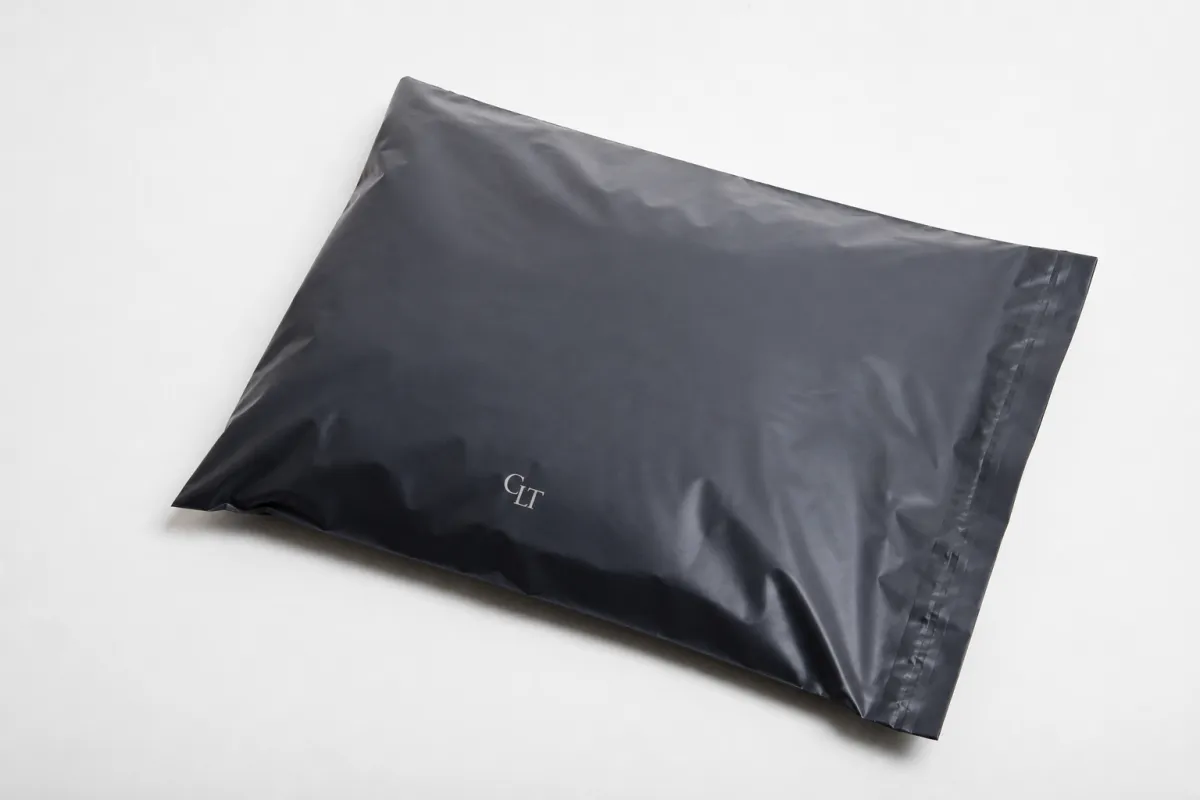
At the simplest level, matte poly mailers for branding are shipping bags made from polyethylene film with a finish that diffuses light instead of throwing it back at the eye. That small surface change alters the entire reading of the piece. Gloss can feel loud and promotional. Matte tends to feel calmer, more measured, and more premium. For a customer who has never touched your product before, that first visual impression can shift customer perception in a way that lasts well beyond the delivery day.
The physical construction is uncomplicated. Most mailers use an outer printed film, an inner protective layer, and an adhesive closure strip. Simple parts, yes, but the way those layers work together matters a great deal. The outer film carries the brand graphics. The inner layer helps the mailer slide, flex, and resist puncture during transit. The closure strip keeps the package sealed through sorting, stacking, and doorstep handling. On a well-made run, the branding stays intact all the way to delivery, without scuffs or weak seams drawing attention away from the design.
It is worth being precise here. Most matte poly mailers are built from polyethylene, often in blends that balance flexibility and tear resistance. The exact structure can vary by supplier, and that variation affects how the bag feels in the hand, how it seals, and how it behaves under stress. That is one reason sample testing matters so much. A spec sheet can tell you the numbers, but it will not tell you how the bag feels when a warehouse associate is loading it at speed.
The branding effect comes from both the surface and the print treatment. A matte finish gives stronger contrast control for logos, taglines, and pared-back artwork. Dark backgrounds do not glare as much. Light backgrounds do not look plasticky. Even small typography can become easier to read because the eye is not fighting reflections. That is why matte poly mailers for branding show up so often with DTC apparel brands, cosmetics sellers, boutique subscription programs, and accessory lines that want a polished first touch without paying for rigid packaging.
There is an important distinction buyers sometimes miss. The goal is not merely to print a logo on a bag. The goal is to create brand consistency across the shipment, from the warehouse label to the doorstep reveal. A mailer that looks intentional makes the whole order feel considered. That can support brand recognition, especially when the same visual system repeats across inserts, labels, and thank-you cards.
Matte poly mailers for branding also solve a common budgeting problem. A business may want a memorable package but cannot justify the per-unit cost of custom cartons, folding cartons, or elaborate inserts on every order. The matte mailer becomes the compromise that does not really feel like one: a relatively low-cost surface with enough design room to say something meaningful.
For brands building a packaging system, the mailer should not stand alone. It works best as one part of a broader presentation that includes branded tissue, labels, and inserts. If you are mapping that system, the product range at Custom Packaging Products is a useful place to think through the rest of the package journey. For format comparison, Custom Poly Mailers shows how this category can vary by style and structure.
Matte is not automatically the right answer. It fits brands that want restraint, modernity, and a quieter premium read. A brand voice that is energetic, loud, and promotional may suit gloss better. The point is not to follow a trend. The point is to choose the finish that supports the brand story rather than working against it.
How Matte Poly Mailers for Branding Work in Real Shipping
Inside the supply chain, matte poly mailers for branding work because they balance presentation with transit performance. The outer film can be printed with one color, two colors, or a full-coverage design depending on the supplier and the order size. The matte surface then acts like a visual filter, muting glare and giving the artwork a more controlled finish. A simple logo often looks more expensive on matte than on glossy stock, even when the material cost difference is fairly modest.
The print mechanics matter more than people usually expect. Spot color printing tends to make logos crisp and efficient for straightforward designs. Full-coverage artwork opens the door to patterns, oversized graphics, and background fields that make the package feel like a campaign asset instead of a plain shipping bag. Matte poly mailers for branding are especially strong when the artwork uses a small number of high-contrast colors and enough open space for the design to breathe.
Customer perception changes with the finish too. Matte often signals restraint, quality, and modern design discipline. Gloss can read brighter, more promotional, and sometimes more commodity-like. Neither one is wrong. They simply communicate different things. For a beauty brand, a matte mailer may suggest refined minimalism. For a youth-oriented label, a glossy finish might create more visual punch. The better choice depends on the brand identity you want to reinforce.
These mailers are a natural fit for apparel, socks, swimwear, accessories, soft goods, subscription products, and lightweight hardgoods that do not need the crush resistance of a box. They also work well when fulfillment speed matters. A mailer that is easy to load, seal, and label can save seconds per order, and those seconds add up quickly when volume climbs. That efficiency matters just as much as aesthetics when a warehouse team is pushing hundreds or thousands of parcels a day.
The tradeoff is customization depth. The more customized the print, structure, and finish, the more you need to think about minimum order quantities, proofing time, and artwork limits. Tiny type can disappear on a matte background. Thin strokes can look weaker than expected. Dark colors may print slightly flatter than they do on a screen. That is not a defect; it is simply how the surface behaves. Good suppliers will tell you that early, not after production starts.
If you want to see how brands use packaging as part of a broader experience, the examples on Case Studies are useful. They point to a simple truth: packaging rarely improves brand recall because of one giant gesture. It usually works because a dozen small choices line up consistently, and matte poly mailers for branding can be one of the most visible of those choices.
For quality testing, packaging teams often think in terms of transit abuse, not just shelf appeal. Mailers may be exposed to conveyor friction, compression, rough handling, and occasional puncture risk. That is where standards and test methods come in. Industry groups such as the ISTA publish transit test approaches that help teams evaluate shipping performance more systematically. For brands shipping at scale, that kind of discipline matters because a pretty mailer that fails in distribution is not premium at all.
A package that arrives intact protects more than the product. It protects the promise.
Matte Poly Mailers for Branding: Cost, MOQ, and Pricing
Pricing for matte poly mailers for branding usually comes down to five variables: size, film thickness, print coverage, color count, and order quantity. Add special finishes, custom sizing, or inserts, and the quote can move faster than many buyers expect. The economics are easy to understand once you break them apart. The more standardized the mailer, the lower the unit price. The more customized the build, the more you pay for setup, proofing, and production control.
What drives the price
Size has a direct effect because larger mailers use more material. Thickness matters too, usually measured in mils. A lighter mailer may be fine for apparel or soft accessories, while a heavier gauge is better for items with sharp corners, heavier contents, or a higher risk of seam stress. Print coverage also matters. A small one-color logo on a stock matte bag is usually much cheaper than a full-bleed design that wraps the whole surface. If you are buying matte poly mailers for branding with a full graphic treatment, expect the price to reflect the extra ink, setup, and quality control.
MOQ is where many buyers get surprised. Lower quantities tend to carry a higher per-unit cost because the fixed costs are spread across fewer pieces. Larger runs reduce unit price, but they increase the upfront cash commitment and storage needs. That is a familiar tradeoff in packaging. A 2,000-piece order may feel easier to approve, yet a 10,000-piece run can cut the cost enough to matter across a quarter of fulfillment. The right answer depends on cash flow, forecast confidence, and how often the design will change.
A practical cost comparison
| Option | Typical MOQ | Typical Unit Cost | Best For | Main Tradeoff |
|---|---|---|---|---|
| Stock matte mailer with logo label | 500-1,000 | $0.16-$0.28 | Testing a new look | Less integrated branding |
| Semi-custom matte printed mailer | 2,000-5,000 | $0.22-$0.40 | Growing DTC programs | More setup than stock |
| Fully custom full-coverage mailer | 5,000-10,000+ | $0.28-$0.55+ | High-volume brand systems | Higher upfront spend |
| Heavy-gauge custom mailer | 5,000+ | $0.32-$0.60+ | Heavier or sharper items | More freight weight |
Those ranges are directional, not universal. Freight, seasonality, ink coverage, and supplier location can move them. International production may lower the unit cost while raising lead time and logistics complexity. Domestic production can shorten the timeline, but not always at the lowest sticker price. Buyers should ask for landed cost, not only ex-factory price. Otherwise the quote can look attractive until freight, duties, and packaging prep show up.
That is also why comparing matte poly mailers for branding to custom boxes can be useful. A box may create a richer tactile experience, but a mailer often delivers a lower cost per impression because material use is lower, shipping weight is lighter, and fulfillment is faster. Printed tissue and branded tape can improve the package too, but those are usually add-ons rather than the core shell. A matte mailer does more of the work by itself.
Ask suppliers for quotes at multiple tiers. A useful pricing request should include material gauge, dimensions, print coverage, plate or tooling fees, sample costs, packaging specs, and freight method. If a supplier only gives one number, you are not seeing the whole picture. A good quote makes comparison easier across options and keeps the decision tied to actual ship-ready cost.
For brands thinking about sustainability, there is also the question of source reduction. The EPA has practical guidance on waste minimization and packaging material use at epa.gov/smm. That does not mean a poly mailer is automatically the greenest answer. It does mean a right-sized mailer, with no excess void and no oversized carton, can be a smarter materials choice than many teams assume. If the format helps reduce packaging mass and shipping complexity, it may fit a broader sustainability strategy even before recycled content enters the conversation.
Bottom line: matte poly mailers for branding are usually most cost-effective when the design stays disciplined, the size is right, and the order volume matches the brand’s actual shipping cadence.
Process and Timeline for Matte Poly Mailers for Branding
The production path for matte poly mailers for branding is usually more predictable than buyers fear, but only if the artwork and specs are clear from the beginning. The workflow often starts with a requirements brief, then moves into artwork setup, digital proofing, sample approval, mass production, quality checks, and freight delivery. Each step is ordinary on its own. Delays show up when teams skip one of them or assume a design file is production-ready when it is not.
Clear artwork files are the biggest time saver. Suppliers need the logo placed correctly, the color specifications confirmed, and any bleed or safe-area requirements respected. If the file is missing a dieline or if the brand team keeps revising copy after proofing starts, timelines stretch quickly. That is normal. It is also avoidable. A good packaging workflow behaves like a checklist rather than a debate.
Where projects usually slow down
Proof approval is a frequent bottleneck because multiple stakeholders want to sign off. Marketing wants the color to feel on-brand. Operations wants the closure to work on the line. Finance wants the price held. Sometimes sustainability wants recycled-content language checked too. None of that is wrong. It only means the approval loop should be planned, not improvised. If one department waits on another, a three-day delay can turn into two weeks before anyone notices.
Seasonality changes the picture further. Peak shipping periods, product launches, and holiday demand can reduce manufacturing flexibility. If a brand wants matte poly mailers for branding in volume before a major campaign, the order should be placed early enough to absorb proofing, sampling, and freight variability. Stock options are faster because they begin with existing inventory. Fully custom options take longer because they require a tailored print run. A realistic planning window is often 12-15 business days from proof approval for some custom jobs, with longer timelines when freight is international or volumes are large.
Brands should ask a few direct questions up front:
- What is the total turnaround from artwork approval to delivery?
- Can I see a sample or pre-production proof before the full run?
- What format do you need for artwork files?
- What packaging method will the finished mailers use for freight?
- Can the supplier support rush production if the launch date moves?
That conversation is not just administrative. It shapes the reliability of the entire packaging plan. If the supplier is vague about proofing or cannot explain the production steps, the order is probably going to require more chasing later. If they can explain the process clearly, they usually handle quality with the same care.
Testing matters too. For distribution-heavy categories, some teams ask for transit-related testing or sample abuse checks before approving a large run. Packaging organizations and labs often use methods tied to shipment hazards, and the discipline of trial, review, and correction pays off quickly. A mailer that passes a hand test is not necessarily ready for a full shipping network. A mailer that has been evaluated under practical conditions is much easier to trust.
If you are comparing packaging formats as part of a launch plan, pairing the mailer with the right labels, inserts, and outer graphics can keep the whole order system coherent. That is where Custom Labels & Tags can become part of the timeline discussion, not an afterthought. Brand consistency holds better when the pieces are planned together instead of ordered one by one.
Key Factors to Choose the Right Matte Poly Mailers for Branding
Choosing matte poly mailers for branding starts with fit. If the mailer is too large, the package looks loose and wasteful, and postage can rise with dimensional weight. If it is too tight, product loading slows down and seams may take more stress than they should. The right size gives the product enough room for safe packing while still creating a tidy, intentional presentation. That supports both cost control and the unboxing experience.
Size, thickness, and closure
Thickness should match the item, not the marketing brief. A lightweight apparel drop might work well in a thinner gauge, while a mailer with harder edges or heavier contents may need more material strength. Ask for a sample with the actual product inside, not just an empty bag. That simple test reveals more than a spec sheet can. It shows whether the seam feels secure, whether the closure strip bites cleanly, and whether the bag resists puncture where the corners press.
The closure itself matters more than many teams expect. A strong adhesive strip speeds fulfillment and helps the package stay sealed in transit. Tear-strip options can improve opening behavior, especially for customers who dislike wrestling with a package. If the brand wants returns to be easier, the mailer may need a second adhesive strip or a reuse-friendly design. Those details are not glamorous, but they affect customer satisfaction far more than decorative extras.
Design choices that affect perception
Design is where matte poly mailers for branding become a visual branding tool instead of a commodity bag. Logo size, placement, typography, and background color all influence how the package reads from a few feet away. Minimal artwork can feel upscale. Bolder graphics can feel energetic and retail-forward. The key is to keep the system coherent with the rest of the brand. If the website is clean and restrained but the mailer is loud and busy, the package will feel disconnected from the brand identity.
Brand consistency gets easier when the mailer is designed as part of a larger set. That might mean using the same type family on inserts, the same palette on labels, and the same tone of voice across every printed touchpoint. A package does not need ornate decoration to feel branded. It needs to feel considered.
Sustainability deserves a careful, honest treatment. Some mailers include recycled content, and some use less material by design. Those are useful improvements, but they do not erase the realities of plastic packaging. The smarter question is whether the mailer uses the least material needed for the job, ships efficiently, and fits the brand’s environmental claims without overpromising. Local recycling access varies a lot, so any sustainability claim should be checked against the actual disposal path customers have, not just the language on the spec sheet.
If a team wants to pair the mailer with paper-based elements, FSC guidance at fsc.org can help inform the sourcing of printed inserts or labels that sit alongside the poly format.
One practical tip saves a lot of regret: compare how the mailer looks in different light. Matte often photographs better because it reduces glare, but under harsh indoor lighting a dark design can look flatter than expected. Ask for a physical sample and place it near product photography, packing benches, and customer-facing surfaces. That is where the real-life read shows up. Packaging is judged in context, not in isolation.
For brands that want a more structured packaging system, it helps to think in layers. The mailer is the outer shell. Labels and tags carry secondary information. Inserts extend the message. The product itself closes the loop. If those layers all point in the same direction, matte poly mailers for branding do more than ship an order; they help build a repeatable customer memory.
That is one reason strong packaging programs often start simple and then refine. They are not chasing decoration. They are managing attention.
Common Mistakes and Expert Tips for Matte Poly Mailers for Branding
The most common mistake is choosing appearance before protection. A mailer can look perfect on a screen and still fail once it hits a sorting belt or gets loaded with a product that has sharp corners. When that happens, the brand pays twice: once for the replacement item and again in customer trust. Matte poly mailers for branding should always be judged as shipping tools first and brand assets second. The best ones do both.
Another frequent error is overdesigning the surface. Too many colors, tiny text, heavy gradients, and low-contrast copy can all weaken readability on a matte finish. Matte gives you a calmer visual field, which is useful, but it also means the artwork needs discipline. A strong logo at the right size will outperform a crowded graphic every time. If you want the package to feel premium, leave some visual space for the design to breathe.
Proofing deserves real attention. Screen colors shift. Printer inks shift. Matte backgrounds alter the way colors sit. A blue may read deeper. A gray may feel flatter. White text may need stronger contrast than expected. This is where a physical sample is worth far more than a quick digital approval. I would rather see one sample in hand than ten polished renders that do not reflect production reality.
Here are a few expert habits that reduce risk:
- Test the mailer with the actual product weight and shape.
- Check the logo at true size, not magnified on a monitor.
- Inspect the seal strength after a few minutes of handling.
- View the finish in natural light and under warehouse lighting.
- Verify that the shipping label has enough contrast and placement space.
Those checks sound basic, but they prevent the most expensive kind of packaging mistake: the one discovered after the full run arrives. If you want a broader view of how brands solve those issues, examples in Case Studies can show how different packaging decisions affect fulfillment and presentation together. The lesson is usually the same: the highest-performing package is rarely the flashiest one. It is the one that works consistently.
There is also a systems mistake that shows up all the time. Teams approve the mailer but forget the rest of the packaging stack. Then the mailer looks sharp, while the inserts are off-brand, the label is awkward, and the fulfillment team improvises the loading order. That breaks the story. Matte poly mailers for branding perform best when the whole package system is aligned, from print assets to warehouse flow.
The smartest buyers do not ask, "How nice does it look?" first. They ask, "How does it hold up, how does it ship, and what does it communicate in a customer’s hands?" That shift in framing is where better packaging decisions start.
Step-by-Step Guide to Ordering Matte Poly Mailers for Branding
Ordering matte poly mailers for branding gets much easier when you treat it like a repeatable sourcing process instead of a one-off creative project. The sequence below keeps the decision practical and reduces the chance of rework later. It also gives you a clean way to compare suppliers on more than price alone, which is where many packaging programs go off track.
- Define the shipment profile. List the product types, average weights, dimensions, and monthly order volume before you ask for quotes.
- Select the mailer size and gauge. Match the bag to the product, not the other way around. If your products vary widely, choose the most common shipping case first.
- Prepare artwork cleanly. Confirm logo files, brand colors, placement rules, and any copy that needs to appear on the mailer.
- Compare suppliers beyond unit cost. Review MOQ, proofing steps, sample policy, freight options, and the expected timeline from approval to delivery.
- Approve a sample with real contents. Check closure performance, print readability, surface feel, and how the bag looks after handling.
- Lock the reorder plan. Decide when you will reorder, what the trigger point is, and how the mailer fits into your wider packaging inventory.
That process may sound simple, but the value is in the discipline. A buyer who defines the specs well can get more accurate quotes, shorter approval cycles, and fewer surprises when the shipment arrives. A buyer who skips the setup stage often spends that time later dealing with freight issues, mismatched sizing, or a visual result that does not feel on-brand.
When you are comparing suppliers, ask for a clear breakdown of what is standard and what is optional. Some will include plate charges or proofing in the quote; others will not. Some will offer faster production but slower freight. Some will be strong on design support but limited on material thickness. You want the real comparison, not the headline number.
This is also the point where branding and operations should meet. If the same team is choosing the mailer, the insert, and the label system, brand consistency improves fast. The shipping package starts to feel like one planned experience rather than a set of disconnected parts. For teams that want to round out the presentation, Custom Labels & Tags and the broader Custom Packaging Products catalog make it easier to build a full system instead of a single component.
One final practical note: build a reorder buffer. Packaging often runs out at the worst possible time, usually right before a campaign or product drop. If matte poly mailers for branding are part of your standard shipper mix, treat them like a core supply, not a decorative add-on. That mindset protects margin, reduces rush freight, and keeps the customer experience stable when volume spikes.
My advice is simple. Start with the product, choose the mailer that protects it, then let the print design sharpen the brand story. That sequence works far better than designing the bag first and hoping the logistics will sort themselves out.
Frequently Asked Questions
Are matte poly mailers for branding better than glossy mailers?
They are usually better if the goal is a calmer, more premium look. Matte reduces glare, which helps logos read more cleanly and often improves how the package photographs. Glossy mailers can still work well if the brand wants a brighter, louder, more promotional feel. The better choice depends on the brand voice and the customer perception you want to create.
What thickness should I choose for matte poly mailers for branding?
Choose thickness based on the item, not just the design. Lightweight apparel and soft goods often work with lighter gauges, while heavier items or products with sharper edges usually need stronger film. Ask for a sample with the actual product inside so you can judge puncture resistance, seal strength, and how matte poly mailers for branding behave in real packing conditions.
What is a typical MOQ for matte poly mailers for branding?
MOQ depends on the supplier, the print method, and whether the mailer is stock or fully custom. Some projects can start in the low hundreds if the order uses a stock base with labels or limited print, while full custom runs often begin much higher. The cleanest way to compare is to ask for tiered pricing so you can see the cost difference between a pilot run and a larger production order.
How long do matte poly mailers for branding usually take to produce?
Lead time depends on artwork readiness, proof approval, production capacity, and freight method. Stock or lightly customized options are usually faster than fully custom mailers. If the artwork is ready and the approval process is tight, production can move fairly quickly; if revisions drag out, the schedule stretches. Planning early is the best way to keep matte poly mailers for branding on track for a launch date.
Can matte poly mailers for branding support a more sustainable packaging strategy?
Yes, if they are right-sized, use only the material needed, and are selected with recycled-content or lower-material options where available. They can also reduce shipping weight compared with heavier formats, which may help simplify fulfillment and cut excess packaging use. Matte poly mailers for branding are not a cure-all, but they can fit a smarter packaging strategy when they are chosen with care.
Practical takeaway: choose matte poly mailers for branding by starting with product protection, then fit, then print design. Ask for a real sample, test it with the actual contents, and compare landed cost instead of chasing the cheapest quote. That is the simplest way to get packaging that looks intentional, ships cleanly, and still makes sense when the orders start stacking up.

