mesh trucker caps bulk production cost changes fast once setup charges, stitching time, and decoration are spread across a larger run. A 100-piece order can look heavy on paper; a 1,000-piece order makes the same cap behave very differently. I have seen a mid-sized program drop almost a full dollar per unit simply because the buyer stopped changing the patch art after sampling. The cap did not get cheaper by magic. The math just stopped getting punished.
Buyers usually have a use case before they have a price target. Promo giveaways, retail merch, team uniforms, and reseller stock all push the spec in different directions. That choice matters more than most quote sheets admit. A cap built for a stadium handout does not need the same finish as a cap meant to sit on a boutique shelf, and mesh trucker caps bulk production cost follows that decision from the first line item to the freight bill.
At Custom Logo Things, the goal is straightforward: give you a clean quote, a clear MOQ, and enough detail to compare offers without guesswork. If you are ordering through our Wholesale Programs, speed already matters. If you are still pricing options, look at the full number before a low sticker price pulls you in and hides tooling fees, setup charges, and freight. That part trips up even experienced buyers, kinda more often than they like to admit.
Mesh Trucker Caps Bulk Production Cost: Why Scale Changes the Math
mesh trucker caps bulk production cost is mostly a math problem with fabric and thread attached. The cap itself is not complicated: crown, mesh back, bill, closure, logo. The expense comes from how many times a factory has to stop, set up, inspect, and decorate. Once those steps are divided across more units, the unit cost falls.
Many buyers chase the lowest quote before they know what is included. A number that looks attractive at first can turn ugly once setup charges, embroidery digitizing, sample shipping, carton labeling, and freight appear. mesh trucker caps bulk production cost should be judged as landed cost, not as a bare factory number with half the bill missing. That is especially true for light products like caps, where freight minimums and carton efficiency can matter more than the item weight suggests.
Four buying scenarios show the difference clearly. Promo giveaways need the lowest practical cost and can live with simpler decoration. Retail merch needs a cleaner finish because crooked stitching and cheap mesh are obvious under store lighting. Team uniforms sit in the middle, built for repeated wear without overbuilding. Reseller stock asks for margin, presentation, and repeatability in the same order. Each one shifts mesh trucker caps bulk production cost in its own way.
Crown structure and decoration method usually do more damage to budget than buyers expect. A soft foam front with a flat embroidered logo is often easier on the wallet than a structured front with a woven patch, 3D puff embroidery, and custom inside taping. Mesh density matters too. Tighter mesh, better hand feel, and cleaner joins between front and back panels push labor upward. Packaging does the same thing. A plain polybag is one cost path; printed inserts, barcode stickers, and retail cartons are another.
If a quote looks cheap because it left out setup charges, sample fees, or freight, it is not cheap. It is incomplete. mesh trucker caps bulk production cost only makes sense when the full landed number is in view.
Timing changes the equation as well. Small runs absorb more fixed cost because the factory still has to digitize artwork, prepare panels, and run approvals. Larger runs dilute those expenses. That is why mesh trucker caps bulk production cost often drops hard between the first few hundred pieces and the first thousand. The curve is not linear. Custom manufacturing rarely is.
For buyers who need to move fast, the best path is not complicated. Pick one cap style, keep the logo clean, and limit the number of colorways. That does more for mesh trucker caps bulk production cost than arguing over a few cents while the spec sheet keeps expanding. Clean specs save money. Messy specs create back-and-forth, and back-and-forth is expensive.
What Buyers Are Ordering: Mesh Trucker Cap Build Basics
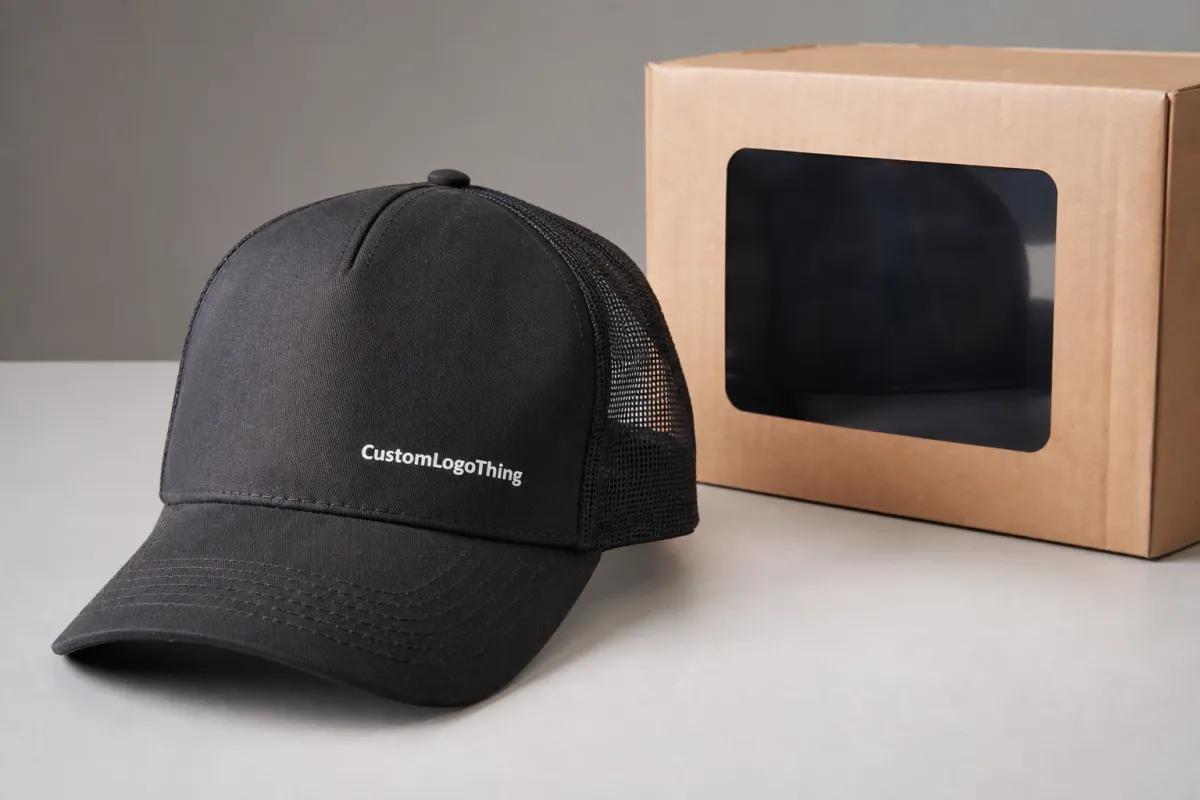
Most mesh trucker caps start with the same build: six panels, a structured or semi-structured front, breathable mesh on the back and side panels, a curved or flat bill, and a snapback closure. The front panel is where logos usually live. The mesh is what keeps the cap from feeling like a small greenhouse. The design sounds basic. The execution is where mesh trucker caps bulk production cost starts to move.
The front panel can be foam, cotton twill, brushed cotton, or polyester. Foam shows up often in promo-grade runs because it is light and easy to shape. Cotton and poly-cotton fronts usually feel more retail-friendly. The bill can be pre-curved or left flat depending on the style. The sweatband can be standard or upgraded. Inside seam finishing can stay basic or move up a level, and that difference shows up in Bulk Pricing Faster than most people expect.
Customizations usually happen in a few places. The front panel can change shape and lining. Seam stitching can tighten for a neater profile. The sweatband can improve comfort. The visor insert can shift stiffness. The label can be woven, printed, or heat transferred. The closure can stay a standard plastic snapback or move to a fabric strap or metal closure. Each choice adds weight to mesh trucker caps bulk production cost.
Cheap-looking specs are not always cheap to produce. Inconsistent construction across colors or sizes often creates more labor than a cleaner mid-grade spec. If black caps use one panel stack and red caps use another, the factory keeps checking, sorting, and reworking. That wastes time. Time becomes cost. mesh trucker caps bulk production cost climbs in places nobody planned for.
Three quality bands help buyers keep the spec honest. Promo-grade caps are built for volume, quick branding, and low unit cost. Fashion-grade caps put more emphasis on hand feel, detail, and visual consistency. Retail-ready caps need the cleanest finish because they sit on a shelf next to products that already look expensive. Match the build to the job. If the cap will be tossed at an event, do not pay for details nobody will notice. And if it is going to be worn every day for three months, do not cheap out on the sweatband and expect the cap to still look fresh.
A basic spec sheet should answer the major questions: crown height, panel count, mesh color, closure type, bill style, logo method, and packing method. If any one of those items is vague, mesh trucker caps bulk production cost will be vague too. Vague quotes are how buyers end up fighting over a finished order that never matched the sample they thought they approved.
If you are comparing vendors, ask for the same build in writing. Same front fabric. Same mesh. Same logo method. Same closure. Same packing. Without that, the quote comparison is noise. Noise is not a buying strategy.
Mesh Trucker Caps Bulk Production Cost: Specs That Move Price
mesh trucker caps bulk production cost reacts most strongly to the parts buyers love to change late in the process. Fabric weight, mesh type, front panel lining, embroidery stitch count, patch type, and color changes all matter. Change one item and the quote may barely move. Change three and the price can jump in a way that only makes sense once the labor behind it is visible.
Fabric weight is a good place to start. A lighter front panel can lower cost, but only if it still holds shape. If the front collapses under a patch or a heavy logo, the cap starts looking cheap immediately. Mesh type matters too. Standard polyester mesh is usually the default because it is cost-effective and breathable. Finer mesh or matched-color mesh adds visual appeal, but mesh trucker caps bulk production cost rises when the factory has to source, cut, and keep the mesh consistent across the run.
Logo method is where buyers often overspend. Flat embroidery is usually the easiest to produce and the cleanest for simple logos. 3D puff embroidery brings more visual pop, but it uses more foam, more control, and more time. Woven patches are strong on detail, but they add material and attachment steps. Printed patches can be economical for colorful artwork, but they are not always the best choice if the cap needs a premium retail look. Each method changes mesh trucker caps bulk production cost in a different way.
Here is the practical version: flat embroidery usually adds the least; 3D puff adds more; woven patches often sit in the middle to upper-middle range; printed patches can be cost-efficient for complex art but depend on quantity and finish. If the logo is small and simple, do not force an expensive decoration method just because it sounds better. That is how buyers inflate mesh trucker caps bulk production cost without getting more value.
| Decoration option | Typical cost impact | Best use case | Notes on production |
|---|---|---|---|
| Flat embroidery | Low to moderate | Simple logos, promo runs, uniform branding | Fast setup, good durability, lower stitch volume |
| 3D puff embroidery | Moderate to higher | Bold front logos, retail merch, premium looks | More labor, foam insert, careful stitch control |
| Woven patch | Moderate | Detailed artwork, crisp edges, brand-heavy builds | Patch sourcing adds time; attachment method matters |
| Printed patch | Low to moderate | Color-rich art, short text, mid-range budgets | Good for complex graphics; finish changes perceived value |
Number of color changes matters more than many buyers think. One-color artwork is easier to digitize, easier to sew, and easier to approve. Once a logo becomes four colors with gradients, borders, and tiny text, the factory spends more time on digitizing and sample correction. That pushes mesh trucker caps bulk production cost up through both setup and production labor.
Mixed colorways add another layer of friction. A run with ten black caps, ten white caps, and ten navy caps sounds flexible, but it forces material handling and line resets that a single-color run does not. If you need that flexibility, fine. Just understand the tradeoff. Mixed logo versions do the same thing. Different names, department codes, or event dates are common in corporate orders, and they always make mesh trucker caps bulk production cost harder to keep low.
There are practical ways to save. Standard closures are cheaper than custom metal buckles. Fewer thread colors usually keep embroidery cost down. Clean artwork with bold shapes is easier than tiny type. Simple inside finishing saves time. Plain packaging is cheaper than printed retail presentation. None of that hurts the cap if the buying goal is practical rather than decorative.
If you want a premium look without overpaying, spend on one visible detail only. A structured front with a clean woven patch and standard snapback often looks sharper than a cap with too many extras fighting for attention. Good buyers know where the eye lands. Bad buyers keep adding parts and then wonder why mesh trucker caps bulk production cost keeps climbing.
Mesh Trucker Caps Bulk Production Cost: Pricing, MOQ, and Unit Cost
mesh trucker caps bulk production cost depends heavily on quantity, and the pricing curve is not subtle. Small runs carry more setup burden per unit. Larger runs spread that cost out. That is why the first quote for a 100-piece order can look very different from a 1,000-piece order even when the cap looks identical on paper. Same product. Different math.
Here is a realistic range for standard bulk orders with simple branding. Sample orders can land around $35-$90 for one approved style, depending on decoration, with shipping extra. Small bulk runs in the 100-300 range often sit around $2.75-$5.50 per piece for simple embroidery, and more if the logo is complex. Mid-volume runs around 500-1,000 pieces can move closer to $1.95-$3.75 per piece. Larger production runs above 2,000 units may land around $1.45-$2.90 per piece, depending on mesh type, patch work, and packing. Those are planning ranges, not promises, because labor markets, material availability, and freight markets all move.
MOQ matters because the factory needs enough volume to justify the setup. One design across one colorway is usually the easiest path to a cleaner quote. Add multiple colorways and the MOQ can rise, or the unit price can rise to compensate. Add multiple artwork versions and the math gets worse. That is not the seller being difficult. That is the seller paying for extra handling, extra checks, and extra time.
One-time fees and recurring unit cost should stay separate. If a quote includes digitizing, mold or patch tooling, artwork setup, woven label creation, and sample approval, those are not the same thing as the per-piece production price. Too many buyers look at the lowest visible number and miss the fact that it is front-loaded with setup charges. mesh trucker caps bulk production cost is much easier to compare when every quote shows setup charges, unit cost, and shipping in separate lines.
Below is a simple way to compare pricing tiers.
| Order size | Typical unit cost | Common extra charges | What it usually means |
|---|---|---|---|
| Sample / prototype | $35-$90 total | Digitizing, sample shipping | Best for approval, not for price hunting |
| 100-300 pieces | $2.75-$5.50 each | Setup charges, patch or embroidery setup | Good for small launches and test runs |
| 500-1,000 pieces | $1.95-$3.75 each | Packaging upgrades, label fees | Sweet spot for many branded programs |
| 2,000+ pieces | $1.45-$2.90 each | Custom packaging, freight, duties | Best dilution of fixed cost |
Do not compare quotes by unit price alone. Compare the landed cost: cap price, setup charges, sampling, packaging, freight, duties, and local tax assumptions if they apply. A quote that is $0.20 lower per piece can still lose once the freight method changes. That is especially true on lighter items like hats, where carton efficiency and shipping minimums can erase the apparent savings. mesh trucker caps bulk production cost only matters if the total math holds up.
If you are reselling, use margin logic instead of wishful thinking. A cap that lands at $2.40 may sound fine until packaging, freight, and fulfillment fees get added. Then the actual cost per piece may be closer to $3.10. If the target retail price is $14.99, room still exists. If the target is lower, probably not. Experienced buyers ask for the landed number first and the unit cost second.
For a direct-buy order, the quote should show exactly what you are paying for. If it does not, ask. The best vendors do not hide the messy parts. They write them down. If you want a cleaner comparison, use our Wholesale Programs page as a starting point and request the same spec from every supplier you are reviewing. Same build. Same decoration. Same packing. Same ship method. That is how mesh trucker caps bulk production cost becomes a fair comparison instead of a guessing contest.
The blunt truth is this: the cheapest quote is often the most expensive once the add-ons appear. Buyers who focus on setup charges, unit cost, and freight from the start usually end up with fewer surprises and fewer angry spreadsheet sessions later.
Mesh Trucker Caps Bulk Production Cost: Process, Timeline, and Lead Time
mesh trucker caps bulk production cost is easier to manage when the process stays clean. The order flow should move in a straight line: inquiry, spec confirmation, digital mockup, sample approval, production, quality check, packing, and shipment. If that sequence gets scrambled, cost and timing both suffer. Simple orders move fast. Sloppy orders drag.
A realistic sample cycle is often 5-10 business days, depending on artwork complexity and material sourcing. Production commonly runs 15-30 business days after approval for standard bulk orders. Shipping is separate. Domestic transit may be quick once the goods are packed. International transit can take longer because customs and freight schedules have their own timing.
Delays usually come from three places: artwork changes, sample revisions, and color matching. Sometimes the buyer changes the logo after the mockup. Sometimes the buyer asks for one more version after the sample arrives. Sometimes the thread color that looked fine on screen needs a real-world adjustment under daylight. Each delay adds time, and extra time can increase mesh trucker caps bulk production cost if the factory has to reschedule the line or rebook freight.
Rush orders cost more. That should not surprise anyone, but it still does. If a job jumps the line, the factory may need overtime, priority sourcing, or split shipments. Those are not free. If someone promises a rush without a surcharge, read the fine print. The cost is usually tucked into another line item, and mesh trucker caps bulk production cost gets shifted rather than reduced.
To keep the project moving, send the quote team everything they need up front. The best submissions include quantity, color count, logo file, target ship date, destination, and packaging needs. If you want private labeling, say so. If you need retailer-ready cartons, say so. If the cap has to survive distribution, mention it. The fewer surprises in the brief, the fewer surprises in the quote.
Good production planning also protects quality. A seller with clear instructions can check stitching, label placement, and packing against the approved spec before cartons close. That matters. A cap that arrives on time but misses the logo placement target is still a bad cap. The savings vanish fast when rework starts. For practical buyers, mesh trucker caps bulk production cost is not just about the invoice. It is about whether the invoice buys the right result.
If the shipment is going into retail, ask about carton testing and handling. For distribution-heavy programs, shipping performance can matter more than the cap itself. Standards from ISTA help define how packaging should be tested for transport abuse, not just how it looks on a dock. That sounds boring. It is. It is also cheaper than replacing damaged stock later.
For buyers who need sustainability proof, ask whether paper inserts, hang tags, or cartons can use certified stock from the FSC system. That does not change the cap itself, but it can improve the packaging story without blowing up the run. The point is not to add features for the sake of it. The point is to keep mesh trucker caps bulk production cost aligned with the actual business goal.
Why Choose Us for Bulk Mesh Trucker Cap Production
Buyers do not need slogans. They need consistency. A good bulk run starts with stable front panels, clean mesh joins, accurate panel stitching, and decoration that lands in the same place from cap to cap. That is the baseline. If a supplier cannot repeat the same result across the run, mesh trucker caps bulk production cost goes up anyway because errors become part of the budget.
We focus on the control points that actually matter in production. Stitch quality is checked before the run is approved. Color matching is confirmed against the selected reference. Packaging is reviewed so carton count and packout stay predictable. Communication stays fast when a spec needs clarification. That last part sounds small, but it saves real money. Slow answers create slow orders. Slow orders create extra handling. Extra handling pushes mesh trucker caps bulk production cost in the wrong direction.
Samples matter because they remove guesswork. A digital mockup is useful, but a physical sample tells the truth about front panel firmness, mesh hand feel, logo size, and how the closure sits. Pre-production photos help too, especially for buyers who need approval from a brand manager, distributor, or retailer. If the sample is wrong, fix it before production. That is cheaper than arguing about a thousand finished caps.
The best buyers are not the ones who ask for the most. They are the ones who ask for the right proof. They want a clear spec sheet, a sample that matches the drawing, and defect handling that does not turn into a back-and-forth circus. Fair enough. That is how real bulk buying works. The quote only matters if the product arrives as promised. Otherwise mesh trucker caps bulk production cost is irrelevant because the order already failed the simplest test.
For some buyers, a supplier relationship is judged by response speed. Fair. Speed without accuracy is just a faster mistake. We would rather slow the approval by a day than ship a thousand caps with the wrong mesh color or patch placement. Practical buyers understand that tradeoff. They know cheap corrections are rare and expensive corrections are common.
If you are comparing us against other vendors, compare the proof, not the pitch. Ask who checks the sample, who signs off on colors, and who handles packing decisions. Ask whether they can support wholesale reorders through our Wholesale Programs process without starting from zero every time. That is the part that saves money over the long run. It also keeps mesh trucker caps bulk production cost stable on repeat orders.
We also keep the process honest about tradeoffs. If a logo is too detailed for the cap size, we say so. If a patch will cost more than a flat embroidery version and not improve the buyer result, we say that too. Nobody needs a sales speech when the spec sheet already tells the story. The point is to help you land on the right balance of cost, finish, and lead time without pretending every feature is essential.
Custom Options That Affect Mesh Trucker Cap Unit Cost
mesh trucker caps bulk production cost changes again once buyers start adding optional upgrades. Some extras are worth the money. Some are decoration for decoration's sake. The smart move is to separate retail value from vanity. If an add-on improves shelf appeal, resale price, or brand recognition, it may earn its keep. If it only makes the quote longer, skip it.
Woven labels are useful when the cap needs a cleaner brand mark inside or outside. Custom sweatbands can improve comfort and give a stronger premium signal. Private packaging helps retail programs, especially if the cap is being shipped to stores or fulfillment centers. Hang tags and barcode stickers are practical if the product needs to move through a retail system without extra repacking. Those add-ons increase mesh trucker caps bulk production cost, but they can also improve sell-through.
Inside taping and custom seam finishing sit in a middle ground. They are not always visible to the buyer at first glance, but they matter on higher-end caps. For disposable promo runs, they are usually not worth the added spend. For resale programs, they may be. That depends on price point, not ego. Buyers who know their audience can decide faster and keep mesh trucker caps bulk production cost under control.
Decoration choices still carry the biggest budget effect. Flat embroidery is durable, familiar, and usually the easiest path to a clean price. 3D puff adds body and perceived value, but it needs better artwork and more care in production. Patches can look sharper than direct embroidery on some logos, especially for designs with fine detail or a heritage feel. Printed patches can work well when the artwork has multiple colors or gradients. Each option changes not only the look, but the labor behind the run.
Packaging changes the freight conversation too. More packaging means more carton volume, more handling, and sometimes higher shipping cost. If you use retail boxes or insert cards, cartons may not pack as tightly. That affects how many pieces fit on a pallet and how much you pay to move them. A small packaging choice can ripple into a bigger logistics bill. mesh trucker caps bulk production cost should be reviewed with shipping in mind, not in isolation.
Material claims matter as well. If the buyer wants recycled content, ask what part of the package can be certified and what part cannot. If the buyer needs a cleaner environmental story, start with packaging. Sometimes a smarter carton spec does more than a fancy cap detail. For packaging best practices, ISTA guidance and packaging industry resources can be useful reference points, especially when balancing presentation with transport safety.
One thing to avoid: adding custom touches simply because they sound premium. Premium does not always sell if the audience is buying a giveaway, a tradeshow handout, or a club cap for one season. In those cases, simpler is smarter. The right add-on improves results. The wrong add-on is just extra cost wearing a nicer name. mesh trucker caps bulk production cost does not care about marketing adjectives.
Next Steps to Order Mesh Trucker Caps in Bulk
mesh trucker caps bulk production cost becomes manageable the moment the order is defined properly. Start with the cap style. Decide whether you want a structured front, a foam front, or a softer build. Pick the decoration method. Set the quantity. Then ask for a quote with the target delivery date already included. If those basics are not clear, every number after that is only a placeholder.
The fastest estimates come from clean input. Send the artwork file in the best format you have. Share the exact colors. State the size range if there are variations. Give the shipping zip or postal code so freight can be estimated correctly. Add packaging needs if you want anything beyond a standard polybag. If you need private labeling, say it up front. That is how mesh trucker caps bulk production cost gets quoted without three rounds of unnecessary revisions.
Here is the order of operations that usually saves time and money:
- Lock the cap spec first.
- Compare quotes second.
- Approve the sample third.
- Release production last.
That sequence sounds dull because it is. Dull is good here. Dull means fewer mistakes, fewer delays, and fewer hidden charges. If a seller pushes you to approve before the spec is fixed, slow down. If the price keeps changing after each small detail, slow down again. Good buying decisions are made before the order is locked, not after.
If you are ordering for resale, start with the wholesale path and build from there. If the first run sells cleanly, reorder with the same spec and reduce the variables. Reorders are where the math gets better because the setup is already known. That is where mesh trucker caps bulk production cost can really work in your favor.
For direct purchase, the simplest next step is to request a written quote with all assumptions listed. Ask for the sample cost, the MOQ, the unit cost at your target quantity, and the expected lead time after approval. Ask whether packaging, setup charges, and shipping are included. Ask what changes would alter the price. Those questions do not make you difficult. They make you profitable.
mesh trucker caps bulk production cost should never feel mysterious. If the quote is clear, the sample matches the spec, and the lead time is realistic, you are in good shape. If any of those pieces are fuzzy, fix them before money changes hands. The cleanest takeaway is simple: lock the spec, demand landed cost, and let the sample settle the arguments before the run starts.
What drives mesh trucker caps bulk production cost the most?
Quantity is the biggest lever because setup charges get spread across more units. Decoration method matters next, especially if the logo uses 3D puff, woven patches, or multiple thread colors. Material choices, packaging, and freight can swing the final landed cost more than buyers expect. mesh trucker caps bulk production cost is usually a mix of setup, decoration, and logistics, not just the cap itself.
What MOQ should I expect for mesh trucker caps in bulk?
A common MOQ is one design per colorway, but the exact floor depends on construction and decoration. Multiple colors or multiple artwork versions usually raise the MOQ or increase the per-unit price. Sample orders can be smaller, but they are priced differently from true production runs. If you want the cleanest mesh trucker caps bulk production cost, keep the first order simple and repeatable.
How do I compare mesh trucker cap quotes without getting fooled?
Make sure every quote uses the same cap spec, decoration method, and packing format. Check whether setup, digitizing, labels, and shipping are included or billed separately. Compare landed cost, not just unit price, because freight and duties can erase the savings. When in doubt, ask each supplier to break down mesh trucker caps bulk production cost line by line.
How long does bulk production usually take after approval?
Sampling often takes about 5-10 business days depending on artwork and material sourcing. Production commonly runs 15-30 days after sample approval for standard bulk orders. Shipping time is separate and depends on destination, service level, and customs clearance. If the schedule matters, build buffer time into mesh trucker caps bulk production cost planning from day one.
Can I lower mesh trucker caps bulk production cost without hurting quality?
Yes, by simplifying the logo, reducing thread colors, and using a standard closure. You can also control cost by choosing one packaging format and keeping the order in one colorway. The smart move is to cut decorative extras first, not the structural quality of the cap. That is usually the difference between a clean order and a cheap-looking mistake. mesh trucker caps bulk production cost should fall where the buyer will not miss the spend.
If you are ready to price a real order, send the quantity, artwork, colors, ship-to zip, and packaging needs. That is enough to build a quote that means something. mesh trucker caps bulk production cost is straightforward once the spec is clear, and the smartest move is to compare landed cost, approve a sample that matches the drawing, and only then release the run.