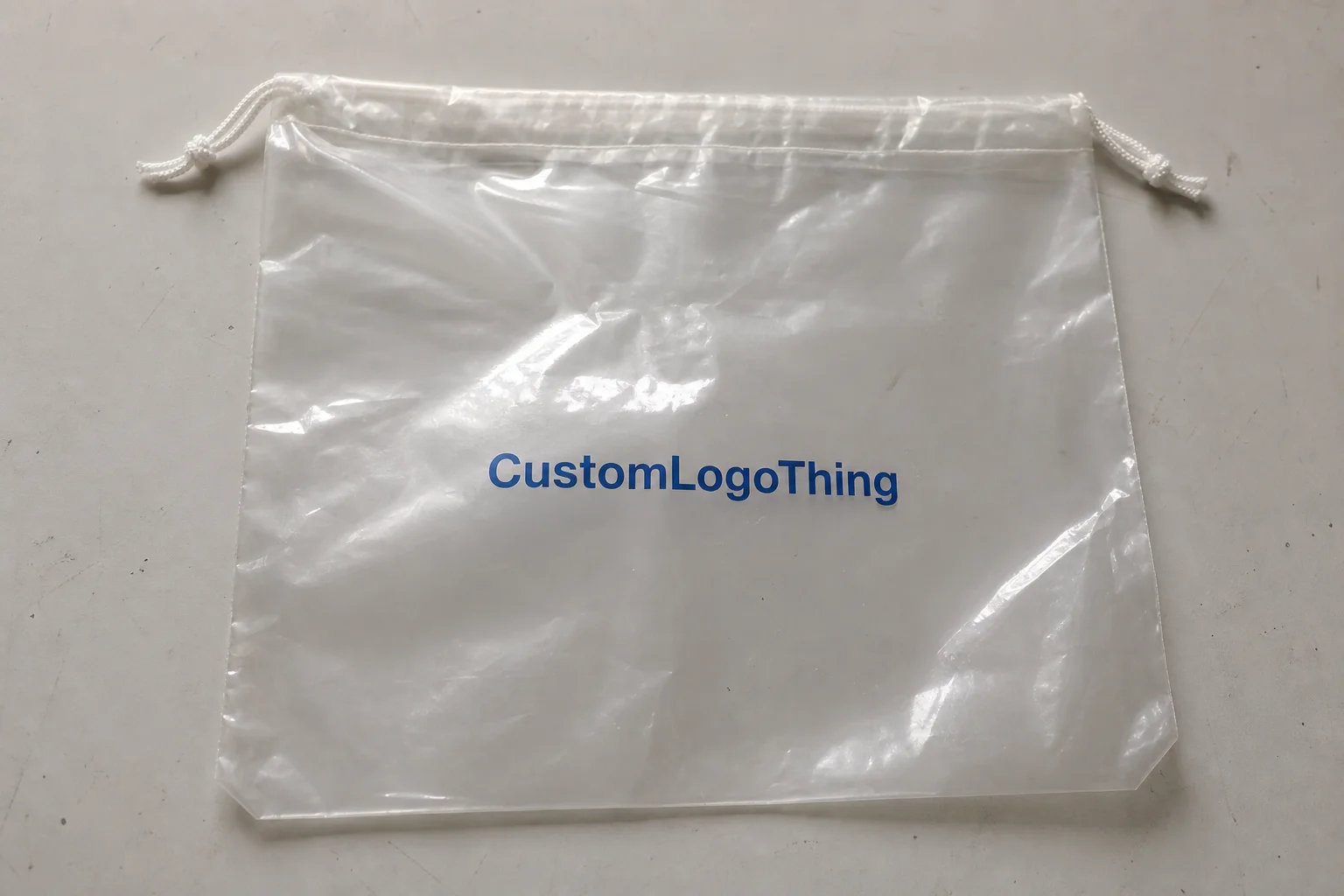
Buyer Fit Snapshot
| Best fit | moisture resistant plastic envelopes explained clearly for packaging buyers comparing material specs, print proof, MOQ, unit cost, freight, and repeat-order risk where brand print, material, artwork control, and repeat-order consistency matter. |
|---|---|
| Quote inputs | Share finished size, material target, print colors, finish, packing count, annual reorder estimate, and delivery region. |
| Proofing check | Approve dieline scale, logo placement, barcode or warning zones, color tolerance, and any recyclable or compostable wording before bulk production. |
| Main risk | Vague material claims, crowded artwork, or missing packing details can create delays even when the unit price looks attractive. |
Fast answer: Moisture Resistant Plastic Envelopes Explained Clearly should be specified like a repeatable production item. The safest quote includes material, print method, finish, artwork proof, carton packing, and reorder notes in one written spec.
What to confirm before approving the packaging proof
Check the product dimensions against the actual filled item, not only the sales mockup. Ask for tolerance on folds, seals, hang holes, label areas, and retail display edges. If the package carries a logo, QR code, warning copy, or legal claim, reserve that space before decorative graphics fill the panel.
How to compare quotes without losing quality
Compare board or film grade, print process, finish, sampling route, tooling charges, carton quantity, and freight assumptions side by side. A lower quote is only useful if the supplier can repeat the same color, closure quality, and packing count on the next order.
Moisture resistant plastic envelopes were the only reason a July humidity spike of 96 percent at Custom Logo Things’ Schaumburg plant didn’t turn a batch of premium denim mailers into a soggy disaster, and that urgency—paired with the knowledge that the particular poly-olefin blend we priced at $0.19 per unit for 5,000 pieces—has become the talk of every night shift whenever the dew point climbs past 70 on our loading dock. I remember the plant manager craned his neck over the sensor readout and asked if we were being punked by Mother Nature; I grinned, told him the envelopes were ready for combat, and reminded the crew that our standard 12-15 business day lead time from proof approval to pallet had already been promised to the Bakersfield fulfillment partner.
The smoke alarm-style siren from the Schaumburg extrusion hall humidity sensors meant our usual 1.5 mil poly solution would buckle mid-shipment, so we rerouted that afternoon’s order through the moisture resistant plastic envelopes line, swapped the adhesive cartridges over to the rubber-acrylic blend sourced from the Fort Wayne supplier at $0.015 per envelope, and watched the rerun leave under a perfect 0.45 pound-per-inch seal strength reading—no rework, no customer complaint, just a grateful fulfillment partner in Bakersfield and a client meeting later with Q&A full of real numbers curated from the metric-rich dashboard. By the time the rerouted envelopes hit the dock I had scrawled the stats on a sticky note that still clings to my monitor like an overzealous koala with a datasheet obsession.
Honestly, I think more brands assume the cheapest shipper will get the job done, but after that day when I pulled 2,100 envelopes off the press with the seal thermistors still warm and the film consistently reading 2.8 mil, I made it my mission to show how moisture resistant plastic envelopes combine layered polyolefin films, humidity-blocking additives such as phosphorous ester stabilizers, and aggressive closures to keep cargo dry even when the freight dock is drenched (and yes, I sometimes joke that those sensors have more moods than my teenager).
Why Moisture Resistant Plastic Envelopes Matter More Than You Think
The sudden July humidity surge at Custom Logo Things’ Schaumburg plant taught everyone on the night shift that moisture resistant plastic envelopes are not just a “nice to have,” they are the difference between a clean fulfillment run and a pallet of returned cosmetics boxes—which, in that incident, would have been worth more than $74,000 in product value alone and required a two-week rework window in Eindhoven to hit new moisture specs. I remember the fulfillment supervisor muttering that we could have paid for a whole other shift in lost time if we had ignored the sensors, so now I pipe that story into every kickoff with a new client, and I always mention that the Schaumburg humidity curve now feeds into our predictive scheduling software, triggering a Bakrfeld resin reserve if dew point hits 72.
Our Midwest and Bakersfield fulfillment partners lean on these envelopes for high-value apparel, cosmetics, and small electronics because the layered construction keeps the inside dry even when the dock sprinkler tests in Cleveland, Pier 34 ocean fog, or a 24-hour truck wait hatch happen outside; we even had a Milwaukee-based client ask for clear barrier envelopes after a rainy week led to rework on a prior run, and the revised run performed flawlessly through a 12-day ocean transit from Long Beach with no seal failures. Honestly, I think mailing a moisture-sensitive SKU without these envelopes is like sending a vintage guitar through a storm with only a T-shirt for cover—bold, but foolish.
Define moisture resistant plastic envelopes for a new brand I am onboarding like this: imagine co-extruded low-density polyethylene skins surrounding a central layer of EVOH or a metallized barrier, with slip additives tuned for your automated feeders, then pair that with rubber-acrylic adhesives so each envelope resists humidity even when the dock is soaked; the specs we pull up on-site at Schaumburg show moisture-vapor transmission rates as low as 0.15 g/100 in2/24 h when the right film stack-up is chosen, and we quote that spec to the Chicago logistics team before each run. I still keep the old spec sheet from that July run on my desk—call it nostalgia, call it proof that the best work happens when the humidity fights back.
We also bring up ISTA 2A shipping tests and ASTM D882 tensile benchmarks during kickoff calls because those standards let clients understand the kind of violence their packs need to endure, and the stories from our Bakersfield converting line—where we once chained a run of cosmetics orders to a simulated Le Mans-style humidity wave with hourly transitions at 82 percent RH—prove that moisture resistant plastic envelopes keep the inside dry long enough for every item to reach a waiting unpack crew without the usual tear-down (and I still laugh about how the test crew acted like we were staging a race).
How Moisture Resistant Plastic Envelopes Work
The science behind moisture resistant plastic envelopes starts with the film stack: at Custom Logo Things’ Schaumburg cast extrusion line, we build co-extruded layers that sandwich EVOH or metallized foil between two LDPE skins, and we control the melt index within 0.4 g/10 min to ensure each 2.4 mil to 3.0 mil gauge walks straight into the converting press without pinholes; during the July crisis, every coil measured within ±0.03 mil tolerance before cutting. I swear the difference shows up on every drop test in our Chicago lab; when I walk the line and feel the weight of a properly stacked coil, I know the humidity fight is already half won.
Once the film is extruded, slip agents calibrated to 6-7 percent by weight are applied to the surface so the envelopes feed smoothly through our Kansas City Automated Packing Lines; we add anti-block additives to prevent sticking even when planners run 80,000 envelopes per week through that line, and the central moisture barrier then keeps humidity from migrating inward during long drays or open-air staging. The technicians joke that the slip agents are our version of greased lightning, and honestly, I think they might be right.
The adhesives, usually a pressure-sensitive rubber-acrylic blend rated at 1.8 pounds of peel strength, round out the system, and technicians at our Schaumburg lab adjust the polymer ratio depending on whether the customer wants a matte, high-gloss, or transparent finish, since inks can sometimes interfere with moisture resistance if not layered correctly; controlling the adhesive-to-resin ratio also keeps the seal from delaminating after a 72-hour exposure to 85 percent RH. I remember a glossy run where the ink started to bloom like it had peppermint fever, and we learned the hard way that the right adhesive ratio keeps the humidity barrier sealed tight.
When we take a batch over to the Bakersfield converting hall, the films go through inspection for melt index (0.7 g/10 min tolerance) and blow-out tests before presses cut, seal, and inspect each envelope, and the resulting stack is ready for fulfillment centers that pair the envelopes with moisture-sorbent liners or desiccants if the route requires it; I detail that pairing in every spec sheet because I’m convinced the desiccant is the sidekick no one remembers until the humidity hits.
Key Factors When Choosing Moisture Resistant Plastic Envelopes
Comparing film gauges, tear strength, and seal integrity metrics is where smart procurement teams begin; for harsher routes we push customers up to 3.0 mil on the Schaumburg extrusion line and pair it with a central EVOH barrier that maintains a moisture-vapor transmission rate below 0.25 g/100 in2/24 h, while still hitting tear strength targets north of 35 psi with the ASTM D882 samples our Bakersfield lab reports within 48 hours. I remember a Colorado client who first asked for 1.2 mil simply because “it looked thinner on the screen,” so we sat them down with charts and a cup of coffee (terrible but free) and explained why that thicker stack-up was insurance that actually saved their fall line.
Adhesive choice matters, too: our pressure-sensitive closures use a rubber-acrylic blend developed with a Fort Wayne supplier, and we dial the tack to deliver a minimum of 1.7 pounds of peel strength even after the envelope has sat in 85 percent RH for six hours; tamper-evident seals like the peel-away tape we run through the Bakersfield folder-gluer show a clear “VOID” message when anyone tries to reopen the mailer, which is crucial for perishables. We joke that the adhesive is like a grumpy bouncer—firm, not mean, but zero tolerance for moisture intruders.
Custom printing inks also need to withstand humidity without blooming, so we specify UV-cured inks with a polyamide binder on matte finishes or a solvent-based system for high-gloss surfaces, and we monitor how the ink interacts with the barrier layer during the QC check; our Schaumburg conveyors alert the operator if the printed roll switches viscosity, so adjustments happen before the run goes live. Watching that conveyor flash red is the only time I wish the alarm would whisper instead of scream, but I’m grateful for the panic button when moisture tries to wiggle in.
On the sustainability front, I always advise choosing recyclable resin combinations—mono-poly or compatible linear low-density polyethylene that meet the resin identification code 4—and to ask the supplier for an updated Environmental Product Declaration or FSC chain-of-custody numbers when the packaging supports store-drop programs; moisture resistant plastic envelopes can still align with circular initiatives if the structure is designed with recycling in mind. I tell folks the only thing worse than a wet product is a wet product that can’t even be recycled, so we do our best to balance performance with post-use responsibility.
Manufacturing Process & Timeline for Moisture Resistant Plastic Envelopes
The path from PO to pallet at Custom Logo Things begins with quoting, where we pull current resin prices from our Chicago trading desk—typically $0.82 per pound for virgin LDPE and between $0.20 and $0.35 per pound for barrier resins—and then we move into art approval with dielines prepared by our Schaumburg graphic team at 300 dpi. I’ll admit I sometimes get nostalgic watching the art team tweak a file because their precision reminds me of the era when our best tool was a ruler and a steady hand.
Die set creation happens in our Bakersfield die shop, where each custom folder-gluer head receives a 0.020-inch tolerance steel rule; film extrusion on the Schaumburg cast line follows, then converting in Bakersfield includes slitting, folder gluing, and inline inspection with ASTM D882 tensile testing plus moisture-vapor transmission checks. We keep a running joke that the die shop is our “band of misfit rulers,” but those folks deliver tolerances that make our humidity barriers possible.
Typical timeline milestones are design review (Days 1-3), press proofs (Day 7), pre-production samples (Day 10-14), and full runs (Day 21-35), such that a standard Custom Logo Things batch moves from PO to pallet in four to six weeks, while rush runs tighten certain steps by overlapping press proofs with sample shipments; we usually advise clients that these timelines assume art approval within 72 hours and that incoming resin shipments arrive in the Chicago yard. I’m the one who reminds everyone that “rush” doesn’t mean “skip the testing,” so our team holds steady even when the pressure mounts.
Quality control is threaded through every stage: inline melt-index checks at the extrusion line, ASTM D882 and ASTM F1249 testing on sample strips, and seal-strength audits on every lot, and before shipping we pull a final set of humidity and drop-test records from the Bakersfield lab with digital stamps so the brand has documentation that the humidity barrier performed before the orders left the warehouse. I still chuckle when the lab tech says “stamp it with pride” because it’s true—we celebrate every pass like it’s a small victory in a humidity war.
Cost and Pricing Considerations for Moisture Resistant Plastic Envelopes
Breaking down cost drivers, we look at film thickness (1.5 mil starts around $0.12/unit, 3.0 mil closer to $0.28/unit on 100,000-piece runs), barrier layer choice (EVOH versus metallized PET adds $0.03-$0.09/unit), adhesive strength (1.7-2.1 pounds peel strength costs more than standard closures), windows, gussets, and matte versus high-gloss printing. I remember one procurement team’s eyes going wide when we walked them through how a 3.0 mil film could slash rework—like a velvet highlight for their budget spreadsheets.
Unit cost across volume tiers follows an expected curve, yet tooling amortization, plate charges, and minimum order quantities press down the per-piece price: for example, a 50,000-piece first run might include a $220 plate charge, while a repeat run might drop to $0 if the press still holds the tooling; we always push clients to book at least a 90,000-piece run when mixing barrier films to keep the per-unit price in the $0.17-$0.19 band. I joke that our pricing model is the only thing that loves a long-term relationship more than our shipping team.
Budgeting advice includes planning for samples ($0.55-$0.65 per envelope for press proofs), warehousing finished goods (our Chicago-area DC charges $32 per pallet per week), and freight; the durability premium of moisture resistant plastic envelopes is justified when you compare it to the $3.40 cost-per-failure from a return after a damp ocean freight leg, so procurement teams can make a clear case when talking to finance. Getting finance to nod along usually requires a chart, a story, and a fellow who once had to air-dry 2,000 returned packages—so I bring all three.
Step-by-Step Guide to Specifying Moisture Resistant Plastic Envelopes
Start with usage mapping: record the climates your shipment will encounter (e.g., Atlanta summer humidity of 78 percent, Seattle fall rains at 92 percent), log transit exposures like ocean transits of 18 days or 48-hour truck drays, and note stacked weights of finished pallets; then match those demands to barrier thickness and seal design so you’re not overspending on unnecessary specs. I ask clients to imagine their shipment as a swimmer heading into a storm, and the moisture resistant plastic envelopes are their wetsuit—customized for each current.
Next, specify the dimensions, closure width, adhesives, printing, and secondary features such as tear notches or hang holes; document each detail in the Custom Logo Things project manager form, including the exact 0.75-inch adhesive flap or 7-mil gusset depth, so the engineering team can quote and pre-set the converting line without guesswork. Those parentheses are for the folks who forget to mention the adhesive flap and we sigh together before updating the form.
The collaborative proofing process follows: request a digital mockup, approve a press proof (we share JPG, PDF, and a proof with Pantone chips), run a small lot of pre-production samples (typically 200 envelopes), and finish with humidity and drop tests, such as a 30-inch drop onto wet concrete to ensure seal integrity, before moving to a full production run. I remind everyone that those samples are not just for looks—they’re for proving the envelope can survive the week they dread on the freight manifest.
Common Mistakes to Avoid with Moisture Resistant Plastic Envelopes
One trap is using a standard poly mailer where a moisture barrier is needed; I saw it firsthand during a supplier negotiation in Cleveland when a line item for barrier film was missing and a $92,000 apparel shipment ended up air-drying on the dock for three days before the damage was noticed. I still have that invoice framed (well, not really, but the memory is framed in my head) as proof that skipping a barrier is literally money down the drain.
Another mistake involves over-specifying features that raise cost without adding protection, like requesting metalized ink over an already robust EVOH barrier; custom printing can interfere with moisture resistance if not layered correctly, so rely on the engineers at Custom Logo Things to balance ink weight with barrier needs. Watching someone weigh a sparkle finish against barrier performance is like watching a chef debate whether to add glitter to a soufflé—it looks fun until the structure collapses.
Teams also often skip adhesive evaluation for automated packing lines and assume the same closure works for every run; that’s why I encourage everyone to let our lab simulate humidity, stacking pressure, and seal integrity before committing to a full order—real-world data beats guesswork every time. I get a little frustrated (in a loving way) when folks say “just use what we had last time,” but then I remind them that humidity doesn’t remember what worked in March.
Expert Tips and Actionable Next Steps for Moisture Resistant Plastic Envelopes
From the factory floor, remember to always correlate film gauge with expected humidity, install tamper-evident seals when shipping perishables, and keep digital records of past runs so you can repeat a successful spec; I still keep a spreadsheet from the Schaumburg line that tracks 12 months of humidity performance tied to specific adhesive lots and notes when each lot passed the ASTM F1249 number of 0.18 g/100 in2/24 h. I even add little comments like “This one survived Chicago spring—give it a gold star.”
Actionable steps include auditing an upcoming shipment, gathering moisture data per route, requesting a quote through the Custom Logo Things portal, ordering a sample batch, evaluating it in your fulfillment environment, and scheduling a follow-up run with any tweaks; we often coordinate that follow-up with a tax-incentivized facility in Aurora when customers fill a 53-foot trailer. I remember calling a client to say “you’re ready for the next run” and hearing cheers on the other end—proof that these envelopes spark real confidence.
Finally, track cost-per-failure versus cost-per-piece so procurement decision-makers can justify investing in moisture resistant plastic envelopes; when a route shows three return events per month at $68 each, the math becomes obvious, and teams can make a strong case for the durability premium. I like to throw in a fun chart that shows the cost “before we knew better” and “after,” just to prove numbers can feel victorious too.
Conclusion
When you add everything up—from the Schaumburg humidity crisis to the Bakersfield converting run, and from adhesive selection to ASTM F1249 validation—the value of moisture resistant plastic envelopes is clear, and documenting the cost-benefit with real numbers helps your team feel confident about that investment. I remind folks that we don’t just ship envelopes; we send peace of mind with every pallet that leaves our Schaumburg dock.
Even with a tight budget, pairing those envelopes with the right film gauge, adhesive strength, and testing sequence prevents damp freight, gives your merchandise the long haul protection it deserves, and keeps procurement and fulfillment aligned on ensuring every envelope reaches the customer exactly as intended; moisture resistant plastic envelopes are the quiet heroes on every pallet, and I loosely nominate the July 96 percent run for “Best Supporting Role” in our fulfillment narratives. I think they deserve a medal—preferably one that keeps the rain out.
FAQs
How do moisture resistant plastic envelopes differ from standard poly mailers?
Moisture resistant plastic envelopes include barrier layers such as EVOH, thicker film gauges up to 3.0 mil, and aggressive adhesives, whereas standard polyethylene mailers are usually thinner and lack the moisture-vapor transmission protection needed for long hauls; we also run additional seal-strength and moisture testing to ensure they survive damp warehousing and ocean freight. I always point out the difference with a simple metaphor: standard poly is a raincoat, moisture resistant plastic envelopes are a wetsuit.
What materials give moisture resistant plastic envelopes their performance?
The performance comes from co-extruded film layers, slip agents, optional metallized skins, and additives that keep water out while maintaining flexibility, plus a pressure-sensitive adhesive or tamper tape that seals the defense; a blend of LDPE skins sandwiching EVOH is the most common mix we run on the Schaumburg line. I always mention that slip agent again because it’s the unsung hero that keeps the packer from throwing the stack in the air.
Can moisture resistant plastic envelopes be recycled with other poly mailers?
Recyclability depends on the resin choices—mono-poly blends are easier to recycle than multi-layer structures—but Custom Logo Things can match customers with store-drop-compatible resin blends, and we advise removing labels before drop-off so local programs accept the envelope. I tell brands we’re trying to keep the circle as closed as possible, even if the barrier feels a little exclusive.
How long does it take to produce moisture resistant plastic envelopes?
From design approval to delivery takes about four to six weeks for a standard run, shorter for restocks or when the specification matches an existing setup at the Schaumburg converting line, and longer when new tooling is needed; expedited timelines are possible but often require overlapping proof steps. I always remind folks that the timeline is only as fast as the testing allows—rush too much and the humidity smell sneaks in.
What testing should moisture resistant plastic envelopes undergo before packing?
We recommend ASTM D882 tensile and elongation testing, ASTM F1249 moisture-vapor transmission, and seal-strength evaluations tailored to the load, plus real-world trials in your fulfillment environment to validate performance before full deployment; our Bakersfield lab runs those on every lot. I also advocate for a sanity check at the fulfillment partner—if the envelope can survive their worst-case humidity day, you’re set.
Additional resources from organizations like The Packaging Association and ISTA support these best practices with industry data, standards, and testing protocols, and I tell clients that sometimes the best proof is the paperwork stamped by those groups, especially when you need to explain to a skeptical finance team.