Buyer Fit Snapshot
| Best fit | Molded Pulp Inserts Bulk projects where brand print, material claims, artwork control, MOQ, and repeat-order consistency need to be specified before quoting. |
|---|---|
| Quote inputs | Share finished size, material target, print colors, finish, packing count, annual reorder estimate, ship-to region, and any compliance wording. |
| Proofing check | Approve dieline scale, logo placement, barcode or warning zones, color tolerance, closure strength, and carton packing before bulk production. |
| Main risk | Vague material claims, crowded artwork, missing packing details, or unclear freight terms can make a low unit price expensive after revisions. |
Fast answer: Molded Pulp Inserts Bulk: Specs, Pricing, and Lead Times should be specified like a repeatable production item. The safest quote records material, print method, finish, artwork proof, packing count, and reorder notes in one written spec.
Production checks before approval
Compare the actual filled-product size with the drawing, then confirm tolerance on folds, seals, hang holes, label areas, and retail display edges. Reserve space for logos, QR codes, warning copy, and material claims before decorative graphics fill the panel.
Quote comparison points
Review material grade, print process, finish, sampling route, tooling charges, carton quantity, and freight assumptions side by side. A quote is only useful when the supplier can repeat the same color, closure quality, and packing count on the next order.
One good shipment can reveal almost everything about a packaging system. The product lands centered, the corners stay intact, the carton looks deliberate rather than improvised, and the insert has done its job without adding unnecessary weight or plastic. That is why molded pulp inserts bulk programs continue to appear in packaging plans that need repeatable protection, predictable assembly, and a cleaner presentation inside the shipper. For brands moving fragile goods at scale, the real question is not whether fiber looks better on a shelf. It is whether the part protects the product, speeds pack-out, and performs the same way across thousands of units.
Buyer logic changes the moment the insert is designed around the product instead of around a guess. A well-built molded pulp part can control movement, absorb shock, and keep the item separated from the outer box, often using less material than loose fill or a generic foam block. In some programs, that difference is small on paper and decisive in practice: fewer returns, less packer confusion, and a carton that weighs less once freight is calculated. If you are comparing bulk options for a repeat program, the useful conversation is about fit, tooling, unit economics, and lead time. That is the lens used here, along with the practical questions that matter before you place an order through our Wholesale Programs.
There is also a quieter reason molded fiber keeps winning attention. It creates fewer contradictions. A package can be protective and presentable, efficient and more material-conscious, simple for operators and precise for the product. Those combinations are hard to find in packaging, and they explain why molded pulp inserts bulk buying is often treated as a long-term supply decision rather than a one-off material swap.
Molded Pulp Inserts Bulk: Why They Still Beat Foam
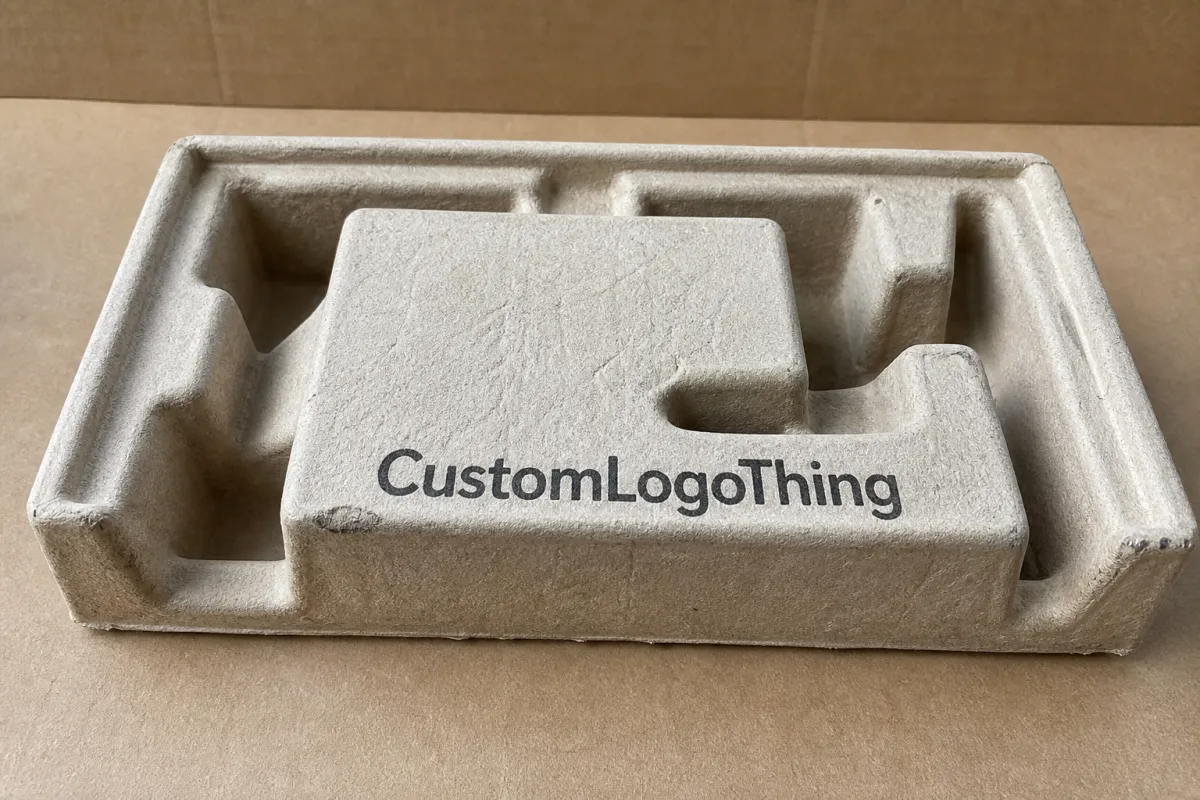
Picture a fragile product arriving after a long carrier run and still sitting exactly where it was packed. The insert has taken vibration, held the item in place, and prevented carton-to-product contact without forcing the shipper to oversize the box. That is the basic appeal of molded pulp inserts bulk supply: the part is shaped to the product, not stuffed around it as an afterthought.
Foam can protect well in some applications, and there are categories where it still makes sense. But molded fiber often wins in repeat programs because it offers a better balance of rigidity, compression resistance, and custom cavity geometry. The insert can cradle a bottle neck, support a housing corner, or suspend a device so pressure spreads across a larger surface. In practical terms, that means fewer scuffs, less internal movement, and a pack-out process operators can repeat without guesswork.
Operationally, the advantages show up fast. Once a molded pulp design is approved, the pack station usually gets simpler, not more complicated. Parts nest in a predictable way, trays stack efficiently, and the cavity tells the packer where the product belongs. That matters for e-commerce fulfillment, retail set packs, and subscription shipments, where speed and consistency carry real cost. A packaging component that saves 3 seconds per pack may not sound dramatic until it is multiplied across 20,000 units a month.
A good insert does not just fill empty space. It guides the product into the same position every time, which is usually where damage reduction begins.
Bulk buyers also think about the story the package tells when it is opened. Molded fiber has a practical, straightforward appearance that fits many sustainability targets without leaning on inflated claims. If the program uses recycled fiber or certified sourcing, that can support internal goals and customer-facing messaging, but protection still has to come first. Material claims matter, yet they should never outrun actual performance.
For repeat shipments, molded pulp inserts bulk orders often make sense when three things have to happen at once: lower damage rates, consistent assembly, and a packaging format that avoids excess plastic. That combination becomes especially useful in categories where returns are expensive, breakage is visible to the customer, or the outer carton needs to stay light for freight efficiency. A half-inch change in box size can push a package into a different shipping tier; packaging details have a way of becoming accounting details.
There is a comparison that buyers sometimes miss. Foam may look cheaper on the first quote, while molded fiber can look more expensive until the damage rate, labor savings, and shipping dimensions are folded in. For a program shipping delicate glass or electronics, the total cost of ownership often tells a different story than unit price alone.
What Molded Pulp Inserts Do for Product Protection
Molded pulp inserts are formed fiber components made to cradle, separate, suspend, or brace a product inside a shipper, retail box, or display package. They are not one-size-fits-all fillers. They are engineered parts, shaped around the item they protect, and the best designs are built around the product’s weight, center of gravity, and most vulnerable surfaces.
The protection logic is straightforward. First, the insert limits movement so the product cannot build up momentum inside the carton. Second, it absorbs impact by deforming slightly under load instead of sending that force straight into the product. Third, it spreads pressure across a wider area, which helps with items that have screens, corners, thin housings, or glass components. The result is a package that behaves more like a fitted tray than a random cushion.
Common uses include electronics, cosmetics, glass bottles, small appliances, home goods, and industrial components. Subscription kits also use molded pulp when the goal is a clean unboxing experience with repeatable placement. The insert can take the form of a clamshell-style tray, an end-cap set, a corner-block structure, or a full perimeter-fit cradle. Each style does a different job, and the right choice depends on how the product is shaped and how the carton is handled in transit.
- Clamshell-style trays work well when the product needs top-and-bottom support and a clear opening-and-closing action.
- End caps help when a product needs corner protection and a stackable presentation inside a rectangular box.
- Corner blocks can protect flat panels, framed items, or devices that should not touch the carton walls.
- Perimeter-fit cradles suit irregular items that need a tighter lock without covering the visible face.
Bulk performance depends on fit consistency. If the cavity is too loose, the item shifts during vibration or drop handling. If the cavity is too tight, packers may force the product in, which can create stress on sensitive edges or slow the line. The best result comes when the product dimensions, insert geometry, and carton size are aligned before production begins.
Testing should reflect reality, not hope. A design that survives a polished sample bench can still fail if the actual product has a heavier power brick, a slightly wider lens, or a finish that adds friction during assembly. That is why sample packs should always use the real product and the real outer box.
For buyers who need shipment confidence, that alignment is where molded pulp earns its place. A properly specified insert can reduce damage claims, simplify quality control, and keep the packaging experience consistent from the first thousand units through the next replenishment run. Even one percent less breakage matters fast: on 50,000 units, that is 500 fewer problems to inspect, replace, explain, and absorb.
Specifications That Matter for Bulk Orders
The fastest way to get a useful quote is to provide the exact dimensions that affect fit. That starts with product length, width, and height, but it should also include protrusions, buttons, handles, lenses, seams, and any areas that cannot bear load. If the item ships with accessories or multiple components, those need to be mapped too. A flat drawing helps, but a physical sample helps more because it shows the tolerances that matter in production.
Material choice comes next. Most molded pulp inserts are made from recycled fiber, though the exact blend and finish can vary by use case. Buyers often ask for a smoother surface when the part is visible in retail packaging, while a more utilitarian texture may be fine for behind-the-scenes shipping. Color, thickness, moisture response, and overall appearance should all be discussed early, especially if the insert sits inside a premium box where the interior surface is part of the brand experience.
Structural details matter just as much. Wall thickness, ribbing, draft angle, nesting depth, and compression strength all affect how the insert performs under load. A deeper cavity may hold the product more securely, but it can also increase material use and raise the unit price. More ribbing can improve stiffness, but it may make the part bulkier in storage. The balance is always there: protection, cost, and manufacturability pulling in different directions.
Carton compatibility is another point that gets overlooked until late in the process. The insert cannot be designed in isolation. It has to fit the final box, allow enough clearance for easy pack-out, and avoid pushing the outer dimensions into a more expensive shipping tier. For e-commerce programs, this matters a lot because a small increase in carton size can affect dimensional weight and freight cost across the entire run.
Testing is the stage where the design becomes real. Before approving a bulk run, request a prototype and pack it with the actual product, not a placeholder. Then check the fit after vibration, compression, and drop testing. Many buyers use internal pass/fail checks, while others align their review to handling profiles from ISTA. That does not mean every package must be certified. It does mean the test plan should reflect how the product is actually shipped.
Fiber sourcing belongs in the conversation too if sustainability documentation matters to your team. Some buyers want recycled content data, while others need alignment with certifications from FSC. The useful part is to make the requirement explicit before sampling so the finished insert supports both operational and reporting needs.
If moisture exposure is part of the shipping environment, the spec should say so plainly. Molded fiber can perform very well in normal distribution conditions, but it is still paper-based material and should be matched to the route, climate, and handling profile. A product that ships through humid warehouses or cold-chain touchpoints may need a different design than a shelf-stable item going straight to parcel delivery.
- Provide exact product dimensions, including protrusions and fragile zones.
- Share the final carton size so the insert and shipper are engineered together.
- Specify finish expectations if the insert is visible at opening.
- Request sample fit checks with the real product before approving tooling.
- Confirm handling expectations such as drop, vibration, or compression sensitivity.
Cost, Pricing, MOQ, and Quote Factors
Pricing for molded pulp is driven by more variables than many buyers expect. Size matters, because a larger cavity uses more fiber and takes more machine time. Complexity matters, because sharper geometry, deeper recesses, and tighter tolerances can increase setup and mold cost. Finish matters, because smoother appearance or added surface treatment can change the process. Quantity matters most of all, because the fixed costs of setup and tooling are spread across every unit in the run.
That is why MOQ conversations can sound confusing at first. A lower run may be possible, but the per-piece cost is usually higher because the same preparation work is being allocated across fewer parts. Once the design is stable, the economics improve quickly as order size rises. For many bulk programs, the goal is not simply to buy the cheapest piece; it is to find the point where the insert protects the product reliably and still fits the supply plan.
A solid quote should include more than unit price. It should show tooling or mold charges, sample costs, price breaks by quantity, freight assumptions, and any secondary work such as trimming or print-related finishing if applicable. If a supplier only gives a single number without volume tiers, that can hide the real decision points. Buyers need to see where the price starts to improve so they can set a rational reorder level.
The table below gives a practical view of how molded pulp pricing often behaves in bulk ordering. Actual numbers vary with geometry, fiber blend, and finish requirements, but the pattern is useful for planning.
| Order Tier | Typical Unit Range | Tooling Impact | Best Fit |
|---|---|---|---|
| 1,000-2,500 units | $0.45-$0.95 each | Higher amortized setup cost | Launches, pilot runs, and early fit validation |
| 3,000-9,999 units | $0.24-$0.58 each | Tooling spread improves | Steady replenishment and seasonal programs |
| 10,000+ units | $0.14-$0.36 each | Lowest unit economics | High-volume shipping, retail rollouts, and national distribution |
Tooling charges often land in the low four figures for simpler parts and can rise for deeper forms or tighter cavity requirements. That number is not the whole story, though, because a more efficient design can save far more over the life of the program by reducing damage, reducing labor, and improving shipment consistency. If the product ships regularly, the math tends to favor the custom part once the run volume becomes meaningful.
For molded pulp inserts bulk sourcing, ask for pricing at multiple quantity breaks. A quote at 2,500 units may look very different from one at 10,000, and the most useful number is usually the break where your forecast and warehouse capacity meet. If your team is balancing purchase order timing against storage space, those tiers are not just commercial details; they shape the operating plan.
That is one reason buyers often review bulk purchasing through our bulk packaging program. The right order size can lower unit cost while also reducing the risk of stockouts and emergency reorders. A steady program is usually cheaper than a series of small, rushed buys.
A second, less visible cost is labor. If a cheaper insert takes more time to orient, fold, or press into place, the savings can evaporate line by line. On high-volume programs, a design that packs cleanly is often worth more than a lower quote that creates friction every hour of the shift.
Production Steps, Timeline, and Lead Time
Production starts with a dimensional review. The supplier needs the product sample, the carton size, and the fit requirements before the mold is designed. After that comes drawing approval, sample development, customer feedback, and any geometry revisions that arise once the physical prototype is packed and tested. Only then does full production make sense.
The schedule can move quickly when the product data is clear. Prototype samples are often ready in roughly 7-14 business days, depending on complexity and whether a new tool is required. Once the sample is approved, production lead time commonly falls in the 15-25 business day range for standard bulk runs, though larger volumes, new tooling, or seasonal pressure can extend that window. The most conservative buyers should always ask for a realistic buffer rather than assuming the shortest possible date.
Where do delays usually happen? Not in the forming machine alone. The usual culprits are unclear dimensions, late feedback on samples, changes to the product after the insert has already been approved, or shifting carton specs late in the program. Even small changes can alter cavity fit, nesting behavior, or trim dimensions. If the product team and packaging team are not aligned, the timeline stretches fast.
Quality control matters at every stage. Moisture content affects fiber behavior, forming consistency affects cavity shape, and drying affects final stability. If the part is not dried or cured correctly, dimensions can drift and edge definition can soften. A good supplier watches these variables closely because a molded insert that looks acceptable on a sample bench can behave differently after several hours in a warehouse stack.
For seasonal launches and retail rollouts, early planning saves money. If you send the product sample and box spec early, the supplier has time to build, test, and refine without rush fees or last-minute compromises. That can be the difference between a well-timed launch and a shipment that sits waiting on packaging.
- Prototype stage: verify fit, stacking, and product retention.
- Approval stage: confirm dimensions, surface finish, and carton compatibility.
- Production stage: monitor drying, trim quality, and lot consistency.
- Freight stage: confirm pack counts, pallet configuration, and warehouse intake timing.
If the packaging program must support both presentation and transport, lead time planning becomes even more important. Retail-facing inserts may need a smoother appearance or tighter fit, while shipping-focused parts may prioritize strength and line speed. Those are not conflicting goals, but they do need to be resolved before the first production run. The earlier that conversation happens, the easier it is to meet both needs without rework.
There is another timing issue that buyers sometimes underestimate: change control. If the product is still being revised, order the insert after the design has settled or budget for a second sample cycle. A packaging tool is not a substitute for product finalization, and that mismatch is one of the fastest ways to turn a lead time into a delay.
Why Choose Us for Custom Packaging at Scale
Custom Logo Things is a practical packaging partner, and that matters because bulk programs succeed or fail on execution, not promise. Buyers need a supplier that understands the relationship between product geometry, box size, warehouse flow, and damage tolerance. A molded pulp insert is only valuable if it works inside the real packing operation, which means the discussion has to go beyond generic product descriptions.
Engineering support is one of the biggest advantages in a custom program. The team can help translate a product shape into a cavity that actually holds the item, protects the weak points, and still packs efficiently at the line. That includes considering how the product is inserted, whether the operator needs one-piece or two-piece handling, and how the insert behaves during stacking and shipping. Small details at this stage often decide whether the final system feels stable or frustrating.
Consistency matters just as much as the original design. Bulk buyers need parts that look and perform the same from one lot to the next, with clear communication if a spec needs revision. That is especially true for brands with multiple fulfillment locations or seasonal demand spikes. If an insert arrives with inconsistent dimensions, the cost shows up in labor, damage, and customer service, not just in the packaging line item.
There is also value in packaging experience that extends beyond the insert itself. A supplier who understands custom packaging can help you Choose the Right balance of protection, presentation, and cost. That may mean simplifying a cavity to reduce tooling cost, adjusting clearance to speed pack-out, or tuning the insert so the product feels secure without requiring excess material. Those are real manufacturing decisions, not marketing lines.
For buyers comparing options across multiple departments, the right partner should make the tradeoffs visible. A lower unit price may not help if the insert slows line speeds or drives breakage. A smoother finish may look better in retail, but it may not be necessary for a shipper that never reaches the shelf. Good packaging advice stays tied to how the item moves through the supply chain.
That is why many customers review procurement options through our Wholesale Programs before moving into sampling. It keeps the conversation anchored to order volume, replenishment planning, and the production realities that bulk packaging demands.
The best bulk packaging quote is not the one with the lowest headline number. It is the one that tells you exactly what the part will do, what it will cost at your real volume, and how long it will take to get there.
There is also a trust issue that good sourcing teams care about. If a supplier promises every outcome without asking about the product, the carton, or the lane, that is a warning sign. Real packaging work starts with constraints, not slogans.
Next Steps for Ordering Molded Pulp Inserts Bulk
If you are preparing a quote request, start with the basics that make the design possible. Send the product dimensions, carton size, product photos, and any notes about fragile areas or assembly steps. If the item has accessories, include them. If the package must support retail presentation as well as shipping, say that clearly, because the structural priorities can change the cavity shape and the finish expectations.
It also helps to share your projected usage. A buyer who needs 3,000 units per quarter has different pricing and inventory needs than a buyer who plans to ship 20,000 units per month. Give the expected order quantity, the likely reorder cadence, and any warehouse constraints such as storage space or pallet limits. That information lets the supplier quote a more useful structure instead of guessing at volume.
Ask for a prototype or fit sample before you commit to bulk production. A close fit on paper is not enough; the real test is how the product seats, how much force is needed to pack it, and whether the box closes without pressure on the item. If possible, test the sample with the actual shipper method, not just on a bench. A package can behave differently once it is stacked, vibrated, or handled in a distribution center.
Be explicit about whether the insert needs to do one job or two. Some products only need shipment protection. Others need to look polished enough for shelf display or premium unboxing. Those programs can overlap, but they rarely use the exact same cavity depth, surface finish, or structural reinforcement. The clearer your goal, the faster the quote becomes useful.
For many buyers, the next action is simple: request a spec review, ask for pricing at two or three quantity tiers, and compare the sample against the actual product. That is the point where molded pulp inserts bulk sourcing becomes a concrete decision instead of an abstract idea. Once the fit is verified and the unit economics make sense, the program usually becomes easier to manage than mixed packaging approaches that rely on ad hoc filler.
If you are ready to move forward, Custom Logo Things can help evaluate the part dimensions, review the carton, and outline a production path that fits your schedule. The strongest bulk programs start with accurate information, realistic quantity planning, and a clear expectation for performance. The practical takeaway is simple: send the real product, the real box, and the real annual volume before you choose the insert. That is how molded pulp inserts bulk ordering protects the product, keeps labor efficient, and supports the packaging plan from the first shipment through the next replenishment cycle.
FAQs
What do I need to request a quote for molded pulp inserts bulk?
Provide product dimensions, carton size, target quantity, and photos or drawings so the quote reflects the actual fit and protection requirements. Include whether the insert is for shipping, retail display, or both, because those goals can change the design and cost. If possible, send a sample product for test fitting so the supplier can check clearances before pricing the full run.
What is a typical MOQ for molded pulp inserts bulk orders?
MOQ depends on tooling, part size, and production method, but custom molded fiber usually prices best once the order volume is large enough to spread setup costs. Smaller runs may still be possible, but the unit cost is usually higher because mold preparation and machine setup are the same whether you run a little or a lot. Ask for pricing across several quantity tiers so you can see where the best unit economics begin.
How long does it take to produce custom molded pulp inserts?
Timeline depends on whether the design is new, whether tooling is required, and how quickly sample approval happens. Prototype samples are usually faster than full production, while larger bulk orders may need more time for drying, inspection, and packing. The fastest way to avoid delays is to approve the dimensions early and provide product samples up front.
Are molded pulp inserts strong enough for fragile products?
Yes, when the cavity is designed correctly, molded fiber can hold items securely and absorb impact during shipping. The insert should be matched to the product weight, shape, and drop risk rather than chosen as a generic one-size-fits-all part. For fragile products, ask for sample testing with the actual item and carton combination before you commit to bulk production.
Can molded pulp inserts be customized for branding or retail use?
Yes, molded pulp can be customized in shape, surface finish, color tone, and fit so it supports the unboxing and shelf experience. The design can also be adjusted for assembly speed, stackability, and product visibility inside the package. If branding is important, share the packaging goal early so the structure supports both protection and presentation.


