For a Frosted Zipper Bags moq order, the first quote is rarely decided by film alone. Setup charges, sealing method, freight, print prep, and even carton efficiency can matter more than raw resin on a small run. That is why two quotes that look close at first can end up miles apart once the product is packed and shipped.
Buyers usually feel that gap right away. A frosted bag looks simple on a screen, but the economics change fast once you add custom size, logo printing, white ink, gussets, or a stronger zipper profile. The real question is not whether the bag is cheap on paper. It is whether the unit cost, MOQ, and landed cost all make sense for the job the bag has to do.
Frosted bags earn their keep in the right setting. They cut glare, hide handling marks better than a clear bag, and make a basic item feel cleaner and more deliberate. That matters for sample kits, retail inserts, subscription packs, cosmetic samples, and hardware sets. Still, the finish is part of the cost structure. Presentation never comes free.
Why Small Runs Cost More Than Buyers Expect
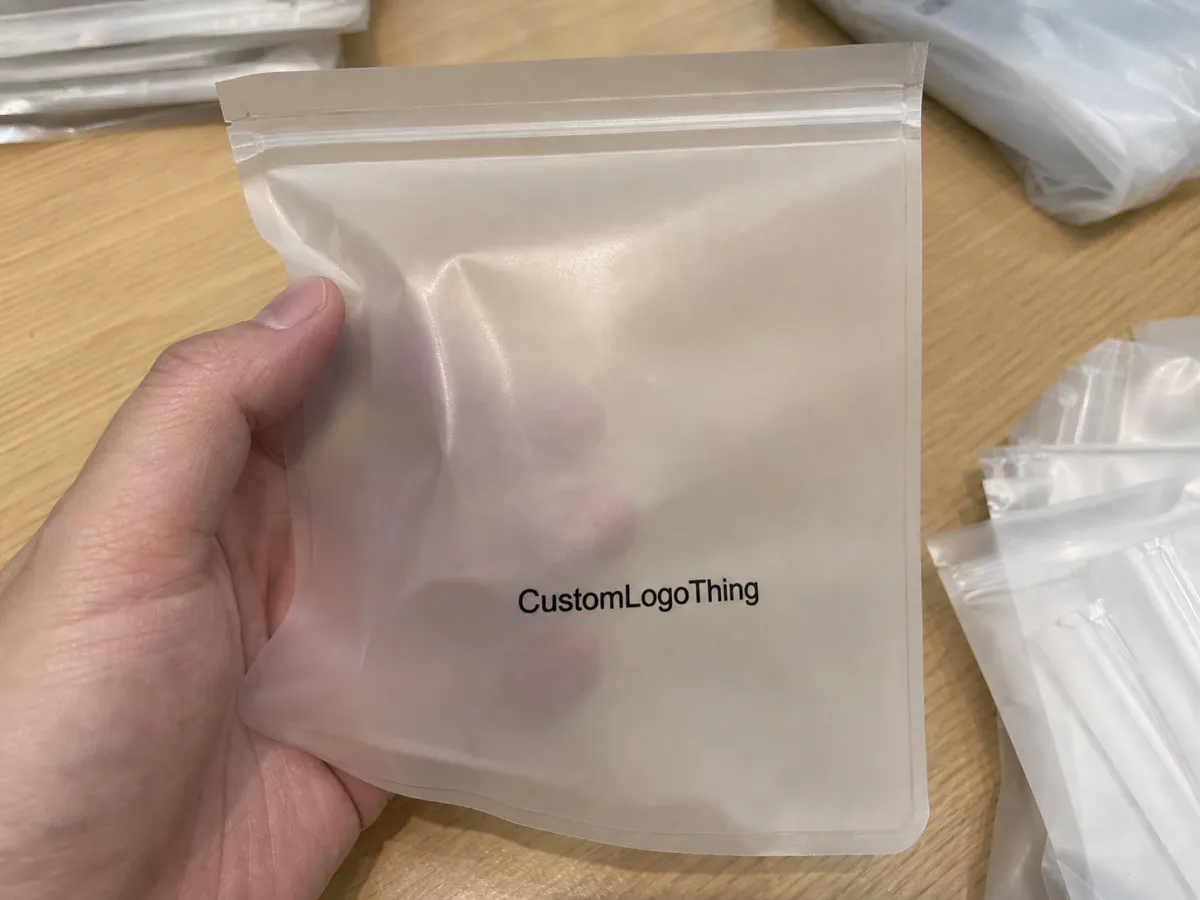
Buyers often compare quotes by looking straight at the bottom line. That is how bad decisions start. On smaller runs, fixed costs carry more weight, so the first 1,000 or 2,000 bags absorb most of the setup burden. Film conversion, zipper attachment, print setup, proofing, and carton planning all bring costs that do not shrink in a neat line.
A plain frosted zipper bag can still require tooling fees, seal checks, and machine adjustments. Add branding and the work expands. The printer has to align artwork, verify coverage on the frosted surface, and sometimes add a white underprint so the logo does not disappear into the haze. A quote that looks high at first may be perfectly normal once those steps are counted.
Freight changes the picture too. A factory-only price can look attractive until the cartons are heavy, the pack size is inefficient, or the order needs a split shipment because samples and production were handled separately. I have seen a lower unit price turn into a higher total bill once shipping, duties, repacking, and rework were added back in. Cheap on paper is not the same as cheap on the invoice.
A low unit price means very little if the bag misses the product, slows packing, or creates a second freight bill.
For a small retail launch, the math can be ugly. Saving two cents per piece does not matter if the bag wrinkles in transit, forces a packing delay, or looks dull under store lighting. Better to ask a sharper question: what quantity and spec produce the lowest usable cost per piece for the actual application?
That is why Frosted Zipper Bags moq order requests should be quoted as a set of variables, not a single number. The bag, the print, the carton count, and the shipping plan belong in the same conversation. Otherwise, the comparison is just noise.
Bag Construction, Frosted Finish, and Zipper Options
Review the bag as a system. The frosted body, the closure style, and the construction shape all affect how the finished piece feels in hand and how well it performs during packing. A flat bag is simpler and usually cheaper. A gusseted bag holds more volume and sits better in a carton, but it brings more material and a different cost profile.
Zippers matter more than buyers expect. A single zipper is common for everyday retail or accessory use. A double zipper can improve reseal confidence, which matters when the bag is opened repeatedly by packers or end users. For samples, small parts, or cosmetics, the closure has to stay smooth after multiple passes. A zipper that catches once becomes a complaint later.
The frosted surface does more than improve appearance. It softens glare under bright retail lights, hides fingerprints better than clear film, and can make an ordinary item feel more considered. That is useful when the bag is part of a kit rather than the hero product itself. The finish does not turn the bag into luxury packaging, but it does lift the presentation.
Decide early whether you need stock packaging, custom branding, or a hybrid approach. Stock sizes can move faster and often carry lower setup charges. Custom branding gives more control over the presentation, but it usually adds proofing time, artwork review, and a higher MOQ. Hybrid orders, where a standard bag gets a small print area or label, can be a practical middle ground if the budget is tight.
- Flat bag: lower material usage, easier to pack, usually best for thin accessories or sample inserts.
- Gusseted bag: better volume, better carton fit for bulkier items, often better shelf presence.
- Single zipper: common and cost-efficient for most retail and kit applications.
- Double zipper: better reseal confidence for repeat use and premium positioning.
- Extras: hang hole, tear notch, or vent feature can add utility, but each one affects price and lead time.
A simple check goes a long way: confirm closure smoothness, seal consistency, and whether the bag will be opened repeatedly by packers or customers. If the answer is yes, ask for a sample before you commit to the full run. A photo is not enough. Fingers tell the truth faster than spec sheets do.
Sizes, Thickness, Print Area, and Spec Checks
Good quoting starts with a tight spec sheet. At minimum, lock down width, height, gusset depth, thickness, zipper profile, and printable area. If the bag size is vague by even a few millimeters, the factory may have to guess. Guessing is how rework starts.
Thickness changes both feel and performance. A 2.5 mil bag can work for lightweight inserts, but a 4 mil or 5 mil build often feels more substantial and holds up better for parts, cosmetics, or heavier samples. If the product is sharp, dusty, or handled often, thicker film usually earns its place. Thin film saves money until it tears on the packing table.
Material choice also matters. Most frosted zipper bags are built on PE-based film, often LDPE or a blended structure depending on the required feel and seal performance. The surface haze is part of the look, but it should not hide weak film. Ask how the film behaves under pressure, crease stress, and repeated zipper use. The surface may be the selling point, but the structure keeps the bag alive.
Artwork is another place where orders slow down. Logo placement, color count, and white ink requirements can move the quote more than a buyer expects. On a frosted surface, dark artwork usually reads clearly, but lighter brand colors may need a white base layer to keep the mark visible. A design that looks sharp on a monitor can print muddy if the underprint is skipped.
Ask for tolerance ranges before approval. That includes size tolerance, seal consistency, and any compatibility limits if the bag will hold food, hardware, cosmetics, or mixed sample components. If the bag must fit a standard shipping carton or retail tray, build that into the brief from the start. The bag should fit the process, not just the product.
One practical tip: match the spec to the packing flow. If items are inserted by hand, a slightly wider opening can save labor. If the bags are filled at speed, the zipper position and opening stiffness matter more than the finish. Good packaging is not just about appearance. It is about how the line runs and how the customer handles the finished piece.
For Buyers Who Need the fastest route to a clean quote, the useful details are simple: exact dimensions, thickness target, zipper type, print file, and shipping destination. Anything missing usually comes back as a clarification request, and clarification takes time.
Frosted Zipper Bags MOQ Order: Pricing, MOQ, and Quote Variables
MOQ exists because film runs, zipper application, and print setup carry fixed labor and machine time. Those costs do not disappear just because the order is small. A frosted zipper bags moq order is priced around production reality, not around what a buyer hopes the per-piece number will be.
The good news is that buyers can control several variables. Size, thickness, print colors, zipper style, extra features, packaging format, and ship-to location all influence the quote. Change one of them and the cost per piece can move enough to justify a different design choice.
| Run Type | Typical MOQ | Budgeted Unit Cost | Usual Lead Time | Best Fit |
|---|---|---|---|---|
| Stock size, unprinted | 500-1,000 pcs | $0.12-$0.28 | 7-12 business days | Samples, quick launches, internal kits |
| Custom size, one-color logo | 1,000-3,000 pcs | $0.18-$0.42 | 10-15 business days | Retail inserts, subscription packs, branded accessories |
| Custom size, multi-color print | 3,000-5,000 pcs | $0.28-$0.65 | 12-20 business days | Premium presentation, stronger shelf branding |
| Custom size, specialty features | 5,000+ pcs | $0.30-$0.75 | 14-25 business days | Hang holes, gussets, double zippers, higher-volume programs |
Those ranges are budgeting bands, not promises. Final pricing can move with resin market shifts, freight, carton density, and whether the artwork needs a second proof. On a small run, bulk pricing may not save much if the minimum order pushes you into excess inventory. On a larger run, the picture changes fast because setup is spread across more units.
Ask for tiered pricing every time. A quote at 1,000, 5,000, and 10,000 units usually shows the inflection point where the unit price drops enough to justify more volume. That is often more useful than a single number because it shows where the economics improve. A curve tells the truth better than a headline price.
Ask for a landed-cost quote, not just a factory quote. Freight, duties, and carton counts can change the final bill by a meaningful amount. If the supplier cannot show the shipping line clearly, the comparison is incomplete. A buyer should know whether a lower quote is actually cheaper after the cartons leave the dock.
If the quantity falls below MOQ, there are usually three ways to deal with it: switch to a standard size, reduce the print requirement, or move to a shared production approach if the factory allows it. None of those options is magical. They simply shift the economics back into range.
Ordering Process, Proof Approval, and Production Lead Time
Once a frosted zipper bags moq order is priced, the process should be straightforward: inquiry, spec confirmation, quote, artwork proof, sample or pre-production approval, production, inspection, and shipment. If a supplier cannot describe that sequence clearly, expect delays later. The steps are simple. The execution is where things get messy.
Lead time is not one number. It changes with print complexity, factory queue, material availability, and whether the bag needs a custom zipper or a special size. A simple unprinted stock run may move quickly. A custom printed bag with white underprint and tight registration needs more time for proofing and line setup.
The most common delay points are predictable. Missing dielines slow artwork. Vague color references create back-and-forth nobody wanted. Late proof edits reset the clock. Quantity changes after the quote is issued can also force a fresh production plan, which is annoying and expensive.
If speed matters, send the important items in one thread: final dimensions, final art files, shipping address, target delivery date, and the person who can approve the proof without delay. That sounds basic because it is. It also happens to be the difference between a smooth run and a week of avoidable email loops.
Good suppliers separate production time from transit time. That distinction matters. A bag can be finished on schedule and still miss your launch if the shipping method is too slow. Ask for both timelines in writing so you can plan inventory and avoid stockouts. A clear schedule beats a vague promise every time.
Quality control should also be part of the schedule, not an afterthought. For a practical check, look at seal width, zipper alignment, print adhesion, haze consistency, and carton count. If the order is for retail or repeat use, ask whether a simple pull test or zipper cycling check is included before packing. A small failure at this stage becomes a big headache after shipping.
For any repeat program, save the final spec sheet and the approved proof set. That way, reorders do not start from scratch. If the same bag is ordered again next quarter, the approval trail should be easy to find and even easier to match.
Shipping quality deserves its own check. For transit-sensitive jobs, ask whether packed cartons were tested against an ISTA distribution profile. The standards library at ISTA is a practical reference point if you want to think beyond the bag and into the shipping lane.
What Good Manufacturing Support Should Catch
Most buyers do not need a sales pitch. They need a clean spec, a proof that matches the order, and a supplier who catches mistakes before they become expensive. That is the real value of manufacturing support: less friction, fewer corrections, and a lower chance of discovering a problem after the cartons are sealed.
Good support starts with the boring stuff. The factory should confirm film type, thickness, zipper style, artwork size, and pack format before production begins. If a bag is intended for repeated handling, the zipper should be checked for smooth travel. If the logo sits on a frosted area, the print needs enough contrast to stay readable. If the carton count is awkward, shipping costs tend to climb for no good reason.
The same logic applies to color and finish. Frosted film can make dark logos look strong, but pale colors may need white ink beneath them. Full-panel prints are possible, but they usually take more setup and more scrutiny. If a supplier brushes past those details, they are not saving time. They are moving the risk to your side of the table.
Direct manufacturing also helps on repeat orders because the spec stays traceable. Marketplace sourcing can work for simple replenishment, but it often hides markups and muddies the paper trail. If a reorder comes up six months later, poor documentation gets expensive fast. Clean records shorten the next run.
There is one more practical point: a good supplier will say no when a request creates avoidable waste. That might mean recommending a standard size instead of a custom one, trimming print coverage, or choosing a bag thickness that meets the job without overbuilding it. Honest pushback is useful. It keeps the buyer from paying for features that never get noticed.
What to Send for a Fast Quote and Next Step
If you want a clean answer fast, send the details that actually affect production: dimensions, thickness target, zipper style, print files, quantity tier, shipping destination, and target in-hands date. That is the shortest route to a quote that reflects the real job instead of a guess.
Ask for at least two quantity levels. A 1,000-piece quote and a 5,000-piece quote often reveal more than a single proposal because you can see where the unit cost drops and whether the move up a tier saves enough to matter. If the numbers flatten out, smaller may be smarter. If the curve drops sharply, buying more can be the cheaper move over time.
For retail-facing jobs, request a sample or proof. Appearance and closure feel matter when the bag represents a brand, a subscription insert, or a premium accessory pack. A quick proof review is cheaper than a returned pallet or a delayed launch.
- Exact width, height, and gusset depth
- Film thickness target in mil
- Zipper type and any extra features
- Print file and color count
- Quantity tiers for comparison
- Ship-to address and target delivery window
Confirm the final spec sheet before production starts. That one step prevents most rework, because the team can build from the same document instead of interpreting a loose email thread. For any frosted zipper bags moq order, that is how you keep the project controlled, priced honestly, and ready to ship without drama.
Common Questions
What is a typical frosted zipper bags MOQ order for custom runs?
MOQ usually reflects setup cost for film, sealing, and any printing, so the number depends on the spec rather than a single universal threshold. Stock sizes can sometimes start lower, while custom dimensions and printed runs often need a higher floor.
Can I mix sizes to meet a frosted zipper bags MOQ order?
Sometimes, but only if the factory allows shared material, similar tooling, or a combined production run across compatible bag sizes. Get that approval in writing before you pay, because blended orders can affect unit cost, packing format, and lead time.
How does printing affect frosted zipper bag pricing?
Print color count, coverage area, and white ink requirements can add setup time and increase cost more than buyers expect. A simple logo may price very differently from a full-panel design, especially on a frosted surface where opacity matters.
What lead time should I expect after proof approval?
Lead time depends on print complexity, current factory queue, and material availability, so production time should be quoted separately from shipping time. A clean spec sheet and fast proof approval usually shorten the schedule more than any single supplier promise.
What details do you need for an accurate quote?
Send exact dimensions, thickness target, zipper style, print files, quantity, and ship-to location so the quote reflects the real build. Include the target use case as well, because food, retail, and sample packaging can require different material or performance choices. That is the fastest path to a reliable frosted zipper bags moq order quote.

