Printed Apparel Plastic Bags Bulk
A folded tee in a clean poly bag looks finished before anyone feels the fabric. In practice, that means the bag is doing real work: it keeps the fold flat, protects the garment from dust and moisture during handling, and gives the product a consistent first impression at packing, receiving, and retail handoff.
If you are sourcing printed apparel plastic bags bulk, the bag has to fit the folded garment, carry the brand clearly, and survive carton movement, warehouse handling, and shipping. Those requirements are usually what separate a clean pack-out from extra labor, rework, or damaged presentation.
The best apparel bag usually does three things at once: it matches the folded size without fighting the garment, prints clearly enough that the brand is legible at a glance, and keeps the line moving without constant repacking or misfeeds. That is why many brands, decorators, and fulfillment teams stay with printed poly bags instead of trying to make each garment do all the branding work.
Practical rule: if the bag fits the fold cleanly, holds a seal or closure without opening, and survives handling without stretching, clouding, or tearing, the branding already has a better chance of looking deliberate.
Why a Better Bag Changes the First Apparel Touchpoint
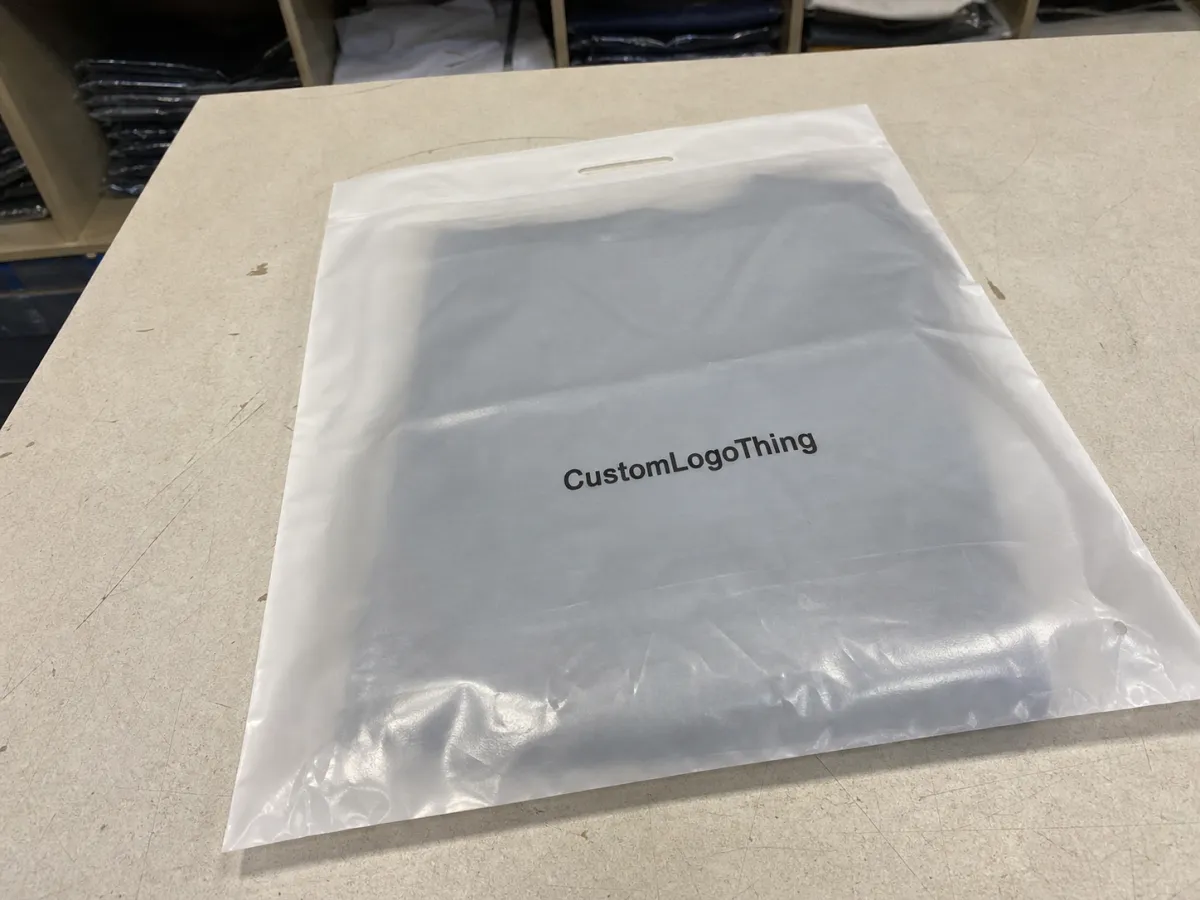
The first impression starts before the customer opens the package. In retail, the bag is visible on the shelf or behind the counter. In warehouse packing, it keeps each piece organized. In direct-to-consumer shipping, it is often the first layer that survives stacking, sorting, and carton compression before the outer box is opened.
There is also a practical benefit that gets overlooked: when every piece is packed in the same bag style and size, cartons stack more evenly, count checks go faster, and the receiving team has fewer odd-shaped surprises. That matters for replenishment runs and seasonal launches, where pack speed is usually the difference between a clean launch and a messy one.
Buyers sometimes focus on print quality and ignore how the bag behaves during pack-out. A lightweight shirt may be fine in a 1.5 to 2 mil film, but the same spec can fail with a hoodie, a two-piece set, or a garment that includes tissue, inserts, and hanging hardware. Once the product has extra volume, the bag is not just presentation; it becomes part of the structure.
For brands that need documented compliance, the packaging spec can also be aligned with real certifications and audit requests. If the bag uses recycled resin, ask for GRS transaction documents and recycled-content declarations. If you want restricted-substance screening for film, inks, or adhesives, OEKO-TEX Standard 100 is the common reference point buyers use. For supplier social compliance, WRAP and BSCI are frequently requested audit standards. If the bag is part of a broader organic textile workflow, buyers may ask how the packaging supports GOTS documentation, even though the apparel claim itself depends on the full chain of custody.
Bag Styles, Film Types, and Print Options for Apparel
Most apparel programs use one of a few bag types. Layflat poly bags are the workhorse because they are easy to size, easy to store, and easy to print. Seal-top styles hold contents more securely and work well for folded sets, reorders, and presentation packs. Resealable bags are common where customers may reuse the packaging or where the item needs a cleaner open-and-close cycle. For some markets, suffocation warnings are required, so that language and placement need to be checked before a proof is approved.
Film choice usually comes down to the look you want and the handling the bag has to survive. LDPE is soft, flexible, and forgiving during packing, which makes it a safe everyday option for folded apparel. LLDPE blends are often used when buyers want more puncture resistance and better stretch. Polypropylene is clearer and stiffer, which can feel more polished for retail display, but it is less forgiving if the pack size is tight. Recycled PE can also be specified when the program needs a sustainability claim, but it should be paired with the right paperwork if you need GRS support.
Clear film keeps the garment visible, which helps when color or texture is part of the product story. White or opaque film gives the brand more visual control and can make logo printing stand out better. Frosted film sits between those two: some visibility, less distraction, and a cleaner premium feel than a cheap clear bag with weak print.
Print method follows the artwork and the quantity. A one-color logo with solid lines is usually the easiest path for bulk runs. Spot colors are common for simple branding. More colors, heavy ink coverage, or fine detail can increase setup complexity and raise the chance of a proof correction. Flexographic printing is the most common process for poly bags at scale, usually with 1-color, 2-color, or 4-color print decks. For short proofs or pilot runs, some suppliers use digital proof prints before the plates or cylinders are finalized.
For buyers comparing printed apparel plastic bags bulk options, the biggest decision is usually presentation versus visibility. If the buyer wants the garment visible, clear film is usually the answer. If the brand needs more visual control, white or frosted film makes more sense. If the packaging has to do both jobs, the spec needs to be deliberate instead of trying to please everyone.
For material terminology and packaging standards, the references at packaging.org are useful. If the bagged product will travel by parcel rather than move short distances inside a store or warehouse, ISTA testing guidance at ISTA is worth a look.
On the production floor, the equipment usually includes a blown-film or cast-film extrusion line, a flexographic press, and a bag-making machine with hot-bar sealing, perforation, or wicketing options. Common print inks are water-based or low-solvent formulations, depending on film and curing requirements. A good setup also includes a counting and stacking station so carton quantities stay consistent.
Sizing, Gauge, and Seal Details That Protect Folded Garments
Bag size should be based on the packed garment, not the size tag. A medium tee may fold smaller than a youth hoodie, and a simple shirt may take up less room than the same shirt once tissue, inserts, and hang tags are added. The useful question is not what size the apparel is. It is what size the apparel becomes after packing.
For common apparel pack-outs, a folded tee may fit in an 11 x 14 inch bag, a hoodie may need 13 x 16 inches, and a two-piece set or bulkier fleece item may need 14 x 18 inches or larger. The exact spec depends on fold style, insert count, closure type, and whether the bag is meant to lie flat in a carton or hang on a peg hook.
Too much compression creates wrinkles at the seams and hems. Too much extra space lets the piece shift around and look lazy by the time it reaches the customer. Neither outcome is expensive in the moment. Both become expensive once the packing team has to correct them all day.
Gauge, or film thickness, matters more than most first-time buyers expect. Lightweight tees often work in 1.5 to 2 mil film. Hoodies, fleece, or multi-piece kits often need 2.5 to 3 mil or higher if the bag has to survive repeated handling. In metric terms, many apparel bags land around 25 to 75 microns depending on the film type and whether recycled content is included. Thicker film costs more, but it can prevent tears, crushed corners, and rework.
Seal style also changes how the bag performs. A plain open-ended layflat bag is fast for hand packing and works well in many standard lines. A seal-top or adhesive-close style helps keep the product secure and reduces the chance that the garment opens up in transit. Perforations are helpful when bags are dispensed from a roll or when the packing process needs cleaner separation. If the bag is machine-fed, ask whether the perforation pitch, film stiffness, and static control are compatible with the line speed.
Print placement needs to stay away from seal zones, fold lines, and tear points. A logo placed too close to a closure can distort during sealing or look off-center after packing. Fine type near the edge is another common mistake. Proofs should show the print area, not just the artwork in isolation. Most suppliers will build a 5 to 10 mm quiet zone around the seal edge and another margin around the side seals to protect the artwork.
If you want a quote that is actually usable, send the folded dimensions and the product weight. Size range alone is not enough. A small error in usable width can force a redesign, and a redesign on a bulk run is not cheap.
- Folded width and length: the actual packed size after folding
- Product weight: helps determine film thickness and handling needs
- Closure style: open, seal-top, adhesive, or resealable
- Print area: front, back, or both sides
- Pack-out method: hand packed, semi-automated, or machine friendly
Inspection at this stage should verify the cut length, seal width, perforation strength, and print registration. A practical acceptance check includes a 10-piece fit test, a hand-tear check at the perforation if applicable, and a seal pull test to confirm the closure is not opening under normal handling.
Printed Apparel Plastic Bags Bulk Pricing, MOQ, and Quote Variables
Pricing for printed apparel plastic bags bulk orders depends on more than bag shape. Size, gauge, print colors, closure style, ink coverage, recycled content, and total quantity all move the number. A stock-size clear bag with a simple one-color logo is one thing. A custom-sized white bag with a larger print area and resealable closure is something else entirely.
A practical range for standard runs looks like this: around $2.50 to $4.00 per unit at 500 MOQ for fully custom small runs with setup included, about $0.24 to $0.48 per unit for 1,000 to 2,499 pieces, roughly $0.14 to $0.28 at 5,000 pieces, and about $0.09 to $0.19 at 10,000 pieces or more for straightforward one-color work on standard film. Heavier gauges, multiple print colors, custom sizing, or specialty finishes can move above those numbers.
MOQ usually depends on whether the bag is stock size or custom. Stock-size printed bags can sometimes start at 500 to 1,000 pieces if the artwork is simple. Custom-size printed bags commonly start at 1,000 to 3,000 pieces. If the program needs multi-color flexo printing, recycled-content paperwork, or a nonstandard closure, 5,000 pieces or more is a more realistic planning number.
Other quote variables include plate or cylinder fees, setup time, ink matching, anti-static treatment, and the number of inspection points required before shipment. Some suppliers separate the tool cost from the unit price, while others amortize it into the run. For comparison shopping, always ask whether the quote includes artwork setup, proofing, and carton packing, because those line items can change the real landed cost.
Certifications can also affect price and lead time. If you need GRS on recycled film, expect more documentation and tighter material traceability. If the bag or its components need OEKO-TEX Standard 100 screening, confirm which components are covered, since film, inks, and adhesive systems may be handled differently. Social compliance documents like WRAP and BSCI can be relevant if your buyer requires audit support in the supply chain.
Here is a useful quote frame for planning:
- 500 MOQ: about $2.50 to $4.00 per unit for custom small-run programs
- 1,000 to 2,499 units: about $0.24 to $0.48 per unit for straightforward one-color work
- 5,000 units: about $0.14 to $0.28 per unit for standard custom film and print
- 10,000+ units: about $0.09 to $0.19 per unit for high-volume runs
- Setup fees: often $35 to $85 per color for plates or cylinder prep, depending on print method
If the buyer is requesting sustainable material content, ask for the resin blend, recycled percentage, and any supporting test data. A quote that names the film type but not the resin specification is too loose to compare across suppliers.
Artwork Approval, Production Timeline, and Reorder Lead Time
Artwork approval is where many orders slow down, so the cleanest process starts with the right file format. Vector artwork in AI, EPS, or PDF is the easiest to separate for print. A raster file can still work for simple jobs, but the proof step may take longer if the logo needs cleanup, line correction, or color simplification.
A typical sample path looks like this: first the supplier sends a digital proof within 24 hours to confirm size, print area, and copy placement. If the buyer wants to see the physical feel of the film, a blank sample can usually be produced in 3 to 5 business days. A pre-production sample after proof approval often takes 5 to 7 business days, depending on whether plates, perforation, or custom sealing parts are needed.
Once the sample is signed off, standard production for a straightforward custom run is often 18 to 22 business days. That assumes the artwork is approved, the film is in house, and the bag style is already confirmed. Reorders can be faster, often 12 to 18 business days, if the spec stays the same and the supplier can reuse the existing plates or cylinders.
For complex programs, add time for verification. Multi-color printing, recycled-content traceability, special seals, and compliance paperwork can add 2 to 5 business days to the front end. If the shipment needs additional third-party inspection, build that into the schedule before you promise a launch date.
A practical inspection sequence usually includes these checkpoints:
- Incoming material check: resin type, film clarity, gauge, and roll width
- First article proof: print position, copy accuracy, color match, and barcode readability if used
- In-process check: print registration, seal width, cut length, and perforation alignment
- Pre-pack check: bag count per carton, bundle tie, and outer carton labeling
- Final inspection: AQL-style sampling for major defects, minor defects, and count accuracy
For buyers who need predictable dates, the key is to separate proof approval from production approval. A bag can look correct on screen and still need a correction to seal spacing, artwork placement, or fold allowance before the run begins.
How Repeat Buyers Keep Branding and Reorders Consistent
Repeat buyers usually keep one master spec sheet and treat it like a controlled document. That sheet should list the bag dimensions, film type, gauge, closure style, print colors, artwork file name, carton pack count, and any compliance requirements. Without that record, a reorder can drift by a few millimeters or a shade change can slip through without being noticed until the bags are already in use.
A good repeat program also keeps an approved sample on file. That sample should include the exact film finish, print placement, and closure style that passed inspection the first time. If the bag is for retail presentation, keep the sample with the folded garment dimensions that were used during approval, not just the empty bag.
Color consistency is especially important with logos and warning text. When the order uses flexographic printing, request a reference to the approved Pantone or target density, plus a note on whether the ink was matched on clear, frosted, or white film. A color that looks right on one substrate can shift noticeably on another.
Repeat buyers also protect the program by keeping the same carton pack count and inner bundle method. If one order ships 100 pieces per carton and the next order ships 120, the receiving team may think the spec changed even when the bag itself did not. That kind of inconsistency creates avoidable confusion in warehouse and retail workflows.
For brands with compliance requirements, it helps to keep a document packet ready for each reorder: supplier audit status, material declaration, recycled-content paperwork if applicable, and any test reports tied to the approved film or ink system. If the buyer needs GOTS compatibility for a broader organic apparel program, the packaging record should be organized so it does not interrupt the garment chain-of-custody review.
Next Steps to Send Specs, Review Proofs, and Order
The fastest way to move a quote forward is to send the packed garment dimensions, target quantity, print file, and any compliance requirements in one message. If the design is still changing, say so early. It is much easier to revise a proof than to stop a production run after the wrong bag style has been approved.
When you request pricing, include the following details so the quote is usable on the first pass:
- Bag size: finished width and length, plus fold allowance if needed
- Film: LDPE, LLDPE blend, polypropylene, clear, frosted, white, or recycled PE
- Gauge: target mil or micron range
- Print: number of colors, one side or two sides, and any warning text
- Quantity: sample quantity, pilot run, and bulk quantity
- Compliance: GRS, OEKO-TEX Standard 100, WRAP, BSCI, or other required documentation
If you want to reduce back-and-forth, ask for three things at once: a digital proof, a blank film sample if available, and a production lead time based on your actual quantity. That gives you a realistic view of print placement, material feel, and schedule before the order is locked.
For brands comparing multiple suppliers, the smartest comparison is not just unit price. It is unit price plus setup, proofing, sample time, approval rounds, carton pack accuracy, and the chance that the bag will need rework on your packing line. The cheapest quote is rarely the cheapest result if it adds labor every time a tee is packed.
Frequently Asked Questions
What is the usual MOQ for printed apparel plastic bags bulk?
Stock-size printed bags can start at 500 to 1,000 pieces for simple work. Custom-size printed bags usually start at 1,000 to 3,000 pieces, and multi-color or specialty specs often need 5,000 pieces or more.
How much do custom printed apparel bags cost?
For planning, a 500 MOQ custom small run can land around $2.50 to $4.00 per unit. Standard bulk runs often fall around $0.24 to $0.48 at 1,000 to 2,499 pieces, $0.14 to $0.28 at 5,000 pieces, and $0.09 to $0.19 at 10,000 pieces or more.
How long does production usually take?
After artwork approval, standard production is often 18 to 22 business days. Reorders can be faster if the spec, plates, and film stay the same.
What certifications matter for these bags?
The most commonly requested references are GRS for recycled content, OEKO-TEX Standard 100 for restricted-substance screening on materials and inks, and social compliance audits like WRAP or BSCI. GOTS may matter when the packaging is part of a larger organic apparel workflow.
What sample should I ask for first?
Start with a digital proof. If you need to judge feel and fit, ask for a blank sample or a pre-production sample, then confirm size, seal, print placement, and carton count before bulk production begins.
What inspection checkpoints should I request?
Ask for incoming material verification, first article print approval, in-process checks for registration and seal width, and final carton count inspection. For higher-risk runs, add seal pull testing and a packed-garment fit check.
Can these bags be made with recycled content?
Yes, many programs use recycled PE or recycled LDPE blends. If you need the claim documented, request the recycled percentage, resin declaration, and any GRS paperwork tied to the finished bags.

