Buyer Fit Snapshot
| Best fit | MOQ Packaging for Small Business projects where brand print, material claims, artwork control, MOQ, and repeat-order consistency need to be specified before quoting. |
|---|---|
| Quote inputs | Share finished size, material target, print colors, finish, packing count, annual reorder estimate, ship-to region, and any compliance wording. |
| Proofing check | Approve dieline scale, logo placement, barcode or warning zones, color tolerance, closure strength, and carton packing before bulk production. |
| Main risk | Vague material claims, crowded artwork, missing packing details, or unclear freight terms can make a low unit price expensive after revisions. |
Fast answer: MOQ Packaging for Small Business: Costs, Options, and Process should be specified like a repeatable production item. The safest quote records material, print method, finish, artwork proof, packing count, and reorder notes in one written spec.
Production checks before approval
Compare the actual filled-product size with the drawing, then confirm tolerance on folds, seals, hang holes, label areas, and retail display edges. Reserve space for logos, QR codes, warning copy, and material claims before decorative graphics fill the panel.
Quote comparison points
Review material grade, print process, finish, sampling route, tooling charges, carton quantity, and freight assumptions side by side. A quote is only useful when the supplier can repeat the same color, closure quality, and packing count on the next order.
MOQ Packaging for Small Business is one of those topics that sounds simple until you are standing beside a packing line in Dongguan or Shenzhen and every choice suddenly carries weight: the board grade, the insert style, the seal, the print finish, even the way the carton folds at the corner after 600 cycles of hand packing. I remember watching one founder spend more on packaging they never fully used than they spent on the product inside it, and I have also seen a 1,000-piece run rescue a launch because the brand stayed lean, looked polished, and avoided dead inventory. For Custom Logo Things, the real aim of MOQ packaging for small business is not to buy the most boxes; it is to buy the right packaging, at the right unit cost, with the right lead time, so the business can actually move, sell, and reorder without tying up cash in the warehouse.
Honestly, I think a lot of first-time buyers get tripped up by “minimum order quantity” because they assume lower is always better, even when the factory is building a custom die and setting up a four-color offset press in Guangzhou or Ningbo. That is not always true. On a corrugated line I visited in Dongguan, the press operator pointed to a short run of 800 mailers and said something I have heard in factories from Ohio to Shenzhen: setup time, plate prep, die-cutting, and finishing can matter more than raw board cost when the order is small. That is exactly why MOQ Packaging for Small Business has to be planned with eyes open, not with wishful thinking. Wishful thinking is not a production spec, and a 2 mm crease adjustment will not fix a missing dieline note.
Why MOQ Packaging Matters for Small Business Growth
The smallest packaging runs are often the most carefully planned, because setup time can outweigh material cost on short orders in factories from Shenzhen to Xiamen. I have seen a 2,500-piece folding carton order take nearly the same prepress attention as a 25,000-piece run, especially when the customer wanted spot UV, gold foil stamping, and a custom EVA insert. In MOQ Packaging for Small Business, every decision matters because there is less room to absorb mistakes, and that is exactly why good planning pays off in both cash flow and customer perception.
For a small business, MOQ packaging lets you launch with branded packaging that looks professional without tying up cash in ten pallets of inventory. That matters for Etsy sellers, DTC brands, subscription boxes, limited-edition drops, and retail pilot programs where the test window might be only 60 or 90 days. I have sat in client meetings where the founder had to choose between 5,000 mailers and paying for a trade show booth in Chicago or Atlanta; the smarter move was a lower MOQ packaging order, because it kept the launch alive and still gave the product a clean, retail-ready presentation with a cost structure the business could survive.
There is also a practical reason MOQ packaging helps growth: it lowers the risk of overbuying. A candle brand I worked with changed fragrance notes after the first 1,200 units, and the original boxes became useless because the scent callout on the side panel no longer matched the product. If they had ordered 15,000 boxes, that error would have been a painful write-off worth thousands of dollars. With MOQ Packaging for Small business, they were able to adjust quickly, reorder a smaller quantity, and test a new label layout before scaling up to a larger batch in the next quarter.
Small businesses also need flexibility for seasonal products, rebrands, and special promotions. A holiday sleeve, a limited-edition mailer, or a trial-size kit often only needs one short run, not a year’s worth of packaging. That is where MOQ Packaging for Small Business becomes a growth tool rather than just a procurement choice. You can test multiple SKUs, compare sell-through rates, and refine package branding before you commit to a larger program, whether the packaging is printed in Dongguan, Yiwu, or a domestic plant in Ohio.
Factory-floor truth: the best short-run packaging orders are the ones where the team knows the product dimensions, the fill method, and the shelf goal before the quote is requested. That planning saves time, board waste, and a lot of back-and-forth, especially when the dieline is being checked against a 350gsm C1S artboard spec or a 1.5 mm chipboard wrap.
The real business value comes from balancing three things: lower cash risk, better SKU testing, and packaging performance that still protects the product. In MOQ Packaging for Small Business, the cheapest quote is not always the smartest decision. I would rather see a founder choose a slightly higher unit cost on a structurally sound box than lose margin on damaged returns, a collapsed tuck flap, or unclear retail presentation on a shelf in Dallas or Denver.
MOQ Packaging for Small Business: Product Types That Work Best
Not every packaging format is equally friendly to short runs. In my experience, folding cartons, mailer boxes, labels, sleeves, inserts, pouches, and some rigid box styles all work well for MOQ Packaging for Small business, but each one behaves differently on the factory floor in places like Dongguan, Shenzhen, and Quanzhou. The product, the print method, and the finish all affect the minimum quantity, so choosing the right structure early can save real money and avoid a redesign after the first sample arrives.
Folding cartons are one of the most common choices for cosmetics, supplements, candles, and small electronics. They usually use SBS paperboard, CCNB, or kraft paperboard in thicknesses such as 14pt, 16pt, or 18pt, depending on product weight and shelf requirements. If you want foil stamping, embossing, or matte lamination, that can push the MOQ up a bit, but folding cartons are still a practical route for MOQ Packaging for Small business because the tooling is straightforward and the cartons ship flat, often packed 200 or 500 per master carton for easier warehousing.
Mailer boxes are a favorite for apparel, gift sets, and subscription boxes. They are often made from corrugated E-flute or B-flute, with custom printed exterior graphics and a kraft or white interior. On a production floor, I have watched mailer box runs move efficiently because the die-cut and glue lines are simple, which helps keep MOQ Packaging for Small Business manageable. These are a good fit when you need retail presentation and shipping durability in the same package, especially for e-commerce shipments leaving Los Angeles, Dallas, or New Jersey distribution centers.
Rigid boxes or set-up boxes are the premium option for luxury goods, high-value gifts, jewelry, and cosmetics kits. They use chipboard wrapped in printed paper, often with inserts made from EVA foam, molded pulp, or paperboard. They look excellent, but they take more hand assembly and more finishing steps, which means a higher MOQ and a higher unit cost. If the product margin supports it, rigid boxes can be a strong part of MOQ packaging for small business, especially when the brand needs a strong unboxing experience and can tolerate a production window of 18 to 30 business days after proof approval.
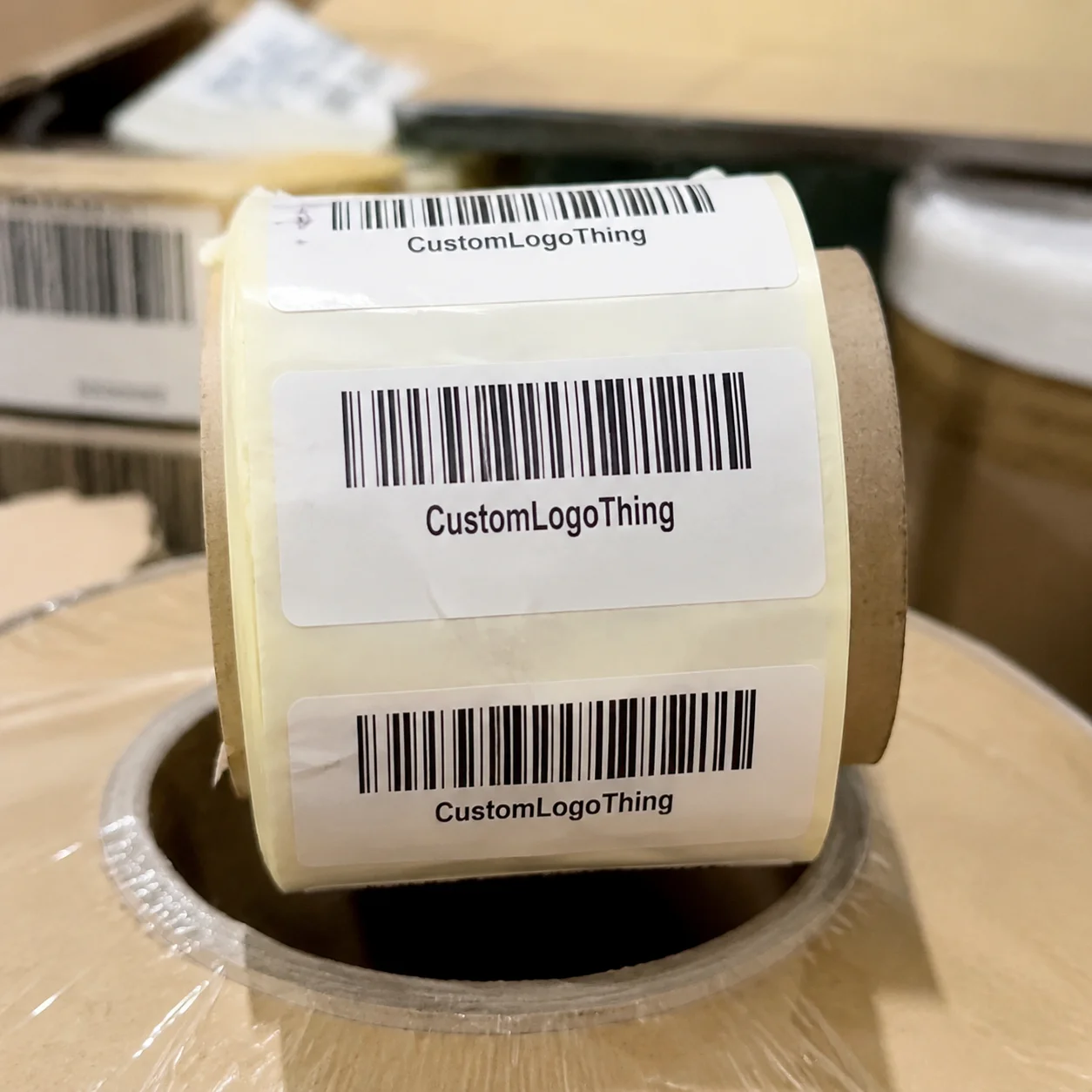
Labels and sleeves are often the fastest path to branded packaging. If you already have a stock bottle, jar, pouch, or folding carton, a custom label or belly band can change the look immediately without forcing a full structural redesign. For a startup that wants MOQ packaging for small business without a huge tooling bill, this is often the cleanest entry point. I have seen DTC food brands use printed labels first, then move into a fully custom carton once sales data justified the upgrade and the reorder volume reached 3,000 to 5,000 units.
Pouches work well for dry goods, samples, powders, snack items, and personal care refills. Depending on barrier needs, the material may include matte BOPP, PET, foil laminate, or kraft laminated film. For products that need resealability, a zipper pouch with a tear notch can be very efficient. MOQ packaging for small business in pouch form is often easier to control because the unit size is compact, the shipping cartons are light, and the print run can sometimes start at 1,000 pieces instead of 10,000.
Material choice matters just as much as format. SBS paperboard gives a clean print surface for premium graphics, while a 350gsm C1S artboard can give a crisp white face with enough stiffness for small retail items. Kraft paper gives a natural, earthy feel. Corrugated board offers strength, especially for shipping. Chipboard delivers rigidity for luxury presentation. Specialty stocks can add texture, soft-touch feel, or a recycled appearance. A good packaging design choice starts with the product, not with the trend. That is one of the biggest mistakes I see in MOQ packaging for small business: people choose a pretty box before they Choose the Right board grade and folding direction.
Manufacturing details also change the economics. Offset printing is common for high-image cartons and rigid wraps; flexo printing is often more efficient for corrugated mailers and labels; digital printing can help with short runs and variable artwork in facilities in Shenzhen, Wenzhou, or Xiamen. Add die-cutting, aqueous coating, UV coating, foil stamping, embossing, debossing, window patches, and custom inserts, and the order gets more complex. For MOQ packaging for small business, simplicity usually keeps the process cleaner and the quote more predictable, especially if the factory is pricing a run of 500, 1,000, or 3,000 units rather than a full container.
If you are comparing options, our Custom Packaging Products page is a good place to start because it shows the core formats small brands usually consider first. You can also check our FAQ if you want a fast answer on artwork, samples, or ordering basics, including common file formats and proof turnaround times that are typically 1 to 2 business days.
Specs to Review Before Ordering MOQ Packaging
Before you place MOQ packaging for small business, I always tell clients to slow down and verify the specs in a written checklist. The most common production problems I have seen were not fancy design failures; they were basic fit issues, unclear closures, or artwork that did not match the dieline. A box that is 3 mm too tight can crush a product, and a box that is 8 mm too loose can make a premium item feel cheap the moment the customer picks it up at the counter or opens the parcel at home.
Start with dimensions: length, width, and depth of the finished product, plus any accessories, inserts, or secondary items that must fit inside. If the item ships with a charger, spoon, sample packet, or instruction sheet, the internal cavity should account for that. In MOQ packaging for small business, product fit is more important than the outer box size alone, especially for fragile glass, molded items, and anything with a tight retail shelf profile. A 2-ounce serum bottle and a 50 ml pump bottle may look similar in a photo, but they will demand different internal clearances and different insert cutouts.
Then review material thickness and board type. A folding carton may be fine at 14pt for lightweight items, but a 16pt or 18pt board can be better if the product is heavier or if the box needs more stiffness. Corrugated packaging may need E-flute for a slimmer profile or B-flute for more cushioning. Rigid boxes usually rely on chipboard thickness measured in millimeters, often 1.5 mm, 2 mm, or 3 mm depending on the intended feel. These details drive both appearance and durability in MOQ packaging for small business, and they also affect how the fold lines score under pressure from the packing team.
Print coverage is another big one. Full-bleed artwork, heavy dark inks, metallic inks, or intricate gradient work can raise cost and increase the risk of color variation. If your brand depends on exact PMS matching, ask for the color target up front. I have had one client in personal care reject an entire proof because the lavender printed too blue under the selected coating. That delay was avoidable. In MOQ packaging for small business, color control starts before the press runs, ideally with a physical drawdown or a printed proof approved against a Pantone reference.
Finishes matter too. Matte lamination gives a soft, premium look, while gloss lamination can make colors pop under retail lighting in a store in Chicago or Miami. Soft-touch coating feels luxurious but can be more expensive and may show scuffs in transit if the carton is handled roughly. Foil stamping, embossing, and spot UV are effective, but every added finish adds setup time. For most brands, the smartest MOQ packaging for small business decision is not “how many effects can we add,” but “which one effect supports the brand story best.”
Do not forget insert requirements. A paperboard insert, molded pulp tray, EVA foam insert, or die-cut corrugated divider can be the difference between a product arriving intact or arriving with chipped corners. That is especially true for glass bottles, ceramics, and multi-piece kits. When I toured a kitting area in Suzhou, the operator showed me how a simple insert change cut breakage by nearly 40% on one shipment of 2,000 units. That kind of fix is often worth more than a lower packaging price. For MOQ packaging for small business, protection is part of the value, and a 1.5 mm tray adjustment can save hundreds of dollars in returns.
Compliance details should be checked early. If you sell food, supplements, cosmetics, or health products, your panel may need ingredient lists, warning statements, barcode placement, lot code space, or nutrition panels. Retail packaging can also require hang-tabs, hang holes, or shelf-ready perforations. If sustainability claims matter, confirm whether the substrate is FSC-certified, recycled, or recyclable, and make sure the claim is accurate. The FSC standard is widely recognized for responsible sourcing, and you can review it at fsc.org.
For shipment durability, ask about stacking performance and crush resistance, especially for corrugated packaging. If the boxes will ride in a master carton, palletize, or travel through distribution centers, packaging should be reviewed with shipment abuse in mind. Standards like ISTA test methods help evaluate transit durability, and the International Safe Transit Association publishes useful guidance at ista.org. That matters a great deal for MOQ packaging for small business because a beautiful box that fails in transit is still a loss, even if the print quality is perfect.
My rule is simple: request the dieline, review a digital proof, and approve a sample mockup before production. That one process step catches most expensive errors. If you are in a hurry, speed up the approval cycle, not the spec review. In my experience, MOQ packaging for small business works best when the structural decisions are locked before artwork begins, because changing a fold direction after proof approval can add 3 to 5 business days all by itself.
Pricing, MOQ, and What Drives Your Unit Cost
Pricing in MOQ packaging for small business is usually built from a handful of drivers: material choice, print complexity, finishing, quantity, box size, and number of SKUs. The more custom the structure and decoration, the higher the setup cost. That setup cost gets spread across the run, which is why a 500-piece order often carries a much higher unit cost than a 5,000-piece order even when the material looks similar on paper. A factory in Shenzhen may quote the same board, but the economics change immediately once you add plates, tool making, and inspection time.
Here is a straightforward example. A 1,000-piece Custom Folding Carton with 4-color offset printing, aqueous coating, and a basic tuck closure might land around $0.42 to $0.68 per unit, depending on size and artwork coverage. The same carton at 5,000 pieces may drop closer to $0.18 to $0.31 per unit because the plate, setup, and die fees are spread across more units. That is the math behind MOQ packaging for small business, and it is one reason small brands should compare total project cost, not just unit price, when they are building a launch budget of $2,500, $5,000, or $10,000.
Rigid boxes tell a different story. A short run of 500 rigid set-up boxes with printed wrap, ribbon pull, and EVA insert can easily land in the $1.80 to $4.50 per unit range, while a larger run may come down substantially. Mailer boxes are often more economical. A custom printed E-flute mailer in a 1,000 to 3,000 piece run might price around $0.65 to $1.35 per unit, depending on board strength, ink coverage, and whether the inside is printed. In MOQ packaging for small business, the structure you choose can change your economics more than almost any other factor, and the gap between a basic kraft mailer and a fully printed premium mailer can be 20% to 40%.
Setup charges are another reality. Die tooling, plate making, color matching, and artwork prepress all cost money. Some of those charges are one-time, some are per SKU, and some are tied to finishing. If you have three box sizes instead of one, your cost structure will reflect that. I once worked with a skincare brand that wanted seven carton sizes for a 10-product line. We trimmed that to four standardized cartons and reduced their inventory complexity immediately. That is a classic MOQ packaging for small business decision: simplify where the customer will not notice the difference, especially if the cartons can be nested into the same outer shipper.
Hidden costs can also surprise new buyers. Freight from factory to warehouse, customs clearance if the production is offshore, inserts, protective master cartons, and rush production fees all affect the final landed cost. If the packaging must arrive in two split shipments because storage is limited, that can add handling and transport charges. In some cases, a slightly higher unit price from a closer production facility in California, Texas, or New Jersey can save more money overall than a low quote with expensive freight from Asia. That is why I always tell clients to calculate the landed unit cost, not only the factory price, when evaluating MOQ packaging for small business.
What is a realistic MOQ? It depends. Labels may start in the low hundreds or low thousands, folding cartons often begin around 1,000 to 3,000 pieces, mailer boxes often start around 500 to 1,000 pieces, and rigid boxes may be higher because of assembly labor. Specialty finishes can push those numbers upward. Anyone promising one universal minimum for every format is oversimplifying the issue. In MOQ packaging for small business, the right MOQ is the smallest quantity that still produces acceptable cost, quality, and lead time, and in many factories that means 1,000 pieces is the practical floor for fully custom printed cartons.
Here is the honest truth: lower MOQ does not automatically mean lower risk. If the quote is too lean, you may get stuck with poor structure, weak board, or a finish that scuffs in transit. I have seen customers choose the cheapest short run and then spend more on damaged replacements than they saved on the order. Good MOQ packaging for small business should protect margin, not just preserve cash on day one, and a box that costs $0.11 less but doubles your return rate is not actually saving money.
From Quote to Delivery: Process and Timeline
The workflow for MOQ packaging for small business is usually straightforward, but the timing depends on how prepared the buyer is. The typical process goes like this: inquiry, specs review, quote, dieline creation, artwork setup, proofing, sampling, production, finishing, and shipment. When each step is clear, production can move at a predictable pace. When information is missing, the job slows down fast, and a project that should have taken 2 weeks can easily stretch into 4 or 5.
The fastest quotes come from buyers who provide dimensions, material preference, print method, target quantity, finish requirements, and current artwork status. If you already know whether you want SBS, kraft, corrugated E-flute, or chipboard, that helps narrow the price range quickly. If you know whether the box is retail packaging, shipping packaging, or a display box, that helps even more. I have had quote requests that were only two lines long and others that included a full packaging brief, insert drawing, and color reference. The second type always moves faster in MOQ packaging for small business, especially when the factory team can price the job the same day instead of waiting for clarifications.
Artwork is where many delays begin. Missing bleed, unoutlined fonts, low-resolution images, and unclear PMS targets can send proofs back and forth for days. A designer may think a 0.5 mm shift is invisible, but on a die-cut carton that shift can move barcode placement or fold alignment enough to matter. In one plant meeting in Guangzhou, a production manager showed me a label sheet where the QR code sat directly on a glue flap. That job had to be rerun. With MOQ packaging for small business, the smallest artwork mistake can become a very visible delay, and one bad revision can add 2 to 4 business days before print approval.
Timelines vary by format. Simple labels and sleeves may move through proofing and production faster than rigid boxes. A folding carton run can often be completed in roughly 12 to 18 business days from proof approval, depending on quantity and finish. Mailer boxes may take 10 to 15 business days from proof approval. Rigid boxes, specialty inserts, and foil-heavy designs can take longer, often 18 to 30 business days or more if hand assembly is involved. Shipping time is separate, and international freight can add several days to several weeks depending on mode and destination. That is why MOQ packaging for small business should be planned backward from the launch date, not forward from the quote date, especially if the product launch is tied to a trade show or seasonal drop.
Sampling is one of the smartest steps a small business can take. A physical sample lets you check fit, closure, print color, finish feel, and insert performance. Digital renderings are useful, but they do not tell you how the carton behaves when folded, how the board creases, or whether a perfume bottle rattles inside. I remember a candle brand that loved their digital proof until they saw the physical sample and realized the lid tabs were too tight for gloved packing staff. One small adjustment saved hours on the filling line. That is the practical value of sampling in MOQ packaging for small business, and a sample couriered from the factory in 3 to 7 days is usually cheaper than fixing a bad launch order.
From production to shipment, quality checks should cover color accuracy, glue performance, die-cut accuracy, and finishing alignment. For retail packaging, I like to see the fold lines, tuck flaps, and print registration checked before the whole run is packed. If the packaging is going to a distribution center, master carton labeling and pallet configuration should be confirmed as well. A good process does not just make boxes; it makes sure the boxes arrive ready for use. That is the real promise behind MOQ packaging for small business, and it is why a clear approval trail matters from the first PDF proof to the final pallet wrap.
Why Choose a Packaging Manufacturer for Small Orders
There is a meaningful difference between ordering from a packaging manufacturer and ordering through a broker. A manufacturer understands machine limits, board behavior, glue performance, and finishing tolerances from the inside of the production line. That matters a great deal in MOQ packaging for small business, because small orders need precision, not guesswork. At Custom Logo Things, we approach short runs with the same attention we would give a larger retail program, just with more flexibility around setup and structure, whether the job is going to a plant in Dongguan or a domestic converter in Pennsylvania.
Factory experience matters because the details are physical. Offset printing has different color behavior than flexo. Lamination changes how a board creases. Die-cutting can expose weak corners if the grain direction is wrong. Hand assembly on Rigid Boxes can introduce variation if the insert tolerances are off by even 1 to 2 mm. I have stood at a packing table where a client’s early cartons were stopping the line because the tuck flap was slightly too stiff. The fix was not a redesign; it was a paper spec adjustment and a crease tweak. That kind of practical problem-solving is exactly what a manufacturer brings to MOQ packaging for small business, especially when the difference between a 90-degree fold and a soft fold affects packing speed by the hour.
Quality control is another reason to work directly with the production side. Color checks, adhesive checks, and fold checks should not be afterthoughts. A reputable manufacturer will review the dieline, confirm structural fit, and watch for finishing issues before the full run is packed. If the job includes foil stamping or embossing, alignment needs extra attention because those effects can drift if the sheet feeds are off. For MOQ packaging for small business, consistent quality is often the difference between a brand that feels established and one that feels improvised, and a 100% inspection on a 1,000-piece order can prevent a much larger retail problem later.
There is also value in honest material substitutions. If a chosen paper stock is too costly or hard to source, a manufacturer can suggest a similar board, a lighter flute, or a different coating that preserves the look while lowering the cost. That kind of advice is more useful than a glossy sales pitch. I have had clients save 12% to 18% simply by switching from a full foil wrap to a single foil logo with matte lamination. In short-run MOQ packaging for small business, smart simplification often beats decorative overload, especially when the savings can be redirected into better product photography or a larger ad budget.
Direct factory communication helps reduce surprises. When the sales team, prepress team, and production team are aligned, quotes are cleaner and deadlines are more realistic. Brokers can be useful in some situations, but they do not always have the same visibility into machine schedules or quality checks. I prefer a setup where the client can get practical answers about artwork, material choice, and lead time without a game of telephone. That is the kind of support small businesses need when they are trying to launch on a real deadline, not an ideal one, and a factory team that can confirm a 12- to 15-business-day schedule from proof approval is worth far more than a vague promise.
Our team has spent years working across custom printed boxes, retail packaging, and product packaging programs for brands that needed short runs without sloppy execution. If you want to compare packaging formats, material choices, or custom inserts, our Custom Packaging Products page gives you a simple starting point, and our FAQ covers many of the basic ordering questions that come up early, including artwork prep, sample timing, and file setup for a 500-piece or 5,000-piece run.
How to Order MOQ Packaging for Small Business Today
If you want to move forward with MOQ packaging for small business, start with the product itself. Write down the exact dimensions, product weight, and any accessories that must fit in the package. Then decide whether you need folding cartons, mailer boxes, rigid boxes, labels, sleeves, or pouches. That one decision narrows the whole project and prevents you from paying for features you do not need, especially if the item will ship from a warehouse in Austin, Orlando, or Los Angeles.
Next, gather the artwork. If your logo is only available as a low-resolution PNG, ask for a vector version before quoting. If you already have brand colors, list the PMS references. If the box needs compliance text, barcodes, ingredients, or warning panels, include them in the brief from the beginning. In MOQ packaging for small business, a complete brief saves days and often improves the quote because the supplier can see exactly what is required, from the 2.5 mm barcode quiet zone to the 3 mm bleed on all sides.
I recommend requesting two or three quote options. For example, compare a kraft mailer with one-color printing, a full-color printed mailer with matte lamination, and a printed mailer with a custom insert. That kind of comparison shows where the price differences come from and helps you make a smarter decision about unit cost and finish. It is often surprising how little a targeted upgrade costs when the structure is already efficient. That is a valuable lesson in MOQ Packaging for Small Business: spend where the customer notices it, not where it only looks expensive on paper.
Ask for the dieline before artwork is finalized, then request a digital proof and a sample if the product is sensitive or high value. If the packaging will travel through a shipping network, ask for stackability guidance or transit testing recommendations. For more technical standards, the EPA has useful information on sustainable materials and waste reduction at epa.gov, which can help when you are evaluating paper-based packaging choices. A thoughtful buyer does not just order a box; they build a packaging system that can be packed on Friday and reordered on Monday without rework.
There is one more step that saves a lot of stress: plan backward from the launch date. If your product is filling on the 15th, the packaging should be on site before that, not after. Build in a few extra days for proof approval, shipping delays, and any last-minute artwork corrections. I have seen too many founders discover that their boxes were “almost ready” three days before launch. Almost ready is not ready. In MOQ packaging for small business, timing is part of the product experience, and a 7-day shipping buffer can protect a launch that took six months to build.
My advice is simple: choose the smallest order that still gives you clean branding, proper fit, and reliable delivery. That is what MOQ packaging for small business should do. If you keep the specs tight, the artwork clean, and the structure practical, you can launch professionally without overbuying inventory or compromising presentation, whether you are ordering 500 units for a pilot or 5,000 units for a national rollout.
When the first run goes well, scaling becomes easier. You already know which finish scuffs, which insert holds the product best, and which carton size packs fastest. That data is far more valuable than a bargain unit price on a box you do not want to reorder. For a small business, that is where packaging stops being a purchase and starts becoming a repeatable system. And that is the real value of MOQ packaging for small business, especially when the next order can be tightened to the exact material, finish, and timeline that worked the first time.
MOQ Packaging for Small Business: decision table
| Decision area | Best fit | What to verify | Risk if skipped |
|---|---|---|---|
| Quote scope | Comparing suppliers and order quantities | Tooling, sample, unit cost, packing, and freight assumptions | Lowest quote wins until missing line items appear |
| MOQ and repeat order | Launch orders, seasonal runs, and scaled reorder plans | MOQ breaks, lead time, storage, and SKU grouping | First order works but reorder cost jumps |
| Approval process | Avoiding rework before bulk production | Dieline, proof, sample, tolerance, and sign-off owner | Bulk production starts before the spec is truly locked |
FAQ
What does MOQ packaging for small business usually mean?
It refers to the minimum quantity a manufacturer requires to produce a custom packaging order. The MOQ depends on the packaging type, material, and printing process. Small businesses use MOQ packaging for small business to launch with less inventory risk while still getting custom branding, often starting at 500 to 1,000 pieces for mailers and 1,000 to 3,000 pieces for cartons.
How do I lower the MOQ packaging cost for a small business?
Choose simpler structures, fewer print finishes, and standard materials where possible. Reduce the number of box sizes or SKUs in the first order. Use efficient dimensions to cut material waste and shipping costs. Those three moves usually have more impact on MOQ packaging for small business than chasing the lowest quote, especially when a single foil stamp or custom insert can add $0.12 to $0.40 per unit.
Can I order custom packaging in a low quantity for a new product launch?
Yes, many custom packaging formats can be produced in short runs. Mailer boxes, folding cartons, labels, and some rigid box styles are common low-quantity options. The best results come from planning artwork and specs carefully before quoting, especially for MOQ packaging for small business, where a clean brief can save 2 to 5 business days in the proofing stage.
What files do I need for MOQ packaging production?
You usually need print-ready artwork in a vector format, plus your logo files and brand colors. A dieline is required for structural packaging, and your printer may provide one. Bleed, safe zones, and font outlining should be checked before approval. If you are ordering MOQ packaging for small business, complete files help prevent delays, and a press-ready PDF with 3 mm bleed is a strong starting point.
How long does MOQ packaging take from quote to delivery?
Timing depends on packaging type, proof approval speed, and finishing complexity. Simple packaging often moves faster than rigid boxes or specialty finishes. Fast approvals and complete specs help reduce delays before production starts. For MOQ packaging for small business, planning backward from the launch date is the safest approach, and many folding carton jobs typically ship 12 to 15 business days from proof approval before freight time is added.