Buyer Fit Snapshot
| Best fit | MOQ Packaging for Small Business projects where brand print, material claims, artwork control, MOQ, and repeat-order consistency need to be specified before quoting. |
|---|---|
| Quote inputs | Share finished size, material target, print colors, finish, packing count, annual reorder estimate, ship-to region, and any compliance wording. |
| Proofing check | Approve dieline scale, logo placement, barcode or warning zones, color tolerance, closure strength, and carton packing before bulk production. |
| Main risk | Vague material claims, crowded artwork, missing packing details, or unclear freight terms can make a low unit price expensive after revisions. |
Fast answer: MOQ Packaging for Small Business: Costs, Specs, and Steps should be specified like a repeatable production item. The safest quote records material, print method, finish, artwork proof, packing count, and reorder notes in one written spec.
Production checks before approval
Compare the actual filled-product size with the drawing, then confirm tolerance on folds, seals, hang holes, label areas, and retail display edges. Reserve space for logos, QR codes, warning copy, and material claims before decorative graphics fill the panel.
Quote comparison points
Review material grade, print process, finish, sampling route, tooling charges, carton quantity, and freight assumptions side by side. A quote is only useful when the supplier can repeat the same color, closure quality, and packing count on the next order.
MOQ Packaging for Small Business: Why the First Order Matters
MOQ Packaging for Small Business looks simple right up until the first purchase order is sitting in front of you. Pick a minimum order quantity, approve the artwork, wait for delivery. That’s the tidy version. The real version reaches into cash flow, shelf life, warehouse space, and the first impression your product makes in a customer’s hands. A box can be cheap and still cost a founder a month of margin if the board spec is wrong, the inserts don’t hold, or breakage quietly eats every shipment. In a run of 1,200 skincare cartons, for example, a 3 mm fit issue can turn into 180 damaged units and a replacement bill of $1.40 per unit before freight is even counted.
I remember one launch where the team was thrilled to save $0.18 per unit on custom printed boxes. Eighteen cents. Tiny, right? Except the boxes arrived with a finish that scuffed if you looked at them too hard, and the product insert wobbled like a loose tooth. The “savings” turned into rework, delays, and a week of everyone pretending not to be annoyed. Honestly, packaging has a way of punishing wishful thinking. The supplier had quoted the run at $0.82 per unit for 2,000 pieces from a plant in Dongguan, but the revised reprint pushed the real cost to $1.07 per unit by the time air freight was added.
The math usually surprises people. One supplier may quote 1,000 custom printed boxes at $1.12 each. Another may quote 5,000 at $0.46. The second number looks like victory until setup fees, freight, and storage enter the picture. Suddenly the smaller order is easier on cash, while the larger order traps $2,300 in inventory that may sit for eight months. MOQ Packaging for Small business is not a unit-price race. It is a landed-cost calculation. A pallet shipped from Shenzhen to Los Angeles can add $380 to $620 in ocean freight and destination charges, depending on carton size and whether the order fills a half-pallet or a full pallet.
I see the same mistake over and over. Founders compare packaging quotes as if they were buying a single commodity. Packaging isn’t a single line item. It sits between product packaging, shipping protection, and package branding. A rigid box can make a gift set feel premium, but if demand is still unproven, that same box can freeze capital you need for ads, inventory, or fulfillment. One cosmetic founder I spoke with delayed a campaign by six weeks because the packaging budget had already been swallowed by an oversized first run. We all stared at the spreadsheet like it had personally insulted us. The project was for 750 sets, not 7,500, and the cash difference between those scenarios was almost $9,000.
Quantity cuts both ways. Order too little and the unit cost climbs, the reorder calendar gets tight, and every restock feels urgent. Order too much and obsolescence becomes the real tax, especially if the label copy changes, the logo shifts, or the SKU line expands. For MOQ Packaging for Small business, the right order is the one that lets you launch, test, and scale without betting everything on one expensive assumption. If your first sales window is 60 to 90 days, a 1,000-unit carton order is usually easier to defend than a 10,000-unit commitment that sits in a warehouse in Dallas or Rotterdam.
“The best packaging buy isn’t the cheapest quote. It’s the one that gets your product out the door, protects it in transit, and still leaves room for the next reorder.”
I remember one client meeting with a cosmetics founder who wanted 500 units of custom printed boxes with foil and embossing. The sample looked sharp. The per-unit price looked brutal. It was nearly triple the stock carton option. We reworked the package branding to a one-color print on a 350gsm C1S board with matte varnish, and the launch kept enough cash for better insert photography. That tradeoff matters. MOQ packaging for small business should support launch speed, not only visual drama. The revised carton was quoted at $0.88 per unit for 1,500 pieces, while the foil version had been sitting at $2.31 per unit before tooling.
Standards matter too. If the shipper matters, review ISTA for transit testing methods. If sustainability claims are part of your pitch, check FSC for responsible fiber sourcing. Those details shape the specs you ask for before production starts, not after the first dented shipment lands at the warehouse. A test in Chicago, for instance, may catch edge crush problems that a flat artwork proof will never reveal.
MOQ Packaging for Small Business: Product Types and Use Cases
MOQ packaging for small business covers a wider range than most buyers expect. A mailer box, a folding carton, and a rigid box each solve a different problem. They also behave differently at low volume. The packaging format changes the minimum order, the print method, the assembly labor, and the final unit cost. Without format context, a supplier quote can be misleading at best and useless at worst. A 14 x 10 x 4 inch mailer made in Guangzhou will not behave like a 60 pt rigid set produced in Shanghai, even if both carry the same logo.
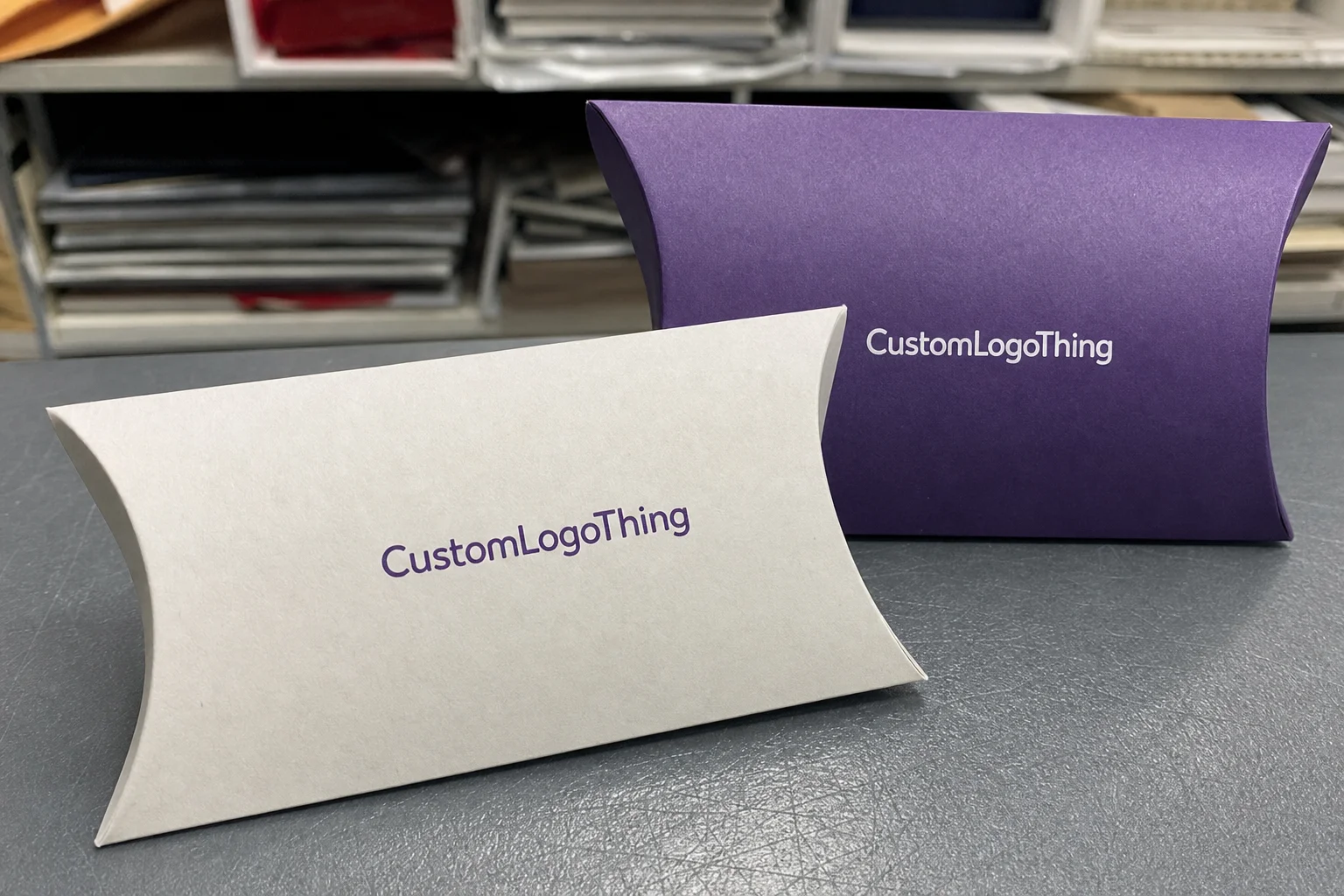
E-commerce brands usually start with mailer boxes because they ship well, hold up under transit, and stay economical at moderate quantities. Folding cartons fit cosmetics, supplements, candles, and small electronics where shelf appeal matters, but the packaging doesn’t need to carry heavy loads. Rigid boxes show up in gift sets, premium accessories, and branded packaging where perceived value counts as much as protection. Labels and wraps often come with lower minimums, which makes them useful for early-stage product packaging when flexibility matters more than presentation. A roll label order can start at 500 pieces for $0.09 to $0.15 per label, while a rigid box run may need 1,000 units and hand assembly in a facility near Shenzhen or Ningbo.
The pattern from factory audits is consistent: the more the packaging has to do, the higher the MOQ usually climbs. A simple white mailer with one-color branding can be economical at a relatively low minimum. Add custom inserts, two-sided printing, embossing, or specialty coatings, and production complexity rises quickly. That complexity affects setup time, waste rate, and the amount of material needed to keep quality within spec. Small business buyers often ask for “just a little more premium,” but in packaging, that small change can move the whole cost structure. Packaging people love saying “just” right before something gets expensive. It’s practically a hobby. A switch from plain kraft to 157gsm art paper wrapped over greyboard can add both labor and 12 to 18 percent to the unit price.
Different use cases point to different formats:
- E-commerce: mailer boxes, corrugated shippers, tissue wrap, and inserts for product protection. A common spec is E-flute corrugate at 1.5 mm thick for shipments under 2 kg.
- Retail shelves: folding cartons, hang tags, labels, and display-ready branded packaging. A typical carton might use 350gsm C1S artboard with CMYK print and aqueous coating.
- Subscription kits: mailers, dividers, and coordinated custom printed boxes for repeat unboxing. Many brands start with 1,000 units to test repeat purchase rates over 3 months.
- Gift packaging: rigid boxes, sleeves, ribbon, and premium finishing for higher perceived value. A 2 mm chipboard base with 157gsm wrapped paper is common in this category.
- Promotional kits: cartons, tissue, labels, and protective inserts for mixed-item shipments. These often need 2 to 4 separate components and more assembly time.
On a packaging line outside Shenzhen, an operator once pointed to a stack of folding cartons and said, “These are easy until the client changes the insert.” He wasn’t exaggerating. A 2 mm change in insert height can force a new dieline, fresh tooling, and another proof round. For MOQ packaging for small business, hidden changes like that are where timelines slip and budgets wobble. Even a 4 mm shift in bottle shoulder height can require the divider to be recut, which may add 2 to 3 business days to sampling.
The stock-versus-custom decision matters too. Stock packaging usually means lower minimums and faster turnaround, but it limits your package branding. Custom printed boxes can strengthen recognition and make the unboxing moment feel deliberate, though they often require higher setup and a tighter ordering plan. Small businesses should ask a direct question: do I need a packaging system, or do I just need a container? If you are shipping 300 units per month from Austin or Toronto, a stock mailer with a branded sticker may be enough until demand crosses 1,000 units monthly.
That question changes the buying decision. A subscription brand shipping candles may need a die-cut insert and an outer mailer. A direct-to-consumer skincare brand may need a folding carton with a clean label area and enough board strength to survive warehouse handling. A small gift brand may need rigid boxes only for a seasonal capsule, which means MOQ packaging for small business should stay tight until demand stabilizes. The right structure is rarely the fanciest one. It is usually the one that matches the product, the shipping path, and the customer expectation. A holiday gift run in November often justifies 2,000 rigid boxes; the same brand in February may only need 250 sample units.
| Packaging type | Typical use | Approximate MOQ behavior | Best for |
|---|---|---|---|
| Mailer box | E-commerce shipments | Often lower to mid-range | Protection plus branding |
| Folding carton | Retail packaging and shelf display | Lower if stock size, higher if custom die-cut | Cosmetics, supplements, candles |
| Rigid box | Premium gift and presentation packaging | Usually higher because of hand assembly | Luxury kits and gift sets |
| Labels and wraps | Branding, compliance, and SKU flexibility | Often the lowest | Fast changes and small batches |
Specifications That Affect MOQ Packaging for Small Business
Specifications decide more about MOQ packaging for small business than most buyers realize. A packaging quote is only as useful as the spec sheet behind it. If the dimensions are vague, the board type is undefined, or the print coverage is unclear, the supplier is guessing. Guessing leads to price cushions, and price cushions show up as higher unit cost. A quote for 2,000 units in Dongguan may start at $0.62 per box and jump to $0.79 once the supplier fills in the missing details.
The core specs start with dimensions. Exact measurements matter down to the millimeter. If your product is 102 mm wide, 68 mm deep, and 145 mm high, don’t round it to “about 10 cm by 7 cm by 15 cm.” That kind of estimate can force a second round of sampling. I’ve seen one missed dimension trigger a full reprint of inserts because the bottle neck sat 4 mm higher than expected. In MOQ packaging for small business, small measurement errors have a habit of becoming expensive ones. A 4 mm misread on the inner tray can turn a snug fit into a rattling shipment.
Material thickness comes next. For folding cartons, buyers should ask for board weight, such as 350gsm C1S artboard, 300gsm CCNB, or a specific corrugated flute profile if the box is for shipping. For mailers, E-flute and B-flute are common choices depending on strength and print needs. For rigid boxes, chipboard thickness often ranges from 1.5 mm to 3 mm. Those numbers matter because a thicker board can improve durability but may also increase MOQ, shipping weight, and assembly cost. A 2 mm greyboard wrapped with 157gsm art paper is a very different production job from a 1.5 mm board wrapped in 120gsm matte stock.
Print method changes the economics too. Digital print can work well for short runs and lower MOQs. Offset print usually makes more sense once volume rises and color consistency matters more. Flexographic print may suit simpler graphics or outer shipping cartons. If you need multiple colors, spot UV, foil stamping, embossing, or soft-touch lamination, expect higher quantities or higher setup charges. That isn’t a trick. It reflects machine setup time and waste rates. A foil stamp in a plant near Shenzhen can add $120 to $280 in setup alone, depending on die size and the number of colors used underneath.
One rule helps small brands stay out of trouble: fewer colors, fewer SKUs, fewer finishes. That combination usually improves pricing and reduces MOQ pressure. A one-color black print on kraft board is often far easier to produce than a five-color carton with matte lamination and silver foil. If your launch can survive restrained packaging design, the first order usually becomes easier to place and easier to reorder. A single Pantone ink on 300gsm CCNB can sometimes shave 8 to 15 percent off the quote compared with a full-coverage CMYK job.
Operational specs matter just as much as visual ones. Before requesting a quote for MOQ packaging for small business, confirm the following:
- Exact product dimensions, including closures and caps.
- Product weight in grams or ounces.
- Shipping condition: parcel, mailer, pallet, or retail shelf.
- Assembly requirement: flat packed, glued, or hand-folded.
- Insert need: paperboard, molded pulp, foam, or none.
- Color standard: CMYK, Pantone, or specific brand references.
- Finishing: matte varnish, gloss, soft-touch, foil, emboss, or none.
Spec clarity saves time. It also prevents the quiet kind of waste that never makes it into a spreadsheet. A supplier in Dongguan once told me, “The worst file is a beautiful file with missing measurements.” That line stuck with me because it’s true. The artwork may be perfect, but if the dieline is wrong, the production team will stop and wait. In practice, that can mean a 48-hour pause while the factory in Foshan or Xiamen confirms dimensions with engineering.
For buyers focused on sustainability, material specification needs an extra layer. Ask whether the board contains recycled content, whether the paper is FSC-certified, and whether the coatings will affect recyclability. The answer is not always simple. A high-gloss lamination can improve shelf appeal but complicate end-of-life recovery. That tradeoff belongs in the quote discussion, not after production. If your target market is in California or the Netherlands, the recyclability conversation may carry as much weight as the print finish.
Pricing and MOQ Packaging for Small Business: What You Really Pay For
MOQ packaging for small business pricing usually has six parts: tooling or setup, artwork prep, sampling, unit production, freight, and taxes or duties where applicable. If a supplier gives you only a unit price, you are not seeing the full picture. I’ve watched buyers choose the cheapest per-unit quote and then discover that tooling, plates, and delivery pushed the final landed cost well above another supplier’s “higher” quote. A carton quoted at $0.41 per unit can become $0.68 once a $120 plate fee, $95 sampling charge, and $260 freight line are added.
Setup charges are common because the press, cutting tools, or print plates need to be prepared before production starts. Sampling can be charged separately if a physical proof is required. Freight can vary sharply depending on carton size, pallet count, and destination. A box that looks light on paper may ship poorly if it is bulky. Cube matters as much as weight. A shipment from Ningbo to Seattle may be cheap in kilograms but expensive in volumetric weight if the cartons are oversized by even 8 mm on each side.
To make quote comparisons fair, you need identical specs. Same board. Same dimensions. Same print coverage. Same finish. Same delivery term. A 1,000-unit quote for a 280gsm carton should never be compared directly with a 1,000-unit quote for a 350gsm carton with lamination. That sounds obvious, yet it gets missed in purchasing meetings more often than it should. People are busy. Line items blur. The wrong value proposition slips through. I’ve watched a buyer celebrate a “better” quote only to find out the cheaper line item was missing inserts, proofing, and freight. The celebration did not last long.
Here’s a practical comparison of how pricing can shift as the MOQ changes for custom printed boxes. These are illustrative figures, but they reflect the pattern I see often in Small Business Packaging:
| Order volume | Example unit cost | Setup/sampling impact | Typical tradeoff |
|---|---|---|---|
| 500 units | $1.45/unit | Higher setup burden per box | Lowest commitment, highest unit cost |
| 1,000 units | $0.98/unit | Setup spread more efficiently | Good for launch testing |
| 5,000 units | $0.46/unit | Best setup efficiency | Lower cost, higher inventory risk |
The hidden costs are where budgets get hurt. Revisions can add days and fees. Rush production often carries a premium. Oversized cartons may increase freight even when the product itself is small. Split shipments can create two deliveries, two tracking cycles, and two chances for damage. For MOQ packaging for small business, the quote should show not only what you pay, but what you avoid paying by keeping the spec disciplined. A rushed reproof in Guangzhou might add 2 business days; a last-minute artwork change in New York can add a week if the plate must be remade.
One of the smartest questions a buyer can ask is for tiered pricing. Not because you plan to buy the highest volume immediately, but because tiered pricing shows the cost curve. If 1,000 units are $0.98 and 3,000 units are $0.61, you can calculate how quickly it makes sense to reorder. That helps with forecasting and gives you a real view of unit cost over time. It also tells you whether MOQ packaging for small business will get materially cheaper once demand stabilizes. At 3,000 units, the same folding carton can sometimes save $1,110 compared with ordering 1,000 pieces in three separate batches.
I also tell clients to ask about reorder pricing separately. Initial orders often include art setup, proofing, and plate costs that may not repeat on the second run. If the supplier cannot explain what happens on reorder, your forecast is incomplete. Good suppliers can tell you, in plain numbers, how much lower the second batch may be when the tooling already exists. A factory in Guangzhou might quote a first run at $1,050 in setup and then drop the repeat order fee to $120 or less.
For sourcing context, the EPA Sustainable Materials Management resources are useful when you need to weigh packaging material choices against waste reduction and recovery goals. That is not just compliance language. It can influence whether a brand chooses paperboard, corrugated board, or a mixed-material structure that is harder to recover. If your sales run heavily through the West Coast or the EU, those material decisions can shape both customer perception and disposal costs.
Process and Timeline for MOQ Packaging for Small Business
MOQ packaging for small business follows a predictable process if the buyer comes prepared. The shortest route from inquiry to delivery usually looks like this: quote request, spec confirmation, artwork setup, sampling, approval, production, and shipping. Miss one of those steps, and the schedule stretches. Timelines rarely blow up because the factory is “slow.” They blow up because someone changed a detail after proof approval. A three-day artwork delay can become a 14-day delivery delay once the press schedule is pushed back at a plant in Shenzhen or Ningbo.
Lead time depends on the complexity of the order. A simple folded carton with one-color print might move in 12 to 15 business days after proof approval. A custom rigid box with inserts and specialty finishing may take 25 to 35 business days or longer, especially if materials need to be sourced. Add international shipping and the timeline may extend another 5 to 18 days depending on route and customs processing. For a U.S. destination, ocean freight from Shanghai to Long Beach can take 18 to 28 days, while air freight may land in 4 to 7 days at a much higher cost.
Sampling is the step small businesses skip at their peril. A physical sample lets you check fit, closure pressure, color, board feel, and print legibility. I once saw a beverage brand approve artwork from a PDF and only discover on the sample that the neck label sat too close to the fold line. The print was fine. The layout wasn’t. The sample saved the run, even though it delayed launch by four days. Nobody enjoyed that delay, especially the founder, but it beat shipping a mistake to 2,000 customers. The sample itself cost $35 plus $18 courier fees, which was cheap insurance compared with a reprint.
Here’s how I advise clients to keep MOQ packaging for small business moving without bottlenecks:
- Finalize product dimensions before asking for quotes.
- Send print-ready artwork or a clean dieline with notes.
- Confirm whether you need a stock size or custom dieline.
- Approve a physical or digital proof within one review cycle if possible.
- Plan freight and receiving before production starts.
The biggest timeline killer is indecision. A founder may spend two weeks debating whether the brand color should be matte navy or deep green, and the factory sits idle. That delay adds no value to the packaging, but it can add real cost if raw materials are held or reordered. For MOQ packaging for small business, speed comes from preparation, not pressure. If your team can sign off within 48 hours, a supplier in Dongguan or Foshan can often hold a production slot and prevent a queue jump.
Rush orders are possible in some cases, but they are not a free lunch. If a supplier promises unusually fast delivery on a fully customized job, ask what is being simplified. Often it is the print process, the finishing, or the sampling step. Sometimes that works. Sometimes it just moves the risk downstream. I would rather a client ship one week later with correct packaging than ship early with damaged product or blurry branding. A rush premium can add 15 to 30 percent, which is a lot to pay for a box that still has to survive parcel handling in Atlanta or Manchester.
My advice is to treat the timeline as part of the cost. If your packaging arrives two weeks late, you may lose launch momentum, preorder revenue, or retail placement. If it arrives too early, you may pay storage fees. MOQ packaging for small business sits at the intersection of timing and capital, which is why the process matters as much as the artwork. Even a 10-day gap between arrival and launch can force a brand to pay $150 to $400 in short-term storage, depending on the city and pallet count.
Why Choose Us for MOQ Packaging for Small Business
Custom Logo Things is built for buyers who want MOQ packaging for small business handled with clear terms and fewer surprises. That matters because small business purchasing is not the same as enterprise buying. You may need 300 units for a test run, 1,000 units for a retail pilot, or 5,000 units if your ad spend is already moving product. The supplier should adjust to that reality, not force every project into a rigid template. A startup in Brooklyn should not have to order like a chain in Chicago, and a founder in Melbourne should not be pushed into a 10,000-unit carton just to get attention.
What I value in a packaging partner is straightforward: honest MOQ, clear artwork requirements, and predictable communication. If the supplier can explain how a 300gsm carton differs from a 350gsm carton, or why a soft-touch finish will raise setup, that’s a good sign. If they can also explain how those choices affect unit cost and transit performance, even better. That’s the sort of practical support small brands need when product packaging is part of the brand strategy, not an afterthought. A 350gsm C1S artboard carton with aqueous coating may be the right balance for a $28 product sold in Denver or Dublin.
We focus on aligning the structure, the print, and the order volume. That means helping you choose between stock and custom printed boxes, deciding whether the insert is necessary, and making sure the package branding supports the sale without inflating cost. In one supplier negotiation I sat through, the customer wanted three finishing effects, but the product sold at $24. The packaging was trying to behave like a luxury gift set in a mid-market category. We cut the finish stack, saved 19 percent on unit cost, and improved margin immediately. Everyone in the room exhaled like we’d just cleared a hostage situation. The order dropped from $1.92 per unit to $1.55 per unit on 2,500 pieces.
That kind of tradeoff is where practical experience matters. A good packaging supplier should be able to discuss paper weight, print coverage, freight impacts, and reorder planning in the same conversation. Not every project needs premium finishing. Not every launch needs a custom insert. Every project does need accuracy, because errors in MOQ packaging for small business are expensive to fix after the boxes arrive. A wrong dieline in Shenzhen can cost a week; a wrong carton size in Toronto can cost an entire restock cycle.
We also support the parts that often slow buyers down: artwork prep, sampling, and production coordination. If your team needs help confirming the dieline or understanding how a specific finish will affect MOQ, that saves time before the press starts. For a brand shipping hundreds of small orders a month, that time is not abstract. It is labor, cash, and launch readiness. A 500-unit pilot can be approved in one proof cycle when the file is clean, but a messy file can take three rounds and 10 extra business days.
If you want to see the broader range of formats we can support, review our Custom Packaging Products. If you already have supplier questions in mind, our FAQ page is a good starting point before you request a quote.
How to Order MOQ Packaging for Small Business: Next Steps
Ordering MOQ packaging for small business gets easier when you prepare the right information first. Start with product dimensions, product weight, and the packaging type you think fits the use case. If the product is fragile, say so. If it needs retail shelf impact, say that too. Those details shape the structure and help the supplier quote accurately the first time. A 220 g candle in a 90 mm jar needs very different packaging than a 40 g lip balm in a 20 mm tube.
Before you request a quote, gather three things: brand assets, reference images, and shipping requirements. Brand assets include logos, Pantone references, and copy. Reference images show the packaging style you want or want to avoid. Shipping requirements tell the supplier whether the boxes need to survive parcel handling, pallet stacking, or display use. The more concrete the inputs, the cleaner the quote. If your warehouse is in Dallas, the supplier should know whether cartons are destined for FedEx Ground, LTL freight, or direct retail receiving.
Here is the supplier comparison checklist I recommend for small businesses buying packaging at minimum quantities:
- MOQ: Ask for minimums by format, not just by supplier.
- Unit price: Confirm the exact spec behind the number.
- Setup fee: Ask whether it is one-time or recurring.
- Sample policy: Physical proof, digital proof, or both.
- Lead time: Separate proof approval time from production time.
- Freight terms: Clarify whether shipping is included.
- Reorder plan: Ask what changes on the second run.
That checklist matters because apples-to-apples comparison is the only fair comparison. One supplier may offer a lower unit price but charge more for sampling or freight. Another may have a slightly higher quote but faster approval and a lower reorder cost. For MOQ packaging for small business, the winner is often the quote with the fewest surprises, not the lowest headline number. A supplier in Guangzhou who includes a proof and one revision may beat a cheaper quote from Yiwu that charges separately for every mockup.
A simple next-step sequence works best. First, request a quote with exact specs. Second, review the quote line by line. Third, approve a sample or proof. Fourth, schedule production and freight together. That sequence keeps launch plans grounded in real lead times and real costs. It also stops small brands from buying packaging that looks good in a mockup but fails in the warehouse. If the sample looks good on Tuesday and the production slot starts on Friday, you can still catch fit problems before 3,000 pieces are printed.
My final advice is direct: don’t order packaging by instinct alone. Use measurements, material specs, and customer experience goals. A smart order for MOQ packaging for small business protects your budget, supports your brand, and gives you room to reorder without panic. If you want your first packaging run to work as hard as your product does, start with the numbers, then shape the design around them. A carton from a factory in Shenzhen, a label printed in Los Angeles, or a rigid box assembled in Ningbo can all work beautifully if the spec is clear from line one.
FAQ
What is the minimum order quantity for MOQ packaging for small business?
It depends on the packaging type, material, and print complexity. Stock or lightly customized items usually have lower minimums than fully custom printed packaging. Ask for MOQ by format so you can compare options accurately. For example, labels may start at 500 pieces, while a custom rigid box may start at 1,000 pieces or more.
How do I lower costs on MOQ packaging for small business?
Use standard sizes, fewer print colors, and simpler finishes. Order one core SKU first instead of multiple versions. Request tiered pricing to see how costs improve with volume. A one-color 350gsm C1S carton will usually cost less than a four-color carton with foil and soft-touch lamination.
Is custom packaging worth it for a small business with a low MOQ?
Yes, if packaging affects perceived value, shipping protection, or repeat purchases. The best case is when the packaging supports both branding and logistics. Start with a focused design that protects the product without overcomplicating production. A 500-piece test run in a branded mailer can be enough to validate demand before you move to 2,500 pieces.
How long does MOQ packaging for small business usually take?
Timeline depends on artwork approval, sampling, and production complexity. Simple orders can move faster than heavily customized packaging. Approving final specs early is the fastest way to reduce delays. A basic folding carton may take 12 to 15 business days after proof approval, while a rigid box project can take 25 to 35 business days.
What should I ask a supplier before ordering MOQ packaging for small business?
Ask about MOQ, unit price, setup fees, sample options, lead time, and freight terms. Confirm the exact specs being quoted so you can compare apples to apples. Request what happens if you need to reorder or scale up later. Also ask which city or region the packaging will be produced in, such as Dongguan, Shenzhen, or Ningbo, because location can affect transit time and freight cost.