A custom hanging toiletry bag looks straightforward on a spec sheet. In use, it has to do several jobs at once: hold liquids upright, keep small items visible, survive repeated packing, and stay balanced when hung from a hook, a rail, or a hotel door. If one of those pieces is off, the bag becomes annoying fast.
That is why the best projects are treated less like a simple promo item and more like a small soft-good product with packaging implications. The layout, hardware, closure, material, and decoration method all affect the final user experience. Leave one of them vague and the quote may look fine, while the sample drifts in a direction nobody actually wanted.
Custom hanging toiletry bag basics: what buyers need to know
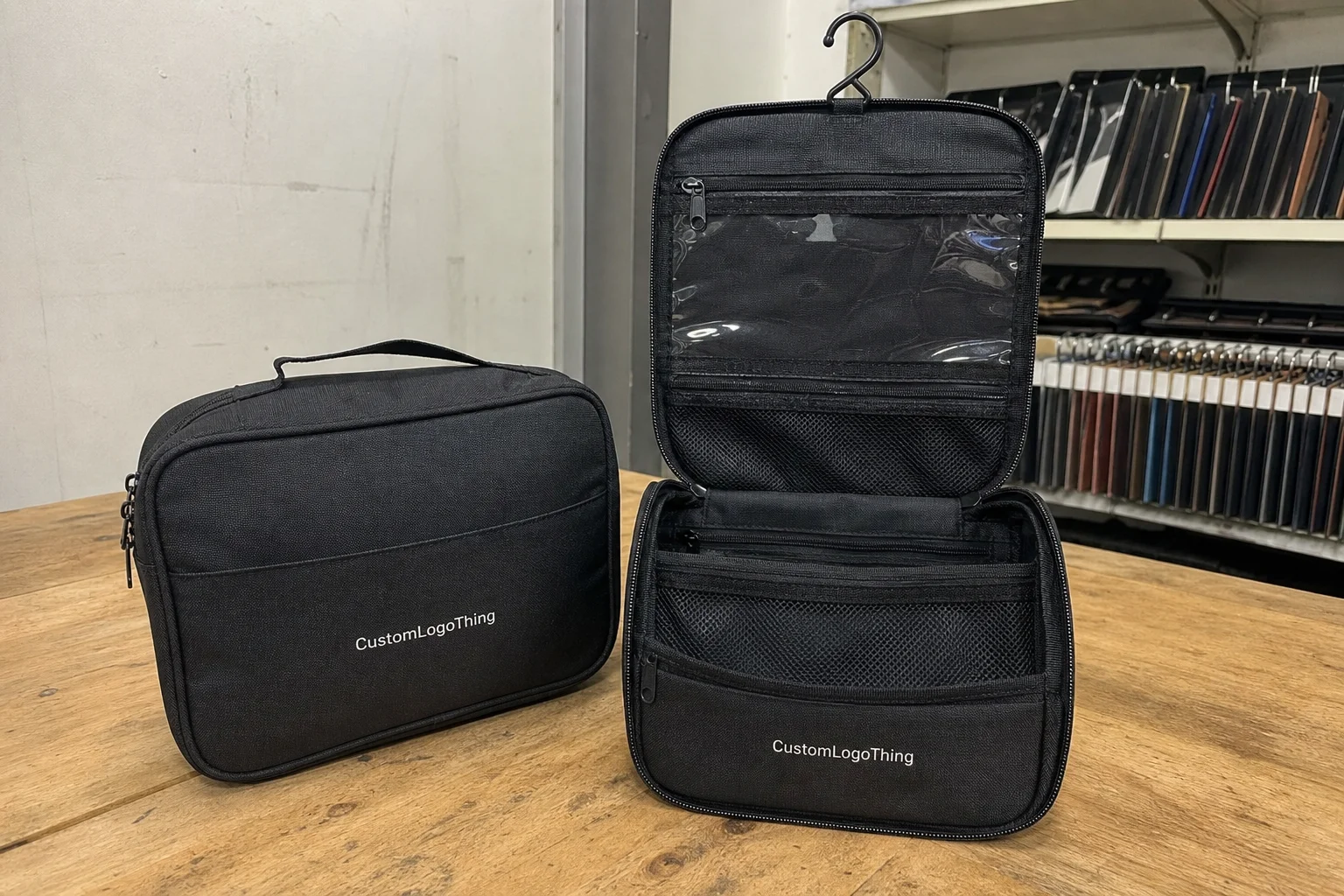
The first decision is usually interior layout, not artwork. A good exterior print cannot rescue a bad pocket plan. If the bag is intended for travel-size bottles, razors, skincare, or grooming tools, those dimensions should shape the pattern from the beginning. Otherwise the product ends up looking generous in mockup and cramped in production.
Most buyers end up choosing among four core variables: size, gusset depth, pocket count, and hanger style. A compact version might sit around 9 x 7 x 3 in, while a fuller retail model may need more than 11 in of height and a deeper base to handle full-size bottles without tipping. Those changes affect sewing time, material consumption, and the amount of reinforcement needed at stress points.
Material choice changes the feel as much as the cost:
- Soft PVC or vinyl gives clear visibility and wipes clean easily. It is practical, but heavy gauges can feel stiff and lower-quality if the seams are not clean.
- EVA tends to hold shape better and can look more refined than soft PVC, though it is not always the cheapest route.
- Coated polyester, often 210D or 300D with PU or PVC backing, brings more structure and is usually easier to sew into a retail-style accessory.
- Hybrid builds combine clear panels with textile sections so the bag keeps visibility without looking purely utilitarian.
The use case matters as much as the material. Promotional kits want cost control and quick branding. Hospitality buyers often care more about wipeability and consistent packing. Retail programs usually need better visual structure and stronger shelf presence. A custom hanging toiletry bag can serve all three, but not with the same bill of materials.
If the bag is part of a larger branded kit, the same brief should cover the carton, insert, and pack-out method. That avoids the common problem where the bag is approved first and then the outer package forces a late redesign. For broader packaging context, packaging.org is a useful reference point when a soft good needs to fit into a bigger merchandising system.
How the hanging format works in real travel use
The hanging mechanism is not a minor add-on. It changes how the whole product behaves. A bag that opens at eye level on a hook or door is far more usable than one that must be emptied onto a sink. That is the reason travelers keep returning to this format: visibility beats rummaging.
Weight balance is where many designs fail. Put too much mass in the lower pocket, or make the top section too light, and the bag twists when hung. Once that happens, zippers bind, seams work harder, and the user notices immediately. A clean sample should hang square without needing to be adjusted.
Typical internal layouts include:
- Clear pockets for liquids and fast identification.
- Mesh pockets for smaller items that benefit from visibility and airflow.
- A larger lower compartment for shampoo, deodorant, or shaving gear.
- Elastic loops for toothbrushes, razors, and narrow bottles.
Closures deserve the same attention. Zippers are still the most reliable choice because they are easy to source and easy to spec. Hook-and-loop closes quickly but collects lint and can feel noisy. Snaps are tidy but less forgiving if the bag is overpacked. For most builds, a nylon coil zipper with a solid puller is the best balance of cost and durability.
Visibility is the practical feature that gets used every day. People do not want to unpack a busy hotel kit just to find toothpaste. Clear panels help, but pocket spacing matters just as much. A well-planned layout reduces friction even when the decoration is minimal.
If the user has to fight the bag every morning, the decoration did not save the design.
Materials, closures, and print-friendly details
This is where the project moves from concept to production. Clear film makes contents visible. Frosted film softens the look. Coated textiles add structure and usually print Better for Retail branding. Hybrid constructions split the difference, which is often the right answer when buyers want both utility and a cleaner shelf presence.
Thickness and gauge matter more than they sound. A thin clear panel may be cheaper, but it can collapse under load or distort when stitched. Heavier film holds shape better and reduces stress near the top seam and hanger. On textile builds, denier, coating weight, and binding width all influence how the finished bag feels in the hand.
For clear PVC, a common practical range is roughly 0.2 to 0.4 mm depending on the target look and strength requirement. Go thinner and the piece may feel fragile. Go too heavy and the bag starts to look rigid or cheap, especially if the pattern has too many folds. The right thickness depends on the size of the pockets and how often the bag will be packed and repacked.
Print method should follow the substrate, not the other way around. A one-color screen print often looks cleanest on fabric panels. Heat transfer works well for smaller or multicolor logos. On clear surfaces, a patch, label, or simple logo placement may be more reliable than forcing a decoration method that does not bond cleanly. Fine type needs breathing room; once seam allowances are added, artwork that looked generous in a mockup can become cramped very quickly.
Useful trim details include:
- Zipper type: a #5 nylon coil zipper is common for medium-size bags because it balances smooth operation and strength.
- Zipper pulls: custom or molded pulls add branding without changing the whole construction.
- Thread color: matching thread keeps the bag understated, while contrast thread can make the construction feel more deliberate.
- Reinforcement: bar-tacks and extra stitching at the hanger attachment and zipper ends reduce failure under load.
Quality control should be specified early, not after the sample arrives. The common checks are simple: zipper alignment, seam consistency, leak resistance on clear pockets, logo placement, and hanger strength. If the product will carry liquids, a basic load test is worth asking for. A bag that looks correct but tips over or twists under a full load is not ready for shipment.
Compliance can matter depending on market and channel. PVC-based builds may need phthalate restrictions or material declarations. Retailers may also ask for lab reports or transit validation. For shipping stress, many teams use ISTA methods because they are more realistic than a visual check on a bench.
The same logic that applies to packaging design applies here: the structure has to support the function, the material has to support the structure, and the decoration has to remain readable after handling. That is why a custom hanging toiletry bag benefits from a real sample before bulk approval.
Pricing, MOQ, and what changes the quote
Price is driven by five variables: material, size, pocket count, decoration, and labor complexity. A plain clear PVC build is not in the same cost class as a hybrid piece with binding, multiple zippers, and custom hardware. The quote usually tracks the amount of cutting, sewing, and finishing more than the logo itself.
MOQ depends on the construction. Simple clear builds may start around 300 to 500 units if the size and print are straightforward. More complex sewn or hybrid versions often sit at 1,000 units or higher. Lower minimums usually mean higher unit pricing because setup and cutting are spread across fewer pieces.
For budgeting, these ranges are a useful starting point:
| Build style | Best fit | Typical unit range | What pushes cost up |
|---|---|---|---|
| Clear PVC or EVA | Visibility, wipeability, promotional kits | $0.85 to $1.75 at 3,000 to 5,000 units | Thicker film, custom zipper pulls, heavier print coverage |
| Coated fabric bag | Retail add-ons, softer handfeel, brand-led programs | $1.60 to $3.20 at 3,000 to 5,000 units | More pockets, binding, embroidery, premium zippers |
| Hybrid construction | Balanced structure and visibility | $2.10 to $4.50 at 3,000 to 5,000 units | Mixed materials, reinforcing, custom tooling, complex assembly |
Those figures are directional, not fixed. A busy print layout, unusual pocket geometry, or special packaging can move the number quickly. If the bag ships inside custom printed boxes or a retail carton, include that in the quote request because it changes pack-out labor and carton assumptions. For teams building a larger program, reviewing Custom Packaging Products alongside the bag spec keeps the estimate grounded in the same set of assumptions.
The fastest quote requests include a size target, artwork files, intended use, and a reference photo or sample. That cuts down on guessing. It also separates hard requirements from nice-to-have features that may be better left out of the first version.
Process and lead time from proof to shipment
The production path is predictable if the brief is clean. It usually runs through concept brief, spec confirmation, artwork review, sample or proof approval, production, inspection, and shipment. Delays usually come from missing details rather than from the sewing itself.
Sampling and bulk production are different schedules. A pre-production sample can take 7 to 14 business days, depending on material stock and construction complexity. Bulk production often needs 18 to 30 business days after approval, and that is before transit time. If the bag needs custom hardware, a new zipper pull, or special packaging, expect that to add time.
Proofing is where timelines stretch the most. If artwork is not final, the supplier waits. If the color target is loose, another revision is likely. If pocket sizes or hanger placement are still open, the sample may need to be remade. The cleanest way to keep momentum is to lock dimensions before asking for cosmetic changes.
Good proofing should cover three things:
- Placement: logo size, offset, and orientation.
- Color: Pantone targets or a very clear digital reference.
- Structure: zipper length, pocket depth, hanger attachment, and seam allowance.
A single revision cycle is worth building into the schedule. Small changes, such as widening a pocket by 15 mm or adjusting the hanger position, can ripple through cutting and stitching. That is how a simple approval turns into a second sample and another week on the calendar.
A clean proof is cheaper than a second sample.
If the order is tied to a launch, retail window, or promotion, plan for carton design and transit testing early. The material may be ready on time while the pack-out still needs to survive shipping, stacking, and handling. That part gets overlooked more often than it should.
Common production mistakes that create rework
The most common mistake is choosing the layout before confirming the actual contents. A pocket designed for travel-size bottles will frustrate anyone packing full-size grooming products. A compartment that looks generous on a screen can shrink once seam allowances and zipper placement are added.
Artwork causes the next round of problems. Low-resolution logos, thin type, and vague color references often look acceptable in a mockup and poor on the finished item. If the decoration area is small, the art has to be simplified. That is a production constraint, not a design failure.
Buyers also tend to underestimate the load-bearing parts. The zipper, seam reinforcement, and hanger attachment are the points most likely to fail if the bag is overloaded or hung while open. A weak hook can make an otherwise decent product feel cheap the first time it twists under weight.
Other repeat issues include:
- Too many features, which adds cost and weight without making the bag better to use.
- Vague language such as “standard size,” which slows quoting and invites revision.
- No spec sheet, which forces every stakeholder to interpret the product differently.
- Ignoring outer packaging, even though the carton or insert can change the final presentation and pack-out.
The bigger mistake is treating the project like a print order. It is closer to a small sewn product with branding requirements, tolerance limits, and assembly constraints. That mindset usually leads to cleaner decisions on both the bag and the packaging around it.
Next steps for a cleaner spec and faster approval
Start with a short spec sheet. Keep it practical: target size, pocket count, material preference, hanger style, closure type, decoration method, and target quantity. It does not need to be fancy. It just needs to keep everyone quoting the same item.
Then attach one reference image and one real use case. A weekend travel kit is not the same as a gym carry item, and neither is the same as a hotel amenity pack. Those scenarios change pocket layout, cleanability, and the amount of structure the bag needs to feel useful.
A clean approval process usually looks like this:
- Confirm exact dimensions.
- Lock the pocket layout and hanger type.
- Send artwork in the requested format.
- Review proof placement and color targets.
- Approve the sample or pre-production piece.
Ask for pricing and timing in the same conversation. A lower price with a longer setup window may be fine for one program and wrong for another. Budget and calendar should be evaluated together, not separately.
For broader branded kits, it helps to think about the bag as one part of the package system rather than a standalone object. The same discipline used in retail packaging and package branding will make approval easier and the finished program more consistent.
If you are ordering a custom hanging toiletry bag, the final check should be simple: confirm dimensions, artwork placement, material choice, and delivery window before release. That sounds basic because it is. It is also the step that prevents most avoidable revisions.
What is the best material for a custom hanging toiletry bag?
Choose clear or frosted plastic when visibility, wipeability, and easy cleaning matter most. Choose coated fabric or a hybrid build when the buyer wants a softer look, more structure, or a more premium retail feel.
How do I estimate the cost of a custom hanging toiletry bag?
Start with the biggest cost drivers: material type, size, pocket count, print method, and finish details. Ask for a quote with complete specs, because vague requests usually hide extra labor and change the unit cost later.
What MOQ should I expect for a custom hanging toiletry bag order?
MOQ varies by construction and decoration method, but more complex builds usually require a higher minimum. A larger order often lowers the unit price, while a smaller run may be better for testing demand or a short campaign.
How long does production usually take after approval?
Lead time depends on sample needs, stock availability, and how quickly proofs are approved. Plan for extra time if artwork is not final or if the bag needs custom hardware, special packaging, or a first article sample.
What details should be in the spec for a custom hanging toiletry bag?
Include exact dimensions, pocket layout, hanger style, closure type, material, and decoration area. Add intended use, target quantity, and delivery timing so the factory can quote accurately and reduce revision cycles.