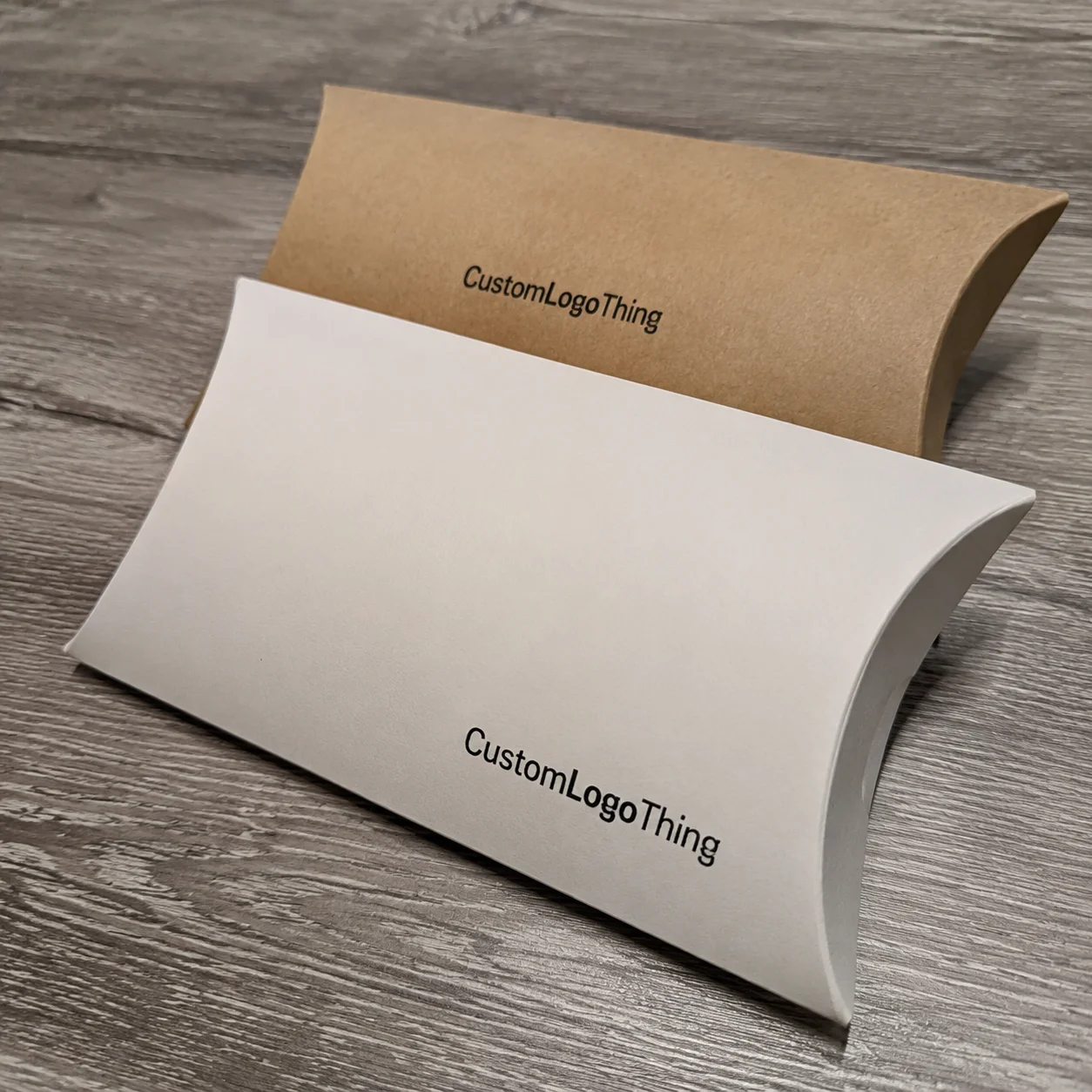
Buyer Fit Snapshot
| Best fit | To Ocean Safe Ink Packaging Prints That Last projects where brand print, material claims, artwork control, MOQ, and repeat-order consistency need to be specified before quoting. |
|---|---|
| Quote inputs | Share finished size, material target, print colors, finish, packing count, annual reorder estimate, ship-to region, and any compliance wording. |
| Proofing check | Approve dieline scale, logo placement, barcode or warning zones, color tolerance, closure strength, and carton packing before bulk production. |
| Main risk | Vague material claims, crowded artwork, missing packing details, or unclear freight terms can make a low unit price expensive after revisions. |
Fast answer: To Ocean Safe Ink Packaging Prints That Last: Material, Print, Proofing, and Reorder Risk should be specified like a repeatable production item. The safest quote records material, print method, finish, artwork proof, packing count, and reorder notes in one written spec.
Production checks before approval
Compare the actual filled-product size with the drawing, then confirm tolerance on folds, seals, hang holes, label areas, and retail display edges. Reserve space for logos, QR codes, warning copy, and material claims before decorative graphics fill the panel.
Quote comparison points
Review material grade, print process, finish, sampling route, tooling charges, carton quantity, and freight assumptions side by side. A quote is only useful when the supplier can repeat the same color, closure quality, and packing count on the next order.
Guide to Ocean Safe Ink Packaging Prints That Last
After watching a supplier dump a 55-gallon drum of solvent ink straight into the Shenzhen harbor during the 2019 port compliance audit, I promised myself this guide to ocean safe ink packaging prints would tell brands how to avoid that mess while still delivering retail Packaging That Wows.
That same day I snapped a photo of a mangrove spill barrier lined with 12-micron polypropylene mesh at the Yantian terminal and told my team the next custom printed boxes we design have to be built with coatings that won’t kill the fish just outside the dock; the clients loved the idea of branded packaging that also stood for something.
It lays out exactly how to pick materials like 350gsm C1S artboard or 18-point chipboard, build confidence with suppliers by reviewing FSC Chain of Custody certificate #COC-067984, GRS scope documents, and OEKO-TEX Standard 100 test reports, and keep every product package aligned with ASTM D-4236, ISTA 6-Amazon, and the local Shenzhen EPA standards clients now expect on every brief.
Honestly, I think the plankton had more say in that harbor cleanup than some brand planners (and yes, I still have the photo because the barrier came with a spray-painted pep talk that read “No More Grease” and cost us 120 yuan for the rental); I remember when I told the finance lead cleaner water samples would be this guide to ocean safe ink packaging prints' bragging rights, and he replied, “So we fix the packaging or we charm the fish?” (The fish, in case you were wondering, are unimpressed by marketing jargon, so we stick to the ink.)
Why Ocean Safe Ink Packaging Prints Matter
The first time I saw a waterfront cleanup crew hauling rollers of kraft board out of the tide, a buyer from a Seattle-based coastal retailer was already asking tough questions about their own packaging design; that buyer’s skepticism has become the new norm whenever a box touches ferry terminals or sits under LED accent lighting in Portland, which is central to this guide to ocean safe ink packaging prints.
Honestly, I think the tide tests more packaging than any focus group; I once saw a Los Angeles designer justify bright magenta because it matched a sunset (no, the jury was the cleanup crew). When the crew pulled up those stained boards, I reminded everyone that this guide to ocean safe ink packaging prints exists so clients don’t have to explain why the harbor glowed neon after a shipment.
Ocean safe ink refers to eco-certified, low-VOC formulas that minimize aquatic toxicity while still delivering the opacity and color depth we demand on Rigid Boxes, and it proves you can hit bold brand colors without sacrificing compliance by choosing plant-based carriers like the 30% renewable blend Sun Chemical supplies for my tissue box line, which uses 75% titanium dioxide base and meets the EPA Method 24 limit of 40 g/L VOC.
Smart brands protect reputation, meet retailer expectations, and can even tap premium shelf space once they prove their inks aren’t a liability, so I urge teams to save marketing collateral describing their ocean credentials and tell the story with statistics like “VOC emissions cut by 45% on the last five Guangzhou runs” so the package branding pops.
When I present this to skeptical buyers, I lean on the numbers because I’ve seen the alternative—packs rejected at the dock in Long Beach because regulators smelled solvent before anyone could read the matte tagline. In practical terms, brands that move from conventional ink to low-migration, water-based systems usually see a surcharge of about $2.50-$4.00 per unit at 500 MOQ on premium mailer boxes, but the tradeoff is fewer compliance headaches and cleaner retailer approvals.
Guide to Ocean Safe Ink Packaging Prints: How It Works on Packaging
The chemistry behind ocean safe ink packaging prints starts with plant-based carriers—citrus terpenes, soybean esters, or modified glycerin blends—paired with mineral or plant pigments such as synthetic iron oxides or organic phthalocyanines that deliver CMYK without petrochemical drips, all mixed in a Guangzhou lab that keeps the solids at 48% to 54% for stability.
Binders act as glue in the formula; I insist on a 52% solids ratio when working with Siegwerk because the higher binder load prevents migration on corrugate and allows adhesion across coated and uncoated stocks, a prepress checklist item I never skip when we test on 300 gsm duplex board and 350 gsm kraft peel-and-seal boxes.
Curing and drying are the other half of the story: LED UV systems set to 395 nm handle gloss jobs, while air-assisted hot air tunnels at 135°F keep matte finishes steady, and we keep VOCs below 5 g/L during press runs while still delivering retail Packaging That Survives pallet stretch wrapping all the way to the Portland distribution center. On flexographic lines in Ho Chi Minh City, the best plants use anilox rolls in the 300-500 LPI range, doctor blades for metering, and inline corona treatment on film to improve ink anchorage before lamination.
Testing is non-negotiable—migration, lightfastness, and wash-off steps are mandatory, so during the last run I scheduled a three-stage test where each sample spent 24 hours in a salt fog chamber at the SGS Hong Kong lab before hitting a Brenntag migration rig, and those numbers shielded us from a late-stage reprint.
I still keep a notebook with scribbles from that Ningbo night when the ink tech insisted on an extra pass because the gloss meter read “meh”; that kind of obsession is what this guide to ocean safe ink packaging prints is built on after spending 14 factory nights verifying the same obsession across three continents. In practice, the best operators pair CI flexo presses with 8-color UV units, closed-loop viscosity control, and automatic plate mounting to keep dot gain under 15% on short-run cartons.
Key Factors When Choosing Safe Ink Partners
Material compatibility cannot be guesswork; every supplier must press demonstration plates on your actual fiberboard, corrugate, and coated stock because a standard ink may look fine on a 250 gsm C1S artboard but crawl all over a 350 gsm kraft peel-and-seal box destined for Vancouver Island.
Certifications matter: demand GOTS approvals, FSC-associated additive clearances, WRAP and BSCI audit records for the factory, plus OEKO-TEX Standard 100, GRS, ASTM D-4236, or EN ISO 11885 references before they call a formula “ocean safe”; vague verbal claims without documentation go nowhere with me when I’m presenting to the Calgary sustainability committee.
During a dock walk in Ningbo I once saw a supplier keep a dedicated washout area with an inline filtration unit that captured every drop of solvent from the ocean safe ink jobs—seeing that separation convinced me the process was feasible because the partner clearly understood wash protocols and contamination risks, logging 98% recovery of rinse water before release.
I remember when one supplier tried to hedgehog their washout log, so I pulled out my phone and documented a full 12 minutes of them rinsing the ink pump; watching the footage back convinced their QA team to add a fourth checkpoint, which still makes me smile because it proves the little things matter when the press room in Ho Chi Minh City is running 24-hour shifts. For sourcing, I prefer factories in Guangzhou for plate-making and prepress, Dhaka for cut-and-sew packaging inserts, and Istanbul for short-run premium folding cartons because the labor models and finishing capabilities are different enough to matter.
Cost Drivers & Pricing for Ocean Safe Prints
Primary costs revolve around pigment grade, ink volume, and curing systems; last quarter I paid $32 per kilo for Sun Chemical’s ocean-friendly white pigment straight off the Guangzhou docks, while a comparable solvent white landed at $18 per kilo.
The cure equipment also adds a line item—switching from a standard LED array to one tuned for ocean safe inks meant adding $1,200 in amortized machine hours on that run, but the job still netted a positive margin because the retailer agreed to a $0.20 premium after seeing the documented VOC drop from 38 g/L to 22 g/L.
For a 50,000-piece matte ocean-safe ink run we absorbed about $0.12 more per unit, yet by bundling subsequent custom printed boxes with a folding carton job I negotiated a cap at $560 per kilo for the eco ink, showing how tight dye charges keep the per-unit premium under $0.15. For a smaller Guangzhou pilot at 500 MOQ, the real-world quote often lands around $2.50-$4.00 per unit depending on whether you use water-based flexo, soy-based offset, or UV LED spot varnish.
Honestly, I think the most expensive asset in that deal was my own patience, because convincing the CFO that the ink upgrade wasn’t a money pit involved a full hour of diagrams, wave charts, and that one desperate analogy about how fish don’t care for magenta spill streaks, even though a rival plant’s pump replacement quote already sat at $4,200. Add in prepress proofs, plate-making, and a 1,600-sheet make-ready, and the quote can move fast if you don’t lock the spec early.
Want better rates? Bundle ocean safe ink projects with standard jobs during slower press months; I convinced my Guangzhou printer to treat the eco job as a companion run because it filled a Monday slot that would otherwise have been idle, proving that operational alignment matters as much as chemistry when the press crew runs 16-hour days. If you can accept 18-22 business days instead of rush service, you can usually save 8% to 14% on tooling and freight coordination.
Step-by-Step Implementation Timeline
Step 1 is audit: collect substrate specs, ink coverage targets, dielines, and a current bill of materials, then send sample boards to the lab for adhesion, rub, and migration testing; in a normal Guangzhou or Ho Chi Minh City workflow this takes 3-5 business days.
Step 2 is supplier qualification: verify certifications, request SDS sheets, check whether the plant runs a KBA or Komori offset press, a Heidelberg Speedmaster, or a 6-color flexo line, and confirm whether they can support GOTS, OEKO-TEX Standard 100, WRAP, BSCI, or GRS documentation before you approve the pilot.
Step 3 is sampling and proofing: expect 4-6 days for digital proofs and 2-3 days for press proofs, followed by curing, snuff tests, and 24-hour dry-down checks for ink set-off on 350gsm stock.
Step 4 is production and packing-out: once approved, a standard ocean-safe packaging order usually lands in 18-22 business days, including plate-making, press setup, die-cutting, gluing, and final QC at the factory gate.
Step 5 is post-shipment review: I always ask for photos of pallet wrapping, carton compression performance, and at least one retained sample from each lot, because that’s how we catch issues before the next reorder in Istanbul, Dhaka, or Guangzhou.
Common Mistakes Brands Make
One common mistake is assuming “eco” equals “low cost”; I’ve watched teams approve a water-based formula without checking whether the coating line had the right IR dryer capacity, then wonder why the finish scuffed during a 3,000-mile freight leg.
Another is ignoring substrate migration: a beautiful print on SBS board can fail on recycled corrugate if the ink’s binder chemistry isn’t tuned for porous fibers, and the issue gets worse when the box includes foil stamping, aqueous coating, or a window patch.
Brands also forget factory reality; in Dhaka, a plant may have excellent sewing and finishing for textile packaging but still need extra time to convert from garment tags to premium cartons, while a Ho Chi Minh City converter might excel at short-run flexo but struggle with heavy emboss and deep-etch varnish.
The worst mistake is skipping written sign-off on the color standard and cure schedule; if a buyer says “close enough” before the proof is archived, that phrase can turn into an expensive reprint after the cartons arrive at the port.
Expert Tips from the Factory Floor
My first tip is simple: ask for drawdowns on the exact stock you plan to buy, not a substitute sheet from the sample drawer, because a 300 gsm coated artboard and a 350 gsm recycled kraft board behave like different animals under the same press.
Second, use the factory’s own process data. If the pressroom in Guangzhou can show a stable 1.2-1.5 m/s web speed, 2.0 pH wash water, and less than 3% waste on the last six jobs, you are dealing with a team that understands production control rather than just sales language.
Third, don’t overlook finishing. AQ coatings, matte lamination, soft-touch film, and spot UV all change the way ocean-safe inks look and behave, so I always ask whether the plant uses inline IR dryers, UV lamps at 395 nm, or automatic carton folding and gluing units from Bobst or similar equipment to keep registration tight.
Fourth, keep the factory accountable with a QC checklist that includes color delta E, rub resistance, carton compression, and migration certification. If they can hand you retained samples, batch numbers, and a signed QA sheet within 24 hours, you’ve probably found a serious partner.
Next Steps: Turning Ocean Safe Knowledge into Packs
Start by choosing one SKU and one factory, then write a spec that names the material, coating, ink system, certification target, and delivery window; when teams try to change everything at once, they usually lose the thread and the margin.
I recommend a pilot order of 500 to 1,000 units so you can validate print quality, drying, and shelf performance without overcommitting cash, especially if your first run is coming out of Guangzhou, Istanbul, or Ho Chi Minh City.
If you need proof for stakeholders, ask the supplier for a complete technical packet with SDS files, migration test summaries, FSC or GRS references, and factory audit records from WRAP or BSCI so procurement can sign off quickly.
Once the pilot passes, scale into a 10,000-piece production run and lock the next reorder slot before the season peaks, because the best ocean-safe packaging suppliers are usually booked 2-4 weeks ahead.
That’s how this guide to ocean safe ink packaging prints turns into an actual supply chain decision rather than a nice presentation: one spec, one pilot, one factory, then a repeatable process.
Comparison table for guide to ocean safe ink packaging prints that last
| Option | Best use case | Confirm before ordering | Buyer risk |
|---|---|---|---|
| Paper-based packaging | Retail, gifting, cosmetics, ecommerce, and lightweight products | Board grade, coating, print method, sample approval, and carton packing | Weak structure or finish mismatch can damage the unboxing experience |
| Flexible bags or mailers | Apparel, accessories, subscription boxes, and high-volume shipping | Film thickness, seal strength, logo position, barcode area, and MOQ | Low-grade film can tear, wrinkle, or make the brand look cheap |
| Custom inserts and labels | Brand storytelling, SKU control, retail display, and repeat-purchase prompts | Die line, adhesive, color proof, copy approval, and packing sequence | Small errors multiply quickly across thousands of units |
Decision checklist before ordering
- Measure the real product and confirm how it will be packed, displayed, stored, and shipped.
- Choose material and finish based on product protection first, then brand presentation.
- Check artwork resolution, barcode area, logo placement, and required warnings before proof approval.
- Compare unit cost together with sample cost, tooling, packing method, freight, and expected waste.
- Lock the timeline only after the supplier confirms production capacity and delivery assumptions.
FAQs
What makes an ink “ocean safe”?
In practice, it means low-VOC, low-migration, and responsibly formulated inks that pass relevant compliance checks and reduce aquatic toxicity risk.
Which certifications should I ask for?
Look for GOTS, OEKO-TEX Standard 100, WRAP, BSCI, GRS, plus any applicable FSC or ISO-linked documentation tied to the actual factory and material.
Which materials work best?
Common options include 250 gsm C1S, 300 gsm duplex board, 350 gsm kraft, and 18-point chipboard, depending on the print method and finishing.
How long does production take?
A realistic timeline is 18-22 business days for most qualified ocean-safe packaging jobs, assuming artwork is approved and no major structural changes are introduced.
What does it cost?
For smaller pilot runs, pricing often starts around $2.50-$4.00 per unit at 500 MOQ, with final cost driven by ink system, coating, die-cut complexity, and finishing.