Buyer Fit Snapshot
| Best fit | Order Compostable Poly Mailers Online projects where brand print, material claims, artwork control, MOQ, and repeat-order consistency need to be specified before quoting. |
|---|---|
| Quote inputs | Share finished size, material target, print colors, finish, packing count, annual reorder estimate, ship-to region, and any compliance wording. |
| Proofing check | Approve dieline scale, logo placement, barcode or warning zones, color tolerance, closure strength, and carton packing before bulk production. |
| Main risk | Vague material claims, crowded artwork, missing packing details, or unclear freight terms can make a low unit price expensive after revisions. |
Fast answer: Order Compostable Poly Mailers Online: Pricing, Specs, MOQ should be specified like a repeatable production item. The safest quote records material, print method, finish, artwork proof, packing count, and reorder notes in one written spec.
Production checks before approval
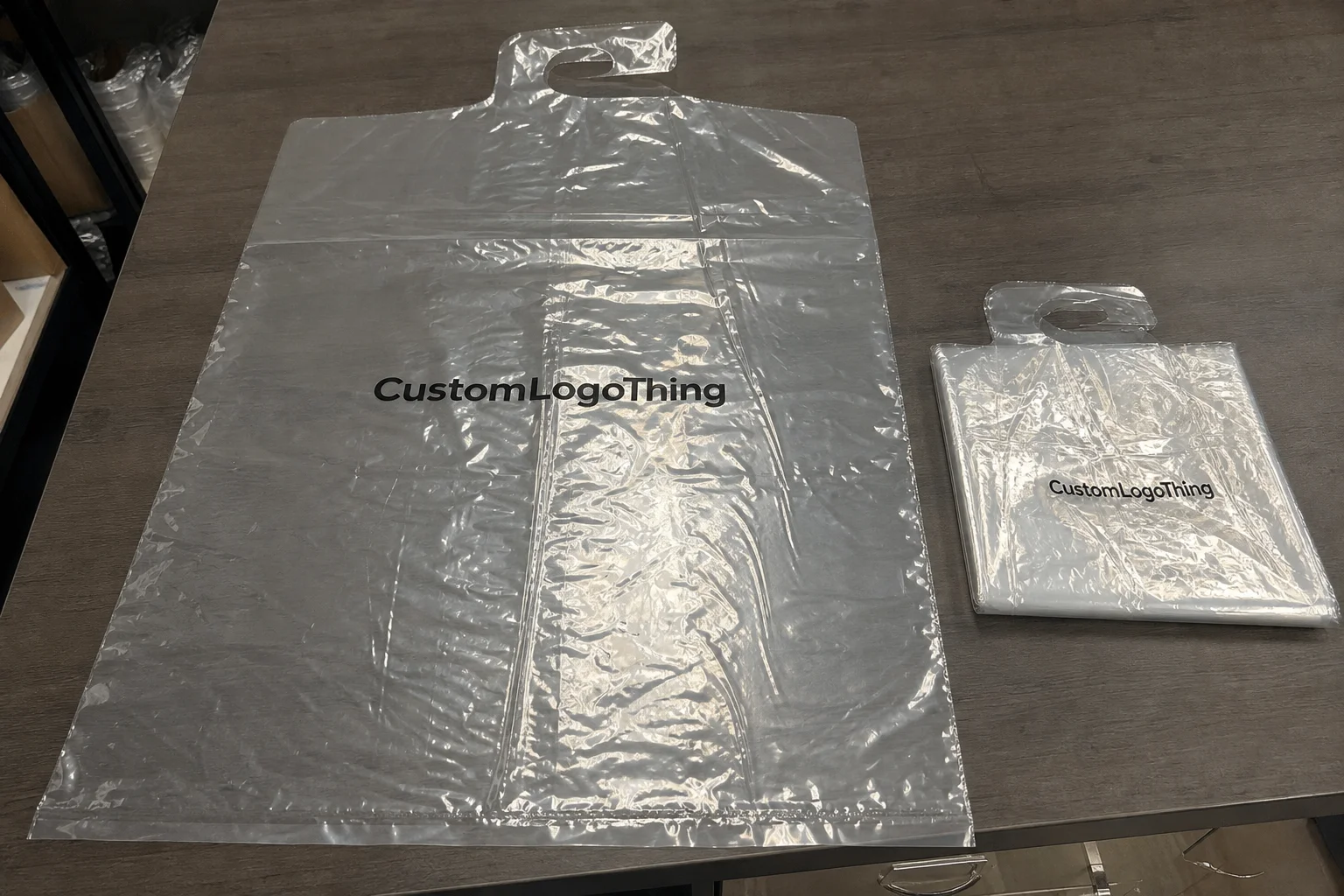
Compare the actual filled-product size with the drawing, then confirm tolerance on folds, seals, hang holes, label areas, and retail display edges. Reserve space for logos, QR codes, warning copy, and material claims before decorative graphics fill the panel.
Quote comparison points
Review material grade, print process, finish, sampling route, tooling charges, carton quantity, and freight assumptions side by side. A quote is only useful when the supplier can repeat the same color, closure quality, and packing count on the next order.
If you want to Order Compostable Poly mailers online, start with proof, not packaging poetry. I’ve stood beside packing lines in Los Angeles and Dallas where a mailer looked excellent in a spec sheet and then folded like damp paper under real handling. Too soft. Too thin. Wrong certification. Buyers usually discover the problem after the first shipment, which is exactly the wrong time. Compare certification language, seal strength, thickness, and fit before you commit. The green claim is the easy part, which is also the part everyone wants to lead with.
Brands switch for reasons that have little to do with trend and everything to do with pressure. Customers ask harder questions about waste. Retail partners tighten packaging rules. Internal teams get asked to show measurable progress on eco-friendly packaging and carbon footprint goals. The packaging decision turns into a business decision. I’ve watched a brand lose repeat buyers because the mailer felt flimsy and the sustainability claim sounded vague. I’ve also watched a clean, well-sized compostable mailer do the opposite: fewer complaints, better unboxing, and a sharper brand impression for less than a penny difference per unit at scale. At 25,000 pieces, that kind of change can matter more than a new logo.
One mistake keeps showing up. Compostable, recyclable, and recycled-content do not mean the same thing. A recyclable film may still miss the mark in curbside systems because film recovery is uneven, especially in regions like the U.S. Midwest and parts of the U.K. Recycled-content reduces virgin resin use, but it is not compostable. Compostable packaging follows a different material structure and disposal pathway, often tied to industrial composting standards. If you plan to order Compostable Poly Mailers online, make sure the product matches the claim you actually need, not the one that sounds best on a sales page. The number of times I’ve had to untangle that confusion is honestly a little exhausting.
Order Compostable Poly Mailers Online: Why Brands Switch
Brands do not usually change packaging because a brochure says “sustainable” enough times. They change because the old option creates friction. Customer objections pile up. Retail compliance gets stricter. Teams want a cleaner story for green packaging without wandering into greenwashing territory. The fastest way to sort the field is to order Compostable Poly Mailers online and compare the actual documentation, not the marketing language.
I visited a fulfillment center in Southern California where the operations manager had four sample bags lined up on a shelf. Two were labeled compostable. Only one came with certification paperwork that matched the disposal pathway the brand needed. The other two relied on broad claims and thin documentation. He looked at the stack and said, “I can’t put our logo on something I can’t defend.” That line has stayed with me. If you order compostable poly mailers online, you are buying a packaging claim that must survive procurement review, customer service questions, and sometimes legal scrutiny. That is not dramatic; that is Tuesday in Torrance or Toronto.
Presentation matters too. Apparel, beauty, and subscription brands often use mailers as the first physical touchpoint after checkout. A matte compostable mailer with a proper fit can make the package feel intentional. An oversized bag sends the opposite message. It reads as excess, even if the material is technically compostable. The real decision lives at the intersection of material chemistry, shipping efficiency, and brand perception. I remember one buyer telling me, half joking and half annoyed, “Our bags need to look like we meant to send them, not like we found them in a back room.” Fair enough, especially when the order ships from a 60,000-square-foot facility in New Jersey.
Online ordering helps buyers compare minimums, print options, lead times, and certification files without sitting through vague sales calls. Ask the same five questions of three suppliers and the differences become obvious fast. One gives you a hand-wave about “eco performance.” Another sends ASTM references, sample timing, and a real freight estimate. The second supplier usually earns the order. If you want to order compostable poly mailers online, clarity is the filter.
“We switched only after we saw the test paperwork and checked the seal ourselves. The marketing pitch meant nothing until the sample passed our pack-out trial.” — Apparel operations manager, Midwest client meeting
Good purchasing starts with measurable criteria: material certification, seal strength, print quality, and shipping fit. Anything less is guesswork dressed up as procurement. In practice, that means a buyer in Chicago should be able to compare a sample from Vietnam, a stock unit from Texas, and a custom run out of California on the same scorecard.
Product Details: What You Get When You Order Compostable Poly Mailers Online
When you order compostable poly mailers online, the product should be more than a bag with a green claim attached. The build usually includes a compostable film, a peel-and-seal adhesive strip, and enough opacity to shield contents during transit. Better versions balance flexibility with tear resistance, so the mailer handles folds, compression, conveyor movement, and the general abuse of last-mile shipping without becoming brittle. A strong spec sheet will name the base film, adhesive type, and the certification standard, rather than hiding behind marketing language.
These mailers work best for lightweight, non-fragile products: folded T-shirts, leggings, scarves, socks, soft accessories, subscription inserts, and similar goods. I’ve seen a subscription brand shift from rigid cartons to mailers and cut packing labor by 18% because the pack-out was faster. Not every product belongs in a mailer, though. Hard goods, sharp edges, and items that need crush protection usually need a different format from our Custom Packaging Products line or a hybrid shipper. I’ve also seen a brand try to mail a product that really wanted to be in a box, and the box won that argument by a mile in under ten seconds.
Branding options help shape the customer’s first impression. One-color print, limited outside print, sizing marks, return messaging, and short disposal instructions all reinforce the eco-friendly packaging story. Some brands need only a black logo on a kraft-look or white surface. Others want a fuller field with size guidance and disposal text. The strongest executions stay factual. A mailer that says “Compostable, industrial facility only” and carries your logo can feel honest. A mailer that tries to say everything feels like a pitch. Customers can smell that from the unboxing table.
Performance expectations should stay grounded. Compostable film is not the same as polyethylene film. It still needs to survive carrier handling, but storage conditions matter more than many buyers expect. Heat, humidity, and long warehouse dwell times can affect the material. Before you order compostable poly mailers online, ask whether the mailers are industrially compostable only and whether the cartons have storage limits. I once watched a receiving area in Phoenix turn into an accidental sauna at 104°F, and the packaging behaved exactly the way you’d expect: badly.
Here’s what I check before recommending a purchase:
- Certification: Ask for the specific standard, not a vague “compostable” claim.
- Adhesive strength: The peel-and-seal strip should close securely on first press.
- Opacity: Contents should not be visible through the film in normal lighting.
- Thickness and feel: Too thin and it fails; too thick and it may add unnecessary material.
- Shelf life: Confirm expected storage window and conditions.
- Print durability: Ink should not smear during packing or transit.
One factory-floor moment still stands out. In an Eastern China converting plant near Ningbo, operators tested 1,000 mailers by hand after a film formulation change. The issue had nothing to do with the compostable claim. Seal consistency slipped on a humid day, and the batch was rejected before it left the floor. That is what supply discipline looks like. If you want to order compostable poly mailers online, ask how seal integrity is tested and what happens when a film lot drifts out of tolerance. If the answer is vague, that is your cue to keep asking—or walk away.
For buyers who want a stronger technical trail, request documentation tied to recognized bodies such as ASTM, ISTA, and FSC where relevant. You can read more about packaging and shipping standards through the ISTA site and industry education at packaging.org. Those references will not choose the bag for you, but they make it easier to ask better questions.
Specifications to Compare Before You Order Compostable Poly Mailers Online
If you want to order compostable poly mailers online and avoid expensive mistakes, compare the specs line by line. Dimensions, film thickness, seal type, print area, color options, and load capacity all affect performance and cost. A bag that is too wide can raise dimensional weight, consume more material, and make the package look sloppy on arrival. Small error, large bill. I’ve seen that tiny misstep turn into a whole month of avoidable grumbling from operations in Atlanta and Amsterdam.
I’ve seen brands order a 14 x 19 inch mailer for a folded garment that would have fit cleanly in 10 x 13 inches. The package arrived with too much air inside, extra resin in the bag, and an outsized look that made the brand seem less disciplined. Customers notice that. So do warehouse teams. If the product is a folded tee with a return card, the mailer should match the folded shape plus a little room for insertion, not a lot of unused space. A giant empty pocket inside a mailer is basically packaging’s version of a shrug.
Thickness deserves the same attention. A film that is too light can scuff or split during line movement. A film that is too heavy adds cost and can alter the disposal profile. There is no universal perfect gauge. The right number depends on the item, the carrier path, and the handling it will face. Procurement has to weigh transit protection against raw material use and price. I know that sounds obvious, but procurement gets blamed for a lot of things that really started with a spec sheet someone rushed through at 4:58 p.m.
Key spec checklist for procurement teams
- Exact finished size in inches or millimeters.
- Film thickness or material weight, such as 60 microns, 70 microns, or 80 microns.
- Closure style: peel-and-seal, tamper-evident, or custom adhesive.
- Print coverage: one side, two sides, or full outside print.
- Color and finish: matte, natural, white, or tinted options.
- Target load: folded apparel, soft goods, or other lightweight items.
- Storage guidance: temperature, humidity, and shelf life.
- Artwork format: AI, PDF, or vector source files.
Certification language needs extra scrutiny. A supplier saying “compostable” is not enough. Ask which standard applies, whether the mailer is industrially compostable only, and whether the claim covers the bag, adhesive, and printed ink together. I’ve seen buyers assume the whole structure was certified when only the film was covered. That is a dangerous assumption if you are trying to avoid greenwashing accusations. Honestly, the paperwork matters more than the slogan, especially if your brand ships into California, Ontario, or the EU.
Think about the shipping chain too. If your fulfillment center uses automated labeling, some finishes can cause adhesion problems. If your shipments move through damp regions, adhesive performance matters more. If your product category has a high return rate, a stronger seal and a clear reclose message can pay off quickly. These are not minor details. They shape cost, labor, and customer satisfaction.
| Option | Typical Use | Strengths | Tradeoffs |
|---|---|---|---|
| Stock compostable mailer | Standard apparel, low-complexity orders | Lower MOQ, faster turnaround, lower setup cost | Limited branding, fewer size choices |
| Custom printed compostable mailer | Retail brands, subscription boxes, DTC | Brand visibility, controlled messaging, better presentation | Higher setup cost, longer proof cycle |
| Custom size compostable mailer | Products with exact fold dimensions | Better fit, less waste, lower dimensional weight risk | Higher MOQ, more planning required |
One more practical point: if you need to order compostable poly mailers online for several product lines, keep the SKU count low wherever possible. Every added size complicates warehouse slotting, purchasing, and reordering. In a client meeting with a seven-brand apparel portfolio in Brooklyn, we reduced the mailer lineup from six sizes to three. The buying team said the real savings were not only in unit price. They were in fewer mistakes and less confusion at fulfillment. That kind of operational clarity is worth real money.
If you want to strengthen green packaging claims without weakening presentation, pay attention to how the supplier explains the circular economy. Vague language is a warning sign. A supplier who cannot explain the disposal pathway is not ready for a serious buyer. The spec sheet should do more work than the sales page when you order compostable poly mailers online.
Pricing & MOQ: What It Costs to Order Compostable Poly Mailers Online
Pricing is where a lot of buyers get surprised. The cost to order compostable poly mailers online depends on material grade, bag size, print coverage, quantity, and any setup or tooling fees. A plain stock mailer at a higher volume may land far below a custom printed version in a smaller run. That sounds obvious. The spread is wider than most teams expect, and it has a nasty habit of showing up after everyone has already mentally approved the order.
In practical terms, I’ve seen stock compostable mailers land around $0.18 to $0.28 per unit at 5,000 pieces, depending on size and spec. Custom printed versions often start higher, sometimes around $0.24 to $0.45 per unit at the same volume once you add color, print coverage, and proofing. Move up to 20,000 or 50,000 pieces and the per-unit cost can drop sharply, with some programs reaching about $0.15 per unit for a simplified stock build or dropping below $0.20 at 25,000 pieces. Those figures move with resin pricing, freight, and print method, so treat them as directional rather than fixed.
MOQ shapes the buying decision as much as unit price does. Standard sizes usually carry lower minimums than fully custom dimensions or heavy print coverage. A brand testing demand may do better with a stock size, limited print, and a smaller first run. A mature brand with predictable volume can take advantage of a higher MOQ and lower unit cost. That is the real tradeoff: cash flow versus unit economics. A buyer in Austin can live with a 3,000-piece trial; a national rollout in Chicago may need 30,000 pieces to make the math work.
Hidden costs show up fast if you miss them. Freight can matter as much as product cost when the supplier is overseas or carton counts are high. Rush production adds premiums. Artwork changes after approval can trigger extra proof charges or delay the run. I’ve watched a buyer save $600 on unit price and spend $1,200 more on air freight just to hit a product launch. That is why I focus on landing cost, not brochure price. A low quote that gets eaten alive by shipping is just expensive with better manners.
Simple value framework
- Estimate unit cost at three quantities: low, target, and high.
- Add freight and any import or transfer charges.
- Include proofing or setup if the design is custom.
- Check waste risk: a torn mailer costs more than it appears.
- Compare customer impact: packaging that looks cheap can weaken repeat purchase behavior.
The cheapest mailer is not always the lowest cost. If it tears, replacement and support tickets eat the savings. If it is oversized, dimensional weight takes its cut. If the print looks weak, the brand looks less credible. I’d rather see a brand spend an extra two to four cents on a better fit and stronger seal than save pennies and create a service problem. That tiny difference can save a whole batch of customer complaints and a few strained emails nobody wants to send.
Smaller brands still have room to work. Start with a standard size. Keep the print to a logo or short message. Use one SKU if you can. If you want to order compostable poly mailers online without blowing up the budget, that is the cleanest path. It keeps the buying decision tied to actual usage instead of imagined volume.
During a supplier negotiation in Shenzhen, I watched a buyer push hard on price and give up the wrong thing: they accepted a lower cost but lost the adhesion spec they had asked for. The supplier was not being difficult. The buyer simply had not locked the spec in writing. The next order required a reprint. If you order compostable poly mailers online, put the spec first and the price second. I still cringe a little thinking about that one.
Process & Timeline: How to Place an Order and What Happens Next
The order flow is straightforward if the supplier is organized. Quote request first. Spec confirmation next. Artwork submission and proofing after that. Production, packing, and shipment follow once the proof is approved. If you want to order compostable poly mailers online with less back-and-forth, have your size, quantity, logo file, ship-to address, and target in-hand date ready before you ask for pricing. Otherwise, the quote becomes a game of email ping-pong nobody enjoys.
Timing depends on whether you are buying stock or Custom Printed Mailers. Stock options move faster because the material and dimensions already exist. Custom printed mailers need a proof cycle, and that adds time. In most cases, proof approval becomes the schedule’s bottleneck. If a brand takes three days to reply to a proof, the order sits. If it takes two hours, the project moves. That basic response gap often decides whether a launch stays on track. I’ve seen launches slip because the person with approval rights was, apparently, on a plane from Seattle to Miami with no Wi-Fi and a suspiciously long lunch.
Production queues matter too. Seasonal demand can stretch lead times. Color matching and converting capacity can stretch them further. Certification review may add time if the buyer wants documentation checked line by line. I usually tell clients to treat the posted lead time as a baseline, not a promise. Build in buffer if the launch is fixed. For Custom Printed Mailers, typical production is often 12-15 business days from proof approval, plus 3-7 business days for transit depending on origin and destination.
What speeds up turnaround
- Final dimensions and target product weight.
- Print-ready artwork in vector format.
- Quantity confirmed before quotation.
- Ship-to address and receiving hours.
- Approval window set internally before the proof arrives.
Receiving matters more than many brands realize. If cartons arrive on pallets, warehouse space has to be available and the floor needs to be dry. Compostable materials should be stored in clean warehouse conditions away from excessive heat and humidity. Leave cartons near dock doors or under roof leaks, and risk goes up. I’ve seen a fresh batch warp because a receiving team left it beside an open bay in August heat in Atlanta. The supplier was not at fault. Storage discipline was. That is one of those moments where everybody stares at the pallet like it betrayed them personally.
Inspection is the final checkpoint. Open the first cartons, verify count, examine print, check seal adhesion, and test one or two mailers with your actual product. If there is a problem, document it immediately. That is much easier to resolve in the first hour than after the shipment enters the fulfillment queue. If you order compostable poly mailers online, treat arrival as a quality-control event, not a delivery confirmation.
Why Choose Us When You Order Compostable Poly Mailers Online
At Custom Logo Things, the strongest reason to buy from us is straightforward: we focus on documentation, not decoration. When brands order compostable poly mailers online, they need transparent specs, responsive quoting, and proof that holds up in procurement review. Too many deals stall because the supplier cannot explain the material, print method, or certification trail in plain English.
We work like a manufacturing partner, not a vague marketplace listing. That means clear sizing guidance, file support, and realistic lead-time expectations. If a 10 x 13 inch mailer fits better than a 14 x 19 inch option, I’ll say so. If one-color print keeps the brand cleaner and the cost under control, I’ll say that too. Honest advice saves money. It also keeps teams from buying packaging that looks good in a mockup and fails at pack-out. I’d rather disappoint someone with the truth than impress them with a bad plan.
Quality control improves when the process is manufacturer-led. You are not guessing who touched the order. You know who reviewed the artwork, who checked the material details, and who is responsible for the quote. That visibility matters if you need to order compostable poly mailers online for multiple SKUs or multiple facilities. Less miscommunication means fewer surprises, especially when one facility is in Atlanta and another is in Phoenix.
“The best packaging vendors don’t talk first about sustainability. They talk about specs, tolerances, and shipment realities. That’s how you know they’ve actually run production.” — Packaging buyer, direct-to-consumer brand
If you need broader packaging support, we can help align mailers with your other formats through our Custom Poly Mailers category and our Wholesale Programs for higher-volume purchasing. Buyers who prefer to self-serve often start with our FAQ page, then come back with sharper questions. That saves time on both sides.
Good service in this category means faster answers, fewer revisions, accurate pricing, and fewer landing-cost surprises. The point is not to use trendy language. The point is to make sure your order arrives on spec. If you want to order compostable poly mailers online, you should expect straight answers on certification, minimums, and the tradeoffs between stock and custom runs. Nothing fancy. Just the details that keep a project from wobbling.
One client meeting in the Northeast made that plain. The brand narrowed its vendors to two suppliers. One had prettier language. The other offered a sample, a spec sheet, and a clean freight breakdown. They chose the second supplier and were still reordering six months later. Trust grows from repeatable details, not polished claims. That is what buyers pay for.
What to Do Before You Place the Order
Before you order compostable poly mailers online, lock down four things: size, certification, print intent, and quantity. If those are still fuzzy, the quote will be fuzzy too. Ask for a sample. Verify the compostability documentation. Compare two or three quote scenarios by quantity so you can see where the best price break actually happens. Then check carton counts and warehouse space before final approval. Yes, it feels tedious. Yes, it saves money.
I recommend a short decision sequence:
- Confirm product dimensions with a folded sample.
- Request a physical sample and test seal strength.
- Verify documentation for the exact compostability claim.
- Review artwork for print area and legibility.
- Compare three quantity tiers so you can see real unit-cost movement.
Then ask the operational questions. How many cartons fit on a pallet? What is the shelf life in your warehouse conditions? Can the mailers sit near ambient heat without issue? What happens if the first shipment arrives with a print mismatch? These are not theoretical concerns. They are the small details that decide whether a packaging program feels controlled or chaotic. I’ve sat through enough “small details” postmortems to know they never feel small once the shipment is already on the floor.
The best buyers treat packaging as a purchasing decision, not a branding afterthought. If your goal is to reduce waste, support eco-friendly packaging goals, and protect the customer experience, you need facts. You need to know the carbon footprint implications, the sizing impact, and whether the product is truly fit for your shipping method. That is how you buy well.
If you are ready to order compostable poly mailers online, request specs, samples, and a quote today. Confirm fit, compliance, and total cost before you place the order. That approach is practical, not flashy. It is also the safest way to buy packaging that supports your brand without creating a disposal claim you cannot defend.
FAQ
When I order compostable poly mailers online, are they industrially compostable or home compostable?
Most compostable mailers are industrially compostable, not home compostable. That distinction matters because the disposal environment is different, and the certification should match the pathway the supplier claims. Before you order compostable poly mailers online, ask for the exact certification and the disposal instructions in writing. A supplier should be able to name the standard, such as ASTM D6400 or EN 13432, without hesitation.
What size should I choose when I order compostable poly mailers online for apparel?
Match the mailer to the folded product plus any tissue, insert, or return card. A snug fit usually lowers waste, reduces dimensional weight risk, and looks cleaner at unboxing. I usually suggest testing with a packed sample before you order compostable poly mailers online in volume. For a folded tee, a 10 x 13 inch or 10.5 x 16 inch mailer often performs better than a loose 14 x 19 inch bag.
Can I get printed compostable mailers, or only plain ones?
Printed options are commonly available, including custom logos and short brand messages. Print coverage and color count affect both price and production time. If you want to order compostable poly mailers online with branding, ask what part of the surface can be printed and whether the print affects compostability claims. A single-color logo on one side is usually faster and can keep setup costs lower than a full-wrap design.
What is the typical minimum order quantity for compostable mailers?
MOQ varies by size, print method, and supplier setup requirements. Standard sizes usually offer lower minimums than fully custom dimensions or heavy print coverage. If you need to order compostable poly mailers online at a smaller quantity, ask about stock sizes first. Many buyers start at 1,000 to 3,000 pieces for stock options, while custom programs may begin at 5,000 pieces or more.
How long does it take to receive my order after I buy online?
Timing depends on whether the mailers are stock or custom printed. Proof approval, quantity, and freight method all affect the final delivery window. If your launch date is fixed, build in buffer before you order compostable poly mailers online so you can absorb a proof delay or shipping change. Custom runs often ship in 12-15 business days from proof approval, while stock items can move faster if inventory is already in the U.S.