Order Custom Calibration Stickers That Pass Audits
A pressure gauge can be accurate. The technician can perform the calibration correctly. The record can sit in the quality system, complete and traceable. Then an inspection still slows down because the label on the gauge is smeared, missing, peeling, or too vague to verify quickly.
That is the practical reason custom calibration stickers matter. They give inspectors, operators, maintenance teams, and quality managers a fast visual link between the physical equipment and the record behind it.
Good calibration labels are not decoration. They are small traceability tools, usually printed on paper, polypropylene, polyester, vinyl, or specialty films, then matched with an adhesive, writable surface, varnish, or laminate for the working environment. Many buyers spend too much time on the logo and not enough on the surface, cleaning routine, and whether a tired technician can read the due date at 6:30 in the morning.
What Custom Calibration Stickers Do on Real Equipment
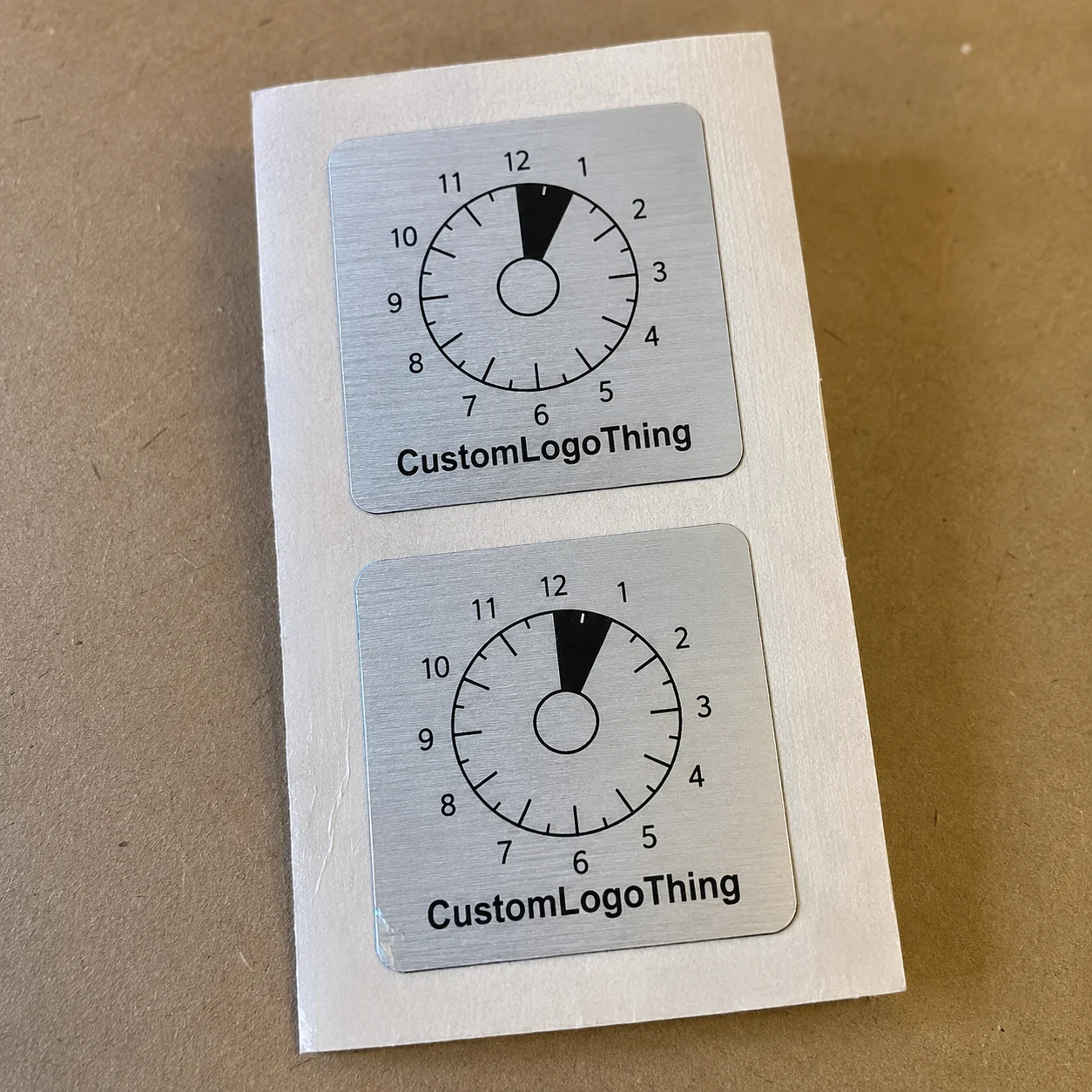
Custom calibration stickers are printed labels used to identify the calibration status of tools, gauges, meters, scales, test equipment, production machinery, and inspection devices. The most common fields include calibration status, due date, asset number, serial number, technician initials, department, certificate reference, and sometimes pass/fail or limited-use information.
The sticker is not the calibration itself. Calibration is the measured comparison, adjustment, verification, and documentation performed under a defined procedure. The label is the visible traceability marker that connects the physical item to the calibration record, certificate, standard operating procedure, and audit trail.
Common formats include write-on labels with blank date fields, preprinted date grids, serialized asset labels, color-coded status stickers, barcode labels, QR Code Labels, tamper-evident labels, and laminated labels for harsh environments. A small torque wrench may only have space for a 0.5 inch by 1 inch label. A machine panel may accept a 2 inch by 3 inch label with a QR code, asset number, and certificate reference.
From a packaging buyer’s point of view, the best calibration sticker is rarely the fanciest one. It is the one that stays legible, matches the workflow, sticks to the equipment, and gives an inspector the right information in seconds. A clean green “CALIBRATED” label with a bold due date often does more useful work than a crowded design with four logos, three tiny fields, and a barcode too small to scan.
Practical rule: if the calibration status and due date cannot be read from a normal working distance, the label design is already fighting the audit process.
How Calibration Labels Work From Print to Inspection
The lifecycle is simple, but every step has to hold together. The label is printed, packed on rolls or sheets, applied to a clean surface, filled in or scanned after calibration, checked during routine use, and reviewed during internal or external audits. If one link breaks, the label can create doubt even when the equipment is in good condition.
Information hierarchy should be obvious. Status comes first: calibrated, due, limited use, rejected, out of service, or do not use. Due date usually comes second because operators and inspectors need it immediately. Asset or serial ID comes next, followed by technician, department, certificate number, procedure reference, or QR link.
Color helps, but it should support text rather than replace it. Green often signals calibrated, yellow can indicate due soon or limited use, and red is commonly used for rejected or out-of-service equipment. Still, not every facility interprets colors the same way. Not every worker sees color equally. Printed words need to remain clear in black or dark ink with enough contrast.
Adhesive behavior is where many failures begin. A pressure-sensitive adhesive has to wet out against the surface, meaning it flows into the microscopic texture of metal, plastic, paint, or powder coating. It also has to hold through handling, vibration, cleaning, temperature swings, and edge contact. Edge lift makes a label look unreliable, even if the printed data is correct.
Print durability can come from several routes. Thermal transfer printing works well for variable data and serialized labels when matched with the right ribbon. Flexographic printing is efficient for higher-volume roll labels. Digital printing is useful for shorter runs, multiple versions, and variable artwork. Varnish can add scuff resistance, while lamination gives a stronger protective film when chemicals, abrasion, or moisture are expected.
Calibration labels usually fail for practical reasons, not because the design is unattractive. The face stock may be too weak. The adhesive may be wrong for the plastic housing. The ink may not resist alcohol wipes. The write-on surface may smear under handling. The right specification starts with the equipment, not the catalog page.
Material, Adhesive, and Size Choices That Matter
Material choice sets the baseline for performance. Paper is economical and acceptable for clean indoor files, short-term tags, and equipment that is not wiped down often. Polypropylene gives better moisture resistance and a clean synthetic look at a moderate cost. Polyester is usually stronger for long service life, chemical exposure, dimensional stability, and equipment that gets handled daily. Vinyl has more flexibility, which helps on curved surfaces or housings that are not perfectly flat.
Adhesive selection depends on the surface. Smooth stainless steel is usually easier than textured powder-coated metal. Glass can hold labels well but may require clean removal in some labs. Painted panels vary because the paint system itself may be the weak layer. Plastic housings can be tricky, especially low-energy plastics such as polyethylene or polypropylene, where ordinary general-purpose adhesives may struggle without a higher-tack formulation.
Before ordering custom calibration stickers, list the real conditions: oil, coolant, alcohol wipes, degreasers, UV exposure, refrigeration, heat, humidity, abrasion, and repeated operator handling. A label used on a clean bench meter has a different job than a label on a forklift scale, outdoor meter box, or washdown-area instrument.
Write-on compatibility deserves its own check. Some teams use ballpoint pen, some use fine-tip permanent marker, and some print variable data before application. A glossy laminate can protect the label, but it can also make handwritten dates bead up or smear unless the design includes a writable patch. Matte polyester, write-on varnish, or a split construction with a protected printed area and writable field can solve that problem.
Size should follow information density. Tiny 0.375 inch by 0.75 inch labels may work for small instruments if they only carry status and due date. Medium labels around 1 inch by 2 inches are common for handheld tools, meters, and gauges. Larger 2 inch by 3 inch or 3 inch by 4 inch labels make sense on machines, panels, and equipment where scan distance matters or where a QR code must be read reliably.
Shape matters more than people expect. Rounded corners reduce picking and edge lift, especially on tools handled daily or wiped with cloths. Square corners can work on flat panels, but they are more likely to catch a fingernail, glove, rag, or packaging material during movement. If a label needs to survive daily contact, rounded corners are usually worth the small die-cutting consideration.
These choices overlap with broader Custom Labels & Tags decisions, but calibration work has less tolerance for ambiguity than retail labeling or general product packaging. A retail label can be attractive and still do its job; a calibration label has to be readable, traceable, and consistent under inspection pressure.
| Material | Best Use | Typical Strength | Watch Point |
|---|---|---|---|
| Paper | Clean indoor use, short-term records, low-contact equipment | Low cost, easy writing | Poor moisture and chemical resistance |
| Polypropylene | Moderate moisture, clean equipment, general industrial labels | Good water resistance and neat print finish | Less heat and abrasion resistance than polyester |
| Polyester | Long-term equipment labels, chemicals, handling, durable tracking | High durability and dimensional stability | Higher unit cost than paper or polypropylene |
| Vinyl | Curved tools, flexible housings, uneven surfaces | Good flexibility and conformability | May not be ideal for high heat or tight tolerance labels |
Cost, Pricing, and Quote Factors for Calibration Labels
Pricing is driven by quantity, size, material, adhesive, ink colors, finish, die-cut shape, serialization, barcodes, QR codes, and whether the labels are supplied on rolls, sheets, or individually cut pieces. A plain one-color paper label on sheets will price very differently from a laminated polyester label with variable QR codes on rolls.
For planning, simple paper or polypropylene calibration labels may land around $0.06 to $0.18 per label at several thousand pieces, depending on size and print coverage. Durable polyester labels with stronger adhesive, matte laminate, and variable data may run closer to $0.18 to $0.45 per label for mid-size quantities. Very small batches can price higher because setup time does not disappear just because the order is small.
A slightly higher unit cost can make sense if the label prevents rework, failed audits, lost traceability, or premature replacement after cleaning. If a $0.32 label avoids a technician spending fifteen minutes searching records during an audit, the math is not difficult. The sticker is cheap compared with the labor and disruption around unclear equipment status.
Useful quote inputs include dimensions, quantity, surface type, indoor or outdoor use, expected lifespan, temperature range, chemical exposure, artwork, variable data, and packaging format. If the labels need to run through a specific thermal transfer printer, include the core size, roll outside diameter, winding direction, and gap requirements.
Minimum order quantity exists becaUse Custom Stickers require setup work: artwork review, file preparation, dies or digital cutting paths, plates for some processes, variable data checks, press setup, finishing, inspection, and packing. A 100-piece order may be possible, but the unit cost can look high because the setup work is spread across fewer labels.
Stock calibration dots are inexpensive and fast. They work well when the process is simple and the facility does not need asset-level traceability on the face of the label. Custom calibration stickers give better control over fields, color systems, company identity, asset matching, barcode structure, and inspection clarity. For regulated or high-value equipment, that control often matters.
Cost-saving moves should not weaken performance. Standardize two or three sizes across departments. Reduce unnecessary ink colors. Group similar versions into one run. Use variable printing for asset IDs instead of ordering twenty separate static designs. Keep the shape practical. Packaging design discipline helps here; the same thinking used for efficient Custom Packaging Products or custom printed boxes can reduce waste in label programs without stripping out the details that quality teams need.
Process, Timeline, and Production Steps Before Ordering
A clean order process usually follows a steady path: gather equipment requirements, choose the label content, confirm size and material, prepare artwork, review the proof, approve production, print, finish, inspect, pack, and ship. The fastest jobs are rarely rushed jobs. They are the jobs where the buyer already knows the surface, environment, size, quantity, and approval chain before requesting the quote.
Lead time depends on artwork readiness, material availability, custom die needs, variable data complexity, proof revisions, lamination, specialty adhesives, and shipping method. A straightforward digitally printed label might move in roughly 5 to 8 business days after proof approval. A more involved durable roll label with laminate, variable data, custom tooling, and sample testing may need 10 to 18 business days or more, depending on the production queue and material sourcing.
The proofing stage is not a formality. Buyers Should Check spelling, date fields, barcode readability, QR destination, serial sequence, color meaning, logo placement, and blank space for handwriting. If the label has a QR code, scan it from a printed proof or sample at the intended size. If the code needs a quiet zone, do not crowd it with borders or text.
Sampling is smart when labels will be applied to textured plastic, powder-coated metal, oily equipment, high-value regulated tools, or surfaces exposed to solvents. A small material test can reveal edge lift, ink smear, stiffness, or poor adhesion before the full order is produced. Not every job needs testing, but difficult surfaces usually justify it.
File preparation also affects speed. Vector logos are preferred because they scale cleanly. Fonts should be supplied or outlined. Barcode data should be clean and formatted consistently. Variable data spreadsheets should be checked for duplicate asset IDs, missing rows, extra spaces, and date format problems. CSV files can work well, but only if the column names and sequence rules are clear.
For packaging buyers who also manage branded packaging, retail packaging, or package branding, the calibration label program may feel small compared with cartons, inserts, or product packaging. The quality risk is different, though. A box can protect and promote; a calibration sticker has to support traceability. That means readability, adhesion, and data accuracy take priority over decorative effects.
Industry standards can provide useful framing even when they do not dictate the exact label construction. ASTM methods are often used to evaluate adhesive properties and material performance, while packaging distribution tests from ISTA help teams think about handling, abrasion, and environmental stress in packed goods. If sustainability sourcing is part of the larger packaging program, paper-based components may also be discussed through resources such as FSC, though durable calibration labels often require synthetic films for performance.
Common Mistakes That Make Calibration Stickers Fail
The most common mistake is choosing a label based only on price or appearance instead of the actual surface and cleaning routine. A low-cost label may look fine on a desk sample, then peel after two alcohol wipe-downs or smear when a technician writes the due date with the wrong marker.
Too much information is another problem. If the label is crowded, technicians may write outside the fields, cover key details, or make the due date hard to see. A good calibration label is selective. It should carry the data needed at the equipment and connect to the deeper record through an asset ID, certificate number, barcode, or QR code.
Weak contrast and tiny fonts create avoidable friction. A 5-point date field may look tidy on a PDF, but it is not friendly on a crowded bench, dim production floor, or instrument panel behind a guard. For most labels, status and due date should be the largest elements. Decorative backgrounds, fine lines, and low-contrast brand colors should be used carefully.
Application mistakes can defeat the right material. Dust, oil, moisture, cold surfaces, curved housings, and uneven texture can all cause lifting. For pressure-sensitive labels, firm pressure matters because it helps the adhesive flow into the surface. Many adhesives also build bond strength over 24 to 72 hours, so immediate handling and cleaning can reduce performance.
Data mistakes can be worse than material mistakes. Duplicate serial numbers, QR codes pointing to the wrong record, missing revision control, and unclear date formats can undermine confidence quickly. If one department reads 04/05 as April 5 and another reads it as May 4, the label is creating risk. Month abbreviations or an agreed date format prevent confusion.
Overlaminating is less obvious but very real. A heavy protective film can improve durability, yet it may make the label too stiff for small curved tools or prevent handwriting from bonding to the surface. If the label needs both protection and handwritten dates, specify a writable zone or choose a matte write-on laminate suited to the pen or marker your team actually uses.
Another quiet mistake is changing label versions without telling purchasing, quality, and maintenance. If one batch says “CAL DUE,” another says “NEXT DUE,” and another uses only a color bar, inspectors may pause to interpret what should be obvious. Consistency reduces questions.
Next Steps to Specify Labels Your Team Can Trust
Start with the equipment, not the artwork. List the equipment types, measure the available label area, note the surface materials, document cleaning chemicals, define required fields, and decide whether the labels need handwriting, scanning, or both. A ten-minute walk through the equipment list can save several rounds of proof revisions later.
Create two or three standard label formats instead of letting every department invent its own version. For example, one small label for hand tools, one medium label for gauges and meters, and one larger label for machines or panels. This improves consistency, simplifies reordering, and usually lowers setup cost over time.
Choose the color system before artwork begins. Green, yellow, and red can work well if the meaning is defined and printed text supports the color. If your facility uses blue for limited-use tools or orange for due-soon equipment, document that choice so future orders match the system.
Build a small review group that includes quality, maintenance, calibration technicians, and purchasing. Each group sees different failure points. Quality looks for audit clarity. Maintenance thinks about surface and cleaning. Technicians know where they can actually place the label. Purchasing understands reorder efficiency, roll format, and budget.
- Measure first: confirm the available label area before choosing a template.
- List the surface: stainless steel, powder coat, painted panel, glass, ABS, polypropylene, or other plastic.
- Name the exposure: alcohol, oil, coolant, UV, heat, refrigeration, abrasion, or washdown.
- Define the data: status, due date, asset ID, technician, certificate number, barcode, or QR code.
- Choose the format: rolls, sheets, or individual pieces based on how labels are applied.
Request samples or material recommendations when the label must survive abrasion, solvents, outdoor exposure, refrigeration, heat, or frequent handling. Not every job needs laboratory-grade polyester and specialty adhesive, but the jobs that do should be specified that way from the start.
Before ordering custom calibration stickers, prepare the size, quantity, surface, environment, required data fields, artwork status, variable data needs, and preferred roll or sheet format. With those details ready, the quote is more accurate, production moves cleanly, and the finished labels stay readable when an inspector is standing there waiting for an answer.
FAQ
What information should custom calibration labels include?
Custom calibration labels should include calibration status, due date, asset ID, technician or department, certificate or record number, and any barcode or QR code needed to connect the sticker to the calibration record. Keep status and due date easy to read from normal working distance because those are the fields inspectors and operators usually check first.
What material is best for durable calibration stickers?
Polyester is often the strongest choice for long-term durability, chemical resistance, and dimensional stability on equipment. Polypropylene, vinyl, or paper may be better depending on surface, budget, flexibility, moisture exposure, and expected service life.
Can calibration stickers be printed with barcodes or QR codes?
Yes, calibration stickers can include barcodes, QR codes, serial numbers, asset IDs, and variable data sequences. The code size, contrast, quiet zone, and print method should be checked so scanners can read the label after application, especially on curved tools or dark equipment housings.
How do I keep custom calibration stickers from peeling off?
Match the adhesive to the surface, clean the application area, apply firm pressure, avoid cold or wet application when possible, and use rounded corners to reduce edge lift. For textured plastic, powder-coated metal, chemical exposure, or frequent handling, request an adhesive recommendation before ordering.
What affects the price of custom calibration stickers most?
The biggest pricing factors are quantity, size, material, adhesive, finish, colors, variable data, barcode or QR printing, and whether the labels are supplied on rolls, sheets, or individual pieces. Standardizing sizes and combining similar versions can often reduce setup costs and improve reorder efficiency.


