A parked service van can generate hundreds of brand impressions in a single day. A weak sticker can do the opposite just as efficiently. The graphic is small, but it becomes a moving judgment of the business behind it: careful or careless, established or improvised, worth calling or easy to ignore.
Custom stickers car owners and businesses order for vehicles are adhesive graphics built for glass, paint, bumpers, panels, or interior windows. They include bumper stickers, window decals, fleet labels, dealership promotions, event giveaways, club graphics, creator merch, and service-vehicle identification. Some exist for personality. Others carry phone numbers, QR codes, license details, unit numbers, safety warnings, or campaign offers that need to stay readable after sun, rain, road grime, and washing.
The difference between a sticker that looks sharp for months and one that curls by the next oil change is rarely luck. It is usually material, adhesive, surface choice, artwork discipline, and production control.
What Custom Stickers Car Buyers Should Know First
The biggest misunderstanding is that a vehicle sticker order is “just artwork.” It is not. The design matters, but the order succeeds or fails through five practical decisions: adhesive strength, surface type, outdoor exposure, readability, and removal expectations.
Miss one, and the decal may still look convincing on screen while failing on the bumper after three weeks of weather.
Decorative car stickers usually prioritize identity and style: hobby graphics, club logos, small illustrations, creator marks, or rear-window graphics. Promotional decals have a different job. They need to communicate quickly from a distance, often with a logo, short message, URL, phone number, QR code, or offer. Compliance and identification labels are more functional again. A plumbing van, catering truck, security vehicle, mobile pet grooming service, courier fleet, or roadside repair unit may need company details, operating regions, permit marks, unit IDs, or warning information.
Those categories overlap, but the buying logic changes. A limited giveaway sticker may only need to survive a short campaign. Fleet branding needs repeatable sizing, tougher material, clean installation, and color consistency across multiple vehicles. A removable decal for a leased car should not behave like a permanent industrial label. A permanent label on a work truck should not be spec’d like a laptop sticker.
Vehicle stickers sit close to Custom Labels & Tags from a production standpoint. Both rely on pressure-sensitive materials, print control, die cutting, finishing, and inspection. The exposure profile is different. A retail label may live on a shelf under controlled lighting. A car decal faces UV, moisture, dust, road salt, heat, cold, detergent, abrasion, and vibration, sometimes before the first invoice from the job it helped win.
Practical rule: if the sticker represents a business in public, treat it like compact outdoor signage, not like a paper label with stronger glue.
That framing changes the conversation. Instead of asking, “Can you print this design?” ask, “Will this material, adhesive, size, and finish work on this vehicle surface for this length of time?” The second question prevents more waste.
How Vehicle Stickers Work on Glass, Paint, and Bumpers
A vehicle sticker is built in layers. The face film carries the printed design. Under it sits the adhesive. The liner protects the adhesive until application. Many outdoor decals also include a clear laminate, usually gloss or matte, that adds protection against UV exposure, moisture, scratches, cleaning chemicals, and routine handling.
Vinyl is the common choice because it handles outdoor use better than standard paper stock. A typical outdoor vinyl face film may be around 3 to 4 mil thick before laminate, though exact specifications vary by manufacturer, grade, and intended application. Cast vinyl is often preferred for long-term graphics, curves, and more demanding installations. Calendered vinyl can work well for flatter surfaces, short campaigns, bumper stickers, and cost-sensitive promotional runs.
That distinction matters. Cast vinyl is generally thinner, more conformable, and more dimensionally stable. Calendered vinyl is usually less expensive and perfectly suitable for many flat or mildly curved placements. Specifying cast vinyl for every sticker can waste budget. Using economy calendered film on a complex curve can waste the entire order.
Placement drives material selection. Glass usually needs clean visibility and, often, clean removal. Rear-window decals may use white vinyl, clear vinyl, static cling, or perforated window film depending on the design, viewing direction, and local visibility rules. Bumpers need flexible durability because they see more grime, spray, impact, and temperature movement. Painted panels require caution. The adhesive should suit automotive paint, and the paint should be fully cured, intact, and free from oxidation, peeling, wax buildup, or previous adhesive residue.
Road exposure is ordinary and brutal. Sunlight fades pigments. Rain and road salt test the adhesive edge. Heat can soften films and adhesives. Cold can reduce flexibility. Automatic car washes add pressure, spinning brushes, detergents, and repeated edge abrasion. Dirt behaves like sandpaper when dragged across a decal.
Removable adhesives make sense for temporary promotions, leased vehicles, seasonal campaigns, dealership offers, event branding, or short-term parking permits. Permanent adhesives suit longer-term fleet graphics, service-vehicle decals, and identity labels where removal is not the priority. There are caveats. “Removable” does not mean risk-free on weak paint, and “permanent” does not mean indestructible on textured plastic or dirty surfaces.
Finish changes both appearance and function. Gloss laminate makes colors look more saturated and often gives a polished retail feel. Matte laminate cuts glare, which can help readability in bright outdoor light. Clear decals look clean on glass but need strong contrast planning because transparent areas disappear against dark tint, busy interiors, or changing backgrounds. A white ink layer may be needed for some clear-label designs if color opacity matters.
Key Specs That Decide Durability, Visibility, and Fit
Size is the first spec buyers underestimate. A 2-inch logo may work beautifully on product packaging, mailer inserts, or a laptop. On a moving car, it can vanish. Vehicle graphics need more negative space, larger lettering, and fewer words because the viewer may have only two to four seconds to understand the message.
For bumper stickers, common sizes include 3 x 10 inches, 4 x 6 inches, and 4 x 12 inches. Small window decals might be 3 x 3 inches or 4 x 4 inches. Door or rear-panel decals for a service business often need larger formats, such as 8 x 12 inches, 12 x 18 inches, or bigger, depending on the vehicle and viewing distance. Measure the actual placement area with a tape measure. Photos distort scale, especially on curved panels.
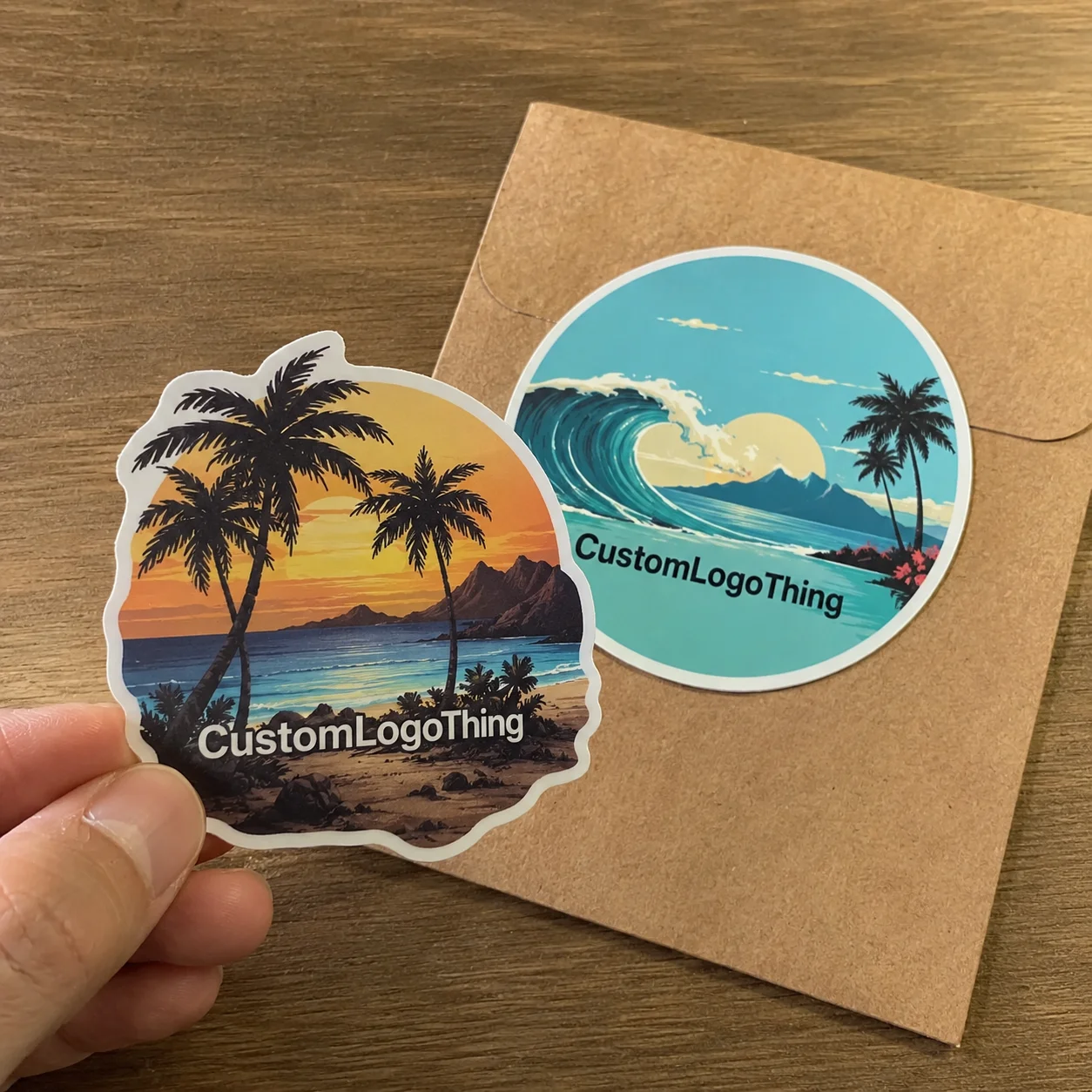
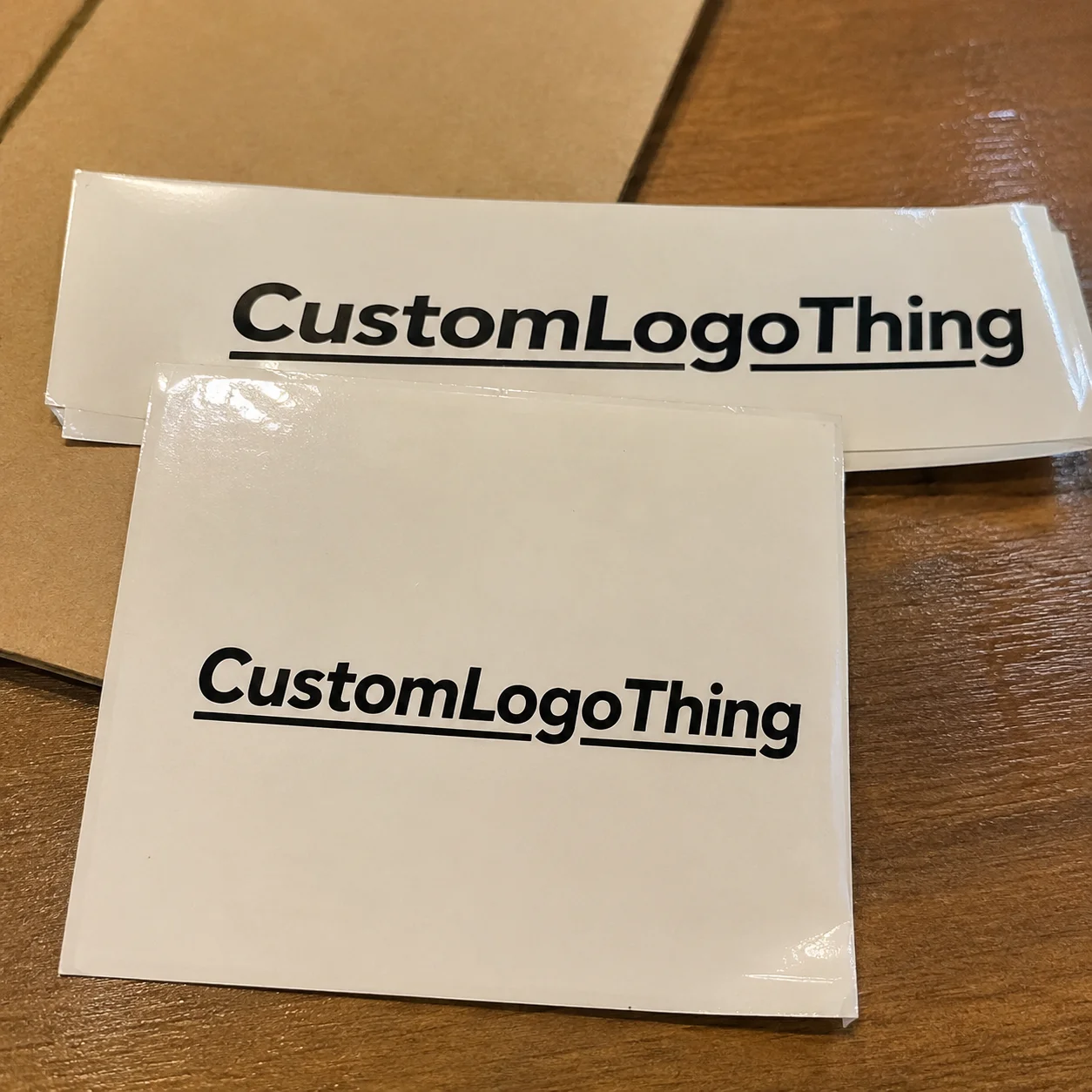
Shape affects usability and cost. Die-cut stickers follow the logo or custom outline, which can make a brand mark feel more intentional. Kiss-cut stickers keep a backing sheet around the shape, making them easier to peel and distribute at events. Rectangles remain efficient for bumper messages, warning labels, QR codes, and offers. Clear shapes work well on glass when the design has enough contrast to survive tinted windows and shadows.
Legibility beats decoration on cars. Thin script fonts, low-contrast colors, and crowded layouts often fail in traffic. Black on white, white on dark blue, yellow on black, and red on white can work well if the font is strong. Pale gray on clear vinyl is usually a poor choice unless the sticker is meant for close viewing only. A QR code placed too small, too low, or too close to a curve may technically print well and still scan badly.
Material thickness and flexibility deserve attention, but buyers do not need to memorize every technical chart. Ask one practical question: will the sticker sit on flat glass, a smooth painted door, a textured bumper, a slight curve, or a compound curve near an edge? More curves usually require a more flexible film, a better adhesive match, and a more careful installation technique. Edges are risk zones because washing, wind, wipers, and fingers lift them first.
Lamination adds cost, but for outdoor car use it is often the least expensive insurance in the order. A laminated vinyl decal generally resists fading and scuffing better than an unlaminated print. For commercial vehicles parked outdoors daily, direct sun and frequent washing make laminate worth discussing at the start rather than after the first faded batch.
Artwork files matter more than many buyers expect. Vector logos such as AI, EPS, or production-ready PDF files are preferred for sharp edges and die-cut paths. Raster files should be high resolution, often 300 dpi at final print size in many workflows. Add bleed where required, keep text inside safe margins, and confirm the cut line before approval. A fuzzy screenshot will not become sharp because it is printed on better vinyl.
Color also needs a reality check. Screens emit light. Printed stickers reflect light. Vehicle paint reflects light differently again, especially metallic or pearlescent finishes. Outdoor lighting changes by hour, season, and parking angle. Pantone references, brand color targets, and physical proofs help, but exact color matching across every lighting condition is not realistic.
Pricing, Unit Cost, and Quote Factors for Car Decals
Sticker pricing is a math problem with a design problem hiding inside it. Unit cost depends on size, material, adhesive type, print coverage, finish, shape complexity, quantity, proofing, packaging, and shipping. A simple 3 x 3 inch vinyl circle costs less than a laminated, die-cut, full-color rear-window decal with individual bags and barcode labels.
Small batches are useful for testing, but they carry more setup cost per piece. Larger runs spread prepress, print setup, cutting, inspection, and packing time across more units. That is why the price difference between 100 and 500 pieces can be dramatic, while the difference between 5,000 and 10,000 may be smaller per unit.
| Order Type | Typical Specs | Approximate Unit Range | Best Use |
|---|---|---|---|
| Small test run | 100 pieces, 3 x 3 inch vinyl, simple shape | $0.85-$1.75 each | Design testing, club decals, first promotions |
| Mid-size promo run | 500 pieces, 4 x 4 inch full-color vinyl | $0.35-$0.80 each | Events, dealership giveaways, local campaigns |
| Bulk branded run | 1,000 pieces, laminated die-cut vinyl | $0.22-$0.55 each | Fleet support, retail inserts, repeat branding |
| Large campaign run | 5,000 pieces, standard shape, efficient print layout | $0.12-$0.32 each | Mass giveaways, national promotions, package inserts |
These ranges are directional, not a quote. Material grade, ink system, laminate, labor, freight, supplier equipment, and market conditions can shift pricing. Still, the pattern is reliable: quantity often lowers the unit cost, while complexity pushes it back up.
Custom shapes usually cost more than rectangles because the cut path takes setup and finishing control. That extra cost can pay back if the outline makes the logo easier to recognize. A die-cut logo on a rear window often looks more deliberate than a white rectangle around the same logo, especially when the vehicle paint or glass becomes part of the visual field.
MOQ policies vary. Some manufacturers can support 50 or 100 pieces. Others price efficiently only at 250, 500, or 1,000 pieces and above. Rush production, specialty vinyl, proofing changes, contour cutting, individual packaging, split shipments, and multiple artwork versions can all affect the final number.
Ask for tiered pricing using the same specs at each quantity. A useful quote request might compare 100, 250, 500, and 1,000 pieces with the same size, shape, material, laminate, and delivery address. That makes the real breakpoints visible. It also prevents a common mistake: ordering too few stickers for a campaign, then paying a second setup charge weeks later when the first batch performs well.
Process and Timeline from Artwork to Finished Stickers
A clean order follows a predictable path: submit artwork, confirm specs, receive a proof, approve the design, print, laminate if needed, cut, inspect, pack, and ship. The proofing stage is not paperwork for its own sake. It protects against expensive errors in size, spelling, color, cut line, QR code placement, version naming, and orientation.
Simple orders can move quickly when files are clean. A standard vinyl decal with a common size and no revisions may take roughly 5 to 10 business days from proof approval, depending on workload and shipping method. More complex work, such as specialty finishes, contour cuts, multiple versions, installation kits, or larger volumes, can move into the 10 to 18 business day range. Freight time sits on top of production time.
Timeline depends on artwork readiness, order quantity, material availability, finish requirements, inspection level, and delivery destination. A logo supplied as a clean vector file will move faster than a low-resolution image pulled from a website. A one-color rectangle will move faster than a multi-version fleet kit with left-door, right-door, bumper, and rear-window pieces.
Build in extra time for campaigns, product launches, dealership promotions, trade shows, and fleet rollouts. Stickers are often tied to a wider schedule: wrapped giveaways, retail packaging, Custom Printed Boxes, product packaging inserts, mailers, or local ad campaigns. One late component can stall the whole promotion.
To reduce delays, send complete information at the start:
- Final artwork file, preferably vector for logos and cut shapes
- Exact finished dimensions, such as 4 x 6 inches or 3.5 inch diameter
- Surface use, including glass, painted panel, bumper, or interior window
- Quantity and version splits, such as 250 black and 250 white
- Finish preference, including gloss, matte, clear, or laminated
- Adhesive expectation, such as removable, permanent, or paint-safe recommendation
- Delivery deadline and shipping ZIP code or destination region
For buyers managing broader packaging design or retail packaging projects, the same discipline applies: specs reduce ambiguity. The more a supplier has to infer, the more likely the quote, timeline, or final result will change.
If you want standards-based thinking, review how packaging professionals approach distribution risk through groups such as the International Safe Transit Association. Stickers are not shipping cartons, but the mindset is useful: define the environment, identify weak points, and choose materials based on the journey rather than the mockup alone.
Common Mistakes That Make Car Stickers Fail Early
The fastest way to make a car sticker fail is to use indoor paper stock outdoors. Paper labels can be excellent for cartons, jars, bags, envelopes, and short-term indoor use. On a bumper, they face moisture, heat, UV light, detergent, and abrasion. Fading, curling, edge lift, and adhesive breakdown are predictable outcomes.
Another failure is tiny text. A design that looks crisp at 200% zoom on a laptop can become unreadable from one car length away. Thin lines disappear. Crowded icons blur. QR codes shrink below practical scanning size. If the message matters, print a paper mockup at actual size and tape it near the intended vehicle area. Stand back 10 to 20 feet. Then check it quickly, not generously. Traffic does not study your layout.
Surface preparation is less glamorous than artwork, but it decides adhesion. Decals should be applied to clean, dry surfaces free from wax, dust, oil, silicone, polish, and moisture. Textured plastic bumpers can be difficult because less adhesive contacts the actual surface. Recently painted areas are risky too. Many paint systems need time to cure fully before adhesive graphics are applied, and that timing depends on the paint process.
Installation temperature matters. Many pressure-sensitive films apply best within a moderate temperature range, often around room temperature rather than freezing cold or high heat. If the surface is too cold, the adhesive may not flow and bond properly. If the panel is too hot, the film can stretch, soften, or grab too aggressively during placement.
Placement can create mechanical failure. Avoid blocking driver visibility. Do not cross panel gaps unless the decal is designed and installed for that purpose. Be careful around sharp curves, rubber seals, heated rear-window lines, door handles, fuel doors, and wiper paths. A rear-window decal placed directly under a wiper blade may scuff faster than the same decal placed outside the wipe zone.
Color expectations also cause friction. A digital proof is a layout guide, not a physical sample. Metallic paint, tinted glass, weather, shade, and reflections all change how a sticker looks once installed. For brand-critical work, request color targets such as Pantone references where possible and consider a printed proof or pilot run before bulk production.
Skipping the proof is a false economy for larger orders. One typo on 1,000 bumper stickers is not a small mistake; it is waste, delay, and reputational damage. The U.S. Environmental Protection Agency publishes practical guidance on reducing waste, and the principle fits here: prevent errors before production rather than managing scrap afterward.
Most sticker failures start before printing. The buyer chooses a weak spec, the supplier fills in the blanks, and the vehicle gets blamed later. Better questions at the quote stage prevent most of that.
Next Steps Before You Order Vehicle Stickers
Start with placement. Decide where the sticker will go, then measure the available space. A bumper, rear glass panel, side door, and tailgate all behave differently. Note whether the surface is flat, curved, painted, glass, plastic, smooth, or textured. Then define how long the sticker needs to last: one weekend, three months, one season, or several years.
Prepare a simple spec sheet before asking for pricing. It does not need to be polished. Include size, shape, quantity, material preference, adhesive type, finish, artwork file, delivery deadline, and installation surface. If you are unsure about material, say so and describe the use case. A supplier can recommend better options when the problem is specific.
Photograph the intended vehicle surface and share it with the manufacturer. A straight-on photo plus one angled photo can reveal curves, trim lines, wiper paths, and surface texture that are hard to explain in writing. For fleet projects, include vehicle make and model if available, and confirm whether every vehicle is identical. Small differences between model years can change panel shape and placement.
Order a sample or proof first if color accuracy, logo shape, QR scanning, or public-facing placement is critical. For larger campaigns, a small pilot run can expose problems before the full order is produced. That same logic is common across Custom Packaging Products, where a prototype can catch structural, print, or branding problems before bulk production.
- Choose the vehicle location and measure it.
- Decide whether the decal should be removable or long-term.
- Pick a size that can be read from the intended viewing distance.
- Use clean artwork with bleed, safe margins, and cut lines if needed.
- Request tiered pricing so the quantity decision is based on real numbers.
- Approve a proof only after checking spelling, size, color, and placement logic.
The best custom stickers car projects are planned as one connected decision: design, material, Cost, and Timeline. Treat those pieces separately and surprises creep in. Plan them together and the finished decal has a much better chance of looking sharp on the road, surviving real weather, and making the brand feel more credible than the sticker’s square inches suggest.
FAQ
Are custom car stickers safe for vehicle paint?
They can be safe when made with the right adhesive and applied to clean, fully cured paint. Avoid damaged, peeling, rusty, oxidized, or freshly painted surfaces. For temporary promotions, leased vehicles, or uncertain paint conditions, removable vinyl is usually the safer option to discuss before ordering.
How long do custom vehicle decals usually last outdoors?
Outdoor life depends on vinyl quality, laminate, sun exposure, weather, washing habits, and placement. A laminated vinyl decal generally lasts longer than an unlaminated sticker exposed to UV and road grime. Cars parked outdoors every day may fade faster than vehicles stored in garages or washed gently by hand.
What size should I order for custom stickers for cars?
Start by measuring the exact placement area on the bumper, window, door, or rear panel. Use larger lettering for messages that need to be read in traffic, and keep small decals simple. A compact logo can work at 3 x 3 inches, but a phone number or website usually needs more space and stronger contrast.
Can I order custom stickers car designs in small quantities?
Many custom sticker suppliers offer small runs, but the unit cost is usually higher than bulk orders because setup time is spread across fewer pieces. Ask for quantity price breaks at 100, 250, 500, and 1,000 pieces. Short runs are useful for testing designs before ordering fleet or campaign quantities.
What artwork file works best for custom car decals?
Vector files such as AI, EPS, or PDF are preferred for logos, sharp text, and die-cut shapes. High-resolution PNG or JPG files may work for simple prints if the image is large enough at final size. Include cut lines, bleed, and safe margins when the sticker has a custom shape or full-bleed background.