Hand sanitizer custom labels have one job that matters more than the rest: they must help the product sell and survive use. On a small bottle, that means the label has to stay readable, stay attached, and still look intentional after handling, shipping, and repeated wiping.
Buyers usually judge the package before they read the details. That is why label design, adhesive choice, and print durability matter as much as the artwork itself. The same thinking used for Custom Labels & Tags and care-label systems applies here: small formats leave little room for weak contrast, crowded text, or decorative elements that do not support the product.
Sanitizer bottles also face moisture, friction, and storage changes that many labels never see. A label can look fine on a proof and still fail once it is exposed to sinks, tote bags, gym counters, or shipping abrasion. That is why this is a packaging decision, not just a print decision.
For brands building a coordinated line with cartons, inserts, or Custom Packaging Products, the sanitizer label should fit the same visual system. If the bottle looks disconnected from the rest of the range, the packaging feels less deliberate.
A label failure rarely looks like a label problem. It looks like a product problem.
What Hand Sanitizer Custom Labels Actually Do
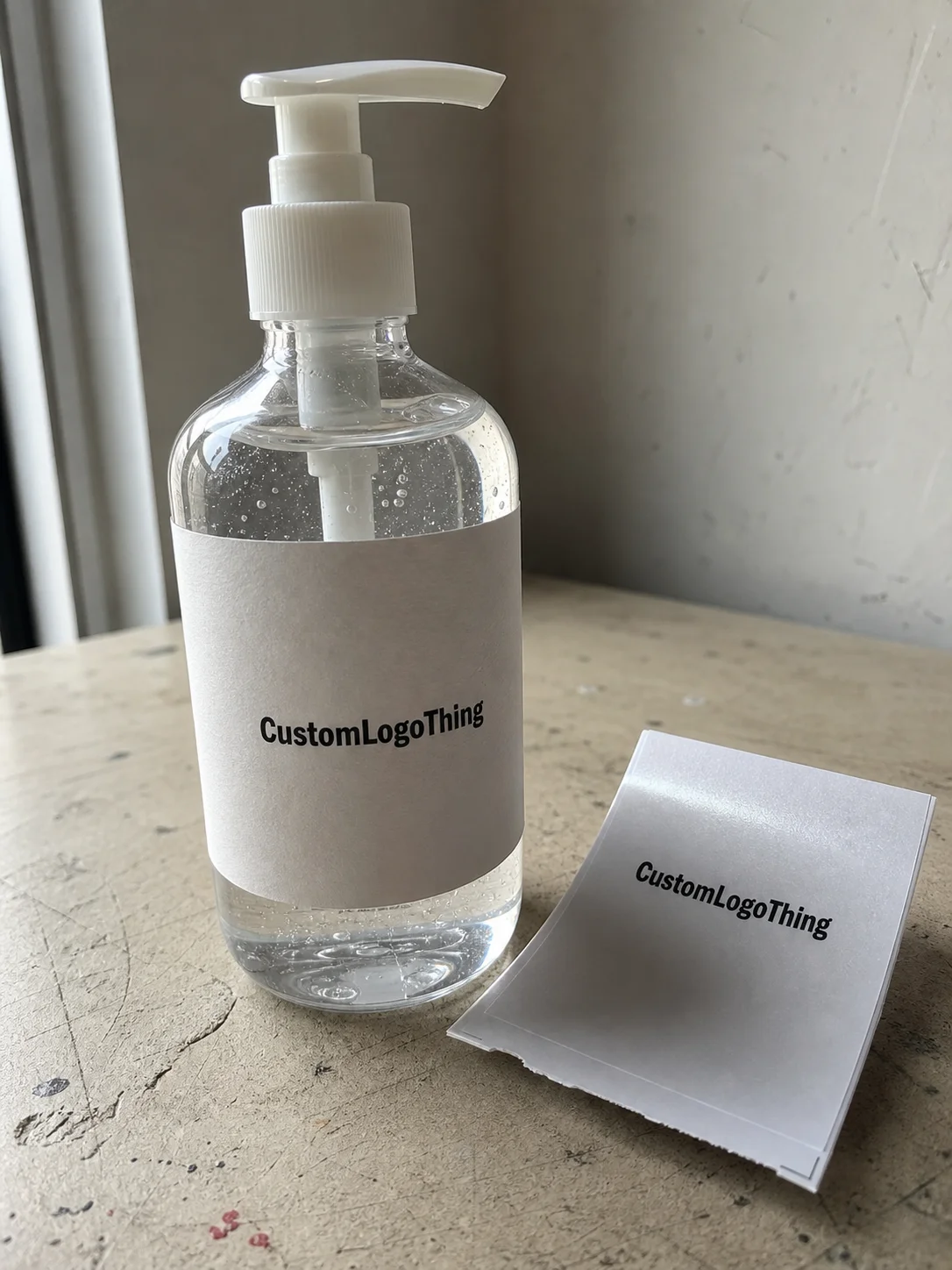
A sanitizer label carries both brand and product information. It needs the product name, size, scent if relevant, usage copy, warnings, and any required ingredient or compliance text, all while staying readable at arm’s length. On 1 oz or 2 oz bottles, spacing becomes critical; on larger pump bottles, hierarchy matters just as much.
For a buyer, the label is often the fastest quality signal on the shelf. Clean typography, correct placement, and consistent color make the product feel finished. Misaligned text, dull contrast, or poor print quality make it feel temporary even if the formula is solid.
The label also supports operations. Barcodes need scan-safe placement. Safety copy cannot be buried in a curve. Size information should not crowd the seam or wrap into a corner. When those details are wrong, the cost shows up later as relabeling, rework, or launch delay.
There is also a simple budget benefit: a good label reduces the chance of returns, repacking, and replacement stock. A poor one creates avoidable waste. That is especially true when the product is sold through retail packaging channels where shelf appearance affects repeat purchase.
How Bottle Shape and Adhesion Change the Design
Bottle geometry controls the usable label area. A flat panel gives more room for text and branding. A curved bottle reduces safe width and can distort small type if the label wraps too far. Travel bottles, pump dispensers, and pocket-size sprays each need their own layout, even when the formula is the same.
That is why dieline planning should start with the actual container, not a generic size. Artwork built for one bottle rarely transfers cleanly to another. If the label is too wide, it wrinkles or overlaps a seam. If it is too narrow, the design can feel lost or underdeveloped.
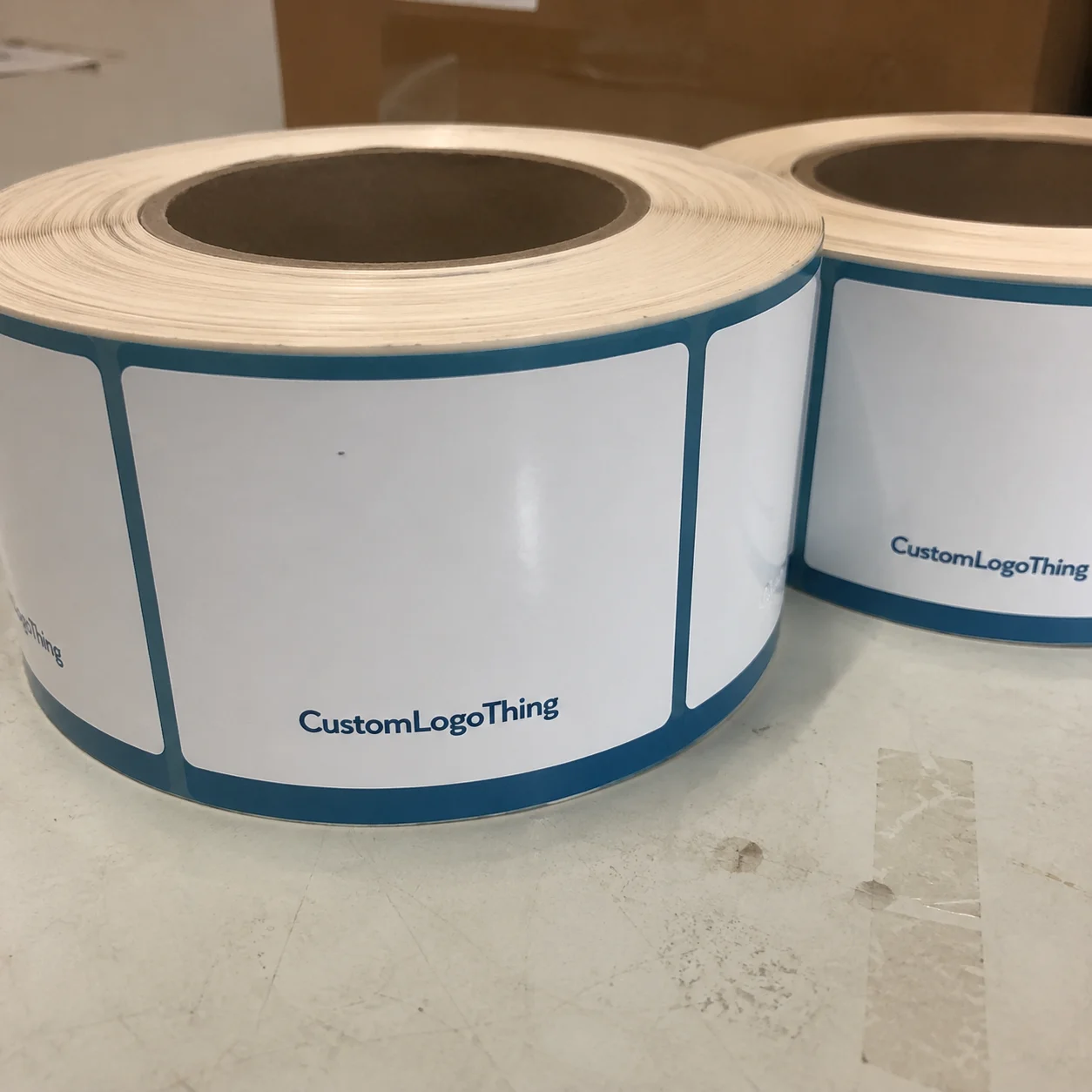
Adhesive choice is just as important. Permanent adhesive is usually the right call for retail, clinic, or facility use where the bottle stays in service for a long time. Removable adhesive makes sense for short-run promotions, test launches, or seasonal kits. On slick plastic, stronger adhesive usually performs better because it reduces corner curl and edge lift.
Material and finish affect both durability and readability. Matte stock cuts glare and helps small copy stay legible. Gloss can make colors feel richer, but it reflects more light. Film-based materials such as waterproof BOPP are typically better for bathrooms, gyms, medical spaces, and other humid environments. Paper can work for dry-use or temporary applications, but it is less forgiving when bottles sweat or get wiped repeatedly.
The label should also match the broader retail packaging presentation. If the line uses soft-touch cartons or minimal graphics elsewhere, the sanitizer label should not feel like an afterthought. Consistency across the package system matters.
For higher-abuse shipping or distribution, it helps to think beyond appearance. The ISTA test framework is useful because it forces teams to consider vibration, drop risk, and carton movement, not just what the label looks like in a mockup.
Production Steps, Proofs, and Lead Time
The production path is straightforward: artwork setup, dieline confirmation, proof review, print method selection, finishing, cutting, packing, and shipment. The main risk is moving forward before the bottle dimensions and label area are fully confirmed. A file can be correct on paper and still fail on the real container.
Proofing is where most avoidable problems are caught. Moving a warning line, increasing barcode space, or shifting copy away from a curve can prevent a reprint later. New hand sanitizer custom labels usually take longer than reorders because both the artwork and the physical fit need verification before production starts.
Lead time depends on quantity, finishing, and whether the job is a repeat or a first run. Simple reorders can often move in about 5 to 8 business days after proof approval if stock is available. New custom runs are more often 10 to 15 business days, especially if they use waterproof film, special adhesive, die cuts, or multiple label sizes. Rush service may be possible, but it leaves less room for correction.
Every added variable increases risk and time. A second label size adds setup. A special finish adds handling. A different adhesive may need sample testing. That does not make the job difficult; it just means the quote should reflect the real work.
Standards and sourcing also matter. If a supplier can speak clearly about durability testing, finish performance, or FSC-certified paper options, that is usually more useful than vague quality claims. FSC paper can support sourcing goals when paper-based components are acceptable for the brief.
Lead time also depends on material availability. Common label stock moves quickly. Specialty films, unusual adhesives, and Custom Die Cuts can add time before the press even starts. For multi-SKU orders, one approved item may be ready while another still waits on copy or barcode fixes.
Cost, MOQ, and Unit Price Tradeoffs
Label pricing is usually driven by setup, material, print method, finishing, and order quantity. The cheapest quote is not always the best one if it assumes a different adhesive, a simpler shape, or a weaker finish. Buyers who compare only unit price often miss the cost of rework, spoilage, or a label that fails after launch.
MOQ, or minimum order quantity, is the other major factor. Smaller orders are useful for launches, test runs, and event kits, but the unit price rises when quantity drops because setup costs are spread across fewer pieces. At around 5,000 labels, a simple pressure-sensitive label may land near $0.18 to $0.28 per unit depending on coverage, stock, and finish. Waterproof film, complex die cuts, or heavier ink coverage can push that higher.
The right comparison is total value, not just the lowest line item. A label that costs less but peels in a humid restroom is not cheaper. It becomes a replacement cost, a labor issue, and a shelf presentation problem. That is especially true when the label is part of a broader product packaging rollout.
| Material / Finish | Typical Use | Approx. Price Range | Practical Tradeoff |
|---|---|---|---|
| Matte paper label | Dry-use promotions, short runs | $0.12-$0.20 per unit | Good readability, weaker moisture resistance |
| Gloss paper label | General retail packaging | $0.14-$0.24 per unit | Brighter color, more glare under strong light |
| Waterproof BOPP film | Bathrooms, gyms, clinics, travel bottles | $0.18-$0.32 per unit | Better durability, usually a higher upfront cost |
| Clear film with premium finish | Minimal branding, upscale product packaging | $0.22-$0.38 per unit | Clean look, but surface prep and application matter more |
If the sanitizer line is part of a larger branded system, a slightly higher label cost can still be the rational choice. Durable labels reduce the chance that damaged stock has to be replaced, and they help keep the shelf presentation consistent.
Sustainability can also affect cost decisions. FSC-certified paper may be worth specifying when the brief calls for responsible sourcing and paper-based components. Just remember that the lowest material cost is not always the lowest total cost once moisture resistance and handling are part of the requirement.
Application method matters too. A label that runs well on automatic equipment may not behave the same during hand application, especially on narrow bottles. If the labels are applied in-house, labor and correction time belong in the real cost calculation.
Common Labeling Mistakes That Cause Reprints
Sizing errors are the most common cause of waste. Artwork that looks balanced on-screen can wrap badly around a narrow bottle, push text into a seam, or leave too little top and bottom margin. On small sanitizer labels, even a few millimeters can change the whole layout.
Compliance gaps are the second major problem. Missing ingredient copy, unclear usage instructions, or low-contrast warnings can slow approval and create a reprint. Even when no formal review is required, weak information hierarchy still makes the product harder to understand.
Finish mistakes are just as costly. Paper on a moist bottle can wrinkle. Weak adhesive can let corners lift after transit. Gloss can look sharp in a mockup and then become glare in a retail aisle. These failures show up quickly once the product is in use.
Rushed proofing creates another avoidable loss. Teams approve a file, then later notice that the barcode is too tight to the edge or the copy sits too close to a curve. By then, the fix costs more time than a careful review would have taken.
The hidden cost of a cheap label is usually not the print bill. It is the reprint, the delay, and the inventory that no longer matches the shelf.
Another common issue is matching the wrong label spec to the wrong bottle surface. Smooth HDPE, PET, and coated tubes behave differently under pressure. If the bottle is part of a larger packaging system, the label should be selected with the same care as the carton or insert.
A label can also fail after production if the adhesive does not match the bottle surface energy. That is why sample testing matters. A proper sample checks not only appearance but also how the label behaves after handling, storage, and moisture exposure.
Expert Checks Before You Place the Order
Start with the basics: bottle dimensions, label area, finish preference, application environment, quantity, and exact copy. If the product is used in a wet setting, say so. If it ships in cartons or mailers, say that too. Those details influence the stock, adhesive, and test method.
Ask for a proof that reflects the actual bottle size, not just a flat artwork file. A scaled PDF helps, but an applied mockup shows more about legibility, spacing, and how the label sits around curves or seams. If possible, request a sample on the real bottle material.
If the project is still changing, a short run is often the smarter move. A smaller order gives real-world feedback on moisture resistance, shelf light, and handling. It also avoids tying up budget in a large run if the copy or bottle size may still change.
One simple rule reduces delays: finalize the wording before finalizing the artwork. Once the product name, size line, barcode, and warnings are locked, production can move faster and with fewer surprises. That matters for hand sanitizer custom labels, where the balance between compliance and presentation is tight.
If you are managing multiple SKUs, keep the system simple. One finish for the main line, one adhesive spec for wet-use items, and one proof process across the range usually works better than creating exceptions for every bottle.
What to Do Next for a Clean Launch
Before requesting a quote, gather the essentials: bottle size, quantity, material, finish, adhesive needs, and any required warning or ingredient text. If the sanitizer line sits beside other branded packaging, define that relationship now so the label does not drift away from the rest of the range.
Compare at least two material options if possible. Matte versus gloss. Paper versus film. Permanent versus removable adhesive. Those choices tell you far more about real performance than a generic sales pitch.
Then review the proof on the actual bottle dimensions and confirm the timeline, shipping window, and reorder plan before approval. If the product is part of a larger retail packaging system, ask how the label will read next to cartons, shelf trays, or any custom printed boxes already in the line. Consistency is a practical advantage.
That is the real job of hand sanitizer custom labels: keep the bottle readable, durable, and credible while making the product look like it belongs on shelf.
What material works best for hand sanitizer labels?
Waterproof film is usually the safest choice if the bottles will be handled often or stored near sinks. Matte paper can work for dry-use promotions or short runs, but it is less forgiving around moisture and rubbing.
Do custom sanitizer labels need waterproof adhesive?
Not always, but moisture-resistant adhesive is strongly recommended for bathrooms, clinics, gyms, and travel bottles. If the label may sweat or get wiped down repeatedly, a stronger adhesive lowers the risk of peeling.
How long does it usually take to produce hand sanitizer custom labels?
Simple repeat jobs are usually faster because the size and artwork are already approved. New custom runs often take longer because proofing, material selection, and final fit checks need to happen before print production.
What should I include on hand sanitizer labels for a retail launch?
Include the product name, volume, key usage claims, warning text, and any required ingredients or regulatory copy. Leave enough whitespace so the label stays readable at arm’s length on a small bottle.
How do I keep small sanitizer labels from peeling or curling?
Match the adhesive to the bottle material and the environment where it will be used. Ask for a proof on the final bottle size and verify that the label edges are not pushed into a curve or seam.
For a clean launch, the safest path is simple: Choose the Right stock, verify the fit, and treat hand sanitizer custom labels as a functional part of the product packaging rather than a last-minute print add-on.