Buyer Fit Snapshot
| Best fit | Order Monochrome Logo Corrugated Mailers That Ship Better projects where brand print, material claims, artwork control, MOQ, and repeat-order consistency need to be specified before quoting. |
|---|---|
| Quote inputs | Share finished size, material target, print colors, finish, packing count, annual reorder estimate, ship-to region, and any compliance wording. |
| Proofing check | Approve dieline scale, logo placement, barcode or warning zones, color tolerance, closure strength, and carton packing before bulk production. |
| Main risk | Vague material claims, crowded artwork, missing packing details, or unclear freight terms can make a low unit price expensive after revisions. |
Fast answer: Order Monochrome Logo Corrugated Mailers That Ship Better should be specified like a repeatable production item. The safest quote records material, print method, finish, artwork proof, packing count, and reorder notes in one written spec.
Production checks before approval
Compare the actual filled-product size with the drawing, then confirm tolerance on folds, seals, hang holes, label areas, and retail display edges. Reserve space for logos, QR codes, warning copy, and material claims before decorative graphics fill the panel.
Quote comparison points
Review material grade, print process, finish, sampling route, tooling charges, carton quantity, and freight assumptions side by side. A quote is only useful when the supplier can repeat the same color, closure quality, and packing count on the next order.
Many ecommerce teams start with artwork and color, then discover the real problem is not the logo at all. The first damage report comes in, the warehouse asks for a different dieline, and the reprint budget gets squeezed before the launch has even settled. That is why smart buyers decide to order monochrome logo corrugated mailers for the next run: fewer variables, faster approvals, cleaner unboxing, and a package that behaves the same way every time it moves through pick, pack, and parcel networks.
There is a brand advantage here that gets underestimated. A one-ink mailer often reads as more deliberate than a busy multicolor panel because the contrast is stronger and the design lands immediately. Teams that order monochrome logo corrugated mailers usually care about three things at once: fit, print clarity, and repeatability. That mix matters more than a decorative palette that looks good in a mockup but slows production once the order is live.
Subscription kits, sample shipments, premium direct-to-consumer orders, internal fulfillment, and SKU-heavy programs all benefit from a simple corrugated mailer when the product and the process demand discipline. The goal is not to impress a design jury. The goal is to ship reliably, reduce rework, and support replenishment without reopening the specification conversation every cycle. If that is your brief, order monochrome logo corrugated mailers and make the packaging process easier to control.
Packaging buyers do not usually lose money on the box ink. They lose it on misfit dimensions, rework, late approvals, and damage claims. A monochrome program keeps the decision tree short and the spec easier to repeat.
Why order monochrome logo corrugated mailers when packaging is the bottleneck
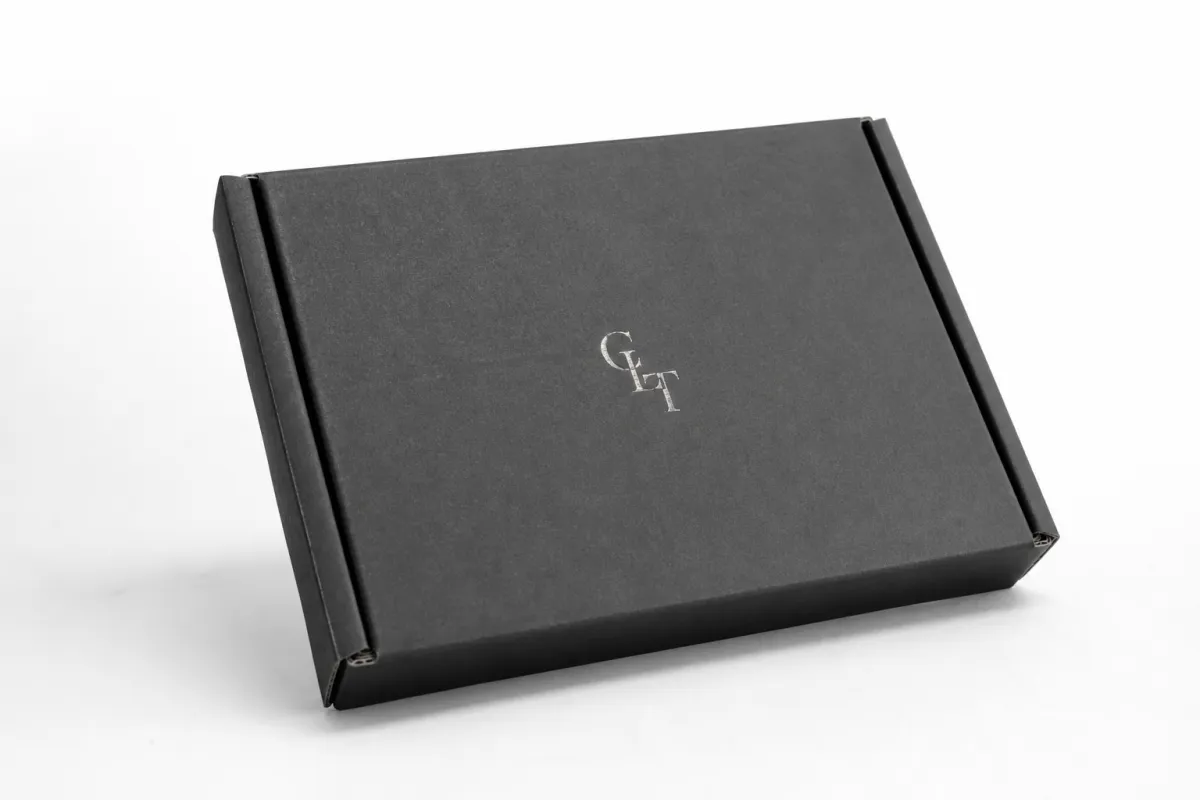
If packaging is slowing the launch, the answer is usually not more decoration. It is fewer decisions. Teams that order monochrome logo corrugated mailers remove color-matching debates, reduce proof cycles, and make it easier for operations, procurement, and brand to agree on a final spec. That is not a creative compromise. It is a production advantage that keeps the order moving.
A one-color mark can communicate confidence without trying too hard. A crowded panel can look busy and cheaper than it cost. By contrast, order monochrome logo corrugated mailers tends to create a cleaner field, so the logo has room to breathe. The eye lands on the mark, not on a stack of effects. That matters for premium apparel, cosmetics sample kits, wellness refills, books, and small electronics where the package needs to signal order and care.
There is a practical warehouse benefit too. The simpler the print spec, the easier it is to reorder without accidental variation. If the brand standard is black on kraft or white on white board, the repeat job stays straightforward. Teams that order monochrome logo corrugated mailers often see fewer corrections from production, fewer disputes over color tolerance, and fewer delays caused by artwork revisions that do not change the function of the box.
From a buyer's point of view, monochrome is also easier to scale across programs. One line can support launch kits, replenishment orders, and internal shipments if the mailer dimensions are disciplined. That is especially useful for businesses with many SKUs. The same print approach can travel across multiple sizes, so the brand system stays consistent even as the packout changes and the inventory picture shifts.
Where does this format win most often? Subscription kits that need fast packing. Sample shipments that must look polished in a tight footprint. Premium DTC orders where unboxing needs to feel intentional. Internal fulfillment where the warehouse team wants a sturdy mailer with fewer handling steps. SKU-heavy programs also benefit, because it is easier to order monochrome logo corrugated mailers than to maintain a more complex print library across several box sizes.
Buyers are often surprised that monochrome can look more expensive. The reason is contrast. One strong logo on a clean surface often communicates more than layered graphics, especially under warehouse lighting or on a doorstep. A customer may not describe the print, but they will notice whether the package feels tidy, coherent, and credible. That kind of quiet confidence is hard to fake.
Product details for monochrome logo corrugated mailers
When you order monochrome logo corrugated mailers, you are usually buying a mailer-style corrugated box with a one-color logo, wordmark, icon, or simple brand message. The common color choices are black, white, or a single brand Pantone. Most programs use a kraft or white exterior with an unprinted or lightly printed interior to keep costs under control and preserve a clean opening experience.
Board construction matters more than most people expect. A standard single-wall corrugated structure is typical for light to moderate ecommerce loads, but the flute profile changes the feel. E-flute gives a smoother print surface and a slimmer profile. B-flute can feel a little sturdier and can be useful if the product needs more crush resistance. The best answer depends on the item weight, the insert design, and how the parcel will be handled after it leaves the warehouse. Buyers who order monochrome logo corrugated mailers should not treat all corrugate as interchangeable.
Print method matters too. Flexographic printing is common for larger runs because setup costs can be spread over volume. Digital printing is often the better choice for short runs, fast changes, or multiple SKUs with different text. One-color screen work can be useful for certain effects, but it is not the right answer for every board or quantity. If the artwork is simple, order monochrome logo corrugated mailers can keep the print process simple enough that the box itself stays the star.
There are also functional features to think about. Self-locking tabs reduce tape use. Tear strips improve opening. Adhesive closures make packout faster. Some brands want interior print for a branded reveal, while others keep the inside unprinted to protect margins. The right configuration depends on whether the box is acting as the shipper, the display piece, or both, and that decision should be made before production starts.
For sustainability positioning, ask about recycled fiber content, FSC-certified options, and print coverage. Less ink is not the same as sustainable sourcing, but monochrome layouts can support efficient use of materials if the board specification is right. If your purchasing team needs documentation, check chain-of-custody details at FSC and ask the supplier for proof rather than marketing language.
One more detail: not every product should go directly into a mailer. A compact apparel set, sample kit, flat accessory, or light box set may be a good fit. Heavy glass, dense hardware, or fragile shapes may need inserts or a stronger outer shipper. If the product needs more load distribution, compare this format with Custom Shipping Boxes before you finalize the spec. Buyers who order monochrome logo corrugated mailers get the best result when the box style matches the load, not just the logo.
Specifications to check before you order monochrome logo corrugated mailers
Before you order monochrome logo corrugated mailers, confirm the inside dimensions, not just the outside footprint. A box can look correct on paper and still pinch a product once an insert or tissue layer is added. Measure length, width, and depth after packing allowance, then add clearance for tolerances, corner protection, and any closing tab that takes up room. A few millimeters can change the packing experience more than a buyer expects.
Artwork files matter just as much. Send vector art if possible: AI, EPS, or a clean PDF. Keep the logo in a single color, flatten unsupported effects, and define the exact ink value if a brand tone matters. A good prepress team will still refine the file, but clean inputs save time. If the file is raster-only, expect a rebuild step before the proof can move. That is normal. Buyers who order monochrome logo corrugated mailers with clean artwork move much faster through approval.
Shipping performance is where many quotes fall apart. Ask about ECT, burst strength, flute profile, and stacking performance. For light apparel and flat kits, many buyers start around 32 ECT. For heavier or denser packs, 44 ECT or higher may be more appropriate, though the exact choice depends on the box geometry and distribution profile. If the mailer will sit in a warehouse stack or travel through more aggressive parcel handling, the spec should be tested against reality, not assumptions.
For transit validation, ask whether the supplier can align testing with recognized methods from the ISTA test procedures. A mailer does not need to pass every test in the book, but the chosen pack should be credible under the likely shipping scenario. ASTM references can be useful as well, especially when the buyer needs a common language for compression, material strength, or dimensional control. Those references help the spec team and the warehouse speak the same language.
Operational details can save a lot of pain later. Confirm where barcodes should live if the mailer carries label data. Ask whether a warehouse needs a dedicated label panel. Clarify if recycled-content statements will appear on the pack or in supplier documentation. If the box will be handled by automated systems, check the tolerances against your equipment and pack tables before you order monochrome logo corrugated mailers.
A sample review should always include four checks: the feel of the board, closure strength, print clarity, and the way the packed product sits inside the box. Close the sample several times. Open it. Tape it if tape will be used in production. Shake it lightly with product inside. That simple test catches many issues long before launch. If the goal is to order monochrome logo corrugated mailers that run smoothly, the sample matters more than a polished mockup. I have seen plenty of launch delays come from a beautiful render and a bad fit.
- Dimensions: inside size, product clearance, insert allowance, and closure overlap.
- Artwork: vector logo, one-color conversion, safe zone, and minimum line weight.
- Performance: ECT, burst strength, flute choice, and stacking load.
- Operations: barcode placement, label area, pallet count, and warehouse fit.
- Validation: packed sample review, closure test, and transit assumptions.
Cost, pricing, MOQ, and quote factors for monochrome mailers
Cost becomes easier to manage once the quote is broken into parts. If you order monochrome logo corrugated mailers, the price is usually driven by box size, board grade, print coverage, run length, and freight zone. A small box with a one-color logo can be surprisingly economical, but the unit price shifts fast if the dimensions are large, the board is heavier, or the shipment needs special handling.
Monochrome print often costs less than multi-color decoration for a simple reason: fewer inks, fewer setup steps, and fewer proof variables. That does not mean it is always cheap. It means the cost curve is easier to predict. For many buyers, that predictability is the bigger win. If a team knows it will order monochrome logo corrugated mailers again next quarter, the supplier can quote with fewer unknowns and less pricing noise.
MOQ depends on the production method. Digital runs can support smaller starting quantities, sometimes in the 250 to 500 unit range for simpler jobs, though this changes by size and factory. Plate-based runs often begin at 1,000 or 2,500 pieces and become more attractive as volume increases. If the program has multiple sizes, ask for tiered pricing so the breakpoint is visible before the order is placed. The right buying decision is not always the lowest unit cost; sometimes it is the cost that protects fulfillment speed and inventory flexibility.
Here is a practical pricing view that many teams use to compare options before they order monochrome logo corrugated mailers:
| Option | Best For | Typical Unit Range | What Changes the Price Most |
|---|---|---|---|
| Kraft exterior, one-color logo | Brand-forward shipping with a natural look | $0.35-$0.85 | Size, board grade, and run length |
| White exterior, one-color logo | Clean premium presentation and sharper contrast | $0.40-$0.95 | Whiteboard premium, print coverage, freight |
| Digital short run | Launches, tests, or multiple SKUs | $0.60-$1.40 | Artwork changes, quantity, and production speed |
| Plate-based volume run | Reorders and stable demand | $0.22-$0.60 | Tooling, board weight, and quantity |
Hidden costs deserve attention. Ask about tooling, plate fees, sample packs, freight, rush charges, and split-ship charges if the order needs to be delivered to more than one warehouse. Some suppliers include a proof charge, others fold it into the setup. If the quote looks low but the shipping and handling charges are vague, the landed cost may be higher than expected. That is why buyers who order monochrome logo corrugated mailers should compare the full delivered cost, not just the line item for the box.
To make the quote accurate, send the target quantity, finished dimensions, artwork file, expected delivery date, and destination postal code. If the box needs inserts, note that early. If the board must be kraft rather than white, say so upfront. If you need to support a promotional launch with no room for delay, say that too. Good quoting is not magic. It is a clean brief. The more specific the request, the easier it is to order monochrome logo corrugated mailers without rework.
Process and timeline: production steps, proofing, and lead time
There is a predictable path from inquiry to shipment. If you order monochrome logo corrugated mailers, the process usually starts with the brief, then moves to a dieline or box spec, artwork review, proof approval, production, and dispatch. The fastest orders are almost always the ones with the cleanest inputs. A buyer who already knows dimensions, quantity, and ship-to location is ahead of the curve before the quote is even accepted.
- Inquiry: share dimensions, quantity, board preference, print color, and destination.
- Preflight: the supplier reviews art, structure, and print feasibility.
- Proof: a digital mockup or sample is issued for signoff.
- Approval: final changes are confirmed, then production is released.
- Production: the boxes are printed, cut, folded, and packed.
- Dispatch: the order ships with tracking and pallet details if needed.
Typical timelines vary. For a simple monochrome job, proof turnaround may be one to two business days once the art is clean. Production can often run in the 12 to 18 business day range after approval, though large quantities, specialty board, or peak-season scheduling can extend that window. Freight adds its own clock. A domestic shipment may move in three to seven business days depending on the route. If you order monochrome logo corrugated mailers with a short launch window, ask for the full timeline from proof approval to dock arrival, not just the factory date.
Delays usually come from the same few mistakes. Missing dimensions. Artwork that is low-resolution or built in multiple color layers. A logo placed too close to the fold. A color reference described in words instead of a Pantone or one-color value. Late comments from too many stakeholders. The fix is boring but effective: one decision-maker, one file owner, one approval path. Teams that order monochrome logo corrugated mailers with that structure usually save days, sometimes weeks.
There are also ways to compress the schedule without sacrificing quality. Use a clean vector file. Approve the dieline before design work begins. Keep the brand decision to one ink and one board. Combine revisions into a single round instead of sending three small notes over three days. Ask whether rush production is available, because the fastest route often depends on file readiness as much as factory capacity. If a supplier says the job can move quickly, confirm what is required from your side to keep it moving. That little bit of coordination can save the whole launch.
What should arrive at each stage? A quote sheet with assumptions. A proof showing placement, size, and one-color treatment. Production confirmation with timeline and quantity. Shipment tracking once the cartons leave the facility. That is the standard rhythm. Anything less creates risk. Buyers who order monochrome logo corrugated mailers should expect the process to feel controlled, not improvised.
Why choose us for monochrome corrugated mailers
Custom Logo Things is built for buyers who want the packaging spec handled with less drama. If you order monochrome logo corrugated mailers through a supplier like ours, the value should show up in the basics: accurate sizing, consistent print, and a reorder process that does not force you to re-explain the project every time demand returns. That is the standard that matters.
The quality controls should be practical, not theatrical. Preflight review before production. Sample signoff before the run begins. Batch inspection so a small issue does not become a full pallet problem. Those steps do not sound exciting, but they protect cash. A lot of commodity suppliers can offer a low quote. Fewer can keep the program stable across replenishments. If your team wants to order monochrome logo corrugated mailers and then reorder them with confidence, repeatability matters more than a flashy promise.
Service depth also changes the buying experience. A supplier that understands board grades, print methods, and carrier handling can help you avoid overbuilding the box or underbuilding the spec. That means fewer surprises during launch and fewer customer complaints afterward. Compare that with a bare-bones vendor that only wants a box size and a payment. The latter may be fine for a commodity parcel, but it is not ideal for a branded program. If the order is part of a broader packaging rollout, explore our Custom Packaging Products and match the mailer to the rest of the line.
Sustainability should be handled with evidence. Recycled fiber options are useful. Efficient ink usage is useful. Waste reduction in production is useful. But claims should be documented, not assumed. Ask for FSC status if it matters to your procurement policy, and review how the supplier handles board sourcing and print waste. If the packaging program needs to align with an internal reporting framework, that is where the paperwork matters as much as the design. Buyers who order monochrome logo corrugated mailers often appreciate that the one-color approach can support a cleaner sourcing narrative, provided the documentation is real.
Another advantage is reorder consistency. With a monochrome layout, the same exact look can be repeated more easily across production runs. That matters if your business has seasonal spikes or multi-warehouse fulfillment. A changed color mix or complex artwork can drift over time. A simpler spec is less vulnerable to that drift. Teams that order monochrome logo corrugated mailers usually come back because the second order looks like the first one. In packaging, that is not a small thing. It is the whole point.
If you want to compare this format with other custom shipper styles, our FAQ and Custom Poly Mailers pages are a useful starting point for deciding whether the product belongs in corrugate or film. The right choice depends on weight, protection, and presentation.
Next steps to order monochrome logo corrugated mailers
If the goal is to move quickly, keep the request tight. Measure the product after packing. Confirm the quantity by launch date, not by wishful forecast. Collect the vector artwork. Decide whether you want kraft or white board. Then send the ship-to postal code and target delivery window. That is enough to start a serious quote. Buyers who order monochrome logo corrugated mailers with those details tend to get faster, cleaner pricing because the supplier does not have to guess at the core assumptions.
Use a short comparison method before committing. Look at total landed cost, MOQ, lead time, print clarity, and damage risk. Do not compare only the unit price. A slightly higher quote can be the better deal if it reduces complaints, keeps the warehouse moving, or protects the customer experience. The cheapest box is expensive if it fails on arrival. If the order is part of a broader fulfillment plan, compare it against Custom Shipping Boxes to make sure the structure matches the product load.
Request a plain sample or a printed proof before full production if the project is new. That is especially smart for premium launches, seasonal boxes, or any item that will move through a carrier network with variable handling. A sample can reveal closure tension, board feel, and logo placement in a way a digital mockup never will. If your purchasing team has a standard approval path, that sample is the fastest way to keep everyone aligned.
There is also a buying advantage in planning the reorder now. If the box will be used repeatedly, write down the final spec, the approved art version, the board grade, and the shipment assumptions in one place. That turns future buying into a procurement task instead of a fresh design debate. If you want a broader program review, our Wholesale Programs page can help frame volume planning across multiple packaging formats.
For teams that want the package to look deliberate, ship well, and stay easy to source, order monochrome logo corrugated mailers and treat the box as a repeatable operating asset, not a one-time decoration. That is the operational decision that keeps reorders clean, protects transit performance, and supports a better unboxing every time the parcel leaves the dock.
What artwork do I need to order monochrome logo corrugated mailers?
Send a vector file such as AI, EPS, or a clean PDF so the logo stays sharp at box scale. Convert the design to a single color, outline the fonts, and remove gradients, shadows, or multi-color effects before proofing. If all you have is a raster image, expect a rebuild step before the proof can move forward. Clean files shorten the approval cycle and reduce surprises at prepress.
What is the usual MOQ for monochrome corrugated mailers?
MOQ depends on box size, board grade, and whether the print method is digital or plate-based. Short runs are usually easier with digital production, while larger runs often reduce the unit cost. Ask for tiered pricing so you can compare the test quantity against the replenishment volume before you commit. That comparison matters if the box will be reordered on a tight schedule.
How do I get the most accurate quote for monochrome logo corrugated mailers?
Provide exact inside dimensions, product weight, quantity, and whether you need inserts or interior print. Include the ship-to postal code, target delivery date, and any freight constraints tied to your warehouse. State whether you want kraft or white board, because the board choice affects both look and cost. A complete brief usually produces a cleaner quote and fewer follow-up questions.
How long does production take after proof approval?
Proof turnaround is usually faster than production, but both depend on how complete the artwork and specs are. Custom sizes, specialty board, or higher quantities can extend the timeline even after approval is signed off. Ask upfront whether rush production is available, because the fastest path is usually tied to file readiness as much as factory capacity. A clear approval chain keeps the schedule from slipping.
Will monochrome logo corrugated mailers protect heavy products?
Yes, if the flute, ECT, and box style are matched to the product weight and stacking load. Heavier items may need inserts, thicker board, or a second shipper to prevent edge crush in transit. Test a packed sample before launch so you can verify closure strength and carrier performance under real handling. A good sample is the most reliable check before volume production.

