Buyer Fit Snapshot
| Best fit | Order Monogrammed Linen Drawstring Bags for Packaging projects where brand print, material claims, artwork control, MOQ, and repeat-order consistency need to be specified before quoting. |
|---|---|
| Quote inputs | Share finished size, material target, print colors, finish, packing count, annual reorder estimate, ship-to region, and any compliance wording. |
| Proofing check | Approve dieline scale, logo placement, barcode or warning zones, color tolerance, closure strength, and carton packing before bulk production. |
| Main risk | Vague material claims, crowded artwork, missing packing details, or unclear freight terms can make a low unit price expensive after revisions. |
Fast answer: Order Monogrammed Linen Drawstring Bags for Packaging should be specified like a repeatable production item. The safest quote records material, print method, finish, artwork proof, packing count, and reorder notes in one written spec.
Production checks before approval
Compare the actual filled-product size with the drawing, then confirm tolerance on folds, seals, hang holes, label areas, and retail display edges. Reserve space for logos, QR codes, warning copy, and material claims before decorative graphics fill the panel.
Quote comparison points
Review material grade, print process, finish, sampling route, tooling charges, carton quantity, and freight assumptions side by side. A quote is only useful when the supplier can repeat the same color, closure quality, and packing count on the next order.
Packaging says a lot before anyone even sees the product. If you need something that feels thoughtful without getting stiff or overworked, order monogrammed linen drawstring bags. A plain poly sleeve keeps an item contained, sure, but it rarely adds any sense of care. A linen pouch feels different the second it is lifted from the carton, and that difference tends to stick in the customer’s mind long after the shipping box is gone.
That lingering use is where the value really shows up. These bags get tucked into drawers, travel kits, jewelry boxes, bathroom shelves, and desk organizers, which means the brand keeps appearing in ordinary daily life. From a packaging buyer’s point of view, order monogrammed linen drawstring bags is not just a decoration decision. It is a decision about presentation, reuse, and how many times the packaging keeps speaking after the sale has already happened.
I have spent enough time reviewing packaging samples to know the little things matter more than people expect. A monogram that sits a quarter-inch too high, a seam that twists, or a drawstring that feels cheap can pull down the whole piece. Get the basics right, though, and the bag does quiet, useful work. That is kinda the whole point.
Why Order Monogrammed Linen Drawstring Bags Beats Plain Packaging
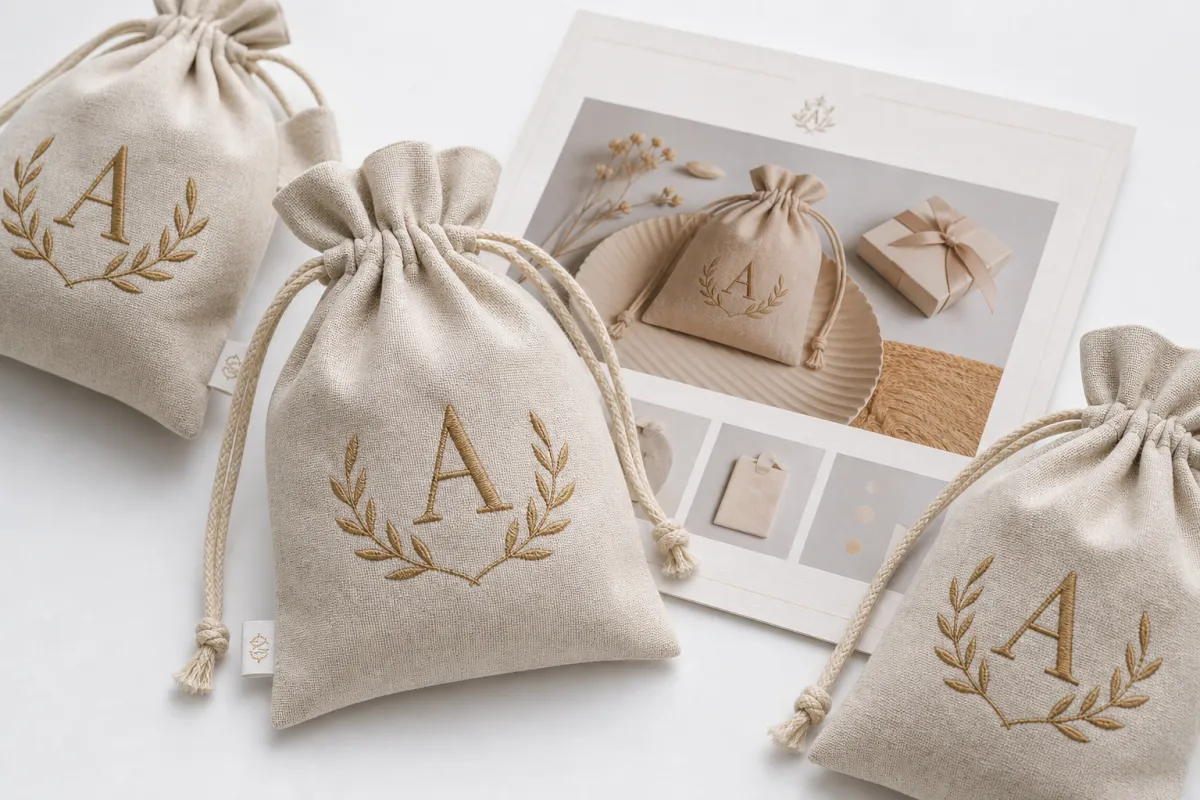
Open a plain plastic bag and the experience usually lands flat. Open a linen pouch with a clean monogram and the product feels more deliberate, more giftable, and more worth keeping. That shift matters for jewelry, skincare, candles, wedding favors, and compact retail goods. The same object can read like a sample in one package and like a present in another.
The useful part is how long the pouch keeps doing its job. Customers reuse these bags for travel, drawer organization, storage, and small gift wraps, and that reuse is real, not theoretical. The shipping carton gets tossed quickly. The bag stays visible, and that is one practical reason many brands order monogrammed linen drawstring bags instead of defaulting to packaging that disappears the same day it arrives.
Linen changes the tone because it suggests natural texture, restraint, and a more finished presentation without needing a rigid box or a loud graphic system. A clean monogram often feels more expensive than a crowded print, especially on products that already carry a premium feel. If you order monogrammed linen drawstring bags for higher-value items, the pouch should support the product quietly and let the product remain the center of attention.
There are practical wins too. A drawstring closure keeps small items from sliding out, the opening and closing motion feels natural, and the soft structure takes up less storage space than a rigid box. Because the bag can be reused, each unit keeps working after the first sale, which is the kind of efficient packaging buyers are usually after. Nobody needs a bag that only looks good in a mockup.
- Weddings: favor bags, welcome kits, bridal party gifts, and table gifts.
- Boutiques: jewelry, scarves, belts, hair accessories, and small apparel items.
- Beauty brands: soaps, sample sets, minis, and spa bundles.
- Gift programs: premium corporate gifts, seasonal sets, and client thank-you packs.
- Events: keepsakes, conference gifts, and limited-run promotions.
A pouch that gets reused is not an extra cost. It is a second and third impression.
The mistake I see most often is treating the logo as if it does all the work on its own. It does not. If the fabric feels flimsy, the stitching wanders, or the size is off, the bag still reads as cheap. Buyers order monogrammed linen drawstring bags because they want packaging that matches the price point of the product, not because they want a logo printed on the least expensive surface available.
That mismatch is easy to spot in person. A pouch can have a good logo and still fail if the cloth has no body or the opening collapses before the customer even uses it. That is why the material choice and the finishing details matter just as much as the monogram itself.
What You Get When You Order Monogrammed Linen Drawstring Bags
When you order monogrammed linen drawstring bags, you are usually getting a soft pouch made from linen or a linen-blend material with a cinch closure along the top edge. The monogram can sit on one side or both sides, depending on how visible you want the branding to be and how the pouch will be handled. The overall effect is simple, but simple often looks the most refined.
The range of use is broader than most buyers expect. A 3 x 4 inch pouch can hold earrings or rings. A 4 x 6 inch size works for soaps, samples, and small jewelry pieces. A 5 x 7 or 6 x 8 inch pouch can fit candles, mini kits, and bundled accessories. Larger formats are better for folded apparel, gift sets, and event favors. That flexibility is one reason brands order monogrammed linen drawstring bags for retail, gifting, and promotions alike.
Monograms have a natural advantage because they are restrained. A monogram usually feels more timeless than a bold full-color print, which helps when the product already carries a premium feel. I have seen buyers cram too much graphic work onto a pouch and end up with packaging that looks promotional instead of polished. If you order monogrammed linen drawstring bags, the goal is not to turn the pouch into a billboard. It is to make it feel like part of the product itself.
The drawstring closure solves a small but real handling issue. Loose items do not rattle around as much, and the customer can open and close the bag without tearing the fabric or wrestling with a stiff seal. That sounds basic because it is basic. Basic is useful, especially if you order monogrammed linen drawstring bags for goods that need to ship well, sit in storage, and be reused after purchase.
Reuse keeps the value moving. Customers use the pouch for travel, drawer storage, jewelry protection, gift wrapping, and simple organization, which extends brand exposure without another insert or another printed layer. If you order monogrammed linen drawstring bags, you are buying packaging that continues working after the sale is over.
One caution is worth keeping in mind. A monogram will not rescue poor packaging math. If the bag is too large, the product slides around and looks underfilled. If the fabric is too thin, the bag collapses and loses its presence. If you order monogrammed linen drawstring bags, fit and fabric weight matter just as much as the artwork.
Size, Fabric, Print, and Closure Specifications
Before you order monogrammed linen drawstring bags, lock down the specification details. A request like “medium size” or “nice linen” leaves too much room for guesswork, and guesswork is where packaging orders go sideways. Measure the product first, then allow enough room for easy insertion and a neat cinch at the top.
For sizing, these are common starting points:
- 3 x 4 inches: earrings, rings, small tokens, and sample items.
- 4 x 6 inches: bracelets, soaps, mini candles, and small beauty items.
- 5 x 7 inches: jewelry sets, accessories, and compact gift items.
- 6 x 8 inches: bundled kits, candles, and larger favors.
- 8 x 10 inches and up: folded apparel, premium gift sets, and event packs.
Fabric choice changes the finished piece more than many buyers expect. Natural linen gives the strongest textured look, but it can cost more and vary a little from batch to batch in surface feel. Linen-cotton blends usually come in at a lower price, drape more evenly, and print with more consistency. Heavier weaves feel more substantial, which helps if you order monogrammed linen drawstring bags for retail display or higher-value products. Lighter weaves still work, but they fit best with small contents and lighter-duty use.
Decoration method is the next decision. Screen print works well for simple logos and keeps the cost under control. Heat transfer can suit certain artwork, though it may not feel as refined on textured cloth. Embroidery gives a tactile, elevated look, but it usually adds cost and time. Woven labels offer a clean option when the logo is small or needs very crisp edges. If you order monogrammed linen drawstring bags, choose the method that suits the linework and the fabric, not just the budget line.
Color belongs in the specification too. Natural beige, off-white, black, and muted custom shades are common starting points. Drawstrings can match the bag, contrast with it, or shift slightly darker for better visibility. That detail matters because a rope-style closure can become part of the design instead of feeling like a leftover functional part. When buyers order monogrammed linen drawstring bags, the strongest results usually come from a controlled palette.
Here is a simple comparison to review before you order monogrammed linen drawstring bags:
| Option | Typical MOQ | Approx. Unit Range | Best For | Notes |
|---|---|---|---|---|
| Stock linen-blend pouch, 1-color screen print | 300-500 | $0.45-$0.90 | Promo sets, small retail runs, sample kits | Usually the fastest route if artwork is simple. |
| Heavier linen weave, 1-color print | 500-1,000 | $0.70-$1.40 | Boutique goods, gifts, premium product launches | Better drape and stronger shelf presence. |
| Embroidered monogram | 300-800 | $1.20-$2.80 | Luxury gifts, bridal, high-touch retail | Textured and polished, but slower and more expensive. |
| Custom size or dyed fabric | 1,000+ | $1.10-$2.60 | Signature packaging programs, repeat retail orders | Setup is higher, but the fit can be much better. |
Ask for these details before you order monogrammed linen drawstring bags:
- Finished bag dimensions, not just rough estimates.
- Fabric weight or blend, ideally in gsm.
- Print area, logo placement, and imprint colors.
- Drawstring material and closure style.
- Seam construction and overlock or topstitch finish.
- Sample approval before mass production.
For packaging that travels, I also like to check how the surrounding materials are likely to hold up in transit. Outer cartons should be packed in a way that survives ordinary carrier handling, and ISTA-style thinking is a useful benchmark for that. If you want a technical reference point, see ISTA transit testing guidance. For paper inserts or hang tags, FSC-certified stock is the cleaner choice when you want the whole package to feel deliberate instead of assembled from mismatched parts. That does not make the pouch itself special on its own. It just keeps the full presentation honest.
Cost, Pricing, MOQ, and Quote Basics
Cost becomes easier to predict once you know what shapes it. If you order monogrammed linen drawstring bags, the main variables are bag size, fabric weight, decoration method, color, drawstring material, stitching complexity, and whether custom packing is required. The language can get fancy, but the math stays grounded in specifications.
Small runs almost always carry a higher per-unit price, and that is normal. Larger quantities spread setup cost across more pieces, which lowers the unit price. Screen printing tends to stay below embroidery on price. Stock fabric is cheaper than custom-dyed fabric. If you order monogrammed linen drawstring bags with a custom size, expect a tooling charge or sample development fee to appear in the quote.
A practical buying range for many standard runs looks like this:
- Simple stock pouch with 1-color logo: lower MOQ, lower unit cost, faster production.
- Heavier fabric or larger size: moderate unit increase, better presentation.
- Embroidery or custom color: higher unit price, stronger premium feel.
- Fully custom specs: the best fit, but the highest setup burden.
One detail buyers miss often is what the quote actually includes. Does the number cover decoration, sample approval, freight, and overrun tolerance? Are setup fees listed separately? Does the supplier charge for artwork revisions? If you order monogrammed linen drawstring bags without asking those questions, you can end up comparing quotes that look different only because each one hides a different piece of the total cost.
The lowest unit price is not always the best value. A bag that arrives with crooked monograms, weak seams, or uneven sizing is still a bad purchase, even if the spreadsheet looks impressive. I would rather see a buyer pay a little more and receive a pouch that supports the product properly. If you order monogrammed linen drawstring bags for premium retail, saving a few cents can create more damage in presentation than it saves in cost.
There is one simple rule that keeps people from overspending in the wrong place: decide whether the pouch is the primary packaging or only one layer in a larger system. If it is the main presentation piece, the fabric and finishing need to be stronger. If it sits inside a rigid shipper, a simpler spec may be enough. That is why thoughtful buyers order monogrammed linen drawstring bags with the full packaging system in view.
If you need repeat purchasing, keep an eye on our Wholesale Programs so you can compare one-time buying against a long-term supply plan. If the usual starting questions are still open, our FAQ covers the basics without dressing them up. That saves time, which is valuable enough on its own.
Process, Timeline, and Lead Time for Production
The production path is straightforward once the buyer sends clear information. When you order monogrammed linen drawstring bags, the sequence usually runs like this: inquiry, spec confirmation, artwork review, sampling or digital proof, approval, production, quality check, and shipping. Skip a step and the schedule starts moving in the wrong direction.
What slows things down most often is vague logo artwork, late changes to bag size, fabric sourcing delays, and approvals that sit untouched while everyone assumes someone else is handling them. If you order monogrammed linen drawstring bags for a launch or event, treat the timeline as a chain. Every loose link matters, even the one that looks minor at first glance.
Lead times vary by spec. Stock-size bags with simple print can move relatively quickly, often around 10-15 business days after proof approval, depending on quantity and shipping route. Custom sizing, custom color, and embroidery usually take longer, often 15-30 business days or more. If you order monogrammed linen drawstring bags with a complex monogram or specialty finishing, plan around the longer end of the range rather than hoping for the shorter one.
Preparation keeps the schedule under control. Before you ask for pricing, gather these items:
- Final dimensions or the product size you need to fit.
- Logo file in vector format if possible.
- Exact quantity and any reorder expectation.
- Fabric color, print color, and drawstring preference.
- Delivery deadline and shipping destination.
- Any retail packing or bundling requirements.
If you order monogrammed linen drawstring bags for a specific event date, ask for a schedule update after sample approval. That checkpoint matters because the real production start usually shifts once the proof is signed off. I have seen projects drift simply because nobody reset the calendar at the right moment. A supplier cannot correct a date that was never confirmed.
Quality checks should be dull, and that is exactly what you want. Look for even stitching, clean edge finishing, straight logo placement, drawstrings that move smoothly, and consistent color across the run. If the bags will ship inside a mailer or carton, ask for a packing method that handles ordinary carrier abuse. If you order monogrammed linen drawstring bags, good quality control is not a luxury extra. It is the difference between a pouch that works and a pile of avoidable complaints.
For goods that include paper pieces such as tags or care cards, the paper spec should sit comfortably beside the pouch. A low-grade insert next to a well-made linen bag creates an awkward mismatch that people notice even if they do not say it out loud. Better to use cleaner stock, tighter printing, and a limited color palette. Buyers notice that kind of detail when they order monogrammed linen drawstring bags.
One more practical point: if your deadline is tied to a launch, trade show, or wedding date, build a buffer into the schedule. Shipping delays happen. Artwork revisions happen. A slightly longer lead time is a lot easier to live with than trying to rush a job that should have been started earlier. That is a planning issue, not a production miracle waiting to happen.
Why Businesses Order Monogrammed Linen Drawstring Bags From Us
Businesses do not keep buying packaging because of polished adjectives. They buy because the order arrives on spec, on time, and without unnecessary drama. That is the real reason customers order monogrammed linen drawstring bags from a supplier they trust. The bags need to look intentional, repeat cleanly, and make the product feel more finished than a plain sleeve ever could.
We focus on the details that actually change the outcome: consistent sizing, even stitching, clear logo placement, dependable drawstring function, and color that stays close from sample to production. If you order monogrammed linen drawstring bags, consistency matters more than a dramatic sales pitch. Nobody needs packaging that sounds impressive and arrives sloppy.
Customization flexibility is part of the value. Some buyers want a subtle monogram. Others need a stronger logo. Some prefer a soft natural linen tone. Others want black or off-white with a contrasting string. If you order monogrammed linen drawstring bags, the right supplier should help match the decoration method to the artwork instead of forcing every logo through the same process.
Support matters too. Buyers want fast quote responses, clear artwork guidance, sample options, and a realistic view of what will ship well. They do not need inflated promises. They need straight answers. If a logo is too detailed for embroidery, say so. If a thinner fabric will not stand up to retail handling, say that too. That is how you order monogrammed linen drawstring bags without wasting time or material.
The right packaging partner does not sell fantasy. It sells a clean spec that works on the production floor and in the customer’s hand.
That is where the value shows up in practical terms. You get a pouch that supports the product, a process that does not eat half the week in back-and-forth, and a final result that looks like it belonged there from the start. Businesses order monogrammed linen drawstring bags because the details are controlled, not because they want another packaging trend to chase.
If you are comparing suppliers, ask for three things in the first exchange: the lowest practical MOQ, a production timeline after proof approval, and a unit price broken out by size and decoration method. That tells you whether the supplier understands real buying decisions. It also tells you whether they can handle repeat work. Buyers keep order monogrammed linen drawstring bags from the same source when the process is clear and the output stays steady.
Another sign of a dependable supplier is how they handle edge cases. A good team will tell you if a monogram is too thin for the selected method, if the pouch needs a stronger seam for heavier contents, or if the size you picked is going to look loose once the product is inside. That kind of pushback is useful. It saves you from placing an order that looks good on paper but misses the mark in the hand.
How to Order Monogrammed Linen Drawstring Bags the Smart Way
If you want the cleanest result, start with the product rather than the artwork. Measure the item, allow room for fit, and choose the bag size before you order monogrammed linen drawstring bags. That one decision prevents a large share of sizing errors. A pouch that is too tight looks awkward. A pouch that is too large looks empty. Neither one helps the sale.
Then decide how much branding you actually need. A monogram can be elegant and sufficient on its own. A full logo may fit retail or promotional use better. A second-side print can help when the bag gets reused often. If you order monogrammed linen drawstring bags with the branding plan already settled, the supplier can quote the right decoration method instead of guessing at the end of the conversation.
Use this checklist before you request pricing:
- Product dimensions and target pouch size.
- Quantity, plus reorder expectations if you have them.
- Preferred fabric color and feel.
- Logo file and branding placement.
- Decoration method target: print, embroidery, label, or another option.
- Deadline, delivery location, and packing needs.
For retail or event work, ask for a sample or digital proof before full production. That is not being difficult. That is protecting the budget. A small sample fee is easier to live with than a full run that misses the mark. If you order monogrammed linen drawstring bags for a date-specific launch, skip that step only if you are comfortable with surprises you could have avoided.
Compare cost, MOQ, and lead time together. Do not chase the lowest unit price without checking whether the minimum order is too high or the turnaround is too slow. Packaging only helps if it arrives on time. That is why smart buyers order monogrammed linen drawstring bags with the full business picture in mind, not just the item price on its own.
Here is the simplest rule I can give you: confirm the specs, confirm the proof, confirm the shipping method. Then place the order. It sounds almost too easy, but the straightforward steps are the ones people skip under deadline pressure. If you order monogrammed linen drawstring bags after checking those three pieces, the final delivery is far more likely to work in the real world.
If you are planning for a launch, wedding, subscription box, or holiday set, do the fit check early and leave yourself room for one proof cycle. That is the cleanest way to keep the job calm. Rushing the artwork after the size is wrong only creates more work, and nobody needs that kind of headache right before production.
Need more background before you move forward? Our FAQ covers the practical questions, and the quote process is straightforward once you have dimensions and artwork ready. If you are planning repeat packaging, our Wholesale Programs are a better starting point than a last-minute scramble. Either way, do not wait until the final week to order monogrammed linen drawstring bags for a launch that matters.
The right pouch is rarely the loudest thing in the room. It is the piece that makes the product look finished, keeps small items together, and stays useful after the sale. That is why serious buyers order monogrammed linen drawstring bags instead of settling for whatever cheap packaging shows up first. Good packaging should earn its place, and this one does that by being practical first and polished second.
Frequently Asked Questions
Can I order monogrammed linen drawstring bags in a small quantity?
Yes, but the minimum order depends on size, print method, and whether the bag uses stock materials or a fully custom spec. Simple branding on standard colors is usually easier to produce at lower volumes than embroidery or custom-dyed fabric. If you need a small run, ask for the lowest practical MOQ and check whether setup fees change the unit price.
What is the typical lead time for monogrammed linen drawstring bags?
Lead time usually depends on artwork approval, sampling, production method, and shipping route. Stock-size bags with simple print are faster than custom sizes, embroidery, or special colors. To avoid delays, approve the proof quickly and confirm the delivery date before production starts.
Which monogram method is best for linen drawstring bags?
Screen print works well for bold, simple logos and usually keeps costs controlled. Embroidery gives a more premium, textured finish, but it can raise the price and extend production time. For small or detailed artwork, ask for a proof so the chosen method matches the logo linework.
What size should I choose when I order monogrammed linen drawstring bags?
Measure the item first, then add enough room for easy insertion and drawstring closure. Use a snug fit for jewelry and small gifts, and a looser fit for apparel accessories or bundled sets. If you are unsure, request two size options and compare the fit with a sample before placing a full order.
How do I get an accurate quote for monogrammed linen drawstring bags?
Send the size, quantity, fabric color, logo file, and preferred decoration method in one message. Ask the supplier to separate unit cost, setup fees, sampling, and freight so the quote is easy to compare. A complete spec sheet gets you a faster, cleaner quote and reduces back-and-forth.
Do monogrammed linen drawstring bags work for heavier items?
They can, as long as the fabric weight, seam construction, and bag size are matched to the item. Heavier contents call for stronger weave, tighter stitching, and a size that keeps the load from pulling on the corners. If the product has sharp edges or unusual weight, ask for a sample before you commit to a full run.

