Most food-themed apparel labels fail for one blunt reason: the logo was designed for a glowing screen, not for thread, ink, trim, heat, washing, and a tiny sew-in area. A clear Printed Woven Labels Food logo print specification keeps the cute strawberry icon from turning into unreadable red mush. Happens constantly.
A food logo might look gorgeous on a website header, menu board, sauce bottle, or bakery bag. Shrink it to 25 mm, weave it with polyester thread, fold it into a neck seam, then wash it 40 times. Different universe. Thread is talented. It is not Photoshop.
Printed Woven Labels Food Logo Print Specification Basics
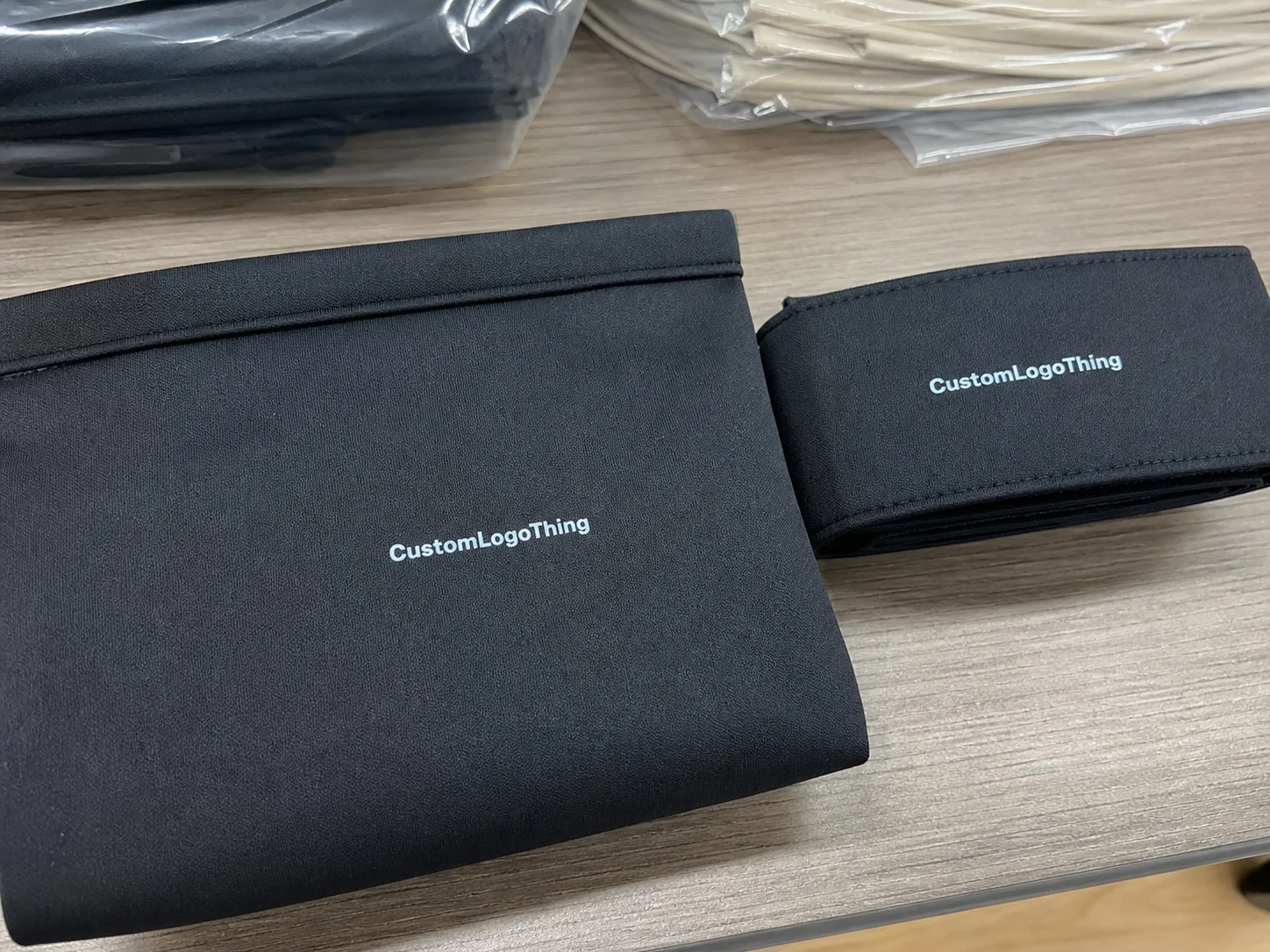
A Printed Woven Labels Food logo print specification is the production brief that tells a label supplier how to reproduce a food brand logo on a textile label. It should cover size, colors, material, weave or print method, fold style, edge finish, placement, backing, quantity, and normal manufacturing tolerance. Without that, the supplier is guessing. Guessing is not a procurement strategy.
These labels are used on clothing and textile items tied to food brands: restaurant uniforms, bakery merch, farm shop tote bags, beverage brand caps, chef aprons, packaged gift textiles, promotional T-shirts, and retail apparel. They are not food-contact packaging labels. That distinction matters. The spec focuses on textile durability, sewing performance, wash resistance, and brand accuracy rather than adhesive migration or direct food-contact rules.
The naming gets messy. Some buyers say “printed woven labels” when they mean a woven label with printed details. Others mean printed satin labels, printed cotton labels, or damask woven labels carrying a food logo. A usable spec needs to define the construction clearly: fully woven, fully printed, or hybrid.
- Woven detail: The logo is built with threads, usually polyester, on a loom.
- Printed detail: Ink is applied to a textile base such as satin, cotton, canvas, or polyester.
- Hybrid detail: A woven base or border is combined with printed text, fine marks, or color-heavy artwork.
Practical rule: If the logo has 12 colors, soft shadows, tiny script, and a sauce splash texture, do not expect a 25 mm woven tab to behave like a restaurant menu. Simplify the mark or choose a print method that can hold the detail.
A good spec prevents proofing drama. It also stops the magical thinking where a badge logo with a rooster, wheat stalks, “since” date, tagline, location line, and five ingredient icons is expected to fit on a tiny side seam tab. Pick the parts that matter. The label can carry a brand mark. It cannot carry the entire marketing department.
How Food Logos Translate Into Label Materials and Print Methods
Food logos often include gradients, illustrated ingredients, seals, badges, hand-lettered scripts, appetite-driven colors, and small decorative details. Nice for packaging. Risky for apparel labels. Before production, the artwork usually needs a label-specific version with fewer colors, heavier strokes, cleaner contrast, and less micro-copy.
For buyers ordering through Custom Labels & Tags, the first decision is construction. Fully woven damask labels are durable and premium, especially for simple restaurant marks, brewery icons, or farm shop logos. Printed satin labels are better for fine text, care information, small lettering, and full-color art. Printed cotton or canvas labels suit rustic bakery, coffee, organic farm, or handmade food brands, but the softer surface can blur fine edges. Hybrid labels work when the brand wants woven texture plus sharper printed information.
| Label Construction | Best For | Typical Strength | Watch-Out |
|---|---|---|---|
| Damask woven polyester | Simple premium logos, neck labels, side tabs | Strong wash resistance and crisp woven edges | Limited fine gradients and tiny text |
| Printed satin | Care text, complex colors, small lettering | Smooth feel and sharp print detail | Can look shiny; contrast must be checked |
| Printed cotton or canvas | Rustic bakery, farm, coffee, handmade merch | Natural texture and artisan look | Fine edges may soften after wash |
| Hybrid woven and printed | Logo texture plus detailed secondary text | Balanced brand texture and readability | Higher setup cost and longer proofing |
Material choice is not just a style preference. Damask polyester gives crisp woven detail and strong laundering performance. Satin feels smooth against the neck but may look glossy under retail lighting. Cotton has a natural look, which food brands love, but it will not hold razor-sharp micro-lines like coated paper. Recycled polyester can support sustainability messaging if documentation is available; if not, it is just a nice-sounding claim waiting to become a paperwork headache. The Forest Stewardship Council is a useful reference point for verified sourcing conversations, though FSC applies to forest-based materials rather than woven polyester yarn.
Print method matters too. Screen printing works well for bold spot color logos with limited shades. Digital printing handles gradients, CMYK artwork, illustrated ingredients, and complex color builds. Heat transfer can work for certain sharp logo details, especially on patches or branded textile items. Woven thread is best for long-lasting marks with fewer colors and clean shapes. Offset and flexographic printing are more common in paper and packaging production, so do not assume those methods apply directly to sew-in textile labels. Wrong category. Wrong machine. Wrong quote.
If the food logo relies on tiny herbs, coffee bean texture, watercolor fruit, shaded cheese wedges, or sauce droplets, printing usually wins. If the logo is a simple icon, strong wordmark, or badge with limited colors, woven usually wins. A strong printed woven labels food logo print specification should state that decision instead of tossing artwork over the fence and hoping the supplier reads minds.
Because these labels sit on clothing, not food contact surfaces, the spec should focus on textile durability and brand accuracy. Still, claims like organic, recycled, compostable, or country of origin need support. Regulators do enjoy paperwork. So do retailers. Ask for documentation before printing claims onto 3,000 labels.
Key Spec Factors: Size, Color, Artwork, and Readability
Size decides what survives. A 20–30 mm label can carry a simple logo tab: maybe a strawberry icon, coffee cup, wheat mark, or short initials. A 35–50 mm label can handle a brand name plus one short line. A 50–80 mm label is more realistic for chef uniforms, aprons, retail merch, or gift textiles that need care text, origin messaging, or a fuller badge. Trying to cram a full farm-to-table seal into 20 mm is how brands accidentally create decorative lint.
Text needs ruthless editing. Small serif type, thin outlines, trademark symbols, established dates, and tiny taglines often disappear in woven thread. For printed labels, they may survive technically but still look cramped. Convert text to outlines, increase stroke weight, remove unnecessary micro-copy, and test the logo at actual label size before sending files. Zoomed-in screen checks lie beautifully.
Color specification deserves more respect than it usually gets. Pantone references help, especially for spot color matching, but thread and fabric are not backlit screens. Tomato red on a monitor can become dull brick red in thread if nobody checks the yarn card. Cream ink on natural cotton may look warm and premium. Cream thread on pale yellow satin may look like the brand name gave up.
For a practical label spec, include these artwork details:
- Final vector file, preferably AI, EPS, SVG, or print-ready PDF.
- Fonts converted to outlines to avoid substitution errors.
- Pantone, CMYK, RGB reference, or thread color target where available.
- Actual label size in millimeters, not “small” or “standard.”
- Approved simplifications, such as removed shadows or merged highlights.
- Background color, border color, and any required negative space.
Logo simplification is not a downgrade. It is adaptation. Remove gradients that add no recognition value. Merge tiny highlights. Drop micro-copy. Create a label-specific version of the food logo if the original was built for menus, packaging, websites, or social media icons. The best apparel labels usually look intentional because someone edited the mark before production, not after the proof came back ugly.
Fold and placement also belong in the spec. Center fold labels work for neck labels. End fold labels fit side seams and hems. Straight cut labels work for patches or flat sewing. Miter fold labels give premium garments a cleaner angled edge. Loop fold labels stand out from a seam and are useful for side tabs or branded details. Each fold needs sewing allowance, often around 5–7 mm per folded end, depending on the garment and attachment method.
Tolerance is normal. Label size can vary by about ±1 mm on many runs. Color can shift slightly between thread lots or print batches. Woven detail may be affected by yarn count, density, and loom constraints. A smart spec names acceptable tolerance instead of pretending every label will come out like a museum print. For larger orders, request a digital proof and a physical sample or strike-off. If the logo includes tiny herbs, bakery script, coffee bean clusters, or sauce droplets, skipping sampling is gambling with extra steps.
Production Process and Timeline From Artwork to Sew-In Labels
The production path is simple when the brief is complete. Send artwork and label requirements. The supplier reviews feasibility. A spec sheet is created. A digital proof is issued. A sample or strike-off is produced if the order needs one. The buyer approves. Bulk production starts. Quality control checks are completed. Labels ship. None of this is glamorous. It is just the process that keeps 5,000 labels from arriving with the fold on the wrong side.
Typical timing depends on construction and supplier workload, but useful ranges help. Digital proofing often takes 1–3 business days. Sample production usually takes 5–10 business days. Bulk production commonly takes 10–20 business days after approval. Shipping can add a few days for express courier or several weeks for economy freight, depending on destination and service level.
What slows projects down? Missing vector files. Unclear color references. No fold style. Unrealistic tiny text. Late changes after sampling. Internal brand teams debating whether basil green feels more emotional than herb green. Thrilling stuff. The supplier cannot build a clean printed woven labels food logo print specification from a fuzzy PNG, a mood board, and “make it premium.”
Send the essentials upfront: vector logo file, final label size, material preference, quantity, fold type, sewing allowance, background color, text content, care symbols if included, required delivery date, and shipping destination. For chef coats, aprons, or uniforms, include laundering expectations. Industrial laundry and casual home wash are not the same test environment.
Industry standards are useful reference points. ASTM textile testing methods can guide conversations about colorfastness, abrasion, and wash behavior. ISTA procedures are more relevant to shipping performance for packaged goods, but they still remind buyers that transport stress is real, especially for bulk cartons of trims and labels. The International Safe Transit Association publishes packaging test protocols that many brands use for distribution planning.
Add timeline buffer. For first-time orders, add at least one extra week. Add more if the labels are for a restaurant uniform rollout, trade show, food festival, seasonal merch drop, or retail launch with a hard ship date. Once a sample is approved, any change should trigger a revised proof. Otherwise the buyer approves one thing, expects another, and acts shocked when production follows the signed proof. Production is literal like that.
Cost, MOQ, and Quote Variables Buyers Should Expect
Pricing depends on quantity, label size, material, construction, color count, print method, fold style, finishing, sampling, packaging, and shipping. The cheap label is usually cheap for a reason. Sometimes that reason is obvious after one wash.
Small custom runs may have higher unit costs because setup is spread across fewer pieces. A few hundred labels can make sense for a test run, limited merch drop, or new restaurant uniform program, but the unit price may look rude. Better unit pricing often appears around 1,000 pieces and above. Larger runs can push pricing down again, though complex artwork, recycled materials, custom colors, specialty backing, and premium print finishing can still add cost.
| Order Situation | Typical Quantity | Buyer Expectation | Tradeoff |
|---|---|---|---|
| Test run | 300–500 pieces | Higher unit cost, lower inventory risk | Good for proofing brand fit before scaling |
| Standard merch run | 1,000–3,000 pieces | Better unit pricing and cleaner production planning | Requires confidence in artwork and garment use |
| Large uniform or retail program | 5,000+ pieces | Lower unit cost if specs are stable | Mistakes become expensive fast |
Minimum order quantities vary. Many custom woven or printed clothing labels start around a few hundred pieces. Specialty materials, recycled yarns, custom-dyed colors, unusual shapes, adhesive backing, or hybrid construction can require higher minimums. Ask before designing around a rare trim that only makes sense at 10,000 pieces. Inventory is real money sitting in a box.
Setup fees may include woven loom setup, screen setup, sampling, custom color matching, artwork cleanup, or proof revisions. Some suppliers roll these into the unit price. Others list them separately. Neither model is automatically bad, but buyers should ask. Surprise fees are not a charming brand experience.
A quote request should include quantity tiers, exact size, material, fold, artwork file, number of colors, shipping destination, deadline, sample requirement, and whether labels need individual packing. If you want the supplier to compare woven damask against printed satin, say that clearly. Otherwise one quote may be printed satin, another damask woven, another cotton with lower wash durability. Same logo, very different label. Apples to apples. Not apples to mystery soup.
For most food-brand apparel orders, custom woven and printed labels should be judged by total fit, not only unit cost. A label that saves $0.03 but looks cheap on every apron is not a savings plan. It is a brand tax.
Step-by-Step Guide to Writing a Usable Label Spec
A usable printed woven labels food logo print specification does not need to be a 40-page technical manual. One clear page can do the job if it covers the right details. The goal is to remove interpretation. Suppliers should know what to make, how it will be used, and what proof checks matter before bulk production starts.
- Choose the label purpose. Decide whether it is a main brand label, side seam tab, neck label, apron patch, merch label, or care label with branding. Purpose controls size, material, fold, visibility, and durability requirements.
- Prepare artwork correctly. Use vector files where possible, outline fonts, provide Pantone or thread references, include a high-resolution visual reference, and mark any details that may be simplified.
- Define physical construction. List width, height, fold style, cut type, seam allowance, edge finish, backing, and whether the label will be sewn flat, inserted into a seam, or attached as a patch.
- Choose material and method. State whether the label should be woven, printed satin, printed cotton, printed polyester, or hybrid. Do not leave the supplier guessing. Guessing is how you get labels nobody wants to sew in.
- Set performance expectations. Include wash resistance, abrasion expectations, garment type, expected use environment, and whether labels will be used on chef coats, aprons, T-shirts, tote bags, or retail apparel.
- Approve proof details. Check spelling, logo proportion, background color, thread direction, fold location, cut line, seam allowance, and size at 100 percent scale before production starts.
- Archive the final spec. Save the approved proof, material choice, color references, supplier notes, and reorder quantity so the next run does not become a detective project.
Include wash expectations in plain terms. For a novelty T-shirt, standard home laundering may be enough. For chef coats and aprons, expect heat, detergent, grease, abrasion, and repeated washing. A printed cotton label that looks perfect on day one may soften around fine edges after repeated hot washes. A damask woven label may last longer, but tiny script might not be readable. Tradeoffs are not a problem if they are chosen on purpose.
Care symbols, origin text, fiber content, recycled claims, or organic claims need accuracy. If the label mentions recycled polyester, organic cotton, or country of origin, keep supporting documents with the spec. Marketing energy does not replace compliance support. Not glamorous. Very useful.
Common Mistakes That Make Food Logos Look Cheap
The first mistake is using the restaurant menu logo without adapting it for labels. Menu logos often have shadows, distressed texture, tiny taglines, script details, or illustrated ingredients that do not translate cleanly to woven or printed textile labels. Apparel labels need their own version. Usually simpler. Usually stronger.
The second mistake is choosing the smallest label to save pennies. A 20 mm label cannot carry a full farm-to-table badge, product slogan, established date, and tiny rooster illustration. It can carry a clean mark. Pick one. If the logo needs the whole badge system, move up to 50–80 mm and use a patch or larger brand label.
Contrast gets ignored too often. Cream on beige, pale yellow on white satin, dark brown on black cotton, and soft green on natural canvas can all look tasteful in a mood board and useless on a garment. If customers cannot read the brand name, congratulations, you made decorative lint.
Low-resolution artwork is another classic mess. Sending only a PNG from a website forces the supplier to rebuild or interpret the logo. They can sometimes clean it up, but the result may not match the original. Vector artwork gives cleaner edges, better color control, and fewer proofing arguments. It also reduces setup delays.
Skipping wash testing is risky for workwear. Chef coats, aprons, and food-service uniforms get punished by heat, grease, detergent, friction, and repeated laundering. Label durability matters more there than on a novelty tee sold at a weekend market. If the order is large, sample first and wash it. Boring? Yes. Cheaper than replacing a bad run? Also yes.
Buyers also approve proofs too quickly. They check the logo and miss fold direction, cut edge, text spacing, material callout, or sewing allowance. Those are not tiny details when 5,000 labels arrive wrong. Use a checklist, especially for reorders with small edits.
Finally, do not forget legal or claim language. Organic cotton, recycled content, country of origin, and care instructions need accurate support. If you are unsure, verify before production. Once it is woven or printed, the label does not care that the internal team “meant something else.”
Next Steps Before You Approve a Custom Label Order
Create a one-page label brief before contacting suppliers. Include the logo file, label purpose, garment type, size range, preferred material, fold type, quantity, deadline, and any required care or origin text. If you are ordering Custom Labels & Tags for several garment types, separate the specs. One label may not work equally well for a chef coat, tote bag, cap, and T-shirt.
Print the logo at actual label size on paper. If the herbs, bread icon, coffee cup steam, or script tagline already looks cramped on paper, thread will not rescue it. Brutal, useful, free test. Then ask suppliers for construction recommendations, not just a price. A good supplier should tell you whether woven, printed satin, cotton, polyester, or hybrid construction fits the logo and use case.
Request tiered pricing at two or three quantities, such as 500, 1,000, and 3,000 pieces. That shows where unit cost drops and whether inventory risk is worth the savings. For launch programs, ask whether sampling, artwork cleanup, freight, and setup are included. Those details affect the real landed cost.
Before approval, check size, color, spelling, fold, logo position, seam allowance, material, backing, and delivery address. Boring checklist. Expensive problem-solver. When the printed woven labels food logo print specification is clear before sampling, the quote is cleaner, the proof is easier to judge, and the finished garment feels like a real brand instead of a rush job.
FAQ
What should a printed woven labels food logo print specification include?
A printed woven labels food logo print specification should include label size, logo artwork, material, weave or print method, color references, fold style, cut finish, backing, quantity, placement, wash expectations, and proof approval requirements. Add garment type and use case, especially for aprons, chef coats, uniforms, or food-brand merch that will be washed often. Include vector artwork whenever possible so the supplier is not rebuilding your logo from a fuzzy screenshot. That is not a workflow. That is a cry for help.
Are woven labels or printed labels better for food logo clothing labels?
Woven labels are better for simple logos, premium texture, and long-term wash durability. Printed labels are better for detailed food illustrations, gradients, fine text, and complex color artwork. Hybrid options can work when the brand wants woven texture but needs sharper printed information or small secondary text.
How small can a food logo be on a custom clothing label?
Simple icons can often work around 20–30 mm wide, but detailed food logos usually need 35–60 mm or more. Tiny script, thin lines, ingredient illustrations, and seals need extra space or simplification. Always review the artwork at actual size before proof approval, because zoomed-in screen checks lie beautifully.
How much do custom printed or woven food logo labels cost?
Cost depends on quantity, size, material, color count, construction, fold type, sampling, and shipping. Expect higher unit costs for small runs and better pricing at larger quantities, often around 1,000 pieces and above. Ask for tiered quotes and confirm whether setup, sampling, artwork cleanup, and freight are included.
How long does production take for printed woven labels with a food logo?
Proofing often takes 1–3 business days, sampling can take 5–10 business days, and bulk production commonly takes 10–20 business days after approval. Complex artwork, custom materials, color matching, and late proof changes can extend the timeline. First-time orders should include extra buffer so launch dates are not held hostage by one tiny label.