Build a Printed Woven Labels Food Bulk Reorder Plan That Prevents Stockouts
A chef coat program can have 2,000 garments cut, bundled, and waiting, then stall over a missing 1.5-inch label. Annoying? Yes. Expensive? Also yes. That is why a Printed Woven Labels Food bulk reorder plan matters. Labels are small, shared across several SKUs, easy to undercount, and often needed before a garment can be closed, inspected, packed, or shipped.
Food apparel, hospitality uniforms, bakery aprons, coffee shop merch, farmers market totes, catering jackets, staff caps, and promotional textile goods all depend on repeatable label supply. The buyer is not just buying a trim item. The buyer is protecting production continuity, brand consistency, and the ability to avoid rush freight when replenishment lands late.
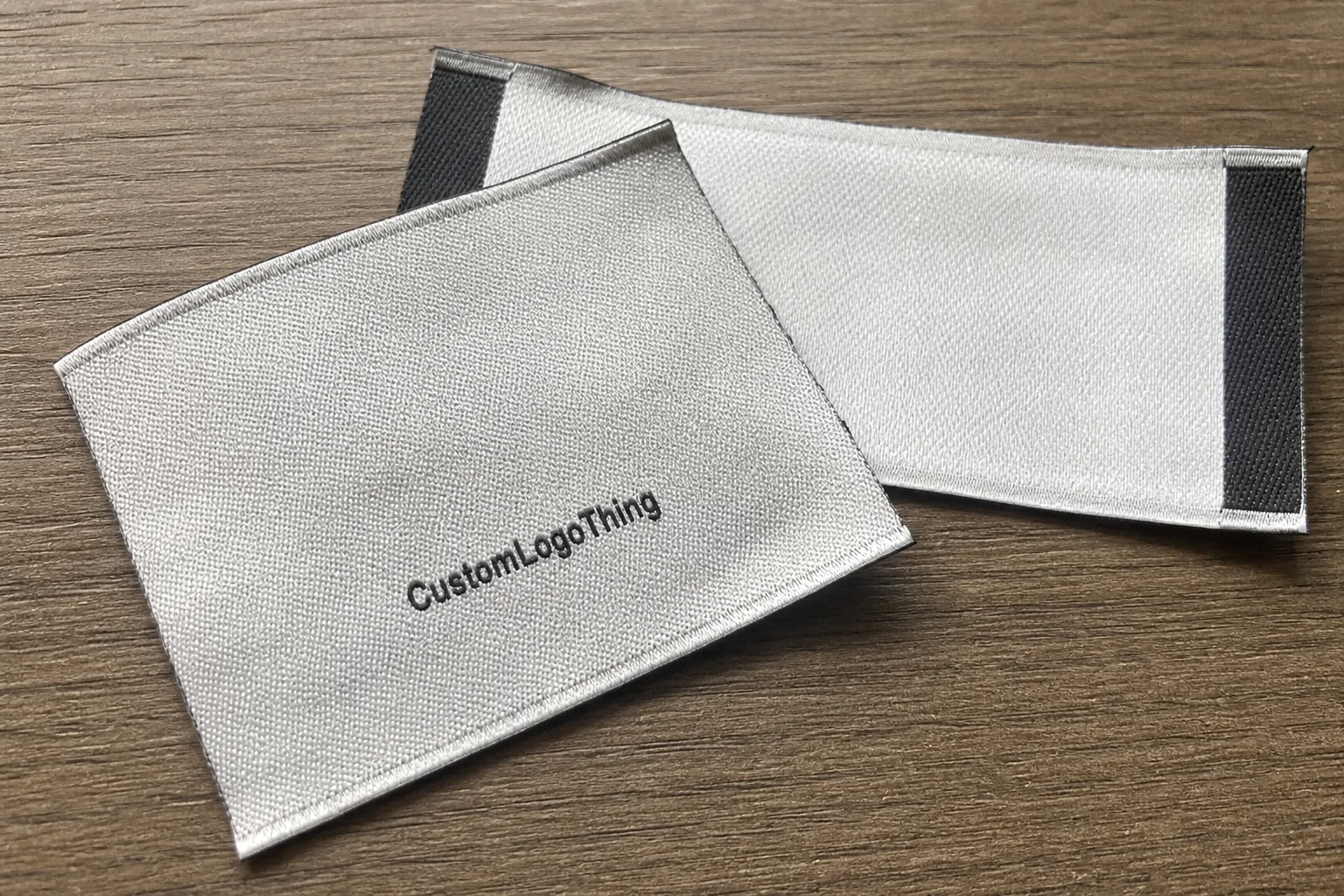
Woven labels are durable sewn-in or sewn-on branding components used on textile products. They can carry a logo, size, care instruction, origin line, product name, department marker, or short compliance message. In a strong reorder program, the finished size, artwork, fold style, yarn colors, backing, approval history, carton labels, and internal version code are all fixed before the next purchase order is released.
Most teams underestimate how fast label inventory burns. One restaurant group may use the same logo label across small, medium, large, and extra-large aprons, plus jackets, caps, tote bags, and seasonal staff gifts. Add salesman samples, replacement stock, damaged pieces, inspection pulls, and a second sewing facility, and the bin that looked safe on Monday gets ugly by Friday.
Production callout: Treat custom woven labels like buttons, thread, zippers, size strips, and carton labels. If one trim item is missing, finished goods can sit incomplete even when the main fabric is ready.
A useful reorder plan tracks average monthly usage, peak-season demand, minimum stock, active label versions, discontinued versions, and the person who can approve the final spec. Basic, yes. Still the kind of basic that prevents purchasing from reordering an old logo while the design team has already changed the spacing.
Custom Logo Things supports repeat label programs built around controlled production files rather than one-off guesswork. Buyers comparing branded trim options can review Custom Labels & Tags and structure reorders around an approved, repeatable specification.
Product Details for Woven Labels Used by Food and Hospitality Brands
Many buyers say “Printed Woven Labels” because they are comparing logo label options and care about how the finished design will look. Fair enough. Technically, a woven label is built with threads, not ink printed on the surface. Logos, letters, borders, and backgrounds are created through yarn color, weave structure, density, and finishing.
That distinction matters. Printed labels can be a better fit for gradients, photo-style artwork, QR codes, variable data, or very fine care text. Woven labels are usually chosen for a more premium sewn-in appearance, stronger abrasion resistance, and branding that holds up through handling, packing, and repeated laundering. For restaurant uniforms, deli caps, bakery aprons, coffee shop merchandise, farmers market totes, and textile gift packaging, durability is usually the deciding factor.
Material and weave type should match the job. Damask woven labels are common for detailed logos, smaller lettering, thin borders, and retail-facing brand presentation because the weave can carry finer lines. Satin-style labels have a smoother hand and can feel better against the neck, waistband, or inner seam. Taffeta-style labels are more economical and work for straightforward size markers, internal identification, or simple brand tabs where ultra-fine detail is not required.
The label’s purpose should drive the spec. A decorative logo patch on an apron pocket may need a straight cut edge, heat-cut edge, or merrow-style border. A neck label on staff apparel may need a soft center fold with enough sewing allowance to prevent scratchy contact. A size loop in a chef coat may only need 0.5 to 0.75 inches of visible width. A tote label carrying care text and origin details may need 1.25 to 2 inches of height before the text reads cleanly.
Food and hospitality programs usually care less about novelty and more about repeat use. A label that looks consistent across 5,000 aprons, 1,200 caps, and 800 tote bags gives the whole program a controlled finish. No mystery trim. No “close enough” logo from the last emergency order. Just the same approved construction, ordered before the shelves go bare.
Buyers managing larger replenishment cycles can connect label purchasing to Wholesale Programs, especially when multiple locations, franchise groups, regional uniforms, or seasonal merch drops need the same trim package.
Specifications to Lock Before Placing a Bulk Reorder
A repeat label order should not depend on memory, old emails, or a photo someone found in a shared folder. Lock the core fields before quoting: finished dimensions, artwork file, logo colors, background color, yarn color references, material type, fold type, cut style, edge finish, backing if any, sewing allowance, quantity per bundle, packing method, and carton labeling instructions.
If those fields are clear, purchasing, design, production, and warehouse teams can approve the same version before Custom Logo Things moves the order forward. If they are not clear, someone will guess. Guessing is a terrible quality-control system. Strangely popular, though.
Fold choice affects both appearance and sewing efficiency. Straight cut labels are used for patches, flat sewing, and visible brand tabs. End fold labels tuck the left and right edges under, which helps on side seams or external applications where raw ends should not show. Center fold labels are common in neck, waistband, and seam applications. Loop fold labels work well for size markers or hanging-style trim. Mitre fold labels create an angled presentation, often used on higher-end textile goods.
Size is not only a design choice. A 0.75-inch-high label can look sharp with a simple logo, but it may struggle with bilingual care text, food-handling notes, fiber content, dense compliance copy, or a thin border. Fine text below roughly 5 to 6 points can become hard to read in woven construction, depending on yarn, weave density, contrast, and the letterforms in the artwork. Thin script fonts are usually the first casualty.
Color matching also needs practical expectations. Woven thread creates texture, shadow, and depth, so a brand color will not behave exactly like flat ink on coated paper or a digital screen. A digital proof can confirm layout, size, fold, and general color direction. A physical sample gives better confidence for thread tone, hand feel, edge behavior, and readability. For color-critical programs, buyers should approve yarn direction before bulk production instead of assuming a perfect ink match.
Packaging details deserve space on the spec sheet. Ask for bundles of 100, 250, or 500 if your receiving team counts that way. Confirm polybag counts, SKU labels, carton markings, and whether the shipment goes to one warehouse or splits across multiple sewing facilities. If labels feed into a garment factory, carton labels should show the program name, label version, quantity, purchase order reference, and destination. Otherwise the wrong trim may get staged beside the right garments. Nobody enjoys discovering that after sewing starts.
For sustainability claims or paper-based hangtag programs that sit beside woven labels, procurement teams may also review chain-of-custody expectations from sources such as FSC. Woven label materials are a separate discussion, but packaging, hangtags, and trim often get evaluated together during supplier setup.
Pricing, MOQ, and Unit Cost Factors for Repeat Label Orders
Woven label pricing is shaped by setup complexity, label size, thread count, color count, weave density, fold type, finishing, quantity, proofing needs, packing requirements, and shipping method. A simple 1-inch center-fold size label and a 2.5-inch damask logo patch with four thread colors are not in the same cost lane, even if both are technically small.
MOQ is practical, not just policy. Smaller reorders may be possible, but bulk quantities usually reduce unit cost because setup, loom preparation, finishing labor, packing, and quality checks are spread across more labels. A reorder of 1,000 pieces may cover an emergency. A run of 5,000 or 10,000 pieces may be better if the label will stay active for several production cycles.
| Reorder Quantity | Best Use Case | Typical Cost Behavior | Buyer Watchout |
|---|---|---|---|
| 500 to 1,000 labels | Short refill, sample program, urgent gap coverage | Higher unit cost because setup is spread over fewer pieces | May trigger another reorder quickly if usage is rising |
| 2,500 to 5,000 labels | Regular uniform replenishment or regional merch run | Often a more balanced unit cost for active programs | Specs should be stable before committing |
| 10,000+ labels | Multi-location, wholesale, franchise, or annual forecast needs | Usually strongest unit-cost position | Storage, branding changes, and version control need discipline |
As a rough planning range, straightforward woven labels may land around $0.08 to $0.20 per unit at larger quantities. Detailed labels, premium folds, dense damask construction, specialty finishing, or smaller reorder quantities can move higher. Exact pricing depends on the approved specification, delivery location, current production load, and shipping requirements. Honest quoting beats a teaser price that changes after proofing.
Repeat orders usually quote cleaner than first runs because the artwork, construction notes, and approval records are already available. That reduces uncertainty. If nothing changes, the buyer can often move from reorder request to production scheduling faster than a new custom label project. If the logo, fold, size, material, or text changes, treat it as a revised order and allow time for proof review.
Do not compare unit cost alone. A cheaper label that frays, reads poorly, curls at the edge, feels scratchy, or arrives after the cut-and-sew window can cost more than the invoice suggests. Delayed sewing lines, replacement runs, relabeling labor, missed retail dates, and premium freight can erase a small unit-price saving quickly.
Cost control is usually straightforward: consolidate active SKUs where possible, avoid unnecessary color changes, use standard fold styles, order before peak uniform or holiday merch periods, and align label quantities with the garment production forecast. For a serious reorder plan, request quantity tiers using the same spec so purchasing can compare immediate need, economical bulk level, and annual forecast level without restarting the quote.
Proofing, Production Steps, and Timeline for Reorders
A clean reorder workflow is not complicated. Confirm the previous job reference. Review artwork and specifications. Approve quantity and quote. Check a proof if anything changed. Schedule production. Weave the labels. Cut and fold. Pack by the requested bundle count. Complete quality checks. Ship. Each step protects the next one.
Unchanged reorders are more straightforward than first runs because the construction has already been approved. Still, the buyer should verify quantity, delivery address, required in-hand date, and garment program status. A label that worked for last season’s apron may need review if the new garment has a different seam allowance, heavier fabric, different placement, or a tighter neck opening.
A new proof is recommended for logo updates, color changes, smaller dimensions, new fold types, added compliance text, revised care instructions, material changes, or a switch from internal label to retail-facing trim. Small changes can affect readability fast. A border that looked balanced at 2 inches wide may feel heavy at 1.25 inches. A fold allowance reduced by 0.125 inches may make sewing less forgiving.
Timeline depends on production load, label complexity, proof approval speed, finishing requirements, order quantity, shipping method, holidays, and receiving windows at the sewing facility. Many repeat woven label orders can move in a few weeks after approval, but not every order fits that window. Complex constructions, large quantities, physical sampling, split shipping, or detailed packing requirements can add time.
If the garment factory needs trim by a specific date, share that date early. “ASAP” is not a production date. It is a panic button with letters on it.
Buyer-side preparation makes a measurable difference. Approve proofs promptly. Send clean vector artwork when needed, such as AI, EPS, or editable PDF files. Identify inactive SKUs so an old version is not accidentally reordered. Confirm carton labeling before packing starts. Avoid last-minute address changes, especially when orders ship to multiple sewing locations.
Quality control should not wait until the carton arrives. For reorders, the checked points should include finished dimensions, fold direction, cut edge, logo position, color direction, yarn quality, legibility, quantity per bundle, carton labels, and visible defects such as broken threads, severe edge curl, distorted letters, or inconsistent folding. The acceptable tolerance should be understood before production, not debated after delivery.
Custom Logo Things is strongest as a practical production partner: clear specs, realistic timing, and direct communication. A good Printed Woven Labels Food bulk reorder plan should reduce surprises. It should not depend on rush promises, missing files, or the heroic assumption that every step will go perfectly.
Common Reorder Mistakes That Increase Risk or Waste
Under-ordering is the mistake buyers make most often. They count the upcoming garment production and forget samples, sales kits, replacements, mis-sews, inspection pulls, damaged pieces, new locations, and future replenishment. If 3,000 aprons are planned, a label order for exactly 3,000 pieces leaves no margin. A 3 percent to 8 percent allowance is often more realistic, depending on the program and sewing process.
Undocumented changes create another risk. A designer may adjust logo spacing to make the mark feel cleaner, while purchasing requests “same as last time” because the old invoice is the only record they have. Or a production team may ask for a smaller label without confirming whether the sewing operator can still catch the fold properly. Small decisions can create real floor problems.
Ordering only from last month’s usage is risky for food, hospitality, and promotional programs. Demand can spike around store openings, seasonal menus, new catering contracts, trade shows, staff turnover, local events, private-label projects, or retail gifting periods. If label consumption moves with hiring or promotions, build that into the forecast.
Inventory confusion is easy to prevent and expensive to ignore. Similar labels for departments, sizes, product lines, or seasonal artwork should have clear internal names and reorder codes. Cartons should identify the label version, quantity, purchase order, and destination. If the wrong label is sewn into 800 garments, the fix may involve trimming, resewing, discounting, or scrapping finished goods.
Skipping proof review after a revision is another common problem. Fine text, border thickness, thread contrast, fold allowance, and label size all interact. A buyer may approve a logo change by email without noticing that the new icon compresses poorly at the existing width. Proofing is not paperwork for its own sake. It is the checkpoint that prevents a small artwork change from becoming a bulk defect.
Over-ordering can be a problem too, even though suppliers rarely complain about it. If a logo refresh, new ownership structure, compliance change, or packaging update is likely, do not bury yourself in two years of obsolete labels just to shave a fraction off the unit price. A bridge order may be smarter until the branding is stable.
A simple checklist helps. Include active label versions, minimum stock levels, approved dimensions, fold style, material, past order quantities, expected lead time, carton labeling rules, and the person responsible for final approval. Keep it where purchasing and production can both access it. A spec locked in one inbox is not really locked.
Actionable Next Steps Before You Request Your Reorder Quote
Before asking for a quote, gather the previous order number if available, a clear photo of the current label, the approved artwork file, exact dimensions, fold style, material preference, current inventory count, and next garment production date. If the label is sewn into a garment, include a photo of the placement. That one photo can answer questions about fold direction, seam position, and visible label area.
Estimate quantity with a practical formula: upcoming garment units plus sampling allowance, replacement allowance, safety stock, and planned launches or seasonal promotions. For example, if 4,000 aprons are scheduled, 150 sales samples are needed, expected replacement stock is 200 units, and safety stock is 500 labels, the reorder should be closer to 4,850 pieces than 4,000 pieces. Round into quote tiers so purchasing has options.
Ask for three quantity levels when practical: immediate need, economical bulk level, and forecast level. That lets the buyer compare unit cost, storage impact, and cash flow without delaying the reorder decision. If branding is stable and usage is predictable, a larger run can make sense. If a logo refresh is likely, a smaller bridge order may be safer.
- Send the basics: order reference, artwork, dimensions, fold, material, quantity, and in-hand date.
- Clarify changes: logo edits, new colors, revised care text, different garment placement, or updated carton labels.
- Confirm routing: one delivery address, split shipments, sewing facility contacts, and receiving deadlines.
- Request tiers: urgent refill quantity, efficient bulk quantity, and annual forecast quantity.
- Set approval ownership: name the person who can approve proof, price, and production timing.
Custom Logo Things can review the existing label, confirm specifications, quote realistic options, and prepare production once the buyer approves artwork, pricing, and timeline. If you need process details before submitting a request, the FAQ covers common custom order questions.
A Printed Woven Labels Food bulk reorder plan works best when label inventory is treated like a production-critical component, not a last-minute accessory. Lock the spec. Forecast usage. Protect safety stock. Reorder before the shelf looks empty.
FAQ
What information do I need for a printed woven labels food bulk reorder plan?
Send the previous order reference if available, label photos, approved artwork, dimensions, fold type, material preference, quantity, delivery address, and required in-hand date. If the reorder is revised, identify every change clearly, including logo updates, color adjustments, text edits, care instructions, or new application requirements.
How does MOQ affect the cost of bulk woven label reorders?
Higher quantities usually reduce unit cost because setup, loom preparation, finishing, packing, and quality control are spread across more labels. The best MOQ depends on usage rate, storage space, cash flow, brand stability, and how long the garment or merch program will stay active.
Can I reorder woven labels if I only have a sample label and no artwork file?
A physical sample can help confirm size, fold style, color direction, and construction, but clean artwork is usually needed for the most accurate repeat production. Custom Logo Things can review the sample and advise what files or reconstruction steps are needed before quoting or proofing.
What lead time should I plan for food apparel label reorders?
Lead time depends on label complexity, order quantity, proof approval speed, finishing, current production schedule, and shipping method. Plan reorders before inventory reaches the danger point so the program is not forced into rush production, substitute specs, or premium freight.
Are woven labels suitable for restaurant uniforms, aprons, and food brand merch?
Yes, woven labels are commonly used on uniforms, aprons, caps, tote bags, and textile merchandise because they offer durable branding and a polished sewn-in look. Choose the material, fold, size, and edge finish based on how the item will be worn, washed, sewn, packed, and presented to staff or retail customers.