Buyer Fit Snapshot
| Best fit | Order Seasonal Promotional Packaging Kits projects where brand print, material claims, artwork control, MOQ, and repeat-order consistency need to be specified before quoting. |
|---|---|
| Quote inputs | Share finished size, material target, print colors, finish, packing count, annual reorder estimate, ship-to region, and any compliance wording. |
| Proofing check | Approve dieline scale, logo placement, barcode or warning zones, color tolerance, closure strength, and carton packing before bulk production. |
| Main risk | Vague material claims, crowded artwork, missing packing details, or unclear freight terms can make a low unit price expensive after revisions. |
Fast answer: Order Seasonal Promotional Packaging Kits: Production Spec, Color Control, and Delivery Risk should be specified like a repeatable production item. The safest quote records material, print method, finish, artwork proof, packing count, and reorder notes in one written spec.
Production checks before approval
Compare the actual filled-product size with the drawing, then confirm tolerance on folds, seals, hang holes, label areas, and retail display edges. Reserve space for logos, QR codes, warning copy, and material claims before decorative graphics fill the panel.
Quote comparison points
Review material grade, print process, finish, sampling route, tooling charges, carton quantity, and freight assumptions side by side. A quote is only useful when the supplier can repeat the same color, closure quality, and packing count on the next order.
A seasonal drop that goes live on Monday and lands in a warehouse on Friday after close has a name: avoidable damage. The campaign misses its window, the inventory sits, and the team ends up explaining why "approved" did not mean "ready." That is why smart teams order seasonal promotional packaging kits early, with the same seriousness they give media buys, forecasts, and launch copy. I have watched projects lose money on this exact point. Creative gets locked. Procurement assumes the supplier is already moving. Then someone asks for final dimensions, final artwork, and a packaging spec sheet that never existed. It is a little brutal, honestly, because the fix was available weeks earlier.
Timing and spec clarity decide whether a seasonal campaign makes money or burns it. A kit may look like "just boxes," yet it is closer to a small logistics system. It protects the product, signals the season, and shapes the first physical interaction a customer has with the brand. If you plan to order seasonal promotional packaging kits, the real work starts before the quote. This guide stays practical: what belongs in a kit, which specs matter, how pricing changes, where delays originate, and how to place the order without creating a week of surprises. It also shows where Custom Printed Boxes, packaging inserts, and retail packaging choices change the final result.
Why You Should Order Seasonal Promotional Packaging Kits Early
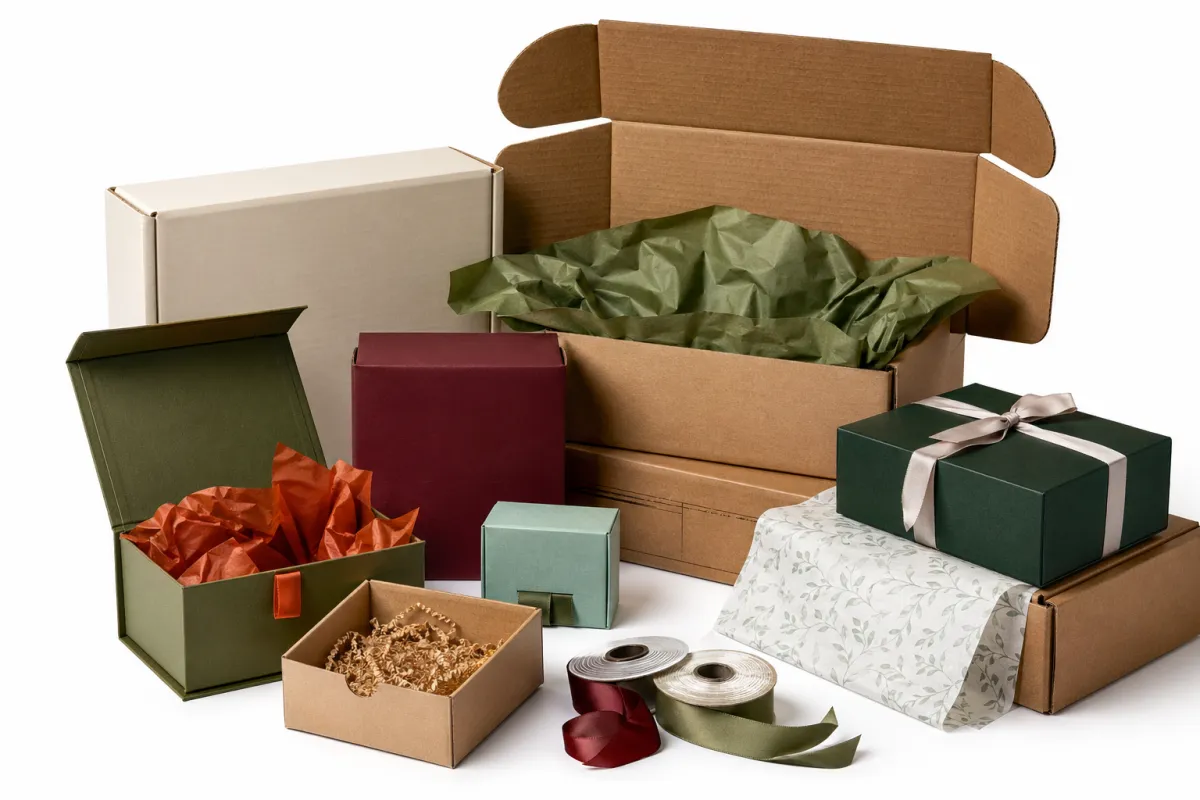
The miss that burns margin
The most common mistake is brutally simple. A launch team treats Packaging Lead Time as if it were shipping lead time. The two are not cousins; they are different species. If your Black Friday campaign starts while cartons are still in prepress, conversion slips before the first ad impression has a chance to pay off. Lost margin from delay usually hurts more than a modest rush premium ever would. I keep seeing the same pattern: campaign budget approved, creative approved, sales targets approved, and only then does procurement ask where the cartons are. Teams that order seasonal promotional packaging kits too late often discover the real bottleneck is not printing, but decision latency.
When you order seasonal promotional packaging kits on a realistic schedule, you buy time in the places that matter most: proofing, sampling, production, and freight coordination. That time cushion absorbs changes without turning the whole project into a fire drill. Seasonal supply planning needs breathing room. Without it, every decision gets compressed into the last few days before launch, which is usually when the most expensive mistakes happen.
Why seasonal kits matter beyond "pretty packaging"
Seasonal campaigns live on short clocks. The packaging has to do several jobs at once: protect the unit, move quickly through fulfillment, and tell the customer this offer was designed for a specific moment. Weak inserts or flimsy sleeves fail on all three counts. Well-built kits solve that problem by giving fulfillment teams a repeatable structure. Labor becomes predictable. Error rates drop. Brand presentation stays consistent across warehouses, pop-ups, and retail partners. That is why teams that order seasonal promotional packaging kits early usually get cleaner execution than teams that wait for a last-minute fix.
The real benefit of order seasonal promotional packaging kits is not decoration. It is reduction of improvisation. If a packing team has to decide at midnight which insert belongs with which product, the cost rises and the brand becomes less consistent. A built kit turns that nightly guesswork into a fixed process. The line moves faster, and the result looks deliberate instead of assembled in a hurry. That difference is the gap between a campaign that feels planned and one that kinda limps across the finish line.
Economic reasons to buy earlier
Ordering early usually lowers risk and often lowers cost. The savings show up in places buyers forget to model:
- Fewer rush charges: expedited production gets expensive quickly, especially after final files land late in the queue.
- Cleaner freight planning: consolidated shipping is usually cheaper than split emergency loads across several dates.
- More meaningful QA: a real sample can reveal fold, fit, and scuff problems before thousands of units leave the plant.
- Better cash flow control: proofing and sampling are easier to budget when they happen before the calendar turns hostile.
If you need 8,000 kits for a seasonal push and 2,000 more for retailer overflow, the order has to respect the calendar, the freight lane, and the sample cycle. Trying to order seasonal promotional packaging kits in the final week rarely buys speed. It buys pressure, and pressure is a poor substitute for time.
What this guide covers so you can move with confidence
The rest of the process breaks into the pieces that actually affect the result: what a seasonal kit includes, the materials and structural specs that prevent returns, pricing logic and MOQ traps, timeline expectations, and the hidden causes of delay. The useful part of this planning is not abstract. It is concrete enough to work with at 5:00 p.m. on a Monday when a launch review is already running late.
Keep one rule visible during planning. If a campaign spans more than one sales channel, the kit still has to behave like one system. That means consistent dimensions, consistent labeling, and no vague "standard" material references from a supplier. If a vendor cannot tell you what base material, finish, and load logic they are quoting, the quote is not ready for a real budget review. The same logic applies whether you are buying corrugated mailers, custom printed boxes, or premium retail packaging.
What Seasonal Promotional Packaging Kits Include
Core components you should expect in a real kit
A proper seasonal kit is rarely a single box. The usual structure includes several pieces working together:
- Outer cartons such as mailers, shipping cartons, or display-ready cartons depending on the channel.
- Slings, sleeves, and tuck-top sleeves to reduce scuffing, crush, and rough handling.
- Internal inserts made from corrugated board, molded pulp, die-cut paper, or foam alternatives.
- Tissue wraps and cushioning film for a cleaner unboxing rhythm and lower friction.
- Labels and stickers for batch coding, barcodes, and campaign identity.
- Campaign cards for instructions, care notes, legal text, or QR campaigns.
Many buyers treat those pieces as optional. They are not. If a shipment lacks an insert map, the packing line slows. If campaign cards are missing, support gets the calls. If labels are inconsistent, retail audits become a mess. The kit works because the parts work together, not because one component looks good in a mockup. That is especially true when you order seasonal promotional packaging kits for mixed channels and need every pack to arrive in the same condition.
Different channel kits, different logic
For teams that need to order seasonal promotional packaging kits, one structure should never be forced across four channels without checking fit. Each channel values different things, and the differences are more than cosmetic.
Ecommerce mailers: prioritize lightweight structure, mail-safe corners, barcode clarity, and easy-open tear paths. Damage rates matter here, and so does repacking speed when fulfillment spikes after a promotion.
Retail-ready gift packs: focus on shelf impact and stackability. The outer carton often needs clean graphics and stronger corner reinforcement because store handling is less gentle than a packing bench.
Influencer boxes: depend on unboxing rhythm. Rigid top structures, layered inserts, and short storytelling copy matter more here, even if the unit cost climbs. The share rate can justify the extra spend.
Subscription launches: need repeatable kitting. Orders arrive weekly or biweekly, so assembly speed and consistency usually matter more than elaborate one-off features.
Standardize or customize?
Standardization gets underestimated in seasonal planning. Keep carton outside dimensions, sleeve lock geometry, internal spacing grid, and adhesive systems stable across the season. Customize the graphics, the seasonal palette, the campaign card, and the accents that create brand signal, including custom printed boxes finishes. That balance keeps labor predictable and lets one assembly SOP cover most of the volume.
Go full custom where the return justifies it. If five flavors share the same footprint, one insert style with color-coded cards can do the job. If product height varies by 25 mm, a custom insert may pay for itself by cutting crush damage, lowering support tickets, and reducing the number of awkward hand adjustments on the line. Many teams that order seasonal promotional packaging kits for recurring drops find this mixed approach is the most cost-efficient path.
"The moment one campaign tries to run three structures, you do not have packaging planning anymore. You have a re-run waiting to happen," one operations lead told me after a holiday launch that nearly slipped a week.
Bundling benefits that save money and mistakes
Bundled kits usually lower labor error by 20-40% because fewer component SKUs move through the warehouse. Picks get cleaner. Scanner confirmation gets faster. Weight variance per parcel becomes easier to control. When labels and cards arrive pre-bundled with the kit, your order seasonal promotional packaging kits workflow turns into a packaging line instead of a puzzle with missing pieces.
Common add-ons can turn a basic kit into a stronger conversion tool:
- QR codes linked to product pages, care videos, or loyalty sign-ups.
- Barcodes and batch numbers printed at the right contrast for scanner reliability.
- Tear strips for quick-open retail packs without scissors.
- Compartment inserts for multi-item bundles, especially sample sets.
- Product callout cards that show usage tips or campaign terms clearly.
Materials, Print, and Structure Specs That Matter
Material choices and where each one works
Most buyers start with color and logo and forget that material is the foundation of performance. That is backwards. The usual options are straightforward, and each one behaves differently in production and transit:
- Corrugated board: strong and cost-efficient for shipping-facing kits, especially 3-ply or 5-ply depending on load.
- Rigid chipboard: useful for display-facing boxes and kits that need firmer edges.
- Folding cartons: efficient for lightweight bundles and retail-facing campaigns.
- Coated paper: gives a vivid print surface, though moisture tolerance can be weaker.
- Paperboard inserts: suitable for light hold lines and shape retention for non-fragile goods.
If the product is brittle or contains glass, thin wallboard is not the place to save money. For parcels above 2.2 kg after packing, test wall caliper and flute selection before anyone signs off. That part is not glamorous, but structure is the first insurance policy the package has. It is also where teams that order seasonal promotional packaging kits late often pay for shortcuts twice: once in production and again in returns.
Print methods and finishes
Most campaigns start with CMYK and add spot color only where accuracy matters. For brand-critical colors such as a specific red or a signature green, a PMS match prevents unpleasant surprises. Premium look requests deserve a finish-by-finish review, not a shrug and a sample swatch.
- Foil stamping for premium accents and selective attention.
- Embossing for tactile detail and stronger brand memory.
- Spot UV for gloss highlights on selected surfaces.
- Matte lamination for a premium retail feel and deeper print character.
- Gloss lamination for brighter color pop and faster visual scanability.
Every finish changes the handling risk. Spot UV can scuff if the pack sequence is wrong. Foil can chip when transit is rough. Matte lamination looks elegant, yet ink density targets may shift depending on the substrate and press speed. For anyone who wants to order seasonal promotional packaging kits with strict color expectations, physical proofs on the same substrate are worth the extra step. They save far more money than they cost.
Structure details that affect performance
Structural specs are where returns begin or end. Vague language invites failure. Tight language fixes it. Be specific about these items:
- Internal tolerances: target 1-3 mm clearance around the product footprint unless a snug lock fit is intentional.
- Weight allowance: include the unit weight plus a 10-20% buffer for moisture, labels, and seasonal inserts.
- Drop risk: define whether the route includes parcel carriers, pallets, or mixed handling. If uncertainty remains, test against a minimum 76 cm drop profile.
- Insert styles: die-cut trays, honeycomb corrugation, corner blocks, and molded forms differ in cost and stability.
For fragile product campaigns, specify handling orientation and cushioning logic in plain language. If a kit includes mixed products, add orientation arrows and a clear "heaviest on shelf" rule. Glass and soft goods should not share an improvised cavity just because the first sample fit by luck. If you plan to order seasonal promotional packaging kits with multiple SKUs inside one box, this is where the quote becomes a real engineering document.
Standards matter here. I ask teams to flag ISTA and ASTM test logic during quoting, even on short runs. Those references are guardrails for distribution performance, not decorative jargon. Sustainability belongs in the spec too. Recycled content %, recyclable structure confirmation, and coating chemistry should appear early. If a kraft-grade structure with water-based varnish can replace glossy film, the team should know that before approval. For projects tied to FSC language, ask for chain-of-custody alignment in writing so nobody has to guess later.
Packaging.org provides practical guidance on packaging material choices and performance criteria, which helps when internal stakeholders challenge a switch from coated board to uncoated board.
Quote-ready data inputs
To get a quote that means something, send the supplier the exact data they need:
- Product dimensions in mm (height, width, depth) and tolerance for each variant.
- Gross weight including add-ons such as labels, tissue, inserts, and campaign cards.
- Shipment method: air freight, LTL, or full pallets.
- Quantity by channel (warehouse, DTC, wholesale) and the re-shipment split.
- Artwork files and production-ready dielines where available.
If your goal is to order seasonal promotional packaging kits with fewer revisions, this list determines whether the project starts clean or turns into a three-week correction loop. It also helps the supplier decide whether packaging inserts should be paperboard, molded pulp, or corrugated.
Pricing, MOQ, and What Changes Your Quote
What actually drives cost
Price is never one number. It is a stack of variables, and the stack changes fast. The same order seasonal promotional packaging kits project can move from sensible to shocking because of these drivers:
- Size and format: more board area means more material and more print cost.
- Material thickness: heavier board raises both product cost and freight cost.
- Print coverage: full bleed costs more than a simple one-color layout, especially if white underprint is needed.
- Special finishes: foil, embossing, and spot UV add setup work and raise per-unit costs.
- Insert complexity: die-cut geometry, locking structures, and premium cushioning all increase labor.
- Packaging labor: assembly time rises as the number of parts rises.
- Freight mode: split shipments can cost much more than consolidated dispatch.
The most common trap is comparing unit price without freight and labor. The cheapest unit quote can become the most expensive landed cost once fulfillment work and shipping are included. Procurement teams see this every quarter, usually after the first invoice. That is why teams that order seasonal promotional packaging kits with a landed-cost lens usually make better budget decisions than teams focused on sticker price alone.
MOQ, unit pricing, and economies of scale
MOQ depends on the plant, the substrate, and the print method, but useful ranges exist. Many suppliers quote 1,000 to 2,000 units for standard kits and 2,500 to 10,000 units for fully custom builds. Higher volume reduces unit cost because tooling and setup are spread across more pieces. Total spend does not always fall in the same way, especially if the project introduces extra material or a more complex insert.
Standard sizes are almost always cheaper than fully custom structures. Stay inside a known carton envelope and swap graphics only, and the cost stays manageable while lead times stay cleaner. Once dimensions change and the die-line turns unusual, every adjustment touches tooling and usually stretches the schedule. If you plan to order seasonal promotional packaging kits more than once, stability pays twice: once on the quote and again on the reorder.
Setup fees versus recurring unit costs
Every quote usually contains two buckets:
- One-time costs: artwork prep, prepress checks, dieline engineering, plate setup, die tooling, and sample builds.
- Per-piece costs: board, print, finishing, and finishing labor.
That split matters for reorder behavior. Setup costs can be amortized if you reorder to a similar spec. Many established campaigns do exactly that. One round of careful pre-launch optimization becomes the template for the next season, which means less rework and fewer hidden fees. Good teams remember this during order seasonal promotional packaging kits planning instead of treating each season like a blank sheet of paper. The same discipline also keeps retail packaging and ecommerce formats aligned enough to share a common production path.
Pricing bands you can use in procurement reviews
| Kit tier | Typical materials / finish | MOQ range | Indicative unit cost band (USD) | Lead-time band |
|---|---|---|---|---|
| Basic seasonal mailer kit | 12-15 pt coated board, 1-color CMYK print, no foil/UV | 1,000-2,500 | $0.30-$0.55 | 8-12 business days |
| Mid-tier printed kit | 3-ply corrugated + custom sleeves + 4-color print + selected lamination | 2,500-5,000 | $0.55-$1.20 | 12-18 business days |
| Premium rigid kit | Custom chipboard/folded rigid with compartment inserts + premium finish | 5,000+ | $1.20-$2.60 | 3-5 weeks |
Use the table as a framework, not a promise. Press cycles, currency swings, and freight lanes all move the final number. Teams that keep artwork tidy and component count lean can sometimes upgrade only a few SKUs and keep the rest in a more controlled tier. That is often the difference between a profitable seasonal run and a run that merely looks good on paper.
Tradeoffs that change both cost and speed
Fewer colors usually mean lower cost and fewer registration headaches. Fewer special finishes usually mean fewer defects and fewer QC rechecks. The point is not to make the piece less premium. The point is to spend where the customer actually feels it. A foil accent on the first layer may be enough. A matte finish with one glossy logo stamp can deliver character without dragging the schedule into a ditch.
If you want to order seasonal promotional packaging kits without surprises, make the compromise early: clean structure first, showpiece details second. Customers notice quality every time they touch the package. They usually do not care how many file versions lived in prepress unless complaints start stacking up.
How packaging affects reorder budgets
Reorders have real leverage when specs stay stable. If the campaign returns every year and dimensions hold, unit cost often improves by 5-15% after the first run, assuming art changes remain controlled. Change twenty variables each season and that benefit disappears. For any order seasonal promotional packaging kits program, the question is simple: what should stay fixed, and what should refresh?
Process and Timeline for Seasonal Promotional Packaging Kits
End-to-end workflow you can run repeatedly
Most projects win or lose on sequence, not creativity. The practical workflow looks like this:
- Brief intake: define channel, campaign goal, unit count, and delivery windows.
- Dieline review: verify geometry, fold lines, glue flaps, load points, and clearance.
- Proofing: digital proof and, for color-sensitive runs, a physical proof.
- Sampling: full physical sample on production board, not mock cardstock.
- Production: press run, die cutting, and finishing.
- Quality check: dimensional checks, print consistency, fold tests, and packing tests.
- Shipment: carton-level inspection, labeling, and freight scheduling.
The sequence is easy to understand until one approval sits for 48 hours and the whole schedule shifts. Anyone who wants to order seasonal promotional packaging kits reliably should build sign-off checkpoints into the calendar and document them clearly. A launch plan with no decision dates is just a wish list.
What usually slows things down
The same four bottlenecks show up over and over in real campaigns:
- Missing dimensions: "about this size" does not help production. Exact measurements do.
- Late artwork: files are not locked, then "minor" edits keep arriving all week.
- Unclear insert counts: 6,000 units for one channel and 2,500 for another without a split plan creates avoidable errors.
- Delayed approvals: legal language, label updates, and campaign card changes after prepress often force reprints.
If your team cares about timeline control, freeze the mechanical file before the supplier enters final imaging. Waiting on legal for ingredient claims at 4 p.m. on Friday is effectively choosing delay mode. The supplier cannot print certainty out of uncertainty. That is the hidden reason some teams that order seasonal promotional packaging kits on paper still miss the shelf date in practice.
Timeline benchmarks
Practical ranges help teams set expectations:
- Simple kits (standard format, clean CMYK, low insert count): 8-14 business days for production, plus 3-7 days freight for domestic delivery.
- Mid-complexity kits (die-cut inserts, two print finish steps): 14-20 business days plus 5-10 days for logistics.
- Premium kits (custom structures, mixed materials, finish combinations): 3-5 weeks depending on sampling and sign-off speed.
Holiday peaks compress supplier capacity, not your patience. In seasonal windows, a 25% buffer is a minimum, not a luxury. Ignore it and the plan starts with a delay already baked in.
A logistics manager once summed it up: "A fast proof only matters if it gets back before the queue fills."
Rush orders: what can be accelerated and what can't
Rush helps in pieces, not as magic. Print plate setup and scheduling slots can often move faster. Raw material procurement, full prepress checks, and comprehensive QA cannot always be compressed without risk. Rush fees usually show up in three places: premium press slots, shorter freight timelines, and accelerated inspection. If a launch really needs that treatment, ask for the true total cost difference before anyone assumes the budget will absorb it quietly.
For teams that need to order seasonal promotional packaging kits on short notice, a smarter move is to rush one SKU and keep the rest on a normal run. That protects quality and keeps the panic from spreading to every item in the set.
Freight and full supply-chain planning
Factory completion is not the end of the clock. The schedule still has pick-up, customs documents if the order crosses borders, and destination staging. Single-warehouse campaigns should include pallet count, lift dimensions, and forklift requirements early. Multi-location programs work better when pallets are split by destination and carrier booking windows are locked while production is still underway.
If two regions have different delivery promises, treat them as separate campaigns in the planning sheet. That approach avoids last-minute freight surprises and keeps the delivery promise honest instead of optimistic. It also keeps the end-to-end plan realistic for teams that order seasonal promotional packaging kits across DTC, wholesale, and retail channels.
Why Choose Us for Seasonal Promotional Packaging Kits
Manufacturing control versus middleman risk
If control matters, choose a production-side partner rather than a forwarding layer that sits between you and the factory. When you order seasonal promotional packaging kits through a team that owns manufacturing communication, quality issues are easier to catch and harder to misread. Prepress feedback arrives faster. Structure checks are clearer. Scheduling visibility improves. That is not theater. It is fewer handoffs and fewer opportunities for an error to get translated three times before anyone notices it.
Middle layers can work for small custom quantities. Repeated seasonal cycles need more than convenience, though. They need accountability that reaches the machine room, because every run teaches the next one what to fix and what to leave alone.
Prepress and engineering checks that prevent expensive returns
Prepress is where design meets reality. A custom printed boxes file can look perfect on screen and still fail on the die-line if a fold allowance is wrong by 0.5 mm. That tiny mistake can ruin thousands of units. Engineering checks on structure and graphics placement catch those errors before they become expensive scrap.
Strong teams test packaging design against product size, carton strength, and print margin. When fold sequence is unclear, they ask before production starts. That question saves money every time, especially on large seasonal runs where one bad assumption can duplicate itself across the full order. It is one more reason to order seasonal promotional packaging kits from a partner that treats engineering as part of the quote, not an optional extra.
Repeatability and seasonal rhythm
Seasonal buyers usually return each year with different campaign art and similar performance goals. When the supplier keeps build records by project, each reorder becomes cleaner. Dieline templates, approved print profiles, and insert spacing maps become reusable assets. In plain language, your next order seasonal promotional packaging kits run gets faster, often cheaper, and a lot less stressful.
That repeatability depends on spec discipline. Change the carton code every season and the operational benefit starts to disappear. There is a middle path that works better: refresh the visuals and campaign cards, but keep the core retail packaging architecture stable. That is how a brand builds a seasonal system instead of reinventing one box at a time.
Transparency and practical communication
Good sales teams can sell almost anything. Better partners tell you where the traps are before the contract is signed. In this category, transparency matters more than hype. Ask any operations lead who has had to choose between missing launch and paying expedite fees, and you will hear the same answer: they wanted clarity two weeks earlier.
That is why practical communication wins. Clear MOQs. Explicit product packaging specs. Honest warnings about shipping capacity. Useful recommendations about package branding consistency across channels so the campaign does not look like three different brands stitched together. If you want a direct comparison first, browse Custom Packaging Products for core formats, check Wholesale Programs for staged purchasing, and keep FAQ open while your design team finalizes artwork.
Why this matters for shelf and fulfillment speed
Seasonal campaigns are not only about online conversion. Retail packaging influences shelf dwell time. If the kit opens cleanly, shows the brand clearly, and survives one more shelf cycle, sell-through improves. Fulfillment speed matters too. A kit that packs faster tightens the order-to-ship window. Those are operational gains, and they show up in revenue, not just aesthetics.
How Do You Order Seasonal Promotional Packaging Kits Without Delays?
You avoid delays by locking four things early: product dimensions, artwork, material choice, and delivery date. If any one of those is vague, the project starts drifting. The cleanest way to order seasonal promotional packaging kits is to freeze the mechanical spec first, then confirm the finish, then approve the sample, then place production. That order matters more than most teams realize.
Think of it like a relay race. The handoff from design to prepress, from prepress to sampling, and from sampling to freight all need one common file set. If every department is working from a different version, the campaign does not fail dramatically. It fails quietly, which is usually worse.
A practical review set should include the dieline, a proof with barcode placement, a material callout, the insert count, and the destination split. If you are planning to order seasonal promotional packaging kits for more than one channel, confirm which SKUs need stronger packaging inserts, which can ship flat, and which need premium presentation. That single decision can cut days from the schedule.
Next Steps to Order Seasonal Promotional Packaging Kits
Kickoff checklist before contacting print
Do this now and the project will get calmer immediately:
- Final product dimensions for each SKU, including labels and hang tags.
- Total quantity and safety stock requirement by channel.
- Target shipment date with a hard deadline and one-week buffer.
- Budget range for standard versus premium finish paths.
- Final artwork files, logo files, and any required legal language.
For large campaigns, include carton counts per destination site. One clean file sheet beats five contradictory updates every time. Confusing instructions travel fast through a production queue, and they are hard to unwind once people start acting on them. Teams that order seasonal promotional packaging kits with a complete kickoff sheet usually get better quotes the first time.
What to request first based on project stage
Not every team starts from zero. If artwork is final, request a full quote and a technical review. If dimensions are still rough, request a dieline review and a sample first. If nothing is finalized, ask for a feasibility matrix that shows what works for the weight class, what may fail in shipping, and what will push the budget upward.
For practical control, work in this order: dimensions and constraints, then material preference, then proof method. It feels procedural because it is. Good packaging rarely comes from guesswork. It comes from checks that force decisions before the schedule gets expensive.
Match structure to channel inventory before locking
Inventory needs should be confirmed before final structure lock. If ecommerce moves 60% of volume and retail moves 40%, the kit should support both. If one channel needs a rigid gift experience and the other needs lightweight mail shipping, a modular base structure with channel-specific add-ons usually makes more sense than two unrelated systems. The quote stays more manageable, and the reorder path stays repeatable.
For teams that order seasonal promotional packaging kits, budget problems often begin here. They overbuild one channel and underbuild the other. The result is either a mailer that costs too much to ship or a retail pack that looks good in a render and fails in shelf handling. A balanced plan protects both the unboxing experience and the fulfillment budget.
Final action before approval
Before you place the order, confirm the final checkpoints:
- Proof approved with the correct barcode size and clear contrast.
- Insert count and orientation confirmed for each SKU.
- Final freight route approved, whether single warehouse or multi-site split.
- Approval date and production start date documented.
- Emergency fallback defined if a carrier delay occurs.
If all five are complete, you are not guessing anymore. You are executing. That is how seasonal conversion gets protected, whether the campaign uses premium retail kits or high-volume ecommerce drops.
So make the final move with enough runway to avoid avoidable rush fees, missed shelves, and reprint drama. Gather the specs. Send the files. Order seasonal promotional packaging kits before the calendar starts dictating terms. Good packaging works quietly. It protects the product, protects the margin, and protects the timeline. And if the schedule feels tight, it probably is - which is exactly why the order needs to be locked now, not later.
Frequently Asked Questions
How early should I order seasonal promotional packaging kits before a launch?
Simple kits usually need at least 2 to 3 weeks if you want the schedule to hold up through proofing, production, and freight. Premium kits with multiple print steps, custom inserts, or several SKUs should be placed earlier, often 4 to 6 weeks ahead. Add extra days for artwork revisions, sample approval, and shipping delays so the launch date stays real instead of ceremonial.
What is the usual MOQ for seasonal promotional packaging kits?
MOQ changes with material, print method, structure complexity, and insert design. Standard formats with cleaner graphics often run at lower MOQs, while fully custom structures and more complex assembly usually push the minimum higher. Larger MOQs typically reduce unit cost and often improve kitting efficiency because setup is spread across more pieces.
Can I mix different products in one seasonal packaging kit?
Yes, as long as the internal layout is engineered around the heaviest and most fragile product. Mixed SKUs need a packing map and a clear sequence so the team knows where each item belongs. Decide early whether you want flat-packed components assembled at fulfillment or fully assembled kits, because that choice affects shipping, labor, and error risk.
What files do I need to get a quote for seasonal promotional packaging kits?
At minimum, provide product dimensions, weight, quantity by channel, target delivery date, and artwork or brand assets. Dielines and existing packaging samples make the quote more accurate and usually faster. If the product is unusually shaped or fragile, include detailed photos from multiple angles and any shipping restrictions that apply.
What affects the final price of seasonal packaging kits the most?
Material choice and print coverage still drive the biggest changes, followed by finishes, inserts, labor, and freight. Tight deadlines and complex assembly can raise cost sharply because they increase pressure on scheduling and labor. Standard sizes and cleaner artwork remain the most dependable path to controlled pricing and dependable timelines on larger seasonal runs.
Reference note: If you want independent quality context, check guidance from ISTA and FSC. Use standards and certifications as part of your qualification checklist, not as a final checkbox.

