Order Stickers Custom iPhone Users Actually Keep Daily
What Stickers Custom iPhone Really Means for Buyers
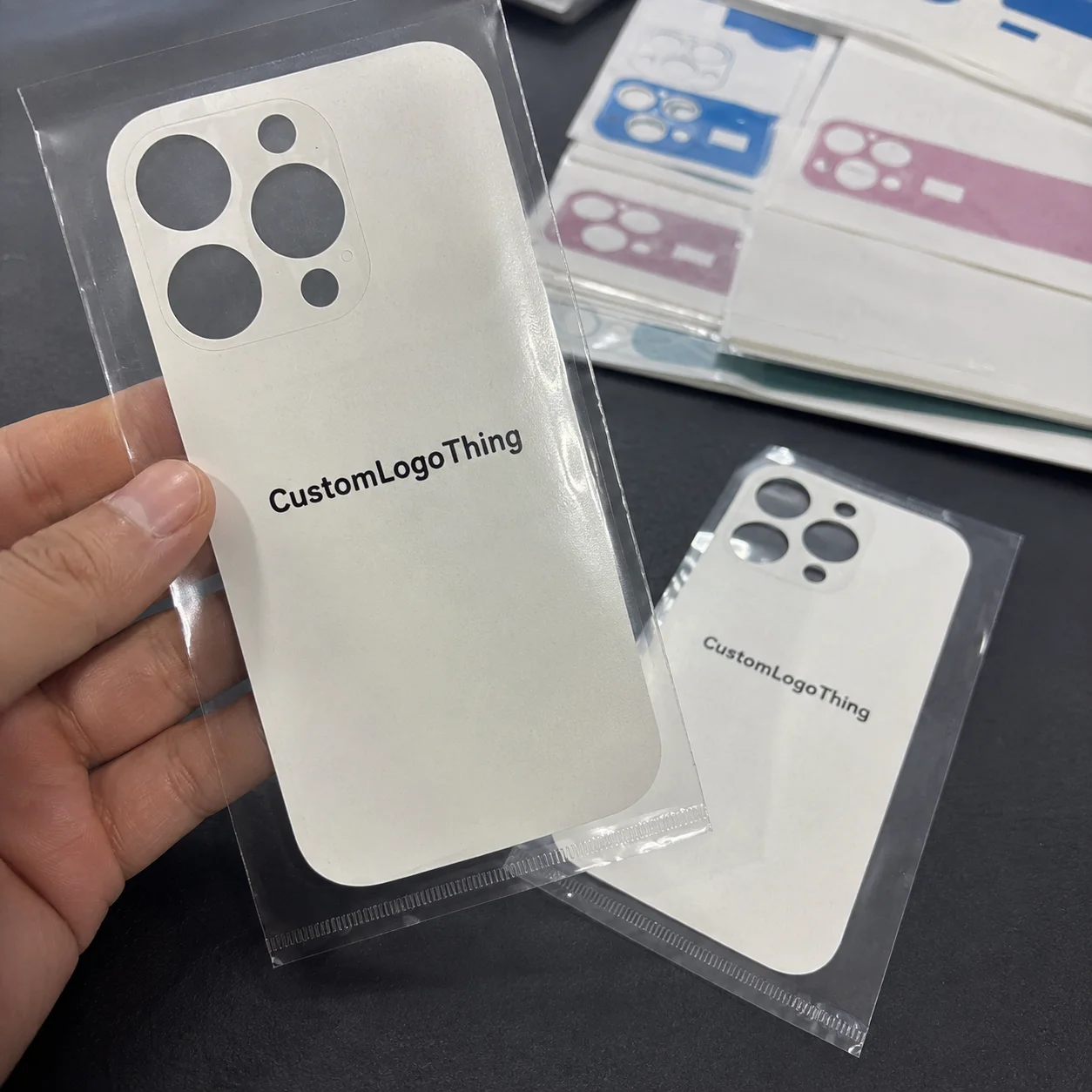
The back of an iPhone is tiny, but it may be one of the few advertising surfaces people carry by choice. That also makes it unforgiving. If a sticker feels plasticky in the wrong way, lifts at a corner, smears under fingerprints, or catches against a case edge, it can be gone before the first day ends.
For buyers, stickers custom iPhone should mean adhesive graphics sized, printed, finished, and packed for phones, phone cases, accessory kits, packaging inserts, or retail sticker sheets. Not merely a logo printed on sticky paper. A phone sticker lives a rougher life than a shipping label. It rubs against pockets, hands, chargers, makeup residue, sweat, light moisture, and textured case materials.
Several products sit under that same phrase. Decorative phone stickers are built for personal style. Brand logo decals may go into an accessory shipment as a small retention piece. Waterproof vinyl decals are intended for heavier handling. Removable case stickers suit customers who rotate cases or dislike residue. Sticker sheets work better for creator merch, school clubs, subscription boxes, retail packs, and promotional bundles where presentation counts.
Many weak orders fail before production starts because the artwork is chosen first and the usage condition is handled last. That order should be reversed. A creator selling a $12 sticker pack needs clean die-cut edges, durable laminate, good peel behavior, and repeatable color. A brand adding a free sticker to an iPhone accessory order can use a simpler spec, but the sticker still needs to feel good enough that the customer does not toss it with the receipt.
Buyer rule: if the sticker is meant to live on a phone, spec it like a handled product component, not a disposable insert.
How Custom Phone Stickers Work from Artwork to Adhesive
The production path looks simple from the outside: artwork setup, material selection, print method, coating or laminate, cutting, inspection, packing, and shipment. Each step changes how the finished sticker feels and performs. Add backing cards, barcode labels, individual bags, or retail-ready packaging, and both cost and schedule move.
Cut style comes first. Die-cut stickers follow the outer shape of the artwork, so a mascot, wordmark, symbol, or icon has its own silhouette. They photograph well and look polished in unboxing kits. Kiss-cut stickers cut through the sticker layer while leaving the backing sheet intact around the design. They are easier to peel, safer for small details, and useful when one sheet carries multiple graphics.
Material is the larger fork. White vinyl is the dependable choice because it prints color cleanly and resists moisture better than paper. Clear vinyl works for minimal designs, but light colors usually need white ink underneath or they disappear on black, navy, or tinted cases. Holographic film can make a drop feel collectible, though it can fight with small type. Metallic films create similar tension: higher perceived value, less forgiveness for fine detail. Paper stock is cheaper and suitable for notebooks, packaging inserts, or short campaigns, but it is rarely the best choice for direct phone use.
Finish changes perception quickly. Gloss laminate makes colors brighter and wipes clean more easily. Matte laminate looks calmer and often suits retail packaging or muted brand systems. Soft-touch can feel premium, but oils may show faster on high-contact surfaces. Transparent, metallic, and holographic effects can raise the perceived value of a small sticker, yet they require sharper proofing because color shifts are easier to notice.
The adhesive choice is less visible and more consequential. Permanent adhesive generally holds longer on smooth hard cases. Removable adhesive is friendlier for customers who switch cases or worry about residue. For phone stickers tied to creators, tech brands, or lifestyle products, test the same design on glossy polycarbonate, matte TPU, silicone, leather-like finishes, and textured recycled cases. They do not behave the same.
Key Specs That Decide Whether iPhone Stickers Last
Size is the first spec that can ruin a good design. Most phone-ready stickers need to avoid camera modules, MagSafe rings, curved case edges, and raised protective lips. A 1.5-inch icon can feel balanced near a lower case corner. A 3-inch logo may dominate the back and collide with accessories. Full-back decals need a proper template, not a rough rectangle.
Thickness matters as well. Laminated vinyl stickers often land around 80–150 microns, depending on the face stock and film. Too thick, and the edge can catch on pockets or case rims. Too thin, and the sticker may feel flimsy, curl sooner, or show the texture beneath it. The right range depends on the surface and on whether the sticker is a free insert or a paid retail item.
Water resistance is often oversold. Vinyl face stock with a protective laminate can handle sweaty hands, light moisture, and routine wiping far better than uncoated paper. That does not mean every “waterproof” claim carries the same meaning. Ask whether the supplier means water-resistant vinyl, laminated vinyl, outdoor-grade decal material, or ink that simply will not bleed at first contact. ASTM test methods are often used across materials and coatings to evaluate properties such as adhesion and abrasion, while bundled shipments can be checked against organizations such as ISTA when formal transit testing is required.
UV resistance deserves attention for sports, travel, campus, festival, cycling, and outdoor creator merchandise. Standard inks can look fine indoors and fade faster under repeated sun exposure. A phone is not a static package on a shelf. It moves through patios, buses, trails, beaches, dashboards, and windows. Exposure accumulates quietly.
Color contrast is another frequent failure point. Black cases swallow dark blue, charcoal, and forest green. Clear cases shift the look of transparent stickers depending on the phone color beneath. Pastel cases soften low-contrast art. Glossy surfaces reflect light and can make thin white text hard to read. If the sticker must match packaging, request a color target and compare samples under ordinary indoor light, not only on a bright screen.
Edge quality also matters. Jagged curves, off-center borders, and narrow slivers around cut lines make stickers feel cheap even when the material is good. For small phone stickers, a slightly simpler cut path often looks better than a complicated outline that strains the cutter. Leave enough border where the design needs visual breathing room.
Testing should happen on actual iPhone cases, not just flat boards. Curvature, texture, oils, and camera-area height change adhesion. If the sticker will ship with chargers, screen protectors, phone cases, or tech accessory kits, check packing friction too. A sticker that looks flawless loose can scuff when it rubs against a cable pouch, instruction card, or carton insert during transit.
Cost, Pricing, and MOQ for Custom iPhone Stickers
Sticker pricing is not mysterious, but quotes look inconsistent when buyers send incomplete specs. The main cost drivers are material, size, quantity, artwork count, finish, laminate, shape complexity, proofing, packing style, and freight. A 2-inch laminated vinyl logo in one design is a different job from a six-design holographic sticker sheet with custom backing card and retail barcode.
Unit cost drops as quantity rises because setup, proofing, machine time, cutting, inspection, and packing labor are spread across more pieces. Small test runs are useful for creators, new brands, and packaging trials. Larger runs make sense for subscription boxes, retail drops, event kits, school campaigns, and accessory bundles where demand is already proven.
| Option | Typical Use | Approximate Unit Range | Buyer Watchout |
|---|---|---|---|
| Paper sticker stock | Packaging inserts, short campaigns, notebook use | $0.04–$0.12 at higher quantities | Weak choice for direct phone handling or moisture |
| Laminated white vinyl | Phone cases, logo decals, creator merch | $0.10–$0.35 for common small sizes | Price shifts with laminate, size, and cut complexity |
| Clear vinyl with white ink | Minimal logos, premium tech accessories | $0.18–$0.45 depending on ink layers | Light colors need white backing to stay visible |
| Holographic or metallic film | Collectible drops, resale sticker packs | $0.22–$0.60 for moderate quantities | Tiny text can become harder to read |
| Sticker sheets | Multiple small designs, clubs, creators, retail packs | $0.35–$1.20 per sheet | Sheet size, kiss-cut count, and packing drive cost |
These are planning ranges, not fixed quotes. Exact pricing depends on volume, print coverage, finish, packing, and delivery location. A buyer may be better off paying $0.18 for a laminated vinyl sticker customers keep than $0.06 for paper that gets removed after one sweaty commute. Cheap materials can become expensive if they make the brand feel careless.
Minimum order quantity follows the same logic. A 100-piece sample run costs more per unit but can protect a launch from the wrong material choice. A 5,000-piece run is more economical when the design is confirmed and the sticker goes into every shipment. Sticker sheets can also reduce handling cost when several small graphics are needed because one carrier moves through printing and packing instead of many loose pieces.
Hidden variables are common: split designs, custom backing cards, barcode labels, individual bagging, rush production, hand collation, carton labeling, and freight. If the sticker ships with Custom Labels & Tags, custom printed boxes, or other tech accessory packaging, ask for total delivered cost. A low unit price can climb once retail packing and logistics are included.
For comparable quotes, send exact size, quantity, material, finish, cut style, artwork count, packing method, destination, and target delivery date. Vague requests produce vague numbers. Clear specs reveal which supplier understands the job.
Process and Timeline from Proof to Delivery
A normal order sequence is direct: share artwork or a concept, confirm size and material, receive a proof, approve or revise, produce, inspect, pack, and ship. The slowest early step is often artwork preparation. Low-resolution logos, unclear colors, missing cut lines, and images copied from websites can add two or three rounds before production begins.
A useful proof should show final dimensions, cut line, bleed, safe area, color notes, material, finish, and quantity. For clear vinyl, it should identify white ink areas. For holographic or metallic film, it should clarify which parts of the artwork allow the special material to show through. For retail sheets, it should show sheet size, kiss-cut placement, backing card artwork, and any hole-punch or barcode location.
Approval speed changes the schedule more than many buyers expect. If a proof arrives on Tuesday and approval comes Thursday, the production clock usually starts Thursday. That two-day gap can affect print scheduling, drying or curing, cutting, inspection, and freight pickup. The risk is sharper when stickers are tied to influencer kits, trade shows, school events, retail stocking, or product launches.
Simple vinyl sticker jobs may be produced within several business days after proof approval, with shipping time added separately. Complex jobs take longer. Holographic film, metallic effects, layered white ink on clear vinyl, custom backing cards, retail bagging, and multiple artwork versions add coordination. If the sticker order connects with Custom Packaging Products such as mailer boxes, inserts, or accessory cartons, align timelines early so stickers do not arrive after the main packaging run.
Samples are worth the wait when adhesion, appearance, or resale value matters. A digital proof confirms layout, but it cannot fully show edge feel, gloss level, opacity on a black case, or adhesive behavior on textured TPU. A practical sequence is sample, test for several days, revise if needed, then approve bulk production. It feels slower. It is still faster than reprinting 10,000 pieces.
Quality control should not be abstract. Check count accuracy, color consistency, cut alignment, laminate bubbles, surface scratches, backing liner release, and carton labeling. For sticker sheets, peel every design shape during sampling, not just the largest one. Small interior cuts and narrow labels are where problems often show up first.
Common Buying Mistakes That Make Phone Stickers Fail
The biggest mistake is choosing by artwork alone. Strong design matters, but the material has to match the phone environment. A paper sticker with a beautiful logo can fail after a week of pocket friction. A premium vinyl decal with unreadable 4-point text is not much better.
Ignoring iPhone hardware is another trap. Camera placement, case texture, MagSafe accessories, curved edges, and raised protective lips all reduce usable space. A centered circle can look perfect on a flat mockup and then sit awkwardly against a MagSafe ring or camera bump. Use an outline or case template before approving size.
Tiny text creates disappointment. Thin lines, hairline icons, and low-contrast colors often disappear at phone-sticker scale. If the sticker is under 2 inches, prioritize bold shapes, clear contrast, and simplified marks. Put detailed slogans on a backing card, insert, or retail packaging panel instead.
Over-ordering is the financial version of the same mistake. A new creator design may look strong online, but demand is not confirmed until customers buy, apply, and respond. Start smaller when testing a new art style, finish, or audience. Increase volume once sell-through, reviews, or reorder behavior supports it.
Under-specifying performance terms causes avoidable disputes. “Waterproof” is not enough. Confirm the face stock, adhesive, laminate or coating, and intended use. Does the supplier mean splash-resistant, outdoor-rated, dishwasher-safe, or suitable for phone handling only? Each phrase points to a different performance level and cost. The EPA’s sustainable materials management guidance is also a reminder that overbuilding every product is not automatically better; the material should fit the use case without unnecessary waste.
Artwork quality is a silent culprit. Web graphics are often 72 or 96 dpi and not built for crisp printed edges. Vector files such as AI, EPS, SVG, or clean PDF are better for logos and cut lines. High-resolution PNG files can work for illustrations, but they should be prepared at print size, usually 300 dpi or higher, with clear bleed and transparent background notes.
Skipping the physical test is risky. Hold the sample. Apply it to smooth and textured cases. Put it in a pocket. Leave it near mild heat. Check the corners after a few days. That small test reveals more than a perfect mockup.
Next Steps Before You Place a Sticker Order
Define the job before choosing the finish. Is the sticker a resale product, a free insert, a brand logo decal, a case decoration, or part of a tech accessory bundle? That answer controls material, quantity, packing, and acceptable cost. Also decide whether the sticker is meant for direct phone backs, removable cases, clear cases, packaging, or sticker sheets.
- Define the use case: resale, insert, loyalty gift, event handout, or accessory bundle.
- Choose the placement: phone back, case corner, full case, packaging insert, or sticker sheet.
- Measure the target area: leave room for cameras, case lips, MagSafe rings, and curved edges.
- Select material: vinyl for handling, clear vinyl for minimal looks, paper for low-contact inserts.
- Decide finish: gloss, matte, soft-touch, transparent, metallic, or holographic.
- Set quantity: sample first for new designs, bulk order after demand and adhesion are proven.
Create two or three size Options Before Ordering. A design that looks balanced on a laptop can overpower an iPhone case. A logo that works at 3 inches may need simplification at 1.25 inches. Ask for a proof showing scale against an iPhone outline or case template, especially for camera-area placement.
Prepare clean artwork files. Vector logos are best for sharp edges and accurate cutting. High-resolution images should be supplied at print quality. Include notes for cut shape, final size, background transparency, white ink, finish, and any color target. If the sticker needs to coordinate with product packaging, Custom Printed Boxes, or retail inserts, share those references so the supplier can keep branding consistent.
Compare quotes by total delivered cost, not unit price alone. Backing cards, split designs, rush delivery, freight, barcode labels, and individual bags can change the real number. Ask what proofing includes and how many revision rounds are covered. A quote with clear prepress support may be stronger than a cheaper one that leaves production details unresolved.
The practical move is straightforward: sample first if durability, brand perception, or resale value matters. The best stickers custom iPhone users keep daily are correctly sized, printed on suitable stock, finished for handling, and tested where they will actually live.
FAQ
Are stickers custom iPhone orders usually waterproof?
They can be waterproof or water-resistant if produced on vinyl with the right laminate or coating. Paper stickers are usually poor candidates for direct phone use because sweat, moisture, and constant handling break them down faster. Ask the supplier to confirm the material, laminate, adhesive, and exposure level before approving the order.
What size should custom iPhone stickers be?
Many phone stickers work best as small accents or moderate logo decals that avoid the camera area, MagSafe ring, and case edges. The right size depends on whether the sticker goes on the phone back, a case, packaging, or a sticker sheet. Test the design against an actual phone or case template before bulk production.
Can I order custom stickers for iPhone cases in small quantities?
Many manufacturers offer low minimums or sample runs, although the unit cost is usually higher at smaller quantities. Small orders are useful for checking artwork, finish, adhesion, and customer response. Larger quantities become more cost-effective once the design is proven.
What artwork file is best for iPhone custom stickers?
Vector files such as AI, EPS, or SVG are best for logos, text, and clean cut lines. High-resolution PNG or PDF files may work for raster artwork if they are prepared at print quality. Include notes for size, cut shape, background transparency, finish, and any white ink areas on clear material.
How long does it take to make stickers for custom iPhone projects?
Timeline depends on proof approval, quantity, material, finish, cutting complexity, packing method, and shipping distance. Simple vinyl sticker orders usually move faster than holographic, metallic, clear, or retail-packaged orders. For launch dates or events, allow time for samples, revisions, production, inspection, and delivery.


