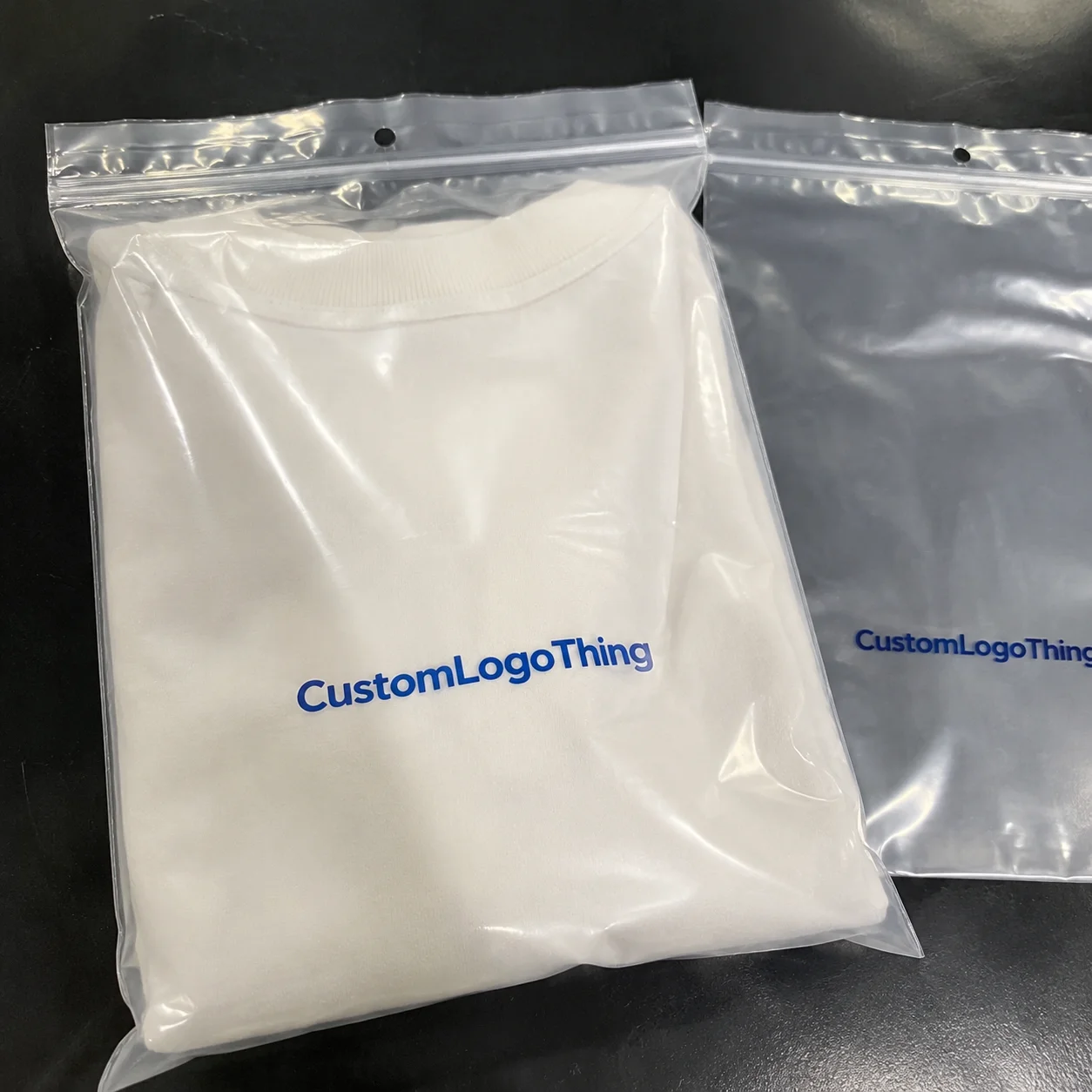
Buyer Fit Snapshot
| Best fit | Packaging Branding Wholesale projects where brand print, material claims, artwork control, MOQ, and repeat-order consistency need to be specified before quoting. |
|---|---|
| Quote inputs | Share finished size, material target, print colors, finish, packing count, annual reorder estimate, ship-to region, and any compliance wording. |
| Proofing check | Approve dieline scale, logo placement, barcode or warning zones, color tolerance, closure strength, and carton packing before bulk production. |
| Main risk | Vague material claims, crowded artwork, missing packing details, or unclear freight terms can make a low unit price expensive after revisions. |
Fast answer: Packaging Branding Wholesale: Pricing, Specs, Timelines should be specified like a repeatable production item. The safest quote records material, print method, finish, artwork proof, packing count, and reorder notes in one written spec.
Production checks before approval
Compare the actual filled-product size with the drawing, then confirm tolerance on folds, seals, hang holes, label areas, and retail display edges. Reserve space for logos, QR codes, warning copy, and material claims before decorative graphics fill the panel.
Quote comparison points
Review material grade, print process, finish, sampling route, tooling charges, carton quantity, and freight assumptions side by side. A quote is only useful when the supplier can repeat the same color, closure quality, and packing count on the next order.
Packaging Branding Wholesale: Pricing, Specs, Timelines
Packaging branding wholesale is not a poster. It is a production system with a brand layer on top. One good render does not make a good shipment. I have watched teams love a concept file and then panic at the first carton test when the fold lines creep and the print sits wrong by a few millimeters.
Buyers in this space usually learn the hard way that wholesale is not about a single wow moment. It is about low surprise over many runs. A package has to survive forklift bumps, shelf dust, compression in trucks, and still carry the same look by batch three, batch ten, batch fifty.
Whether you print 1,000 or 100,000 pieces, packaging branding wholesale has to solve two problems at once. It should make sense at first glance in a shop window, and it should still look good after repeated handling in transit. Glue flap width, board caliper, and bleed margin are not trivia. They decide whether the run gets accepted or kicked back.
From a buyer’s perspective the goals are usually simple: protect, communicate, and control cost. Most of the chaos appears when people treat those as separate buckets. If your structure, color system, and budget assumptions are aligned before quote day, quality stays stable and revisions reduce sharply.
Pack smart, not vague. A clear specification sheet shortens sourcing, helps your team compare vendors, and keeps reorder cycles boring in the best possible way. Packaging branding wholesale is a workflow with standards, not a guessing game.
Packaging Branding Wholesale: Why Precision Wins Orders
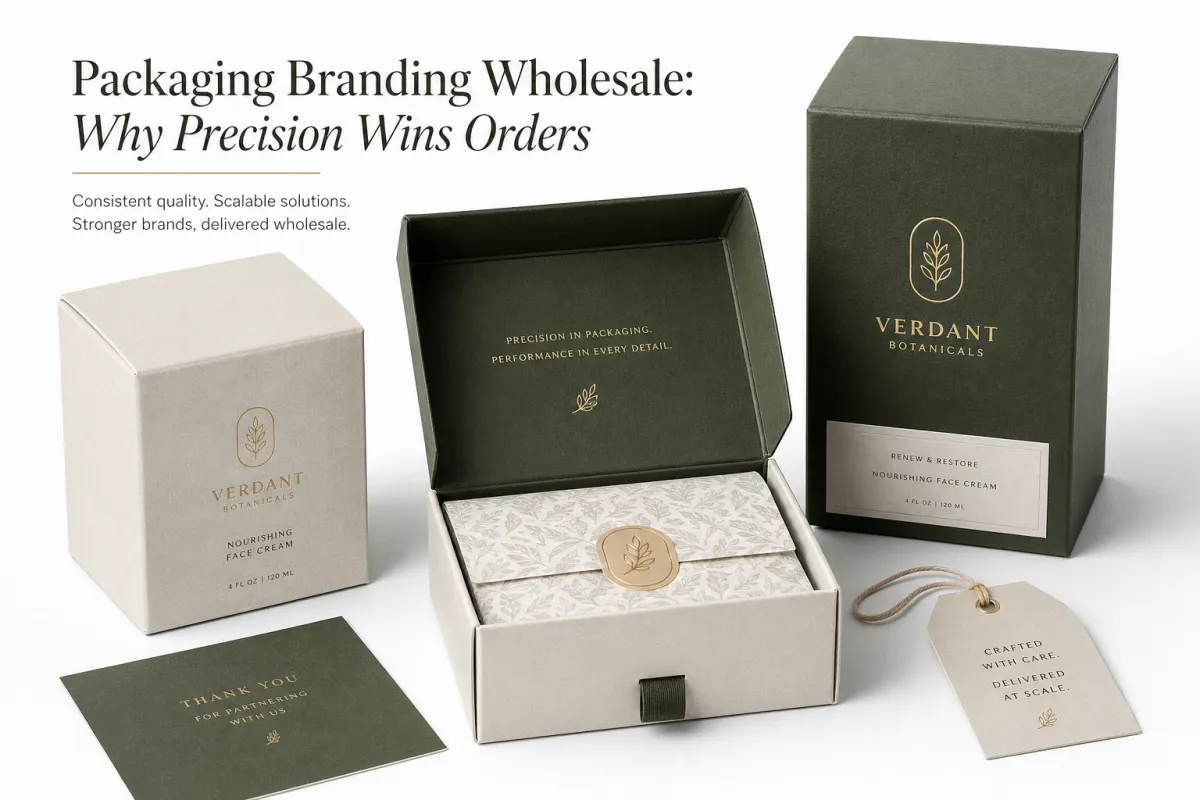
Precision in packaging branding wholesale is not being picky; it is protecting margin. A small print drift that looks fine in a JPEG can become a visible miss on real cartons in a stack. By then it is expensive, and frankly annoying, to fix.
In wholesale, consistency is the real feature. Brand teams are not usually buying decoration for one campaign. They are buying repeatable packaging that keeps the same stock, size, finish, and message from run to run. One approved sample does not approve five thousand units, and one clean photo does not represent your whole supply plan.
I once had a skincare brand launch with exactly this issue: their first approved mockup looked premium, but the corners on the first full run flattened under standard e-commerce handling. Nobody changed the look. They changed board support and flap design and the returns rate dropped immediately. That is what precision does for packaging branding wholesale.
Weak structure creates real penalties. Underweight board crushes edges faster. Weak adhesive means boxes opening in transit. Poorly placed folds force crowding where artwork meets mechanical stress. These are avoidable if structure decisions are finalized before press time.
The right question is not “Which style is flashier?” It is “Which structure stays credible after repeated handling, shipping, and retail handling?” Shelf-facing SKUs prioritize readability and color consistency. Fulfillment-heavy programs care more about stiffness, edge strength, and stack behavior.
My bias is this: restrained usually wins. Keep a clean visual hierarchy, match structure to actual product load, and choose finishes that support purpose. Programs scale better when they are designed to repeat. Packaging branding wholesale rewards consistency over theatrics, and that can sound boring until it saves your team hours.
“A strong wholesale package still reflects your brand after it is folded, packed, shipped, and handled multiple times. If it only performs in a render, it is not production-ready.”
From a practical buyer perspective, packaging branding wholesale should pass four checks quickly: visual match, product protection, budget fit, and repeatability. If those are true, approvals move faster. If not, every order risks the same late-cycle edits.
Packaging Branding Wholesale Product Details
Packaging branding wholesale includes more than folding cartons. The right format depends on product behavior, storage time, and route-to-market. Retail displays may need strong top-line visibility, while e-commerce-first brands often need abuse resistance and lightweight efficiency.
Each format solves a specific use case. Folding cartons work well for lightweight items, supplements, and small goods with predictable stacking. Mailer boxes are usually the right answer for e-commerce and subscription mixes where handling and impact matter. Rigid cartons earn their keep in premium retail and gift-driven presentations where opening experience matters.
When the product is fragile, inserts and controlled clearance become mandatory, not optional. Mixed SKUs in one box usually need internal partitions or foam support. If the internal architecture is weak, outer design does not rescue the unboxing.
Material choice is one of the few decisions that shifts customer perception immediately. A 14 pt carton and a 16 pt structure look different under the same print. E-flute corrugated behaves differently under compression and humidity. If you are shipping hard, the extra stiffness can be the difference between a clean campaign and a damaged return cycle.
Finish has measurable impact too. Matte lamination gives a controlled, premium look. Gloss adds pop and contrast. Soft-touch feels premium but can scar under heavy movement. Foil, embossing, debossing, and UV effects can upgrade cues if used sparingly. Too much decoration looks expensive until the warehouse proves how fragile it is.
Fit is where packaging branding wholesale either earns trust or gets blamed for customer returns. Glass and ceramics usually need stronger support and impact control. Lightweight apparel can do well with tighter sleeves and sleeves-only solutions. Subscriptions benefit from internal organizers to avoid movement and shape damage.
Across multiple product lines, uniform systems reduce rework. One line may demand cleaner front graphics; another may need reinforced corner structure. In practice, this means selecting formats by function, not by whichever sample looked coolest in the meeting.
Internal consistency does not mean sameness. You can use one cartoning strategy with optional insert variations per SKU. If your project is label-heavy, Custom Labels & Tags often deliver the branding continuity without redesigning each outer package. If your outer formats vary widely, a Custom Packaging Products map helps teams compare purpose instead of forcing everything into one mold.
The useful comparison is always: shelf impact plus protection plus unit economics for the exact SKU movement. That sentence decides whether packaging branding wholesale turns into a reliable program or an annual rework cycle.
Print Specifications That Control Quality
Quality in packaging branding wholesale does not emerge at the end. It is decided before design handoff. Dimensions, board grade, paper weight, caliper, die line, print coverage, and color placement are a system. Change one without adjusting the others and defects are likely.
Color consistency starts with process, not taste. CMYK is practical for broad runs and fast turnarounds. Pantone or spot color systems become important when multiple formats must match across cartons, sleeves, and tags for repeat campaigns. If your brand color shifts between materials, people will notice even if they cannot explain why.
The dieline is your production blueprint. Build artwork from true production templates, not a generic idea board. Extend bleed beyond trim, protect type in safe zones, and keep glue zones clear of critical graphics. If fold areas are visually crowded, alignment issues will show up on day one.
Proofing has to match risk level. Digital proofing catches content, type, spacing, and layout issues. Structure proofing confirms fold logic, slot behavior, and assembly fit. Production samples test the real print-and-finish stack under near-production conditions. One stage does not replace the others. It all depends on complexity and consequence.
Quality control at scale depends on multiple checkpoints, not one. Check registration, die-cut precision, fold integrity, glue strength, coating adhesion, and finish consistency across units. For higher-risk transit use, transit simulation, vibration testing, and compression checks are usually the right call.
For industry-standard references, transport testing methods from ISTA are a strong starting point. For responsible sourcing and material questions, FSC guidance can help evaluate certified paperboard pathways through FSC. I always recommend validating these standards against your actual transport pattern, not just a brochure.
Structure and art should be tuned together. A dark, saturated design on a larger carton may reveal registration issues sooner than expected. A lighter palette can improve print control on smaller mailers. A soft-touch finish might read premium but may fail under rough fulfillment unless you confirm handling cycles. Packaging branding wholesale succeeds when design and structure agree early.
When this stack is stable, pricing, approval, and reorder planning become far cleaner. Teams stop arguing over style preferences and start debating performance. And let’s be honest: that is usually where budgets finally make sense.
Packaging Branding Wholesale Pricing and MOQ
Pricing in packaging branding wholesale is mostly arithmetic with practical constraints. Quantity sets the base rate. Print method, color count, finish profile, material thickness, structural complexity, and packed weight refine the number. A simple printed carton and a rigid decorated sleeve are two different financial models even if the visual style looks similar.
MOQ is not arbitrary. It is a blend of setup cost, manufacturing efficiency, and finishing complexity. Folding cartons often start lower for simple builds. Rigid options and high-impact finishes usually need larger starts to absorb setup time. Inserts, inserts with multiple cuts, and intricate die work can push the minimum up again.
I recommend treating the following as a planning baseline, not a promise. Your exact quote still depends on final board size, finishing complexity, ink limits, and shipping destination.
| Packaging Type | Typical Use | Common MOQ | Rough Unit Cost Range | Notes |
|---|---|---|---|---|
| Folding carton | Retail packaging, cosmetics, supplements, small goods | 500-5,000 | $0.18-$0.55 | Good for custom printed boxes with efficient print coverage |
| Mailer box | E-commerce, subscription kits, direct shipping | 250-3,000 | $0.85-$2.40 | Corrugated strength supports transit and unboxing handling |
| Rigid box | Gift sets, premium product packaging, presentation kits | 500-2,000 | $2.50-$7.00 | Higher labor and material cost, stronger shelf impression |
| Labels and tags | Jar labels, apparel tags, bottle branding | 1,000-10,000 | $0.03-$0.18 | Lowest entry cost, useful for package branding support |
| Inserts and dividers | Protection, organization, multi-piece sets | 500-5,000 | $0.10-$0.75 | Price depends on board thickness and cut complexity |
Compare bids line by line. Include toolings, plate or die charges, proof rounds, sample counts, packaging, and freight. A lower headline figure often hides a narrow scope. I have seen teams lose days because “cheap” quotes skipped the part they needed most.
There are easy ways to reduce unit cost without harming outcomes. Standardize dimensions, simplify finish layers, and avoid structural changes per SKU unless justified. Group SKU families by shared templates. In many programs, a crisp matte carton with clear typography beats a crowded premium look with weak structure.
Most overruns come from late changes, not from honest scope. Late file edits, additional proof rounds, rush corrections, and retooling can destroy the economics fast. Even tiny artwork shifts can trigger new plates or reruns.
Cost optimization in packaging branding wholesale is really about value per dependable spec. Stronger board may raise unit cost but can lower return rates. Simplifying finish depth can preserve brand quality while reducing labor. Sometimes a slightly larger MOQ improves long-run economics enough to protect cash flow.
Quick disclaimer: these ranges are directional, and final numbers can vary by country, supplier, and finishing house. Always verify with a production-ready pre-quote spec pack before you lock forecasts.
How Does Packaging Branding Wholesale Work From Quote to Delivery?
The sequence is straightforward, then messy, then manageable again. Most teams follow this order: discovery, quoting, art review, sampling, production, final quality checks, shipping. Then delays happen when handoffs are incomplete.
Discovery starts with facts, not preferences. Confirm product dimensions, weight, fragility, distribution channel, stacking constraints, and shipment profile early. If you are shipping both retail and fulfillment, document both paths. A fact-driven brief shortens quote cycles and reduces negotiation churn.
Late changes are the number-one timeline killer. Ambiguous dieline information, unclear measurements, unresolved color callouts, and finish indecision add hidden hours. A complete file package lets partners run production planning while you are still in approval mode.
Sample strategy should be intentional. For unfamiliar structures and fragile goods, request structure samples before full production. For premium visuals, add a production-style sample that confirms print and finish behavior. Digital proofing works for repeat runs with stable templates, but it is not enough for first-time critical launches.
Timelines vary by load and complexity. Quick proofs and design alignment can move quickly, but structure validation takes time and materials, and full production adds its own throughput reality. In my experience, many teams with clean preparation land around 12-20 business days from proof approval to shipment for standard runs, with longer windows for complex builds.
Communication is the control lever. Confirm final quantities, approved files, destination, and finish expectations before green-light. Bundle comparable SKUs to avoid parallel confusion. If launch dates are fixed, add this constraint early and build a realistic buffer.
For broader reference, Wholesale Programs and Case Studies can be useful to benchmark where decisions often break down. Context helps buyers avoid format mismatches before they become production problems.
Why Choose Custom Logo Things for Wholesale Branding
Custom Logo Things is useful in this space because it keeps teams centered on buildability. The focus is not abstract design mood. It is structure, print path, finish, MOQ, and budget together. That combination usually cuts the confusion noise fast.
The real edge is in how options are translated into tradeoffs. Buyers should compare alternatives directly: heavier board versus lighter board, matte versus coated, one-color versus full spread, structural change versus layout tweak. I have seen teams make better decisions in one session when constraints are shown clearly.
Repeatability is where a strong partner earns trust. Regional runs and later replenishment should not invent variation. A slight visual shift can be intentional in some contexts, but random variance is a sign your spec process is weak.
The value is most visible when conflicting goals collide. Shelf appeal asks for premium look. Fulfillment asks for strength. A clean display box can fail if the internal support is wrong. A tough mailer can still look dull if print control is weak. Good teams balance these pressures without pretending one requirement has zero cost.
For multi-line portfolios, I recommend this sequence: lock format first, validate structure next, then pick materials, and only then finalize finishes. That order avoids expensive scope creep. It also preserves your ability to reorder without reinventing the brief each quarter.
Custom Logo Things handles cartons, sleeves, labels, inserts, and larger packaging systems with one consistent method. The model is simple: stable specs, consistent quality checks, practical reordering.
Packaging Branding Wholesale Next Steps
Before you call a supplier, prepare a complete intake package. Include exact dimensions, target volume, material preferences, finish goals, current artwork status, and destination. Better information gives a sharper quote and more realistic production windows.
If you are deciding between formats, run side-by-side comparisons. Keep structure constant and vary one variable at a time, such as caliper or coating type. I am a fan of this because it reveals cost changes early, before approval fatigue takes over. Your future self will thank you.
If the run is premium, fragile, or brand-new, request sample proofing before full volume. A structure sample confirms fit. A production-style sample confirms color and hand feel. Skipping this step is one of the easiest ways to get burned.
For the cleanest quote, send all constraints at once: sizes, volumes, finish notes, shipping terms, and required timeline. If your launch date is fixed, say it bluntly. If matching exists across existing lines, include references and a baseline spec sheet. Precision in the brief usually means precision in output.
Final takeaway: Packaging branding wholesale works when your specs are boring enough to survive real-world use. Go to production with one structure, one color standard, one set of tolerances, and one realistic timeline, then make changes only through documented revisions. That discipline is not glamorous, but it is exactly what keeps margins and brand consistency from fighting each other.
What is the typical MOQ for packaging branding wholesale?
MOQ depends on format, print method, and finishing depth. Folding cartons often start lower than rigid or highly finished solutions. Board choice, coating, and complexity can still shift the number. Ask for a final quote against your exact structure before locking forecast quantities.
How can I reduce packaging branding wholesale costs without lowering quality?
Standardize key dimensions across the catalog where possible, simplify artwork where detail is not adding commercial value, and remove late structural edits. Keep finish choices tied to visible impact and shipping reality. Group SKUs by compatible dimensions and use label or sleeve modules where practical.
Which print method is best for packaging branding wholesale orders?
Digital printing is strongest for short to mid-volume and quick turnarounds. Offset is usually the better bet for high-volume runs that need tighter color consistency. Flexographic is common for corrugated and very high volume with repeatable patterns. The best choice comes from quantity, ink coverage, and your tolerance for color variation.
How long does packaging branding wholesale take from proof to delivery?
It depends on sample needs, file readiness, material, and freight distance. Clean files and stable specs usually move faster than projects with late dieline or color revisions. Rush windows can happen, but only if complexity and capacity line up.
Can I order samples before a full packaging branding wholesale run?
Yes. I recommend it for all new structures, premium products, and fragile items. Ask for the specific sample type you need: structure, digital proof, and production-style sample each validates a different risk. It costs a little, but it avoids expensive mistakes later and is usually cheaper than full-run rework.