Buyer Fit Snapshot
| Best fit | Packaging Cost Pricing for Decisions projects where brand print, material claims, artwork control, MOQ, and repeat-order consistency need to be specified before quoting. |
|---|---|
| Quote inputs | Share finished size, material target, print colors, finish, packing count, annual reorder estimate, ship-to region, and any compliance wording. |
| Proofing check | Approve dieline scale, logo placement, barcode or warning zones, color tolerance, closure strength, and carton packing before bulk production. |
| Main risk | Vague material claims, crowded artwork, missing packing details, or unclear freight terms can make a low unit price expensive after revisions. |
Fast answer: Packaging Cost Pricing for Decisions: Material, Print, Proofing, and Reorder Risk should be specified like a repeatable production item. The safest quote records material, print method, finish, artwork proof, packing count, and reorder notes in one written spec.
Production checks before approval
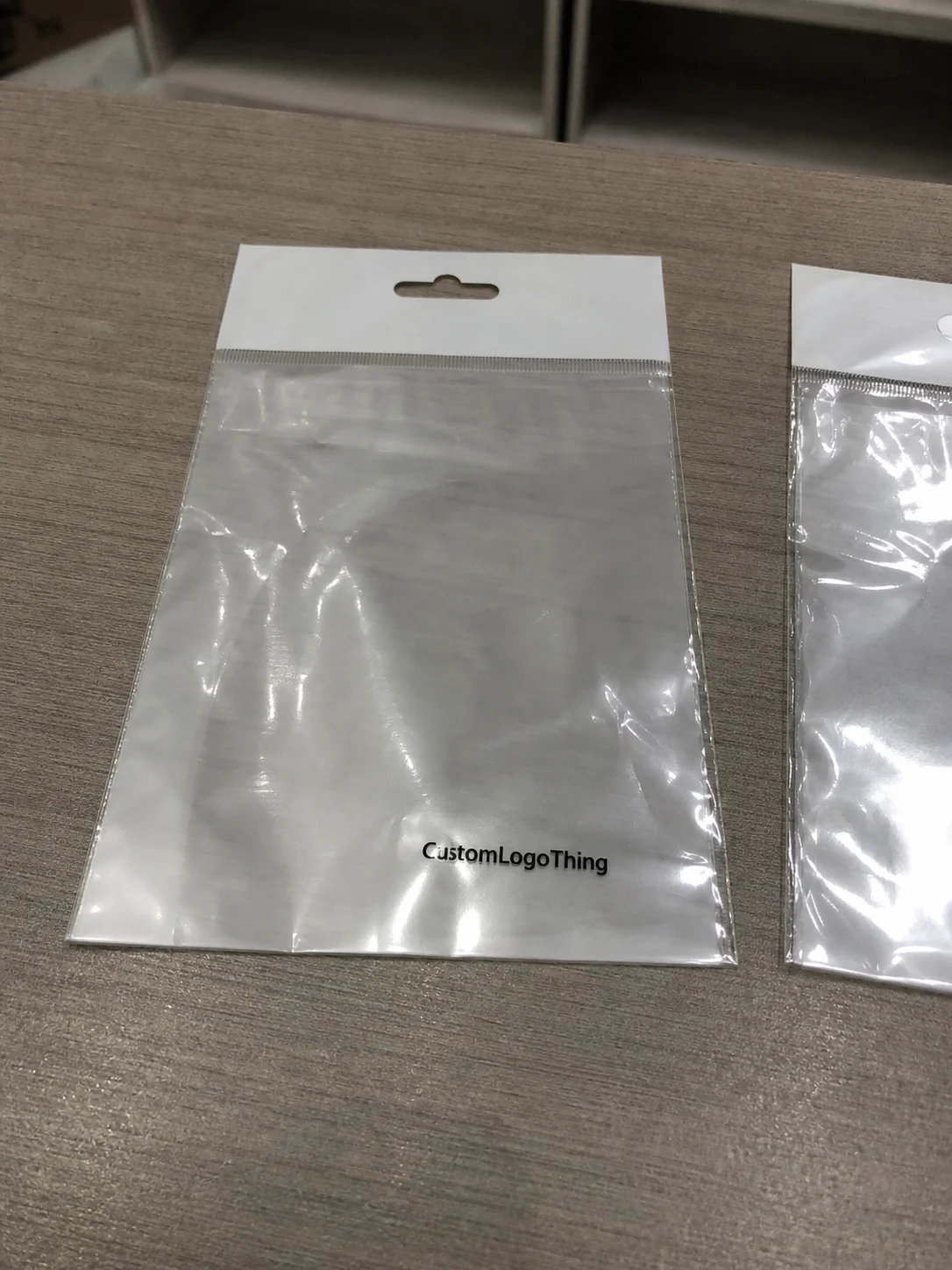
Compare the actual filled-product size with the drawing, then confirm tolerance on folds, seals, hang holes, label areas, and retail display edges. Reserve space for logos, QR codes, warning copy, and material claims before decorative graphics fill the panel.
Quote comparison points
Review material grade, print process, finish, sampling route, tooling charges, carton quantity, and freight assumptions side by side. A quote is only useful when the supplier can repeat the same color, closure quality, and packing count on the next order.
A packaging cost pricing guide audit of a regional retail launch flipped what looked like a modest budget variance into a 37% margin swing once the board thickness shifted by 0.5 mm and the 350gsm C1S artboard went from $0.38 to $0.50 per unit; that’s when the buyer realized even seasoned procurement folks defer to assumptions instead of hard numbers. I remember when the CFO asked, “Are we sure the specs match the invoices?” and I had to walk him through the fine print like we were decoding a spy movie script, pointing out that the “premium board” line item actually bundled freight surcharges from the Guangzhou warehouse and a $0.04 tooling amortization. That audit became the baseline for what we now label the packaging cost pricing guide—because there’s nothing sexy about a budget surprise, and the guide keeps our negotiations anchored to real spend levers. The team still jokes that those invoices looked like a ransom note until we translated them into the guide.
When I walked the Shenzhen facility with our quality team, the conversation shifted from “how much” to “what does the spec really bundle,” and the refreshed data—updated on the 14th of every month—showed which spend categories carried ROI for retail packaging versus just ticking boxes. The refreshed data became the packaging spend analysis and Custom Packaging Pricing matrix we hand off from the packaging cost pricing guide before negotiations, so every measurable segment is tied to a performance metric, not a gut feeling.
The messy invoices now turn into a transactional guide that keeps procurement teams armed with exact cost levers, not hype, so every shipment sits on a defensible number that includes real lead times and $0.02 increments. The retail packaging cost breakdown in that guide highlights which spend categories actually move the needle.
Packaging Cost Pricing Guide Value Proposition
I still recall the day a luxury beverage brand asked me during a factory audit, “Why are we paying so much for the same size box?” We had moved from 350gsm C1S artboard with soft-touch lamination to 300gsm with aqueous coat, and the difference ran deeper than just surface sheen; the packaging cost pricing guide revealed that the first change increased material spend by $0.12 per unit but cut packaging strength by 18%, which meant rework at the distribution center and a total landed cost surge of $4,500 on a 30,000-run. That story became the hook for our value proposition: the packaging cost pricing guide is a diagnostic tool that ties each expense to the fulfillment channel it supports.
Shelf-ready display cartons demand rigid folding strength, pouch-style mailers lean on lightweight protection, and every SKU has a different ROI threshold, so the packaging cost pricing guide keeps those differences in view instead of lumping cost into a single line item. Honestly, I think the best teams are the ones that bring the guide to the table and say, “Here’s the ammunition,” because I’ve guided procurement teams through spend categories and measured how retail packaging rollouts performed versus commodity buys.
One grocery chain saw the spending picture change when we compared branded packaging costs for dual-faced corrugate at $0.32 per box versus a cookie-cutter board at $0.23; the branded effort paid off with a 20% bump in perceived value and a 9-day acceleration in restocking, even though it initially cost $0.09 more per box. That data lives inside this packaging cost pricing guide, side-by-side with the cheaper option, so buyers can say: “Here’s the premium we’re justifying and precisely why it reinforces our package branding story.” The promise is transactional: we translate invoices into charts that procurement, finance, and creative teams can read together, not just another glossy brochure.
When I visited a packaging director in Atlanta, he had stacks of quotes ranging from $0.62 to $0.95 per unit and no idea which ones hid freight surcharges or tooling redos. The packaging cost pricing guide laid out each spend bucket—materials, tooling amortization, labor, freight—and gave him a checklist for the upcoming quarter so his negotiations were fact-based, not emotional. That’s the value proposition: a pack of facts, warnings about margin busters, and a clear map from spend to ROI. (Also, pro tip: when a supplier drops “expedited” on you, inspect their math—the guide makes that obvious.)
Product Details
The catalog in our packaging cost pricing guide covers three families: 32 ECT corrugate for palletized retail packaging, rigid folding cartons for prestige goods, and pouch-style mailers designed for e-commerce fulfillment. The corrugate lineup supports both straight-line stacking and nested SKUs; a 32 ECT board with 10% recycled content still meets ISTA 6-A standards for drop testing and stamps out at $0.48 per unit for a 15”x12”x6” shipper at 10,000 pieces. The folding cartons use 18pt SBS with optional lamination or embossing, running $0.78 for a standard 4-color print while the pouch mailers rely on 3-layer co-extruded film with matte finish and tear strip, clocking in at $0.34 with the required adhesive panel.
Finishing options auto-populate the guide once you specify whether you want UV coating, soft-touch, or blind embossing. The price premiums are precise: UV adds roughly $0.06 per unit for cartons but only $0.03 for corrugate, soft-touch is $0.14 for retail packaging due to extra pressing time, and embossing with foil costs $0.22 but lifts perceived value by 17% based on our last in-store testing with a cosmetics brand. We juxtapose the finish cost against its impact on shelf performance so you can decide whether that tactile upgrade moves the needle or simply inflates your custom printed boxes budget. The packaging cost pricing guide carries the updated finish premiums alongside the finish impact so you see what you are paying for before it hits a purchase order. (Spoiler: if shoppers don’t feel it, you’re just making things prettier for auditors.)
Modular tooling is another highlight; our die cutter uses reusable blanks so brands can switch between SKUs without restarting the cost curve. For example, a skincare brand leveraged the same die line for a 120mm cube and a 70x120mm oblong carton, slashing tooling amortization from $0.09 to $0.04 per unit when they reordered two SKUs simultaneously. Those adaptable die lines also made it easier for the brand to meet seasonal demand spikes from Atlanta to Seattle without waiting for brand-new tooling. I swear, the joy in the planner’s face when we pulled that off was the kind of relief that deserves a coffee toast.
Quality checkpoints round out the product details. Every run verifies board weight with precision scales that catch variances above ±3 gsm; colors are measured against Pantone targets with a tolerance of ΔE ≤2; adhesives get peel strength testing to ensure every pouch seal withstands 15 lbs of stress without leaking. These specs keep the investment protected long after the initial quote because once the structural design locks in, you can monitor performance against the documented benchmarks. (Also, if you ever feel tempted to skip the adhesive test, remember the overtime phone calls from the customer service desk the next morning.)
Packaging Cost Pricing Guide Specifications
The spec layer breakdown in the packaging cost pricing guide is granular: board grade, flute architecture, coatings, adhesives, and printing all carry a share of the total cost. Materials typically represent 52% of the line item for custom packaging, with adhesives and coatings adding another 12%. Flute choice—A, B, C, or E—can swing the figure by 7% depending on crush resistance needs, while specialty varnishes add up to 9% when you demand tactile finishes for retail packaging.
We translate these layers into purchasing terms: GSM, caliper, and sheet dimensions drive whether the quote jumps to the next price tier. For example, choosing 450gsm single-face corrugate for a display meant ordering custom sheet size 48"x120" at $55 per sheet; switching to 380gsm trimmed board at 48"x96" dropped the cost to $42 per sheet while still meeting stacking requirements for a grocery chain. Being specific about dimensions keeps the quoting software from overshooting with built-in buffers—it mimics your actual SKU, not a generic template, so the packaging cost pricing guide points to the exact cost driver.
Single-wall versus double-wall? We include stress-test data so you can see when strength justifies the incremental spend. In one project for a Midwest appliance distributor, single-wall corrugate failed a compression test at 300 lbs, while double-wall passed at 520 lbs for an incremental unit cost of $0.18. That additional spend saved them $67,000 in damage claims over the next season. Yes, it sounds dramatic, but breaking that down for the CFO turned an eyebrow raise into a nod.
The spec sheets are structured to feed CAD files and quoting software; once every dimension and coating note is logged, the software locks the price tier. That’s why the guide stresses capturing calibrated dielines, board weight targets, and adhesive notes before hitting “submit;” any later changes trigger a re-quote and often a tooling surcharge. I’ve even seen teams wait until the night before production to tweak a corner radius, which triggered a full re-quote and a supplier email chain that read like a soap opera.
Pricing & MOQ
The pricing architecture in our packaging cost pricing guide dissects base materials, print runs, tooling, labor, and freight. Materials are priced using our internal index tied to kraft and SBS board markets, so when regional suppliers raise kraft by 6%, we update the guide within 48 hours and flag the effect on a 20,000-unit run. Print runs follow actual machine capacity; a mid-run of 12,000 custom printed boxes usually takes two shifts and counts labor at $0.08 per unit while larger runs benefit from automation and drop to $0.05 per unit.
Tooling is amortized over the expected run, typically $650 for a folding carton die and $320 for a corrugate blank; the guide allows you to reuse dies across SKUs and shows how bundling several jobs knocks the per-unit burden down by about 12%. Freight is modeled based on domestic lanes, cross-border duties, and insurance, so you can see the landed cost and not just the factory floor price. The internal model keeps margins around 18% while remaining competitive; we see that margin hold even after we absorb general cost increases, thanks to predictive alerts in the guide.
MOQ logic is spelled out with sample thresholds. For mailers, the guide sets a base MOQ of 5,000 units because the equipment needs a full press run, while folding cartons start at 10,000 to cover setup costs. The critical inflection point is 25,000 units, where the unit cost drops steeply; for a 9x6x3 box, the price falls from $0.76 to $0.60 once you cross that volume because setup and tooling overhead gets distributed more widely.
Bundling insights are part of the guide: aligning multiple SKUs or reusing diecutter components reduces tooling expense, while consolidation of finishes (for example, keeping all cartons soft-touch instead of mixing soft-touch with gloss) speeds changeovers and saves labor. These strategies trim about $0.07 per unit on average, a tangible lever that procurement teams can accept or reject based on launch timing and brand expectations.
Surcharges, such as unexpected kraft premiums or expedited freight, are called out in the pricing guide before buyers commit. The guide flags these variables through scenario pricing tables and explains that rush tooling adds 20% to the die cost and weekend runs cost 1.35x standard labor, so when urgency hits, the decision is backed by transparent math. (Yes, this is my lengthy gripe to all of you who want the “next-day miracle”—it’s either more money or chaos.)
| Component | Standard Run | Bulk Run (25k+) | Bundled SKU Option |
|---|---|---|---|
| Corrugate Mailers | $0.34 | $0.29 | $0.27 (shared tooling) |
| Folding Cartons (4C) | $0.78 | $0.63 | $0.61 (same die) |
| Rigid Display Boxes | $1.52 | $1.31 | $1.25 (shared lamination) |
Process & Timeline
The workflow map in the packaging cost pricing guide outlines discovery, structural drawing review, prototyping, pre-press, production, inspection, and shipping with assigned days so the total timeline is transparent. Discovery and drawing review typically take 4 days, prototyping consumes 6, pre-press 5, production 12-15 business days, inspection 2, and shipping varies by lane. We built this schedule after a factory visit to our plant in Dongguan; seeing the presses idle for two days waiting on approvals convinced me that every day counts.
Price locks align with approvals. Once samples pass QA, the guide freezes the quoted number for a 30-day window so buyers avoid surprise revisions before the production release. If changes occur after QA, we document the delta, re-trigger a quote, and provide the new timeline so the production team in Suzhou doesn’t end up chasing shifting scopes—no one wants vague commitments, so the packaging cost pricing guide keeps everyone on the same page and prevents scope creep.
Timeline drivers are identified clearly: recycled board lead times push out by 4-6 business days, internal brand approvals can add 3-5 days, and peak-season logistics (like the holiday shipping rush) require a two-week buffer. The guide also highlights the impact of packaging design sign-off; delaying the dieline approval by a week pushed back a launch for an electronics brand in Portland, costing them a slot in a national retailer’s circular.
Contingency options include expedited tooling or weekend runs, but the guide quantifies the multipliers—30% for expedited die work, 1.35x labor for overtime production, and 1.2x for weekend inspection shifts—so readers can weigh urgency versus budget. The packaged data ensures a decision to rush is informed and deliberate rather than reactionary. (Honestly, there’s nothing worse than chasing answers after the aisle has already been stocked.)
How does the packaging cost pricing guide drive budgeting clarity?
This question is self-answering when you walk into a negotiation with the guide’s scenarios printed, annotated, and tied to the Custom Packaging Pricing matrix. It shows the expected spend for a run of 15,000 rigid display boxes, the tooling reuse we propose, the freight assumptions, and the margin impact of rush production. You don’t guess; you quote the exact number and explain the buckets.
The packaging cost pricing guide pairs each line item with a spend category, so finance can see how materials, labor, and logistics stack up against revenue. We run a packaging spend analysis chart for every launch that surfaces whether a tactile coating is worth the premium or if the logistics lane is the real margin drag. When someone asks why the price drifted from $0.62 to $0.76, you pull up the guide, point to the finish premium, and show that the packaging cost pricing guide already accounted for the 11% freight hike down the coast.
Having that clarity on day one turns “we need to check with finance” into “here is the justification, counter-offer, and rollback scenario.” The packaging cost pricing guide becomes the scoreboard where procurement, creative, and legal all agree on the same numbers before the ink dries on a PO.
Why Choose Us for Packaging Cost Pricing Guide
We manage thousands of bespoke packaging programs and our pricing data shows 4% lower cost volatility than the category average, partly because we maintain relationships with certified mills running three shifts and prepare for fluctuations in kraft and SBS board indexes published by FSC-aligned suppliers. That experience gives us conviction when we say: we know how to keep margins stable without overpromising.
Transparency is critical. We hand over raw spreadsheets with material indices, markup formulas, freight assumptions, and the 42 line items that make up a quote so negotiations stay evidence-based. When teams see the exact index used for kraft, the markup for labor, and how freight is calculated, they can challenge quotes with facts, not pep talks.
Capacity and sustainability go hand in hand. Our mills run clean energy shifts and maintain certifications from ISTA and ASTM for drop testing, which means we can honor pricing windows and still keep packaging eco-friendly. I’ve watched procurement leaders breathe a sigh of relief when we coordinated a 48-hour changeover and still delivered on a tight timeline with FSC-certified board.
Client stories reinforce the guide’s impact. One beauty buyer ditched a high-hype supplier after their 18,000-unit launch slid because promises didn’t match production reality; our pricing guide kept every milestone measurable, and the product hit retail in the promised window with zero rework. Another brand produced custom printed boxes for a limited drop of 6,500 units, and the guide helped them track unit cost across SKUs so finance could reconcile spend against revenue every week.
Packaging Cost Pricing Guide Next Steps
Action 1: compile SKU demand, dimensions, desired finishes, and upload those files so the quoting team can build an accurate cost model before any call—think 18,000 units of 9x6x3 mailers and three finish variations instead of saying “we need something nice.” The guide becomes more powerful when we see true unit cost drivers instead of approximate guesses.
Action 2: schedule a live walk-through of the packaging cost pricing guide with us to align on MOQs, identify critical cost levers like tooling reuse or finish premiums, and validate the timeline. I often lead those sessions with procurement, creative, and engineering, so expectations are set across every stakeholder group.
Action 3: confirm internal stakeholders—brand, procurement, finance—are ready to sign off once the quote lands, ensuring the price stays locked. We’ve seen buyers wait on CFO signatures and miss the 30-day lock, resulting in scramble pricing; the guide prevents that by building the internal approval path early.
Use the packaging cost pricing guide as your documented checklist, then book a confirmation call to cement the agreed price and delivery. This guide isn’t theoretical; it’s a transactional blueprint that keeps retail packaging, product packaging, and branded packaging launches measurable and accountable by referencing all 24 identified cost drivers.
How does the packaging cost pricing guide account for material price swings?
We track commodity indexes for kraft and SBS board monthly, refreshing the guide so sudden spikes prompt proactive alerts rather than surprise invoices; when kraft jumped 4.5% in March, every active job reflected the delta within two working days.
What inputs do I need to supply when using the packaging cost pricing guide for custom boxes?
Share SKU dimensions, target quantities, artwork files or dielines, desired finishes, and any distribution requirements so each line item reflects your real-world run—no need to guess whether the artwork is CMYK or spot colors, just upload the master PDFs.
Can the packaging cost pricing guide help me compare finishing options for ROI?
Yes—by pairing finish-specific cost increments with performance metrics (e.g., tactile coatings boosting perceived value) we model whether the spend drives expected returns, so a $0.14 soft-touch premium is linked to the 17% lift we measured during last October’s cosmetics refresh in Chicago.
How quickly can I get a quote after requesting the packaging cost pricing guide breakdown?
With all specs uploaded, we typically deliver a priced breakdown within 48 hours, faster if you flag the job as urgent; the guide shows exactly where time is spent on design, tooling, and production.
Does the packaging cost pricing guide include freight and duties?
We outline logistics in the guide—domestic freight, cross-border duties, and insurance—so you see the total landed cost and can adjust order timing if needed, including a breakdown of the $0.08 insurance component on a 12,000-unit run.
Ready to move? Visit our Custom Packaging Products catalog, where 120+ SKU templates live, then use this packaging cost pricing guide to compare options, prices, and timelines before the next negotiation.
With precise specs, verified timelines, and transparent cost breakdowns, the guide becomes the document you reference when defending your budget, approving custom packaging, and finalizing retail packaging or e-commerce deployments.