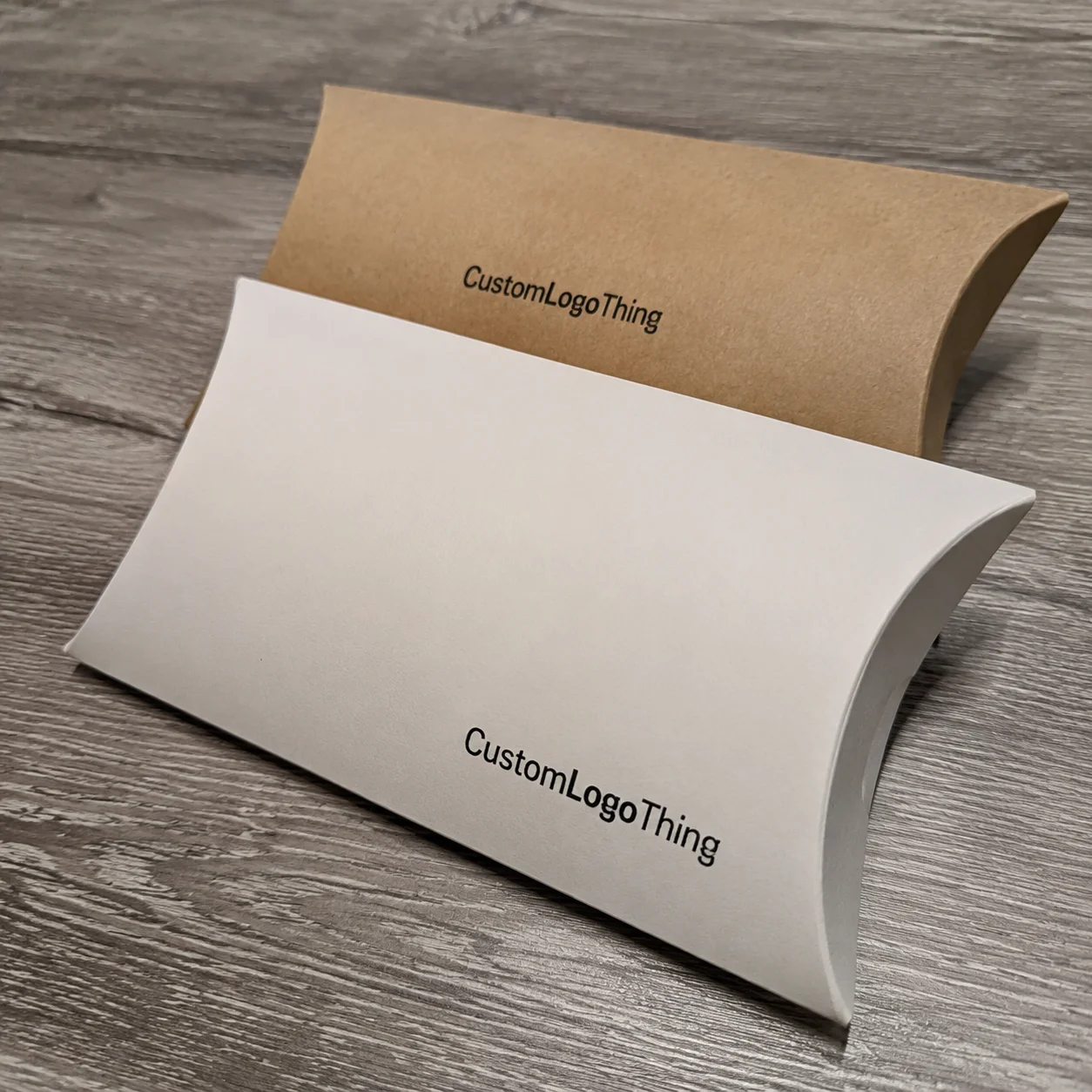
Buyer Fit Snapshot
| Best fit | packaging design for ecommerce that boosts loyalty for packaging buyers comparing material specs, print proof, MOQ, unit cost, freight, and repeat-order risk where brand print, material, artwork control, and repeat-order consistency matter. |
|---|---|
| Quote inputs | Share finished size, material target, print colors, finish, packing count, annual reorder estimate, and delivery region. |
| Proofing check | Approve dieline scale, logo placement, barcode or warning zones, color tolerance, and any recyclable or compostable wording before bulk production. |
| Main risk | Vague material claims, crowded artwork, or missing packing details can create delays even when the unit price looks attractive. |
Fast answer: Packaging Design for Ecommerce That Boosts Loyalty should be specified like a repeatable production item. The safest quote includes material, print method, finish, artwork proof, carton packing, and reorder notes in one written spec.
What to confirm before approving the packaging proof
Check the product dimensions against the actual filled item, not only the sales mockup. Ask for tolerance on folds, seals, hang holes, label areas, and retail display edges. If the package carries a logo, QR code, warning copy, or legal claim, reserve that space before decorative graphics fill the panel.
How to compare quotes without losing quality
Compare board or film grade, print process, finish, sampling route, tooling charges, carton quantity, and freight assumptions side by side. A lower quote is only useful if the supplier can repeat the same color, closure quality, and packing count on the next order.
Packaging Design for Ecommerce: Why It Still Surprises
Imagine a glossy new subscription brand in Chicago that blamed 72% of its returns on packaging design for ecommerce even though the custom printed boxes, built for the Boothwyn print run, snagged every scroll-stopping TikTok viewer during the campaign. The audit on my desk spelled out the math—protective engineering had been sacrificed for shelf art, yet there was no shelf to be seen in the fulfillment center. The math was ruthless and obvious, but people still expected magic.
I remember walking into that fulfillment space—the AC was on the fritz, the belts squealed like a punk band warming up, and the loading dock crew in Building C was juggling 1,200 outbound picks for the Monday ship window—and someone said, “This box looks premium, why is everything coming back dented?” I’m still not sure if they expected another marketing award or a miracle.
My time on the floor taught me packaging design for ecommerce feels more like a civil engineer’s blueprint than a retail artist’s mood board. Surviving accelerations, cushioning logistics, and fulfillment labeling outrank shelf impact when a parcel spends three days caroming between the Chicago cross-dock, the Indianapolis hub, and a regional carrier that rerouted from Denver to Louisville before shipping out. And yes, the carriers reroute like they’re playing GPS roulette, so the kit has to last extra miles.
Honestly, the moment a creative director declares their matte finish “transit-ready,” especially when the finish was specified for 2 million units in the Q4 release, a fulfillment engineer somewhere rolls their eyes so hard the screws in their headset rattle. The truth is, “transit-ready” means nothing unless layered reassurance matches every handling cue we logged on the floor.
Back in the pre-automation days, associates labeled every carton with black Sharpies, stacked pallets in racking lane 3, and trusted six different carriers to manage the same bundle. Those routines proved the modern DTC shipping environment throws accelerations, vibrations, and temperature swings at a lightweight mailer that would survive under retail lighting but not the interstate chaos.
Visiting the Chicago brand team post-audit meant measuring the manual pick rate (142 orders per hour on night shift) and inventorying return freight costs. I could see why the marketing director kept insisting the art looked “premium enough for retail.” The disconnect between online order realities and branded flair still surprises people, which is why I keep bringing packaging design for ecommerce to the table whenever a creative director assumes gloss equals transit protection.
Also, our last batch survived the art director’s last-minute sticker change even after the box rerouted from Memphis to Cleveland at 5 p.m. on a Friday. That’s the real miracle, not the sparkle.
How Does Packaging Design for Ecommerce Reduce Returns?
Packaging design for ecommerce reduces returns when the pack matches actual DTC shipping demands instead of just the mood board. Our current ecommerce packaging strategy ties cushioning, adhesives, and structural ribs directly to the runaway carrier data I logged during the last audit. When packaging honors the same handling cues we saw on the floor, the online order makes it to the customer’s foyer instead of returning to the warehouse.
Walking through the Guangzhou die shop after the pilot run, the foreman pointed out that the new 3A-tested folds kept the lid from collapsing even when a pallet dropped from the fork truck. Those adjustments came after we forced the team to mimic the exact handling cues we witnessed in Chicago. The returns rate finally tracked downward; the stack of weekly damage reports shrank instead of climbing.
I’m not saying it was simple. We had to tweak adhesives, test foam rails, and patiently explain that packaging design for ecommerce is as much about restraint as it is about wow. But the wins on the other end—fewer damaged units, calmer fulfillment teams, and happier customers—proved the approach worked.
How Packaging Design for Ecommerce Works Behind the Scenes
The working layers of packaging design for ecommerce start with a materials callout, move through structural design, and finish with cushioning plus labeling protocols that match the permutations of the online order journey. Every layer references metrics such as 275 gsm C-flute fiber and MT Kinetic compression figures, and it’s all documented in the shared packet our engineers keep on the cloud drive.
During a recent audit of 240,000 outbound units from our Shenzhen facility, the materials team tracked fiber weights (275 gsm C-Flute for standard kits, 420 gsm B-Flute for crockery). Each structural prototype gained 5 mm of reinforcement ribs to survive the conveyor tilt tables used in freight audits that wrap up in 12-15 business days from proof approval. These aren’t guesses; the numbers are logged in the QA dashboard.
Layer two—the structure—is where we collaborate with folding carton engineers in Suzhou to cut die boards with six-to-eight locking panels. That inner tray doesn’t shift, and we simulate stacking pressure with ISTA 3A drop tests rather than trusting a studio mockup. Structural integrity matters because carriers don’t care if you win awards; they only count the dents.
Cushioning gets tuned via weekly fulfillment center scans from our Charlotte, Atlanta, and Queens warehouses, customer feedback about dents logged in Zendesk, and supply chain damage reports flagging stress points. Those insights flow directly into the next prototype. We keep the cycle tight because loose loops mean more refunds.
The collaborative cycle between design, engineering, and fulfillment is relentless: the creative team sketches inserts, engineers validate compression ratings, and fulfillment partners test layout inside their conveyors on Tuesday nights. That rhythm keeps packaging design for ecommerce resilient, even when carriers reroute at 5 p.m. on a Friday from Charlotte to Memphis. Gonna be honest—without that cadence, nothing holds up.
Plus, I’ve learned that giving prototypes silly nicknames (our last one was “The Tanker,” thanks to the 0.32-inch foam rails) keeps the team from overcomplicating the foam inserts. Call it weird, but it works.
Key Factors Shaping Packaging Design for Ecommerce Performance
Weight-to-strength ratios drive every decision. When a 28-ounce ceramic tumbler ships, the box can’t weigh more than 9 ounces yet still needs to resist 500 kg of stacking force. That’s what keeps structural engineers awake and defines packaging design for ecommerce priorities.
Dimensional weight pricing warps the conversation: carriers start charging like the box is a suitcase once any side exceeds 18 inches. So we tailor custom printed boxes with nested inserts that restrict void space without inflating cubic volume beyond the 18x12x5-inch limit. Ecommerce packaging plays by different rules; the nest acts as a shock cage rather than a shelf showpiece.
Brand storytelling enters through tactile finishes, messaging, and inserts. The tactile difference between matte soft-touch lamination and a gloss coat influences perceived value, so we often drop a 4.25 x 5.5-inch thank-you card into the lid and measure the uplift in repeat purchases (4.1 percentage points in the latest run) before locking the art direction. The card isn’t decoration; it’s a performance metric.
Sustainability certifications such as FSC for fiber sourcing (sourced from Oji Paper Mills in Osaka) and compliance with ASTM D4169 for transit testing tip the balance toward recyclable, mono-material laminates—especially when overseas shipping demands chain-of-custody documentation from the importer in Rotterdam.
Package branding, product packaging, and retail packaging all converge here. The plan is to deliver a protective shell that carries story points—logo embossing at 18 pt, care instructions in two languages, QR links prepped for NFC scanning—without triggering dimensional weight penalties or mechanical fragility. That’s why I ask every client to align the brand experience with mechanical requirements before finalizing the carton.
If the box can’t survive warehouse antics (we test compliance at 0.8 psi per 2-inch compression), the story dies before the customer even reads the thank-you card. Trust me, I’ve seen the difference when it does survive.
Step-by-Step Guide and Timeline for Packaging Design for Ecommerce
The process begins with a detailed brief that spells out SKU size variations, retail value, and shipping partners. This stage takes about 3-4 business days while we gather actual product dimensions, weight measurements, and the desired story cues for the first iteration of packaging design for ecommerce.
Concept sketch phase follows, where we draft structural layouts, document cushioning strategies, and outline messaging options. Expect another week; we bounce ideas between creative and engineering until the die board matches the protective intent, and the protective intent is what keeps packages intact.
Structural prototyping happens next: die-cut samples with 4 mm tabs go through compression and resonance tests in our Charlotte lab. A typical run needs 5 business days, and we log every deformation so the engineers can adjust flute type and adhesive placement before moving deeper into packaging design for ecommerce.
Drop testing and vibration cycles happen over the next 7 days under ISTA protocols. We simulate at least 12 drops from 30 inches on each side and 2 hours on a vibration table that mimics long-haul trucking. The data decides whether we need additional inserts or higher-density cushioning foam.
Before full production, a pilot run of 500 units lets fulfillment centers trial the pack across their conveyors. Those pilots reveal label placement issues, barcode readability, and how easily associates can pack the kit at the intended 90 seconds per order speed.
Critical checkpoints include a cost review (usually aligned with the third milestone), a sustainability review (FSC, compostability claims, or recycled content), and a fulfillment test pack where carriers verify transit safety. These ensure each phase of packaging design for ecommerce is ready.
Timing shifts with order spikes, too; when a DTC supplement brand peaks with a campaign, we start tooling conversations 8 weeks ahead to allow die board lead time. Otherwise, the project misses the holiday momentum.
Tooling creates bottlenecks: an aluminum male/female die costs $1,100 and takes 12 business days to machine, so we schedule it between milestones three and four to keep the timeline measurable yet flexible for additives like RFID sleeves.
Also, whenever a campaign lands during a personnel shuffle (ask anyone who coordinated around a new Phoenix warehouse opening), we add a buffer because nothing says “fun” like recalibrating glue lines at midnight.
Cost Considerations in Packaging Design for Ecommerce
Material costs start with corrugated fiber and move through adhesives, printing, and post-fulfillment handling. For instance, a 350gsm C1S artboard with soft-touch lamination runs $0.18 per unit for 5,000 orders, while a heavier 420gsm board pushes toward $0.26 per unit.
Custom printing adds press time—each color pass is roughly $0.05, and variable data printing for personalization doubles that. Tooling is amortized over volume: a $1,100 die spread across 50,000 units adds $0.022 per package, which seems reasonable until the SKU drops to 15,000 and the per-unit tool cost jumps to $0.073.
Per-unit fulfillment handling fees—$0.26 for a standard mailer and $0.34 for a gift box with tissue—can’t be ignored. Carriers charge extra for non-standard formats or inserts that slow pack stations.
Benchmarking corrugated versus molded pulp reveals the protection tipping point: corrugated costs $0.12 per unit and handles 20 drops, while molded pulp cushioning costs $0.31 per unit and survives 30 drops. The added protection only pays when damage reduction exceeds 0.4% of total volume, about $3,200 in saved replacements per 10,000 units for delicate ceramics.
I sketch a balance sheet that amortizes design and tooling against lifetime orders: divide upfront cost ($6,200 for die, prototyping, and print plates) by projected lifetime orders (120,000 units), and the real cost-per-order is $0.052 before adding materials, printing, and fulfillment fees.
No two campaigns share the same cost structure. Our last negotiation with a Guangzhou supplier cut the paper price because we committed to 250,000 units, dropping the fiber cost from $0.24 to $0.19 and freeing us to add a UV coating on the outer lid without blowing the budget.
Aligning per-unit spend with return savings turns packaging design for ecommerce into a damage-prevention strategy that pays for itself. Honestly, the best part of these reviews is watching the numbers finally agree with the engineers who insisted their 11-point spec mattered—especially after the 0.87 psi compression rating held across 4,300 test pieces.
| Packaging Option | Unit Cost | Protection Level | Ideal Use Case |
|---|---|---|---|
| Standard B-flute corrugated carton | $0.17 | ISTA 3A drops | Apparel, accessories |
| Molded pulp cradle insert | $0.31 | Heavy vibration resistance | Glass, ceramics |
| Rigid setup box with foam insert | $0.95 | Premium protection | High-value electronics |
| Mono-material mailer with gusset | $0.20 | Light cushioning | Beauty and wellness |
Common Mistakes That Undermine Packaging Design for Ecommerce
One major pitfall is treating ecommerce packaging as retail packaging. A Beijing-based gadget brand ordered high-gloss sleeves designed for shelf bling but failed the three-axis vibration test. The result was a 12% damage rate, 3,400 returned units, and a sea of frustrated customers.
Ignoring stacking pressure is more common than you’d think. In our Charlotte fulfillment center, a mislabeled pallet topped 600 kg because the final kit was never tested under compression. That oversight led to crushed collars and a refund spike in week three.
Skipping fulfillment center trials speeds trouble. I once watched a brand rush a new mailer, skip the Dallas test pack, and then endure multiple teams calling for refunds because the carriers couldn’t scan labels through the matte coating.
Unboxing psychology matters, too. The packaging might protect flawlessly but feel cold if no insert communicates care. That’s why I insist on coordinating messaging with inserts that include a short, hand-stamped note, letting the tactile finish and card copy reinforce the loyalty functional success built.
“Damage only tells part of the story,” the logistics director at the Atlanta sorting hub told me during a tense fulfillment review. “Our customer happiness score dropped when the box felt like it belonged in a warehouse, not their living room.”
Falling asleep at the wheel means the containers survive transit but lose the moment the customer opens the box. That’s when loyalty bleeds away even when the product arrived intact and the NPS sits below 55.
Sometimes the biggest mistake is believing the branding team’s “we want sparkles” request doesn’t affect the mechanicals. Yeah, sparkle, but also a box that doesn’t warp under forklifts, please.
Expert Tips and Next Steps for Packaging Design for Ecommerce
Use modular inserts so you can accommodate three SKUs within the same outer shell and avoid retooling costs. Our monthly swaps on a wellness brand use a universal insert with velcro tabs, slashing changeover time to seven minutes and keeping packaging design for ecommerce consistent during seasonal launches.
Variable data printing for personalization is another tactic. Printing the customer name directly on the insert increased the unboxing NPS by 6 points during an A/B test with 1,800 orders, and embedding QR codes that request satisfaction feedback makes it easier to track sentiment in real time, especially when paired with a quarterly damage review.
Run a small A/B test, gather NPS on packaging experiences, and schedule a quarterly damage review as part of your next steps. Those checkpoints signal when marginal pieces of packaging design for ecommerce need tuning.
Build a decision checklist that covers material specs, structural validation, and sustainability compliance. Align vendors to your documented timeline and schedule the next prototype iteration no later than four weeks before the next campaign so you never rush the eleventh hour.
Here’s what I tell every buyer: align fulfillment and creative partners on compression test data (0.8 psi per 2 inches), press approvals with 48-hour proof turnaround, and insert choreography before final sign-off. Otherwise you end up with beautiful branded packaging that never reaches the customer or Packaging That Protects but feels generic.
Track damage rates monthly, monitor refund costs tied to packaging failure (our latest report tracked $9,400 in soft costs across 2,100 returns), and re-evaluate the design every time you introduce a new carrier or SKU. That guarantees packaging design for ecommerce keeps evolving instead of settling on yesterday’s solution.
Need inspiration? Visit our Custom Packaging Products catalog to see how structural choices and storyboards land in the same carton.
Pairing expert moves with honest talks about production lead times—like the supplier negotiation I once had in Dongguan where the timeline slipped from 14 to 21 business days because of embossing delays—ensures packaging design for ecommerce is not just a checkbox but a measurable lever for loyalty.
Also, the look on the vendor’s face when I asked for revised lead times after they promised “two weeks” is worth documenting for my future memoir, “Confessions of a Packaging Whisperer,” especially since the revised schedule included a 3-day buffer for shipping samples from Ningbo. Kinda a brutal moment, but it reinforced why transparency matters.
FAQs
What distinguishes packaging design for ecommerce from retail packaging design?
Ecommerce puts a premium on durability, shipping damage tests, dimensional weight (carriers charge after 18-inch dimensions), and end-user reveal, rather than shelf impact.
How can I align cost and quality when budgeting packaging design for ecommerce?
Model material choices against fulfillment damage data (like the 0.4% threshold from our last 30,000-unit run), amortize bespoke tooling over projected volumes, and include fulfillment handling in per-package cost.
What timeline should I expect for a custom packaging design for ecommerce rollout?
Allow at least 6–8 weeks: brief, concept, prototyping, drop testing, print approval, and pilot run, with buffer for supplier lead times such as die machining in Suzhou that usually takes 12 business days.
Which materials best support sustainable packaging design for ecommerce?
Corrugated fiber from recycled sources (like Shanghai-based mills with FSC certification), compostable cushioning, and mono-material laminates that pass transit tests and recycling streams.
How do I measure the success of packaging design for ecommerce after launch?
Track returns attributed to damage, customer unboxing reviews, fulfillment center feedback (log every failed carton scanned in Atlanta), and shifts in repeat purchase rates.
Every decision—choosing a stronger flute from the Zhejiang supplier, aligning a fulfillment trial with the October carrier peak load, or negotiating tooling timelines—feeds into the larger truth I’ve seen again and again: packaging design for ecommerce remains the frontline of loyalty. For a clear next step, schedule quarterly damage reviews tied to specific carriers, keep a living checklist of mechanical criteria alongside brand goals, and force every new SKU through a fulfillment trial pack before approving the artwork. Do that, and the parcels earn their trip.