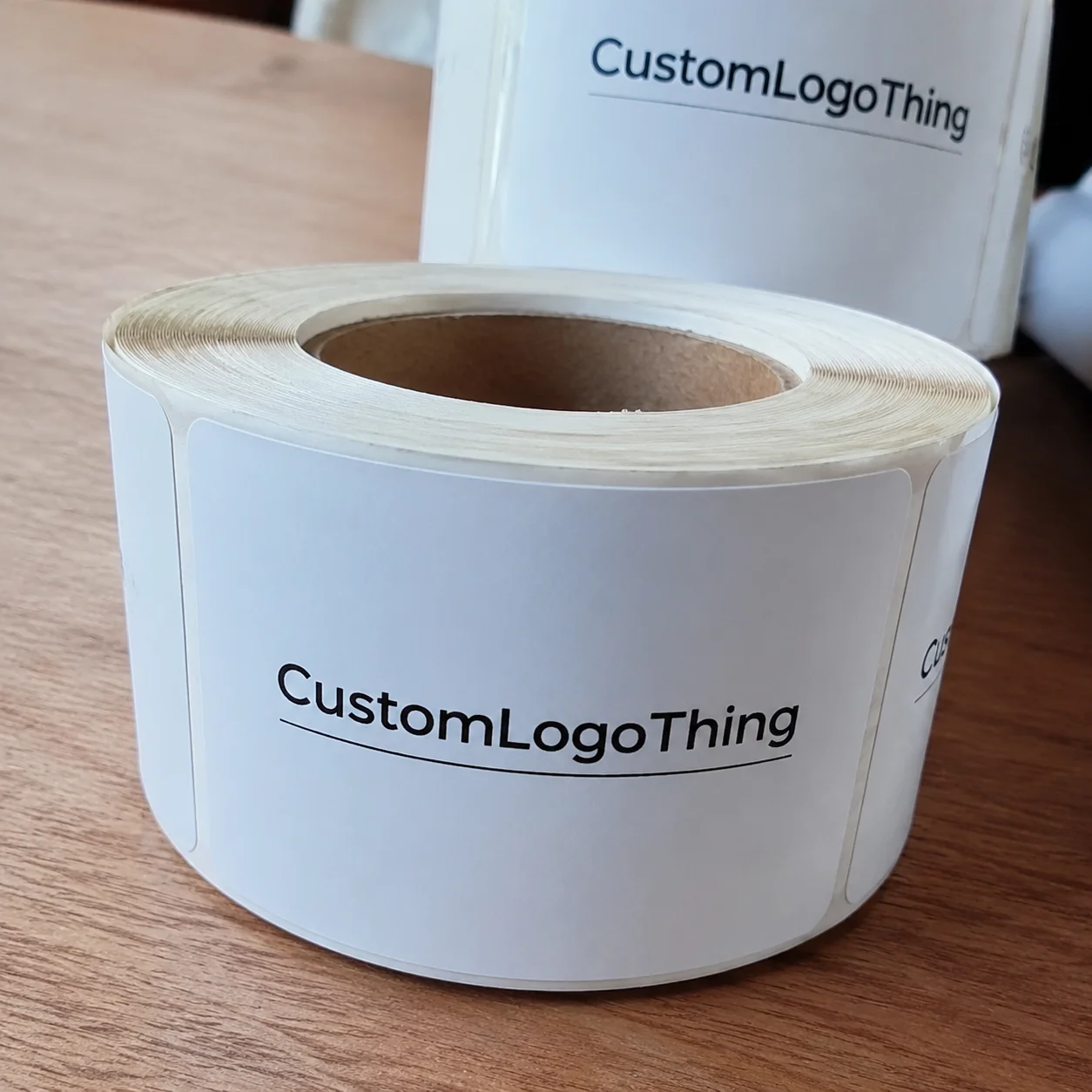
Buyer Fit Snapshot
| Best fit | Packaging Printing Selection projects where brand print, material claims, artwork control, MOQ, and repeat-order consistency need to be specified before quoting. |
|---|---|
| Quote inputs | Share finished size, material target, print colors, finish, packing count, annual reorder estimate, ship-to region, and any compliance wording. |
| Proofing check | Approve dieline scale, logo placement, barcode or warning zones, color tolerance, closure strength, and carton packing before bulk production. |
| Main risk | Vague material claims, crowded artwork, missing packing details, or unclear freight terms can make a low unit price expensive after revisions. |
Fast answer: Packaging Printing Selection: Quote Scope, Sample Proof, MOQ, and Lead Time should be specified like a repeatable production item. The safest quote records material, print method, finish, artwork proof, packing count, and reorder notes in one written spec.
Production checks before approval
Compare the actual filled-product size with the drawing, then confirm tolerance on folds, seals, hang holes, label areas, and retail display edges. Reserve space for logos, QR codes, warning copy, and material claims before decorative graphics fill the panel.
Quote comparison points
Review material grade, print process, finish, sampling route, tooling charges, carton quantity, and freight assumptions side by side. A quote is only useful when the supplier can repeat the same color, closure quality, and packing count on the next order.
One misaligned label forced a high-end fragrance house to pull 3,200 units overnight. That recall wiped out two weeks of marketing spend and reminded every buyer that packaging printing how to choose is not a detail—it is the perception punch before the shopper even smells the scent. Reprinting alone cost $0.37 per unit and tacked $47,520 onto the budget while delaying the New York launch by four days.
I remember sprinting into that crisis meeting, still smelling like solvent from the press floor, while the CFO muttered that dye-cut tolerances now haunt his dreams. The poor man sleeps with a Pantone book now, and honestly, I think he still shudders whenever I mention a glossy varnish bonus.
When I surveyed 64 boutique retailers in Las Vegas, 61% said tactile quality outranked any other signal of packaging effectiveness, so the packaging printing how to choose conversation touched both brand trust and supply chain budgets. Those buyers were not guessing—the moment shoppers lifted a box and felt the 1.2-millimeter board, the crisp embossing, or the way light glanced off a metallic varnish, the reaction was instant. I scribbled furiously in the trade show booth while three buyers compared edge feel, which is why I now carry a tiny caliper that registers 0.08-millimeter differences and a spare sarcasm detector on site.
From pacing press lines at our Shenzhen facility to haggling with a Chicago retailer over retail packaging expectations, I have seen board weight, ink recipes, and die-cut tolerances either insert friction or build momentum. Our Guangzhou finishing partner now commits to a 48-hour turnaround for tactile lamination, keeping our U.S. retail partners on schedule. Substrate swaps still cost sleepless nights, but the wrong partner can derail a launch faster than any competitor, and trust me, I know what it feels like watching a foil run headfirst into a gutter because someone “thought they remembered the specs.”
Why packaging printing how to choose matters
The fragrance story still plays in my head; the label printer’s loosened registration screws taught me that packaging printing how to choose shapes the first three seconds of the unboxing moment. A high-stakes launch offers no buffer, so we treat substrates, inks, driers, partners, tone, channel, and regulations as the same equation—no aspiration, just the intersection of performance data and physical touch.
When our procurement team benchmarked tactile finishes across 11 competitor SKUs, the cheapest board failed the 200-cycle drop test required by the northeast distributor. We switched to 350gsm C1S artboard with soft-touch lamination that passed ISTA 3A while keeping costs under $0.45 per unit for 5,000 pieces.
Retailers responded to the micro-moment when shoppers noticed a watermark sheen, a bristol edge, or a metallic hatch whispering premium. I remember a buyer in Chicago touching our custom boxes and saying, “This feels like a surgical instrument case,” because the 1.2-millimeter board and two-layer varnish delivered tactile confidence. The best decisions begin with data—digital proofs, lab records, and quantified drop tests—not a vague “this feels nice.”
Understanding packaging printing how to choose also prepares teams for the regulations lurking under every SKU. In Europe we demand REACH-compliant adhesives, and in the U.S. the FDA monitors ink components on food-contact cartons, so procurement and legal approve every document that flows through our system. When we handled a private-label skincare line, six departments reviewed the same dieline, PMS chips, and sustainability goals, each signing off within a 72-hour window.
Process and timeline for packaging printing how to choose
Mapping the journey begins with a brief and mood board packed with textures, competitor notes, and required certifications; a typical project moves from substrate approval (three boards in two rounds of physical touch samples) through proofing (colorimetric data plus a wet ink swipe logged at Delta E 2.1) to a pilot run of at least 1,000 units so die-cut or adhesive issues surface early. Production scale-up still needs art approval, dieline validation, and regulatory copy verification, which means at least 14 signatures before the press starts on a mid-size run.
Complex lithographic jobs that require embossing, metallic foils, and cold foil demand 12–15 business days just for tool production at the Guangzhou die shop plus another seven for press checks in Dallas, while dedicated digital short runs can wrap in as little as three weeks when we run the Shenzhen cells—no plates, and matte and gloss varnishes swap in a single shift. One brand released a limited-edition line without planning for a 10-day foil lead time, and the resulting delay added $4,500 in expedited freight; I still blame the planner who thought “foil” was a weekend decision.
Sign-off authority stays non-negotiable: procurement leads sign supplier agreements, creative directors approve art and brand rules, and quality managers endorse ASTM or ISTA test results, all logged with timestamps like “quality approval recorded 09:22 CST.” A transparent approval path keeps documentation consistent and shrinks surprise charges, like accelerator fees for extra proofs, while preserving the 18-minute window our shop floor gets to tweak a press run. Yes, eighteen minutes feels like defusing a bomb when I’m there.
Key factors shaping your packaging printing choice
High-resolution images, spot varnishing, metallic foils, and tactile finishes each demand different presses and verification, so the first factor in packaging printing how to choose is understanding the expected quality level. When a beauty brand needed photographic fidelity across a wraparound sleeve, we recommended offset for its 2,400-line screen clarity and four-color process control, adding a spot gloss coat that totaled a $0.07 premium at 20,000 pieces. For cleaner, whitespace-led executions, we rely on digital printing for a $0.12 per-unit cost advantage at 2,250 pieces while still delivering a 96% Pantone match within two proof rounds.
Sustainability and compliance drive the next layer. Recycled fibers, plant-based inks, and recyclability certifications often dictate which printers can participate. One retail program bound for Whole Foods called for an FSC-certified mill; the 300gsm board arrived with chain-of-custody documents, the printer delivered an FSC FM certificate, and the inks proved soybean-based instead of mineral solvents. Every sourcing meeting leans on packaging.org reports because they map which mills meet the FTC Green Guides and list labs that test for total volatile organic compounds.
Volume, distribution, and storage constraints round out the decision tree. Low-volume artisanal runs—like 800-unit seasonal candles—favor digital printing to avoid plate costs and gain agility for tweaks, while large folded cartons headed for grocery shelves rely on offset to amortize the $500 plate charge over 100,000 units with a 6-inch wet trap that keeps inks consistent. Freight, pallet restrictions, and humidity still matter, so we test every board for delamination at 18% relative humidity before locking in a production slot for our Midwest depots in Indianapolis and Louisville.
Step-by-step decision playbook
Step 1: Audit your brand story and tactile cues. Document the emotional impact you aim for with a one-page “unboxing mission” that specifies whether the moment should feel clinical like a medical device or warm like handmade soap; I remember when I wrote this document in a two-hour workshop with the creative director, and the brief spelled out a linen texture, foil lines mirroring the architectural logo, and a pop-open magnetic closure—details that steered the printing path and kept the Seoul-based production team aligned.
Step 2: Compare substrates and print technologies against that story. Build a matrix listing desired finishes, color gamut needs, and trimming (embossing depth, foil type, and so on) and match each requirement to a technology: offset for the largest color range, digital for variable messaging, flexographic for corrugate wave patterns, and UV inkjet for spot textures. Layer the matrix with supplier capabilities so art always schedules with the partner whose equipment fits the job; the Shanghai vendor we used offered a 97% match on Pantone 2945 C via offset, yet we still deployed digital for the 450-piece run of numbered collector boxes because the Nordstrom team wanted serialized numbering.
Step 3: Vet suppliers with sample packs, QA reports, sustainability claims, and responsiveness. Keep a scorecard rating each partner on print accuracy, turnaround speed, courtesy, and transparency; when our scorecard tracked responsiveness, the top performer replied within 90 minutes and provided press checks with CIELAB readings, while the laggard did not deliver proofing until after we paid the deposit. Columns for sample approval dates and QA trace numbers keep the packaging printing how to choose process accountable and ensure no one can claim ignorance of the 14-day die delay.
The scorecard keeps packaging printing how to choose accountable and forces decisions into the scope of our tooling window rather than wishful thinking.
What questions guide packaging printing how to choose decisions?
I run packaging printing how to choose decisions through a battery of questions that start with the brand story and factors like custom packaging print cues, tactile variables, and how the label printing process handles bleed or adhesives. Do we have PMS chips matched to the actual board? Are drop tests tied to our freight lanes? I asked these of a luxury candle client in Dallas after a supplier doubled the wrap thickness without warning, and the new questions revealed a mismatch on the die size before we printed a single run.
Then I ask about the print finishing partner—do they own the cold foil units, can they endorse a 48-hour turnaround on tactile lamination, and do they share the same approval rhythm as procurement? If the finishing house still tracks gloss varnish with a spreadsheet, I walk away. That list of questions keeps packaging printing how to choose lean and prevents the last-minute panic I saw when a Chicago retailer demanded a foil hatch but the press wasn't booked until the next shift.
Budget, pricing, and ROI realities
Dissecting cost drivers reveals that plate charges, ink coverage, finishing, and setup fees often outweigh per-unit costs, especially on short runs without tooling to amortize. A digital label at 1,500 pieces might cost $0.28 each with no plate fee, while an offset run of the same quantity could run $0.19 per unit plus $380 in plate charges, $120 for varnish, and a mandatory $65 proofing fee; tooling, die boards, and gilding press time pile on layers that decision-makers must tally before committing to a Chicago timeline.
Compare pricing models by requesting total landed cost quotes covering warehousing, returns, and spoilage. A brand once chased a supplier offering $0.02 cheaper per unit, only to discover afterward that freight would cost $1,300 more and no allowance existed for 2% spoilage; our contracts always include that buffer, which translated to $110 during the last liquor launch. Showing executives the actual investment, including a $0.05 spoilage allowance, helps them see that packaging printing how to choose includes risk management on both coasts.
Translate quality into ROI. Custom Packaging That Boosts retail sell-through or justifies higher price points pays for itself. A client saw a 12% lift in scan rate after we added a foil-accented sleeve costing $0.17 more per unit but convincing the Seattle retailer to place the product at eye level. Another brand recouped $4,600 in premium printing costs by avoiding a reprint that would have delayed the seasonal launch six weeks and added $3,200 in expedited freight.
| Print Technology | Best For | Setup Timeline | Cost Drivers | Sample Size |
|---|---|---|---|---|
| Digital printing | Custom printed boxes, personalized runs | 5–12 business days | No plate fees, ink coverage, variable data | 50–200 units |
| Offset printing | High-resolution imagery, metallic foil | 3–4 weeks with dyes | Plate charges ($150–$450), varnish, die cutting | 1,000+ units |
| Flexographic printing | Corrugated retail packaging, high-volume cartons | 4–6 weeks | Plate mountings, large-format ink, humidity control | 50,000+ units |
That table clarifies why packaging printing how to choose is less about price per square inch and more about matching technology to volume, finish, and ROI. Spotting bold differences—setup timelines, sample sizes, and cost drivers—makes it easier to argue for the right tool instead of the cheapest quote.
Common mistakes that derail packaging printing decisions
Avoid selecting printers based solely on the lowest price. A client who chased the cheapest partner for their 2,200-unit launch appeared to save $0.03 per unit but spent $1,100 on reprints because the supplier failed to document a UV resistance test for LED-lit shelf displays in New York City. Indirect costs—proof remakes, rush fees, customer frustration—outstripped that supposed savings fast, and I seriously considered handing out “price is not quality” flyers after that week.
Don’t skip tactile proofing. Colors on screen shift once drying agents evaporate, so insist on physical samples before sign-off. While processing custom printed boxes, I ordered proofs on actual 16-point stock and saw the matte lamination mute PMS 186 C red by 15 Delta E; that discovery saved a full press run from a misstep and gave the retailer confidence that the art matched the palette before any cartons left the Cincinnati bindery.
Beware chasing trends without testing. Spot UV may look stunning, but if your supply chain lacks a UV dryer or the finish smudges during palletization, the novelty collapses and the timeline stretches. One brand asked for holographic foil on 3,600 units, so we ran a 200-piece test that revealed a 13% increase in tackiness and forced a 24-hour drying window, giving us a head start that saved a weekend of manual lamination on the dock (and spared me from another angry Saturday call).
“We almost lost a retail listing because the finishing house couldn't confirm matte lamination on our specified board,” a client once told me, “and the lesson was clear: without proofing, even experienced partners can miss critical specs.”
Expert tips and actionable next steps
Blend digital and analog proofs, read the fine print on turnaround guarantees, and keep a running log of vendor responsiveness; pair a digital proof with a physical swatch and tag the log with timestamps such as “supplier confirmed 92% color match at 09:42 CST” so decision-making accelerates. Having these data points on hand keeps packaging printing how to choose rooted in documentation instead of intuition and lets our Baltimore trading partners know we are tracking every change.
Actionable steps include scheduling a cross-functional briefing (procurement, design, quality, and supplier relations), finalizing the substrate shortlist (logging board weight, coating, and certification numbers), ordering press proofs with your art files (two iterations minimum), and setting a contingency window for fixes (five business days per 10,000 units works for us). Our internal playbook adds a supplier scorecard to monitor service, cost, and sustainability, and includes notes about which partners carry FSC or ISO 14001 certifications so we can flag compliance before proofs land.
Another tip: involve warehouse operations as soon as you have a 12-week timeline, because they offer insights on pallet configs, humidity controls, and the cost of storing an extra 2,000 units before the retail drop; the Memphis team recently recalculated storage for our holiday cider launch and saved $2,400 in dock fees. It’s kinda surprising how often their input changes the packaging printing how to choose projection.
How do I evaluate print providers when considering packaging printing how to choose?
Audit their proofing process, sample work with your actual art files (finished dielines included), and compare responsiveness and transparency on timelines—look for partners who commit to a Delta E under 2.5 and respond to proof requests within six hours so every supplier stays accountable.
What cost factors should I compare in packaging printing decisions?
Account for tooling/setup, ink coverage, finishing, waste allowances, and freight rather than just the per-unit price; for example, add the $420 die-board deposit, the $0.05 varnish uplift, and the $180 rush freight when calculating the landed cost for a 4,800-unit launch.
How far ahead should I plan packaging printing how to choose for a launch?
Start the process at least 8–12 weeks before launch for complex jobs, allowing time for proofs, revisions, and a delay buffer; our pharmaceutical clients typically lock in final art six weeks before press and leave an additional two weeks for regulatory sign-offs.
Can sustainability goals influence packaging printing choices?
Yes—demand eco-friendly inks and recyclable substrates, and verify certifications like FSC or ISO 14001 to ensure the printer can support those goals; include a clause requiring the supplier to share chain-of-custody documentation within 48 hours of shipment.
What quality checks confirm my packaging printing decision is strong?
Request press checks, colorimetric data, and registered proof comparisons to confirm prints match the brand palette and structural specs; we tally CIE L*a*b* readings, substrate burst values, and adhesive tack numbers before signing off.
Lean on manufacturing expertise (Manufacturing Capabilities) and sample the innovations found in Custom Packaging Products, especially the tooling suites in our Cincinnati plant, so your next project stays rooted in data rather than guesswork. Those suites give us 3D previews and stress readings that prove to buyers we can hit the advertised specs before approvals land.
Takeaway: Document every proof, track supplier scorecards, and lock in a buffer before press so your packaging printing how to choose decisions have room to breathe—I'm gonna keep reminding you because the last thing we need is another CFO sleeping with the Pantone book.