Buyer Fit Snapshot
| Best fit | Paper Bags vs Kraft Bags Branding projects where brand print, material claims, artwork control, MOQ, and repeat-order consistency need to be specified before quoting. |
|---|---|
| Quote inputs | Share finished size, material target, print colors, finish, packing count, annual reorder estimate, ship-to region, and any compliance wording. |
| Proofing check | Approve dieline scale, logo placement, barcode or warning zones, color tolerance, closure strength, and carton packing before bulk production. |
| Main risk | Vague material claims, crowded artwork, missing packing details, or unclear freight terms can make a low unit price expensive after revisions. |
Fast answer: Paper Bags vs Kraft Bags Branding: Film, Print, MOQ, and Carton Packing should be specified like a repeatable production item. The safest quote records material, print method, finish, artwork proof, packing count, and reorder notes in one written spec.
Production checks before approval
Compare the actual filled-product size with the drawing, then confirm tolerance on folds, seals, hang holes, label areas, and retail display edges. Reserve space for logos, QR codes, warning copy, and material claims before decorative graphics fill the panel.
Quote comparison points
Review material grade, print process, finish, sampling route, tooling charges, carton quantity, and freight assumptions side by side. A quote is only useful when the supplier can repeat the same color, closure quality, and packing count on the next order.
Paper Bags vs Kraft Bags Branding: Which One Wins?
Paper bags vs kraft bags branding is not really a material contest. It is a perception test with a print budget attached. Put the same logo on two different stocks and customers will react differently, even if they cannot explain why. One bag looks finished. The other looks honest. Sometimes those are the same thing. Sometimes they are not.
There is one detail people miss all the time: kraft is still paper. The real comparison here is usually white or coated paper bags versus brown kraft bags, plus recycled variants and specialty finishes. That distinction matters because each surface changes how color reads, how much texture shows, and how expensive the bag feels in the hand.
A plain kraft bag can look more credible than a glossy paper bag. That bothers people who assume premium always means shiny. It does not. Kraft has texture and restraint. If the print is weak, a glossy stock can expose every mistake and make the whole thing feel overworked instead of polished. That affects brand identity, brand recognition, and the unboxing experience because customers judge the bag before they judge the product inside it.
"If the bag needs to scream, the design is already in trouble. Packaging should carry the brand, not wrestle it."
Paper Bags vs Kraft Bags Branding: the quick answer
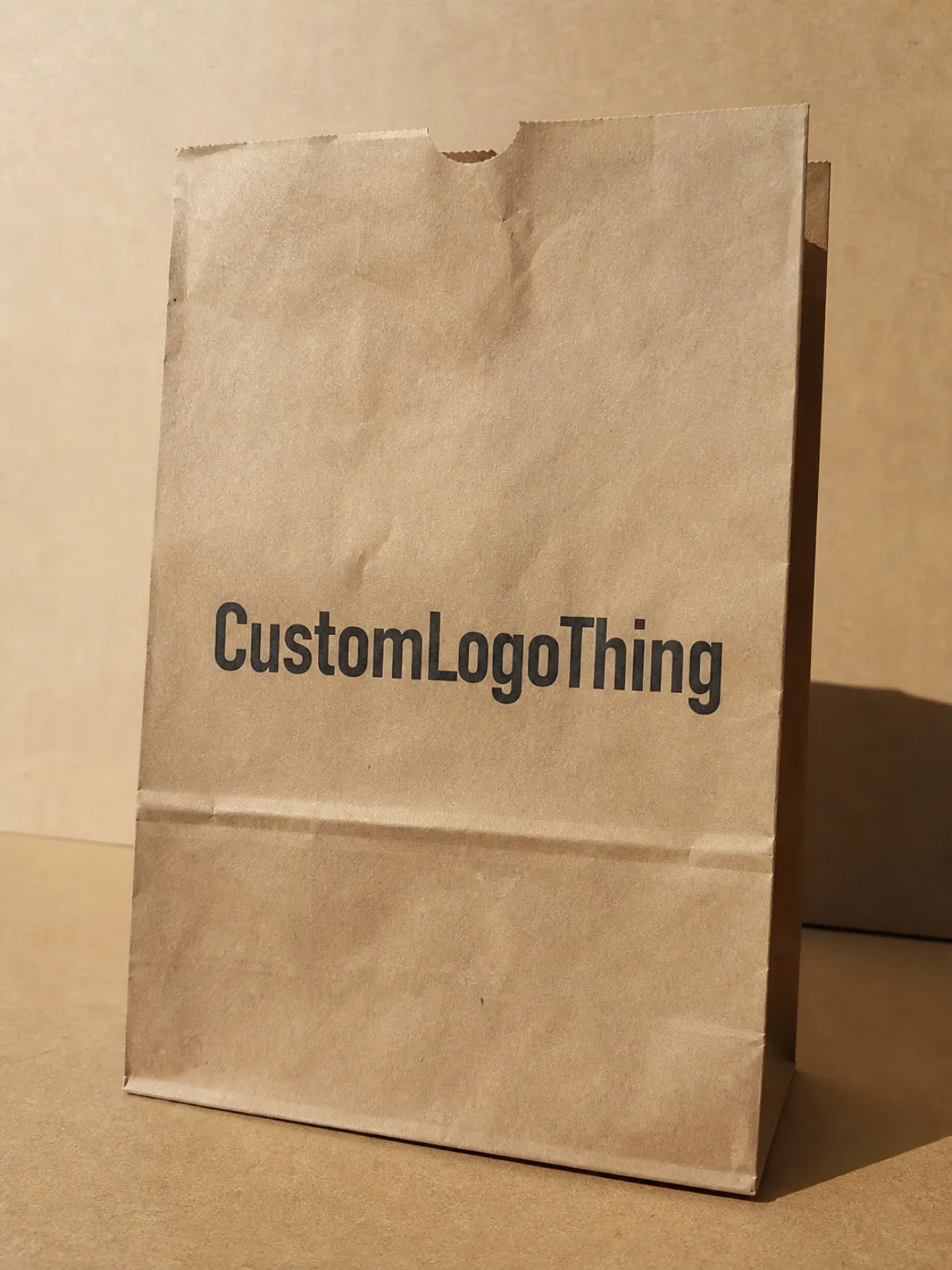
Here is the buyer-level answer: white or coated paper bags usually win when the brand needs polished color, crisp edges, and a more premium handoff; kraft bags usually win when the brand wants warmth, sustainability cues, and lower unit cost. That does not make one better across the board. It means they solve different problems.
If your logo has fine lines, tight typography, gradients, or a heavy color block, better paper stock gives you more control. White paper or coated paper holds detail better, especially if the artwork is built for clean visual branding. If your brand leans earthy, artisan, value-led, or understated, kraft usually looks more believable. Customers read that texture as less staged, and customer perception matters more than people like to admit.
Paper and kraft also behave differently under lighting. Matte paper can photograph beautifully, then show scuffs after a few handoffs. Brown kraft hides wear better, which is useful for retail checkout, takeaway, and event bags that pass through a lot of hands before the customer gets home. In practice, the best option is the one that still looks like your brand after three hours on a sales floor and one awkward subway ride.
The fast rule is simple:
- Choose paper bags for sharp color, premium finishes, and a more controlled presentation.
- Choose kraft bags for warmth, a natural feel, and a budget that stays polite.
- Choose neither blindly until you see the logo printed on both, because screen mockups have trust issues.
That is why paper bags vs kraft bags branding should be treated as a customer-moment decision, not a design theory exercise. The real question is not which stock sounds nicer. It is which one makes the logo easier to remember, easier to photograph, and easier to repeat across locations without becoming a different brand every quarter.
Top options compared: paper, kraft, recycled, and coated
Not all paper bags are the same, and treating them as one category is how people end up disappointed with print quality. The material, coating, and finish change the look more than most buyers expect. A brown recycled bag and a white laminated bag may both get called "paper bags," but they are not doing the same job for your brand identity.
| Option | Brand signal | Print clarity | Durability | Typical cost at 1,000 pcs | Best fit |
|---|---|---|---|---|---|
| Natural kraft | Earthy, honest, casual | Good for simple logos | Solid for light to medium loads | $0.18-$0.45 each | Cafes, bakeries, markets, simple retail |
| White kraft | Cleaner, brighter, more flexible | Better contrast than brown kraft | Similar to natural kraft | $0.25-$0.60 each | Retail bags with cleaner branding |
| Coated paper | Polished, premium, photo-friendly | Excellent for color and detail | Good, but scuffs show sooner | $0.45-$1.10 each | Boutiques, gifting, fashion, cosmetics |
| Laminated paper | High-end, glossy or matte luxury feel | Very strong | Very good, especially for handling and moisture | $0.80-$2.20+ each | Premium retail, events, launch kits |
| Recycled fiber paper | Responsible, understated, textured | Varies by surface | Depends on fiber mix and build | $0.22-$0.55 each | Eco-led brands, conscious retail, everyday use |
Natural kraft is the safe, practical choice for many small brands. It hides scuffs, tolerates rough handling, and gives a grounded look that works with one-color or two-color artwork. It also tends to photograph as more lived-in and less polished, which can be exactly what a brand wants. The downside is obvious: small details disappear, dark colors can sink into the background, and gradients usually turn muddy. If your brand system relies on delicate line work, natural kraft will not do you any favors.
White kraft sits in the middle. It keeps the texture and sturdiness of kraft, but the lighter base improves contrast. That means logos stay sharper, reds and blues behave better, and typography reads more cleanly. It is a useful option for brands that want to stay warm and approachable without losing legibility. The tradeoff is that it shows dirt sooner than brown kraft, and it can still feel less refined than coated paper. For many retail brands, though, that is a fair trade.
Coated and laminated paper bags are where print quality really opens up. You can get cleaner edges, stronger blacks, more faithful brand colors, and a better photo result. The tradeoff is obvious: they can look expensive, but they also show creasing, scratches, and weak design faster. If the artwork is weak, a premium finish does not save it. It just frames the problem more expensively.
Recycled fiber bags deserve their own lane. They can support a credible sustainability story, especially when the supplier can back up the material claim with real paperwork. That said, recycled does not automatically mean better looking. Fiber speckling, shade variation, and a more absorbent surface can change the final print. If the brand leans on environmental messaging, check the claim carefully and do not confuse "recycled look" with certified recycled content. For sourcing language, the FSC site is a better reference than vague green copy that sounds nice in a pitch deck and nowhere else.
For shipping abuse, handle strength, and carton performance, the ISTA test framework is more useful than guessing. A bag that survives a sample photo is not automatically ready for stacked cartons, distribution centers, or retail backrooms where things get dragged, dropped, and squeezed because somebody "just needed it out of the aisle."
One more practical note: if your product is oily, damp, or likely to sit in humid storage, the finish matters just as much as the look. Uncoated kraft can absorb moisture faster. Coated paper resists that better, but it can crease in a more visible way. There is no perfect stock. There is only the stock that matches the job.
Detailed reviews: what each bag type does to your brand
Natural kraft is the honest workhorse. The brown tone hides fingerprints and minor wear, which makes it a strong fit for bakery bags, coffee shops, markets, gift sets, and casual retail. If your logo is bold, simple, and built around one or two inks, this stock gives you a lot of value for the money. It also tends to feel grounded instead of staged, which helps brands that want an everyday, handcrafted, or neighborhood look. The downside is plain: small details disappear, dark colors can sink into the background, and gradients usually turn muddy. If your brand system relies on delicate line work, natural kraft will not do you any favors.
White kraft is the compromise choice that is better than most people expect. It keeps some of the texture and sturdiness of kraft, but the lighter base improves contrast. Logos stay sharper, reds and blues behave better, and typography reads more cleanly. It is a good option for brands that want to stay warm and approachable without losing legibility. The tradeoff is that it shows dirt sooner than brown kraft, and it can still feel less refined than coated paper. For many retail brands, though, that is a fair trade.
Coated paper is the pick for clean branding and strong shelf appeal. It handles high-contrast printing, fine detail, and color consistency better than textured options. Fashion, cosmetics, stationery, and gift retail often lean this way because the bag becomes part of the presentation. The unboxing experience improves fast when the stock is smooth, the print is sharp, and the handles are chosen with care. But coated paper is also less forgiving. Scuffs show. Wrinkles show. If the print registration is off by a little, the defect looks louder on coated stock than it does on kraft. That is why a buyer should never approve a coated bag from a mockup alone.
Laminated paper pushes the presentation further. Matte lamination gives a soft, expensive feel. Gloss lamination can make colors pop, though it can also look loud if the design is already busy. Lamination helps with moisture resistance and surface protection, which is useful for premium retail and event bags. It also raises the price, and that matters. A laminated bag can make a brand look more established, but if the product and customer base are more relaxed, the finish can feel too formal. I have seen brands spend extra on lamination only to find their audience preferred the simpler look of kraft. Fancy is not automatically better. Annoying, but true.
Recycled fiber bags sit in a different conversation. They can support a responsible brand story, especially for labels that want to show they are making better sourcing choices. The texture can feel authentic and less manufactured, which helps some brands a lot. But recycled fiber does not guarantee a better visual result. Surfaces can vary more from run to run, and the print may absorb differently. That means a buyer should request a physical sample, not rely on an eco label and optimism. Brand consistency still matters, even in sustainable packaging.
If you want to see how these differences show up in real retail settings, our Case Studies page is a useful reference point. A logo that looks strong on one finish can get weaker fast on another, especially under overhead LED lighting or in window displays where reflections change every minute.
There is also a practical durability angle. A bag that looks beautiful but tears at the gusset is not premium. It is just expensive disappointment. Buyers who are ordering for daily use should pay attention to handle attachment, board weight, fold memory, and glue quality. Those details are not glamorous, but they are the reason one supplier becomes a repeat supplier and the other becomes a cautionary tale.
Process, Timeline, and Production Steps
Good bag projects are boring in the right way. They follow a predictable production flow, and that is exactly why the timeline matters. The fastest orders are not the ones with the slickest sales pitch. They are the ones where the artwork is ready, the size is known, and nobody suddenly decides to move the logo 12 mm to the left after proof approval.
- Brief - Define the size, carry weight, quantity, finish, handle style, and actual use case. Retail checkout is not the same as gifting, and the bag should not pretend otherwise.
- Dieline - Confirm flat dimensions, gusset depth, handle placement, and print safety margins. Leave enough room around the edges so the logo does not fall into a fold or edge crush.
- Artwork prep - Send vector files, outline fonts, and match colors with Pantone references if color control matters. Keep fine lines above 0.35 to 0.5 pt if you want them to survive production.
- Proofing - Check the digital proof carefully. This is where most preventable problems show up: wrong logo placement, bad color assumptions, missing bleed, or handle artwork landing in the wrong zone.
- Sampling - Request a physical sample if the order is important. Sample the exact size and finish, not a "similar" version that only shares a family resemblance.
- Printing and finishing - Depending on the stock, this may involve offset, flexo, hot stamp, embossing, lamination, or simple one-color print. Drying and curing time can matter more than buyers expect.
- Assembly and quality check - Handles, folds, glue lines, and print consistency should be checked before shipping. Bad glue on a bag is the kind of failure customers notice instantly and forgive never.
- Packing and transit - Bags are bulky. Even light stock can eat freight space, which is why shipping often becomes a bigger line item than people planned.
Typical timing depends on how custom the job is. Simple stock-style branded bags can move in roughly 7 to 12 business days after proof approval if the supplier already has the base material ready. More custom projects, especially those with a special size, rope handles, lamination, or foil, often need 15 to 25 business days. If you add embossing, unusual handles, or sample revisions, 20 to 35 business days is more realistic. That is not slow. That is normal production.
The usual delay points are easy to predict. Pantone matching takes time. Foil stamping needs tool approval. Handle changes are always more disruptive than they sound. Sample revisions chew up days because everyone thinks, "It is just a small tweak," right before it adds another proof round. If the factory is busy, queue time can also stretch the order. This is why buyers who need bags for a launch should plan the order before the launch invitation goes out.
If the bag will support heavier products, ask for a carry test before you approve the run. A retail tote or paper shopping bag should be assessed against the actual load, not a vague assumption. If you have a shipping or display challenge, reference a transit standard such as ISTA rather than hoping the handle "looks strong enough." Looks are great. Broken handles are more memorable.
For brands adding stickers, inserts, or hang tags, pairing the bag with Custom Labels & Tags can improve the whole presentation. A bag and tag system works better than a bag alone when the customer needs a clear brand memory after leaving the store.
Cost, Pricing, MOQ, and Unit Cost
Pricing is where the fantasy usually ends. The unit cost looks simple until you break it apart and realize the money is sitting in five different places. Material grade, size, print colors, finish, handle style, and quantity all affect the quote. If a supplier gives you one flat number without explaining those pieces, keep asking. Hidden cost is where bad purchasing decisions breed.
The usual cost hierarchy is straightforward. Plain kraft sits at the low end. Printed kraft moves into the middle once one-color or two-color branding is added. White kraft often lands a little higher because the base stock and visual requirements are more demanding. Coated paper costs more because the surface is better suited to premium branding. Laminated and specialty paper bags usually sit at the top end because the finish stack, tool work, and labor all climb.
Here is a practical way to think about the numbers for a typical branded order:
- Plain natural kraft - often $0.18-$0.35 each at mid quantities, with lower pricing possible at larger volumes.
- Printed natural kraft - often $0.25-$0.55 each, depending on print coverage and handle type.
- White kraft - often $0.25-$0.60 each, especially if the artwork needs cleaner contrast.
- Coated paper - often $0.45-$1.10 each, with more if you add specialty finishes.
- Laminated paper - often $0.80-$2.20+ each, depending on lamination, foil, embossing, and structure.
MOQ changes the math in a way that surprises first-time buyers. Small orders get punished by setup fees because the press still has to be calibrated, plates have to be made, and the line still has to be run. Larger orders lower unit cost, but only if the buyer can actually move the inventory before styles change or the brand refreshes. A 500-piece order can be expensive per unit. A 5,000-piece order can be smart or foolish, depending on how fast the bags leave the warehouse.
Typical MOQ bands look something like this:
- 500 units - possible for simpler stock-style or digital runs, but unit cost is usually higher.
- 1,000 units - a common starting point for many custom branded bags.
- 3,000-5,000 units - often where pricing becomes much more efficient.
- 10,000+ units - best for repeat programs with stable artwork and steady sales.
Do not forget the extra line items. Setup fees can run roughly $50-$250 depending on print method and complexity. Plates or tooling may add another $30-$120. Foil dies and embossing tools can push higher. Samples are sometimes credited back, sometimes not. Freight can be a shock because bags are light but bulky; the carton volume matters more than the weight. For a smaller order, shipping can add $0.05-$0.25 per bag or more, and rushed air freight can blow past that quickly.
The smart way to compare quotes is to ask for landed cost, not just factory price. Landed cost includes freight, setup, samples, and any special finishing that sneaks in later. If one quote is $0.06 lower at factory level but $0.14 higher after shipping and setup, the cheaper quote was fiction from the start. Suppliers are not always trying to mislead you, but the math can still hide the truth.
For most buyers, the cheapest choice is not the best choice. The real target is the lowest cost that still protects brand consistency, photo quality, and repeated customer use. If the bag falls apart or looks wrong on camera, the savings were fake.
One more pricing reality: packaging costs tend to rise faster than people plan once a brand adds finishing touches. A simple one-color kraft bag can stay practical for months. Add foil, lamination, custom rope handles, and embossed logos, and the budget shifts quickly. That is fine if the margin supports it. It is a problem if the packaging starts eating the profit you meant to spend elsewhere.
How to Choose the Right Bag for Your Brand
Start with the use case. A retail checkout bag, a takeaway bag, a gift bag, and a shipping insert bag all get handled differently. They are not interchangeable, no matter how often a supplier's catalog tries to pretend otherwise. A coffee shop needs carry strength and good scuff hiding. A fashion boutique needs a better unboxing experience and cleaner color. A trade event needs affordable volume and decent brand recognition from a distance.
Then match the material to the brand voice. Premium fashion, beauty, and gift retail usually need sharper paper options because the bag is part of the presentation. Artisan food, handmade goods, and value-led retail often fit kraft better because the texture supports the story. If your brand identity says "clean, precise, polished," brown kraft can fight that. If your brand says "warm, handmade, approachable," a glossy finish can feel like it was borrowed from a different business.
The most useful test is not a mood board. It is a physical test. Hold the bag. Load it. Look at it under your store lighting, not under the supplier's studio lights. Take a photo from arm's length and another from across the counter. If the logo disappears in a quick phone shot, customers will lose it too. That is not a theory. That is how actual visual branding gets judged in the wild.
Here is a simple decision framework:
- Choose paper if crisp color, polished presentation, and premium photo output matter most.
- Choose kraft if warmth, texture, and cost control matter most.
- Choose coated paper if the brand wants a more elevated handoff and can tolerate visible wear.
- Choose recycled fiber if the sustainability story is real and the print can handle the surface.
Ask one more question before you place the order: what does the bag need to communicate after the customer leaves the store? If the answer is "sophistication," the stock should support that. If the answer is "earthy, honest, practical," kraft usually fits. If the answer is "we are not sure," that is your cue to order samples from both paths and stop guessing.
Also check your repeat order rhythm. A beautiful bag that only works for one seasonal run is not a system. It is a one-time expense with better lighting. If your brand needs steady reorders, choose the stock that gives you stable color, stable supply, and no surprises when your next batch lands three months later.
Our Recommendation: what to order next
If you need a direct recommendation, here it is. Most small-to-mid brands should start with printed kraft. It is the safest balance of price, durability, and brand readability. It works for a broad range of product types, and it is usually good enough to carry a clean logo without draining the budget. If the artwork is minimal and the customer base values warmth and honesty, kraft is the sensible default.
Premium retailers should test coated paper. Not because it is fashionable. Because it gives better color control and a more elevated impression if the artwork is ready for it. That matters for fashion, beauty, luxury gifting, and retail brands that rely on strong shelf presence. If the product has a higher margin, the bag should not look like it was chosen five minutes before print approval.
High-volume basics can stay with plain kraft if the bag is mainly functional. This is the boring option, and boring is often profitable. If the brand sells through volume, take the savings and put them into better product photography, stronger inserts, or cleaner typography on the bag itself. That usually creates more value than overspending on a finish nobody asked for.
Here is the order I would use for a new run:
- Request two samples: one kraft, one paper with the same artwork.
- Check them under the lighting customers actually see.
- Load them with the real product weight.
- Compare the landed cost, not just the unit price.
- Pilot with a smaller batch before committing to a large reorder.
That last step matters more than people think. A bag can look excellent on screen and still feel wrong in the hand. It can be too shiny, too flat, too soft, or too loud. Once the customer touches it, the packaging either confirms the brand story or weakens it. There is no prize for finding that out after 10,000 units have landed.
If you need a brand-system view, pair the bag with matching inserts, stickers, or hang tags so the visual branding feels consistent. The bag should not be doing all the work alone. A strong logo on the right stock, backed by the right tag or insert, gives the customer a clearer memory and a better repeat impression.
Paper bags vs kraft bags branding is decided by the customer moment, not by the supplier catalog. Choose the option that supports the strongest in-store impression, the clearest photo result, and the repeat order rhythm your business can actually sustain. If you want the shortest path to a good decision, order two samples, test them in real lighting, and buy the one that still looks right after handling, loading, and a few ugly photos.
FAQ
For branding, are paper bags or kraft bags better for premium retail?
Coated or matte paper usually looks more premium because it gives cleaner color and sharper edges. Kraft can still work if the logo is minimal, the typography is strong, and the texture is part of the brand story. If the goal is a luxury-looking handoff, paper usually wins; if the goal is warm and handmade, kraft often fits better.
Do kraft bags print as well as paper bags for logo branding?
Simple one- or two-color logos usually print well on kraft, especially with bold shapes and strong contrast. Fine details, gradients, and dark full-coverage art can lose clarity on brown stock. If precision matters, white ink or a lighter bag color can improve the result quickly.
Which option has the lower cost for custom branding?
Plain kraft is usually the cheapest starting point, especially when the order quantity is high. Paper bags climb in cost once you add heavier stock, lamination, foil, embossing, or custom handles. The smallest order often has the worst unit cost because setup charges do not shrink much.
What MOQ should I expect for paper bags vs kraft bags branding?
Stock-style branded bags can start with lower MOQs, but true custom sizes, finishes, and handles usually need a higher minimum. Higher MOQ lowers unit cost, but only if the buyer can actually move the inventory. Ask for quotes at 500, 1,000, and 5,000 units so you can see the pricing curve instead of guessing.
How do I test paper bags vs kraft bags branding before placing a big order?
Order samples with the real logo, bag size, and handle style you plan to use. Check them in daylight, store lighting, and on camera because branding can look very different in each setting. Fill the bags, carry them, and inspect the finish for scuffing, color shift, and how the brand reads from a distance. That is the safest way to settle paper bags vs kraft bags branding before you place a larger run.
Can recycled paper bags still look premium?
Yes, but only if the material quality, print method, and artwork are aligned. Recycled paper can look refined, quiet, and intentional. It usually works best with simple layouts, controlled ink coverage, and a supplier that can prove the recycled content instead of just talking about it.


