Personalized Address Labels Round: Buy Smarter, Stick Better
Personalized Address Labels round are simple in concept and easy to misuse in production. The shape is useful because it gives a clean, finished look on envelopes, mailers, insert cards, jars, and small cartons without the visual weight of a rectangle. The challenge is fitting a return address, logo, and any decorative element into a circle that still reads clearly after printing and application.
For buyers, the useful questions are not about style alone. The real decision is whether the diameter, adhesive, stock, and finish match the surface and the way the label will be used. A circle that looks good in a proof can still fail if it lifts on a curved mailer, smears under handling, or forces the text too small to read.
The best orders are usually the ones where design and spec are chosen together. That keeps the label functional instead of decorative only.
What personalized round address labels actually do
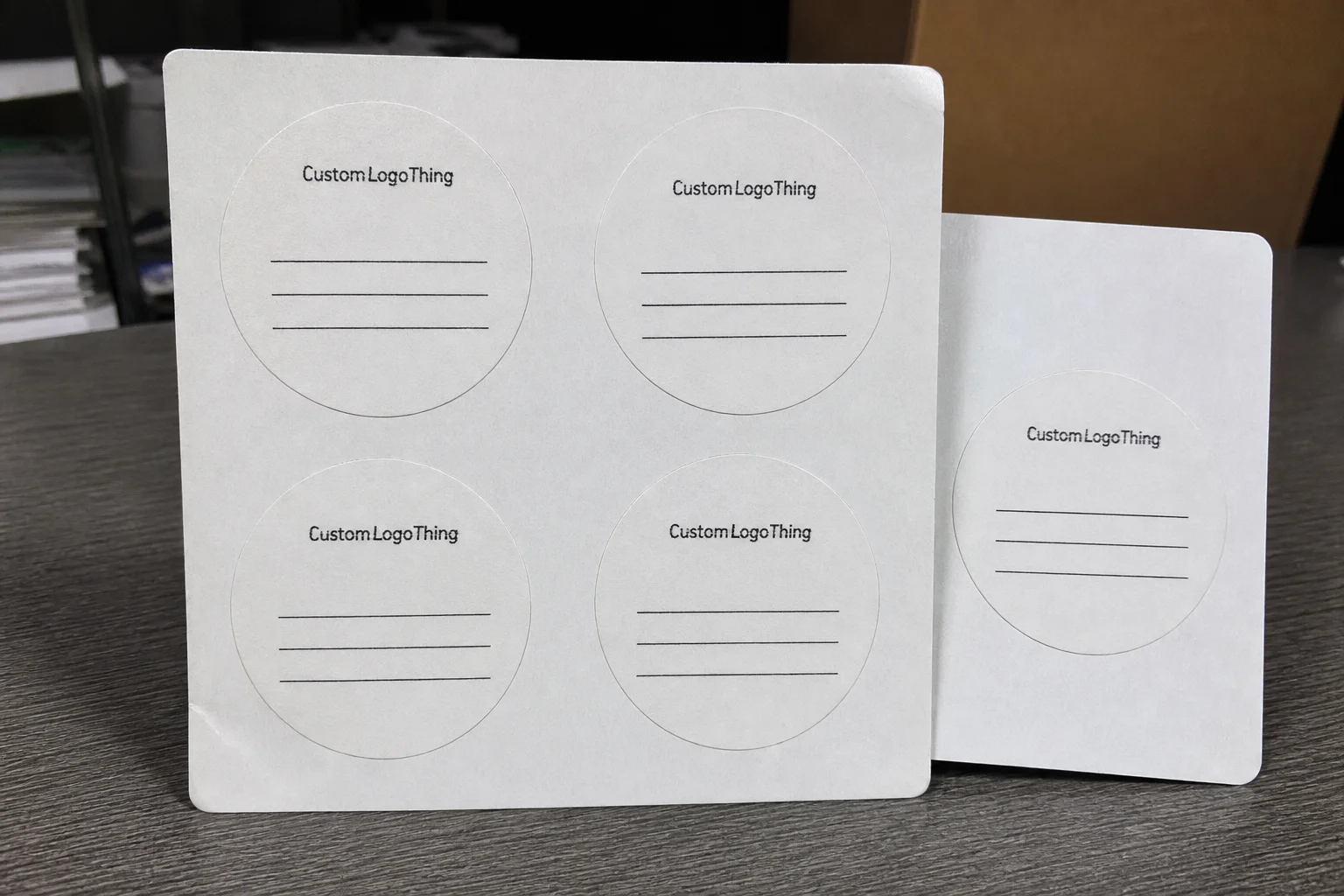
Round address labels are pressure-sensitive stickers printed with a name, return address, logo, or short message. They come on sheets or rolls and are used to make mailing and packaging look organized without adding much cost or setup time. The format is especially useful when a brand wants a consistent sender mark on small packaging or outbound mail.
They are common on envelopes, tissue wraps, poly mailers, product boxes, and jars. In clothing and ecommerce packaging, they often serve as the final branded touch on an otherwise plain shipment. That small detail matters because it keeps the packaging system consistent across different touchpoints.
The tradeoff is space. A circle gives you less room than a rectangle, so the layout has to be disciplined. If the diameter is too small for the address or logo, the design becomes crowded and harder to use. Buyers usually get the best result by prioritizing readability first and decoration second.
Most buyers choose round address labels for three practical reasons:
- Presentation: they make envelopes and small packages look more finished than handwritten or generic labels.
- Speed: preprinted labels reduce packing time when the same address is used repeatedly.
- Consistency: they keep branding aligned across inserts, mailers, and seals.
If a packaging system already has a visual identity, a round label is one of the lowest-cost ways to carry it through the final touchpoint.
How the label format and adhesive process works
Production is straightforward: artwork is printed, cut to round shape, and packed on sheets or rolls. Sheets work well for smaller quantities and hand application. Rolls are better when speed matters or when labels are applied in volume with a dispenser.
Adhesive choice affects how well the label performs after application. Permanent adhesive is the default for mailing and packaging because it is designed to stay in place through transit and handling. Removable adhesive is useful when the label is temporary or needs to peel cleanly. Stronger tack may be needed for textured stock, coated mailers, or curved containers where a standard adhesive can lift at the edges.
Material changes both cost and durability. Paper labels are usually the most economical and are fine for dry, indoor use. Polypropylene and vinyl cost more but offer better moisture resistance and durability. Coated stocks usually print cleaner when the design includes small type or fine logo lines.
Round labels also behave differently on the package surface. A centered circle is easy to read and works well as a seal, but small diameters leave limited room for longer addresses. A 1-inch label may fit a short logo or one line of text, but it is often too tight for a full return address. The right size depends on the actual copy, not the mockup.
Packaging guidance from groups like the Flexible Packaging Association and testing references from the ISTA both point to the same practical rule: fit and performance matter more than appearance alone.
Key specs that affect pricing, print quality, and fit
Pricing for personalized address labels round depends on a few core variables. Diameter is one of the biggest. Larger labels cost more per piece, but they make the typography easier to read and give the layout room to breathe. Smaller labels are cheaper, but they can force text so small that the label becomes hard to use.
Material and finish are the next major cost drivers. Matte paper is often the least expensive and easiest to read, especially for full return addresses. Gloss can sharpen color and create a more finished look, though it may reflect light. Specialty coatings such as soft-touch add cost and are usually worth it only when finish is part of the brand presentation.
Quantity has a major effect on unit price because setup and proofing are spread across more pieces as the run gets larger. Typical custom round label ranges often look like this:
| Order Size | Typical Format | Common Unit Cost Range | Best For |
|---|---|---|---|
| 250-500 pieces | Sheets | $0.20-$0.45 | Small batches, testing a design |
| 1,000-2,500 pieces | Sheets or rolls | $0.08-$0.22 | Regular fulfillment, moderate branding use |
| 5,000+ pieces | Rolls | $0.03-$0.12 | Frequent mailing, ecommerce packaging, repeat orders |
Those ranges move with print coverage, adhesive type, number of colors, and whether proofing or finishing is included. They are still more useful than a vague claim of “Affordable Custom Labels.”
Print complexity also changes both cost and readability. A one-color return address is usually cheaper than a full-color logo with gradients and small copy. The more detail a circle has to carry, the more carefully the file has to be prepared. Simplifying a complicated logo often improves the final result on a small round label.
Surface conditions matter too. Smooth kraft envelopes are usually easy. Coated mailers, textured boxes, and slightly curved jars may need stronger tack or a more flexible stock. If the label will be handled often or exposed to humidity, choose the adhesive for that reality rather than the ideal condition shown in the proof.
For brands with sourcing requirements, paper choice and certification may matter. The FSC system is a widely recognized reference for responsible forest management. It does not improve performance on its own, but it can matter when packaging programs need documented material sourcing.
Personalized address labels round: step-by-step ordering process
The cleanest ordering process starts with the spec. Pick the diameter, finish, material, and quantity before finalizing the artwork. If design comes first, it is easy to discover too late that the address is too long or the logo is too wide for the circle.
Once the spec is set, prepare the artwork correctly. Vector files are ideal because they scale cleanly, though high-resolution raster files can work if they are set up properly. Keep text large enough for the smallest label size you expect to print. Leave a safe margin around the edge so nothing gets clipped by the die line.
Then request a proof. This step should not be skipped. Proofs catch spelling errors, zip code mistakes, poor centering, weak contrast, and awkward line breaks before production starts. They also confirm whether the order will be printed on sheets or rolls and whether the trim size changes slightly after finishing.
Before approval, confirm the functional details:
- Format: sheets for hand application, rolls for faster packing.
- Core size: important if the labels will be used in a dispenser.
- Adhesive: permanent, removable, or stronger tack for textured surfaces.
- Cut: kiss-cut labels stay on the liner until peeled; individually cut labels need different handling.
For brands building a wider packaging system, round address labels often pair well with other branded items from Custom Labels & Tags. Keeping the visual style consistent across labels, inserts, and tags usually costs less than creating each piece separately.
After proof approval, the order moves into printing, cutting, finishing, quality control, and shipping. If the file is clean and the spec is settled, that part should be routine.
Process and turnaround: what timing usually looks like
Turnaround depends on file readiness, proof revisions, print method, and order size. A simple run with clean artwork can move quickly. A file with low-resolution art, missing details, or multiple revisions will take longer.
A realistic timeline often looks like this: one to two business days for file review and proofing, several business days for production, then shipping time. Larger orders or specialty finishes can extend the schedule. If the labels are tied to a launch or event, leave room for at least one proof cycle.
Rush service is possible in this category, but it usually adds cost and reduces flexibility for changes. The best way to protect timing is clean files, a simple design, and early confirmation of every detail.
Seasonal demand can also affect lead time. Packaging surges often happen before launches, holidays, and trade shows, and labels are rarely the only item in the queue. Ordering early usually improves both pricing and reliability.
The smoothest label order is usually the one that gives production room to work: clean artwork, clear specs, and one proof cycle are better than last-minute changes and emergency shipping.
Common mistakes with sizing, artwork, and quantity
The most common mistake is choosing a diameter that is too small. Round labels can look elegant in a mockup, but once a full return address is added, tiny type becomes a problem. If the label is meant to function first, pick the largest size that still fits the package.
Weak contrast is another issue. Light gray text on a glossy surface or a logo with too many thin lines may look acceptable on screen and fail in print. Strong contrast is easier to read and less likely to feel cheap. For mailing use, readability should win over subtlety.
Format gets misjudged as well. Sheets are fine for smaller hand-applied runs. Rolls are better when volume increases or when the packing team needs speed. If the labels are part of a fulfillment workflow, choosing sheets because they seem simpler can slow the line down later.
Proof approval errors are another frequent source of trouble. Buyers check the logo and miss the address line, spacing, or zip code formatting. They also forget to confirm the final trim size. That is how labels end up technically correct but inconvenient to use.
Quantity planning creates its own problems. Ordering too few labels can force another setup charge and a higher unit price. Ordering too many can leave outdated addresses, old contact details, or obsolete artwork sitting in inventory. The safer approach is to order for the production cycle you can realistically use.
If a final check is needed, compare the plan against how the package will actually be handled. Will it be stored in a warm warehouse? Will the mailers be compressed in transit? Will the label go on a textured or curved surface? Those details determine whether the label still works after application.
Expert buying tips for better labels and lower unit cost
Start with size. Choose the largest diameter that still fits the envelope, mailer, or insert card. More space usually makes typography cleaner and reduces layout compromises.
Keep the design restrained. A circle does not need to hold every part of a brand identity. One clear logo, a return address, and perhaps a short line of supporting text usually print better than a crowded layout. Simpler art also reduces proof corrections.
Match finish to use:
- Matte: good for writing surfaces and a softer, less reflective look.
- Gloss: better for sharper color and a more polished retail finish.
- Durable stock: better for shipping, handling, or moisture exposure.
Ask for price breaks at multiple quantities. Moving from 1,000 to 2,500 pieces can lower unit cost enough to justify a larger run, but the savings only matter if the address or branding will stay current.
If your packaging line uses more than one container or mailer size, standardize the label wherever possible. Two well-chosen diameters are easier to manage than several similar versions that all need storage, reordering, and artwork upkeep.
Ask for a quote that separates size, material, finish, quantity, and any special adhesive or printing requirement. If a supplier only gives one lump price, it is hard to tell what is driving the cost.
Next steps for ordering the right round address labels
Measure the actual space on the envelope, mailer, jar, or insert card before choosing a diameter. That step is often skipped, and the result is a label that is round on paper but wrong in practice.
Decide what the label needs to do. If it is decorative, finish and branding can take priority. If it is functional, readability and adhesion matter more. If it needs to do both, the design usually has to be simpler and the stock may cost more.
Prepare clean artwork, confirm the address details, and request a proof before production. Compare quotes by size, material, finish, and quantity rather than by headline price alone.
For brands ordering personalized address labels round for mailers, packaging inserts, or clothing shipments, the best choice usually balances readability, durability, and unit cost without overcomplicating the design.
FAQ
What size works best for personalized address labels round?
Use the largest diameter that fits your packaging or envelope space without crowding other elements. Smaller sizes can work for short names or simple logos, but full return addresses usually need more room if you want them readable at a glance.
Are round address labels better on sheets or rolls?
Sheets work well for small batches and manual application. Rolls are better for larger mailing runs or faster packing workflows, especially if your team uses a dispenser or applies labels as part of a fulfillment line.
What affects the cost of round personalized address labels the most?
Quantity, material, finish, and print complexity usually drive the biggest price changes. Lower quantities cost more per label because setup and proofing are spread across fewer units.
How long does production usually take for custom round address labels?
Timing depends on proof approval, quantity, and whether the artwork is ready to print. Rush options may be available, but they usually increase cost and reduce flexibility for edits.
Can personalized address labels round work for clothing packaging?
Yes, they work well for thank-you cards, tissue wraps, poly mailers, and insert packaging. Choose an adhesive and finish that match the surface and handling conditions of the package.


