Staples Personalized Address Labels seem simple, but they influence how consistently mail goes out, how fast a packing station moves, and how polished each envelope or mailer looks. The real difference is usually not the artwork. It is the combination of stock, adhesive, cut quality, and proof accuracy underneath it.
For buyers, the useful question is whether the label solves a workflow problem. A label that prints clearly, peels cleanly, and stays put through sorting is worth more than one that only looks good on screen. That is especially true when the same address gets used across envelopes, inserts, invoices, and shipping materials.
What Staples Personalized Address Labels Really Solve
For small brands, offices, and mail-heavy teams, staples Personalized Address Labels provide a repeatable way to put a return address on outgoing mail without rewriting the same information by hand. That saves time, reduces address errors, and gives every mail piece a more consistent presentation.
They also help standardize the way mail looks across different surfaces. A simple label can make a plain envelope, kraft mailer, or insert card feel intentional. For a buyer, the value is not just visual. It is operational: fewer handwritten steps, fewer mistakes, and less friction at the packing table.
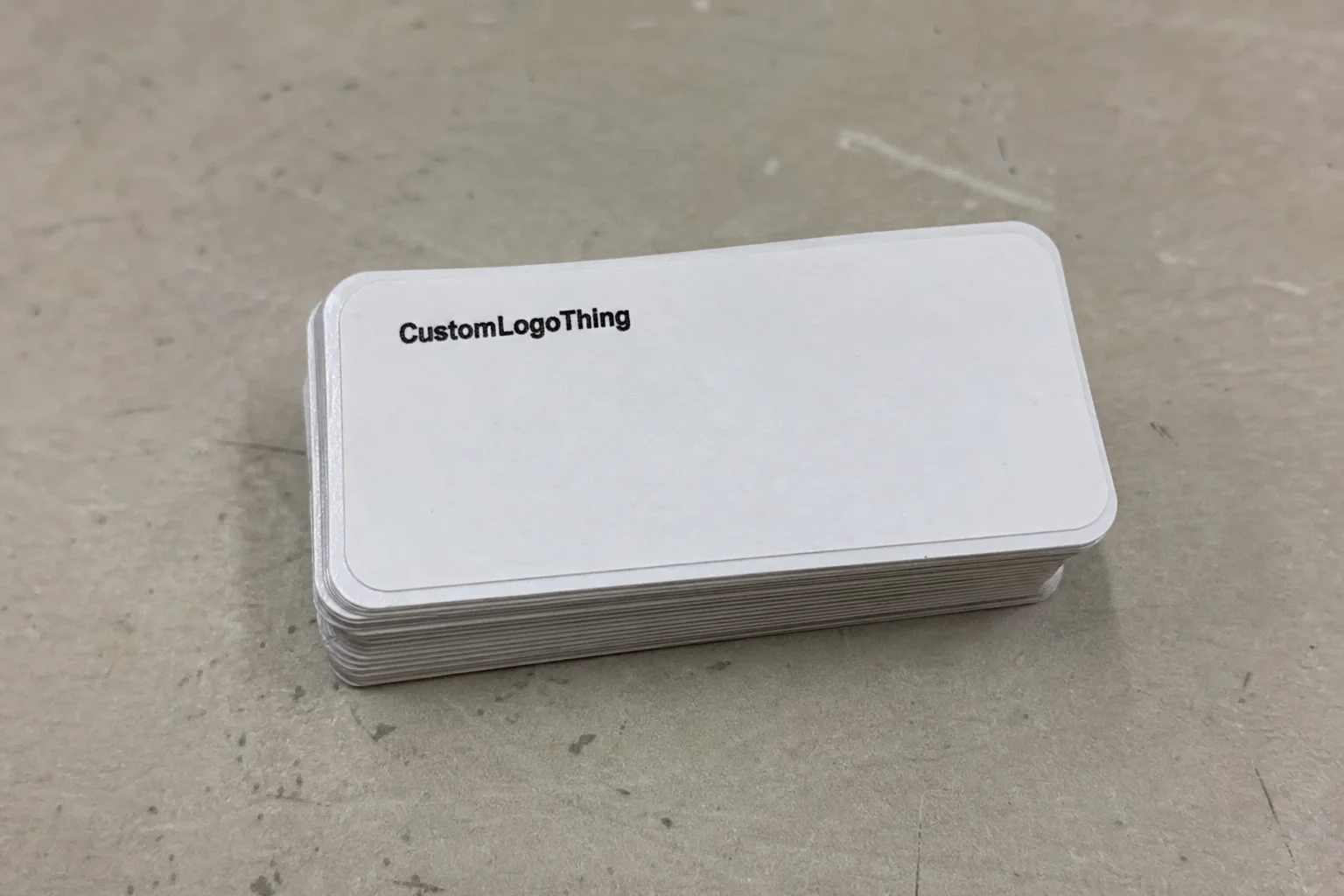
The format matters as much as the design. Some teams need sheet labels that can be peeled by hand. Others need roll Labels for Faster application. If you are comparing Personalized Address Labels with custom stickers or generic mailing labels, the deciding factor is usually how the label will be applied in real use.
Size and readability are more important than decoration. A compact layout with clear type often performs better than a crowded design with too much artwork. On mail pieces, the address block should be easy to scan at a glance, with enough contrast and spacing to stay legible after handling.
"The best label is the one that disappears into the workflow and never becomes a problem."
How Custom Address Labels Are Produced
The production process starts with artwork setup. The printer checks the label size, margins, bleed, font size, and how the return address sits inside the cut line. This is where most avoidable problems can be caught early, especially when the layout includes a logo, multiple lines of text, or small details like suite numbers.
After setup, a proof is reviewed before printing begins. That proof should show the label at actual scale so spacing, line breaks, and alignment can be checked properly. A design that feels balanced on a monitor can still look cramped once it is trimmed and applied, so the proof stage matters more than most buyers expect.
For straightforward jobs, digital printing is usually the best fit because it handles shorter runs efficiently and produces sharp text. Larger quantities may use a different production path depending on the artwork, material, and finish. After printing, the labels are cut, inspected, packed, and prepared for delivery.
Variable data adds complexity. A fixed return address label is simple. A version with multiple names, departments, or serialized numbers needs more careful proofing because one broken line wrap can affect the whole order. If the label includes small text, such as apartment numbers or PO boxes, that text should be checked at full size rather than only zoomed in.
Production quality also depends on the physical relationship between the face stock, adhesive, liner, and die-cut. Even if the print looks clean, a slightly off cut or a liner that releases poorly can make the label annoying to handle. That is why proofing should cover both appearance and application.
Materials, Adhesive, and Finish Choices
Material choice determines whether the label is a good fit for the mailer or a compromise. Paper face stock is usually enough for envelopes, inserts, and low-abrasion use. Film stocks, such as BOPP, are better when the label may encounter moisture, friction, or frequent handling on a poly mailer or parcel.
The adhesive is just as important as the face stock. A permanent adhesive that works well on smooth paper may not behave the same way on kraft envelopes, recycled stock, or lightly textured cartons. When a corner lifts, the problem is often surface mismatch rather than print quality. Smooth poly mailers typically need stronger adhesion than standard office envelopes, and rough kraft surfaces may need a sample test before a full run.
Finish changes both appearance and function. Matte finishes reduce glare and are easier to read under work lights, which makes them useful on packing lines. Gloss can deepen color and make the label look richer, but it is not always ideal if readability matters more than shine. Writable stocks are useful when a team needs to add notes by hand after application, though they are usually less polished visually than coated label stocks.
For buyers who need to align the purchase with sourcing requirements, FSC-certified materials can be worth considering. That does not make a label better for every use case, but it does make procurement easier for organizations that track paper sourcing closely.
Label size belongs in the material discussion too. A 2 x 3 inch label may look tidy on a small envelope, while the same format can feel cramped once the logo, return address, and any secondary line all compete for space. A larger size creates breathing room, but too much label can overpower a small package.
Thickness and finish also affect handling. Thicker facestocks can feel more durable, but they may peel less cleanly if the cut depth is not matched to the liner. A sample or proof run is useful before committing to a larger order.
- Paper labels fit light-duty mailing and lower-cost runs.
- Film labels are better for rough handling, poly mailers, and moisture exposure.
- Matte finishes improve readability and reduce glare on busy packing lines.
- Writable stocks help when teams add notes by hand after application.
Cost, Pricing, and Quantity Breaks
The cost of staples personalized address labels depends on a few predictable variables: size, stock, finish, print coverage, quantity, and whether the job includes variable data or multiple versions. A simple one-color paper label will cost less than a full-color label on film with a specialty finish because both material and setup complexity increase.
As planning numbers, a basic paper label at moderate quantity might fall around $18-$40 per 1,000 units. Coated matte paper often lands closer to $24-$55 per 1,000, while durable film options commonly fall in the $40-$85 per 1,000 range depending on size, adhesive, and coverage. These are working estimates, not quotes, because final pricing shifts with exact dimensions, artwork, and shipping destination.
Quantity breaks can lower unit cost, but only if the order size fits actual use. Buying too few raises the per-label cost, while buying too many can leave stale inventory if the address, logo, or packaging changes. The real balance is between unit price, storage space, and how often your packaging is updated.
When comparing quotes, check more than the headline number. Confirm whether proofing is included, whether setup charges apply, whether freight is separate, and whether there is a minimum order quantity. A lower unit price can disappear if a second proof, reprint, or carton charge is added later.
It also helps to think about failure cost. A label that lifts, smears, or creates rework can cost more than a better-built alternative. For teams that ship regularly, the cheapest option is not always the least expensive one after handling and replacement are included.
| Label Option | Best Use | Typical Price Signal | Main Tradeoff |
|---|---|---|---|
| Uncoated paper | Invoices, thank-you cards, light mailers | $18-$40 per 1,000 | Lowest durability |
| Coated matte paper | Clean branded envelopes and pack-ins | $24-$55 per 1,000 | Less writable than plain paper |
| BOPP film | Poly mailers and rough handling | $40-$85 per 1,000 | Higher cost, stronger adhesive needed |
| Writable stock | Short runs and hand-marked mail | $22-$50 per 1,000 | Not always the sharpest visual finish |
If the labels will move through parcel distribution, it is useful to think like a packaging engineer. Guidance from ISTA helps frame the question: will the label hold through vibration, friction, and stacking, or will the corners and ink be damaged before the package arrives?
For buyers comparing formats across a broader assortment, Custom Labels & Tags is a useful starting point. If the workflow is still being narrowed down, a second pass through matching label and tag options can help decide whether sheeted labels, custom stickers, or another peel-and-stick format is the best fit.
Process, Timeline, and Turnaround Expectations
The order flow for staples personalized address labels usually follows the same sequence: artwork submission, file review, proof approval, production, packing, and delivery. Most delays happen before printing starts. Clean copy, correct address formatting, and fast proof approval keep the order moving.
Simple repeat jobs are faster because the layout is already proven. New artwork takes longer, especially if the logo needs cleanup or the address block needs to be resized for the label format. A straightforward reprint can sometimes ship in 3-7 business days after proof approval, while a first-time custom run may take 7-15 business days depending on quantity and finishing.
Rush requests should be raised early. Shipping can only do so much if the font is missing, the logo is low resolution, or the layout is still under discussion. More schedules slip because of proof delays than because the press needed extra time.
If a team uses multiple SKUs or departments, the format should be locked before production begins. One label size for returns, another for internal routing, and a third for customer-facing inserts can work well, but only if the files are named clearly and the proof approval is organized. Otherwise, small changes can turn into a long revision cycle.
Send one clean file package: logo, address copy, preferred size, finish, quantity, and any special notes about rotation or positioning. That reduces guesswork and keeps the turnaround predictable. It also avoids production assumptions that may not match the buyer’s intent.
Common Mistakes That Cause Reprints
The most common reprint issue is cramped typography. A return address, logo, tagline, and decorative border may fit in theory, but small labels do not leave much room once the cut line is applied. Simpler type and better spacing usually print and read better than trying to fit too much into a small area.
Wrong adhesive selection is another frequent problem. A label that holds well on smooth paper may lift on recycled kraft or wrinkle on a curved poly mailer. When the corner curls, it is often blamed on print quality even though the real issue is the surface. Sample testing on the actual packaging is the safest way to avoid that mistake.
Low-resolution artwork also causes avoidable reprints. A logo pulled from a website may look fine on a screen and still print fuzzy on a small label. Vector art or a high-resolution file is much safer, especially when the design includes thin lines or small type. If the logo is too busy, simplify it for label use instead of forcing every detail into a tiny format.
Proof approval is another point where jobs go wrong. Once the proof is approved, the printer is working from that file. If the street abbreviation, ZIP code, or company name is wrong, the finished labels will be wrong too. It is a basic check, but fast-moving teams still miss it.
There is also a format mismatch risk. Sheet labels, roll labels, and folded stacks behave differently, and the label format should match the applicator or the way the team peels labels at the station. A label that is right for hand application may be wrong for a faster packing line.
Color can create a quieter version of the same problem. A design that looks balanced on a backlit screen may print darker, flatter, or warmer than expected. A good proof should show readability and contrast clearly, not just placement.
- Keep the address block readable at actual size.
- Test adhesion on the real packaging surface.
- Use vector files or high-resolution artwork.
- Check spelling, spacing, and cut placement before approval.
Expert Tips and Next Steps Before Ordering
Start by measuring the actual application area. Do not guess from a template or assume the label should be as large as possible. A label that fits the usable space with a little breathing room usually looks better and applies more cleanly than one that stretches edge to edge.
Request a digital proof at full size. That is the best way to check spacing, margin balance, and legibility before anything is printed. If the proof looks dense on screen, it will usually feel denser once it is trimmed and applied.
It also helps to order a small buffer above expected usage. If you think you need 1,000 labels, ordering 1,200 can prevent a rush reorder during a busy shipping week. That extra inventory is often cheaper than expedited freight or a packing delay.
The cleanest next step is simple: confirm quantity, choose stock and finish, verify the address format, and gather the right logo files before requesting the quote. If you are comparing staples personalized address labels with other custom label formats, that small amount of prep work will make the proof faster and the final result more dependable.
For most buyers, the best setup is the one that matches the packaging surface, the packing speed, and the brand presentation at the same time. When those three line up, the label stops being a commodity item and starts doing useful work for the mail stream.
If your goal is clean, repeatable mailing at scale, choose staples personalized address labels by size, adhesive, and workflow first, then by artwork. That order of decisions keeps the labels practical, readable, and ready for real use.
FAQ
Are Staples personalized address labels a good choice for small apparel brands?
Yes, if the brand needs a clean return address for shipping envelopes, inserts, or thank-you cards without handwriting each piece. They work best when the design is simple, readable, and sized for the actual mailer or packaging surface. For many small brands, that makes staples personalized address labels a practical option.
What size should I choose for personalized address labels on mailers?
Choose the smallest size that still leaves comfortable spacing for the name, street, city, state, and ZIP code. Larger sizes help when you include a logo or second line, but oversized labels can look heavy on small envelopes.
Can personalized address labels stick to poly mailers and kraft envelopes?
Yes, but the adhesive should match the surface texture and finish. Smooth poly mailers usually need reliable permanent adhesion, while textured kraft stock may need extra testing for edge lift before you place a full order.
How do I keep the unit cost down on custom address labels?
Use one standard size, one finish, and one design version whenever possible. Ordering a larger quantity usually lowers the per-label price, but only buy enough to avoid stale inventory or unnecessary storage.
What should I check before approving staples personalized address labels?
Review spelling, address formatting, spacing, logo sharpness, and the proof at full size. Confirm that the label matches the real packing surface and that the turnaround fits your mailing schedule before you approve the run.