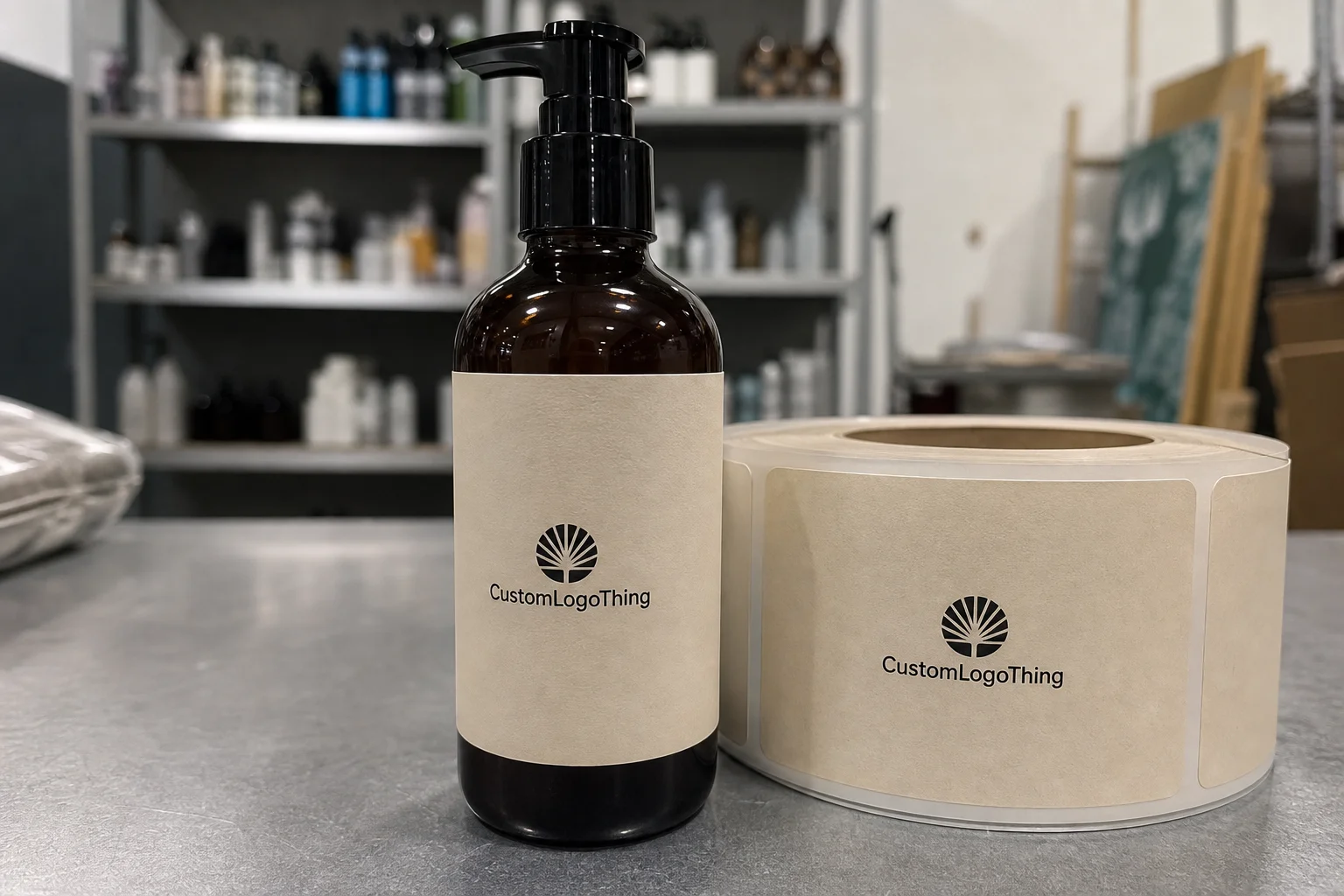
Personalized Address Labels Walgreens: What to Know. Personalized address labels Walgreens look like a small purchase, but they solve several practical problems at once: handwriting errors, repeated address entry, and the slow drip of time lost to manual labeling. That matters whether you are mailing holiday cards, return envelopes, invoices, or a stack of parcels that all need the same sender information.
These labels are not decorative packaging. They are functional adhesive pieces that carry a fixed address and travel on envelopes, small cartons, poly mailers, and inserts. For a seller moving apparel, accessories, or subscription mailers, that makes them a low-friction way to keep shipping and returns organized without adding another production step. If your operation already uses Custom Labels & Tags for branding, address labels are the plain counterpart: less presentation, more utility.
The value is usually operational rather than aesthetic. A printed address saves time line by line, but the bigger gain is consistency. Once the information is correct, every piece goes out with the same formatting, the same ZIP code, and the same suite line. That reduces delivery mistakes, re-mailing, and the awkward cleanup that follows a bad handwritten label. The real comparison is not stationery versus stationery. It is a few dollars spent now versus repeated manual work later.
Why personalized address labels Walgreens matter for busy mailers
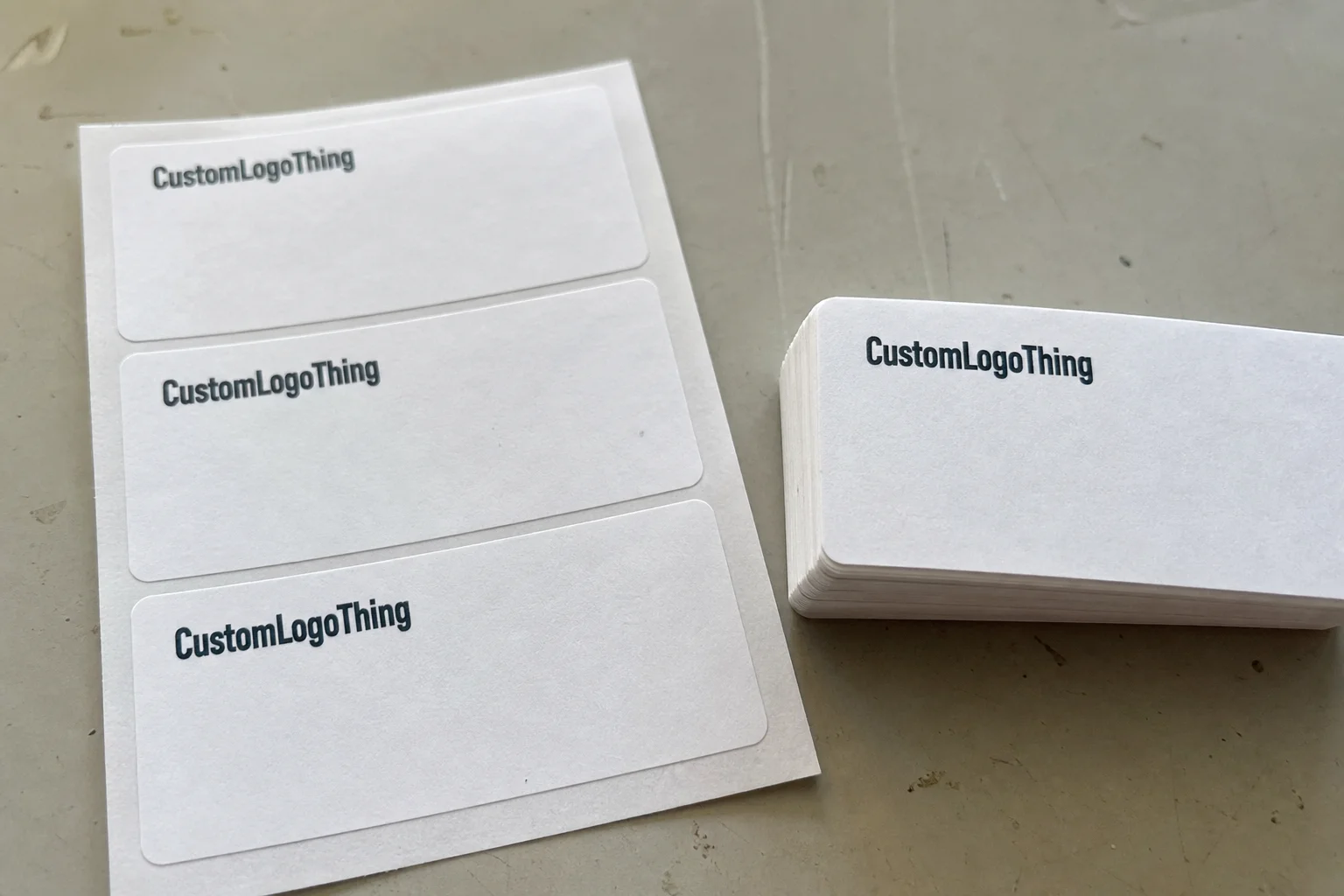
Personalized address labels Walgreens are often treated as a convenience item, yet the useful part is consistency under load. When mailing volume rises, even small variations become annoying. A handwritten apartment number can drift. A return address can be shortened one day and written in full the next. Labels remove that variability.
For households, the case is obvious: holiday mail, move announcements, thank-you cards, and return addresses on envelopes that leave the kitchen table. For small businesses, the use case expands. Labels can go on return envelopes, small mailers, invoices, care cards, and outer packaging where a clean sender address helps the parcel look deliberate. A startup selling tees or accessories does not need custom box printing to look organized. It needs fewer touchpoints and fewer opportunities for mistakes.
That is why buyers often care less about “design” and more about reducing decision fatigue. You do not stop to check whether the same address was written three slightly different ways across three different envelopes. You do not waste time correcting a line that squeezed into the corner. You do not have to explain a smudged label to a customer who expected a clean shipment. Those small problems are easy to ignore in isolation. In a batch, they become real labor.
There is also a presentation angle, but it is limited. A printed label makes outgoing mail look orderly. That matters, especially for businesses that send recurring correspondence. Still, the best labels are usually the ones you barely notice because they do their job without calling attention to themselves.
For packaging teams, the useful comparison is not between labels and branding. It is between a label system that keeps the workflow moving and one that creates extra handling. A return label that prints clearly, sticks cleanly, and stays readable is worth more than a prettier label that slows the bench.
"If the label has to survive sorting, stacking, and a wet delivery route, adhesive and substrate matter more than decoration."
How ordering and turnaround typically work
The ordering flow is usually direct: choose a template, enter the address, preview the proof, set the quantity, pick the stock, and submit for pickup or delivery. The proof step is where most problems are caught. If a suite number is missing, the city line wraps strangely, or punctuation lands in the wrong place, the proof is the last practical chance to fix it without wasting material.
Availability and fulfillment can vary depending on the specific product, the store workflow, and whether the order is routed for pickup or shipping. Pickup is generally the fastest path when the design is simple and the local location has the right stock. Shipped orders add more time because proof review, production, and transit all sit in the chain.
A useful working estimate looks like this:
- Simple pickup order: often same day or next business day if the layout is clean and the location has stock on hand.
- Shipped custom order: usually several business days after proof approval, then longer if the destination is far from the print location.
- Revision needed: add time if spacing, line breaks, or address formatting need another proof.
Most delays are not mysterious. They come from small data issues: a mistyped unit number, a low-resolution upload, or a last-minute change after the proof has already been generated. If the labels are tied to a deadline, approve the proof before you commit the rest of the mailing workflow. One incorrect line can cost more time than the labels themselves.
For business use, proofing is more than a spelling check. It is where you confirm whether the text fits the final surface. A return address that looks balanced on a screen can feel crowded on a narrow mailer flap or too small on a box panel. Screens are forgiving. Real packaging is not.
If the order is going on apparel packaging, test the design against the actual mailer before you treat the proof as final. That is the difference between a label that feels tidy and one that lifts at the corner after one handling cycle. Production errors are rarely dramatic. More often, they are dull and expensive.
What drives cost and unit pricing
Pricing usually comes down to quantity, label size, stock type, finish, shipping method, and whether a reprint is needed. That is true for personal orders and small business orders alike. The big difference is scale: small runs are priced for convenience, while larger orders tend to drop the unit cost sharply.
As a practical budgeting range, small convenience packs often land around $8-$20 for limited quantities, while moderate custom runs can work out to roughly $0.18-$0.45 per label depending on count, coverage, and material. Those are planning numbers, not a store quote. They are still useful because they show where convenience pricing ends and volume pricing begins.
| Order type | Best use | Typical cost signal | Main tradeoff |
|---|---|---|---|
| Small convenience pack | Holiday mail, one-off returns, personal notes | Higher per-label cost, lower setup effort | Fast to buy, inefficient at scale |
| Mid-size custom run | Repeat mailings, customer correspondence, light brand use | Moderate unit cost that improves as quantity rises | Requires cleaner artwork and proof review |
| Weather-resistant stock | Poly mailers, cartons, humid routes, outer packaging | Usually a 10%-30% premium over basic paper stock | Better durability, less paper-like finish |
There are hidden costs too. Rush processing can raise the total quickly. Shipping can erase the advantage of a small order. A typo that forces a reprint turns a cheap item into waste. For a household, that is annoying. For a business, it is a small operating failure.
The real math is not label price alone. It is price plus the labor saved plus the cost of fewer mistakes. That is where address labels stop acting like stationery and start acting like part of the mailing workflow.
If the same address is used in more than one place, compare the label plan with the rest of the packaging stack. A return-address label, a branding label for inserts, and a separate product label may be more efficient than trying to force one printed piece to do every job. That is where a category like Custom Labels & Tags becomes useful as part of the larger system.
Design specs that make labels readable and durable
Readability comes first. Font size, contrast, line spacing, and address order determine whether the label looks clean or cramped. A straightforward return address usually places the name on top, street address in the middle, and city-state-ZIP on the bottom. That hierarchy is easy to scan, and it survives printing better than a decorative layout squeezed into too little space.
Small type can look elegant on a monitor and poor on paper. The same is true of thin fonts. Once printed, delicate letterforms can blur, especially on lower-quality stock or when handled frequently. In practice, a slightly larger, simpler typeface is often the safer choice.
Material matters just as much. Matte stock is easier to read because it avoids glare. A stronger adhesive is useful when labels go onto coated mailers, textured cartons, or surfaces that flex during transit. For parcels, I would rather see a plain label that stays attached than a glossy label that curls after one delivery cycle.
For clothing sellers, the substrate question gets specific fast. Kraft paper, coated paper, poly mailers, and flexible return sleeves all behave differently. A label that holds well on one may fail on another. That does not mean every order needs premium weather-resistant stock. It means the surface should determine the spec, not the template.
The packaging industry has reasons for caring about abrasion, vibration, compression, and moisture. Those stresses are real. They show up in transit testing standards such as [ISTA transit testing](https://ista.org), and responsible paper sourcing can matter too, especially for brands that want to check [FSC certification](https://fsc.org) before choosing a stock. Neither standard is overkill for an address label. Both are useful ways to think about whether the label will survive actual handling.
"A label that lifts at the edge after one delivery cycle is too expensive, even if the unit price looked low."
Design for the surface, not the mockup. A preview can hide a crowded line or a font weight that looks fine at one size and noisy at another. If the label has to work on envelopes and parcel packaging, test the larger surface first, then confirm whether the same layout still reads cleanly at the smaller size.
Ordering checklist before you buy
Before placing an order, clean the data. Standardize the name, street line, apartment or suite number, city, state, and ZIP. This is not glamorous work, but it prevents the most common proof correction. If the address file is inconsistent, the label will carry that inconsistency into every piece of mail.
- Confirm the use case. Personal mail, returns, and business correspondence do not need the same label size or stock.
- Choose the surface first. Pick the label based on the envelope, parcel, or insert where it will actually be used.
- Check the proof on a larger screen. A desktop monitor catches spacing and line-break issues better than a phone.
- Test one label on the real package. This matters most for poly mailers, textured cartons, and coated surfaces.
- Save the approved version. Keep the final proof, dimensions, and any notes about adhesion or readability for the next reorder.
If the order is for an apparel brand, the test step matters even more. A return-address label that looks clean in the editor is not enough. It has to sit flat on the actual mailer, survive friction, and remain readable after handling. Skipping that test usually creates the kind of problem that is annoying, repetitive, and expensive to fix.
That is also where a more disciplined packaging setup helps. If the thank-you insert, return label, and parcel marker all follow the same grid, the packing bench moves faster. The design work does not stop at approval. In production, the first printed piece is where the real check begins.
Common mistakes that create waste or print failures
The biggest waste points are predictable. Too much text. A font that is too small. Address lines that do not fit the label shape. Those problems create rework because they often show up only after the proof, or after the first application, when the issue is already material. A label that feels balanced on screen can become cramped once printed at scale.
Another expensive mistake is skipping the apartment, suite, or unit number. That is not just a formatting issue. It can lead to delivery delays, undeliverable returns, and customer service follow-up that never should have happened in the first place. For business mail, that is avoidable cost.
Material mismatch is quieter but often more damaging over time. Stock that performs well on plain envelopes may peel from glossy packaging or textured cartons. A label placed on a mailer with dust, fiber, or light moisture can fail even when the adhesive is technically sound. The problem is not always the adhesive. Sometimes it is the surface prep, the humidity, or the way the package gets handled before it even leaves the bench.
Buying the wrong quantity is the last common error. Some people guess instead of tracking actual usage. A small household may only need a compact run. A seller shipping every week may burn through labels quickly. If you size the order from memory instead of usage, you either overbuy and hold inventory too long or underbuy and pay rush costs later.
For buyers comparing labels with broader packaging supplies, the right question is not “What is cheapest?” It is “What avoids rework?” A slightly better adhesive or a better-fit size can save more than the difference in sticker cost. That is especially true when the label is part of a returns process or appears on every outgoing parcel.
How to decide whether Walgreens is the right fit
Walgreens makes sense when speed, convenience, and low-friction ordering matter more than deep customization. That usually means small runs, familiar address data, and a need to get labels quickly without building a larger print workflow. For personal use, that is often enough. For a small business, it can still be enough if the volume is modest and the layout is simple.
The fit gets weaker as the use case becomes more demanding. If you need larger quantities, tighter control over stock, or labels that have to withstand more challenging surfaces, a more specialized run may be more economical. Once the ordering pattern becomes repetitive, the cheapest solution is often the one that reduces rework, not the one with the lowest sticker price.
A good rule is to compare three things at the same time: volume, surface, and deadline. If the order is small, the surface is simple, and the turnaround window is short, a convenient retail path can be the right choice. If the surface is difficult, the quantity is high, or the labels need to become part of a repeatable packaging system, a more controlled production path usually makes more sense.
For apparel parcels, return envelopes, and short-run business mail, personalized address labels Walgreens can be a practical middle ground. The key is to treat them as part of a workflow, not just as an accessory. That means checking the proof, matching the stock to the package, and keeping a clean record for reorders. When those pieces are in place, labels stop being a small annoyance and start being a simple, reliable part of the mailing process.
Are personalized address labels from Walgreens worth it for small mail runs?
Yes, if you mail a few times a month and want a fast way to keep envelopes and parcels consistent. They make the most sense when convenience matters more than deep customization or bulk pricing.
How fast are personalized address labels Walgreens orders usually ready?
Timing depends on pickup, shipping, and the workflow behind the specific order. Proof approval, stock availability, and shipping distance are the main factors that change turnaround.
What affects personalized address labels Walgreens pricing the most?
Quantity, label size, material, finish, and delivery method are the biggest cost drivers. Rush handling, shipping, and reprints from address errors can raise the real cost quickly.
Can I use personalized address labels Walgreens on clothing shipments?
Yes, they can work well as return-Address Labels for Apparel boxes, poly mailers, and thank-you inserts. They are not a replacement for sewn-in or garment-care labels, but they are useful for outbound shipping.
What should I check before reordering personalized address labels Walgreens?
Confirm the address spelling, suite number, ZIP code, and any business name formatting before approving a repeat order. Also check whether the last version had issues with font size, adhesion, or label alignment.