Personalized canvas tote bags look straightforward until they are actually in circulation. Then the weak points show up fast. A tote that seems fine in a mockup can feel flimsy in hand, print differently from bag to bag, or lose its shape after a few uses. A well-made one does the opposite: it keeps carrying books, groceries, laptops, samples, and giveaway items long after the event that launched it has been forgotten.
That durability is the real reason these bags matter. They are not just a logo surface. They are a repeated-use object, which means the purchase has to balance construction, decoration, Cost, and Lead Time. If any one of those is off, the result usually feels disposable. If they are all aligned, the bag becomes part of everyday carry, and that is where the branding value actually comes from.
The useful way to evaluate a tote is to think past the first handoff. What happens after it is folded, stuffed, set on a floor, pulled by the handles, and reused ten times? That is the test that separates a promotional item from a product people keep.
Why personalized canvas tote bags stand out in real use
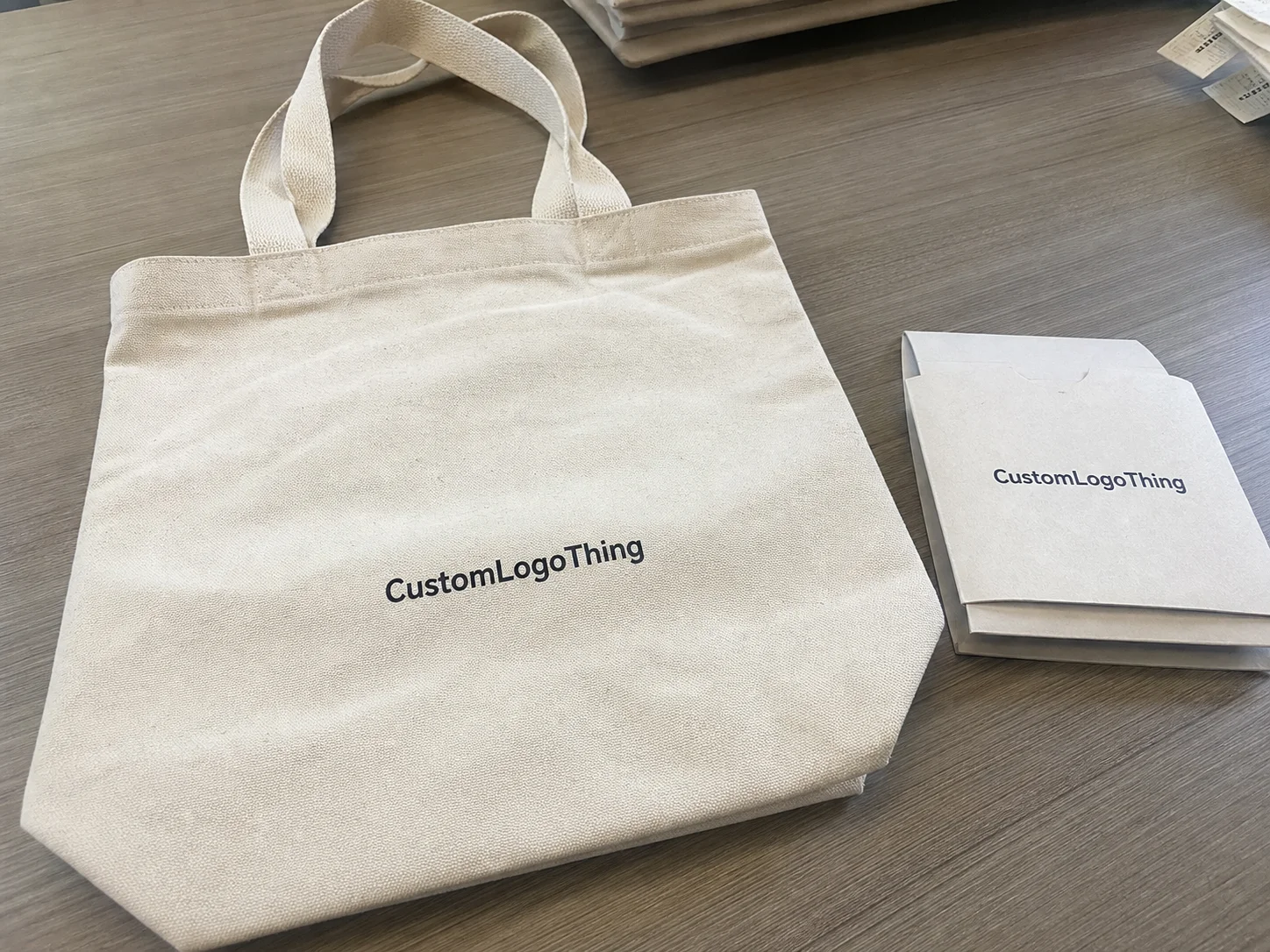
Canvas has a practical advantage over most short-life promotional items: it stays visible. Paper packaging gets opened and discarded. A pen gets misplaced. A tote rides to the office, the store, the train platform, and the kitchen counter. That gives personalized canvas tote bags a longer branding window than a flyer, box insert, or standard handout.
They also sit in an unusual middle ground. A tote can be inexpensive enough for bulk distribution, yet substantial enough to feel like a real object. That is why the same format works for trade shows, retail packaging, employee kits, hospitality welcome packs, subscription inserts, and direct-to-consumer orders. The use case changes, but the core logic stays the same: carry enough, look good enough, and survive long enough to be reused.
What makes a bag feel personalized is more than a logo on blank canvas. Size, handle length, fabric color, print placement, and finishing details all change the way the bag reads. A natural 10 oz tote with a one-color imprint feels very different from a dyed black tote with an inside pocket, woven label, and edge-to-edge decoration. One is economical and functional. The other is closer to a retail accessory.
The buying mistake is to focus on the handout moment. A tote that gets used for six months offers more exposure than a tote that looks impressive for ten seconds and then falls apart. Weak stitching at the handle points, overly soft fabric, or a print that cracks early all cut that life span down. Once that happens, the brand impression turns from useful to forgettable.
If the tote will carry books, bottled drinks, or boxed retail purchases, start with load requirements and construction. The artwork matters, but the structure keeps the bag in use.
For sourcing teams that think in systems, the tote should be treated like any other physical touchpoint. It needs to fit into the rest of the packaging and fulfillment process without creating avoidable defects. If paper components are part of the package, standards from groups like the FSC can help guide material selection, and transit guidance from organizations such as the International Safe Transit Association can be useful if the tote is bundled into kits or shipped with fragile contents.
How the customization process works
The production path is usually simple on paper: artwork review, blank bag selection, decoration method selection, proof approval, production, inspection, packing, and shipment. In practice, the quality of the final bag depends on how early those decisions are locked. With personalized canvas tote bags, the blank and the decoration method should be matched before the order is quoted, not treated as independent choices later in the process.
Decoration methods in plain language
Screen printing is the standard choice for bold logos, simple spot colors, and larger runs. It produces strong opacity and consistent placement when the art is clean and the color count is controlled. Heat transfer is often better for smaller orders or artwork with fine detail, since it avoids the setup burden of multiple screens. Embroidery gives texture and a premium feel, but it is a poor fit for very small text or highly detailed logos. Woven labels, patches, and sewn-on branding elements can raise the perceived value without relying on print alone.
Artwork prep matters more than most buyers expect
Vector files such as AI, EPS, or press-ready PDF usually produce the cleanest result for logos and type. Raster files can work, but only if the resolution is high enough to survive the fabric texture. Canvas is not paper. The weave affects edge sharpness, color density, and how thin strokes hold up. Fine lines may disappear. Small text may fill in. A gradient that looks smooth on a screen can print unevenly on cloth.
That is why a proof should be treated as a working document, not a courtesy attachment. A design may need spacing changes, a thicker stroke, or a simplified layout before it will look right on the bag. Small adjustments at proof stage are cheap. Corrections after production starts are not.
Cost, pricing, and MOQ factors to plan around
Pricing for personalized canvas tote bags usually comes down to five variables: bag size, canvas weight, handle construction, decoration complexity, and packaging. Add a zipper closure, inside pocket, reinforced gusset, or second print location, and the unit price changes quickly. The lowest quote is only useful if the spec is truly the same.
MOQ, or minimum order quantity, is mostly about setup economics. Screen printing requires screens. Embroidery requires digitizing. Special finishing requires labor and time. Those costs are easier to absorb over 1,000 bags than over 100, so smaller orders carry a higher per-unit price. That does not mean small runs are bad. It just means the buyer should expect less pricing efficiency.
| Option | Typical unit range | Best fit | Main tradeoff |
|---|---|---|---|
| Light canvas, one-color screen print | $1.10-$2.10 at 1,000 pieces | Event handouts, simple giveaways | Less structure and lower perceived value |
| Midweight canvas, one to two colors | $1.80-$3.40 at 1,000 pieces | Retail packaging, onboarding kits | Moderate setup and limited artwork complexity |
| Heavy canvas with embroidery or patch | $3.50-$6.50 at 1,000 pieces | Premium merchandising, higher-end brand programs | Higher cost and longer production time |
| Small run with detailed transfer | $4.00-$8.00 at 100-300 pieces | Pilot orders, special events | Higher per-unit cost |
Those numbers are only helpful if the specs are comparable. Two quotes can look close while hiding differences in fabric weight, seam reinforcement, handle length, or print coverage. A thin 10 oz bag with a small front logo is not the same product as a reinforced 12 oz bag with a full-size print and folded edge finish. Compare line by line, not by headline price.
There is also a false economy in buying the cheapest tote available. Thin fabric distorts when filled. Loose stitching fails at the stress points. Prints that crack after a few folds make the whole item feel disposable. In that case, the money was spent twice: first on the order, then on the damage to the brand impression.
Production steps and timeline from proof to shipment
After approval, the order usually moves through a predictable sequence: final proof, material staging, decoration, inspection, packing, and shipment. Simple one-color jobs with stock blanks can move quickly. More complex programs take longer because the print registration is tighter, embroidery needs digitizing, or the buyer wants a physical sample before full production starts.
The most common delay is not sewing or printing. It is back-and-forth before production. Artwork arrives in the wrong format. The logo needs simplification. A PMS color shifts because the fabric color changes how it reads. Someone asks for a sample after the quote was built around a virtual mockup. None of that is unusual, but each step adds time.
For planning purposes, straightforward orders can often ship in roughly 10-15 business days after proof approval if blank stock is available and the decoration is simple. More involved programs, especially those with multiple print locations, custom coloring, or retail-style finishing, often need 3-5 weeks or more. Freight should be added separately. If the totes are tied to a launch, event, or store reset, build in buffer time rather than aiming at the exact day.
That buffer is practical, not cautious for its own sake. Marketing wants sample approval. Operations wants dock dates. The event team wants finished bags before kits are assembled. If the tote arrives last, the rest of the project slips with it. A realistic schedule protects both the budget and the launch.
Spec choices that affect quality and brand feel
Canvas weight is one of the first decisions to make. Lighter fabric is easier to fold, cheaper to ship, and usually fine for light loads or event use. Heavier canvas feels more substantial, holds shape better, and gives the imprint a sturdier backdrop. Heavier is not automatically better. If the tote needs to be compact and easy to carry all day, midweight fabric can be the better choice.
Construction details matter just as much as weight. Gussets increase capacity and help the bag stand open. Reinforced stitching improves durability at the handle attachment points, which is where many bags fail first. Handle length changes how the tote is used: shorter handles suit hand carry, while longer handles are better over the shoulder. These are small choices with large consequences for usability.
Color also affects the final result. Natural canvas is classic and forgiving, but it can mute certain print colors and make the weave more visible. Dark-dyed bags can feel sharper and more premium, though the ink or thread choice has to be selected carefully so the logo stays readable. Soft neutrals often work well for retail and hospitality because they feel less like a giveaway and more like an everyday item.
Finishing details are where a tote starts to move from basic promo piece to retail-ready product. Inside seams, lining, pockets, zipper tops, and edge finishing all change the way the bag is handled and perceived. These features are worth discussing early because they change cost and lead time. They also decide whether the tote feels deliberate or improvised.
One simple quality question helps keep the spec honest: what would make this bag feel acceptable after the tenth use, not just the first glance? That question shifts the focus from decoration to durability. A nice-looking tote that fails at the seams is still a bad tote.
Common mistakes buyers make with custom totes
The most common mistake is sending artwork that was never prepared for fabric. A low-resolution logo, a thin font, or a complicated gradient can look fine on a screen and then turn muddy on canvas. The second mistake is choosing a bag size without thinking through what it must carry. A tote that fits a brochure is not the same tote that needs to hold a notebook, water bottle, and boxed sample.
Buyers also get surprised by the full cost because they focus only on the piece price. Setup charges, extra print locations, repeat colors, freight, and individual packaging all move the final number. If the bags need to be kitted, that labor belongs in the budget from the start. Ignoring it usually creates a budget gap after approval, which is the worst time to discover it.
Skipping proof review causes avoidable problems. The proof is the point where placement, scale, and color are still adjustable. Once production starts, corrections become expensive. A logo can be technically correct and still look too small on the finished bag. It can be centered on paper and still feel off because the seam changes the visual balance. Those are not dramatic mistakes, but they make a program feel careless.
Another mistake is comparing suppliers on a single number instead of the whole package. One quote may include a better blank, cleaner folding, and more careful inspection. Another may be cheaper because the printer is assuming looser tolerances or lighter materials. If the quotes are not normalized, the comparison is misleading. Spec discipline matters as much as price pressure.
Next steps for ordering personalized canvas tote bags
Start with the use case. Is the tote for retail purchases, onboarding kits, event giveaways, or recurring daily use? Then estimate quantity, choose the bag size, select a color, and gather the best logo file you have. If the order will be compared across suppliers, send the same specification to each one so the quotes are actually comparable. Otherwise, you are comparing different products with the same label.
If the design is central to the program, ask for a proof or sample before the full run. That matters most when the artwork is detailed, the deadline is fixed, or the tote will be seen in a high-visibility setting. Small issues are much easier to correct before production than after thousands of bags have already been finished.
A practical rule keeps the process grounded: choose the tote that fits the load, choose the decoration that suits the artwork, and choose the supplier that can explain the spec clearly. The best orders are built on clear requirements, a realistic schedule, and a bag that still looks good after it has been folded, filled, carried, and reused. That is the value proposition behind personalized canvas tote bags.
FAQ
What makes personalized canvas tote bags different from standard totes?
They are built around the brand and the use case, not pulled from a generic stock line. Size, color, handle style, print placement, and finishing can all be matched to the job, which usually improves presentation and repeat use. The result is a more specific product, not just a bag with a logo.
How do I choose the right canvas weight for custom tote bags?
Use lighter canvas for simple giveaways and lighter contents. Choose heavier canvas when the bag has to carry books, groceries, bottled items, or retail purchases. The better question is not which option is heaviest, but which one matches the load and the way the bag will be used.
What affects the unit cost of personalized canvas tote bags most?
Quantity, fabric weight, and decoration method usually have the biggest impact. More colors, more print locations, and custom finishing raise the price. Freight, inspection, and individual packaging can also move the total more than buyers expect when they compare quotes at a glance.
How long does production usually take for personalized tote bags?
Simple orders can move quickly after proof approval if blanks are in stock and the decoration is straightforward. More detailed artwork, sampling, or special construction adds time. The safest approach is to build lead time into the schedule before the bags are needed.
What file should I send for the best print result?
A vector file such as AI, EPS, or PDF is usually the best starting point for logos and text. If the artwork has to be raster-based, high resolution helps reduce edge softness and color issues. Clean artwork shortens the proof cycle and lowers the risk of print problems.