A jewelry brand sends a velvet necklace display, branded hanger card, polishing cloth, and matching pouch to a retailer. It arrives dusty, bent at one corner, and looking like it rode loose in the trunk of someone’s car. That is the unglamorous but expensive problem custom PVC Zipper Garment Bags for jewelry brands are meant to solve.
These bags do not sell the romance of fine jewelry on their own. They do something more practical: they keep presentation sets clean, grouped, visible, and ready for handling by reps, buyers, stylists, and store teams. A good bag prevents the sample kit from becoming a sad pile of scuffed boards, tangled tags, loose pouches, and mystery SKUs.
Custom PVC Zipper Garment Bags for Jewelry Brands: What They Actually Do
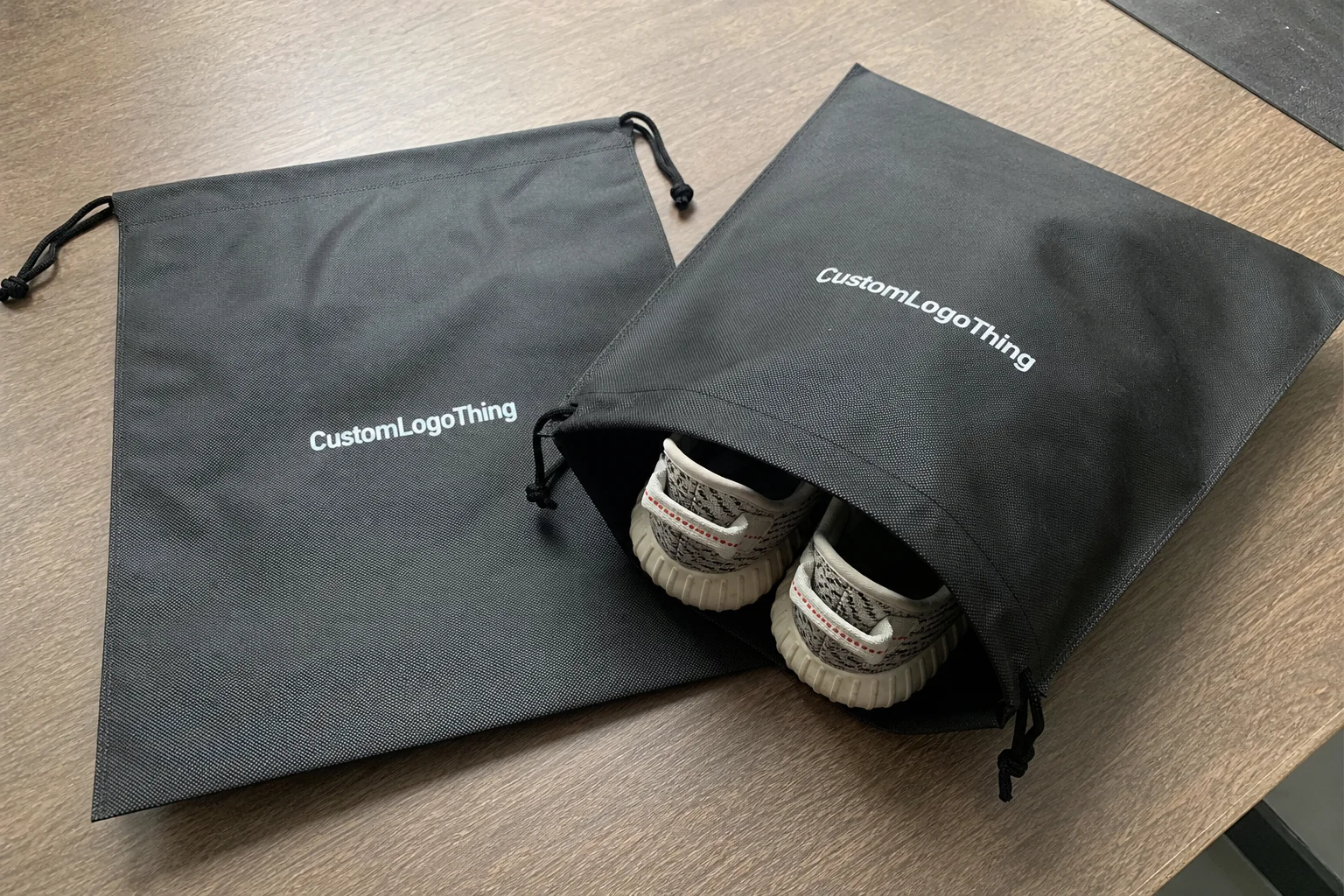
Custom PVC Zipper Garment Bags are transparent or semi-transparent plastic bags made from PVC film and finished with a zipper closure. Jewelry brands use them for sample kits, showroom merchandise, trunk show sets, travel collections, retail presentation sets, press samples, wholesale buyer kits, and seasonal collection storage.
They are called garment bags because the format borrows from apparel packaging: larger flat shapes, zippered access, optional handles, optional hanger holes, and enough surface area for branding. For jewelry, the bag usually protects something larger than one tiny ring box. Think necklace display boards, earring cards, bracelet rolls, padded inserts, branded textile pouches, or several SKUs grouped into a retail-ready set.
Standard poly bags are cheap. Sometimes that is enough. But they also crinkle, tear, hide contents poorly, and can make a polished wholesale set feel like it was packed in a hurry under fluorescent lighting. A clear PVC zipper bag has more structure, better visibility, and a cleaner presentation. It can be reused by sales reps and store teams instead of being thrown away after one opening.
From a packaging buyer’s point of view, the value is simple: the bag reduces handling damage and makes the kit easier to identify. A rep can pull the right collection faster. A retailer can keep backstock cleaner. A stylist can see what is inside without opening 14 similar pouches. Nobody gives packaging an award for that, but operations teams notice.
Practical rule: if the jewelry presentation includes a board, roll, pouch, insert, or multiple coordinated pieces, a zippered PVC garment-style bag usually makes more sense than a disposable poly sleeve.
Brand perception matters too. A clear zippered PVC bag says organized and retail-ready. A crinkly throwaway bag says someone packed the order five minutes before pickup. Harsh? Yes. Usually true? Also yes.
How PVC Zipper Bags Work for Jewelry Samples, Displays, and Travel Sets
The construction is straightforward. Sheets of PVC film are cut to size, heat-sealed around the edges, and fitted with a press-to-close zipper track, slider zipper, or sewn zipper. Depending on the intended use, the bag may also include a die-cut handle, fabric handle, hanger hole, reinforced seam, snap button, gusset, inner divider, business card pocket, label window, or custom zipper pull.
For jewelry brands, the most common uses are sales rep sample bags, wholesale buyer presentation kits, trunk show packing, retail backstock protection, bridal jewelry sets, press sample organization, and seasonal capsule collection storage. In practice, the bag often becomes part storage tool, part branded packaging, and part retail support piece.
Visibility is the main advantage. Clear PVC lets teams identify the contents without opening every bag. That matters when a rep has 40 sample sets and six minutes before a buyer appointment. Glamorous? No. Useful? Very.
Closure style changes how the bag feels in daily use. A press-to-close zipper works for lighter items and lower-cost programs. A slider zipper is easier for repeated opening and closing, especially for reps who travel with the same collection for months. A sewn zipper looks more premium and handles frequent use better, but it costs more and adds production steps. Snap buttons and hook-and-loop closures can add security, though they rarely replace a real zipper on a sample kit.
Structure depends on what goes inside:
- Flat bags: best for lightweight earring cards, thin necklace cards, printed inserts, and small presentation folders.
- Gusseted bags: better for boxed sets, padded rolls, stacked cards, or kits with depth over about 0.75 inches.
- Hanger-style bags: useful for necklace boards, display cards with hooks, or showroom racks.
- Envelope-style bags: clean for wholesale packets, lookbooks, line sheets, jewelry care cards, and coordinated samples.
Branding usually appears on the front center, lower corner, header strip, or back panel. Some brands add a QR code, wholesale contact email, care instructions, collection name, reorder code, or retailer-specific label area. For more developed packaging programs, the PVC bag can coordinate with Custom Packaging Products such as custom printed boxes, hang tags, pouches, and retail display inserts.
There are limits. PVC protects against dust, handling, light moisture, and surface scuffs. It is not a hard case. It is not crush-proof. It will not save delicate jewelry from poor carton packing, no matter how much optimism the purchasing team applies.
Key Specs to Choose Before You Ask for a Quote
Start with size. Measure the actual jewelry presentation piece, not only the jewelry. Include the display card, insert, pouch, ribbon, hang tag, polishing cloth, line sheet, and any retail paperwork that needs to fit inside. If the contents have depth, measure that too. Flat thinking causes tight bags. Tight bags cause angry emails.
Add functional clearance. For flat items, 0.25 to 0.75 inches of extra space around the contents usually works. For boxed or layered sets, allow more room based on depth and how the item slides in. Too tight makes the bag frustrating. Too loose lets the product shift around and look sloppy.
PVC thickness is one of the biggest spec decisions. Here is the practical version:
| Spec Choice | Typical Range | Best For | Tradeoff |
|---|---|---|---|
| Light PVC film | 0.10–0.15 mm | Dust covers, light cards, low-cost storage | Can crease faster and feel disposable |
| Mid-weight PVC film | 0.18–0.25 mm | Reusable sample bags, rep kits, showroom sets | Higher cost, but often the better working spec |
| Heavy PVC film | 0.30 mm and up | Structured presentation, frequent travel, larger kits | More weight, higher unit cost, bulkier cartons |
Clear PVC gives immediate product visibility. Frosted PVC looks more refined and hides visual clutter. Tinted PVC can support brand color, but it may reduce visibility, especially with small stones, subtle metals, or delicate earring cards. If staff need to identify sets quickly, avoid a dark tint unless labels or clear windows are built into the design.
Zipper choice affects both cost and user experience. Press-to-close zippers are economical. Slider zippers are easier for repeated opening. Sewn zippers feel more polished and hold up better for travel use, though they increase cost and production complexity. If a buyer opens the bag twice, a basic zipper may be fine. If a rep opens it 200 times in a season, upgrade the zipper. That is not luxury. That is math.
Optional features can help, but only if they serve a job. Common add-ons include die-cut handles, fabric handles, hang holes, metal eyelets, bottom gussets, side gussets, business card pockets, inner dividers, snap buttons, reinforced corners, and custom zipper pulls. A bag holding one lightweight earring card does not need six features and a zipper pull with its own personality.
Print method matters more than many first-time buyers expect. Silk screen printing works well for simple logos and one- or two-color designs. Heat transfer can handle more detail. Foil accents look premium but should be tested on PVC because adhesion, contrast, and readability vary by film finish. Full-panel printing works when the bag is part of the packaging design system, but it can hide the product if overdone.
Artwork should be practical. Vector logo files are preferred. Pantone references help with color matching. Fine text must be large enough for the print method and bag surface. Tiny gold script on clear PVC is where readability goes to die.
Cost, Pricing, MOQ, and What Changes the Unit Cost
Pricing depends on size, PVC thickness, zipper type, print method, number of colors, order quantity, added hardware, packing requirements, and whether the bag needs custom tooling or simple custom cutting. Anyone giving a universal fixed price without specs is guessing. Maybe confidently. Still guessing.
For simple small-to-mid custom PVC zipper bags, higher-volume orders may land around $0.45–$1.20 per unit, depending on size and print coverage. Mid-weight printed bags with better zippers often sit closer to $1.20–$2.80 per unit. Large gusseted, slider-zip Bags with Handles, reinforced seams, and multi-color branding can move into the $3.00–$7.50+ per unit range. Freight, duties, special packing, and rush shipping can raise the landed cost.
MOQ varies. Many custom PVC Zipper Garment bag orders start around several hundred pieces. For more customized specifications, 500 to 1,000 pieces is common. Special PVC colors, unusual sizes, large formats, custom zipper pulls, or complex printing may require higher minimums.
| Bag Type | Typical MOQ | Estimated Unit Range | Good Fit |
|---|---|---|---|
| Small flat PVC zipper bag, one-color logo | 300–500 pcs | $0.45–$1.20 | Earring cards, care kits, small sample sets |
| Mid-size clear PVC bag with slider zipper | 500–1,000 pcs | $1.20–$2.80 | Rep samples, necklace cards, showroom storage |
| Large gusseted garment-style bag with handle | 1,000+ pcs | $3.00–$7.50+ | Display kits, trunk show sets, travel collections |
Setup costs can sneak up. Logo screens, pre-production samples, custom tooling, die charges, color matching, specialty zipper pulls, and revised proofs can add upfront cost even if the unit price looks reasonable. Ask whether sample fees are credited back after bulk production. Sometimes they are. Sometimes they are not.
Quantity breaks matter. The jump from 300 to 500 or 1,000 pieces can noticeably reduce unit cost because setup labor spreads across more bags. Very small custom runs are where budgets go to cry.
Shipping deserves attention too. PVC has weight and volume. Large garment-style bags are not priced like featherweight mailers, especially if they ship assembled, flat-packed with tissue, or individually polybagged. If the project is time sensitive, air freight may cost more than the bags themselves. Nobody enjoys discovering that after approval.
Compare quotes correctly: same size, same thickness, same zipper, same print area, same packing method, same carton quantity, same shipping terms. Otherwise, you are comparing a real quote with a wish.
Process and Timeline: From Sample to Finished Bags
The normal order flow is not complicated, but skipped steps create expensive almost-right packaging. First, confirm the use case. Then choose the size and material. Submit artwork. Review the technical drawing. Approve the quote. Pay the deposit. Produce a pre-production sample. Test and approve the sample. Start bulk production. Inspect, pack, and ship.
Design and quote review often takes 2–5 business days if measurements and logo files are ready. Sampling usually takes 1–2 weeks, depending on zipper style, printing, and custom features. Bulk production commonly takes 3–5 weeks after sample approval. Shipping can range from a few days by air to several weeks by ocean freight, depending on destination and service level.
Several things slow orders down: unclear measurements, low-resolution logos, late size changes, conflicting stakeholder feedback, custom color matching, special hardware, and approving a sample without testing it with the real jewelry set. That last one is painfully common.
Use a physical sample test checklist before approving mass production:
- Insert the actual display, not a random substitute.
- Zip and unzip the bag at least 20 times.
- Check whether corners pull, wrinkle, or distort under pressure.
- Confirm the logo is not blocked by the contents.
- Stack several filled bags and check sliding, bending, and compression.
- Hang the bag if a hanger hole or handle is part of the design.
- Leave it closed overnight and check odor, fogging, or creasing.
Artwork requirements are basic but non-negotiable. Send vector files such as AI, EPS, or clean PDF. Use Pantone references if brand color matters. Keep small text large enough for the print method. A QR code should be tested at printed size, not admired on a 27-inch monitor. Screens lie beautifully.
Approval should cover dimensions, material thickness, zipper style, print color, logo position, quantity, packing, carton marks, and shipping method. If your retailer has compliance requirements, include those early. Standards such as ISTA can guide transport testing for packed shipments, especially if the filled bags go inside cartons that must survive parcel networks. For material and environmental considerations, the EPA offers useful packaging waste and materials resources.
Build buffer time for launches, trade shows, wholesale market appointments, and PR send-outs. Packaging that arrives the day after the event is just inventory with emotional damage.
Common Mistakes Jewelry Brands Make With PVC Zipper Packaging
The first mistake is ordering from product photos instead of measured specs. A bag can look perfect online and still be too narrow for a necklace display or too shallow for a padded bracelet roll. Measure the contents. Then measure again after adding the hang tag, pouch, insert, and paperwork.
The second mistake is choosing PVC that is too thin for repeated rep use. Light 0.10 mm film can be fine for dust protection, but it may crease, tear at corners, or look tired after a few rounds of travel. If the bag needs to survive showroom appointments and trunk shows, mid-weight film around 0.18–0.25 mm is usually the safer starting point.
Logo placement causes more problems than it should. If the necklace board covers the center of the bag, do not put the logo in the center. Place it in a corner, header area, printed strip, or back panel. Branding should be visible after the product is inside. Yes, that sounds obvious. Packaging has a special talent for punishing obvious assumptions.
Zipper quality is another common miss. Jewelry reps and store buyers open these bags constantly. A cheap zipper that catches, splits, or refuses to align makes the whole brand feel cheap. Rude but accurate. Spend the extra money if the bag is meant for repeated handling.
Clear PVC is not always the best choice. If the contents are visually messy, frosted PVC or a printed panel can make a mixed sample kit look curated instead of chaotic. Clear works beautifully when the product layout is neat. It works badly when the inside looks like a desk drawer with earrings.
Chemical sensitivity deserves real testing. Some plated metals, adhesives, inks, stones, textiles, and finishes may react poorly if stored in certain plastics for long periods. The risk depends on jewelry construction, humidity, storage temperature, and direct contact points. Use anti-tarnish inserts, tissue, or inner pouches when the product needs extra protection. For higher-value jewelry, test storage for several days or weeks before placing a large order.
Overcustomizing too early is another budget trap. Start with the right structure. Then add foil logos, custom zipper pulls, specialty handles, and elaborate package branding once the format actually works. Fancy failure is still failure, just with better decoration.
Retail workflow matters. If store staff cannot label, stack, hang, scan, or identify the set quickly, the bag becomes pretty but annoying. Annoying packaging gets replaced. For related presentation ideas, review the range of custom packaging products that can support the same product packaging system without creating clutter.
Build a Smarter Bag Spec Before Ordering
Before asking for quotes, gather the exact product set. Measure length, width, depth, and zipper clearance. Photograph how the jewelry sits inside. Decide whether the bag is mainly for storage, travel, retail display, wholesale presentation, PR send-outs, or rep samples. One bag can support several jobs, but one primary job should lead the spec.
If the bag needs to impress a buyer, prioritize structure, print quality, and clean product visibility. If it needs to survive rep travel, prioritize PVC thickness, zipper quality, reinforced seams, and practical handles. If it needs to organize backstock, prioritize clear visibility, labeling space, and stackability. Do not pretend one low-cost flat bag will do all of that perfectly. It will not. Physics remains undefeated.
Create three spec levels before requesting pricing:
- Basic: clear PVC, simple press zipper, one-color logo, no gusset, no handle.
- Mid-range: 0.18–0.25 mm PVC, slider zipper, corner or header logo, optional hang hole or gusset.
- Premium: heavier PVC, sewn zipper, reinforced seams, handle, frosted or tinted finish, upgraded print or foil accent.
This makes supplier conversations far more useful. Instead of asking for one vague quote and then being shocked by reality, you can compare tradeoffs before the project has momentum.
Send the manufacturer clear information: dimensions, quantity, target budget, logo file, preferred material thickness, zipper style, reference photos or sketches, sample deadline, delivery address, and any retailer compliance needs. If you have existing branded packaging or custom printed boxes, share those too so the PVC bag can match the broader packaging design system.
Order and test a physical sample with the real jewelry display before bulk production. Do not approve from a mockup alone if the contents are dimensional, delicate, expensive, or awkwardly shaped. A digital proof cannot tell you whether the zipper strains, the corners buckle, or the logo disappears behind a necklace board.
Plan inventory by channel. Count wholesale kits, rep kits, trunk show sets, retail display refreshes, influencer send-outs, PR samples, and replacement bags for damaged or lost packaging. A 10–15% overage is often reasonable for active sales programs, though that depends on launch size and storage space.
If you want examples of how custom product packaging decisions affect presentation and operations, the Case Studies page is a useful place to compare real packaging approaches. The best custom PVC Zipper Garment Bags for jewelry brands are not the fanciest bags; they are the ones sized correctly, branded clearly, priced realistically, tested with the real contents, and delivered before the collection needs to move.
FAQs
What size custom PVC zipper bags do jewelry brands usually need?
Measure the full presentation set, not just the jewelry item. Flat earring or necklace cards may only need small or mid-size bags, while necklace boards, bracelet rolls, and display kits often need larger garment-style dimensions. Add 0.25 to 0.75 inches of clearance around flat contents so the zipper does not strain and the product can be removed easily. If the set includes padding, boxes, ribbon, or paperwork, measure depth as well as length and width.
Are custom PVC zipper garment bags safe for jewelry storage?
They are useful for dust protection, organization, handling, and short-to-medium-term presentation use. For long-term storage, test the bag with your actual metals, plating, stones, adhesives, fabrics, and inserts. Some jewelry finishes can react to humidity, trapped chemicals, or certain packaging materials over time. Use anti-tarnish inserts, tissue, or inner pouches when the jewelry requires extra protection.
How much do custom clear PVC zipper garment bags cost?
Cost depends on bag size, PVC thickness, zipper type, print method, quantity, and added features like handles or gussets. Simple flat custom bags may cost under a couple dollars at higher quantities, while large gusseted bags with slider zippers, reinforced seams, and multi-color printing can cost several dollars each. Higher quantities usually reduce unit cost because setup and labor are spread across more pieces. Compare quotes using the same specs across suppliers, or the comparison is basically decorative.
What is the typical MOQ for custom PVC zipper garment bags for jewelry brands?
Many custom orders start around several hundred pieces, with 500 to 1,000 pieces being common for more customized specifications. Special PVC colors, custom zipper pulls, large sizes, or complex printing can increase the MOQ. If you are testing a new presentation format, ask for a pre-production sample first before committing to a full run. Ordering slightly more can sometimes lower the unit cost enough to justify the extra inventory.
How long does production take for branded PVC zipper jewelry bags?
Quoting and artwork review can take 2–5 business days if measurements and logo files are ready. Sampling often takes 1–2 weeks depending on complexity. Bulk production usually takes 3–5 weeks after sample approval, with shipping time added after that. Build in extra time for inspections, trade show deadlines, freight delays, and any changes after the first sample.


