One missing hoodie can turn pickup into a 20-minute search. One unmarked bottle can throw off snack time. That is why personalized daycare labels are less of a decorative extra and more of a small operational fix that saves time every week.
Daycare items move constantly. They get tossed into shared cubbies, washed with near-identical clothes, handed from one adult to another, and left in a hurry on shelves or benches. A label that stays readable after repeated washing or wiping does more than identify an item. It cuts parent stress and reduces sorting work for staff.
Handwritten names usually hold up for a while, then they start slipping. Marker fades. Stickers peel on curved bottles. Fabric tags get missed during a rushed cleanout. The right labeling system takes that friction out of the routine without turning caregivers into inventory clerks.
Why personalized daycare labels solve the daily mix-up problem
A daycare classroom is basically a high-volume sorting environment. Coats, nap blankets, snack containers, shoes, spare socks, bibs, and bottles all pass through the same small space all day long. Multiply that by 10, 15, or 20 children, and mix-ups become a predictable part of the week.
That is where personalized daycare labels earn their place. A label on a hoodie keeps it from disappearing into the wrong cubby. A bottle label keeps one child’s water cup from becoming a communal mystery. A bin label helps teachers return spare clothes to the right family instead of adding another item to lost and found.
The problem gets worse because many daycare items look alike. Parents buy the same brands, the same sizes, and the same neutral colors. Even a well-run room can end up with five nearly identical lunch containers by afternoon pickup. A name written in fading ink on tape is easy to overlook. A properly printed label is not.
“The cheapest label is often the most expensive one once you count replacements, reorders, and the time spent hunting for missing items.”
From a packaging buyer’s point of view, this is a durability question first and a design question second. If the label cannot survive moisture, abrasion, and repeated handling, the design does not matter for long. The best systems are simple, readable, and built for real use rather than photos.
For parents, that means fewer duplicate purchases. For staff, it means faster drop-off and less cleanup confusion. For both sides, it means one less tiny problem that somehow grows into a daily annoyance.
Useful formats often work best when you think in categories: fabric items, hard goods, and shared storage. That is why many families pair Custom Labels & Tags with a mixed pack instead of forcing one label type onto every item.
There is also a practical cost angle. A lost hoodie or water bottle is usually more expensive than the label that would have kept it from disappearing. The savings are not dramatic on paper, but they are real over a school year.
How the labeling system works across clothing, bottles, and bins
The smartest daycare label setup is not one label for everything. It is a set of formats matched to the surface. Clothing labels are built for fabric. Adhesive labels are built for smooth hard goods. Bottle labels and lunch container labels need extra resistance to moisture, repeated washing, and friction.
That is where many buyers go wrong. They order a nice sticker and expect it to behave like an iron-on patch. Or they use a fabric label on a plastic bottle and then wonder why it lifts at the edges after a few dishwasher cycles. Different materials, different jobs.
- Clothing labels: iron-on, sew-in, or heat-transfer styles for shirts, socks, hats, and blankets.
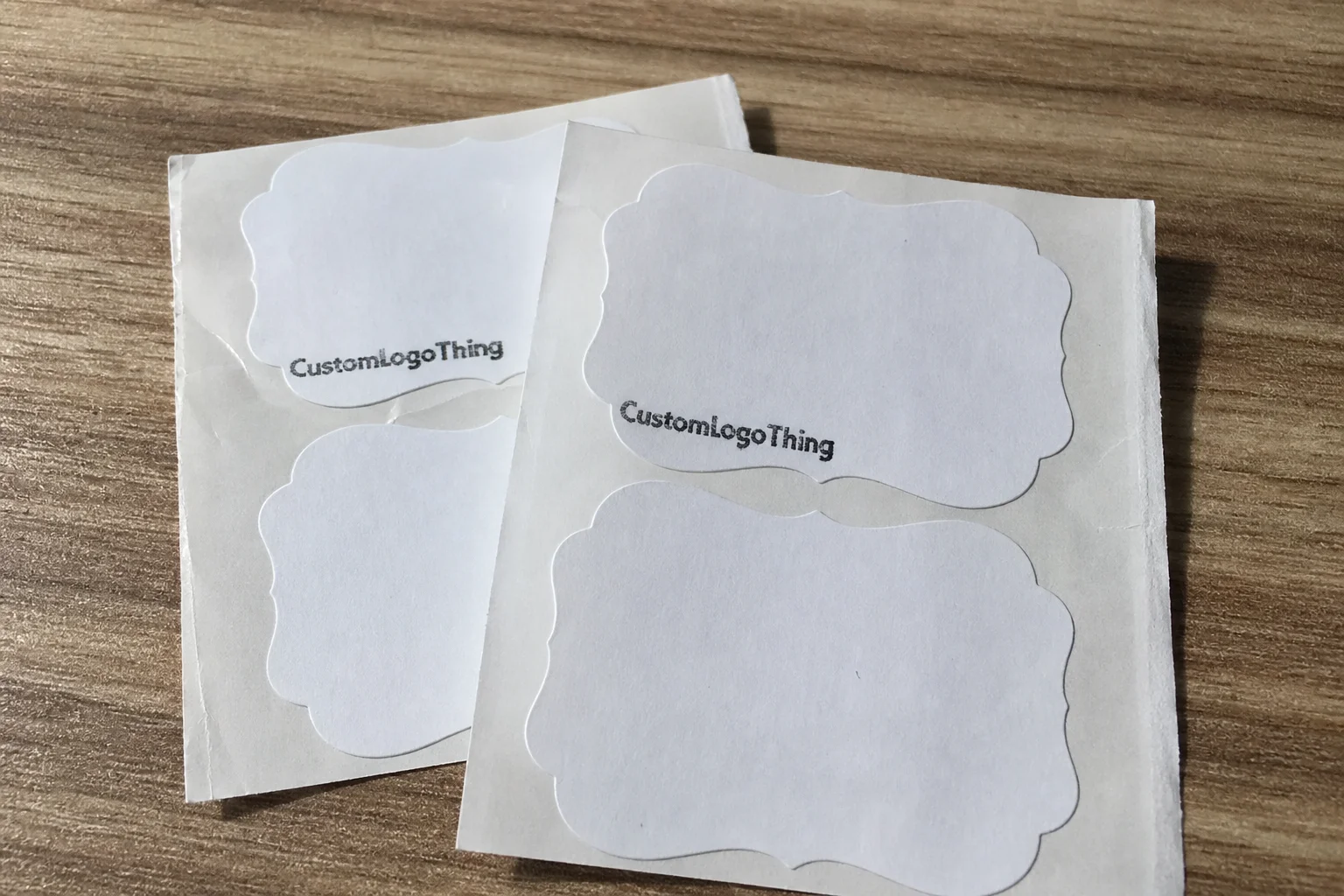
- Adhesive labels: waterproof or moisture-resistant stickers for bottles, lunch boxes, and toy bins.
- Specialty formats: slimmer labels for pacifier cases, snack tubs, or curved containers.
Most personalized setups include the child’s name, plus an optional icon or color choice. Some families add allergy notes, room names, or a class code if the daycare requests it. That extra information can help, but it should never crowd the main name. Readability matters more than decoration.
A consistent visual system across the whole pack helps more than buyers expect. Same font family. Same icon style. Same color family. Teachers and assistants identify items faster when the design is instantly recognizable, even from a few feet away during pickup or cleanup.
A mixed pack also helps because daycare gear changes with the season. A summer set may lean on bottles, sunscreen bags, and spare tees. A winter set may need more iron-on clothing labels for coats, mittens, and scarves. A good provider can adapt the same design across formats while matching adhesive and finish to the surface.
The label market is split between two buyer groups: families ordering a few dozen pieces and centers ordering in bulk. Family orders usually focus on convenience and speed. Center orders are more likely to care about batch consistency, reorders, and how the labels behave after repeated use across multiple children.
| Label type | Best for | Typical durability | Common risk |
|---|---|---|---|
| Iron-on clothing label | Socks, shirts, blankets, bibs | Many wash cycles when applied correctly | Peeling if heat, pressure, or cure time is rushed |
| Waterproof adhesive label | Bottles, lunch boxes, snack containers | Dishwasher-resistant on smooth surfaces | Lifting on textured or curved areas |
| Sew-in or tag label | Heavy-use garments and soft gear | Very strong on fabric | Slower to apply than stick-on formats |
| Storage/bin label | Cubbies, bins, backpacks, baskets | Long-lasting indoors | Adhesion drops on dusty or rough surfaces |
Cost and pricing: what changes the unit price
Label pricing is not random. It usually comes down to material, size, print method, finish, and quantity. A durable label with strong adhesive and high-contrast print should cost more than a basic paper sticker, and that difference usually pays for itself the first time it survives a wash cycle instead of being replaced.
For small family orders, pricing often lands in the $12 to $28 range for a starter set, depending on how many pieces are included and whether the set mixes fabric and adhesive formats. Larger packs typically lower the unit price, especially once the design is already set up.
Here is the practical buyer logic: a label that costs a few cents more but lasts through repeated laundry and dishwasher use is usually better value than a cheaper option that peels in a week. The hidden cost is not the sticker itself. It is the replacement, the lost item, and the time spent relabeling.
Common factors that change the quote include:
- Print coverage: full-color backgrounds or icons can raise cost versus simple text.
- Material choice: vinyl, polyester, or fabric-based options vary in price and performance.
- Custom artwork: unique icons or multiple name lines often add setup time.
- Pack size: larger sets typically lower the per-label rate.
- Rush production: fast turnaround can increase total price.
There are also add-ons that sound minor but matter. If you want separate labels for bottles, clothing, shoes, and bins, you are effectively ordering multiple product types. That is not a drawback. It is how a complete daycare kit is built. Families who buy only one format often end up placing a second order within a few weeks.
One way to keep costs under control is to split the order by use frequency. Put the most durable material on the items washed or wiped most often, then choose simpler formats for storage bins or backup clothing. That keeps the budget focused on the labels that do the hardest work.
If you want to compare options, ask for a quote that breaks out label type, quantity, and finish. That makes it easier to see where the price comes from and where a mixed pack may actually reduce total spend. Packaging buyers do this all the time with cartons, and labels deserve the same scrutiny.
For broader packaging and labeling context, the Packaging School and Packaging Institute resources are useful for understanding material selection and print durability in practical terms.
Process and timeline: from artwork to delivery
The ordering workflow is usually straightforward. Choose a template. Enter the child’s name. Pick a color, icon, or font style. Review a proof. Approve production. Then wait for printing, finishing, and shipping.
That said, the timeline changes based on a few real-world variables. Proof revisions can add a day or two. Material availability matters if a specific adhesive or fabric stock is running low. Production queue length can shift during seasonal rushes. Shipping method is its own variable. Standard parcel service is not the same as expedited delivery.
For families preparing before the first daycare day, a realistic lead time is usually 7 to 15 business days from design approval to delivery, depending on the supplier and shipping speed. If the labels are needed for a first-day bag, plan earlier. Last-minute orders are possible, but they cost more and leave less room for proof corrections.
For a full-term kit, the process gets easier. Reorders are faster when the design is already on file. In some cases, the next run moves several days quicker because the artwork setup is already complete and only quantity or surface type needs updating.
One practical tip: approve the proof on a phone and again on a larger screen if the order includes small text. Tiny name lines, allergy notes, or sibling labels can look clear on mobile and unreadable at actual size. That is a common mistake, and it shows up only after production if nobody checks carefully.
Good suppliers generally follow a simple workflow: proof, approve, produce, inspect, ship. If quality control matters, ask how they check print alignment, adhesive consistency, and cut accuracy before packing. The answer tells you more than a glossy product page does.
If you want a frame of reference for product testing and performance claims, ISTA’s package testing standards are a useful benchmark for how durability gets evaluated in transit and handling. See ISTA for testing resources.
Picking the right size, finish, and wash durability
Size should match the item, not the mood board. A tiny label may look elegant on a sample sheet, but it becomes useless if nobody can read it in a hurry. On a sock or collar, a compact format makes sense. On a backpack, bin, or lunch kit, you need something larger and easier to spot.
Finish matters too. Matte surfaces reduce glare and can improve readability under bright classroom lighting. Glossy finishes may look brighter, but they can reflect light and show scuffs sooner. If the label will be handled often, a slightly textured or smudge-resistant finish is usually the safer choice.
Here is the language buyers should watch closely: laundry-safe, dishwasher-safe, and moisture-resistant are not the same claim. A moisture-resistant adhesive might hold up to wipe-downs but fail in the dishwasher. A laundry-safe clothing label may survive machine washing but not high-heat drying if the application was rushed. Match the claim to the actual use case.
The best daycare labels also use simple typography. High-contrast text, a clear font, and minimal clutter make the label easier for a caregiver to read at a glance. That matters in a busy room. A teacher should not need to tilt a bottle under the light to figure out who it belongs to.
- Socks and collars: small, narrow labels with strong contrast.
- Bottles and lunch gear: medium labels with waterproof adhesive.
- Bins and backpacks: larger labels that can be read from a few feet away.
For materials and environmental considerations, families sometimes ask about plastic-heavy products. The EPA’s guidance on waste reduction is helpful background if you are trying to cut down on replacements and disposable packaging. See EPA recycling and waste reduction resources for broader context.
As for wash durability, give every label time to bond before the first cleaning cycle. That small step matters more than most buyers realize. The adhesive or heat-set bond needs time to settle. Skip that, and even a strong label can fail early.
Text placement matters too. If the name sits too close to the edge, abrasion reaches it faster. If the icon is oversized, the name gets squeezed into a font that is too small to read. The best layouts leave breathing room around the text and keep the child’s name as the focal point.
Common mistakes that make labels fail fast
The fastest way to ruin a label is to apply it to the wrong surface. Dust, lint, detergent residue, moisture, and texture all work against adhesion. A bottle with condensation on it is a bad candidate for a sticker. A shirt tag with oil or softener residue can interfere with iron-on bonding. Clean first. Dry fully. Then apply.
Another mistake is overdesigning the layout. Too much text makes the label harder to read, especially on small items. Tiny fonts, low-contrast colors, and crowded icons create a label that looks decorative but performs poorly. In a daycare setting, function wins.
Care instructions also get misunderstood. Iron-on labels are not magic. They need the right temperature, pressure, and application time. Some also need a cure period before washing. If they go straight into laundry, the edges can lift early. That is usually a process failure, not a material flaw.
Then there is the wrong-format problem. Using one label type everywhere seems efficient until the first dishwasher cycle or the first warm wash cycle exposes the weak point. A sticker on a knit sleeve will not behave like a clothing label. A fabric label on a curved bottle will not behave like waterproof vinyl.
“A label should fit the item, the care routine, and the environment. If any one of those three is wrong, the whole system gets shaky.”
One more thing buyers often miss: replacement cost. If a label set is cheap but falls apart after two washes, you may spend more replacing it than you would have spent on a better set from the start. That is a simple math problem, not a branding one.
Another common failure point is surface prep on storage items. Bin labels will not stay put on dusty plastic, and lunch labels do better on smooth, flat sections than on ridged lids. If a product is designed for curved surfaces, the manufacturer should say so clearly.
Next steps for building a complete daycare label set
Start with an inventory. List the items that leave the house regularly: shirts, pants, socks, shoes, bottles, lunch boxes, nap blankets, bibs, hats, and backup clothes. Then add the less obvious ones: pacifier cases, snack containers, sunscreen bags, and seasonal gear. The goal is coverage, not guesswork.
From there, choose a mixed pack strategy. Use iron-on or sew-in labels for fabric. Use waterproof adhesive labels for hard goods. Use larger bin labels for storage. That way, each item gets the right format instead of one compromise design trying to do everything.
It also helps to test a small batch on the actual surfaces you use most. Label one bottle, one shirt tag, and one container. Check how they look after the first wash or rinse. That tells you more than a product photo ever will.
Once the system is set, standardize it. Keep the same font, same icon, and same color family across reorders. Store a few extras in a drawer for new gear or replacement items. And do not wait until the pack is empty to reorder. Families almost always need more labels than they expected.
Done well, personalized daycare labels reduce mix-ups, save time, and make the daily handoff less chaotic for everyone involved. They are small, yes. But in a daycare routine, small things can have a surprisingly large effect.
If you are building a label set from scratch, start with the items that are hardest to replace and easiest to lose. That usually gives the quickest return in convenience and fewer frustrating reorders later.
The cleanest systems are the ones that survive ordinary life: the rushed drop-off, the unexpected spill, the extra laundry load, the lunch box that goes missing for a day and comes back the next morning. Personalized daycare labels are meant for that kind of use, not just for neat rows on a sample sheet.
How long do personalized daycare labels usually last?
Lifespan depends on the material, surface prep, and how often items are washed or scrubbed. Clothing labels and waterproof adhesive labels typically last longer when applied correctly and allowed to fully bond before use. Low-quality labels often fail at the edges first, so durability claims should be checked against the actual surface and care method.
What should I include on personalized daycare labels for a toddler?
Start with the child’s first name or full name, then add an icon or color if the daycare handles many similar items. For items with safety concerns, include allergy notes or special handling markers only if the school requests them. Keep the layout simple so teachers can identify the item quickly without reading a block of text.
Are personalized daycare labels better than writing names by hand?
Yes, when durability matters, because marker ink fades, smears, and washes out faster than printed options. Printed labels also create cleaner identification on shared supplies, clothing tags, and lunch gear. They are especially useful for busy parents who need a repeatable system rather than constant relabeling.
Can personalized daycare labels go on bottles and clothing?
Yes, but they need the right format for the material: waterproof adhesive for bottles and iron-on or sew-in styles for fabric. The same design can often be adapted across item types, but the adhesive and finish should match the surface. Trying to use one label type everywhere usually causes premature peeling or fading.
How many personalized daycare labels should I order?
Count every item that leaves the house regularly, then add extras for backups, replacements, and new seasonal gear. Families often underestimate how many small items need labeling, especially socks, shoes, hats, bibs, and spare clothing. A mixed pack is usually the most efficient way to cover both high-use and occasional items.