Personalized fabric bags have a simple advantage that many packaging formats never quite match: they keep carrying the brand long after the purchase, event, or gift has been opened. A bag that gets reused for errands, lunches, samples, or travel keeps the logo moving through everyday life, which gives it far more impressions than a single-use wrapper or insert.
For buyers, the value is practical rather than abstract. You are choosing a reusable carrier, a tactile brand surface, and often a piece of packaging that can stand on its own as a product. That means the material, stitching, artwork, and finish all matter in a way that is easy to overlook at the mockup stage and very obvious once production begins.
What Personalized Fabric Bags Really Are and Why They Stand Out
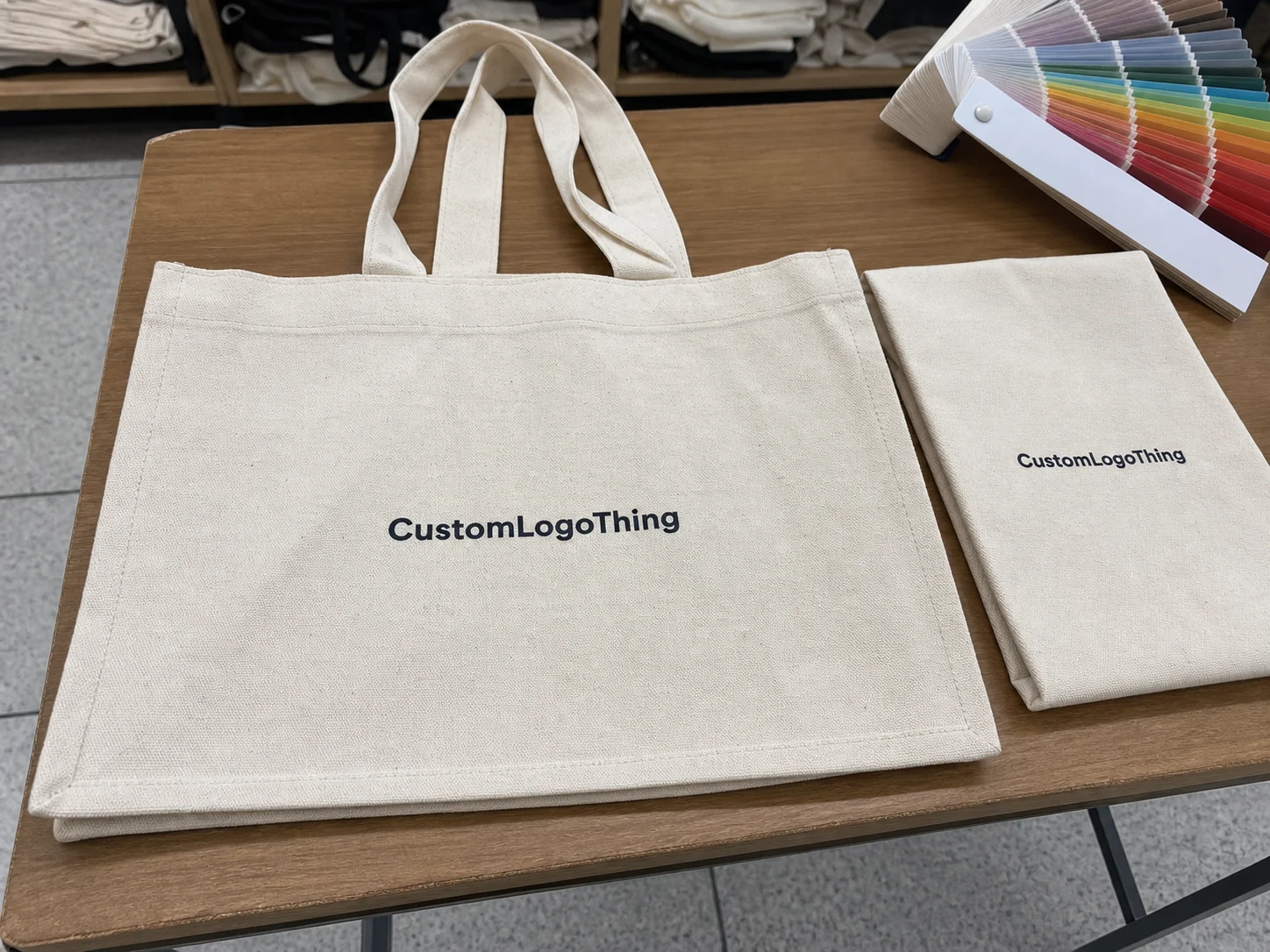
At the most basic level, personalized fabric bags are reusable bags made from woven or nonwoven textile materials and customized with a logo, message, artwork, or pattern. Common material families include cotton, canvas, jute, nonwoven polypropylene, and blended textiles. Each behaves differently once you move from design to production. Cotton usually feels softer and more natural, canvas is denser and holds shape better, jute has a rustic open weave with strong texture, and nonwoven polypropylene tends to be the least expensive option for broad promotional use.
That material choice affects much more than appearance. It changes how cleanly a design prints, how the bag folds, how it drapes when carried, how much weight it can handle, and whether it still looks tidy after repeated use. A smooth cotton twill will usually hold fine logo lines better than rough jute, while a laminated nonwoven bag may be ideal for bright graphics but feel less refined than stitched canvas. Buyers often compare only the front-panel artwork and miss the fact that the bag has to survive handling, filling, and folding without losing its shape or pulling at the seams.
There is also a real difference between decorative customization and packaging-grade construction. Decorative work may stop at a centered logo and a color choice. Packaging-grade work goes further, adding gussets for capacity, reinforced handles, closure styles such as zippers or drawstrings, inner pockets, lining, labels, and extra stitching where the load concentrates. Those details decide whether the bag feels like a disposable giveaway or a reusable item that people keep within reach.
Personalized fabric bags are a good fit for retail, events, gifting, subscription packaging, and premium product presentation because they can carry enough perceived value that customers continue using them. They work especially well for apparel, beauty, coffee, wellness, artisanal food, and corporate welcome kits, where the bag itself can support the brand story without competing with the product inside.
A fabric bag often outlives the item it carries, which is why the bag itself becomes a moving piece of brand presence rather than disposable wrapping.
How the Customization Process Works from Artwork to Finished Bag
The ordering process is usually straightforward, but better results come from treating it like a specification exercise instead of a quick logo upload. First comes the bag size, the intended use, and the target fabric weight. Then the handle style, closure type, and structural needs are chosen. Artwork setup, proofing, and print-method selection follow after that. Skipping those steps or rushing through them is where many expensive revisions start.
Print method matters because each one works differently on different fabrics. Screen printing remains the go-to for bold logos, solid colors, and mid-to-large quantities because it gives strong opacity on cotton or canvas and holds up well in regular use. Digital print is more flexible for full-color graphics, gradients, and smaller runs, though the result depends heavily on the fabric surface and print preparation. Embroidery gives a textured, premium look, but it is best for simplified logos and thicker fabrics, since tiny text can get lost in the thread. Heat transfer can be practical for short runs or variable artwork, while woven labels are useful when the branding needs a clean sewn-on finish rather than a large printed panel.
In buyer terms, the right method is the one that fits the fabric, the artwork, and the run size together. A design with four delicate color transitions may look clean in a digital proof and still be a poor fit for coarse jute. A thick embroidered mark may look excellent on heavy canvas and feel awkward on a thin tote that cannot support the stitch density. The most useful quote comparisons happen after that match is clear.
Here is a practical overview that buyers often use during quoting:
| Decoration method | Best for | Typical strengths | Common limitations |
|---|---|---|---|
| Screen printing | Bold logos, simple art, medium to large runs | Sharp color blocks, good coverage, efficient setup at volume | Less suitable for photographic detail or many colors |
| Digital print | Full-color artwork, small runs, complex graphics | Good detail, flexible for multiple colors | Can be more expensive per unit and may vary by fabric texture |
| Embroidery | Premium branding, textured logos | Durable, upscale look, tactile finish | Not ideal for tiny text or very detailed artwork |
| Heat transfer | Short runs, variable artwork, specialty effects | Useful for complex graphics and quick setup | Depends heavily on fabric compatibility and care requirements |
| Woven label | Subtle branding, sewn-on identity marks | Elegant, durable, clean finish | Not a substitute for large graphic branding |
Before a full run starts, a pre-production sample or strike-off is the safest checkpoint. It confirms color, placement, scale, and how the fabric behaves under the chosen decoration method. That step matters even more when the design crosses a seam, sits near a gusset, or combines more than one material. For personalized fabric bags that have to hit a specific launch date or retail schedule, the sample is not a luxury; it is usually the cheapest way to avoid a costly mismatch later.
Construction details need the same attention as the print. Clean stitching, tight seam allowances, bartacks at handle joins, and reinforced bottoms keep a reusable bag functional after repeated use. A strong front print is useful, but if the handles start to pull or the bottom panel twists under load, the bag stops doing its job quickly.
Key Specs That Affect Performance, Look, and Branding
The spec sheet usually tells you more than the mockup does. Fabric weight, often measured in GSM, affects how the bag feels and how it holds its shape. A lighter tote folds down easily and feels casual, while a heavier canvas can stand up on its own and communicate more value. Weave density matters too, since a tighter weave usually gives better print clarity and less fraying around cut edges and seams.
Texture plays a practical role in branding. Smooth cotton or fine canvas generally reproduces logos more cleanly than rough jute, which has more character but also more visual noise. That does not make textured materials a bad choice. It just means the artwork should be designed with the surface in mind. A simple, bold mark can look excellent on jute, while fine linework or small type often belongs on a smoother fabric.
Handle length, gusset depth, and closure style all change how the bag is used. Short handles create a compact hand-carry tote. Longer straps make the bag more useful in everyday settings, especially for shoppers who want to carry it over the shoulder. A deeper gusset increases capacity for boxed goods, bottles, or stacked items. Zippers, snaps, and drawstrings change the bag’s feel as much as the function; a closed top often makes the bag feel more secure and a little more premium, especially in gifting or product presentation.
Color is another area where design and production have to stay aligned. On natural cotton or unbleached canvas, dark branding usually reads more clearly than pale ink. On deep-colored fabric, ink coverage may need an underbase or a different print method to maintain contrast. Buyers sometimes ask for brand color matching first, but contrast and legibility are what keep the logo working after the bag leaves the table or shelf. A slightly adjusted tone that prints cleanly is usually better than an exact color that disappears into the fabric.
There are also practical sustainability considerations. Reuse is the clearest benefit: a bag used dozens of times can replace a large number of disposable alternatives. Some buyers also look for recycled content, organic cotton, or FSC-certified components for related paper hangtags and inserts. For broader packaging and recycling context, resources like the EPA recycling guidance and FSC certification information can help teams match materials to their claims more responsibly. The useful rule here is simple enough: if the material claim cannot be supported in production, it should not be overstated in marketing.
Cost, Pricing, MOQ, and Quote Factors Buyers Should Compare
Pricing for personalized fabric bags is built from several pieces: material cost, decoration method, setup charges, labor, packaging, and shipping. Two bags that look similar in a catalog can price very differently once the construction is finalized. A one-color screen print on a basic cotton tote will not cost the same as an embroidered canvas bag with lining, zipper closure, and a woven label.
Quantity is one of the strongest levers. Larger runs usually lower the unit price because the setup cost is spread across more bags, while small orders carry more overhead per piece. As a rough working range, a simple promotional tote may land around $0.90-$2.50 per unit at high volume, while thicker canvas, more complex decoration, or premium finishing can move the price much higher. Smaller custom runs tend to cost more per unit because the fixed work involved in setup and proofing does not shrink very much.
MOQ, or minimum order quantity, varies by bag type and print method. Screen printing usually favors larger quantities because the setup takes time and screen preparation adds labor. Digital print or heat transfer can be more flexible for lower-volume testing, though the unit economics may be less attractive than a full production run. For a retailer testing a seasonal insert, a brand event, or a limited gift pack, it helps to ask where the MOQ can drop without weakening print quality or construction.
Quote comparison should be line by line, not just based on the headline number. One supplier may include folding and polybagging, while another bills them separately. One may quote freight to destination, while another leaves shipping out of the number entirely. A quote that looks inexpensive at first can become the most expensive option once packaging, freight, and minor finishing charges are added.
- Multiple ink colors usually raise setup and print time.
- Special trims such as metal snaps, toggles, or leather accents add cost quickly.
- Extra pockets and lined interiors increase labor and material use.
- Custom sizing can affect cutting efficiency, waste, and lead time.
- Premium finishes such as embroidery or woven labels generally cost more than plain printing.
If a buyer wants a true comparison, it helps to request one quote with standard materials and another with upgraded specs. That makes the budget split much clearer: how much is going into structure, how much into decoration, and how much into the experience of the finished bag.
Process and Timeline: Production Steps, Approval, and Lead Time
The usual production path starts with inquiry and spec review, then moves to quote, artwork proof, sample approval, bulk production, quality control, and shipping. Simple jobs can move quickly once the proof is approved, but the clock starts only after the details are locked. In practice, the slowest part is often not sewing or printing; it is the back-and-forth on size, finish, artwork, and color.
Standard dimensions, limited print colors, and straightforward construction usually shorten lead time. A one-color screen print on a stock cotton tote is easier to move than a fully customized bag with multiple panels, interior lining, and special closures. Pantone matching, embroidery digitizing, and sample revisions can each add days. If fabric stock is limited, the schedule can stretch further because production may need to wait for material replenishment.
For planning purposes, many custom bag programs need roughly 12-20 business days after proof approval, though order size, material availability, and factory workload can move that number in either direction. Freight adds another layer, especially if the bags move by ocean rather than air. A launch tied to a trade show, holiday rush, or retail reset should always be scheduled backward with a buffer, because a tight timeline often forces more expensive shipping choices or fewer rounds of sample review.
A realistic timeline usually includes a little breathing room. Tight schedules tend to push buyers toward expensive freight or rushed proof approval.
For transport testing or packaging validation, some buyers also reference ISTA testing standards when the bag must survive shipping, handling, or fulfillment as part of a larger kit. That is not necessary for every order, but it becomes useful when the bag is used inside subscription packaging, bundled merchandise, or a packed retail shipment.
Common Ordering Mistakes That Lead to Reprints or Waste
One of the most expensive errors is approving artwork on a flat file without checking how it lands on the real bag template. A logo can look balanced on screen and still sit too close to a seam, disappear into a gusset fold, or scale down more than expected once the bag is sewn. The proof needs to be reviewed against the actual dimensions, not just the artboard.
Choosing a fabric because it looks appealing in a photo can also create problems later. Some materials wrinkle heavily, some fray at the edges, and some do not accept the chosen decoration method well. A buyer may love the natural texture of a rough weave, but if the logo needs crisp edges and fine lines, that texture can work against the final result. The best-looking material in a sample kit is not always the best material for production.
Underordering can quietly raise the real cost of the project. If 3,000 bags are needed but only 2,500 are approved to save money, the next reorder may cost more because the setup has to happen again and the second run may not match the first perfectly. Overordering creates the opposite problem: storage, cash flow strain, and aging inventory that may never be used. The right quantity usually sits between those extremes and should be based on realistic use, replenishment timing, and storage capacity.
Skipping a sample is another avoidable mistake, especially for bags with mixed materials, embroidery, lining, closures, or stitched labels. Sample approval catches issues before bulk production locks them in. A short delay at the sample stage is usually far cheaper than reworking hundreds or thousands of finished bags.
One more issue shows up often with exact color matching. Buyers sometimes expect screen printing, embroidery thread, and fabric dye to behave like the same color system. They do not. Thread, ink, and textile dye each have their own limits, and each one reacts differently to texture and lighting. If the brand color is highly specific, that should be tested early rather than assumed from a digital mockup.
Expert Tips for a Better Bag, Better Print, and Better Value
The strongest results usually come from building the design around the material instead of forcing the material to serve the design at any cost. A good bag concept starts with what the fabric can naturally do well. If the textile has visible texture, keep the logo bold. If the fabric is soft and pliable, use the construction to add shape. Fighting the material usually costs more and tends to produce a less convincing product.
Simple, high-contrast graphics often perform best on personalized fabric bags, especially when the goal is repeated brand recognition. A clean logo, clear type, and enough open space can look more premium than a crowded layout that loses legibility once the bag is folded, stuffed, or carried. In packaging, readability usually outperforms complexity.
Before final approval, ask for material swatches, ink references, and trim samples if the bag includes extras. Seeing a cotton swatch, a thread color, or a zipper tape in hand gives a much clearer sense of the final piece than a digital mockup alone. If the bag will be sold at retail or handed to VIP customers, that tactile review is worth the extra step.
It also helps to design for reuse from the start. Strong seams, comfortable handles, and sensible proportions create more impressions over time because the bag stays in circulation. A bag that feels awkward, flimsy, or too small gets left behind. A bag that feels reliable becomes part of the customer’s routine.
- Keep the logo readable from several feet away.
- Match artwork complexity to the print method.
- Choose a fabric that supports the bag’s real use case.
- Check stitch quality at stress points, not just the front panel.
Practical quality control also matters after the sample stage. A production check should look at print registration, stitch consistency, handle alignment, seam strength, and whether the final bag opens and closes as intended. For bags with dense decoration or premium trims, a simple pull test on handles and bottom seams can reveal problems that a visual check alone may miss.
Next Steps to Spec, Quote, and Order the Right Bag
If you are preparing a quote request for personalized fabric bags, start with the essentials: final size, fabric choice, decoration method, target quantity, budget range, and delivery date. Add the use case too, because a retail tote, event giveaway, and subscription insert all call for different construction choices. The clearer the brief, the more useful the quote.
A simple request usually works best. Include artwork files, preferred finish, any required performance details, and whether the bag must hold specific items such as bottles, boxed goods, or heavier samples. If the design is still being developed, ask for one budget option and one premium option so you can see how material and finishing changes affect the final product.
Before placing the order, review the proof with care. Check spelling, logo scale, placement, handle style, seam visibility, and any color callouts. If the bag is going to represent the brand in real customers’ hands, the proof is not a formality; it is the last point where a costly mistake can still be caught. Done well, personalized fabric bags combine practical use with repeat brand visibility, and that is a combination worth getting right the first time.
What are personalized fabric bags usually made from?
Common materials include cotton, canvas, jute, nonwoven polypropylene, and blended textiles. The best choice depends on durability, print method, hand feel, and the level of finish the bag needs.
How much do personalized fabric bags cost per unit?
Unit cost depends on material, size, print complexity, quantity, and finishing details. Larger orders usually reduce per-piece pricing because setup costs are spread across more bags.
What affects the lead time for custom fabric bag orders?
Lead time is shaped by artwork approval, sample requests, material availability, print method, and order size. Simple specs and quick approvals usually move faster than multi-color or highly customized builds.
Which print method is best for personalized fabric bags?
Screen printing is common for bold logos and solid colors. Digital print, embroidery, and heat transfer each work better for different artwork styles, fabrics, and budgets.
What should I check before approving a fabric bag proof?
Verify size, logo placement, colors, spelling, handle style, and any seams or gussets that affect design visibility. Ask for a sample or strike-off if the bag has premium details or if color accuracy is critical.