Personalized fabric Labels for Handmade Items do more than identify the maker. They affect how finished the product feels, how well it survives washing, and how clearly the brand is remembered after the item leaves the studio. Buyers rarely inspect labels on purpose, but they do notice when a label feels right or when it looks like an afterthought.
The label should match the product and the way it is used. A soft baby blanket, a knit tee, a tote bag, and a pouch need different materials, folds, and attachment methods. Treating labels as a production spec instead of decoration avoids most of the common mistakes.
For small brands, labels also support consistency. When products are made in batches, sold months apart, or restocked in different colors, the label is often the only element that stays constant. That makes it a practical brand tool, not just packaging detail.
Personalized Fabric Labels for Handmade Items: What They Fix
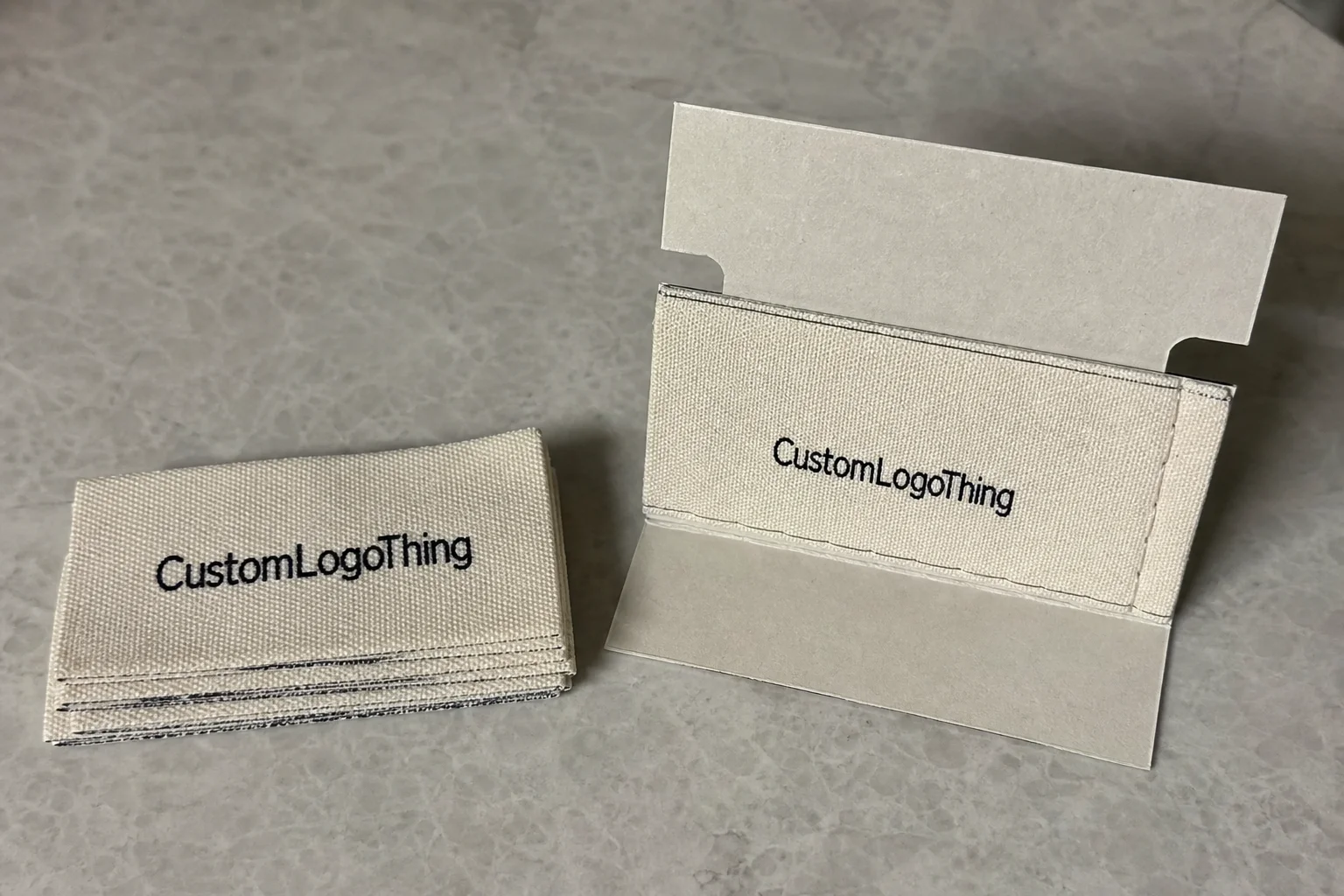
A label solves several problems at once. It identifies the maker, gives the item a retail-ready finish, and can carry care instructions, size, fiber content, or origin details. On handmade products, that information reduces questions and makes the product easier to gift, wash, and resell.
There are two common paths: woven and printed. Woven labels are built from thread and usually last well through wear and laundering. Printed labels handle finer text and more detailed artwork. Neither is universally better. The right choice depends on the design and how much detail the label has to hold.
Labels also protect brand attribution. Once packaging is removed, the label may be the only visible brand marker left on the item. That matters for repeat orders, resale, and customer memory.
For broader sourcing options and material comparisons, start with Custom Labels & Tags and work backward from the item’s real use case.
“The label should look like it belongs to the product, not like it was borrowed from a different one.”
How Custom Fabric Labels Are Made and Applied
The usual workflow is straightforward: artwork review, proofing, production, finishing, and packing. The difficult part is that each choice affects legibility and durability. A logo that looks clean on screen may become unreadable once it is reduced to label size. Thin fonts, dense borders, and small icons are the most common failures.
Woven labels are typically made from polyester thread, sometimes with other fibers depending on the supplier. They have a stitched look and strong wash performance, but fine detail can be lost. Printed labels can preserve smaller type and sharper graphics, though the result depends on the substrate and ink system. If the design has a lot of text or intricate line work, printed is often safer.
Attachment method matters as much as material. Sew-in labels are standard for apparel and most soft goods. Heat-activated or iron-on options can work, but they should be tested on the actual fabric because not every textile handles heat the same way. Loop and fold styles are common on necklines, hems, and visible brand tabs because they sit cleanly in the seam.
Vector artwork is the safest starting point: AI, EPS, or PDF. Low-resolution PNGs and screenshots often create problems during conversion. Ask the supplier for minimum line thickness, minimum font size, and proofing format before approval. Those limits tell you whether the design is production-ready.
Cost, Pricing, MOQ, and Quote Basics
Unit price is only part of the cost. Setup, sampling, shipping, and revision charges can change the real total quickly. A quote that looks cheap on paper may be more expensive once everything is included. The useful question is not “What is the lowest quote?” It is “What is included in this quote?”
These are the main price drivers:
- Label type: woven, printed satin, cotton, or heat transfer.
- Size: larger labels use more material and more machine time.
- Color count: more colors usually add complexity and setup work.
- Finishing style: straight cut, center fold, end fold, loop fold, or custom shape.
- Quantity: higher runs lower the unit cost.
- Backing and extras: adhesive, heat seal, packaging, or specialty finishing.
For planning purposes, small runs often land around $0.20 to $0.60 per label depending on construction, while larger standard runs can fall closer to $0.05 to $0.20. That spread is normal. If a quote is much lower without an explanation, check for omitted sample costs, freight, or revision fees.
MOQ means minimum order quantity. It reflects machine setup, material waste, and the economics of short runs. Lower MOQs are possible, but the unit price usually rises because fixed costs are spread across fewer pieces. For a new product line, that may be acceptable. For repeat products, a higher MOQ usually gives better value and fewer reorder issues.
| Label Type | Best For | Typical Entry Cost | Pros | Tradeoff |
|---|---|---|---|---|
| Woven label | Apparel, bags, premium handmade goods | $0.08-$0.24 at mid to higher quantities | Durable, polished, stitched-in look | Fine text can get lost |
| Printed satin label | Detailed artwork, care info, soft handfeel | $0.05-$0.18 at mid to higher quantities | Sharp detail, good for small type | Feel and wash performance depend on substrate |
| Heat transfer label | Stretch garments, tagless branding | $0.12-$0.35 | No sewn bulk, clean interior finish | Application process needs control |
To compare suppliers fairly, send the same spec to each one: dimensions, artwork file, material preference, fold style, quantity breaks, and intended placement. If those inputs change from one quote to the next, the comparison is not useful. A clear brief also speeds up proofing and reduces revision cycles.
Design Choices That Make Labels Feel Premium
Good label design depends on restraint. Labels are small, so they do not tolerate clutter. Thick strokes, simple shapes, and generous spacing usually perform better than ornate artwork or thin lines that look elegant on a screen and fail on fabric. If a logo has hairline elements, it may need a simplified production version.
Typography is critical. Small labels need type that stays readable at reduced size and under imperfect lighting. Light gray on pale beige may look refined in a mockup, but it disappears once stitched into a garment interior. Higher contrast is usually safer, especially on woven labels where thread density affects clarity.
Color count matters too. A two-color woven label often looks cleaner than a crowded five-color version with no breathing room. It is also easier to control in production. The same principle applies to borders, icons, and taglines. Every extra element competes for space, and usable area shrinks once fold lines and seam allowance are accounted for.
Placement changes the feel of the label. A center-back label works well for many garments. Side seam branding can feel quieter and more modern. Exterior tabs make sense on bags, pouches, and outerwear where the label is part of the visual identity. If the product sits against skin, comfort becomes part of the spec. Scratchy edges, stiff backing, and bulky folds can make a good label feel wrong in use.
Material choice should follow the item, not the mood board. A lightweight blouse, a brushed sweatshirt, and a canvas pouch each interact differently with the same label. What looks balanced on one fabric may twist, pucker, or disappear visually on another. Sample testing on the actual product is the most reliable check.
Production Steps and Turnaround Expectations
The typical timeline is inquiry, quote, artwork review, proof approval, sampling or pre-production review, bulk production, and shipment. It looks linear, but changes often push the order back. If the buyer changes size after proof approval, the workflow usually has to restart.
Sampling and bulk production are different stages. A sample can be turned quickly because it is a controlled check. Bulk production requires queue time, machine scheduling, finishing, packing, and quality inspection. In many cases, sampling takes about 3 to 7 business days and bulk production takes about 10 to 15 business days after approval. Those numbers can stretch if the factory is busy or the material is special order.
Rush production is possible, but only within inventory limits. If the supplier does not already have the thread, satin, backing, or finishing material in stock, speed drops fast. The more specialized the label, the more lead time depends on materials rather than labor.
Packaging and transit also matter. Labels are small, but they still benefit from clean inner packing and moisture protection on long shipments. For carton and transport testing, ISTA is a better reference than guesswork. If your program includes paper inserts or packaging components, FSC standards may matter as well.
Ask for a production calendar before paying the invoice. It should show the proof deadline, approval cutoff, production start, and estimated ship date. If the supplier cannot give that visibility, the schedule is not really controlled.
Common Mistakes That Make Labels Look Amateur
The most common mistake is overcrowding the label. Brands want the logo, tagline, website, care instructions, size, and sometimes a social handle squeezed into a tiny space. The result is usually tiny type, low contrast, and a label that reads as unfinished. A label should identify the product quickly, not act as a brochure.
Buying on price alone creates a different kind of failure. A cheaper woven label can feel stiff or rough. A cheap printed label may fade or lose clarity after repeated washing. The money saved per unit can disappear if the product feels uncomfortable or looks tired after a few uses.
Technical details matter more than many first-time buyers expect.
- Fold direction changes how the label sits in the seam.
- Seam allowance affects whether it stays flat or twists.
- Placement affects visibility, comfort, and wear.
- Fabric behavior changes the result on knits, stretch blends, and lightweight wovens.
Testing on the actual garment fabric is one of the simplest ways to avoid problems, yet it is often skipped. A label that looks fine in a proof can behave poorly once sewn into brushed fleece, delicate linen, or a stretch knit. It may curl, bunch, or disappear visually against the fabric color.
Another mistake is letting the brand system drift. If the label, hang tag, care card, and packaging all use different type, spacing, and tone, the product loses coherence. Consistency does not make a brand exciting, but it does make it believable.
What to Decide Before You Request a Sample
Before requesting a sample, lock down the basics. If size, material, fold style, and placement are still undecided, the sample will only prove that the brief is incomplete. A tighter spec saves time, reduces revision loops, and gives the supplier something real to execute.
Use this checklist:
- Label type: woven, printed satin, cotton, or heat transfer.
- Finished size: actual usable space on the product.
- Fold style: straight cut, center fold, end fold, loop fold, or custom.
- Placement: neck, side seam, hem, exterior tab, or interior seam.
- Color count: keep it efficient unless the artwork genuinely needs more.
- Care details: include them only if they fit the space and the product category.
Request a sample on the same kind of substrate the final product uses whenever possible. Paper proofs help with layout, but they do not show how the label will drape, crease, or sit against the finished item. A label can look balanced on a flat mockup and still be too bulky on a lightweight blouse or too narrow on a thick sweatshirt seam.
Comparing at least two quotes on the exact same specification is usually enough to expose the real differences. Keep everything identical: size, material, fold, quantity, and artwork file. Then compare price, responsiveness, proof quality, and lead time. If one supplier is cheaper but vague about details, that usually signals hidden risk rather than better value.
For most handmade brands, the best label is the one that balances brand presence, wash performance, and unit cost. Not the cheapest option. Not the most decorative proof. The one that still looks correct after the item has been worn, washed, packed, and resold.
What are personalized fabric labels for handmade items usually made from?
Most are woven polyester, printed satin, cotton, or a blended fabric chosen for softness and wash performance. Woven labels usually feel more substantial and last well in regular use. Printed labels are better when the artwork needs finer detail or smaller text. The right material depends on whether the item is apparel, a soft accessory, or a decorative piece that will not be washed often.
How much do personalized fabric labels for handmade items cost per label?
Price depends on quantity, size, number of colors, finishing, and label construction. Small runs cost more per piece because setup and proofing are spread across fewer labels. Always compare the unit price with sample costs, shipping, and any rush charges before deciding. The lowest quote is not always the lowest total cost.
What affects the turnaround time for custom fabric labels?
Artwork approval, sample requests, revisions, and the current factory queue are the main drivers. Once the spec is fixed, bulk production is usually faster than the sampling stage. Rush service may be available, but it still depends on material stock and machine capacity.
Should I choose woven or printed labels for handmade products?
Choose woven labels when you want a stitched-in look and strong durability with relatively simple artwork. Choose printed labels when the design needs smaller text, sharper detail, or a lower entry point. If the label will sit against skin, test both if possible, because texture matters almost as much as appearance.
How do I size labels for small handmade items?
Start with the placement area, not the artwork. Seam allowance and fold style limit the usable space more than most buyers expect. Keep the type short and the graphics simple so the label stays readable after weaving or printing. Order a sample if the item is small, stretchy, or delicate, because personalized fabric Labels for Handmade items can overwhelm the product if the dimensions are even slightly off.


