A handmade item can be well made and still feel incomplete. The stitching is clean, the materials are thoughtful, and the shape works, but something is missing. Add custom sewing Labels for Handmade items, and the piece stops reading like a sample and starts reading like a finished product. In the buyer’s hand, that difference is immediate.
A label does more than identify the maker. It helps the item feel memorable, easier to reorder, and easier to place inside a branded system that may also include hang tags, inserts, boxes, and shipping materials. If your line already uses broader packaging elements, keep the label spec aligned with Custom Labels & Tags and the rest of your Custom Packaging Products. When those pieces look related, the product feels more deliberate.
Why unbranded handmade pieces feel unfinished
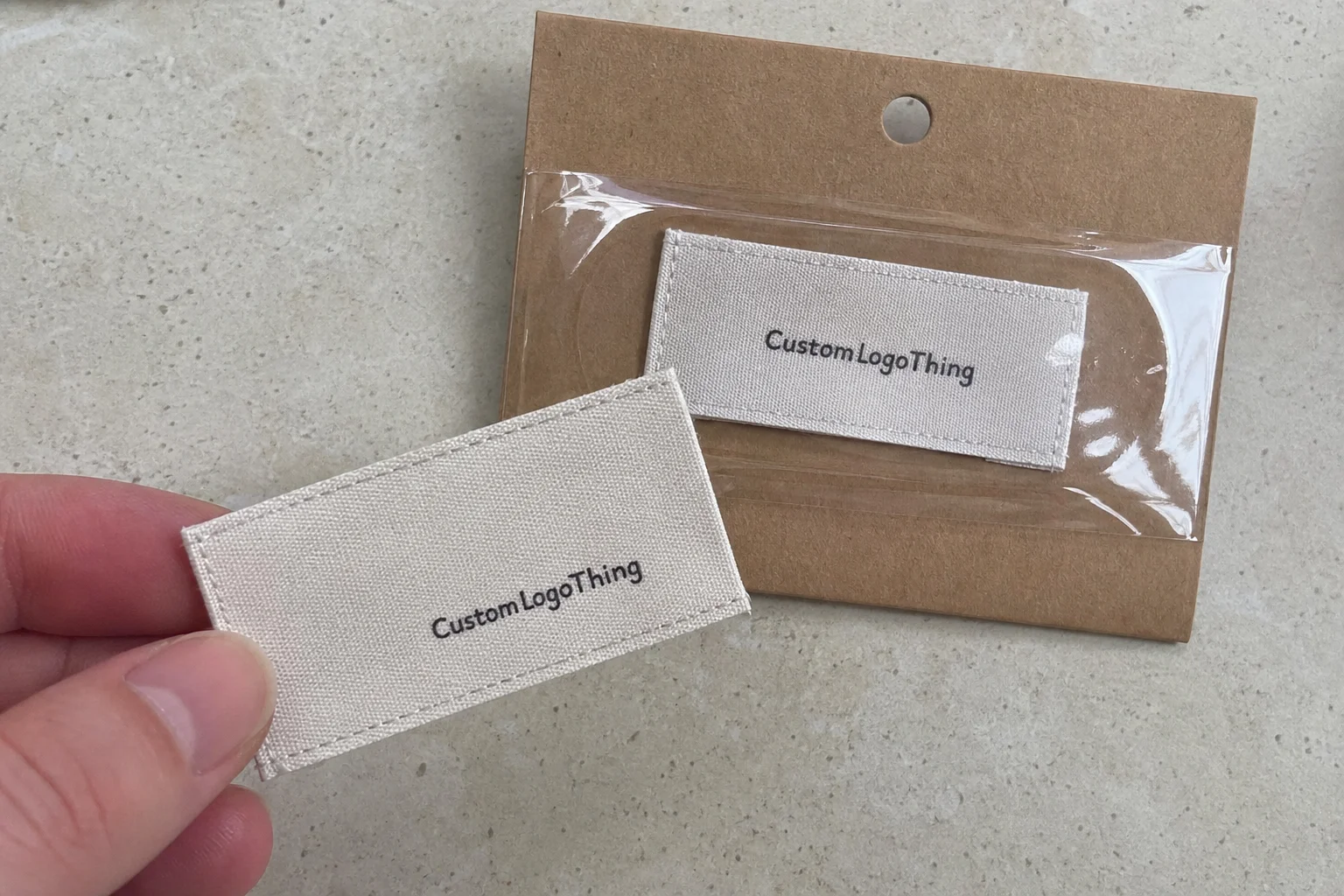
Buyers notice missing cues quickly. A handmade item with no label may be well sewn and neatly finished, but it often reads like something that has not yet entered a product line. There is no immediate brand marker and no easy memory anchor after the purchase is over. For a gift or one-off commission, that may be acceptable. For a brand that wants repeat sales, it is a weakness.
A sewn label closes that gap. It gives the item a finish point and signals that the piece was completed intentionally. That matters because buyers often read visible branding as a sign of legitimacy, especially when they are comparing similar handmade goods at a market, in a listing, or in retail packaging.
The effect shows up fast. A canvas tote without a label can disappear into a stack of generic bags. A quilt without a label may still be beautiful, but it does not carry a signature. A knit accessory without branding can feel temporary, as if it never fully joined a line. Add a well-sized woven or printed label and the product reads as part of a system, not a lone object.
A label is not decoration first. It is proof that the piece was finished with intent.
That is why Custom Sewing Labels for handmade items do more than mark ownership. They support recognition, strengthen repeat purchases, and connect the product to the rest of the brand architecture, from packaging design to the carton or mailer it ships in. The item does not just look branded. It feels like it belongs to a brand.
How custom sewing labels for handmade items move from artwork to sew-in
The workflow is straightforward if the inputs are clear. It starts with artwork, then moves through size and fold decisions, proofing, approval, finishing, and shipping. Most delays come from unclear files, vague dimensions, or late changes that trigger another proof round.
Start with the best logo or text file you have. Vector artwork is ideal because it preserves edges and spacing at small sizes. If the logo exists only as a low-resolution image, the proof will expose the issue immediately. Then confirm the label dimensions, fold style, attachment method, and whether the label sits inside a seam, on a hem, or on an exterior edge.
A flat sew-in label does not behave like a center-fold label. A side-seam placement needs different allowances than a label stitched to an interior lining. Those differences sound minor until the sample is attached and the seam allowance cuts into the design. Small labels fail when the physical space is guessed instead of measured.
Before asking for a quote or timeline, gather the basics:
- Artwork in vector format if possible
- Exact label size, not an estimate
- Fold style or attachment method
- Quantity by SKU if the product line has variants
- Fabric type and color of the finished item
- Whether the label must survive repeated washing
- Any care text, size text, or website line that must fit
Timeline depends on proof complexity and the state of the artwork. A simple woven or printed label with a clean spec can often move in roughly 7 to 12 business days after approval. Once sampling, custom folds, tighter color matching, or larger runs are added, 12 to 18 business days is more realistic, and revisions can push that further. Small products still move through production steps, and those steps do not compress just because the label is tiny.
There is also a packaging angle. If your labels sit alongside hang tags, tissue, or outer cartons, it is worth checking whether paper components can use FSC certified stock and whether the shipping setup matches normal handling rather than idealized storage. The label does not need to survive extreme conditions, but it does need to survive sewing, washing, storage, and retail handling without curling, fraying, or fading.
Cost, pricing, and MOQ: what changes the unit cost
Label pricing is driven by setup, detail, material, and quantity. The common mistake is comparing unit prices without checking what sits behind them. A low quote can look attractive until artwork setup, sampling, finishing, and shipping are added. That is how a cheap label becomes an expensive order.
The main variables are predictable. Higher quantity lowers unit cost because setup gets spread across more pieces. More colors usually increase cost. A more complex fold or cut adds labor. Fine detail can force a more expensive weave or print method. Revision rounds also matter, even when the supplier is flexible. Every extra proof cycle costs time, and time is part of the product price whether it appears as a line item or not.
Minimum order quantities exist because a factory has to cover setup, machine time, and finishing before the first usable piece is packed. Small runs usually carry the highest cost per label. Larger runs often reduce the unit price enough to justify the inventory, especially if the design is stable and the product line is not changing every month. If the artwork is still evolving, keep the order conservative. If the line is already selling consistently, a larger run is usually the cleaner financial move.
| Label option | Best use | Typical unit cost | What changes the price |
|---|---|---|---|
| Printed satin label | Soft-hand apparel, baby items, fine text | $0.18-$0.45 at 500 pieces; $0.05-$0.16 at 5,000 pieces | Ink coverage, edge finish, fold style |
| Woven damask label | Apparel, bags, premium handmade goods | $0.25-$0.60 at 500 pieces; $0.09-$0.22 at 5,000 pieces | Thread count, color count, size, weave density |
| Cotton twill label | Natural look, craft brands, rustic product packaging | $0.22-$0.55 at 500 pieces; $0.08-$0.20 at 5,000 pieces | Fiber choice, wash durability, finishing method |
| Heat-transfer style label | Very low-profile finish, minimal bulk | $0.20-$0.50 at 500 pieces; $0.07-$0.18 at 5,000 pieces | Artwork detail, application needs, wash performance |
Sampling usually adds cost too, and that should be expected. For a simple order, sample fees often land around $25 to $80, depending on complexity and whether a physical proof is required. That is not a penalty. It is the cheapest way to avoid producing a full run that looks correct on screen and wrong on fabric. Skipping the sample does not save time; it moves risk downstream.
The other mistake is isolating label cost from the wider packaging budget. A label that is inexpensive but visually disconnected from the box, insert card, or wrapping system does not create savings. It creates inconsistency. For brands that care about presentation, the unit price matters less than how the label fits into the complete packaging design.
Choosing the right material, weave, and attachment style
Material changes the feel of the product immediately. It changes how the label bends, how it reads against the fabric, how it survives washing, and whether it disappears into the garment or sits on top of it like an afterthought. Woven labels generally produce the cleanest premium finish because the text and logo become part of the structure. Printed labels are better when the design has finer detail, smaller text, or needs a softer hand feel without obvious thread texture.
Cotton twill sits in a different lane. It has a natural, craft-forward look that works well for brands trying to avoid a polished synthetic finish. It can be a better match for handmade goods with visible texture, but it is not always the best option for repeated abrasion or darker, higher-contrast branding. The choice is not aesthetic alone. It is also about use case.
Attachment style matters just as much. A center fold works well for neck openings and side seams. End folds give hems and edges a neat finish. A loop fold can help in specialty placements or hanging uses. A flat sew-in label is simpler and works well on linings, pockets, or interior panels. The wrong fold in the wrong place creates bulk, puckering, or a label that twists after laundering.
Use the finished fabric as the final test, not the render. A label that looks balanced on canvas may feel too stiff on jersey knit. A design that looks crisp on white may lose contrast on dark fabric. Stretch fabrics can distort placement if the label is sewn into an area with too much movement. Samples are not extra work. They are the only reliable way to see how the label behaves in the actual product.
Three practical rules reduce mistakes:
- Choose woven for durability and a more polished finish on bags and garments.
- Choose printed when the artwork is detailed or the hand feel has to stay soft.
- Match the fold and placement to the real sewing allowance on the product.
If the line also uses custom printed boxes or wrap components, keep the label style aligned with the rest of the branded packaging. A soft, natural label can sit beside a rigid glossy box, but the contrast needs to look intentional. Otherwise the system feels assembled from separate decisions, which is usually how brands end up looking less coherent than they intended.
Design rules that keep small labels readable
Small labels fail for familiar reasons: too much text, too little contrast, and too much confidence in details that vanish once reduced to size. A label is not a miniature poster. It needs to identify the brand quickly and hold up under real use. If the logo cannot be read at final dimensions, the artwork needs simplification.
Start with hierarchy. The brand name or logo leads. Everything else is secondary. A website, care note, size note, or tagline only belongs on the label if there is enough room for those elements to breathe after sewing. The better decision is usually fewer words, not smaller type. Tiny type that nobody can read is just decorative noise.
Contrast matters more than cleverness. Thin lettering on a similar-colored background gets lost quickly. Metallic thread, low-contrast ink, or overly fine detail may look elegant in a mockup and weak in the actual product. That problem becomes more visible on handmade items because the surrounding fabric already has movement, weave, or surface texture. The label has to compete with all of that.
Edge safety deserves attention too. Leave enough margin so letters do not get clipped by a fold or swallowed by the seam. If a design runs too close to the edge, the weave or print can fray faster. That is not a style choice. It is a production issue.
If the reader has to squint, the label failed.
For brands building their packaging system at the same time, consistency matters more than decoration. The label, hang tag, insert card, and outer packaging should feel like parts of the same language. They do not need to match exactly. They do need to share the same level of restraint, spacing, and material logic. Good branded packaging feels considered. Bad branded packaging feels like four separate decisions happened in the same week.
Next steps for ordering labels that actually fit your product line
Measure the real product first. Not the concept version. The actual tote, bib, quilt edge, or garment seam. That sounds basic because it is basic, and it is one of the most common places small brands lose time and money. A label size that looks fine on a mockup can become awkward once it is sewn onto a finished item with less available space than expected.
Then decide what the label is supposed to do. Branding only? Care information? Decorative signature? A mix of those? Once the job is clear, the spec gets simpler. Labels tend to fail when they are expected to carry too much information in too little space. That is how readable type turns into clutter.
When requesting pricing, give the same information every time. Quantity. Dimensions. Material. Fold. Artwork format. Placement. Target turnaround. If the quote comes back with several options, compare them on landed cost and usable quality, not just the lowest number. A cheap label that cannot be sewn cleanly or washed reliably is not cheap. It is underpriced trouble.
A practical order process usually looks like this:
- Measure the available sew area on the finished goods.
- Choose a label type that fits the fabric and use case.
- Submit clean artwork and a short spec sheet.
- Review the proof on the actual product if possible.
- Approve a sample before the full run.
- Order with a small buffer so the next production cycle is covered.
That last step is easy to skip and expensive to ignore. A little overage prevents emergency reorders, rush fees, and the kind of compromised decisions that show up when inventory runs out mid-production. Once the spec is stable, Custom Sewing Labels for handmade items become part of the product architecture. They support finish quality, keep the packaging system coherent, and make the brand look more settled than it would without them.
How many custom sewing labels for handmade items should I order first?
Order enough for one production cycle plus a small buffer for mistakes, samples, and late additions. If the design is still changing, keep the run smaller. If the product is stable, a larger quantity usually drops the unit cost enough to justify the extra inventory.
Are woven or printed sewing labels better for handmade products?
Woven labels usually win on durability, texture, and a more premium finish for garments and bags. Printed labels are better when the design has tiny text, finer detail, or needs a softer hand feel with less thread texture.
What should I put on a sewn label for handmade items?
Put the brand name or logo first. If space allows, add a website, size, or care note. Keep anything secondary only if the final label size stays readable after sewing and washing.
How long does production usually take for custom sewing labels?
It depends on proofing, sampling, quantity, and finishing style. Simple orders can move in roughly 7 to 12 business days after approval. More complex orders often take 12 to 18 business days or more.
Where is the best place to sew labels on handmade items?
Common spots are the side seam, hem, neck area, interior pocket, or another low-friction location with enough stitch room. The best position depends on comfort, visibility, and whether the label should be decorative, informational, or both.
Do custom sewing labels help with retail packaging?
Yes. They make the product feel finished and easier to brand across the rest of the system. When the label, insert card, and packaging design match, the piece looks like part of a real line instead of a single handmade item floating on its own.


