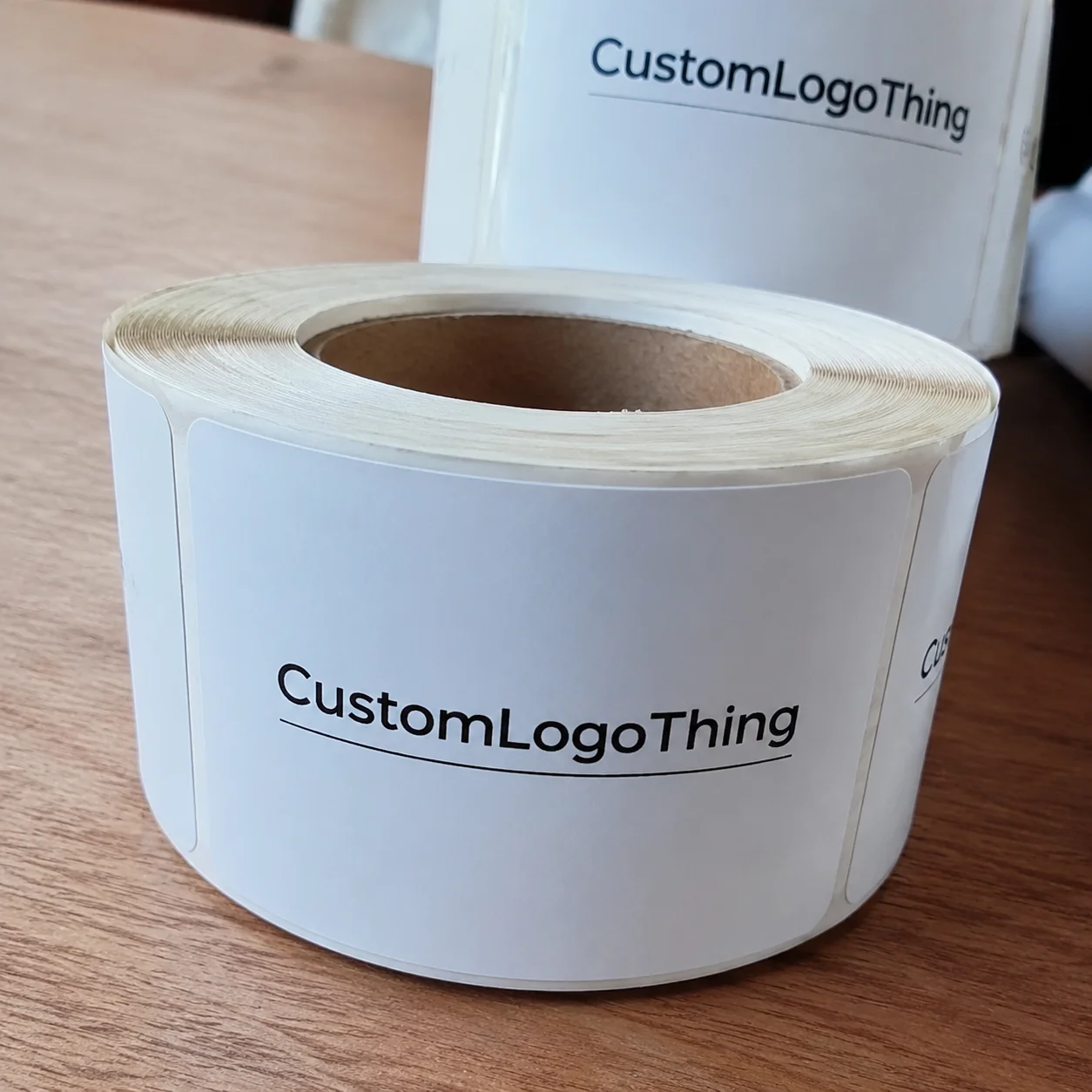
Buyer Fit Snapshot
| Best fit | personalized honey jar labels waterproof practices for packaging buyers comparing material specs, print proof, MOQ, unit cost, freight, and repeat-order risk where brand print, material, artwork control, and repeat-order consistency matter. |
|---|---|
| Quote inputs | Share finished size, material target, print colors, finish, packing count, annual reorder estimate, and delivery region. |
| Proofing check | Approve dieline scale, logo placement, barcode or warning zones, color tolerance, and any recyclable or compostable wording before bulk production. |
| Main risk | Vague material claims, crowded artwork, or missing packing details can create delays even when the unit price looks attractive. |
Fast answer: Personalized Honey Jar Labels Waterproof Practices: Material, Print, MOQ, and Cost should be specified like a repeatable production item. The safest quote includes material, print method, finish, artwork proof, carton packing, and reorder notes in one written spec.
What to confirm before approving the packaging proof
Check the product dimensions against the actual filled item, not only the sales mockup. Ask for tolerance on folds, seals, hang holes, label areas, and retail display edges. If the package carries a logo, QR code, warning copy, or legal claim, reserve that space before decorative graphics fill the panel.
How to compare quotes without losing quality
Compare board or film grade, print process, finish, sampling route, tooling charges, carton quantity, and freight assumptions side by side. A lower quote is only useful if the supplier can repeat the same color, closure quality, and packing count on the next order.
I’ve seen personalized Honey Jar Labels waterproof fail in some painfully ordinary ways: a farmer’s market morning in Portland, Oregon with condensation dripping off chilled jars, a wedding favor table in Asheville, North Carolina where guests kept grabbing bottles with damp fingers, and a small-batch producer in Fresno, California whose paper labels curled after two days in a refrigerator. The honey was fine. The branding was not. That mismatch is exactly why Personalized Honey Jar Labels waterproof deserve more attention than many makers give them, especially when jars are moving through 38°F coolers, 72°F retail shelves, and sticky hands in the same week.
Honestly, I think labels are one of the most underestimated parts of a honey business. A label is never just a label. It is a message, a seal of care, and sometimes the only thing separating a $7 artisanal jar from a $3 commodity jar. For honey brands selling through farm stands, specialty shops, gift sets, and online subscriptions, personalized honey jar labels waterproof can make the difference between a jar that looks polished and one that looks tired before it even leaves the packing table. And yes, customers notice. A glossy film label on a 12-ounce glass jar looks like a $9.99 product. A wrinkled paper sticker looks like someone ran out of time.
Personalized Honey Jar Labels Waterproof: What They Are and Why They Matter
Here’s the simple version: personalized honey jar labels waterproof are labels built to resist water, humidity, condensation, and the kind of light handling that ruins ordinary paper stock. They should not smear when a refrigerated jar sweats at 34°F. They should not wrinkle when a customer rinses sticky residue from the outside of the jar. They should not peel at the corners after a week in a cooler. If they do, that’s not “character.” That’s a label problem, and it usually starts with the wrong material choice in the first place.
I remember standing in a cramped packing room in Lancaster, Pennsylvania with a beekeeper while a dozen 12-ounce glass jars sat under fluorescent lights. The labels looked beautiful on the bench. Then we pulled four jars from a cooler set to 39°F. Within 30 minutes, the paper labels had tiny bubbles at the edges. Tiny. Evil. Bubbles. That’s the sort of problem people miss when they test labels only on a dry table instead of in a real selling environment. Personalized honey jar labels waterproof matter because honey itself is stable, but the jar lives in messy conditions: refrigerated displays, wet market tents, and shipping cartons that sit in Memphis, Tennessee distribution centers for 48 hours or more.
These labels show up everywhere: roadside stands, boutique grocery shelves, wedding favors, gift boxes, subscription honey clubs, and seasonal gift baskets. I’ve also seen them used on squeeze bottles with plastic bodies, where the surface energy and curvature make adhesion even trickier than on glass. A clean label on a curved jar tells buyers the producer thought about the whole package, not just the recipe. That matters more than people like to admit, especially when the label size is 2.5 inches by 3 inches and the jar is going to sit in a cooler at 41°F for six weeks.
“We thought our honey needed better jars. What it really needed was a label that could survive the fridge door, the market bucket, and people’s hands.” — a small-batch producer I worked with during a packaging review in Sacramento, California
That last point matters. A premium-looking honey jar often sells at a higher price because the label signals quality before the lid is even opened. And with personalized honey jar labels waterproof, the protection is not just against water. It is against the perception of carelessness. Harsh? Maybe. True? Absolutely. If a label lifts at the bottom seam after two days in a Michigan grocery cooler, the buyer does not think, “Oh, interesting substrate failure.” They think, “This brand is sloppy.”
Waterproof performance becomes even more important on curved surfaces. Flat labels can forgive a lot. Curved glass or PET plastic jars create stress at the edges, especially if the label is too wide or the adhesive is not suited to the radius. A label can start lifting from the seam on day one, and once that edge lifts, moisture gets in. The problem grows. Fast. On a 3-inch-diameter jar, even a 0.125-inch misalignment can create enough tension to show a wrinkle by the next morning.
So, let me be precise: personalized honey jar labels waterproof are not one material. They are a system. Substrate, adhesive, ink, and finish all need to work together. If one part is weak, the whole thing can fail. I’ve watched a beautiful label design get wrecked because one cheap layer blew the entire spec. Annoying? Very. Avoidable? Also very. A supplier quote that saves $0.02 per unit means nothing if you have to relabel 2,000 jars by hand in a warehouse outside Nashville, Tennessee.
How Personalized Honey Jar Labels Waterproof Performance Actually Works
The performance of personalized honey jar labels waterproof starts with the face stock, but it does not end there. A label can be made from a moisture-safe film and still fail if the adhesive is wrong or the print is unprotected. I’ve seen that happen on a production line in Dongguan, China where the printer spec looked strong on paper, yet the adhesive had been chosen for room-temperature cartons, not chilled glass. Paper specs can be very convincing right up until reality walks in wearing wet boots.
Think of the label as four layers working together:
- Face stock: the visible material, such as BOPP, polypropylene, vinyl, polyester, or coated paper.
- Adhesive: the glue that has to bond to glass, PET, or HDPE without lifting.
- Ink system: digital, thermal transfer, or UV-cured inks that determine print endurance.
- Finish: laminate, varnish, matte coating, or gloss protection that shields the artwork.
For personalized honey jar labels waterproof, BOPP or polypropylene is often the first material I recommend reviewing. It resists moisture well, holds up on curved jars, and stays flexible. Vinyl is also tough, though it can feel heavier and may be chosen more often for specialty applications. Polyester brings high durability, but it can be more rigid and sometimes overkill for a honey jar unless the storage conditions are especially demanding. Coated paper can work in dry environments, but once condensation enters the picture, paper is playing defense from the first minute. And paper loses that fight fast. A 2-mil BOPP label with a permanent acrylic adhesive is a very different beast from an 80gsm paper sticker with a basic rubber adhesive, and the difference shows up in week one.
Waterproof and water-resistant are not the same thing. Water-resistant labels can tolerate a little moisture. Waterproof labels are built for repeated exposure, including condensation and occasional surface contact with damp hands. That distinction matters around sinks, chillers, delivery trucks, and event coolers. If your jars are sitting in ice buckets at a market in Minneapolis in January or Charleston in August, personalized honey jar labels waterproof is not a nice-to-have phrase. It is the difference between a clean display and a display that starts peeling before lunch. I’ve seen that happen, and nobody is thrilled when the “premium” shelf starts looking like a craft project gone wrong.
Printing method matters more than many buyers realize. Digital printing can deliver excellent short runs with fast artwork changes, while thermal transfer can be useful for variable data or lot codes. UV-cured inks often perform well because they dry quickly and resist smudging. I’ve negotiated with suppliers in Shenzhen who pushed standard toner on moisture-prone labels, and the savings were tiny compared with the cost of re-labeling returned jars. A label that smears on contact is not a bargain. It is a future headache with a nice invoice attached. On a 5,000-piece run, saving $0.01 per label is $50. Reworking 5,000 jars is a very different number.
Adhesive choice is equally important. Glass, PET, and HDPE all behave differently. Cold glass can trap condensation, and oily residue from handling can break bond strength. On refrigerated surfaces, you want an adhesive tested for low-temperature application or at least low-temperature service. With personalized honey jar labels waterproof, the adhesive is not a footnote. It is part of the promise. A permanent acrylic adhesive with a service range from 20°F to 150°F is a far better fit than a general-purpose paper label glue that was never meant for cold-chain storage.
Finish options that change real-world durability
Finish affects both protection and shelf appeal. A gloss laminate gives better abrasion resistance and a brighter look. Matte can reduce glare and improve readability, especially under market tent lighting or grocery store LEDs. Soft-touch finishes feel premium, though they can cost more and are not always necessary for a jar that will spend most of its life in a pantry or cooler. If the label will be rubbed by stacking, shipping, or handwashing, laminate often earns its keep. If not, you may be paying extra just to make the label feel fancy for ten seconds. (Which, fine, sometimes that matters too.)
For a quick authority check on packaging performance testing and material expectations, I often point clients to the International Safe Transit Association’s resources at ISTA. If a honey jar is being shipped rather than sold locally, transit testing becomes part of the conversation, not an optional add-on. Shipping always has opinions about your packaging. Usually rude ones. A carton drop from 36 inches onto a warehouse floor in Reno, Nevada does not care that your label looked cute on a proof.
| Material | Moisture Resistance | Typical Use | Relative Cost |
|---|---|---|---|
| BOPP / Polypropylene | High | Refrigerated jars, market sales, gift packs | Moderate |
| Vinyl | High | Durable specialty labeling, high-touch handling | Moderate to high |
| Polyester | Very high | Harsh conditions, long shelf life | High |
| Coated Paper | Low to moderate | Dry storage only | Low |
Personalized honey jar labels waterproof are only as good as the weakest layer in the stack. That’s the real formula. Not the marketing claim. The stack. The boring, unsexy, absolutely critical stack. If the laminate is perfect but the adhesive was selected for cardboard mailers, the label still fails on day three in a refrigerated display case in Atlanta.
Key Factors That Affect Durability, Cost, and Shelf Appeal
Let’s talk about what actually changes the outcome. First: the jar itself. A straight-sided glass jar is easier to label than a round jar with a narrow shoulder. A textured plastic container can be difficult because the adhesive has less uniform contact. Curved jars raise the stakes for personalized honey jar labels waterproof, because the more the label wraps, the more it wants to lift at the seam. Nature loves a weak edge. So does gravity.
Surface energy is one of those technical phrases that sounds abstract until you watch labels fail by the case. Glass typically gives more predictable adhesion than low-energy plastics, but cold and condensation can still sabotage performance. I’ve seen a client in Omaha lose an entire batch of winter gift jars because the labels were applied in a warehouse that sat at about 42°F. The jars looked dry. They were not dry enough. That whole batch taught everyone an expensive lesson in what “dry” actually means when the air is sitting at 68% humidity and the cartons are stacked on a concrete floor.
Cost comes down to several line items, and people often look only at the per-label price. That’s too narrow. For personalized honey jar labels waterproof, pricing is usually shaped by material type, quantity, shape complexity, finish, and whether you need multiple versions for clover honey, wildflower honey, and creamed honey. Custom die-cutting also adds cost, especially if the shape is unusual or the label has intricate corners. A straight 3" x 2" rectangle on BOPP is usually cheaper than a scalloped label with metallic foil and a matte laminate. Not shocking. Manufacturing rarely rewards whimsy.
Here’s the part small brands often underestimate: order size changes unit cost dramatically. A run of 500 labels can cost much more per label than 5,000 labels, even if the artwork is identical. Smaller runs are flexible, which is useful for seasonal honey or limited-edition harvests. Larger runs bring better unit pricing, but they also tie up cash and reduce agility if your branding changes later. Cash flow has no patience for pretty packaging. Neither does a warehouse manager trying to reconcile 2,000 jars with obsolete label stock.
Below is a simple comparison that reflects typical industry logic, not a universal quote. Actual pricing depends on size, shape, finish, and the supplier’s equipment. Still, it helps to think in ranges when planning personalized honey jar labels waterproof for retail or gifting. On a 5,000-piece order printed in Guangzhou or Chicago, the same label may land at very different price points depending on whether you want gloss laminate, custom die-cutting, or a special adhesive rated for refrigeration.
| Order Type | Approx. Unit Cost | Pros | Trade-Offs |
|---|---|---|---|
| 500 labels | $0.35–$0.70/unit | Flexible, ideal for testing flavors | Higher unit cost |
| 2,000 labels | $0.18–$0.40/unit | Balanced for small brands | Less room for frequent redesign |
| 5,000 labels | $0.10–$0.25/unit | Better pricing for core SKUs | Higher upfront spend |
Environmental conditions also shape durability. Refrigeration, ice buckets, shipping moisture, and frequent handling all put pressure on the label. A label that survives on a dry shelf may fail in a chilled display. That is why personalized honey jar labels waterproof should be chosen for the real storage environment, not the ideal one. Real life is rude like that, especially in stores in Boston where jars move from backroom pallets to front-of-house coolers in under 20 minutes.
Design affects longevity too. Tiny text is a common mistake. So is weak contrast. If your label is full-bleed with dark honey-colored artwork and the type sits over a busy background, the first wrinkle or scuff will make readability worse immediately. Leave breathing room near edges. Keep essential copy at least 0.125 inch inside the trim line, and use a font size that still reads at arm’s length, because that is how customers shop. Nobody is leaning in to admire your ingredient panel like it’s a museum exhibit. On a 2-inch-wide front label, text under 6 pt is begging for trouble.
Branding and price are linked. A matte, film-based label with crisp typography can support a higher shelf price than a paper label that looks temporary. I’ve watched buyers in gourmet stores assume a jar cost more simply because the label felt tighter and more finished. That perception is real. With personalized honey jar labels waterproof, the visual quality has commercial value. It’s not fluff. It’s margin. A $0.15 label on a jar sold at $11.99 is a different conversation than a $0.05 label on a $4.99 jar.
If your brand also uses tags or secondary packaging, it helps to keep material choices aligned across the line. Our Custom Labels & Tags page is a useful reference point for brands comparing formats across jars, cartons, and gift bundles.
Step-by-Step Process for Ordering Personalized Honey Jar Labels Waterproof
The cleanest projects I’ve seen follow a simple sequence. Skip the sequence, and you pay for it later in reprints, wasted stock, or a pile of jars that need hand correction. Here is the process I recommend for personalized honey jar labels waterproof when you’re working with a supplier in Shenzhen, Los Angeles, or Toronto.
- Measure the jar precisely. Record the label panel width, height, circumference, and any shoulder curve. A 2.5-inch-tall label might fit beautifully on a 12-ounce jar but crowd a 6-ounce jar with a narrow body.
- Choose the environment first. Will the honey sit in a refrigerator, on a market table, or in a gift basket? Personalized honey jar labels waterproof should match the cold, humid, or dry conditions the product actually sees.
- Build artwork for print. Use 300 dpi resolution, set bleed correctly, and keep logos away from edges. A well-prepared file saves time during proofing.
- Select the adhesive and finish. Ask whether the label is rated for glass, plastic, or refrigerated surfaces. Confirm if you need gloss, matte, or laminate.
- Request a physical sample or proof sheet. A screen proof is not enough. You need to see size, color, and edge behavior in real light.
- Apply on clean, dry jars. Even a moisture-safe label can struggle if the surface has condensation or a thin film of honey from the filling process.
- Store the finished product carefully. Keep jars dry, avoid stacking before the adhesive cures, and watch for edge lift during the first 24 hours.
I visited a small packing operation in Grand Rapids, Michigan that applied labels immediately after filling hot honey into warm jars. The labels looked fine for the first hour. Then the glass cooled, condensation formed under the edge, and the adhesive softened. That is exactly the kind of thing a sample test can catch. With personalized honey jar labels waterproof, the test is not optional if your jars are cold-packed or frequently refrigerated. Trust me, guessing is a terrible production strategy, and it gets more expensive when you have 1,800 jars on pallets and a Saturday market deadline.
From an efficiency standpoint, the smartest buyers standardize their base design. If you sell orange blossom, wildflower, and lavender honey, keep the same logo, brand panel, and net weight location. Swap only the flavor block. That reduces setup cost and makes the product line easier to recognize on a shelf. It also keeps your sanity intact, which is underrated. A supplier in Ho Chi Minh City will quote faster too when the dieline only changes in one field instead of four.
Process and Timeline: From Concept to Finished Honey Jars
A realistic timeline for personalized honey jar labels waterproof usually includes design, proofing, revisions, printing, finishing, and shipping. If everything is ready, a project can move quickly. If artwork is still being debated, expect delays. The difference between “fast” and “stalled” is often a single copy change on the ingredients line. I wish that were dramatic, but nope. It’s usually that one tiny sentence, and it can cost two extra business days in proofing if the nutrition panel needs to be rechecked.
Here is the typical flow I’ve seen for small-batch honey labels:
- Artwork preparation: 1–3 business days if files are ready, longer if the brand is still refining the look.
- Proofing and revisions: 1–4 business days depending on how many changes are needed.
- Production: 5–10 business days for many standard runs, sometimes longer for specialty finishes.
- Shipping: 2–5 business days depending on location and service level.
That means a common planning window is 10–20 business days from a clean start to delivery. If you need personalized honey jar labels waterproof for harvest season, Holiday Gift Sets, or a spring market launch, I’d start earlier than that. A two-week delay on labels can leave pallets of filled jars sitting idle in a warehouse in Columbus, Ohio, and idle inventory eats up space fast. It also makes everyone in the room start asking irritating questions like, “Can we just use the old label?” No. No, we cannot.
Some things speed the process up. Standard sizes do. Ready-to-print files do. Choosing a common film stock like BOPP can do it as well. Things that slow the process down include custom die lines, metallic effects, multiple SKUs, and last-minute copy changes. Special finishes may also extend timelines because the supplier has to manage additional steps. A gold foil accent can add 2–4 business days if the finisher is in Chicago and the printer is in California.
Rush service can help, but it is not magic. It may reduce the number of material options or increase cost. If a supplier offers rush production on personalized honey jar labels waterproof, ask exactly what gets compressed: proof time, print time, shipping time, or all three. Those answers matter. A “rush” that skips sample approval is not a rush; it is a gamble with better branding.
One useful standard to keep in mind, especially if you ship jars, is packaging transit testing. Organizations like The Packaging School / packaging industry resources and ISTA-aligned testing protocols help brands think about more than the label alone. A label that survives handling but fails in distribution still creates a bad customer experience. A jar that arrives in Phoenix with a pristine label and a shattered lid is still a failed order.
Common Mistakes That Make Waterproof Labels Fail
The most expensive label mistakes are usually the boring ones. Not dramatic design disasters. Boring process errors. I’ve seen personalized honey jar labels waterproof ruined by paper labels used in refrigerated storage, by jars labeled while still damp from washing, and by customers applying labels over a light film of honey near the shoulder. Great way to turn a finished product into a sticky little mystery. It happens more often than people admit, especially in small facilities that run 300 to 800 jars a week and don’t have a dedicated label station.
Here are the most common failure points:
- Using paper stock for wet conditions. Paper may look nice, but it is not a good match for condensation or ice buckets.
- Choosing the wrong wrap width. If a label wraps too far around a curved jar, the seam lifts and moisture gets in.
- Ignoring adhesive compatibility. Cold glass, HDPE plastic, and oily surfaces each need different adhesive behavior.
- Designing with tiny text and weak contrast. A wrinkled label is hard enough to read already.
- Skipping a real-world test. A flat sample on a desk does not tell you how the label behaves on your jar.
- Applying to cold, wet containers. Condensation weakens bond strength immediately.
- Assuming “water-resistant” means waterproof. It does not, and the difference shows up fast.
I remember a client in a supplier meeting in Denver who insisted the problem was “bad printing.” It wasn’t. The labels were printed correctly. The issue was that the filling room was humid, the jars had just come out of a wash cycle, and the adhesive was specified for dry retail cartons. That project taught me something I still repeat: personalized honey jar labels waterproof fail most often because of mismatch, not because of quality in isolation. The wrong adhesive on a 38°F jar is still the wrong adhesive, even if the print looks beautiful.
Another common issue is overdesign. Busy graphics can hide small edge defects at first, but once the label absorbs moisture or gets a corner nicked in transit, the defect becomes very visible. Cleaner layouts often hold up better because there is less visual noise competing with the surface condition. If your label has a dark honey background and metallic type, a 1/16-inch corner lift can stand out like a sore thumb under store LEDs in San Diego.
If a label supplier can’t explain the difference between a film-based label, a laminate, and the adhesive’s temperature performance, I’d keep asking questions. Labels for honey jars are food-adjacent packaging, and they deserve more than a generic answer. Ask for exact specs: 2-mil BOPP, permanent acrylic adhesive, gloss overlaminate, and the temperature range in degrees Fahrenheit. If they hesitate, that hesitation is the answer.
Expert Tips for Better Results and Smarter Buying Decisions
My first tip is simple: buy the pairing, not just the material. Personalized honey jar labels waterproof work best when the substrate and adhesive are matched to the container and the environment. A good BOPP label with the wrong adhesive can underperform. A modest film with the right adhesive can outperform it in daily use. That’s the kind of thing people only learn after a few bruising order cycles, which is a very expensive education. On a 5,000-piece order at $0.15 per unit, the label spend is $750. Replacing all of them because the adhesive was wrong is not a “learning moment.” It is a budget problem.
Second, request samples that have been stressed. Put them in a cold fridge for a few hours. Rub them lightly with a damp cloth. Expose them to condensation. That is how you see whether the finish holds and whether corners stay down. A supplier sample on a dry sheet tells only part of the story. I like to test jars at 36°F, then pull them into room temperature at 72°F and watch the edge behavior for 20 minutes. The weak ones reveal themselves fast.
Third, keep branding practical on small jars. A 4-ounce honey jar does not have the same label real estate as a 16-ounce jar. If you cram too much copy into a tight space, you create a readability problem and sometimes a durability problem because fine details show wear faster. For personalized honey jar labels waterproof, clarity often beats decorative density. Fancy is nice. Readable sells. On a 1.75-inch-wide front panel, the brand name should usually be the largest text element, with the flavor name second and the ingredients line small but still legible.
Fourth, if you sell multiple honey varieties, use a master design. Keep logo placement, nutrition panel, and brand color stable. Change only the honey type or floral source. That keeps print setup efficient and makes shopping easier for customers who scan a shelf in about three seconds. That’s not long. Your label has to get noticed fast. A master design can also cut proofing time from four revisions to one, which is the kind of efficiency every small brand appreciates.
Fifth, decide where premium finishes actually matter. A gloss laminate can make a jar pop under store lighting. A matte finish can cut glare and make the text easier to read. Soft-touch can feel upscale, though I’d reserve it for gift boxes or limited-edition lines where the tactile experience justifies the added cost. Personalized honey jar labels waterproof should fit the sales channel, not just the design mood board. A farmers market table in Tucson is not the same as a specialty shelf in Manhattan.
Finally, work backward from your target shelf price. If your retail jar sells for $9.99 and the label package pushes your cost structure too high, the math may no longer work. That’s not a design problem. That’s a business model problem. I’ve seen brands overinvest in packaging on a low-margin item and then wonder why profits disappeared. The label cannot save a bad pricing strategy, no matter how pretty the finish looks in a sample room in Milan.
For brands that care about recycled-content or responsible sourcing claims, FSC-certified paper components may be relevant in some secondary packaging or insert materials. The Forest Stewardship Council’s guidance at fsc.org can help you separate true sourcing claims from vague green language. That said, FSC does not make a label waterproof by itself. The performance spec still has to be engineered correctly. A recycled insert card and a waterproof jar label are two different jobs.
One more practical note: if you’re comparing vendors, ask them for exact specs. I mean exact. Face stock thickness, adhesive type, temperature range, cure method, and recommended application surface. That kind of detail separates a serious supplier from one that is selling generic stickers in disguise. If they can quote 350gsm C1S artboard for a box insert but can’t tell you the label adhesive’s low-temperature rating, keep shopping.
What to Do Next With Personalized Honey Jar Labels Waterproof
Start with your jar. Measure the diameter, the flat label panel, the shoulder curve, and the lid overlap area if any. Then write down the conditions the jar will face: refrigerated display, farmers market heat, gift wrapping, shipping, or all four. Personalized honey jar labels waterproof should be chosen from those facts, not from a template image. Templates are cute. Reality is the one paying the bills. If your jar lives in a 40°F walk-in cooler in Seattle and then on a sunny table in Austin, your label needs to survive both.
Next, compare at least two material options. Ask for samples of each on your exact jar shape. If your jars are glass, test on glass. If they are plastic squeeze bottles, test on that plastic. A sample on the wrong container can give you a false sense of security, and that costs money later. I’ve watched brands approve a label on a square proof sheet, then panic when the same label failed on a 2.8-inch-diameter round jar with a narrow shoulder. Shape matters. A lot.
Review your artwork with a practical eye. Can someone read the flavor name from three feet away? Is the brand name large enough to survive a slight wrinkle? Are the ingredients and net weight placed where they won’t be lost in the curve? These are the questions that turn personalized honey jar labels waterproof from a packaging purchase into a selling asset. If the label can’t survive a 0.5-inch seam shift, the pretty type is not helping anyone.
Here is a simple approval checklist I recommend:
- Jar dimensions confirmed
- Material selected for moisture exposure
- Adhesive matched to glass or plastic
- Finish chosen for gloss, matte, or abrasion resistance
- Proof reviewed for color and size
- Timeline confirmed in business days
- Sample tested on the actual container
If you get those seven items right, you are already ahead of a lot of honey brands I’ve seen. Honestly, most failures happen before the first label is printed. They happen in planning, not production. And in most cases, they happen because someone skipped the ugly details and hoped the supplier would fix them later. That is not a strategy.
The smartest path is the one that aligns the jar, the storage environment, and the price point. That is how personalized honey jar labels waterproof become more than decoration. They become part of the product’s credibility, shelf appeal, and customer trust. Measure first, test on the real jar, and choose the label spec based on the worst condition your honey will actually face. That’s the move.
Are personalized honey jar labels waterproof or just water-resistant?
True personalized honey jar labels waterproof are designed to resist moisture, condensation, and light washing far better than water-resistant paper labels. For the best result, look for a moisture-safe film, a strong adhesive, and a protective finish that can handle handling around coolers, sinks, and refrigerated shelves. A BOPP label with a permanent acrylic adhesive is a much better fit than paper stock if your jars sit at 38°F to 42°F.
What material works best for personalized honey jar labels waterproof use?
BOPP/polypropylene is one of the most common choices because it handles moisture well and stays flexible on jars. For harsher conditions, ask about laminate, film stocks, or adhesives designed for refrigerated surfaces. The best material depends on the jar shape, storage temperature, and how often the jar gets handled. For example, a 2-mil BOPP with gloss laminate often performs well on chilled glass jars shipped from Chicago to Minneapolis in winter.
How much do personalized honey jar labels waterproof options cost?
Pricing depends on size, material, quantity, finish, and whether you need custom shapes or multiple designs. Smaller orders usually cost more per label, while larger runs reduce unit pricing but offer less flexibility. For planning, a small run may land around $0.35–$0.70 per label, while larger runs can move much lower depending on the specs. A 5,000-piece order can sometimes land near $0.15 per unit for a standard 2" x 3" BOPP label with a basic matte finish, while custom die-cut shapes or specialty adhesives will cost more.
How long does it take to order personalized honey jar labels waterproof products?
Timeline usually depends on artwork readiness, proofing, production, and shipping. If your files are ready and you choose a standard size, the process can move faster. Custom Die Cuts, special finishes, and multiple flavor versions add time, so a realistic planning window is often 10–20 business days from clean artwork to delivery. In many cases, production itself runs 12–15 business days from proof approval, plus 2–5 business days for shipping depending on the destination.
Can I apply personalized honey jar labels waterproof labels to cold jars?
Yes, but the jar should be dry and free of condensation before application. Cold, wet glass weakens adhesion, especially on curved surfaces. For better bonding, apply the labels in a dry room and let the jars sit long enough for the adhesive to settle before packing or stacking. A room at 68°F to 72°F with dry jars usually gives much better results than trying to label directly out of a 39°F cooler.