Small jars have a way of exposing packaging flaws quickly. If the label is cramped, the adhesive fails, or the branding looks generic, buyers notice almost immediately; that is why personalized honey labels do so much work for farmers market jars, wedding favors, and boutique retail shelves. On a compact container, the label often sells the product before anyone even twists the lid.
From a packaging buyer’s point of view, a good label is not just decoration. It helps communicate trust, taste, origin, and value in a space that may be only a couple of inches wide, and it can raise the perceived worth of a modest jar more than many sellers expect. That same consistency-minded approach is familiar to anyone managing branded packaging across product lines, including businesses that keep their visual presentation aligned through Custom Labels & Tags.
Why personalized labels can make a small honey jar feel premium
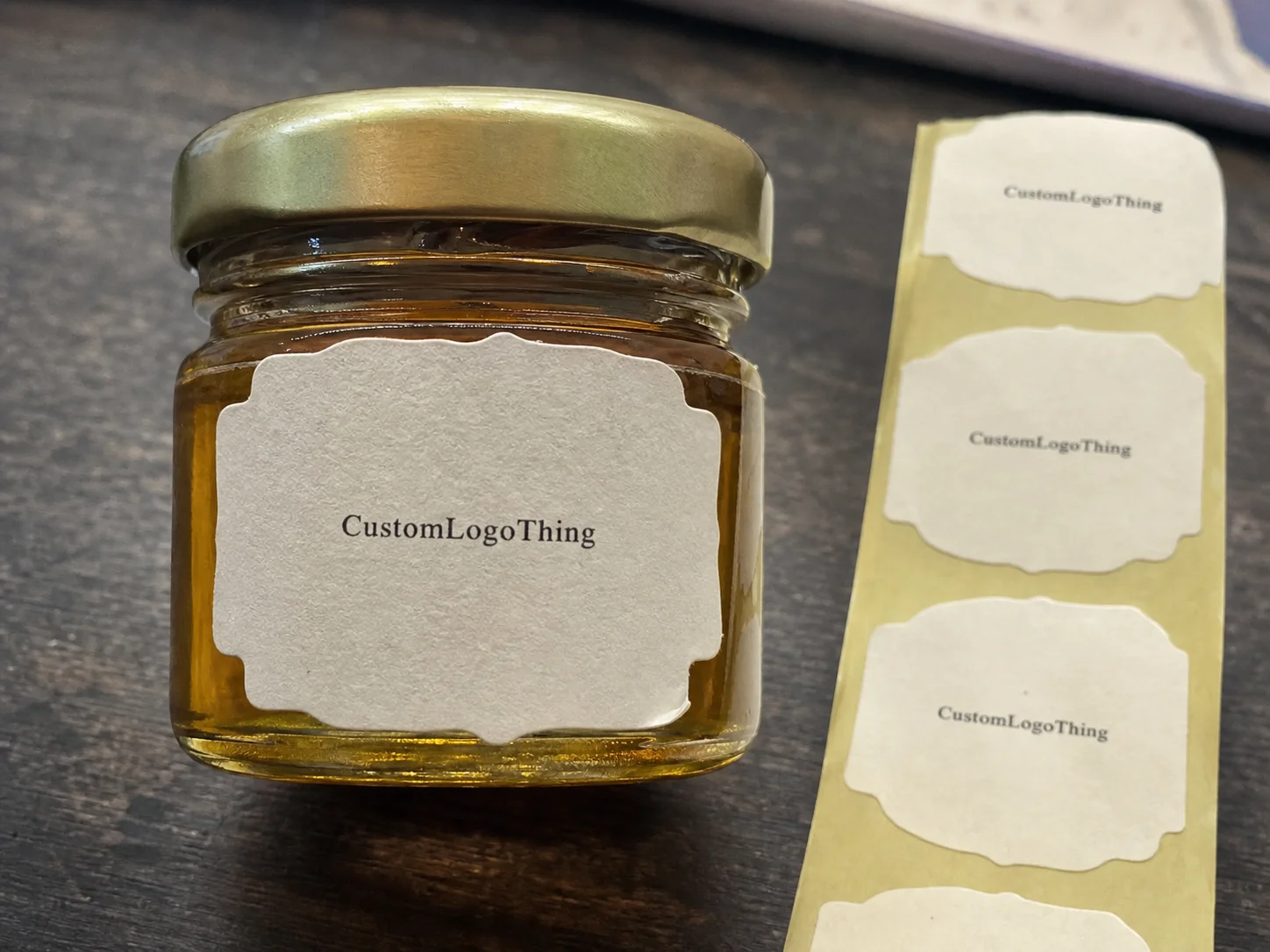
A small honey jar is competing on three fronts at once: shelf appeal, giftability, and trust. If it sits on a market table beside ten other jars, the buyer may only give it a few seconds before deciding whether to pick it up. That means the front label has to do more than identify the contents; it needs to create a quick, confident impression.
Personalized honey labels are custom-printed labels made for your jar size, branding style, varietal, flavor, event, or retail format. They can be minimal and rustic, bright and modern, or elegant enough for wedding favors and holiday gift sets. The point is not ornament for its own sake. The point is fit: the right size, the right material, the right message.
The value jump can be surprising. A plain jar with a handwritten sticker may feel like a home kitchen product, while a clean, well-proportioned label with a strong logo, readable typography, and thoughtful spacing can push the same jar into boutique territory. That is especially true for small-batch honey, creamed honey, infused honey, and local varietals where the story matters almost as much as the taste.
There is also a practical branding angle. If a business sells honey alongside other packaged goods, the label design should feel consistent with the rest of the line so the customer recognizes the brand quickly. That consistency can matter as much as the artwork itself, particularly when the product appears at different points of sale with different lighting, handling, and shelf conditions.
For gift packaging, the label often carries more emotional weight than on a standard retail jar. A neat layout, a clear varietal name, and a finish that suits the occasion can make a simple honey jar feel like something chosen deliberately rather than assembled quickly.
How custom honey labels are produced and applied
Most label jobs follow the same basic path: artwork setup, material selection, print method, finishing, die-cutting, and then packaging for application. It sounds straightforward, but each step changes how the final label looks and performs on the jar.
The most common construction for honey jars is a pressure-sensitive label, which is a self-adhesive label with a release liner. Within that category, buyers usually choose among paper, BOPP, clear film, matte, gloss, or waterproof stock depending on how the jars will be stored and handled. Paper can work well for dry, low-stress use. Film stocks tend to hold up better when jars face condensation, chilled gift baskets, or frequent handling.
Jar shape matters a great deal. Straight-sided jars give the easiest application surface, while hex jars, squat jars, and tin-top containers may need a tighter label width or a different panel layout so the edges stay flat. If a label wraps too far around a curve, it can wrinkle or lift at the seam. If it is too narrow, it may look like an afterthought.
Application can happen by hand or on a label applicator, and the format matters. Rolls are usually preferred for production lines because they feed consistently, while sheets may suit smaller hand-applied runs. Label orientation, gap spacing, and peel performance all affect how cleanly the label goes on. In practice, a label that is easy to peel and place saves time and reduces crooked placement, especially when someone is labeling dozens or hundreds of jars.
For buyers comparing options, the choice often comes down to what matters most:
- Paper labels for lower-cost, dry-use packaging
- BOPP film labels for moisture resistance and better scuff performance
- Matte finishes for a softer, natural look
- Gloss finishes for brighter color and more shelf pop
- Clear labels when the jar itself should remain visible
Most honey labels are printed digitally for short to mid-size runs, especially when multiple varietals or seasonal versions are involved. Digital printing is practical because it handles variable artwork well and avoids the heavier setup associated with long-run methods. For larger repeat programs, other print methods may make more financial sense, but the right choice depends on quantity, artwork complexity, and finishing requirements rather than habit.
Key factors that affect label durability, appearance, and compliance
Honey packaging lives in a tricky environment. A jar may sit in a warm kitchen, travel in a gift basket, get handled at a market table, or be stored in a refrigerated display. That means the label has to survive humidity, finger oils, abrasion, and occasional temperature swings without turning cloudy or peeling at the corners.
Material choice is the first line of defense. Standard paper labels can look excellent, but if the jar will face condensation or heavy handling, BOPP or another film stock usually performs better. Adhesive choice matters too. A permanent adhesive is useful when the label needs to stay put through shipping and shelf life. A removable adhesive may be better if jars are reused, though that depends on the surface and how long the label remains in place.
Artwork details can help or hurt durability perception. Small type sizes below about 6 pt become difficult to read on curved containers, especially if the print area is narrow. Strong contrast matters more than decorative tricks. Dark text on a light field, or a clean logo with enough open space, usually reads better than an overdecorated layout packed with script fonts and flourishes.
Compliance text belongs on the label too. Retail packaging often needs the product identity, net weight, ingredient or contents statement, and any other disclosures relevant to the market you sell into. Honey sold through retail channels can also require barcode legibility and space for lot coding, best-by dates, or harvest dates depending on your operation. For packaging context, industry guidance from organizations such as the Institute of Packaging Professionals can be useful when evaluating how materials, print quality, and application fit into a broader packaging system.
From a production standpoint, a label that looks beautiful on a flat proof but fails on a curved jar is not a successful label. Testing on filled jars is often the difference between a design that looks nice on screen and a label that holds up in real use.
| Label option | Typical use | Durability | Relative cost |
|---|---|---|---|
| Paper, matte | Dry shelf display, low-cost runs | Moderate | Lowest |
| BOPP, gloss | Retail jars, handling, condensation risk | High | Medium |
| Clear film | Premium look, visible jar contents | High | Medium to higher |
| Waterproof film | Chilled storage, gift baskets, shipping | Very high | Higher |
Personalized honey labels process and timeline: from proof to delivery
The cleanest orders move through a predictable workflow. First, you submit jar measurements, quantity, artwork, and any wording requirements. Then the vendor prepares a proof so you can review size, placement, text, and color. Once you approve it, production starts, quality checks happen, and the labels are packed for shipment.
Personalized honey labels often slow down for ordinary reasons. Missing dielines are common, especially when the jar has unusual dimensions. Low-resolution logos can make a proof look fuzzy or force a redraw. Last-minute changes to varietal names, ingredient wording, or color can also add time because the print file has to be updated and rechecked.
Typical timelines vary, but a useful planning range for many custom label jobs is often 12-15 business days from proof approval for production, plus shipping time. Simple jobs can move faster, while specialty materials, complex finishing, or late revisions can add several days. If labels are needed for a market date, a launch, or a wedding weekend, the safest move is to build in cushion.
“The best label orders are the ones that arrive boringly on time, fit the jar correctly, and do not force the team to improvise on the packing table.”
For buyers who want to understand scheduling or quality expectations for pressure-sensitive packaging, it helps to think in terms of proof time, print time, and transit time. Those are separate pieces, and each one can be managed if the project is organized early.
Quality control usually includes a visual check for registration, color consistency, edge cutting, adhesive condition, and barcode readability where applicable. On a small run, one or two mislabeled sheets can still derail a packing session, so careful inspection before shipment matters more than many buyers realize.
Personalized honey labels cost, pricing, and MOQ basics
Price is usually driven by a handful of predictable factors: quantity, label size, material, finish, color usage, die shape, and whether the labels are supplied on rolls or sheets. If you want a special contour cut, a clear film, or a premium finish, expect the unit price to rise. If the order is larger and the artwork is simple, the cost per label usually falls.
The minimum order quantity, or MOQ, matters because setup costs have to be spread across the run. Smaller orders usually cost more per label, but they reduce inventory risk. That can be the right choice for seasonal honey, gift sets, or a new product that has not yet proven its sales volume. Larger orders make more sense when the design is stable and monthly demand is predictable.
As a practical range, many buyers see pricing land somewhere around $0.12-$0.35 per label depending on quantity and material, with shorter runs and premium films sitting toward the upper end. Special shapes, metallic accents, or heavy coverage can push that number higher. The real question is not just “What is cheapest?” but “What gives me the lowest total packaging cost for the amount I will actually use?”
Paper labels are usually the least expensive way to get a polished look, but they can be a false economy if moisture or abrasion causes early failure. Paying a bit more for film can make sense when a product needs to survive shipping, chilled display, or repeated handling without losing its appearance.
Here is a simple way to compare common choices:
| Option | Best for | Typical unit cost trend | Inventory risk |
|---|---|---|---|
| Short run, paper | Small batches, testing, low upfront spend | Higher per label | Low |
| Mid run, BOPP | Retail sales, handling, moisture resistance | Moderate | Moderate |
| Higher volume, simple print | Repeat SKUs, steady demand | Lower per label | Higher if demand shifts |
If you are balancing price and performance, a conversation about Custom Labels & Tags can help frame the tradeoffs between appearance, durability, and application format. That discussion is usually more useful than chasing the lowest quote line by line.
Common mistakes that make honey packaging look amateur
Most weak honey packaging does not fail because of one huge mistake. It fails because of several small ones that stack up. Overcrowded layouts are near the top of the list. When the product name, logo, flavor note, origin story, and regulatory text all fight for attention, the jar looks busy rather than premium.
Another common issue is choosing the wrong label material for the environment. A paper label can look fine on a dry shelf but start lifting in humid storage or after condensation forms on a chilled jar. Once edges wrinkle, the whole package feels less trustworthy. That is especially frustrating when the product itself is excellent.
Curved surfaces also expose sizing errors. A label that is too wide may overlap awkwardly, while one that is too short can leave blank zones that make the front panel feel unfinished. Curved jars need dimension checks, not guesses. A quick test on a filled sample often reveals more than a screen proof can.
Then there is proofing. Typos in varietal names, wrong net weight placement, weak barcode contrast, and mismatched colors are all avoidable. One careful review can save a lot of rework later. If the product is going into retail, it is worth checking against the relevant labeling rules and verifying that the final file includes everything required for the sales channel.
A subtle but common problem is finish mismatch. A highly glossy label on a rustic honey line can feel off-brand, just as a matte uncoated look may undersell a product positioned as a premium gift item. The finish should support the brand story rather than compete with it.
Expert tips for better-looking labels and faster reorders
If you want your labels to age well as the product line grows, build a small family of sizes instead of a one-off design for each flavor. That makes seasonal honey, limited releases, and gift sets feel related without forcing every jar to use the exact same layout.
Keep vector logos, final copy, and print-ready artwork organized in one place. It sounds basic, but it speeds up reorders and reduces setup charges later because nobody has to rebuild files from scratch. A clean art file is one of the easiest ways to save time on the next run.
Test labels on a few filled jars before you commit to a full order. That one step reveals a lot: whether the adhesive grabs the surface correctly, whether condensation dulls the finish, whether the barcode scans, and whether the label wraps too far. If you are shipping the product, standards like ISTA packaging test procedures can be a useful reference point for thinking about transit stress, even if you are not running a formal lab test.
Leave some room in the design for future changes. A harvest date, batch number, or seasonal flavor callout can be added later if the layout was built with that flexibility from the start. That kind of planning makes personalized honey labels easier to scale as the product line grows.
For reorder efficiency, keep one master file with approved fonts, colors, and label dimensions. That reduces the chance of drift between print runs, which is one of the most common reasons a brand slowly loses visual consistency over time.
Next steps for ordering the right label setup
Start with the jar, not the artwork. Measure the body, photograph the front and side panels, and gather the exact copy that needs to appear on the label. That includes the product name, flavor or varietal, net weight, and any required disclosures. If the jar has a cap band or a curved shoulder, include those dimensions too.
Next, decide what matters most: premium shelf appeal, moisture resistance, or the lowest unit cost. That single decision usually points you toward the right substrate and finish. If sustainability is part of the buying criteria, it is also worth checking whether a material is certified or sourced responsibly; for buyers evaluating responsible fiber content in packaging components, the FSC site is a useful reference.
After that, request a proof and confirm the quantity and production timeline before approving anything. If the labels are likely to face humidity, chilled storage, or frequent handling, order a small test batch first. It is far cheaper to discover a fit issue on twenty jars than on two thousand.
Keep the product naming and brand treatment consistent across the launch so the first reorder is easier. That consistency helps the packaging line stay organized, reduces confusion during fulfillment, and makes the brand look more established. For small jars, that polish is often what separates a nice homemade product from packaging that feels ready for retail.
It also helps to be realistic about lead times around holidays and market seasons. A rush order can sometimes be accommodated, but it usually narrows material choices and leaves less room for proof revisions. Planning ahead gives you better options and fewer compromises.
FAQ
What should I know before ordering personalized honey labels for small jars?
Measure the jar body and cap area first so the label fits the curve and leaves enough clean space. Choose the material based on whether the jar will sit in warm, humid, or refrigerated conditions. Prepare a print-ready logo and final wording before requesting a proof to avoid delays.
Are personalized honey labels waterproof or moisture resistant?
They can be, but it depends on the substrate and adhesive you choose. BOPP and other film labels usually hold up better than standard paper when jars face condensation or chilled storage. Testing on a filled jar is the safest way to confirm performance before a full order.
How much do custom honey jar labels usually cost?
Price depends on quantity, size, finish, material, and whether you need a special shape or rolls. Lower quantities usually have a higher unit cost because setup is spread across fewer labels. Buying more at once often lowers unit cost significantly if you have regular demand.
How long does the production timeline take for personalized honey labels?
Timeline usually includes proof approval, production, quality checks, and shipping time. Clean artwork and quick approvals shorten the overall lead time. Complex materials or late revisions can add days to the schedule.
What mistakes should I avoid with personalized honey labels?
Avoid tiny text, weak contrast, and overcrowded layouts that make the jar hard to read. Do not choose the wrong adhesive for humidity or curved packaging surfaces. Always proof check spelling, net weight, and product naming before approving production.
If you want small jars to look polished, easy to read, and worth the price, the label has to be treated like a real packaging component, not an afterthought. That is the practical advantage of personalized honey labels: they help the jar sell faster, travel better, and look more credible from the first glance to the next reorder.