Small Labels Carry Big Risk at the Retail Rack
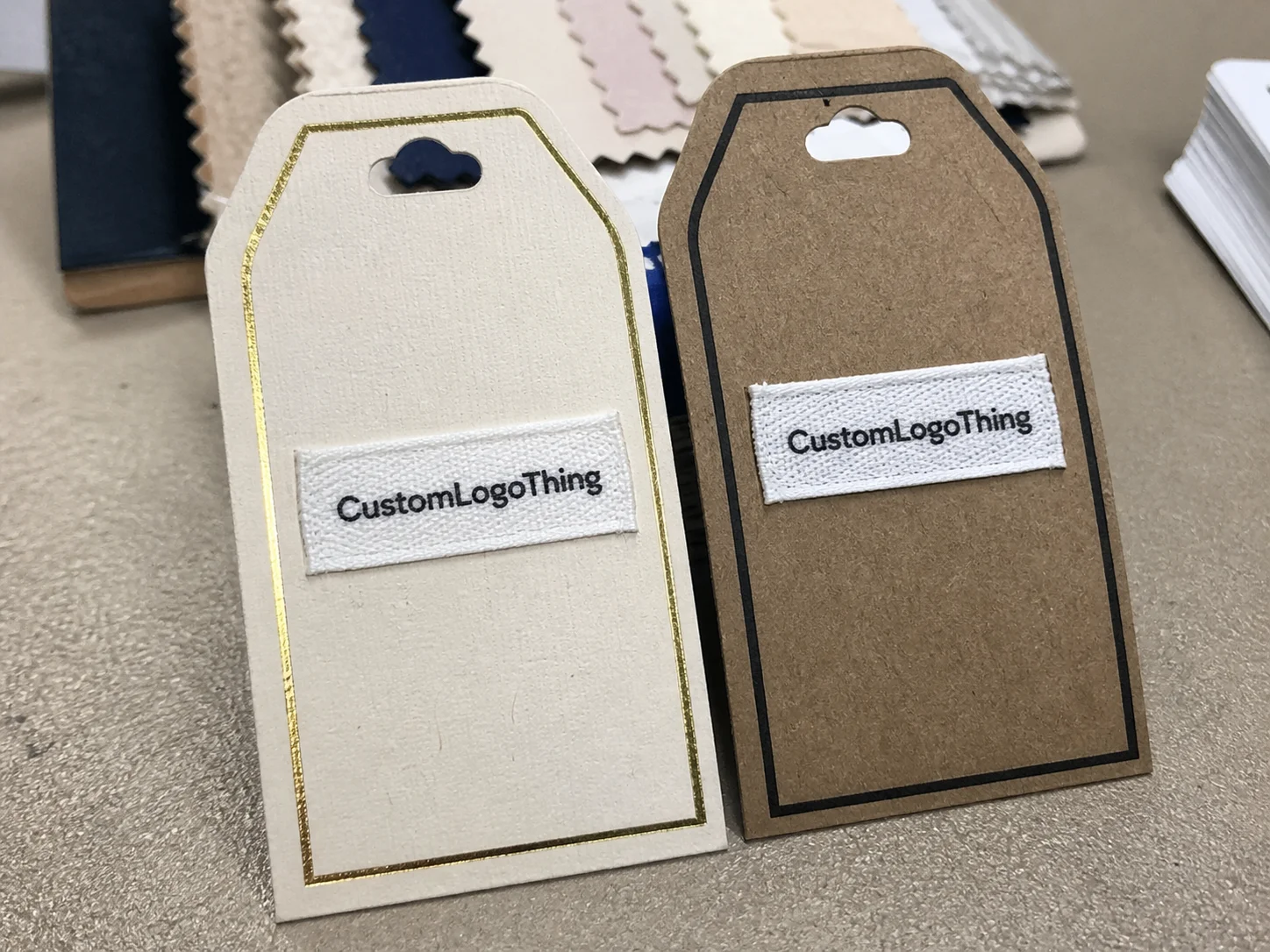
A garment can pass fabric inspection, measure correctly, and still feel unfinished if the neck label puckers, scratches, frays, or looks off-brand under store lighting. Buyers comparing a Printed Woven Labels food moq pricing plan usually need clear numbers before they can approve sampling, issue a purchase order, or brief a garment factory.
That tiny component carries more responsibility than it gets credit for. It supports perceived quality, comfort, brand recall, size identification, care information, and sometimes compliance copy that has to stay readable after repeated washing. On a T-shirt, a 1-inch center-fold label can decide whether the wearer keeps it on or cuts it out. On a chef coat, apron, café uniform, or restaurant merchandise hoodie, the label also has to tolerate laundering, detergent, heat, and constant handling.
Purchasing teams usually ask the same first questions. What is the MOQ? What happens to the unit cost at 500, 1,000, or 5,000 pieces? Is setup included? Which fold works with the garment factory’s sewing method? How many thread colors can the artwork hold before the logo starts looking like a blurry postage stamp?
Custom Logo Things works with apparel buyers who need practical manufacturing guidance for Custom Clothing Labels, not a pile of vague promises. The best label orders start with material fit, clean artwork translation, predictable MOQ tiers, and transparent quoting. A useful pricing plan explains construction choices, unit cost drivers, proofing steps, and the exact details needed for a reliable quote.
Production note: A label is not just a logo carrier. It is a sewn component, and sewn components need tolerances, fold allowances, material choices, and finishing instructions just like the garment itself.
The goal is simple: make the label look intentional, feel right on the garment, and arrive before the sewing window closes. Miss any of those three and the “small” label becomes a large problem.
Printed Woven Labels Food MOQ Pricing Plan Basics
The phrase Printed Woven Labels Food moq pricing plan often comes from a buyer comparing printed and woven garment labels for apparel, accessories, uniforms, promotional goods, or merchandise tied to a restaurant, packaged food, café, hospitality, or lifestyle brand. “Food” may mean staff uniforms, branded aprons, chef coats, event merch, or retail apparel sold by a food brand. The buying need is still apparel-label focused: choose the right construction, price it correctly, and keep production moving.
Printed labels and woven labels are not interchangeable. A printed label places ink onto a substrate such as satin polyester, cotton tape, nylon, or soft polyester. It works well for fine text, care instructions, size grids, QR codes, fiber content, legal copy, and multicolor layouts. A woven label builds the artwork directly from threads, usually polyester yarns, giving the label texture, durability, and a more dimensional brand finish.
Woven labels are usually the better choice for neck labels, hem tags, sleeve tags, brand marks, and premium identity details. Printed labels make more sense when the layout carries dense copy, small symbols, washing instructions, barcodes, or artwork that would lose clarity if converted into thread. Many apparel programs use both: a woven logo label for identity and a printed satin care label for required garment information.
A pricing plan is not one flat number. Label size, fold, material, color count, backing, edge finish, order quantity, packing method, and shipping method all change the unit cost. A 1 inch by 2 inch center-fold damask neck label does not price or behave like a 2.5 inch straight-cut hem tag. A 6 inch printed care label folded into a side seam has a completely different job.
Common formats include center fold, end fold, straight cut, Manhattan fold, loop fold, miter fold, iron-on backing, adhesive backing for positioning, sew-on labels, and heat-transfer alternatives for garments where a fabric label would feel too bulky. If the label touches skin, softness matters. If it sits at a hem, cuff, or sleeve, edge stability and appearance may matter more than hand feel.
The best quote starts with use case, not artwork alone. Tell the supplier where the label will sit, how it will be attached, how the garment will be washed, and whether it must feel soft against skin. Those four details prevent a surprising number of bad samples.
Material, Weave, Print, and Finish Specifications
Damask polyester is the workhorse for detailed woven labels. It supports cleaner edges, tighter lettering, and sharper logos than lower-density woven options. Satin weave gives a smoother sheen and a softer visual finish, although it may not hold tiny detail as crisply as high-density damask. Taffeta is common for economical apparel labels where function matters more than a premium hand. High-density woven labels help when a small logo, narrow stroke, or compact wordmark needs better definition.
For printed garment labels, substrate choice matters just as much as artwork. Satin polyester is common for care labels and size labels because it prints cleanly and folds well. Cotton tape gives a natural look, but it may not hold tiny print as sharply as synthetic satin. Nylon is durable and practical for certain utility or uniform labels. Soft polyester blends can improve skin comfort for T-shirts, childrenswear, activewear, and lounge apparel.
Artwork has limits. Woven labels cannot reproduce photographic gradients like paper printing, and thread has physical diameter. Very small text may need thicker strokes, simplified shapes, or a larger label size. A 5-point care line that looks fine on a monitor can turn muddy when woven at a 0.6 inch finished height. Monitors lie. Thread does not care.
Finish choices affect both feel and cost. Ultrasonic cut edges can produce a clean sealed edge on many synthetic labels. Hot-cut edges are practical for straight-cut pieces but may feel firmer if the edge touches skin. Woven edges can improve appearance and durability. Soft backing can reduce scratchiness, while adhesive backing may help a sewing operator hold placement before stitching. Merrowed borders add a raised edge and a heritage look, but they also add finishing labor and can raise cost per piece.
Fold allowances need discipline. If a center-fold label finishes at 1 inch by 1.5 inches, the unfolded height may need to be roughly 2 inches plus tolerance, depending on fold method and seam allowance. A loop fold label needs enough length for both visible faces and the stitched area. Straight-cut labels need safe margins so the logo does not sit too close to the blade path.
Color planning works differently in woven and printed production. Woven labels use thread colors, usually matched as closely as practical to Pantone references. Printed labels can carry more complex color layouts, but contrast still controls readability. Metallic, neon, transparent, shadowed, and gradient artwork often needs production-friendly conversion. If brand color is strict, provide Pantone references early rather than relying on screen color.
One logo can require three label builds. A 1-inch neck label, a 2.5-inch hem tag, and a long care label may all carry the same brand mark, but each has a different job, attachment method, and comfort requirement. Treating them as one spec is how mistakes get baked in before anyone notices.
MOQ, Pricing, and Unit Cost Drivers Buyers Should Know
MOQ is shaped by loom setup, material sourcing, print setup, cutting, folding, inspection, and finishing labor. The first few hundred pieces carry more setup cost per label because proofing, machine calibration, thread preparation, ink setup, and operator time do not shrink just because the order is small.
A practical Printed Woven Labels Food moq pricing plan should show quantity breaks. A buyer may need 300 labels for a product test, but the unit cost can improve sharply at 1,000, 2,500, or 5,000 pieces. Exact pricing depends on construction and finish, but the pricing logic is consistent: larger runs spread setup charges and handling time across more labels.
As a planning range, simple printed satin labels often price lower than detailed woven labels at small quantities because the setup is less complex. Basic printed labels for small runs may land in the low cents to several dozen cents per piece depending on size, ink coverage, packing, and freight. Woven labels can range from several cents to well over a dollar per piece when the order is small, the label is large, or the build includes high-density weaving, specialty backing, multiple colors, or extra finishing. Freight, rush handling, sampling, and split packing can change the landed cost quickly. Anyone promising one universal price is skipping the actual spec. Convenient, but not useful.
| Label Option | Best Use | Typical MOQ Planning | Cost Behavior |
|---|---|---|---|
| Printed satin label | Care content, size grids, QR codes, fine text | Practical for smaller test runs when artwork is simple | Lower setup complexity, but print method and packing still affect unit cost |
| Damask woven label | Logo neck labels, hem tags, premium branding | Often better value at medium and bulk quantities | Setup is spread across more pieces, improving cost per piece |
| High-density woven label | Small lettering, tight marks, detailed brand labels | Best planned with proofing or sampling for new artwork | Higher thread/detail requirements can increase tooling fees or setup time |
| Heat-transfer label | Tagless neck branding, activewear, soft-touch applications | Useful when sewn labels may irritate skin | Application method, sheet layout, and durability testing influence price |
Main unit cost drivers include label dimensions, woven versus printed construction, thread count, ink colors, fold type, edge finish, backing, packaging, inspection requirements, and shipping method. A 2-color woven label with a standard center fold will usually price differently from a 6-color high-density label with adhesive backing and individual bundles by SKU.
Buyers can control cost without weakening the brand. Keep artwork clean. Avoid oversized labels unless the garment truly needs them. Standardize one fold style across multiple SKUs. Consolidate colorways where possible. Order a practical MOQ tier rather than buying exactly the number needed for immediate sewing, because production loss, sample pulls, replacement garments, and future reorders can leave a team short.
Low MOQ orders make sense for product testing, boutique launches, seasonal capsules, staff uniforms, restaurant merchandise, trade show apparel, and new brand trials. Higher MOQ orders make sense for recurring apparel programs, multi-location uniform rollouts, resale merchandise, and brands that want consistent label lots across several garment production cycles.
Transit planning affects landed cost too. If labels must arrive before a garment sewing window, air shipping may solve the timing issue but raise the total cost. For broader packaging and distribution planning, groups such as ISTA publish transport testing standards that help teams think more carefully about how goods move through handling networks. Labels are small, but missed delivery windows can delay cartons of finished apparel.
Artwork Review, Sampling, and Production Timeline
A clean order path usually follows eight steps: submit artwork and specs, confirm label type and size, receive quote, approve digital proof, review a physical sample if needed, release bulk production, inspect finished labels, then pack and ship. Simple printed labels may move faster than complex woven labels, but timing depends on artwork condition, sample requirements, order volume, and finish choices.
During artwork review, the production team checks line thickness, letter height, safe margins, thread conversion, fold allowance, cut tolerance, and legibility at finished size. Vector artwork is strongly preferred because it allows clean scaling and shape review. AI, EPS, SVG, or editable PDF files are useful; a PNG or JPG reference helps confirm how the artwork is supposed to look.
A digital proof confirms layout, size, colors, fold marks, copy, and general construction. It is efficient and often enough for repeat orders or simple designs. A physical sample gives a better sense of texture, density, color behavior, edge finish, and softness. For a new woven neck label, a sample can prevent a full production run from landing with lettering that feels too tight or a backing that feels too stiff.
Printed labels can often proceed faster because the process may involve fewer thread-conversion decisions. Woven labels with small text, multiple colors, specialty borders, or unusual folds can need more review. Physical sampling, color revisions, and large-volume production add time. A realistic schedule includes proof approval, production, packing, transit, customs where applicable, receiving inspection, and sewing or application time at the garment factory.
Typical timing varies by project, but buyers should plan in stages. Digital proofing may take a few business days once complete specs are received. Physical sampling can add a week or more depending on construction and shipping. Bulk production may take one to several weeks after approval, especially for woven labels with specialty finishing or high volume. Rush options may exist, but rushing after late approvals is not a strategy. It is just expensive damage control.
Buyer-side actions make a real difference. Send vector artwork. Confirm Pantone or brand color references. State the garment type and label placement. Explain the attachment method, such as single-needle stitching on two sides, seam insertion, heat application, or temporary adhesive positioning before sewing. Flag any firm in-hands date before quoting, not after proof approval.
If sustainability documentation matters for the broader apparel or packaging program, say so early. For example, brands that manage paper hang tags or cartons alongside labels may ask about FSC-related materials; the Forest Stewardship Council provides certification information for responsibly sourced forest-based materials. Woven polyester labels are a different material category, but mixed labeling packages often include both textile labels and paper components.
Common Specification Mistakes That Raise Cost or Delay Orders
The most common mistake is ordering from a logo file alone. A logo does not tell the supplier finished size, fold style, attachment method, label placement, softness requirement, packing instructions, or how much detail must remain readable after trimming and folding. A quote based only on artwork is usually a rough estimate, not a production-ready plan.
Tiny text creates another problem. Thread has thickness, and woven construction has limits. Care symbols, legal copy, fiber content, dense ingredient-style information, or small QR codes are usually better suited to printed labels. If a buyer insists on weaving content that belongs in print, the label may become larger, more expensive, or less readable. Sometimes all three. Delightful.
Comfort mistakes show up fast in wear testing. A stiff damask neck label may look premium on a sample table but irritate skin after 30 minutes of wear. T-shirts, childrenswear, activewear, sleepwear, and uniforms need careful thought around backing, edge finish, placement, and stitch method. Softness is not always about the face yarn; the cut edge and folded seam can matter just as much.
Color issues slow orders too. Screen colors and thread colors do not behave the same way. A bright lime green on a phone screen may not have a perfect thread equivalent. Metallic, neon, transparent, shadowed, or gradient artwork may need practical conversion. If exact color is mission-critical, request a physical sample or thread reference before bulk production.
Wash durability should not be an afterthought. Restaurant, kitchen, café, and uniform apparel may face hotter wash cycles, stronger detergents, abrasion, and more frequent laundering than retail fashion items. Printed labels need suitable ink and substrate. Woven labels need stable yarns, clean edges, and construction that will not curl or fray after repeated wash and dry cycles. If the garment goes into industrial laundry, say that early.
Cost traps are easy to miss. Too many label versions increase setup work. Ordering below realistic demand can force a second small run at a higher unit cost. Changing specs after sampling can restart proofing. Requesting rush shipping because approvals sat for three days can erase the savings gained through bulk pricing.
A strong order file includes artwork, dimensions, fold type, quantity, material preference, attachment method, color references, packing instructions, delivery address, and approval contact in one clear package. If the order supports multiple SKUs, label each version clearly so the production and receiving teams can match quantities without digging through email threads.
How Custom Logo Things Supports Apparel Label Orders
Custom Logo Things helps buyers translate branding into manufacturable clothing labels. That means looking beyond the artboard and asking practical questions: will this sit against skin, will it be inserted into a seam, will it be washed hot, will the logo still read at 0.75 inches, and does the buyer need a printed care label in addition to a woven brand label?
The team can help decide whether the project belongs on a woven label, printed satin label, cotton label, heat transfer, hang tag, or mixed labeling package. For buyers still sorting options, the Custom Labels & Tags page is a useful starting point for matching label types to apparel use cases.
Consultative quoting matters because small spec changes can alter both feel and cost. Reducing a label height by 0.25 inches, switching from a specialty fold to a standard center fold, or simplifying a 6-color logo to 3 thread colors may improve unit cost without damaging the brand presentation. Not always, but often enough that review before production is worth the time.
Quality priorities are measurable: readable artwork, consistent sizing, clean cuts or folds, appropriate thread or ink selection, and packing labels that help receiving teams identify styles and quantities. Inspection should check finished dimensions, fold accuracy, color consistency within reasonable production tolerance, legibility, edge quality, and count accuracy. If a garment decorator needs labels packed by SKU, that detail should be included before production packing begins.
For a Printed Woven Labels Food moq pricing plan, the goal is not to push every buyer into the most expensive construction. The goal is to match the label to the garment, budget, wash expectation, and delivery window. A restaurant apron label, a retail hoodie neck label, and a printed care label for staff uniforms may all need different materials.
Buyers can request a quote with complete specs or ask for help choosing construction. Custom Logo Things can review files, recommend materials, discuss MOQ, explain sampling options, coordinate production details, and plan packing or shipping requirements before the order reaches production.
Next Steps to Request a Label Quote Without Delays
A fast quote starts with a simple checklist. Send the label type, finished size, quantity, artwork file, color references, fold style, garment use, attachment method, delivery location, and target in-hands date. If those details are not final, say what is flexible. A supplier can often quote two or three practical options if the buyer explains the goal clearly.
- Artwork: AI, EPS, SVG, or editable PDF is preferred, with a PNG or JPG reference for visual comparison.
- Size: Provide finished width and height, plus whether dimensions include folds or seam allowance.
- Quantity: Ask for two or three quantity breaks to compare low MOQ testing against better bulk pricing.
- Construction: State woven, printed, heat transfer, or ask for a recommendation based on placement and detail.
- Packing: Confirm bulk packing, roll packing, individual bagging, carton labels, or split shipping needs.
Photos help when the buyer is unsure. Send an image of a similar label, a garment placement photo, or a retail sample that shows the desired look and softness. That is often faster than describing a fold style from memory, especially with Manhattan folds, loop folds, and seam-inserted tags.
Ask for pricing options instead of one number. A low-entry MOQ may be right for a test run, while a larger tier may lower the cost per piece enough to justify extra inventory. If several apparel drops are planned, include estimated reorder timing so the quote can account for repeat production needs.
Confirm whether the order needs sample approval, bulk-only production, individual bagging, roll packing, carton labels, or split shipping to multiple garment decorators or factories. If your team has general questions before building a spec package, the Custom Logo Things FAQ can help with common ordering details.
The cleanest plan is not complicated. Match the label type to the garment. Keep the artwork manufacturable. Quote more than one quantity tier. Build in time for proofing. Then approve the final spec before production starts, because fixing a label after it has been cut, folded, packed, and shipped is nobody’s idea of efficiency.
FAQ
What is the usual MOQ for custom printed or woven clothing labels?
MOQ depends on label type, size, material, fold, and finishing, because setup time and machine preparation must be covered before production becomes efficient. Printed labels may be practical for smaller test runs, while woven labels often become more cost-effective as quantity increases. Ask for several quantity breaks so purchasing can compare a low-entry order against a lower unit cost bulk option.
How does a printed woven labels food MOQ pricing plan affect unit cost?
A printed woven labels food moq pricing plan affects unit cost through construction, label dimensions, thread or ink colors, fold style, backing, edge finish, inspection needs, and order quantity. A larger order usually lowers the unit cost because proofing, setup, cutting, and finishing are spread across more labels. Clean artwork and standard sizes or folds can help control price without weakening the brand look.
Should I choose printed labels or woven labels for apparel branding?
Choose woven labels for durable logo branding, premium neck labels, hem tags, and brand marks that need texture and longevity. Choose printed labels for small text, care instructions, size information, QR codes, or artwork with finer color detail. Many apparel programs use both: woven brand labels for identity and printed care labels for required garment information.
What files and details are needed for a fast clothing label quote?
Send vector artwork when possible, plus label size, quantity, material preference, fold style, color references, and attachment method. Include garment type and label placement, because a neck label, side seam label, hem tag, and care label may need different materials. Share the delivery address and target date early so production and shipping options can be planned accurately.
How long does production take after label artwork approval?
Timeline depends on whether the label is printed or woven, whether a physical sample is required, and how complex the finish is. Digital proof approval is usually faster than sample approval, but a sample can reduce risk for new brands or detailed woven artwork. Delays are most often caused by incomplete specs, late artwork changes, unclear color references, or waiting too long to approve the proof.